Category: Business News

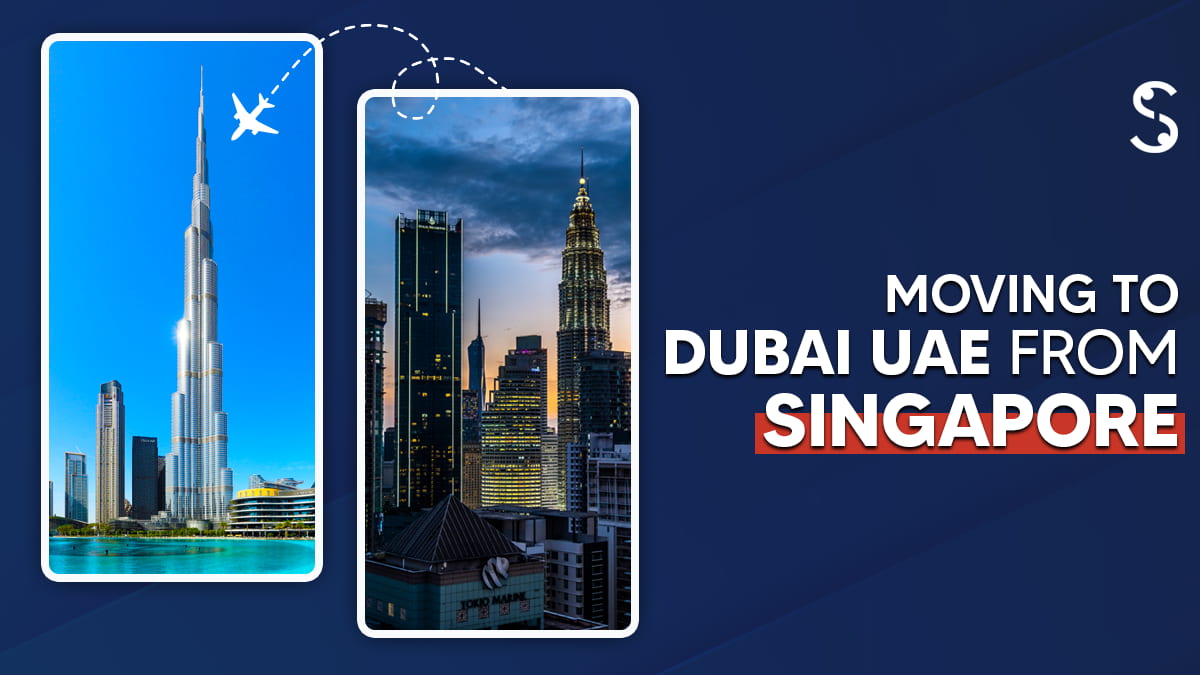
  • Moving to Dubai UAE from Singapore

    Moving to Dubai UAE from Singapore

    Relocating from Singapore to Dubai is a big step, but one that many people are considering for a variety of reasons. While Singapore is a key player in Southeast Asia, Dubai stands out as a gateway to both Western and Eastern markets in the Middle East. Lately, more individuals and business owners from Singapore are choosing to move to Dubai because of the many advantages it offers compared to Singapore. 

    For individuals, one of the biggest attractions is Dubai’s tax-free lifestyle, which can lead to significant savings. For business owners, Dubai provides a more cost-effective and business-friendly environment, with benefits like limited corporate tax in certain free zones, easier company formation, and access to a rapidly growing economy. 

    So, let’s understand why more people from Singapore are moving to Dubai and the business opportunities that make it a top destination for both individuals and companies. 

    Why Move to Dubai from Singapore? 

    Relocating from Singapore to Dubai offers a range of benefits and opportunities for both individuals and businesses. Here are some reasons why more people are making the move: 

    1. Lower Tax Rates 

    Dubai’s corporate tax rates are significantly lower than Singapore’s which provides a more favourable business environment for companies. Dubai also offers zero corporate tax in many free zones. 

    Unlike Singapore, where personal income tax can go as high as 22%, Dubai does not impose any personal income tax. The VAT rate in Dubai is also relatively low at 5%, adding to the cost-saving benefits for businesses. 

    2. Favorable Government Incentives 

    The Dubai government offers various incentives, such as tax holidays, free zone benefits, and grants, to attract foreign investment and stimulate economic growth. 

    3. Lower Operating Costs for Businesses 

    Dubai’s free zones provide businesses with cost-effective solutions, such as affordable office spaces, reduced regulatory costs, and the ability to own 100% of the company without needing a local sponsor. This contrasts with Singapore, where business costs, such as real estate and labor, are higher. 

    4. Golden Visa 

    Dubai offers the Golden Visa program, which provides long-term residency (generally 10 years) visas to investors, entrepreneurs, and professionals to facilitate their stay and business activities. 

    5. Attractive Lifestyle and Quality of Life 

    Dubai offers a luxurious lifestyle, with world-class infrastructure, healthcare, and education. The city is known for its high-end shopping, dining, and entertainment options, all in a safe and family-friendly environment. Additionally, Dubai’s large and diverse expat community makes integration easier for newcomers from Singapore. 

    6. Geographical Location and Market Access 

    Dubai is located between Europe, Africa, and Asia which makes it an ideal base for businesses looking to access global markets. This location opens doors to untapped opportunities in the GCC and African regions, which are growing rapidly. Singapore’s location, while strong for Asia, doesn’t offer the same reach into these markets. 

    How to Move to Dubai from Singapore? 

    When relocating from Singapore to Dubai, understanding the visa requirements and available residency options is crucial. Here’s a breakdown of the most common types of visas for individuals & business owners: 

    A. For Individuals 

    Moving to Dubai from Singapore requires careful planning, especially when it comes to securing the right visa and residency options. Here are the most common visa types: 

    1. Work Visa 

    Dubai Work visa is for individuals who have secured employment in Dubai. The company sponsoring you will handle most of the paperwork. Residency in Dubai for the duration of your employment, plus access to Dubai’s healthcare and other public services. 

    2. Investor Visa 

    Investment visas are granted to individuals who make a significant investment in Dubai (e.g., real estate, business). The specific requirements and investment amounts vary depending on the type of investment. However, the investor visa allows you to live in Dubai, own a business, and sponsor family members. It typically lasts for 3-5 years. 

    3. Golden Visa 

    The Golden Visa is available to investors, entrepreneurs, professionals, and exceptional talents (scientists, doctors, etc.). It grants long-term residency, typically up to 10 years. The minimum investment amount varies depending on the category 

    4. Dependent Visa 

    A Dubai-dependent visa is issued to family members (spouse, children, parents) of individuals who already hold a valid residence visa in Dubai. It allows family members to live in Dubai under the sponsorship of the primary visa holder. 

    5. Student Visa 

    The visa is issued to students enrolled in universities or educational institutions in Dubai. The student visa allows individuals to live in Dubai for the duration of their studies. 

    Process for Obtaining a UAE Residence Visa (For Individuals) 

    To live in Dubai as a resident, individuals must follow the steps below to obtain their residence visa: 

    1. Gather Required Documents 

    Prepare all necessary documents, such as passport, visa application, medical fitness certificate, and any other supporting documentation. 

    2. Entry Permit 

    Once you’ve applied for a work, investor, or other visa, you will first receive an entry permit, which allows you to enter Dubai and begin the process of formal residency. 

    3. Medical Test 

    After arriving in Dubai, you’ll need to undergo a medical fitness test to confirm you are free of contagious diseases. 

    4. Emirates ID Application 

    You’ll need to apply for an Emirates ID, which is a national identification card used for various services in Dubai (banking, driving license, healthcare, etc.). 

    5. Residence Visa Stamping 

    The final step is to get your residence visa stamped in your passport. This stamp confirms your legal residency in Dubai. 

    B. For Businesses 

    Moving or expanding your business from Singapore to Dubai is a strategic decision. Dubai offers two main options for business setup: Mainland and Free Zones. Each comes with its own set of advantages and requirements, depending on the nature of your business and your expansion goals. 

    Mainland Business Setup 

    This is for businesses that want to operate freely across Dubai, the UAE, and internationally, without geographic restrictions. Key benefits include: 

    • Operates within the mainland territory of Dubai. 
    • Businesses can be fully foreign owned. 
    • Can trade with both local and international markets. 
    • Wide range of business activities 
    • Eligible for Government incentives and contracts. 

    Best Suited For: Retail, restaurants, consultancies, trading companies, construction, and other businesses that require access to the local market. 

    Free Zone Business Setup 

    Suitable for businesses focused on international trade, exports, and services that don’t necessarily need to operate within the local UAE market. Key Benefits: 

    • 100% foreign ownership allowed. 
    • No corporate or income tax in many free zones. 
    • Customs duty exemptions for goods imported and re-exported. 
    • Simplified business setup and registration process. 

    Best Suited For: E-commerce, IT services, logistics, media, manufacturing, and consultancy services looking to export internationally. 

    Types of Business License 

    The type of license required for your business in Dubai will depend on the specific industry and activities you plan to engage in. Some common license types include: 

    1. Commercial License 

    For businesses involved in trading activities (import/export, retail, general trading). 

    2. Industrial License 

    For companies involved in manufacturing or production such as factories, food processing units, and manufacturing plants. 

    3. Professional License 

    For providing various services, such as consultancy, tourism, and professional services. 

    4. Freelance License 

    The license is issued to individuals who want to work as freelancers in specific sectors (media, IT, design). 

    Process of Obtaining a Dubai Business License 

    To move your business from Singapore to Dubai, follow these steps to obtain the right business license: 

    1. Choose a Business Activity 

    Select the specific type of business activity you want to engage in. 

    2. Select Business Structure 

    Choose the legal structure for your company, such as a Limited Liability Company (LLC), Sole Establishment, or Branch of a Foreign Company. 

    3. Select a Business Name 

    Choose a unique and available name for your business. 

    4. Prepare Documents 

    Submit the required documents for your business setup, including: 

    • Passport copies of owners and partners. 
    • Proof of residence in Dubai (if available). 
    • Memorandum of Association (MOA) (for Mainland companies). 
    • Business plan (for some Free Zone businesses). 

    5. Secure Office Space 

    You’ll need to secure a physical office space as part of the business license process. This can be in a co-working space, a physical office, or a virtual office (for Free Zones). 

    6. Register Business with DED 

    Submit your business license application to the Department of Economic Development (DED) or the relevant free zone authority. 

    7. Obtain the Business License 

    Once all documents and approvals are in place, you can obtain your business license. 

    8. Apply for Visa 

    After receiving your business license, you can sponsor employee visas, including your own as the business owner. 

    Comparison of Cost of Living in Dubai vs. Singapore 

    When considering a move from Singapore to Dubai, one of the key factors to evaluate is the cost of living. While both cities are known for their high standards of living, they differ in various aspects such as accommodation, lifestyle, and healthcare. 

    Accommodation & Utilities 

    Rentals in Dubai are generally lower than in Singapore, especially for apartments outside the prime city center. However, luxury villas and high-rise apartments in prime locations can be comparable or even more expensive. 

    For example, a one-bedroom apartment in a desirable area might pay around AED 70,000 to AED 100,000 per year. More affordable options are available in areas like Al Barsha or Jumeirah Village Circle, where rents can be lower. 

    Utilities like electricity, water, and internet are typically cheaper in Dubai than in Singapore. 

    Lifestyle 

    Dining out in Dubai can be relatively affordable, with a meal at a mid-range restaurant costing around AED 100 to AED 200 for two people. Grocery prices can vary but are generally comparable to Singapore. However, costs for entertainment like movies, concerts, and theme parks can be similar or slightly higher in Dubai compared to Singapore. 

    Public transportation in Dubai is generally cheaper than in Singapore, with a well-connected metro system and affordable taxi services. 

    Healthcare and Insurance 

    Both Dubai and Singapore have public healthcare systems, but the quality and accessibility may vary. Dubai offers a mix of public and private healthcare options, while Singapore has a strong public healthcare system.  

    Health insurance is mandatory for residents, and employers typically provide coverage. If self-employed or not covered by an employer, private health insurance can cost around AED 5,000 to AED 10,000 annually for an individual. Coverage varies by plan and provider. 

    So, Dubai may be slightly more affordable than Singapore in terms of accommodation and certain lifestyle expenses, it’s essential to consider other factors like healthcare costs and personal preferences when making a decision. 

    How Shuraa India Can Help You Relocate? 

    Moving to Dubai from Singapore presents a compelling opportunity for both individuals and businesses seeking new opportunities. The city’s world-class infrastructure, excellent healthcare facilities, and safe environment make it an attractive destination for families and individuals seeking a better work-life balance. 

    At Shuraa India, we make the move to Dubai easy and stress-free. We can help you with everything from starting your company and getting the right licenses to sorting out visas and more. Our experienced team is here to guide you through every step of the process. 

    If you’re thinking about making Dubai your new home or business hub, let us help you get started. Contact Shuraa India today, and we’ll make sure your move to Dubai is smooth and successful. 
  • How to Get an Emirates ID in the UAE?

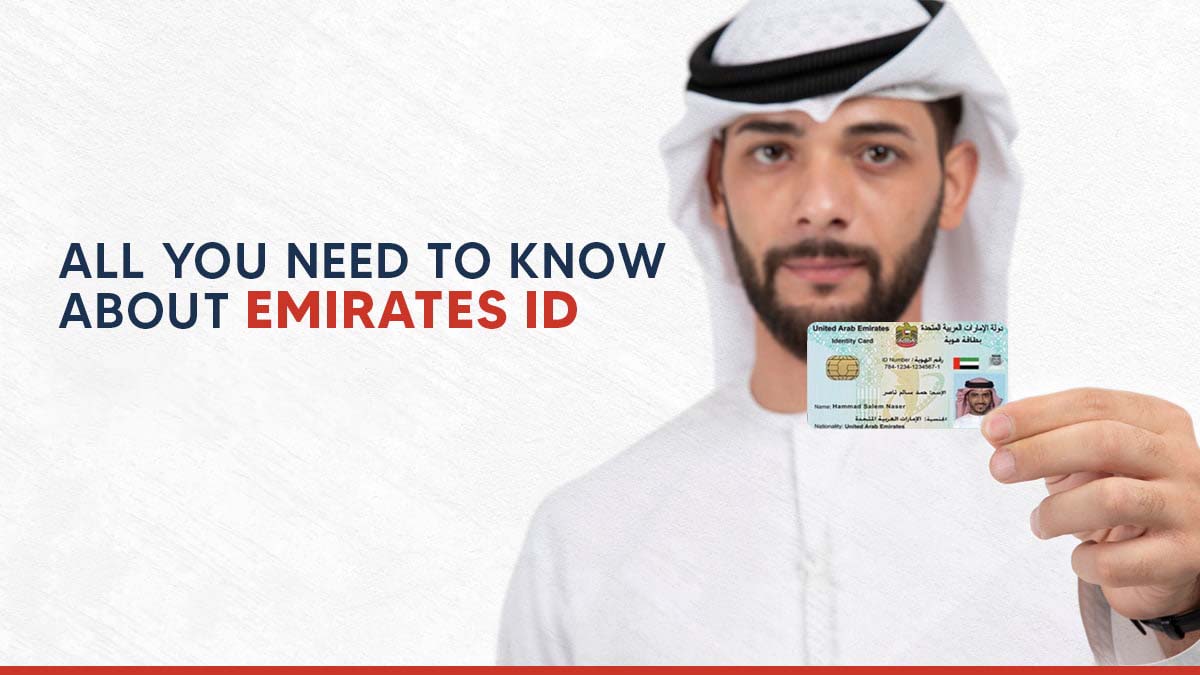
    How to Get an Emirates ID in the UAE?

    The UAE Emirates ID is an essential identification card for residents and citizens, serving as a gateway to numerous services and official transactions across the country. Understanding the process is important whether you renew your ID, apply for the first time, or update your details. 

    This 2026 guide will explain everything you need about the Emirates ID. Plus, with Shuraa’s expert assistance, managing the application or renewal process becomes seamless.  

    What is the Emirates ID? 

    The UAE Emirates ID is an official identification card issued by the Federal Authority for Identity and Citizenship (ICP). It is a legal requirement for all UAE citizens and residents to always apply for and carry their Emirates ID. This essential card serves multiple purposes: 

    • Voting in Federal National Council elections 
    • Accessing government services 
    • Passing through immigration via eGates and smart gates at UAE airports 
    • Travelling within the GCC for UAE citizens 

    Note: It is illegal to confiscate someone else’s Emirates ID. Companies can only record the data from the ID and cannot withhold it. Violations should be reported to the judicial authorities. 

    What are the ID Card Features? 

    The Emirates ID incorporates advanced features to ensure the highest levels of accuracy and security. Key components include: 

    • Smart Card: Equipped with an electronic chip that stores personal data and can be read by specialised machines. This chip holds up to 32,000 characters and includes encrypted data accessible only to authorised authorities. 
    • Public Key Infrastructure: Provides digital signatures and authentication certificates for added security. 
    • Fingerprint Biometric: Fingerprint data is used for accurate identification. 
    • Identification Number: A unique 15-digit number for accessing government and private services. 

    The Emirates ID includes precise lettering, ultraviolet ink, and unique line drawings. With nine security features, it is designed to resist forgery. 

    Get your Emirates ID processed fast — our PRO team handles it all.

    What are the benefits of the UAE Emirates ID? 

    The Emirates ID offers multiple benefits, including: 

    • Access to Services: Essential for accessing government services, healthcare, and other official transactions. 
    • Travel Convenience: Allows UAE citizens to travel within the GCC and use eGates and smart gates at UAE airports. 
    • Secure Identification: Provides a reliable and safe way to verify identity with fingerprint biometrics and encrypted data. 
    • Voting Rights: Enables participation in Federal National Council elections for UAE citizens. 
    • Convenience: Streamlines various processes by consolidating personal data into one card. It reduces the need for multiple documents. 

    Steps to Apply for the UAE Emirates ID 

    Applying for the UAE Emirates ID is a straightforward process. You can complete the application online or visit a typing centre for assistance. Here’s how to apply: 

    Step 1: Fill Out the Application Form 

    Complete the Emirates ID application form with accurate information. You can access the form online through the Federal Authorities for Identity and Citizenship (ICA) website, at Customer Happiness Centers, or an accredited typing centre. 

    Step 2: Submit Required Documents 

    Gather and submit the following documents with your application: 

    • Copy of your passport 
    • Copy of your UAE residency visa 
    • Passport-size photographs 
    • Copy of the completed application form 

    Step 3: Visit the Emirates ID Center 

    Go to an ICP service centre to provide your biometric data, including fingerprints and a photograph. This step is required for first-time applicants. 

    Step 4: Track Your Application 

    Check your Emirates ID application status online using your application number on the ICP website. 

    Step 5: Collect Your Emirates ID 

    Once processed, you’ll receive a notification via SMS or email to collect your Emirates ID from the Emirates Post office mentioned in your application. You must pick it up within 90 days. 

    For further assistance or inquiries about the application process, including status checks and tracking, consider contacting Shuraa experts or visiting your nearest Emirates Post office. 

    Shuraa IndiaPRO team has processed 100,000+ Emirates ID applications for Indian residents — get guided end-to-end support.

    Documents required to Sign Up for an Emirates ID 

    Getting your Emirates ID is easy if you have the right documents ready. Here’s what you’ll need, depending on your status: 

    UAE Citizens: 

    • Original family book 
    • Original passport 
    • One passport-sized photo 

    GCC Nationals: 

    • Valid passport 
    • Proof of residence (such as a valid trade license, school certificate, or employment letter) 
    • If you’re under 21, a valid Gulf card from one of your parents 
    • If you’re 21 or older, a valid Gulf card 
    • One passport-sized photo 
    • If you’re under 15, a birth certificate, a parent’s passport, or Emirates ID 

    Expats: 

    • Valid passport 
    • Residency permit or entry permit 
    • A passport-sized photo 
    • If you’re under 15, a birth certificate, a parent’s passport, or Emirates ID 

    Make sure all documents are original and not expired. Photocopies are acceptable only if a notary public attests to them. 

    How to Renew Your UAE Emirates ID Card 

    As a UAE resident, renewing your Emirates ID card within 30 days of its expiry is crucial. Otherwise, you risk daily fines of AED 20, which can add up to a maximum of AED 1,000.  

    To help you through the process, here is a straightforward guide to renewing your Emirates ID: 

    • Check Your ID Validity: Make sure your Emirates ID is due for renewal by checking its expiry date. 
    • Apply for Renewal: Visit the ICP website, use the ICP App, or visit an accredited typing centre to start the renewal process. 
    • Fill Out the Form: Complete the renewal application form with your details. 
    • Submit Required Documents: Provide the necessary documents and pay the renewal fee. The cost varies based on the ID’s validity and the service centre. 
    • Check Your Application Status: You can check your renewal status online after submission. 
    • Provide Biometrics (if needed): You should visit an ICP service centre to provide biometric data if requested. 
    • Track Your ID Status: Monitor the status of your renewed Emirates ID online. 
    • Collect Your Renewed ID: Once processed, you’ll receive an SMS to collect your renewed Emirates ID from the designated post office. 

    For additional help or questions, refer to the ICP website or contact their support. 

    Simplify Your Emirates ID Process with Shuraa India 

    Obtaining or renewing your Emirates ID is essential for seamless nationwide access to services and transactions. While the process is straightforward, Shuraa Business Setup can simplify it further.  

    Our expert team provides personalised assistance with your application or renewal, ensuring all requirements are met efficiently. From gathering necessary documents to tracking your application status, Shuraa India guides you every step of the way. Trust Shuraa India to handle your Emirates ID needs and experience a seamless, stress-free service. 

    FAQs 

    Q1. How long does it take to get an Emirates ID? 

    Processing a new Emirates ID typically takes about two weeks. 

    Q2. What should I do if I lose my Emirates ID? 

    Report the loss to the police immediately. Then, apply for a replacement at any service center. 

    Q3. What are the penalties for not having an Emirates ID? 

    Penalties can include fines, detention, or even deportation, depending on the situation. 

    Q4. What are the rules for using an Emirates ID? 

    You must carry your Emirates ID at all times in the UAE and use it for all official transactions. 

  • ICP Smart Services UAE: Visa Status & Emirates ID Check

    ICP Smart Services UAE: Visa Status & Emirates ID Check

    The UAE is known for making life easier with its smart and efficient government services. One of the best examples of this is ICP Smart Services, offered by the Federal Authority for Identity, Citizenship, Customs & Port Security (ICP). These online services are designed to make important tasks like applying for visas, getting residency permits, and renewing Emirates IDs super easy and hassle-free. 

    ICP Smart Services in UAE help you get things done quickly without dealing with piles of paperwork or waiting in long lines. From applying for a visa from the comfort of your home to renewing your Emirates ID in just a few clicks, these services are all about making your life easier. 

    What is ICP in UAE?

    ICP Smart Services are a set of convenient online services provided by the Federal Authority for Identity, Citizenship, Customs & Port Security in the UAE. These services are designed to make important processes like visa applications, residency services, Emirates ID applications, and renewals simpler and faster for everyone. 

    Whether you’re a resident applying for an Emirates ID, a tourist looking for a visit visa, or a business owner handling employee visa, ICP Smart Services provide a smooth, user-friendly experience. You can easily complete these tasks online without needing to visit government offices in person. 

    Key Services Offered by ICP Smart Services in the UAE 

    ICP Smart Services offers a wide range of essential services that make life easier for UAE residents, tourists, and businesses in the UAE. Here are some of the main services you can access: 

    1. Visa Services 

    • Apply for various types of visas, including visit visas, tourist visas, and residency visas. 
    • Extend or renew visas easily through the online platform. 
    • Track visa application status with just a few clicks. 

    2. Emirates ID Services

    • Apply for a new Emirates ID or renew an existing one. 
    • Request replacements if your ID is lost or damaged. 
    • Update personal details on your Emirates ID quickly and conveniently. 

    3. Residency Services

    • Apply for new residency permits or renew existing ones. 
    • Cancel residency permits when no longer needed. 
    • Change residency status if required. 

    4. Status Change Services 

    • Easily convert from a visit visa to a residency visa without leaving the country. 
    • Manage immigration status changes smoothly. 

    5. Passport Services (For UAE Nationals) 

    • Apply for new passports or renew expired ones. 
    • Request passport replacements if lost or damaged. 

    6. Entry Permit Services 

    • Apply for entry permits for special categories, including Golden Visas and other long-term residency options. 

    7. Other Services 

    • Track application status and receive updates. 
    • Access and download important documents online. 
    • Make online payments safely and securely. 

    Who Needs to Register for ICP Smart Services? 

    Individuals who need to register for ICP Smart Services include:  

    1. UAE Citizens  

    Citizens must register to access government services related to identity, citizenship, and residency.  

    2. UAE Residents 

    Expats and residents living in the UAE must register to manage their residency permits, visas, and other related services.  

    3. Business Owners

    Entrepreneurs and business owners must register to handle business licenses, employee visas, and other commercial services. 

    4. Travellers

    Visitors to the UAE may also register to apply for entry permits or manage any related services. 

    Note: Anyone seeking to utilise the various government services offered through the ICP Smart Services platform should complete the registration process. 

    How to Access ICP Smart Services? 

    Accessing ICP Smart Services is super easy and can be done from anywhere with an internet connection. Here’s how you can do it: 

    A. Online Portal (Website) 

    You can access ICP Smart Services through their official website. Just follow these steps: 

    • Visit the ICP Smart Services website: https://icp.gov.ae/ 
    • Register or log in using your credentials. New users will need to create an account. 
    • Browse the various services available, such as visa applications, Emirates ID renewals, residency permits, etc. 
    • Fill out the required forms, upload necessary documents, and make the payment (if applicable). 
    • Submit your application and track its progress online. 

    B. Mobile Application 

    For extra convenience, you can use the ICP mobile app available for both Android and iOS devices. Here’s how:  

    • Visit the Google Play Store or Apple App Store and search for “UAEICP” to install the app. 
    • Sign up or log in using your details. For enhanced security and convenience, you can log in using your UAE Pass credentials. If you don’t have a UAE Pass, the app provides guidance on how to register for one.  
    • Choose the service you need and follow the straightforward instructions. 
    • Pay online and submit your application with ease. 
    • The app allows you to track the status of your applications in real-time. 

    C. Documentation Requirements 

    The documents you need will depend on the service you’re applying for. Commonly required documents include: 

    • Passport copies 
    • Recent photographs 
    • Emirates ID copies (for renewals or updates) 
    • Visa copies (for status changes or renewals) 

    Depending on the service, you might need to provide tenancy contracts, employment letters, or medical fitness certificates.  

    Always double-check the requirements listed on the website or app to avoid any delays. 

    D. Customer Support

    If you encounter any issues or have inquiries: 

    Access the “Help” or “Support” section on the ICP website or app for FAQs and guides.  

    Phone: Call the ICP customer service at 600522222 for immediate assistance.  

    Email: Reach out via the contact form available on the “Contact Us” page of the ICP website. 

    How to Apply for a UAE Visa or Residency Using ICP Smart Service? 

    Applying for a visa or residency permit through ICP Smart Services is straightforward. Follow these steps: 

    • Visit the official ICP Smart Services website or open the UAEICP mobile app. 
    • Log in using your credentials or sign in with your UAE Pass for quicker access. 
    • Select the type of visa or residency service you wish to apply for (e.g., visit visa, residency visa, family visa, etc.). 
    • Fill out the application form. 
    • Provide accurate information, such as your passport details, personal information, address, and purpose of visit. 
    • Upload required documents such as passport copy, passport-sized photograph, proof of residency, previous visa copies, etc. 
    • Pay the necessary fees via the secure online payment gateway. 
    • You will receive a confirmation number for tracking. 

    How to Renew or Replace an Emirates ID through ICP Smart Service? 

    Renewing or replacing your Emirates ID through ICP Smart Services is simple and efficient. 

    • Access the official website or mobile app and log in with your details. 
    • Click on the Emirates ID option from the list of available services. 
    • Choose whether you want to Renew, Replace (in case of damage/loss), or Update Details. 
    • Provide your Emirates ID number and other requested details & documents. 
    • Make the required payment. 
    • Submit your application and keep the reference number for tracking purposes. 

    How to Check ICP Application Status and Track Service Requests? 

    ICP Smart Services makes tracking your application status easy and convenient. Here’s how: 

    • Visit the ICP Portal/App 
    • Click on the “Track Application” option from the dashboard. 
    • Input the confirmation or reference number you received during the application submission. 
    • Alternatively, you can use your passport number for tracking. 
    • The portal/app will display the current status of your application. 
    • You can also enable notifications to get updates about your application status. 

    How to Apply for the ICA Golden Visa in the UAE? 

    Applying for a Golden Visa through ICP Smart Services UAE is convenient. Here’s how: 

    • Log into the CP portal or app using your credentials or via UAE Pass. 
    • Choose the “Golden Visa” service option from the dashboard. 
    • Provide details such as passport information, Emirates ID (if applicable), and residency status. 
    • Specify the category of Golden Visa you’re applying for (e.g., investor, entrepreneur, specialized talent, etc.). 
    • Prepare documents such as passport copy, sponsorship proof, proof of investment or business setup (for investors and entrepreneurs), recommendation letter or certificates (for specialized talents). 
    • Complete the payment process and submit your application. 
    • You will receive a reference number for Golden Visa tracking. 

    How to Check ICP Smart Services Fines? 

    Checking your fines via ICP Smart Services UAE is a straightforward process. 

    • Access the official ICP website or mobile app and sign in with your credentials. 
    • Look for the “Fines Inquiry” option on the dashboard. 
    • Provide your passport number, Emirates ID number, or residency file number. 
    • The system will display any fines associated with your profile, including details about the violation and the amount payable. 
    • If you wish to clear the fine, proceed with the online payment option. 

    ICP Smart Services New Updates in 2026 

    The Federal Authority for Identity, Citizenship, Customs & Port Security (ICP) in the UAE introduced several updates to enhance the efficiency and convenience of its Smart Services platform. Notable changes include: 

    • Visitors holding 90-day visit visas can now apply for a one-time 30-day extension, providing greater flexibility in their travel plans.  
    • Residents are now restricted from applying for residence renewal if their current residence validity exceeds six months. This policy encourages timely renewals and efficient processing. 
    • Removal of GCC nationals without Emirates IDs from visa registration.  
    • A new healthcare scheme mandates employers to provide health insurance for all employees, including domestic workers, ensuring comprehensive healthcare coverage.  

    Additionally, people of determination are exempt from fingerprinting for passport services and fees. The process for twin residency has been updated for specific occupations. All services are designed for easier access through individual and business accounts. 

    Benefits of Using ICP Smart Services 

    Using ICP Smart Services UAE comes with numerous benefits for residents, tourists, and businesses. Here are some of the key advantages: 

    1. Convenience and Accessibility

    ICP Smart Services provides a hassle-free way to access various government services online. From applying for visas to checking the status of your Emirates ID, you can do it all from the comfort of your home. 

    2. Timesaving 

    The digital platform ensures faster processing of requests. For instance, you can quickly perform an ICA Smart Services UAE visa status check without waiting in long queues or making endless calls. 

    3. Reduced Errors and Improved Accuracy 

    The online forms and submission process are designed to reduce human errors. Automated verification systems help ensure that your documents are accurately processed. 

    4. Wide Range of Services 

    Whether you need to apply for a visa, renew your Emirates ID, or even check your visa validity through ICA smart services visa validity check, the platform provides various options to meet your needs. 

    5. Secure Transactions

    ICP Smart Services ensures the security and confidentiality of your personal information which makes it a reliable platform for sensitive tasks like visa applications and Emirates ID renewal. 

    6. Transparency

    With real-time tracking of application status, users are kept informed about the progress of their requests, enhancing transparency and trust. 

    Simplify Your UAE Journey 

    ICP Smart Services have made life so much easier for everyone in the UAE, whether you’re a resident, tourist, or business owner. From applying for visas and renewing Emirates IDs to checking visa status and validity, everything is now quick, simple, and reliable. It saves you time, cuts down errors, and keeps you informed throughout the process. 

    But while the ICP platform is super convenient, having expert guidance can make all the difference. That’s where Shuraa India comes in. If you’re considering setting up a business, dealing with visa or residency matters, or just need some guidance throughout the process, our team is here to support you. 

    Why stress over the details when you can enjoy a smooth, efficient experience? Let Shuraa’s experts make your journey in the UAE hassle-free. Reach out to us today and get things done the right way. 

    Frequently Asked Questions 

    1. What is the process for the ICA Smart Services UAE visa status check? 

    You can check your visa status by visiting the ICP Smart Services website, entering your passport number or Emirates ID, and following the on-screen instructions. 

    2. How do I apply for an Emirates ID through ICP Smart Services? 

    Log in to the ICP Smart Services portal, fill out the Emirates ID application form, upload required documents, pay the fee, and submit your application. 

    3. Can I renew my Emirates ID online? 

    Yes, you can renew your Emirates ID by logging into the ICP Smart Services portal, submitting the renewal application, and paying the required fees. 

    4. Are ICA Smart Services in the UAE free? 

    No, most ICA Smart Services require payment of processing fees. However, some status checks and information inquiries may be free of charge. 

  • Certificate of Incorporation in UAE: Complete Guide

    Certificate of Incorporation in UAE: Complete Guide

    In the fast-paced business world of the UAE, getting a Certificate of Incorporation in the UAE or COI is important. It is considered your company’s official ID card and a golden key that unlocks many opportunities.   In this blog, Shuraa India will explain why the COI is important, what documents you need, its benefits, and how to get it. We’ll walk you through the required paperwork, including identification documents, proof of address, and business plans.  

    What is a Certificate of Incorporation? 

    To start a business in the UAE, it is important to have a certificate of incorporation. It is also known as an Incorporation certificate in the UAE. This document is a legal recognition to start a business in the UAE. This is issued by a government body or the regulatory authority of the UAE.  

    This certificate is issued by the Department of Economic Development in the UAE or in the Freezone authority where your business is started. A certificate of incorporation is important for the legal standing of your business. As it proves that your business is properly constituted and registered under the laws of the UAE.  

    What are the components included in the Certificate of Incorporation in the UAE? 

    Key components of the Certificate of Incorporation in the UAE include: 

    • Company Name 
    • Registration Number 
    • Date of Incorporation 
    • Registered Office Address 
    • Type of Company 
    • Nature of Business 
    • Share Capital 
    • Details of Directors and Shareholders 
    • Duration of the Company 
    • Governing Authority’s Stamp and Signature 

    These details collectively start the company’s legal identity and ability to operate within the UAE. 

    Advantages of Having a Certificate of Incorporation 

    Getting a Certificate of Incorporation in the UAE has many benefits: 

    • It makes your business official and legal in the UAE. 
    • It helps the clients to believe that you are a legitimate company and not scammers. With this your clients can trust your company too.  
    • One of the most important advantages is you can get work visas for the employees and for yourself too.  
    • It also helps to get the licenses and permits required for a business to run.  
    • You can even open a business bank account if you have a COI.  
    • It also protects your assets from business debts and any other legal issues.  
    • It also helps your business to get a good name in the business hub in the UAE.  

    How do you get a Certificate of Incorporation in the UAE? 

    Here’s a simple step to help you get your Certificate of Incorporation in the UAE: 

    Step 1: Choose a Business Structure and Jurisdiction 

    The first step is to Decide your business structure, such as an LLC (Limited Liability Company) or a branch office. Then, choose where to set up, whether you want to set up in a Free Zone or on the mainland. 

    Step 2: Choose Your Business Activities 

    Once you have selected a business structure, the next step is to Select the main activities your business will conduct. This is important because some activities require special approvals or are specific to certain areas. 

    Step 3: Choose a Company Name 

    The third step is to Choose a name for your business, as it is important. Make sure you follow the UAE naming guidelines. For choosing a name for your business, you can go through the DED’s website. You can check the availability of your company name and then you can choose from. Get your name reserved with the DED or Free Zone Authority.  

    If you need help selecting your company name, contact Shuraa India. We’ll help you choose one.  

    Step 4: Get Initial Approval 

    Once you have selected a name for your business, the next step is to get the initial approval. You will get your initial approval from the DED or Free Zone Authority. You need to get other approvals from the Chamber of commerce and the approvals fully depend on the business activity which you are choosing.  

    Step 5: Rent Office Space 

    The next step is to choose a good location where you will set up your business. Just make sure your business meets all the required things it needs to start. The proper size, spacing and location of the office are important.  

    You can rent anything like a normal office space, you can even get a retail space or even a warehouse as per your business need.  

    Step 6: Apply for a Trade License 

    Once you get the approvals, the next step is to get a trade license. You can get the license from the DED or the Free Zone Authority. It is important to submit your Business MOA, rental agreement, and initial approvals. If you need any help with any of the document’s approvals, you can contact our Shuraa India experts.  

    Step 7: Pay Licensing and Registration Fees 

    Once you get the approvals from the DED, you will be informed about the fees which you have to pay. Remember to make the payment on time to avoid last-minute rejections. If you pay the registration fees on time, then it will be easy for you to get the Certificate of Incorporation. 

    Step 8: Get the Certificate of Incorporation 

    This is the second last step, during which all your documents and payments are verified. Then the authority will issue your Certificate of Incorporation. Then your company will be officially registered under the govt of UAE.  

    Step 9: Open a Corporate Bank Account 

    Once you get your Certificate of Incorporation, then you can open a corporate bank account in the UAE. And start your business after it legally.  We hope these steps will help you get a Certificate of Incorporation if you are confused at any step. You can contact Shuraa India today!  

    Documents Required for a COI 

    The documents required may vary based on your business structure and location. Below is a necessary list of documents: 

    • Passport Copies 
    • Application Form 
    • Trade Name Reservation Certificate 
    • Passport Copies 
    • Memorandum & Articles of Association (MOA/AOA) 
    • Visa Copies 

    Cost of the Certificate of Incorporation in the UAE 

    The cost of getting the certificate of incorporation in the UAE varies based on factors like the type of trade license, business activities, and industry. Generally, the price for an incorporation certificate starts at AED 6,000*. You can contact Shuraa India today for the exact price.  

    Get a COI with Shuraa India 

    Starting a business in the UAE can be complicated with all the legal requirements. That’s where Shuraa India comes in. We have been serving clients with the best services for the last two decades.  

    We can handle all your problems, like choosing a name, jurisdiction, the documents required, and all the approvals from the authority for getting a Certificate of Incorporation in the UAE.  

    Contact our team today! So, we can further guide you in getting a certificate of incorporation in the UAE.  

  • What is UID Number in UAE?

    What is UID Number in UAE?

    Your Unified Identification Number or UID is important in identifying individuals during your time in the UAE. For utilising all the government transactions, every visitor and resident in the UAE is given a Unique Identifying Number. 

    The main reason for getting a Unified Identification Number was to ease immigration procedures, which led to the issuance of over 8 million visas annually to expatriates relocating to the UAE. 

    This guide by Shuraa India will help you explore the facts and importance of a Unified Number UAE. We will cover the advantages, functionality, purpose, and important steps for getting a Unified Number in the UAE. 

    Knowing about the Unified Identification Number System is important whether you’ve lived in the UAE for ages or just landed. It helps you figure things out and get things done in this lively country. 

    What Is a UAE Unified Identification Number (UID)?

    Well, it’s a 9-15-digit number you automatically get when you receive your residence visa. This number is important because it shows you’re a visa holder and is unique to you. The General Directory of Residency and Foreign Affairs (GDRFA) and the Federal Authority for Identity and Citizenship (ICA) give the Unified Number UAE.  

    They handle residency permits, Emirates ID applications, and documents needed to stay in the UAE. Each person’s UID number is connected to their visa and passport.  

    Note: This number stays the same, even if your visa situation changes while you’re in the country. 

    Benefits of Unified Number UAE

    The Unified Number UAE, or UID, comes with several benefits: 

    • It is a unique identifier for individuals holding visas in the UAE. It makes it easier for government agencies to identify and track them. 
    • The UID has various administrative procedures, such as visa applications, residency permits, and Emirates ID applications, by providing a single, consistent identifier. 
    • Government agencies can efficiently manage and process visa-related matters with a UID, reducing paperwork and smooth bureaucratic processes. 
    • A UID makes it easier for individuals to access government services, apply for permits, and complete other official tasks without needing multiple identification numbers. 
    • The UID remains the same regardless of visa status changes and continuity in identification and administrative records. 

    UID Number on UAE Resident Visa

    If expats see their resident visa, it contains several numbers and codes. It includes the Unified Identity Number (UID), which is just above the visa file number. Check the image given below.  

    How to Find Your UID Online

    To quickly find your UID, follow these steps: 

    • Visit the GDRFA Unified Number Inquiry Service
    • Enter your details: passport number, nationality, date of birth, and gender. 
    • Solve the provided math question. 
    • Click “Submit” to retrieve your Unified Number UAE. 

    Note: For reference, you can check the image given below. 

    How to Get Unified Number UAE – Online Assistance

    If you haven’t received your UID number or can’t find it using the online portal, you can reach out for assistance: 

    Phone Contact 

    • Toll-free within the UAE: 8005111 
    • International: +971 4 313 9999 

    Online Contact 

    • For direct inquiries, fill out the contact form on the GDRFA

    In-Person Assistance 

    • Visit GDRFA headquarters in Al Jaffliya, Dubai. 

    For more details, visit the GDRFA contact information page.

    How to Get a Unified Identification Number (UID) in UAE – Offline Process

    When you enter the country on a residency visa for the first time, you automatically get your Unified Number. If you have no idea about how to get a Unified number in the UAE, here are the steps on how it works: 

    Step 1: Arrival in the UAE

    Once you have landed in the UAE on a visa that leads to residency (such as an employment or family sponsorship visa), immigration authorities at the port of entry (airport, seaport, or land border) will issue a UID as part of your immigration file. 

    Step 2: Medical Test & Emirates ID Application

    After entry, you must complete your medical fitness test and apply for an Emirates ID. Your UID is linked to these applications.

    Step 3: Visa Stamping

    Once you are done with the entry process. You need to undergo a medical test. Then you can apply for your Emirates ID to get your visa stamped in your passport. At this time, your UID will be linked to all related applications and documents. 

    Step 4: Emirates ID Issuance

    Your UID will be listed once you receive your Emirates ID. The Emirates ID is an important document for your identification and verification for various services in the UAE.  

    Why Is the UID Number Important?

    The UAE’s UID number is important for several reasons: 

    • It helps keep your information up to date. 
    • It simplifies the government and business processes. 
    • It optimises identity verification and tracking customer interactions, leading to better service. 
    • It makes identity fraud and crime more difficult. 

    UID Number UAE vs Visa – Key Differences

    The key difference between the UID number UAE and visa is mentioned in the table given below: 

    Aspect  UID Number UAE  Visa 
    Definition  A unique 15-digit identification number for all UAE citizens and residents.  An official document allowing entry and stay in the UAE for a specified period. 
    Purpose  Serves as an official proof of identity.  Permits entry and stay in the UAE. 
    Issued by  UAE government.  UAE government. 
    Contains  Personal information (name, DOB, gender, nationality, photograph).  Entry and stay permissions for specific purposes (tourism, employment, residency). 
    Mandatory for  All residents over the age of 15.  Foreign nationals wishing to enter the UAE. 
    Linked to  Biometric data such as fingerprints.  Entry conditions and duration of stay. 
    Validity  Permanent identification number.  Valid for a specific period (e.g., 30 days, 90 days, up to 3 years). 

    How to Merge Multiple UID Numbers

    Getting more than one UID number because of a computer mistake can mess up getting your resident visa and cause problems with your immigration records. To prevent issues, it’s important to fix this quickly. The immigration people (GDRFA) can combine all your UID numbers into one document. Here’s how: 

    • Go to the UAE immigration office or Contact GDRFA
    • Take copies of your passport and entry visa (if applicable). 
    • If you have any old, expired, or cancelled visas, bring them along, as they may be needed for reference at the immigration service centre. 

    Final Thoughts

    We hope this blog on Unified Number UAE was helpful and that it cleared up your doubts and queries. Understanding the immigration rules in the UAE can be a bit tricky for most of us, and travelling in the Emirates for the first time can be challenging. We at Shuraa India are happy to help you. 

    If you plan to start a business in Dubai, Shuraa India is here to assist you. We provide professional help with residence, family, and employment visas. Whether you have questions or need expert guidance on starting your business in the UAE, we’re here.  

  • UAE Emiratisation Law: Key Rules & Benefits

    UAE Emiratisation Law: Key Rules & Benefits

    The United Arab Emirates (UAE) has undergone a remarkable transformation over the past few decades, evolving from a modest trading hub into a global economic powerhouse. Central to this growth is the UAE’s commitment to ensuring its citizens, known as Emiratis, play a pivotal role in the nation’s development.

    Emiratisation in the UAE is a strategic government initiative designed to increase the employment of UAE nationals in both public and private sectors, fostering economic sustainability and cultural preservation. This article delves into the intricacies of Emiratisation, exploring its objectives, regulations, impact, and challenges, with a focus on its implementation in the private sector.

    What is Emiratisation?

    Emiratisation in the UAE refers to a national policy aimed at boosting the participation of Emirati citizens in the workforce, particularly in the private sector, where expatriates have historically dominated. Launched as part of the UAE’s broader vision to diversify its economy and reduce reliance on foreign labor, Emiratisation seeks to empower Emiratis with meaningful career opportunities.

    It aligns with the UAE’s long-term goals, such as the UAE Vision 2021 and the “We the UAE 2031” strategy, which prioritize human capital development and economic resilience.

    The initiative is not just about filling jobs but about equipping Emiratis with the skills, training, and opportunities to thrive in a competitive global market. By integrating nationals into diverse industries, Emiratisation in the UAE strengthens the nation’s social fabric and ensures that Emiratis contribute significantly to the country’s progress. Programs like Nafis, introduced in 2021, play a crucial role in supporting this vision by connecting Emirati job seekers with private sector employers.

    Objectives of Emiratisation

    Emiratisation is driven by a set of clear and ambitious goals that reflect the UAE’s commitment to its citizens and economic future. These objectives include:

    • Increasing Employment Opportunities: Reducing unemployment among Emiratis by creating accessible job opportunities in both public and private sectors.
    • Reducing Expatriate Dependency: Building a skilled local workforce to lessen reliance on foreign labor, particularly in strategic industries.
    • Economic Diversification: Supporting the UAE’s shift from an oil-based economy to a knowledge-based one by fostering local talent in sectors like technology, healthcare, and finance.
    • Skill Development: Equipping Emiratis with the education and training needed to compete in a globalized job market.
    • Cultural Preservation: Promoting Emirati identity and values by ensuring nationals are active participants in the nation’s development.

    These goals are underpinned by a commitment to balancing economic growth with social inclusion, ensuring that Emiratis are at the forefront of the UAE’s success story.

    Emiratisation Rules in UAE: Key Regulations

    The UAE government has introduced a series of regulations to enforce Emiratisation, particularly in the private sector. These rules, overseen by the Ministry of Human Resources and Emiratisation (MoHRE), are designed to ensure compliance while providing incentives for companies that meet or exceed targets. Below is an overview of the key Emiratisation rules in UAE:

    Mandatory Quotas for Private Companies

    Since January 2023, private companies registered with MoHRE on the UAE mainland with 50 or more skilled employees are required to achieve a 2% annual increase in Emirati employment in skilled positions. This translates to:

    • 0–50 skilled workers: 1 Emirati
    • 51–100 skilled workers: 2 Emiratis
    • 101–150 skilled workers: 3 Emiratis
    • More than 150 skilled workers: 1 Emirati for every additional 50 skilled workers (or part thereof)

    Starting in 2024, companies with 20 to 49 employees in 14 key sectors—such as healthcare, education, real estate, and financial services—must hire at least one Emirati, increasing to two by the end of 2025. These quotas aim to integrate approximately 75,000 Emiratis into the private sector by 2026.

    Compliance and Penalties

    Non-compliance with Emiratisation targets carries significant penalties. As of 2024, companies failing to meet quotas face fines of AED 96,000 per Emirati not hired, increasing to AED 108,000 in 2025. Repeated violations can result in fines up to AED 500,000, increased work permit fees, or even suspension of permits. The MoHRE conducts regular inspections to ensure adherence, with over 1,300 companies penalized for violations since mid-2022.

    Incentives for Compliance

    To encourage participation, the government offers incentives through the Nafis program, including:

    • Salary support of up to AED 8,000 per Emirati hired.
    • Reduced employer pension contributions.
    • Child allowance schemes providing AED 800 monthly per child.
    • Access to government-funded training programs.

    Companies exceeding targets by 3% or training at least 500 Emiratis annually qualify for Tier 1 status, which includes reduced work permit fees and preferential treatment in government dealings.

    Skilled Worker Criteria

    To count toward Emiratisation quotas, Emirati employees must meet specific criteria:

    • Possess at least a secondary school certificate or higher.
    • Have professional qualifications attested by relevant authorities.
    • Earn a minimum monthly salary of AED 4,000.
    • Be employed in skilled roles, such as legislators, managers, professionals, or service and sales positions.

    These requirements ensure that Emiratis are placed in meaningful, high-value roles that contribute to their professional growth.

    Emiratisation in UAE for Private Companies: Challenges and Opportunities

    Emiratisation in UAE for private companies is a cornerstone of the initiative, as the private sector employs a significant portion of the UAE’s workforce. However, integrating Emiratis into this sector presents both challenges and opportunities.

    Challenges

    • Skill Mismatch: Some Emirati job seekers lack the specialized skills required by private sector roles, particularly in industries like technology and finance.
    • Cultural Expectations: Emiratis often prefer public sector jobs due to higher salaries, shorter working hours, and greater job security, making private sector roles less attractive.
    • Retention: Retaining Emirati talent can be difficult due to competition from other employers and the need for continuous professional development.
    • Compliance Costs: Smaller companies, especially those with 20-49 employees, may struggle with the financial burden of hiring Emiratis while meeting quota requirements.

    Opportunities

    • Local Insights: Emirati employees bring cultural knowledge and market insights that can enhance business operations and customer relations.
    • Government Support: Programs like Nafis provide financial and training support, reducing the cost of hiring and upskilling Emiratis.
    • Diverse Workforce: Integrating Emiratis fosters inclusivity, aligning with global trends toward diverse and equitable workplaces.
    • Long-Term Growth: A skilled Emirati workforce contributes to the UAE’s economic diversification and sustainability goals.

    To address these challenges, companies are encouraged to collaborate with universities, invest in training programs, and offer competitive compensation packages to attract and retain Emirati talent.

    Emiratisation in the Private Sector: Sector-Specific Requirements

    Emiratisation in private sector varies across industries, with specific quotas and expectations tailored to each sector’s needs. For example:

    • Banking: Banks must achieve a 4% annual Emiratisation rate, reflecting the sector’s strategic importance.
    • Insurance: Insurance companies with over 50 employees are required to maintain a 5% Emiratisation rate.
    • Other Sectors: The 14 sectors targeted for companies with 20-49 employees include information and communications, real estate, education, healthcare, construction, and hospitality, among others.

    These sector-specific requirements ensure that Emiratisation aligns with the UAE’s economic priorities, such as fostering innovation in technology and improving service quality in healthcare and hospitality.

    Emiratisation Law for Free Zone Companies

    The Emiratisation law for free zone companies is notably different from mainland regulations. Companies in free zones, such as the Dubai International Financial Centre (DIFC) and Abu Dhabi Global Market (ADGM), are exempt from mandatory Emiratisation quotas. This exemption stems from the unique regulatory frameworks of free zones, which are designed to attract foreign investment and operate under distinct labor laws.

    However, free zone companies are encouraged to voluntarily participate in Emiratisation initiatives. Many choose to hire Emiratis to align with national goals, access government incentives, and build stronger ties with the local community. The Nafis platform is available to free zone companies, offering resources to connect with Emirati talent and support their integration into the workforce.

    The Role of the Nafis Program

    Launched in September 2021, the Nafis program is a federal initiative designed to enhance the competitiveness of Emiratis in the private sector. It serves as a bridge between Emirati job seekers and private companies, offering a range of programs to support both parties. Key Nafis initiatives include:

    1. Emirati Salary Support Scheme: Provides salary subsidies of AED 3,000 to AED 8,000 monthly for Emiratis employed in the private sector.
    2. Talent Program: Develops specialized skills and international certifications for Emiratis to meet private sector demands.
    3. Unemployment Benefit: Offers financial support for Emiratis who lose their jobs, ensuring stability during transitions.
    4. Vocational Counselling: Provides career guidance to help Emiratis navigate the job market.
    5. Nafis Award: Recognizes companies and Emirati employees who excel in advancing Emiratisation goals.

    Since its launch, Nafis has facilitated the employment of over 100,000 Emiratis in the private sector, with 70,000 placements occurring in the last two and a half years. The program’s success underscores the UAE’s commitment to creating a sustainable and inclusive job market.

    Impact of Emiratisation on the UAE Economy

    Emiratisation in the UAE has far-reaching implications for the nation’s economy and society. By prioritizing Emirati employment, the initiative contributes to:

    • Economic Diversification: Emiratis are increasingly employed in non-oil sectors, supporting the UAE’s goal of reducing oil dependency.
    • Social Inclusion: Integrating Emiratis into the workforce fosters a sense of national pride and strengthens cultural identity.
    • Reduced Unemployment: The initiative addresses youth unemployment, providing Emiratis with opportunities to build stable careers.
    • Global Competitiveness: A skilled Emirati workforce enhances the UAE’s reputation as a hub for innovation and talent.

    The economic impact is evident in the private sector’s growth, with a 170% increase in Emirati employment since 2021, driven by Nafis and other initiatives. This progress positions the UAE as a model for balancing economic growth with social development.

    How Companies Can Succeed with Emiratisation

    For companies navigating Emiratisation, strategic planning and proactive measures are essential. Here are actionable steps to ensure compliance and maximize benefits:

    • Assess Workforce Needs: Evaluate current employee numbers and identify roles suitable for Emirati hires.
    • Partner with Nafis: Register on the Nafis platform to access job seekers, training programs, and financial incentives.
    • Invest in Training: Develop tailored training programs to bridge skill gaps and prepare Emiratis for specialized roles.
    • Create Inclusive Workplaces: Foster a culture that values diversity and offers flexible work arrangements to attract Emirati talent.
    • Monitor Compliance: Regularly track Emirati hires and report progress to MoHRE to avoid penalties.

    Collaborating with business setup consultants, such as Shuraa India, can simplify the process. Shuraa India offers expert guidance on Emiratisation compliance, helping companies navigate regulations, access incentives, and connect with Emirati talent. Their services ensure that businesses align with UAE laws while achieving their commercial objectives.

    Common Misconceptions About Emiratisation

    Despite its clear objectives, Emiratisation is sometimes misunderstood. Here are some common misconceptions and clarifications:

    • Misconception: Emiratisation only applies to large companies.

      • Clarification: As of 2024, companies with 20-49 employees in 14 sectors are also subject to quotas.

    • Misconception: Free zone companies must comply with Emiratisation laws.

      • Clarification: Free zone companies are exempt but can voluntarily participate.

    • Misconception: Emiratisation is only about meeting quotas.

      • Clarification: The initiative emphasizes skill development and long-term career growth for Emiratis.

    • Misconception: Hiring Emiratis increases costs without benefits.

      • Clarification: Government incentives and local expertise make Emirati hires cost-effective and valuable.

    Addressing these misconceptions helps companies approach Emiratisation with clarity and confidence.

    The Future of Emiratisation

    The UAE’s commitment to Emiratisation is unwavering, with ambitious targets set for the coming years. By 2026, the government aims to achieve a 10% Emiratisation rate in the private sector, creating thousands of jobs for Emiratis. Emerging trends, such as the rise of technology and renewable energy, will shape the initiative’s future, with a focus on preparing Emiratis for roles in high-growth industries.

    The success of Emiratisation will depend on continued collaboration between the government, private sector, and educational institutions. By investing in upskilling programs, fostering innovation, and promoting inclusive workplaces, the UAE can ensure that Emiratis remain at the heart of its economic and social progress.

    Conclusion

    Emiratisation in the UAE is more than a policy—it is a transformative movement that empowers Emirati citizens to shape their nation’s future. By prioritizing local talent, reducing expatriate dependency, and fostering economic diversification, the initiative aligns with the UAE’s vision of a sustainable and inclusive economy. For businesses, Emiratisation offers opportunities to tap into government incentives, build diverse teams, and contribute to national goals.

    Navigating Emiratisation requires a strategic approach, and partners like Shuraa India can provide the expertise needed to succeed. As the UAE continues to evolve, Emiratisation will remain a cornerstone of its journey toward global leadership, ensuring that Emiratis are not just participants but drivers of progress.

  • Corporate Tax in the UAE

    Corporate Tax in the UAE

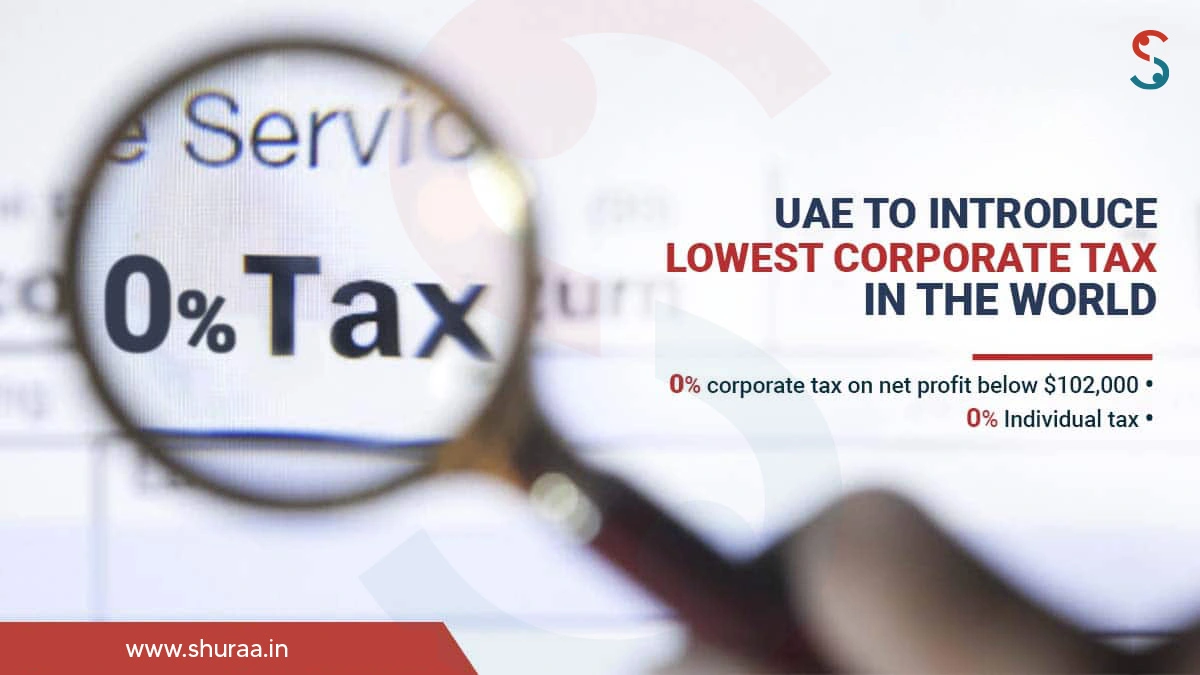
    The UAE, well known for its record economic growth, has announced plans to impose a federal corporate tax on business (net) profits. The UAE Ministry of Finance will establish a corporation tax in Dubai on the net profit of multinationals from June 1, 2023, as part of a comprehensive tax overhaul. 

    The Ministry of Finance declared that net profits up to Dh 375,00 (INR 75,96,910 Lakh) would be tax-free. This is in keeping with a big initiative aimed at assisting small & medium enterprises. Furthermore, the government will levy a 9% corporate tax on businesses for net profits over $102,000 (INR 75,96,910 Lakh). And 0 percent for net profits below that amount.

    These substantial improvements will open a new window of financial growth for businesses and in coming years, this reform can prove to be a big advantage for Indian entrepreneurs. 

    The 9% corporate tax on businesses is the lowest across the globe. Thus, big multinational companies should prioritize the UAE to open their new branch. Also, according to a Fundera survey, the average small business owner earns INR 53,85,975 per year. As a result, this announcement is a big boon for small and medium enterprises too as they can continue to take advantage of 0% TAX

    What Are the Highlights of New UAE Corporate Tax

    Due to favorable tax regimes in most GCC nations, the Gulf Cooperation Council remains an attractive jurisdiction for foreign investment. However, several reforms are in the works to generate new revenue streams while lowering the region’s reliance on traditional revenue sources. Below are the highlights of the new tax regime in the UAE.

    1. Individual Earnings

    Individuals will continue to be exempt from taxation on earnings from work, real estate, equity investments, and other sources of personal income not tied to a UAE trade or business. Therefore, the personal income tax rate in the UAE still stands at 0 percent. Foreign investors who do not conduct business in the country will also be exempt from the corporate tax in Dubai.

    2. Regulations on Loss Utilization

    Loss utilization regulations will be generous in the UAE’s corporate tax framework. Furthermore, UAE groups will be taxed as a single entity. They can also use collective relief for losses, intra-group transactions, and reorganizations.

    3. UAE Corporate Tax on Net Profits

    In terms of profit, corporate tax on business in the UAE will be applied to the business’s adjusted accounting net profit. For instance, a business’s turnover is AED 1 Million ( INR two crores). after all deductions (e.g. REntal, Salary). the company’s net profit comes out to be AED 3,00,000 ( INR 60 lakhs ). The enterprise will be exempt from taxation in the UAE.

    4. Tax Incentives

    In the case of free zones, the 9% tax will be applied to enterprises within the free zones that gain commercially from the mainland. The current advantages for free zone enterprises will be honored for businesses that comply with all regulatory standards – and do not conduct business with the mainland.

    5. Minimal Compliance Costs

    The corporate tax in UAE will ensure that compliance costs are kept to a minimum for multinationals that develop as well as maintain appropriate financial records. The corporate tax will be levied on the earnings of UAE companies as reported in their financial statements. Moreover, the reports should be prepared by internationally accepted accounting standards, with exceptions and adjustments.

    Moreover, the administrative burden to businesses to file corporate tax returns will be significantly less. Thanks to the digitalisation of government services over the last few years

    6. Business Activities

    Except for the extraction of natural resources, which will continue to be subject to emirate-level corporate taxation, the UAE corporate tax will apply to all enterprises and commercial activities.

    7. Assessment Year

    Multinationals would only have to file one corporate tax return every fiscal year. Furthermore, they will no longer have to make advance tax payments or prepare provisional tax filings. With reference to the OECD Transfer Pricing Guidelines, UAE enterprises will be subject to transfer pricing and documentation requirements.

    How Will The UAE Tax Regime Benefit Small Businesses?

    Many people consider small businesses an essential source of employment creation and technical innovation.  Small company owners have long been lauded for their contributions to the economy in the UAE. Their impact on employment growth and innovation, in particular. As a result, the new federal income tax policy will benefit small businesses and startups. 

    Here are some ways the UAE corporate tax on multinational companies will boost small businesses.

    1. Reducing Corporate Concentration

    Corporate concentration is the reason for the slowing of productivity growth and the economy’s slowing in general. Net income, revenues, assets, and market capitalization are distributed more evenly among the largest firms. The rising concentration reveals that big companies raise prices while decreasing salaries, offering lower-quality goods and services, and limiting output. Large enterprises and multinationals will be impacted by UAE taxation, but startups and small businesses will benefit from the expanding economy. 

    2. Promoting Healthy Competition

    Corporate concentration links to rising inequality and large businesses’ increasing political weight, in addition to suffocating competition. The concentration of wealth and power in the hands of a few large corporations can instill a sense of discontent among small enterprises. As a result, the UAE is introducing a business tax to line with worldwide efforts to promote healthy competition amongst global investors.

    3. Combating Tax Evasion

    Corporates are given credit for increasing competition and improving customer welfare due to their ability to utilize economies of scale. Large firms’ increasing efficiencies in comparison to their smaller counterparts are well-known. The tax for Indian entrepreneurs who are planning to do business in Dubai is only when their net earnings go beyond INR 75.96 Lakh. This new tax regime will help small businesses to stand out in the market while keeping a check on the issue of corporate tax evasion.

    4. Transparent System of Corporate Taxation

    It makes sense for the government to take action as the UAE’s economy grows and it assumes a larger position on the world stage. Tax transparency allows a high-level understanding of an MNE’s business activities through tax data. The UAE corporate tax is a reasonable price to pay for the benefit of conducting business as a corporation.

    It can fund the costs of public services that benefit businesses in particular, as well as to capture a portion of large corporations’ revenues. Hence, the new tax regime will also meet issues posed by the global economy’s digitisation.

    5. Prevent Harmful Tax Practices

    The new corporate tax regime takes the UAE several steps to meet international standards on ‘tax transparency’ and prevent ‘harmful’ practices. The administration will pave the way for the UAE to handle the problems posed by the global economy’s digitization and other issues. Furthermore, put its support for creating a worldwide minimum tax rate into action by applying a different corporation tax rate to large multinationals that meet specified criteria laid forth in the plan above.

    UAE Corporate Tax Rate in 2026

    As per the Ministry of Finance, CT rates are:

    • 0 percent for taxable income up to AED 375,000.
    • 9 percent for taxable income above AED 375,000.

    Get a free UAE corporate tax compliance check for your business

    Ready to Launch Your Business in The UAE?

    The new tax regime lays the groundwork for a robust economic recovery in the UAE, allowing the country to return to pre-pandemic levels. As a result, it is a perfect moment to start a business in the UAE. Speak to Shuraa specialists now if you’re still unsure whether Dubai is the right place for your company. 

    Shuraa India is a pioneer in Dubai business setup services. We have branch offices across the globe in major cities like London, Delhi, and Mumbai. 

    From guiding you on the right path to transforming your entrepreneurial idea into a successful firm, we do it all. You can connect with any of our nearest offices for a consultation. Thus, leverage the UAE’s cutting-edge infrastructure, strategic location, outstanding connectivity, and supportive workforce and start a business in Dubai today.  

    Shuraa’s tax advisors manage corporate tax registration & filings for 40,000+ UAE businesses — transparent, expert-led service