Blog

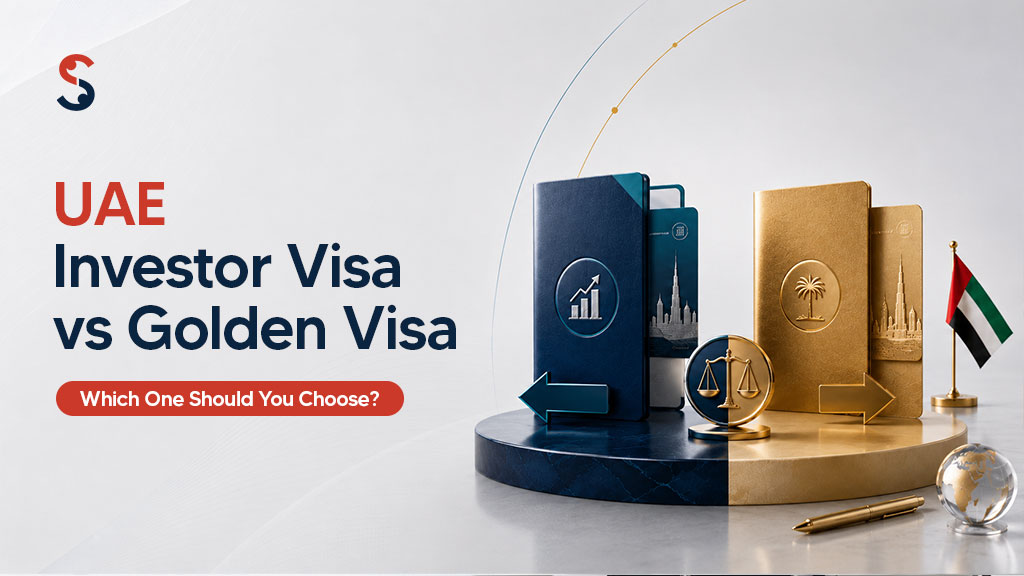
  • UAE Investor Visa vs Golden Visa: Which One Should You Choose?

    UAE Investor Visa vs Golden Visa: Which One Should You Choose?

    After helping thousands of Indian entrepreneurs establish their businesses in the UAE for more than two decades, we have noticed one question that comes up almost every time. 

    Usually, there is little confusion about the business activity itself or the overall company formation process. Most entrepreneurs already have a fair idea of how they want to enter the UAE market. However, the confusion often begins with finer details. 

    For instance, you may already know that a Free Zone company is the right choice for your business, but deciding which Free Zone best suits your requirements can be challenging. 

    Similarly, most investors and business owners know they will need a UAE residency visa. The real question is which visa to choose from. In most cases, entrepreneurs find themselves comparing two popular options: the UAE Investor Visa and the UAE Golden Visa. 

    Both provide residency benefits. Both support long-term business and investment goals. However, both come with their own advantages, requirements, and limitations. Additionally, factors such as travel flexibility, family sponsorship, renewal requirements, and long-term residency goals can also significantly influence your decision. 

    In this guide, we’ll compare the UAE Investor Visa vs Golden Visa in detail, understand the eligibility requirements, costs, benefits, and key differences so you can choose the residency option that best aligns with your goals. 

    What is a UAE Investor Visa? 

    A UAE Investor Visa is a residency visa issued to individuals who have made a qualifying investment in the UAE. In most cases, this visa is obtained through business ownership, company formation, or eligible property investments. 

    An investor visa typically offers a validity period of two years. It can be renewed as long as the qualifying investment remains active and all relevant requirements are met. 

    One of the biggest advantages of the Investor Visa is its accessibility. Compared to the Golden Visa, it generally requires a lower investment threshold. This makes it a practical option for startup founders, SME owners, and first-time investors. 

    Key Benefits of a UAE Investor Visa 

    • Relatively lower investment requirements 
    • Renewable residency status 
    • Ability to sponsor eligible family members 
    • Access to banking and business services in the UAE 
    • Suitable for entrepreneurs launching a new venture 
    • Potential pathway to upgrade to a Golden Visa later 

    The Investor Visa often provides the right balance of affordability and residency benefits. It is convenient for entrepreneurs who are still exploring the UAE market or establishing their initial operations. It allows business owners to build their presence without making a significantly larger investment from the outset. 

    What is a UAE Golden Visa? 

    The UAE Golden Visa is a long-term residency programme designed for investors, entrepreneurs, business owners, skilled professionals, and other eligible individuals who meet specific criteria. 

    For investors, one of the most common routes is through a qualifying investment of AED 2 million or more. 

    Unlike a standard Investor Visa, the Golden Visa offers long-term residency of up to 10 years with greater flexibility and fewer renewal concerns. 

    The Golden Visa has become particularly attractive for individuals seeking long-term stability in the UAE, whether for business expansion, family relocation, or wealth diversification. 

    Key Benefits of a UAE Golden Visa 

    • Long-term residency of up to 10 years 
    • Reduced renewal frequency 
    • Greater travel flexibility 
    • Enhanced family sponsorship benefits 
    • Self-sponsored residency status 
    • Ideal for investors with long-term UAE plans 

    The Golden Visa is generally preferred by investors who already have a clear long-term vision for their presence in the UAE. Instead of dealing with frequent renewals, they can focus on growing their investments, expanding their businesses, and planning for the future with greater confidence. 

    UAE Investor Visa vs Golden Visa: Key Differences 

    Both the Investor Visa and the Golden Visa provide residency rights in the UAE. However, they are designed for different investor profiles. 

    The Investor Visa is often more suitable for entrepreneurs who are entering the UAE market, setting up a new company, or looking for a cost-effective residency option. 

    The Golden Visa, on the other hand, is typically preferred by investors seeking long-term residency, greater flexibility, and fewer administrative obligations. 

    Here’s a quick comparison: 

    Factor  UAE Investor Visa  UAE Golden Visa 
    Validity  Usually 2 years  Up to 10 years 
    Investment Requirement  Lower investment threshold  Typically, AED 2 million+ 
    Renewal Frequency  More frequent  Less frequent 
    Family Sponsorship  Available  Extended benefits available 
    Travel Flexibility  Subject to residency requirements  Greater flexibility 
    Best For  Entrepreneurs and SME owners  Long-term investors and HNWIs 

    For many investors, the choice eventually comes down to balancing affordability with long-term convenience. Understanding your future plans can often make the choice much clearer. 

    Investor Visa vs Golden Visa UAE: Eligibility Requirements 

    Visa eligibility requirements vary depending on your selected visa category and investment route. For an Investor Visa, eligibility is generally linked to business ownership or a qualifying investment. 

    The Golden Visa offers multiple eligibility pathways. This makes it suitable for a wider range of investors and entrepreneurs. 

    UAE Investor Visa 

    Common eligibility routes include: 

    • Business ownership in a UAE company 
    • Shareholding in a qualifying business 
    • Eligible real estate investment 
    • Compliance with applicable licensing and immigration requirements 

    UAE Golden Visa 

    Common investor eligibility routes include: 

    • Real estate investment valued at AED 2 million or more 
    • Qualifying business investment 
    • Ownership stakes meeting relevant government criteria 
    • Compliance with UAE immigration regulations 

    Eligibility requirements can change over time as immigration regulations evolve. Therefore, it is always advisable to verify the latest criteria before making any investment decisions. 

    Planning your UAE investment journey? Speaking with experienced Shuraa India consultants early can help you choose the right residency pathway and avoid unnecessary costs later. 

    Golden Visa Cost Dubai vs Investor Visa Cost 

    Budget is often one of the first factors investors consider when comparing visa options. 

    On average, applying for a 2-year UAE Investor Visa costs between AED 10,000 and 12,000, covering government fees, medical testing, and Emirates ID processing. A 10-year Golden Visa runs roughly AED 10,000–15,500 in application fees, depending on your category and whether you use a service provider. 

    While investment requirements are important, focusing solely on the upfront cost can sometimes result in a decision that may not serve your long-term interests. 

    Cost Factor  Investor Visa  Golden Visa 
    Initial Investment  Lower  Higher 
    Visa Validity  Shorter  Longer 
    Renewal Costs  Recurring  Less frequent 
    Administrative Effort  Higher over time  Lower over time 
    Long-Term Convenience  Moderate  High 

    A lower initial investment can certainly make the Investor Visa attractive. However, investors who intend to maintain a long-term presence in the UAE often find that the additional flexibility and reduced renewal requirements of a Golden Visa provide greater value over time. 

    Instead of looking only at today’s costs, it is important to evaluate how each visa fits into your long-term business and residency plans. 

    Family Sponsorship and Travel Flexibility 

    Business decisions are rarely made in isolation. Behind every entrepreneur or investor are family commitments, travel plans, and future aspirations that influence decision-making. 

    This is one area where the difference between an Investor Visa and a Golden Visa becomes particularly important. 

    The Investor Visa allows eligible holders to sponsor family members and establish residency in the UAE. However, visa holders generally need to pay closer attention to residency requirements and renewal timelines. 

    The Golden Visa offers greater flexibility in this regard. It is particularly beneficial for investors who frequently travel internationally or spend significant periods outside the UAE. 

    For families planning long-term residency in the UAE, the Golden Visa can also provide a stronger sense of stability due to its longer validity period and reduced administrative requirements. 

    Although many investors initially focus on investment amounts, travel flexibility and family considerations often become much more important after relocation. 

    Can You Upgrade From an Investor Visa to a Golden Visa? 

    Yes, and this is actually a common path followed by many entrepreneurs. 

    Many business owners begin their UAE journey with an Investor Visa while setting up and growing their businesses. As their investments increase or they become eligible under the Golden Visa criteria, they may choose to upgrade. 

    This approach allows investors to establish a presence in the UAE without immediately committing to a larger investment requirement. 

    For many entrepreneurs, the Investor Visa serves as a practical starting point, while the Golden Visa becomes a long-term objective once their business or investment portfolio expands. 

    This flexibility allows investors to progress at a pace that aligns with their financial and business goals. 

    Which One Should You Choose? 

    There is no single correct answer to that question. The right choice depends entirely on your investment capacity, business objectives, travel requirements, and long-term plans in the UAE. 

    Choose an Investor Visa if: 

    • You are setting up a new business in the UAE 
    • You prefer a lower investment commitment 
    • You are entering the UAE market for the first time 
    • You want residency linked to your business activities 

    Choose a Golden Visa if: 

    • You meet the AED 2 million investment threshold 
    • Long-term residency is a priority 
    • You travel frequently outside the UAE 
    • You want greater long-term flexibility 
    • You are relocating with family and seeking stability 

    Ultimately, there is no universal “better” option. The best visa is the one that aligns with your personal and business objectives. 

    Common Mistakes Investors Make When Choosing a UAE Residency Visa 

    Many investors focus heavily on visa duration or investment requirements while overlooking other equally important factors. 

    Here are some of the most common mistakes we see: 

    1. Choosing Solely Based on the Lowest Investment Amount

    A lower investment requirement may appear attractive initially. However, investors often overlook factors such as renewal frequency, administrative requirements, and long-term flexibility. Looking beyond the upfront cost usually leads to a more informed decision. 

    2. Ignoring Future Business Expansion Plans

    Some entrepreneurs choose a visa based on their current business size without considering future growth. If you plan to expand your operations or investments in the coming years, your visa choice should support those plans. 

    3. Underestimating Renewal Obligations

    Visa renewals involve documentation, processing, and compliance requirements. Investors who fail to account for these recurring obligations may face avoidable inconvenience later. 

    4. Failing to Consider Family Sponsorship Requirements 

    Family needs often evolve over time. Investors should evaluate sponsorship benefits carefully, especially if they intend to relocate with spouses, children, or other dependents. 

    5. Confusing Residency Status with Tax Residency

    Many people assume that obtaining a UAE visa automatically makes them a UAE tax resident. In reality, tax residency depends on several factors and should be assessed separately with professional guidance. 

    6. Not Seeking Professional Guidance Before Applying

    Every investor’s situation is different. Seeking professional advice before making a decision can help avoid costly mistakes and ensure you choose the most suitable residency pathway. 

    Avoiding these common mistakes can save both time and money while ensuring your chosen visa continues to support your long-term goals. 

    How Shuraa India Helps You Choose the Right UAE Residency Path 

    Choosing between an Investor Visa and a Golden Visa is not always an easy decision. Every investor has different objectives, budgets, family considerations, and business plans. What works for one entrepreneur may not be the ideal solution for another. 

    That’s why at Shuraa India, we help investors and business owners evaluate their options, understand eligibility requirements, and identify the most suitable residency route based on their goals. 

    Our team assists with everything from company formation and investment planning to visa processing, documentation support, and regulatory guidance. Rather than simply helping you obtain a visa, we help you choose the residency pathway that aligns with your long-term vision in the UAE. 

    Ready to secure UAE residency through investment? Connect with Shuraa India for personalised guidance and end-to-end support. 

    Frequently Asked Questions 

    1. Which is better- UAE Investor Visa or Golden Visa? 

    Neither visa is universally better. The right option depends on your investment amount, residency goals, travel requirements, and long-term plans in the UAE. 

    2. What is the validity of an Investor Visa in the UAE?

    The UAE Investor Visa is commonly issued for a validity period of two years. It can be renewed as long as the qualifying investment remains active and all relevant immigration requirements continue to be met. 

    3. What is the minimum investment required for a UAE Golden Visa? 

    One of the most common investor routes requires a qualifying investment of AED 2 million or more. However, eligibility criteria may vary depending on the investment category and current regulations. 

    4. Can I sponsor my family with an Investor Visa?

    Yes. Investor Visa holders can generally sponsor eligible family members, subject to applicable UAE immigration regulations. 

    5. Can I upgrade from an Investor Visa to a Golden Visa?

    Yes. Many investors begin with an Investor Visa and later transition to a Golden Visa once they meet the relevant eligibility criteria. 

    6. Does a UAE visa automatically make me a tax resident?

    No. Tax residency depends on several factors, including your physical presence in the country and applicable tax regulations. 

    7. Is the Golden Visa worth the higher investment?

    The Golden Visa offers long-term residency, fewer renewal requirements, greater travel flexibility, and enhanced stability for families. Whether it is worth the higher investment depends on your personal goals and how long you intend to maintain your presence in the UAE. 

  • How Indian CAs and Accountants Can Practice in Dubai

    How Indian CAs and Accountants Can Practice in Dubai

    Imagine being a talented CA who hails from India. You are practising well, your clients trust you 100%, and you have a strong career going on for yourself. But as you see new opportunities coming towards you, you start looking at the bigger picture and start thinking. Maybe you want to cater to global clients, grow your services or establish an international presence.  

    That’s where Dubai, UAE, enters the frame. Being one of the top business hubs of the world, it gives a plethora of opportunities to individuals who work in finance, including talented CAs from India. That’s why, in this blog, we will be talking about business setup for Indian CAs in Dubai. 

    For those who do not know, Indian CAs have an important role to play in the entrepreneurial world of the UAE. The financial knowledge that they bring, their international outlook, and expertise in the Indian as well as the UAE markets really benefit businesses. No matter if it’s about making sure there’s compliance, figuring out complicated regulations, or creating opportunities that are new, CAs from India are dependable partners when it comes to the growth of the company. 

    Alright! Now that we’ve established that, let’s dive in deeper to understand the business setup for Indian CAs in Dubai. 

    Why Dubai Appeals to Indian CAs? 

    Dubai is one of the top business hubs of the world. That’s why it appeals to small and medium enterprises, startups, MNCs, and global investors. That said, once companies expand, so does their requirement for expert financial services. These include accounting, compliance with VAT, bookkeeping, reporting of finances, CT advisory, management of payroll, and auditing.  

    A few major benefits for Indian CAs are: 

    • Increasing need for tax and accounting knowledge 
    • Access to a client base that is diverse and international  
    • Prime location that links Asian, European & African markets 
    • Regulations that are business-friendly  
    • Advanced financial ecosystem 
    • Chances to work with law firms, consultants, etc.  

    Thanks to these factors, business setup for Indian CAs in Dubai is an appealing choice for expert professionals who want to grow outside of the Indian market. 

    Is It Possible for Indian CAs to Practice in Dubai? 

    Of course. Indian CAs can give accounting as well as consultancy services lawfully in Dubai, as long as they secure the crucial company licenses and approvals.  

    Based on the provided services, professionals might set up:  

    • Consultancy firms for accounting 
    • Practices with respect to financial advisory 
    • Companies that provide bookkeeping services 
    • Firms that provide tax consultancy 
    • Businesses that provide corporate finance advice 

    To function lawfully, professionals need to finish the needed process for CA firm registration in Dubai and secure permission from the concerned authorities.  

    Explained: Available Business Structures for Indian CAs 

    Before you begin your operations, you need to choose the correct structure of your business, as it’s necessary. Some of the most typical options are: 

    UAE Mainland  

    A company in the UAE Mainland lets accounting professionals cater to their clients across the United Arab Emirates. There are no geographical restrictions. To add, a Mainland setup is perfect for those firms that want to directly work with companies that are local, corporations that are huge, and government entities.  

    UAE Free Zone  

    Some Free Zones in the United Arab Emirates provide professional licenses that suit accounting as well as consultancy activities. Free Zones such as DWTC, IFZA, and DMCC come with simplified processes for registration. Often, these get a preference from the business owners who want an affordable market entry.  

    Remember, going with the correct structure is an extremely important step when it comes to Business setup for Indian CAs in Dubai. The reason? It has a direct impact on the operational flexibility as well as the growth of your business. 

    Licenses Needed to Launch Your Accounting Practice 

    Securing the right license is crucial before you start providing professional services. Based on the activities, you might need an accounting consultancy license in Dubai that allows services like: 

    • Bookkeeping 
    • Reporting of the finances 
    • Tax consultancy 
    • Consulting for compliance 
    • Management accounting 
    • Advisory for business 

    Remember, the exact requirements related to licensing might differ depending on what jurisdiction you go with and the nature of the services being provided.  

    What Are the Steps for CA Firm Registration in Dubai? 

    We are sure that by now, you might be thinking about the CA firm registration in Dubai process. To put it simply, it usually includes the following steps: 

    Step 1. Finalise Your Business Activities 

    Start by establishing what services will be provided by your firm, like reporting of finances, bookkeeping, consultation regarding taxes, etc. When you clearly highlight your activities, it aids in establishing the requirements for approval & licensing. 

    Step 2. Pick a Business Jurisdiction 

    Select whether you wish for your firm to be established in the Mainland or a UAE Free Zone, depending on the market you’re targeting as well as your operational requirements. Remember, every jurisdiction comes with specific advantages, regulations, and opportunities for business.  

    Step 3. Secure Your Unique Business Name 

    Pick a trade name that is unique and in compliance with the naming guidelines of the United Arab Emirates. To add, the name should be a reflection of your professional services. After it is approved, that name will get reserved for the process of your company registration.  

    Step 4. Get Initial Approvals 

    Turn in the needed paperwork as well as applications (for initial approval) to the concerned authorities. This step is a confirmation that the business activities you proposed meet regulatory needs.  

    Step 5. Submit Your License Application 

    Make sure you’re applying for your accounting consultancy license in Dubai that’s appropriate and is in line with the services you plan to provide. Securing the right license is crucial if you wish to operate your accounting practice lawfully. 

    Step 6. Finish Registering Your Company 

    Make sure you have finalised all the formalities related to the incorporation, such as submission of paperwork and approvals from the government. This finishes the process of accounting firm company formation & establishes your business officially.  

    Step 7. Open a Corporate Bank Account 

    After the registration of your company, you need to set up your business bank account with a bank that is based in the United Arab Emirates. This lets you take care of the transactions related to your business, payments, as well as operations related to finances with efficiency.  

    If you want a seamless experience when it comes to business setup for Indian CAs in Dubai and begin legally serving your clients, make sure you follow these steps. 

    What Are the Services Provided by Indian CAs in Dubai? 

    Accounting experts can offer a variety of services post getting the needed approvals, such as: 

    • Accounting & bookkeeping 
    • CT advisory 
    • Preparation of the financial statement 
    • Processing of the payroll 
    • Value Added Tax registration & compliance 
    • Assessment of the internal controls  
    • Valuation of the business  
    • Consulting for finances 
    • Advisory on risk management 
    • CFO services 

    The flexibility offered by the United Arab Emirates’ market makes it simpler for you to start an accounting business in Dubai and serve businesses in a variety of industries. 

    Top 4 Advantages of Establishing an Accounting Firm in Dubai 

    Here are several benefits of going for a professional accounting practice set up in Dubai: 

    Growing Market Access 

    Many new businesses get set up in the United Arab Emirates annually. This makes a constant demand for services related to accounting.  

    Global Client Exposure 

    The international business environment of Dubai lets firms collaborate with clients from across nations & industries.  

    Opportunities for Business Expansion 

    It’s possible for professionals to grow their operations by providing consulting solutions as well as financial services that are specialised. 

    Solid Regulatory Framework 

    The evolving financial regulations of the United Arab Emirates make opportunities for expert professionals who are able to help companies stay compliant.  

    These benefits have made a significant contribution to the growing demand for the services related to accounting firm setup in Dubai among professionals from India.  

    Challenges One Should Consider 

    Yes, there are substantial opportunities. However, as a professional, you need to be aware of the challenges, too. These are: 

    • Licensing & compliance needs 
    • Competition in the market 
    • Strategies for client acquisition 
    • Knowing the tax regulations of the UAE 
    • Ensuring professional certifications as well as standards 

    Cost of Establishing an Accounting Firm in Dubai 

    Although the cost lies between AED 12,900* to AED 30,000*, the entire price of an accounting firm setup in Dubai is based on certain factors, such as: 

    • Jurisdiction of your business 
    • Licensing needs 
    • Allocation of the visas 
    • Office space needs 
    • Fee for the government 
    • Professional service costs 

    Since requirements differ, getting personalised assistance could be a great idea before you execute your accounting firm company formation process.  

    Set Up Your Accounting Firm in Dubai with Shuraa India! 

    Establishing your professional UAE accounting practice includes several regulatory, licensing, and paperwork requirements. Which is why it can seem like a hassle if you are doing it on your own. Don’t worry! That’s where Shuraa India comes into the picture. We make the process simple by helping you right from registration to banking assistance. 

    Over the past few decades, we have enabled thousands of Indian business owners to realise their UAE business dream, and you could be next. With us, you don’t get overpromised claims or complicated solutions. Our team of experts understands your unique requirements and helps you with what’s best for your business.  

    So, no matter if you want support with your CA firm registration in Dubai, want to get your accounting consultancy license in Dubai, or wish to start an accounting business in Dubai, all you need to do is contact us, and we will take care of the rest.  

    FAQs 

    1. How to Register a CA Firm in Dubai?  

    To do it, you need to follow the necessary steps that enable you to register your firm.  

    2. Is an Indian CA Valid in Dubai?  

    Of course! Their international outlook, knowledge related to finances, and command of the Indian as well as the UAE markets are really advantageous for businesses.  

    3. What Are the Best Business Setup Consultants for Indian CAs in Dubai? 

    If you’re an Indian CA looking for reliable consultants to set up your firm in Dubai, Shuraa India is one of the leading names that you can trust. 

    4. Cost of Company Formation for Indian Chartered Accountants in Dubai? 

    Although the price falls between AED 12,900* to AED 30,000*, there are several factors that influence the entire costing such as jurisdiction of your business and licensing needs, etc. 

    5. Is Dubai Good for Accountants?  

    Totally! The city offers a good environment for the growth and success of accounting firms. 

  • UAE Visa Rule Update 2026

    UAE Visa Rule Update 2026

    UAE’s 2026 visa updates focus on attracting skilled talent, easing tourist entry, and offering longer-term residency options. Key changes include specialized visas for AI experts, multiple-entry visas for cruise passengers, and simplified sponsorship for family members. Indian nationals also benefit from streamlined visit visa processes, making travel more accessible. In 2026, new changes have been introduced to make it easier for people to live, work, and do business in the UAE.

    If you’re an expat living in the UAE, a business owner looking to invest, or a tourist planning a visit, it’s important to stay updated on these new rules. For Indian travellers, the new visit visa rules in the UAE for Indian nationals bring important updates, making travel more convenient and accessible.

    They affect everything from residency visas and work permits to tourist visas and long-term stay options like the Golden Visa. So, here are the latest New Visa Rules in the UAE 2026 in a simple and easy-to-understand way. 

    What are the New Rules for UAE Visa 2026?

    The UAE has introduced significant visa rule changes in 2026 to make it easier for residents, investors, and visitors, especially Indian nationals. Here’s a summary of the latest updates:

    1. New Visit Visa Rules for the UAE

    • Extended Stay Options: Visitors can now apply for 60-day and 90-day visit visas, offering more flexibility for tourism or business trips.
    • Multiple-Entry Tourist Visa: A 5-year multiple-entry visa allows stays of up to 90 days per entry, extendable for another 90 days. Ideal for frequent travelers and business visitors.
    • Required Documents: Applicants need to provide proof of funds (AED 5,000), accommodation confirmation, and return flight tickets.
    • Grace Period Removal: The 10-day grace period for overstaying has been removed. Fines and deportation will now apply for overstaying your visa.

    2. Visa Extension Policies

    • In-Country Extensions: Visitors can extend their visas within the UAE without leaving the country, with up to two 30-day extensions, allowing a total stay of 120 days in a year.

    3. New Visit Visa Rules for Indians

    • Starting in 2026, Indian nationals with a valid passport (minimum 6 months) can get a 14-day visa on arrival, simplifying travel to the UAE for business or tourism.

    4. Updates on UAE Residence Visas

    • Retiree Visa: A 5-year renewable visa for expatriates over 55 with a certain financial background.
    • Golden Visa Expansion: The Golden Visa program now includes superyacht owners, scholars, and humanitarian leaders, offering 10-year residency.
    • Blue Visa for Environmental Leaders: A 10-year residency for professionals in sustainability, encouraging environmental leaders to move to the UAE.
    • Dubai Gaming Visa: This 10-year visa targets professionals in the gaming industry, including game developers and esports athletes.

    5. Unified GCC Visa

    • GCC Grand Tours: A unified visa system allows travel to all six GCC countries (UAE, Saudi Arabia, Qatar, Oman, Bahrain, and Kuwait) with a single visa.

    6. Stricter Compliance Measures

    • The UAE has enforced tougher penalties for overstaying visas, including fines and bans on future entry. Adhere to the visa validity to avoid penalties.

    7. New Employment Visa Rules in the UAE

    • Employment visas are now more flexible and provide faster processing for skilled workers, making it easier for Indian professionals to work in the UAE.

    How These New Visa Rules Benefit Expats and Foreign Nationals

    The UAE’s new visa rules benefit Indians significantly:

    • Easier Access: With 14-day visas on arrival, longer stays, and multiple-entry options, Indian nationals can visit the UAE more easily.
    • Business and Investment: The changes support Indian entrepreneurs and investors looking to set up businesses or invest in the UAE’s growing economy.

    How to Apply for UAE Visas?

    Applying for a UAE visa in 2026 involves a few essential steps, depending on the type of visa you’re applying for. Here’s a guide for Indian nationals:

    1. Determine the Type of Visa 

    The UAE offers various visa types, including: 

    • Tourist Visa (Short-term & Long-term) 
    • Visit Visa (For family or business visits) 
    • Residency Visa (Employment, Investor, Freelancer, Retirement, Golden Visa, etc.) 
    • Student Visa 
    • Freelance Visa 
    • Green Visa & Golden Visa 
    • Dubai Gaming Visa (For professional gamers and e-sports industry experts) 

    2. Check the Eligibility Criteria 

    Each visa type has different eligibility criteria. Some key requirements include: 

    • Passport validity (minimum of six months) 
    • Sufficient financial proof (for self-sponsored visas) 
    • Employment contract (for work visas) 
    • Investment proof (for investor and entrepreneur visas) 
    • Sponsorship (for family visas) 

    3. Gather Required Documents 

    The required documents vary based on the visa type but typically include: 

    • Passport-size photographs (as per UAE standards) 
    • Valid passport with at least six months’ validity 
    • Proof of accommodation (hotel booking or rental agreement) 
    • Flight tickets (return tickets for short-term visas) 
    • Bank statements (for certain visa types) 
    • Health insurance coverage 
    • Sponsor’s Emirates ID (for family or employment visas) 

    3. Submit the Application Online or Through an Agency 

    • For Tourist & Visit Visas: Apply through airlines (Emirates, Etihad), travel agencies, or hotel partners. 
    • For Residency & Work Visas: Apply through a company, sponsor, or the General Directorate of Residency and Foreigners Affairs (GDRFA). 
    • For Golden, Green, & Investor Visas: Apply through the Federal Authority for Identity and Citizenship (ICP) or GDRFA Dubai. 

    Applications can be submitted: 

    • Online via ICP (icp.gov.ae) or GDRFA Dubai (gdrfad.gov.ae) 
    • Through Amer Centers in Dubai for certain visa types 
    • Through authorized travel agencies 

    4. Pay the Visa Fees 

    Visa fees vary depending on the type and duration of stay. 

    5. Undergo Medical Examination & Biometric Registration 

    Medical fitness tests are mandatory for employment, investor, and long-term residence visas. Biometric registration (fingerprints & eye scan) is required for new applicants. 

    6. Receive Visa Approval & Stamping 

    Once approved, the visa will be electronically issued. For residency visas, the passport must be submitted for visa stamping. 

    7. Entry & Emirates ID Registration 

    Upon arrival, complete the Emirates ID application (for residency holders). Collect the Emirates ID after visa stamping to complete the process. 

    How Shuraa India Helps with UAE Visa and Updates?

    Shuraa India offers expert assistance in navigating the latest UAE visa regulations and updates. Whether you’re an expat, business owner, or tourist, Shuraa India ensures you understand the new rules, including visas for skilled professionals, AI specialists, tourist entry, and family sponsorship.

    With tailored guidance, we help Indian nationals secure the right visas quickly and efficiently. Our team provides end-to-end support, from application processing to visa renewals, ensuring a smooth experience. Stay updated with Shuraa India to simplify your UAE immigration process and take advantage of the most recent visa opportunities.

    • Visa Application: Streamlined application process for Indian nationals.
    • Document Preparation: Help with the required documents to ensure your visa is approved.
    • Visa Processing: Fast-track processing for work visas, business visas, and residency applications.

    Act Now and Get Your UAE Visa Today!

    • Limited-time offer: Get 10% off on your UAE visa application when you apply by 19 Mar, 2026!
    • Free consultation: Speak with our experts to understand which UAE visa suits you best.

    Frequently Asked Questions (FAQs)

    1. What is the recent update on business visas in the UAE?

    The UAE has streamlined the business visa process, making it easier for entrepreneurs and investors to set up businesses. New long-term residency options have been introduced for significant investors.

    2. What are the eligibility changes with the job seeker visa?

    Eligibility for the job seeker visa has expanded to include professionals in specialized fields. Applicants need to prove qualifications, skills, and financial stability, enabling easier access to job opportunities in the UAE.

    3. What are the mandatory requirements for a job visa?

    To obtain a job visa, you must provide proof of employment, pass a medical fitness test, submit valid educational documents, and meet the minimum salary requirement, depending on the sector.

    4. Was the visit visa extension a point in the new visa rules in UAE?

    Yes, the new visa rules allow a longer visit visa duration with easier extensions. Visitors can extend their stay in the UAE for additional 60 to 90 days based on conditions.

    5. What is the duration of getting a renewed residence visa as per new rules in UAE?

    The renewed residence visa processing time is typically 2-4 weeks. Applicants must meet updated requirements, including medical tests and proof of employment or investment, for quicker processing.

  • How to Register a Company in Dubai from India?

    How to Register a Company in Dubai from India?

    If you’re an entrepreneur in India, you’ve likely noticed that the world is getting a lot smaller. In 2026, the business bond between India and the UAE is at an all-time high. Thanks to recent trade agreements, it’s no longer just big corporations making the move – thousands of Indian startups and small business owners are now looking to register a company in Dubai from India. In fact, Indian investors are currently the top foreign group starting new businesses in the city. 

    But why is everyone heading to Dubai? Every year, thousands of Indian entrepreneurs register companies in Dubai across sectors like trading, consulting, e-commerce, logistics, and professional services. Here is why so many Indian founders are registering their companies there: 

    • Keep More of Your Profits: You still enjoy 0% personal income tax. Even the corporate tax is a low 9%. 
    • You are the Boss: You can now have 100% ownership of your company. 
    • Speedy Setup: In 2026, you can practically register a company from your laptop in India. The process is digital, transparent, and often takes less than a week. 
    • World-Class Lifestyle: Beyond business, the Golden Visa options make it easier than ever for Indian families to move and live in one of the safest cities in the world. 

    Setting up abroad might sound intimidating, but it’s actually more straightforward than you think. In this guide, we’ll break down exactly how you can take your Indian business to Dubai this year without the headache. 

    Why Start a Company in Dubai from India in 2026? 

    In 2026, Dubai has become one of the most practical and profitable destinations for Indian entrepreneurs to start a business. 

    1. The $200 Billion Trade Partnership 

    Recently, the UAE President visited India and set a massive new goal: doubling bilateral trade to $200 billion by 2032. For an Indian business owner, this means the CEPA trade agreement is now in full swing, offering zero-duty access to almost 90% of Indian goods entering Dubai. If you’re in manufacturing, textiles, or food, Dubai is an extension of your home market. 

    2. Bharat Mart 2026 

    Opening in 2026, Bharat Mart in Jebel Ali (Dubai) is a game-changer for Indian SMEs. It’s a 2.7 million-square-foot facility with 1,500 showrooms specifically for Indian exporters. You can display and store your products in Dubai, allowing you to sell directly to buyers from Africa and Europe without expensive middlemen or long shipping delays from India. 

    3. Dubai Allows 100% Foreign Ownership 

    Dubai allows 100% ownership for foreign nationals in most business activities – both in Mainland and Free Zones. Indian entrepreneurs don’t need a local partner just to start or run their business, which gives full control and peace of mind. 

    4. Avoiding Global Tariff Hikes 

    With global trade tensions rising, some countries have doubled tariffs on Indian-made goods (like jewellery and textiles). However, because of the India-UAE CEPA deal, the UAE remains a safe harbour. By adding just a small amount of value to your product in a Dubai Free Zone (like final packaging or assembly), your product officially becomes “Made in UAE.” 

    5. You Can Start the Company from India 

    One of the biggest reasons Dubai is popular in 2026 is that you can register a company remotely from India. From documentation to approvals, most steps can be handled online. Travel is usually required only for banking or visa formalities, if at all. 

    6. Strong and Reliable Banking System 

    Dubai has a globally recognised banking system with access to multi-currency accounts, international transfers, and stable financial regulations. For Indian entrepreneurs dealing with overseas clients, payments and fund management become much easier. Thanks to a new agreement to link India’s UPI with the UAE’s Jaywan payment system, cross-border payments have become nearly instant and much cheaper. 

    Types of Company Structures for Indian Citizens in Dubai

    Dubai offers different business structures to suit various goals, budgets, and industries. Before picking a legal form (like an LLC), you must choose where your company will be registered. This is the most important decision you’ll make. 

    1. Mainland Company 

    A Mainland company is licensed by the Dubai Department of Economy & Tourism (DET) and allows businesses to operate anywhere in the UAE and beyond. If you plan to serve clients within the UAE and need unlimited visa quotas, the Mainland is the best choice. 

    Popular Mainland Business Structures: 

    1. LLC (Limited Liability Company)

    The Gold Standard for Indian business owners. In 2026, you can now have 100% ownership of an LLC in most sectors without needing a local Emirati partner. 

    • Most common structure for trading & service businesses.  
    • Requires a minimum of 2 shareholders and a maximum of 50.  
    • Liability limited to each shareholder’s contribution.  
    • Can engage in commercial, industrial, and professional activities. 

    2. Sole Proprietorship

    This is a business owned 100% by one person. Unlike an LLC, you have unlimited liability, meaning you are personally responsible for all business debts. 

    • Owned by a single individual.  
    • Best for consultants, professionals, and freelancers.  
    • Full personal liability for business debts. 

    3. Branch of a Foreign Company

    If you already have a successful company in India (e.g., in Mumbai or Delhi) and just want an extension in Dubai, you can open a branch. 

    • A foreign company can set up a 100% owned branch in the Dubai Mainland.  
    • The branch can conduct activities identical to the parent company.  
    • Requires a Local Service Agent (LSA) but does not own any shares. 

    4. Civil Company

    • Specifically designed for professionals (Doctors, Lawyers, Engineers, Accountants, or Consultants). 
    • 100% owned by professionals but may require a local service agent (LSA) for administrative purposes. 
    • Liability is not limited (owners are personally liable). 

    2. Free Zone Company 

    A Free Zone company operates within designated zones regulated by specific Free Zone authorities. Free Zones are ideal for import/export businesses, e-commerce, consulting, and tech startups. 

    Popular Free Zone Business Structures: 

    1. Free Zone Establishment (FZE)

    An FZE is a single-shareholder company, ideal for solo entrepreneurs or consultants starting their business in Dubai. It offers full control, limited liability, and a straightforward setup process. Many Indian founders choose this structure when launching small to mid-sized ventures. 

    2. Free Zone Company (FZCO/FZ-LLC)

    This structure is suitable for multiple shareholders – individuals or corporate entities. It’s commonly used by startups, partnerships, and family-run businesses from India that plan to scale operations in Dubai while maintaining limited liability protection. 

    3. Offshore Company 

    An Offshore company is designed for businesses operating outside the UAE, offering tax benefits and confidentiality. They cannot conduct business inside the UAE. Offshore companies are ideal for investors, holding companies, and businesses engaged in international trade. 

    Register your Dubai company today — free step-by-step guidance.

    What are the Types of Business Licenses in Dubai? 

    Your business license in Dubai depends on the activity you plan to carry out. Choosing the right license from the start is important, as it defines what your company is legally allowed to do. 

    1. Commercial License 

    A Commercial License is required for businesses involved in buying, selling, importing, exporting, or trading goods. This is one of the most common licenses chosen by Indian entrepreneurs, especially for trading, general commerce, and distribution businesses. If you are using Bharat Mart to store or display products, this is the license you will need. It allows you to move goods freely across the globe. 

    Permitted Activities:

    • General trading (multiple product categories)
    • Import and export operations
    • Wholesale and retail distribution
    • E-commerce trading (physical products)
    • Commodity trading
    • Building materials trading
    • Food and beverage trading
    • Electronics and consumer goods trading

    2. Professional License 

    This license is suitable for service-based businesses that rely on skills, expertise, or professional knowledge. It’s ideal for consultants, IT professionals, marketing agencies, designers, trainers, and freelancers. Many Indian professionals opt for this license due to its flexibility and lower setup requirements. 

    Permitted Activities:

    • Business consulting and management advisory
    • IT services and software development
    • Digital marketing and advertising agencies
    • Graphic design and creative services
    • Accounting and bookkeeping services
    • Legal consulting (subject to UAE Bar Association requirements)
    • Engineering consulting
    • Educational training and coaching
    • Event management and planning
    • Public relations services
    • Translation and interpretation services

    3. Industrial License 

    An Industrial License is required for businesses involved in manufacturing, production, or industrial activities. This includes factories, assembly units, and processing businesses. It usually requires additional approvals, warehouse space, and compliance with safety and environmental regulations. 

    Permitted Activities:

    • Manufacturing and production facilities
    • Food processing and packaging
    • Assembly and fabrication operations
    • Industrial processing
    • Recycling and waste processing
    • Chemical processing
    • Textiles and garment manufacturing
    • Furniture manufacturing

    4. E-Commerce License 

    An E-commerce License allows businesses to sell products or services online, either within the UAE or internationally. This license is popular among Indian entrepreneurs running online stores, digital platforms, or dropshipping businesses from Dubai. 

    Permitted Activities:

    • Online retail (selling physical products via website/app)
    • Digital services and subscriptions
    • Dropshipping operations
    • Online marketplace platforms
    • Digital content sales
    • Software as a Service (SaaS) offerings

    5. Freelance Permit 

    In 2026, the Freelancer path is the fastest way for a solo creator to live and work in Dubai. It is best for writers, photographers, independent IT tutors, and media professionals. It’s a permit issued to you as an individual, not as a company. It’s significantly cheaper than a full trade license but doesn’t allow you to hire employees. 

    Who Is This For:

    • Writers, content creators, and copywriters
    • Photographers and videographers
    • Graphic designers and illustrators
    • Independent IT professionals and developers
    • Social media managers and digital marketers
    • Consultants (business, marketing, HR)
    • Tutors and trainers
    • Artists and creative professionals

    How to Register a Company in Dubai from India

    How to Register a Company in Dubai from India in 2026 

    The process of company setup in Dubai from India in 2026 is a streamlined, digital-first experience. Because of recent updates, you can now complete nearly 90% of the process remotely without leaving India. 

    1. Decide Your Business Activity 

    Start by clearly defining what your business will do. Dubai has a predefined list of approved business activities, and your license will be issued based on this selection. Choosing the right activity is crucial, as it affects licensing, approvals, and costs. 

    2. Choose the Right Jurisdiction 

    This is arguably the most important strategic decision in your Dubai company setup, as it determines ownership structure, costs, market access, and operational flexibility. Three Main Options:

    Option A: Mainland (DET Licensed)

    Choose Mainland If:

    • You want to directly serve UAE consumers (retail, restaurants, services to individuals)
    • Your business targets UAE companies and government entities
    • You need an unlimited geographic scope across all Emirates
    • You want no restrictions on where you can operate physically
    • Your business model requires local market presence (showrooms, offices, service centers)

    2026 Update: 100% foreign ownership is now available for most commercial and professional activities, removing the previous 51% UAE partner requirement for many sectors.

    Option B: Free Zone

    Choose Free Zone If:

    • You operate internationally or primarily export from the UAE.
    • You want guaranteed 100% ownership across all activities
    • You prefer streamlined, fast setup processes
    • Tax efficiency is a priority (0% corporate tax in many zones)
    • You run an e-commerce, trading, or service business without the need for a UAE mainland physical presence
    • Cost optimization is important (generally lower setup and operational costs)

    Option C: Offshore

    Choose Offshore If:

    • Your business operates entirely outside the UAE (international consulting, global trading)
    • You need a holding company for international assets or investments
    • Privacy and confidentiality are priorities
    • You want tax optimization for global operations
    • You’re establishing an intellectual property holding company

    3. Reserve Your Trade Name 

    In 2026, you can check name availability instantly through the Invest in Dubai portal or your chosen Free Zone’s website. Avoid offensive words, religious references, or names of government bodies. 

    4. Apply for Initial Approval 

    Initial approval confirms that UAE authorities have no objection to you starting the business. At this stage, you submit basic details about the company, shareholders, and business activity. 

    5. Submit Required Documents 

    You’ll need to provide documents such as passport copies, photographs, and business details. Depending on the setup, additional documents like MOA or shareholder resolutions may be required. 

    6. Secure a Business Address 

    Depending on your license type, you may need a physical office, flexi-desk, or virtual office. Many Free Zones offer affordable workspace options, especially for startups and small businesses. 

    7. Pay Fees & Get Your License 

    Once your documents are uploaded and the office space is confirmed, you’ll receive a payment link. After payment, your Digital Trade License is emailed to you. You are now officially a business owner in Dubai. 

    8. Apply for Your Investor Visa & Emirates ID 

    With your license in hand, you can apply for your 2-year Investor Visa. You can start the visa process from India. You only need to fly to Dubai for a quick medical test and to collect your Emirates ID card. 

    9. Open a Corporate Bank Account 

    The final step is opening a corporate bank account in Dubai. While documentation requirements are strict, having a properly structured company and clear business activity helps ensure smoother approval. 

    Why UAE Corporate Banking Can Be Challenging:

    UAE banks maintain strict compliance standards due to:

    • Anti-Money Laundering (AML) regulations
    • Know Your Customer (KYC) requirements
    • Financial Action Task Force (FATF) compliance
    • Combating Financing of Terrorism (CFT) regulations

    Major UAE Banks for Business Accounts (2026):

    Traditional Banks:

    • Emirates NBD: Largest UAE bank, comprehensive business solutions
    • Abu Dhabi Commercial Bank (ADCB): Strong business banking focus
    • Mashreq Bank: Entrepreneur-friendly with digital solutions
    • Commercial Bank of Dubai (CBD): Good for SMEs
    • Dubai Islamic Bank: Sharia-compliant banking
    • RAKBank: Competitive rates and flexible terms

    Required Documents for Account Opening:

    • Trade License (original or attested copy)
    • Memorandum of Association (MOA) (for LLCs)
    • Certificate of Incorporation (some banks require)
    • Shareholders’ passport copies (all partners)
    • Shareholders’ Emirates ID copies (UAE residents)
    • Shareholders’ visa copies (UAE residents)
    • Proof of business address (Ejari, tenancy contract, utility bill)
    • Business plan (detailed, with financial projections)
    • Board resolution (authorizing account opening and signatories)
    • Authorized signatory documents (passports, IDs of account operators)
    • Personal bank reference letter (from bank in India)
    • Source of funds declaration (explaining initial capital source)
    • Company profile/presentation (explaining business model)
    • Proof of business activity (contracts, invoices, purchase orders as available)

    Note: Working with a professional business setup consultant like Shuraa India can help avoid delays and ensure everything is done correctly the first time. 

    We’ve registered 1,00,000+ companies in Dubai — our experts handle every step from name registration to trade license.

    Documents Required to Open a Company in Dubai from India  

    The documentation process to register a company in Dubai from India is fairly straightforward. Most documents are simple personal and business details, and many can be submitted digitally during the initial stages. 

    Basic Documents Required (For Indian Nationals): 

    • Passport copy (colored, all pages, minimum 6 months validity)
    • Recent passport-size photographs (2-4 photos, white background)
    • Proof of address (utility bill, bank statement, rental agreement from India – dated within last 3 months)
    • Educational/professional certificates (for professional licenses – degrees, certifications)
    • Curriculum Vitae (CV/Resume) (for certain professional activities)
    • Emirates ID copy (if shareholder is already UAE resident)
    • Visa copy (if shareholder holds UAE residence visa)

     Business-Related Documents: 

    • Proposed company name options 
    • Business activity details 
    • Memorandum of Association (MOA), Required for certain company structures, especially Mainland setups 
    • Shareholder details 

     Additional Documents (If Applicable): 

    • Visa copy/Emirates ID 
    • No Objection Certificate (NOC) 
    • Parent company documents (For branch or subsidiary setups) 

    What is the Cost of Registering a Company in Dubai from India? 

    For those wanting to form a proper company (LLC), Free Zone packages are highly popular. A standard professional or e-commerce license in 2026 generally starts between ₹2.8L and ₹4.1L. Many zones, like IFZA, offer “all-in-one” bundles that include a virtual office address and one investor visa eligibility, helping you avoid separate rental costs. 

    If you plan to open a physical shop or trade directly with the local Dubai market, a Mainland license is required. These typically start at ₹3.4L to ₹5.7L for commercial activities. 

    Mandatory Visa & Residency Costs: 

    Even if you own the company, you need a residency visa to open a bank account and live in the UAE. 

    • Establishment Card: ₹37,700 – ₹62,900 (One-time/Renewable). 
    • Investor/Partner Visa: ₹88,000 – ₹1,25,700 (Valid for 2–3 years). 
    • Medical Test & Emirates ID: ₹30,200 – ₹45,300. 
    • Health Insurance: ₹15,100 – ₹62,900 (Basic essential plans are mandatory). 

    Annual license renewals, office lease renewals, and visa renewals are also your recurring expenses you should plan for in your budget. 

    UAE Visa Options for Indian Business Owners 

    Dubai offers multiple visa options for Indian business owners, depending on how actively they want to be involved in the business and whether they plan to live in the UAE. 

    1. The Standard Investor/Partner Visa (2–3 Years) 

    This is the most common route for Indian founders. Once you register your company (Mainland or Free Zone), you are eligible for this residency. 

    • Validity: Usually 2 years (Free Zone) or 3 years (Mainland), renewable indefinitely. 
    • Key Benefit: It is the standard requirement for opening a personal bank account and sponsoring your family (spouse, children, and parents). 
    • 2026 Update: The process is now fully digital; you can start the application in India and only fly to Dubai for a medical test and biometrics. 

    2. The Golden Visa (10 Years) 

    UAE Golden Visa has become much more accessible for pioneering entrepreneurs and startup founders. 

    • Eligibility: You can qualify if you own a project with a minimum value of ₹4.6 Crore or if you have approval from a certified business incubator in Dubai. 
    • Key Benefit: You can stay outside the UAE for more than 6 months without losing your residency (unlike standard visas). It also allows you to sponsor an unlimited number of domestic staff. 
    • 2026 Update: AI specialists and Future-Tech founders now have a fast-track nomination process for the Golden Visa. 

    3. The Green Visa (5 Years) 

    The Green Visa is a self-sponsored residency designed for those who want more flexibility than a standard visa but aren’t ready for the Golden Visa. 

    • Eligibility: It is ideal for freelancers or self-employed individuals with a bachelor’s degree who can prove an annual income of approx ₹82 Lakhs for the last two years. 
    • Key Benefit: If your business closes or your license expires, you get a 6-month grace period to stay in the UAE and find a new opportunity, rather than the standard 30 days. 

    4. The Business Exploration Visa (90 Days) 

    If you aren’t ready to commit to a company setup yet, this is a specialized entry permit for 2026. 

    • Purpose: It allows you to enter Dubai specifically to scout for office space, meet partners, and finalise your business plan. 
    • Requirement: It does not require a sponsor (like a hotel or a friend). You simply need to show proof of your business background in India. 

    Set up your Company in Dubai with Shuraa India 

    Starting a company in Dubai from India is a well-planned business decision backed by strong India–UAE ties, business-friendly policies, and global opportunities. With clear regulations, tax efficiency, and easy access to global markets, the path is far more straightforward than it once was. 

    That said, getting the setup right from day one makes all the difference. From choosing the right jurisdiction and license to handling documentation, visas, and bank accounts, professional guidance can save you time, cost, and unnecessary stress. Shuraa India supports Indian entrepreneurs at every stage – before, during, and even after company registration. If you’re considering taking the next step, exploring expert support can help turn your Dubai business plans into a smooth and successful reality. 

    Commonly Asked Questions 

    1. Can an Indian citizen register a company in Dubai? 

    Yes, Indian citizens are currently the most active foreign group starting businesses in Dubai. Under the 2026 regulations, Indian entrepreneurs can own 100% of their company in most sectors (Mainland and Free Zone) without needing a local Emirati partner or sponsor. 

    2. How long does it take to register a company in Dubai from India? 

    In many cases, company registration can be completed within a few days to a couple of weeks, depending on the business activity and jurisdiction. 

    • Mainland: 10-24 business days for standard activities
    • Free Zone: 7-15 business days (often same day for simple cases)

    3. Can I register a Dubai company from India remotely? 

    Yes. Thanks to the Invest in Dubai digital platform and the UAE Pass app, nearly the entire process – from name reservation to receiving your digital trade license, can be completed online from India. You generally only need to visit Dubai once to complete your medical test for the residency visa. 

    4. Do Indians have to pay corporate tax in Dubai? 

    The UAE introduced a federal corporate tax of 9%, but it is very entrepreneur friendly. Small businesses are exempt if their annual profit is below approx ₹85 Lakhs. Additionally, many Free Zone companies still qualify for a 0% tax rate on income earned from outside the UAE. 

    5. Can I open a bank account for my Dubai company from India? 

    While you can start the application and upload documents to digital banks (like Wio or Zand) from India, most traditional banks still require a physical meeting or a video verification once you have your Emirates ID. It is highly recommended to plan a short 3-day trip to Dubai once your visa is processed to finalise your banking.

  • Company Formation Cost in Dubai

    Company Formation Cost in Dubai

    Dubai isn’t just about tall towers and luxury living, it has quietly become one of the most exciting places to start a business. Entrepreneurs from all over the world, especially Indians, are drawn here because of the city’s tax-friendly rules, world-class infrastructure, and global connectivity. For many, Dubai feels like the perfect gateway to international markets while still being close to home. 

    When you’re planning to start a company in Dubai, one of the most important things to understand is the company formation cost in Dubai. The total cost depends on several factors, such as whether you set up in the mainland or a free zone, the type of license you need, the number of visas, office requirements, and additional government approvals. 

    On average, the first-year cost for a mainland company may range between AED 15,000 and AED 50,000, while free zone companies often start at a lower cost but can go higher depending on the package and facilities you choose. 

    Getting a clear idea of these costs upfront will save you a lot of stress later. It helps you budget wisely, avoid hidden surprises, and pick the setup that actually matches your business goals. 

    What Factors Affect Company Formation Cost in Dubai?

    Dubai company formation cost isn’t fixed, it depends on several factors. Here are the main ones you should know about: 

    1. Type of Jurisdiction (Mainland, Free Zone, or Offshore)

    Dubai offers three options: Mainland, Free Zone, and Offshore. Each comes with its own rules, benefits, and cost structure. 

    • Mainland setups usually require office space and can be more expensive. 
    • Free zones often have packages that include a license, visas, and office facilities. 
    • Offshore companies are cheaper but limited in business activities. 

    2. Business Activity & License Type 

    The nature of your business plays a big role in cost. A commercial license (for trading) may have a different fee than a professional license (for services). Certain sectors like healthcare, finance, or food & beverage may need extra approvals, which add to the overall cost. 

    3. Office Space Requirements in Dubai

    Mainland companies need physical office space (Ejari), which increases setup costs. Free zones offer flexible options like flexi-desk, co-working, or private offices that can suit smaller budgets. 

    4. Visa Requirements & Costs

    The number of visas you need for yourself, your employees, or family members will impact the cost. Visa quotas vary by jurisdiction and office size, the more visas you apply for, the higher the expense. 

    5. Government & Regulatory Approvals

    Some industries require special permissions from government bodies (for example, tourism, education, or medical services). These approvals add both time and cost to the setup. 

    6. Additional Services & Documentation 

    Costs can also include: 

    • Trade name reservation 
    • Initial approval fees 
    • Notary and legal translation charges 
    • PRO services for paperwork and renewals 
    • Bank account opening support 

    Dubai Company Formation Cost Breakdown (2026)

    The cost of starting a company in Dubai depends on a mix of fees, approvals, and requirements. Here’s a simple breakdown of the main expenses you should plan for: 

    1. Trade License Fees 

    Every business in Dubai needs a license. The cost usually falls between AED 15,000 and AED 50,000 for mainland companies, while free zones can range from AED 10,000 to AED 50,000 depending on the zone and activity. Offshore licenses are cheaper, often around AED 10,000 to AED 18,000. 

    2. Name Reservation & Initial Approvals 

    Before you register, you’ll need to reserve your company name and get initial approvals. This typically costs between AED 600 and AED 2,500, although some free zones include this in their packages. 

    3. Office Space or Workspace Rental Costs

    Mainland companies must rent a physical office, and this can cost anywhere from AED 15,000 to AED 50,000+ per year, depending on size and location. Free zones offer more flexible options – from flexi-desk or shared spaces (AED 5,000–15,000) to private offices that can go much higher. Offshore companies don’t usually need office space, which keeps costs lower. 

    4. Visa and Immigration Costs in Dubai

    If you plan to live and work in Dubai or hire staff, visas are a must. Each visa (investor, partner, or employee) costs roughly AED 3,000 to AED 6,000 per person, including medical tests and an Emirates ID. Free zones and mainland setups both follow similar pricing, but offshore companies don’t provide visas. 

    5. Government and Administrative Fees

    These cover things like chamber of commerce membership, labour card, immigration card, and other paperwork. Expect to spend an extra AED 1,000 to AED 10,000, though some free zones bundle these costs. 

    6. Bank Account Opening Requirements

    While there may not be a direct fee, many banks require a minimum balance, which can be a significant amount to maintain. 

    7. Annual Renewal Costs

    Remember, most costs repeat each year. License renewals, office rent, and visa renewals can add up to AED 10,000 to AED 25,000+, depending on your setup. 

    Total Company Formation Cost in Dubai: Quick Summary

    1. So, in total, A mainland company in Dubai with one visa and a modest office will generally cost AED 15,000 to AED 50,000+ in the first year. 
    2. A free zone package with private offices and a single visa can typically start from AED 12,500, but can reach up to AED 35,000+ depending on premium packages, business activity, and multiple visas.
    3. An offshore company is the most affordable, usually around AED 20,000 to AED 65,000, but it doesn’t allow local trading or residence visas. 

    Note: The good news is that with Shuraa’s right guidance, you can avoid hidden expenses and choose a setup that matches your business goals. 

    Get your personalised Dubai company formation cost — in INR, instant.

    Smart Tips to Reduce Dubai Business Setup Costs

    Starting a business in Dubai doesn’t always have to drain your pocket. With the right planning and smart decisions, you can cut down on unnecessary expenses while still setting up a strong business foundation.

    Here are some simple tips to save money during your company formation journey: 

    1. Choose the Right Jurisdiction Based on Your Business Needs

    Mainland, Free Zone, or Offshore all come with different costs. If you don’t need to trade directly in the UAE market, a Free Zone company can be much more affordable. 

    2. Pick a Cost-Effective License Type

    Dubai offers several license types (commercial, professional, industrial, etc.). Go for the one that directly fits your business needs instead of choosing a broad or high-cost license. 

    3. Start Small with Office Space

    Instead of renting a big office right away, you can opt for a Flexi-desk or shared office facility in a Free Zone. This helps you save on rent while still meeting legal requirements. 

    4. Leverage Business Setup Packages

    Many consultants, including Shuraa, offer bundled packages that cover licenses, visas, and PRO services at discounted rates compared to doing it separately. 

    5. Plan Your Visa Needs in Advance

    Each additional visa adds to your overall cost. Estimate how many visas you’ll actually need to avoid overpaying. 

    6. Take Advantage of UAE Tax Benefits

    The UAE offers 0% personal income tax, but you’ll still need to register for VAT and corporate tax if applicable. Knowing the rules early helps avoid penalties later. 

    Important: Partnering with experts like Shuraa India can save you both time and money. With over 26+ years of experience and 100,000+ businesses successfully established, Shuraa can guide you to the most budget-friendly setup options without compromising on compliance or growth opportunities. 

    No hidden fees. No surprises. Get a transparent, itemised Dubai company formation cost estimate from our licensed advisors.

    Why Indian Entrepreneurs Should Work with a Business Setup Consultant in Dubai

    The company formation cost in Dubai isn’t the same for everyone; it really depends on your chosen jurisdiction, the type of business activity, and how many visas you’ll need. That’s why having the right guidance from the start can make all the difference. 

    Working with a trusted business setup consultant like Shuraa India helps you save both time and money. From giving you a clear and accurate cost breakdown to handling documentation, approvals, and government procedures, Shuraa ensures there are no hidden surprises along the way. 

    If you’re planning to start your business in Dubai, get in touch with Shuraa India today for a free consultation. Our experts will guide you through the most affordable and efficient business setup path. 

  • How to Start a Fintech Company in Dubai?

    How to Start a Fintech Company in Dubai?

    A few years ago, most fintech founders looked towards markets like London, Singapore, or Silicon Valley when launching a financial technology business. Today, Dubai has firmly entered that conversation, and for many startups and even large businesses, it is becoming the preferred choice. 

    The reason is simple. Dubai offers a supportive regulatory environment, access to investors, strong digital infrastructure, and a strategic location connecting the Middle East, Africa, and Asia. Instead of treating innovation as a challenge, the UAE has built dedicated frameworks that help fintech companies launch, test, and scale with confidence. 

    For Indian entrepreneurs and startups looking to expand globally, a fintech company setup in Dubai can provide access to new markets, international partnerships, and long-term growth opportunities. 

    This guide explains everything you need to know about obtaining a fintech license in Dubai, choosing the right jurisdiction, understanding regulations, costs, and the complete setup process in 2026. 

    Why Is Dubai Attracting Fintech Startups? 

    Dubai’s fintech sector is growing at an impressive pace. The UAE fintech market is projected to reach approximately USD 5.71 billion by 2029. This growth is driven by increasing digital payment adoption, open finance initiatives, blockchain innovation, and government-led digital transformation programs. 

    Several factors make Dubai attractive for fintech startups: 

    Strong Government Support 

    Initiatives such as the Dubai Economic Agenda (D33), Cashless Dubai, and the UAE Centennial 2071 strategy continue to encourage digital financial innovation and technology-driven businesses. 

    Progressive Regulatory Frameworks 

    Dubai offers dedicated fintech ecosystems through DIFC fintech and ADGM fintech frameworks, including regulatory sandboxes that allow startups to test products before full-scale launch. 

    Access to High-Growth Markets 

    A Dubai-based fintech company can serve customers across the Middle East, Africa, and South Asia. This provides businesses an access to more than 3 billion potential consumers. 

    Investor-Friendly Ecosystem 

    Dubai hosts venture capital firms, angel investors, accelerators, and innovation hubs. This supports fintech startups across payments, lending, blockchain, wealth management, and Insurtech sectors. 

    Advanced Digital Infrastructure 

    Smartphone penetration in UAE exceeds 95%. This is one of the world’s highest digital adoption rates. 

    Popular Fintech Business Models in Dubai 

    Before starting the licensing process, founders should clearly identify their fintech business model. There are several Fintech business models that founders can opt for in Dubai. 

    Common fintech activities in Dubai include: 

    • Digital payment solutions 
    • Payment gateways 
    • Remittance platforms 
    • Digital wallets 
    • Buy Now Pay Later (BNPL) services 
    • Wealth management platforms 
    • Robo-advisory services 
    • Insurtech solutions 
    • Lending platforms 
    • Crowdfunding platforms 
    • Blockchain and Web3 businesses 
    • Cryptocurrency and virtual asset services 
    • RegTech and compliance software 
    • Open banking solutions 
    • Financial SaaS platforms 

    Your business activity directly influences the type of fintech license Dubai authorities may require. 

    UAE Fintech Regulation 2026: What Entrepreneurs Need to Know? 

    One of the biggest advantages of launching a fintech startup UAE India founders can benefit from is regulatory clarity. Unlike many countries where fintech businesses operate within outdated banking frameworks, the UAE has developed dedicated regulations for digital finance, payments, blockchain, virtual assets, and financial innovation. 

    Dubai’s fintech ecosystem is primarily regulated through four major authorities: 

    Authority  Role 
    DFSA  Regulates financial activities within DIFC 
    FSRA  Regulates financial activities within ADGM 
    VARA  Regulates virtual asset and crypto activities 
    Central Bank of UAE  Oversees payment systems, lending, and financial institutions 

    Recent regulatory developments include: 

    • Expansion of Open Finance frameworks 
    • Enhanced digital payment regulations 
    • Virtual asset licensing frameworks 
    • Stablecoin and payment token regulations 
    • Extended regulatory sandbox programs 
    • Stronger AML and KYC requirements 

    Not sure which regulator applies to your fintech business model? Consulting with a business setup expert early can help avoid costly licensing delays and compliance issues later. 

    DIFC vs ADGM vs Mainland: Which Is Best for Fintech? 

    Choosing the right jurisdiction is one of the most important decisions when starting a fintech company in Dubai. Your choice will influence licensing requirements, setup costs, banking options, regulatory oversight, and future growth opportunities. 

    For most fintech startups, the decision comes down to DIFC, ADGM, or Mainland UAE. 

    Dubai International Financial Centre (DIFC) 

    DIFC is Dubai’s leading financial free zone and is ideal for payment companies, investment platforms, wealth management solutions, and fintech businesses seeking global credibility. 

    Abu Dhabi Global Market (ADGM) 

    ADGM has become a preferred choice for blockchain, Web3, digital assets, and innovative fintech startups due to its flexible regulatory approach. 

    Mainland UAE 

    Mainland companies are suitable for businesses looking to directly serve the UAE market, work with government entities, or establish local financial partnerships. 

    Quick Comparison 

    Factor  DIFC  ADGM  Mainland 
    Best For  Financial services  Innovation-focused fintech  Local market access 
    Regulator  DFSA  FSRA  Central Bank / Other Authorities 
    Sandbox Access  Yes  Yes  Limited 
    Foreign Ownership  100%  100%  Available for many activities 
    Reputation  Very High  High  Market-focused 

    Types of Fintech Licenses in Dubai 

    Dubai offers different kinds of Fintech licenses. The license required depends on the services your company intends to provide.  

    Innovation Testing License (ITL) 

    Designed for startups testing new fintech solutions in a controlled environment. It is best for early-stage startups, product validation, and proof-of-concept testing. 

    DIFC Innovation License 

    A cost-effective option for startups looking to build and operate within Dubai’s fintech ecosystem. It is suitable for SaaS fintech companies, Fintech technology providers, and Innovation-focused startups. 

    DFSA Category 3 & 4 Licenses 

    These licenses are required for regulated financial services. Examples include payment processing, money transfer services, investment advisory, and wealth management. 

    Virtual Assets License 

    Required for businesses involved in cryptocurrency exchanges, digital asset custody, blockchain financial services, and token-related activities. 

    Depending on the jurisdiction, licensing may be issued through DFSA or VARA. 

    Step-by-Step Process to Start a Fintech Company in Dubai 

    Starting a fintech company in Dubai involves much more than obtaining a trade license. Since fintech businesses operate within a regulated environment, founders must carefully plan their licensing, compliance, technology infrastructure, and operational setup from the beginning. 

    The following roadmap outlines the typical setup process: 

    Step 1: Choose the Right Jurisdiction 

    Evaluate whether DIFC, ADGM, or Mainland aligns with your business model, target customers, and future growth plans. 

    Step 2: Select Your Legal Structure 

    Most fintech startups choose an LLC structure due to flexibility and investor friendliness. 

    Step 3: Prepare a Business Plan 

    Authorities generally require business model explanation, revenue projections, financial forecasts, market strategy, and growth roadmap. 

    Step 4: Develop Compliance Frameworks 

    Prepare documentation covering AML policies, KYC procedures, cybersecurity measures, data protection policies, and risk management controls. 

    Step 5: Apply for Regulatory Approval 

    Applications are submitted to the relevant authority depending on business activity and jurisdiction. 

    Step 6: Register the Company 

    Once approvals are obtained, reserve the company name, finalise legal documents, obtain your trade license, and complete the incorporation of your company. 

    Step 7: Secure Office Space 

    Requirements vary depending on jurisdiction and license type. Options may include physical offices, co-working spaces, flexi-desks, and approved startup facilities. 

    Step 8: Open a Corporate Bank Account 

    Banks typically review business plans, compliance frameworks, source of funds, shareholder profiles, and regulatory approvals. 

    Step 9: Build Technology Infrastructure 

    Implement payment integrations, data protection systems, security controls, customer onboarding tools, and monitoring systems. 

    Step 10: Test and Launch 

    Where applicable, startups can utilise regulatory sandboxes before transitioning to full commercial operations. 

    Documents Required for Fintech Company Setup 

    Documentation plays a crucial role in your Fintech company setup as this step decides whether you will get one shot approval or will face delays in your application process. 

    While requirements vary, most applications require: 

    • Passport copies of shareholders 
    • Business plan 
    • Financial forecasts 
    • Source of funds documentation 
    • Shareholder profiles 
    • Technology architecture overview 
    • AML and KYC policies 
    • Cybersecurity framework 
    • Proof of capital 
    • Corporate governance policies 

    Having complete and accurate documentation significantly improves the efficiency of the approval process. Incomplete submissions often lead to additional regulatory queries and licensing delays. 

    Cost of Setting Up a Fintech Company in Dubai 

    The cost of setting up a fintech company in Dubai depends largely on the chosen jurisdiction, licensing category, and whether the business requires regulatory approval. 

    Typically, the cost of getting a Fintech company license starts at AED 12,500 (approx. INR 3 Lakhs). But remember, this is just an initial license cost. On overage, the overall cost of setting up a fintech company in Dubai costs between AED 15,000 and AED 250,000+ for initial licensing, depending on whether your technology is non-regulated (e.g., software development) or regulated (e.g., payment processing, digital asset services) 

    A software-based fintech startup operating under a non-regulated structure will generally have lower setup costs than a payment institution, lending platform, or virtual asset business that requires extensive regulatory approvals. 

    Additional costs may include: 

    • Office space 
    • Compliance officers 
    • Audit fees 
    • Banking charges 
    • Technology infrastructure 
    • Legal advisory services 

    For startups in the validation stage, innovation licenses and sandbox programmes can provide a more affordable entry point before transitioning to a full financial services license. 

    Timeline to Setup a Fintech Company in Dubai 

    The timeline depends on the complexity of the business model and the regulatory approvals required. 

    Non-regulated fintech businesses can often be established within a few days or weeks. However, regulated financial services companies typically require a more extensive review process. 

    Typical timelines include: 

    Activity  Estimated Timeline 
    Non-Regulated Fintech Setup  3–7 Days 
    Innovation License  1–2 Months 
    Regulated Fintech License  3–6 Months 
    Full Financial Services Operations  12–18 Months 

    Entrepreneurs should also account for banking approvals, office setup, technology implementation, and compliance preparation. 

    Compliance Requirements for Fintech Companies 

    Compliance is one of the most important pillars of any successful fintech business. Regulators, investors, banks, and customers expect fintech companies to maintain strong governance and risk management frameworks. 

    Key compliance requirements typically include: 

    Anti-Money Laundering (AML) 

    Companies must establish systems to monitor transactions and detect suspicious activities. 

    Know Your Customer (KYC) 

    Customer identity verification processes must be implemented before onboarding users. 

    Data Protection 

    Fintech businesses must safeguard customer information and comply with applicable privacy regulations. 

    Cybersecurity 

    Regulators expect businesses to maintain strong security controls and risk management procedures. 

    Regulatory Reporting 

    Licensed fintech companies must submit periodic reports to the relevant regulatory authorities. 

    A strong compliance framework not only satisfies regulators but also increases trust among customers, investors, and banking partners. 

    Building a compliant fintech business from day one is often far easier and more cost-effective than correcting regulatory gaps after launch. Seeking professional guidance during the setup stage can help businesses avoid future compliance challenges. 

    Start Your Fintech Company in Dubai with Shuraa India 

    Choosing the right jurisdiction, obtaining approvals, preparing compliance frameworks, opening bank accounts, and understanding regulatory requirements can significantly impact your success in launching a Dubai fintech business. 

    At Shuraa India, we help entrepreneurs, startups, and growing businesses through every stage of the fintech company setup process in Dubai or the UAE. From selecting the right business structure to obtaining the appropriate fintech license and managing incorporation formalities, our experts simplify the journey so you can focus on building your business. 

    Whether you’re planning a digital payments platform, blockchain venture, lending solution, wealth-tech startup, or another innovative financial service, our team can help you establish your presence in the UAE efficiently and compliantly. 

    Get in touch with Shuraa India today and take the first step towards launching your fintech company in Dubai. 

    Frequently Asked Questions (FAQs) 

    1. How do I start a fintech company in Dubai?

    You must choose a suitable jurisdiction, obtain the appropriate fintech license, complete regulatory approvals, register your company, establish compliance frameworks, and open a corporate bank account. 

    2. What is the best jurisdiction for a fintech startup in the UAE? 

    DIFC is often preferred for established financial services businesses, while ADGM is popular among innovation-driven fintech startups. Mainland may suit companies targeting the local UAE market. 

    3. How much does a fintech license in Dubai cost?

    The license costs can range from AED 12,500 for certain non-regulated activities to over AED 1 million for fully regulated financial services operations. 

    4. Can Indian entrepreneurs start a fintech company in Dubai?

    Yes. Indian entrepreneurs can establish a fintech startup in Dubai with 100% foreign ownership through various free zones and approved business structures. 

    5. Is a fintech license mandatory in Dubai?

    If your business provides regulated financial services such as payments, lending, investment management, or virtual asset activities, regulatory licensing is typically required. 

    6. How long does fintech company setup in Dubai take?

    Simple fintech businesses can be established within days, while fully regulated fintech companies may require several months, depending on regulatory approvals and licensing requirements.

  • UBO Registration UAE: What Indian Business Owners Must Know

    UBO Registration UAE: What Indian Business Owners Must Know

    The United Arab Emirates has turned out to be a preferable business hub for business owners from India (who want to expand internationally). And why should we blame them? Whether it is policies that are tax-friendly or business setup options that are easy, the UAE provides a lot of opportunities for growth to anyone who dares to dream loudly. 

    That said, with global business activity rising, the government in the United Arab Emirates has also done its bit to strengthen the regulations related to corporate transparency. And this is exactly why we’d be talking about one of the major requirements for compliance, i.e., UBO registration in the UAE. 

    If you have your very own UAE company or are managing one, it is extremely important for you to understand the regulations related to the Ultimate Beneficial Owner (UBO). This is because if you fail to comply, it can result in legal complexities, penalties & disruptions when it comes to your operations. That’s why, in this blog, we will tell you all that you need to know regarding UBO registration in the UAE, such as why it is important, what you require, the eligibility, and the process for compliance. 

    What Do You Mean by UBO Registration in the UAE? 

    UBO, or Ultimate Beneficial Owner, refers to the natural person who directly or indirectly owns, controls, or has significant influence over a company, usually through 25% or more ownership or voting rights. Under UAE regulations, companies are required to identify and maintain records of their UBOs to enhance corporate transparency and help prevent financial crimes such as money laundering and terrorism financing. 

    The process via which the ownership details are submitted to the concerned authorities is referred to as UBO registration in the UAE. For those who do not know, the regulation is applicable to the majority of the companies in the Mainland, entities in the Free Zone & other licensed companies that operate in the United Arab Emirates. 

    The goal? Enhancing accountability & making the United Arab Emirates aligned with the global standards for anti-money laundering. 

    Explained: The Reason Behind the UBO Regulation Being Introduced 

    The UBO rules were introduced by the UAE as a part of its attempts to fortify its economic ecosystem and improve global trust. The aim of the authorities is to make a business atmosphere that is transparent, where the identification of the actual owners behind companies becomes easy. 

    The following are supported by these regulations: 

    • Money laundering prevention 
    • Financial fraud reduction 
    • Better compliance for AML that’s a must for India-UAE companies to follow 
    • Investor confidence that’s stronger 
    • Improved credibility for international business 

    For Indian business owners who are functioning in the United Arab Emirates, compliance is not just optional. Keeping precise records when it comes to ownership is an extremely important legal responsibility now. 

    Who Needs to Register for UBO in the UAE? 

    A lot of companies that are based in the UAE have to adhere to the UBO rules. This involves: 

    • Companies in the Mainland 
    • Companies in the Free Zone 
    • Entities that are commercial 
    • Businesses that operate in the UAE that are foreign owned 

    If you happen to be the beneficial owner of a UAE company, you might need to submit your information as part of the registration process of the Ultimate Beneficial Owner. 

    What Information Do You Need for UBO Registration?  

    As a business, for you to finish the process of registration, you generally need to give:  

    • Complete name of the individual who’ll be the beneficial owner 
    • Details related to the passport 
    • The nationality 
    • Residential address  
    • Percentage of ownership 
    • Control nature in the business 
    • Details related to the visa or the Emirates ID (if applicable) 

    Authorities might also ask for corporate paperwork that is supportive in nature, copies of the license, as well as shareholder structures.  

    That’s why ensuring your records are up to date is equally important. If there are any changes in terms of ownership or structure of control, usually, they must be reported within the timeframe that is prescribed.  

    Why is It Important for Indian Business Owners to Maintain UBO Compliance? 

    Indian entrepreneurs often go for company formation in Dubai & other emirates to expand internationally, plan their taxes, and access markets. That said, if you ignore compliance needs, you’d be putting yourself at serious risk.  

    Listed below are the reasons why you need to go for UBO registration in the UAE:  

    1. To Steer Clear of Penalties

    If you aren’t compliant, it might lead to huge fines, company operation restrictions, or challenges when it comes to renewing your trade license. 

    2. To Keep Up Banking Relationships

    UAE banks carry out tight due diligence checks. If you, as a business, have proper UBO records, it can help you keep up financial credibility as well as banking operations that are smooth.  

    3. To Encourage Corporate Transparency 

    Having ownership disclosures that are strong means contributing to the UAE’s corporate transparency. This increases trustworthiness when it comes to investors, financial institutions, as well as authorities. 

    4. Boost Your International Image

    As a company, if you comply with the international standards for ownership disclosure & AML, you could be seen as more dependable and credible.  

    What is the Procedure for UBO Registration? 

    The process for UBO registration in the UAE generally includes the following steps: 

    Step 1: Determine Your Ultimate Beneficial Owners 

    Figure out those people who will be owning or controlling the business directly or indirectly, such as investors, shareholders, or people who have a lot of power to make decisions for the business when it comes to the business.  

    Step 2: Make Sure Your Supporting Documents are Ready 

    Have the identification paperwork, records related to the ownership, and information regarding the shareholders in place. It is important to ensure that all the paperwork is updated, accurate, and in line with the legal structure of the company ahead of submission.  

    Step 3: Make the Information Submission to Authorities 

    Make sure you are filing the needed details with the concerned authority of the Free Zone or the relevant licensing authority of the UAE Mainland within the timeline that has been prescribed.  

    Step 4: Ensure Your Records are Updated  

    Companies need to make sure that information related to ownership remains precise and up to date. If there are any changes in the structure of control or shareholding, they should be promptly reported to the concerned authority.  

    Remember, finishing UBO registration in the UAE in a correct manner helps companies steer clear of needless delays as well as challenges related to compliance. 

    What Are Some Typical Challenges Companies Face? 

    A lot of Indian business owners come across challenges like: 

    • Complicated structures for ownership  
    • Difficulty in figuring out indirect ownership 
    • Incomplete paperwork 
    • Submissions that are delayed 
    • Insufficient knowledge when it comes to regulatory updates 

    That’s why it becomes important to take professional advice, as it can make the entire process simple and minimise the risks related to compliance in a significant manner.  

    How Can Expert Business Setup Consultants in the UAE Be Helpful? 

    Expert business setup consultants can help businesses: 

    • Understand regulatory requirements 
    • Identify beneficial owners accurately 
    • Prepare the required documentation 
    • Ensure timely submissions and filings 
    • Stay compliant with changing regulations 

    For Indian business owners who are not familiar with the compliance processes of the UAE, professional assistance is time-saving, error-reducing, and helps streamline the operations of the business.  

    Make Your UAE UBO Registration Easy in Shuraa India! 

    Knowing the regulations related to compliance in the United Arab Emirates can seem complex, particularly for business owners from India who are taking care of cross-border company operations. From figuring out the ultimate beneficial owners to making sure you are ready with precise paperwork, even a single, tiny mistake can result in penalties or needless delays. 

    At Shuraa India, our experts simplify the entire UBO registration process for UAE businesses. From understanding legal requirements and organising ownership records to preparing documents and ensuring timely submissions, we help you stay fully compliant with ease. 

    No matter if you have a business in the Mainland or a company in the Free Zone, our expert consultants offer comprehensive support, helping you remain compliant and concentrate on the growth of your business.  

    FAQs 

    1. Who is Eligible for UBO Registration in the UAE?

    Any person who is owning 25% or above shares or voting rights in a business (directly/ indirectly), or can significantly exercise control concerning the decisions related to the business, is usually regarded as qualified when it comes to UBO. 

    2. What Does UBO Stand for?

    The person who ultimately has either direct or indirect ownership or control over a business is referred to as the UBO (also known as Ultimate Beneficial Owner) 

    3. Is It Mandatory to Go for UBO Registration in the UAE?

    Of course! Most of the UAE Mainland companies and even Free Zone businesses need to adhere to the UBO regulations.  

    4. Can a CEO Be a Beneficial Owner? 

    Totally! It is possible for a CEO to be considered as a beneficial owner provided they are owning the business (25% or more, whether directly or indirectly) or exercising control that is significant when it comes to the business’ operations or decision-making.  

    5. What Are the Documents Required for Beneficial Ownership? 

    The paperwork needed for beneficial ownership typically involves copies of the passport, Emirates ID, or copies of the visa (if applied), details of the shareholder, ownership records of the company, copies of the trade license, and supporting corporate paperwork that shows the structure of the ownership. 

  • Business Strategy and Planning in Dubai

    Business Strategy and Planning in Dubai

    A robust business strategy and meticulous planning are imperative in Dubai when instituting organisational change. Lacking a well-defined plan and adherence to discipline could precipitate adverse outcomes, potentially leading to failure. The viability of significant financial decisions for future business expansion hinges upon your chosen strategy and plan.

    Given the inherent risks associated with change implementation, we’ll outline a comprehensive roadmap of tactics and strategies to guide you toward accomplishing your business objectives. In this blog, Shuraa India aims to assist you with your business strategy and planning endeavours in Dubai. Keep reading for further insights. 

    Strategic Services for Business Planning and Development

    Below are the strategic services for Business Strategy and Planning in Dubai 

    1. Precise Financial Performance Projections

    Forecasting financial performance involves thoroughly analysing historical data to predict a company’s future financial trajectory. Our tailored financial statements empower enterprises to strategise for growth and effectively manage cash flow, ensuring accurate predictions that bolster the advancement of small and medium-sized businesses. 

    2. Competitive Analysis and Strategy Development

    Identifying key competitors and scrutinising their offerings is essential for crafting a robust business strategy. Through comprehensive competitiveness analysis, we devise strategic plans to surpass competitors, seize opportunities for differentiation, and stay abreast of industry trends, consistently meeting or exceeding market expectations. 

    3. Innovative Business Modeling

    Our unique business models provide a systematic framework for organisational success, emphasising profitability and quality service delivery at optimal costs. By leveraging calculative insights, we help businesses maximise profits and redefine their strategic approaches innovatively, fostering sustained growth and adaptability. 

    4. Thorough Benchmarking Strategies 

    Benchmarking facilitates a comprehensive comparison of products or services with industry leaders, offering valuable insights for improvement. Adopting technical and competitive benchmarking, our approach underlines continuous enhancement and identifies areas ripe for innovation and efficiency gains. 

    5. Strategic Feasibility Studies

    Conducting feasibility studies is integral to assessing proposed business venture resource readiness and technological capabilities. Our systematic feasibility study process identifies potential investment risks and technical challenges, ensuring a solid organisational foundation for future endeavours. 

    6. Expert Guidance in Capital Budgeting

    Guiding capital budgeting decisions requires meticulous analysis and strategic foresight. Our comprehensive support in capital budgeting empowers businesses to make informed investments in long-term assets, optimising returns and enhancing operational efficiency in alignment with business goals. 

    Benefits of Business Strategy and Planning in Dubai

    Preparing a business strategy and planning in Dubai involves establishing long-term objectives and devising a roadmap to attain them. Irrespective of your business’s scale, there are several benefits to developing a business plan in Dubai. 

    Comprehensive Business Assessment

    • Developing a business strategy entails thoroughly evaluating various business aspects, including financial performance, customer satisfaction, staff retention, sales metrics, and prevailing market trends. 
    • This analysis provides valuable insights into the current business landscape and helps identify areas for improvement and growth. 

     Stimulating Creativity and Innovation 

    • Business strategy fosters creativity and innovation, leading to the exploration of new business ideas and opportunities. 
    • By encouraging creative thinking, businesses can uncover novel approaches to address challenges and capitalise on emerging market trends.

    Achievement of Long-Term Objectives 

    • Effective business strategy and planning in Dubai are centred on elevating the business to the next level and realising long-term goals. 
    • Through strategic planning, businesses can chart a clear path toward success and ensure sustained growth and profitability. 

    Enhanced Communication Proficiency 

    • Implementing a well-defined business strategy facilitates the development of effective communication systems within the organisation. 
    • Mastering communication techniques is crucial for seamless business management and fostering collaboration among team members. 

    Clarity in Actionable Steps

    • Developing a business plan enables businesses to identify key steps and milestones necessary for progress. 
    • With a clear roadmap, businesses can navigate challenges more effectively and make informed decisions to propel their growth. 

    How does Shuraa facilitate business strategy and planning? 

    At Shuraa India, our dedicated team of experts specializes in business strategy and planning. We begin by formulating a robust business plan, delving into your business’s essence, conducting competitor analysis, and establishing long-term objectives. Once the optimal strategy is formulated, our business experts at Shuraa India help you go through its seamless implementation within your organization, paving the way for outstanding business expansion. 

    Think of Shuraa India as your creative partner, ready to deploy effective strategies that cultivate a successful business ecosystem. Reach out to our experts today to tackle your journey towards success. 

    FAQs

    Q1. Who should participate in a company’s strategic planning? 

    Involvement in strategic planning should include management, stakeholders, investors, advisors, and departmental heads. This collaborative approach aids in charting the company’s future course, ensuring the incorporation of diverse perspectives across the organisation. 

    Q2. When is the ideal time to conduct strategic planning? 

    Strategic planning typically involves outlining the company’s trajectory for the foreseeable future, with plans often spanning annually or over three years in alignment with the organisation’s vision. Following each period, all administrative members of the organisation should reflect on successes and setbacks, strategising how best to propel the company forward. 

    Q3. How frequently should strategic planning occur? 

    At Shuraa India, our Business experts initiate the planning process at the outset of our collaboration, aligning it with a company’s goals, vision, and mission. Subsequently, it can undergo review and adjustments monthly, quarterly, or annually, tailored to the specific requirements and objectives established initially. 

  • Best Company Structure for Solo Indian Entrepreneurs in Dubai

    Best Company Structure for Solo Indian Entrepreneurs in Dubai

    A few years ago, starting a business abroad sounded like something only large companies could do. You needed investors, offices, teams, and a lot of money. 

    But today, the case is not the same. Now, even a solo founder sitting in Delhi, Mumbai, Jaipur or Bengaluru can easily set up a UAE company from a laptop. And with the right structure, he would easily get international clients, global payments, and he can build a business that looks far bigger than it actually is. 

    And one of the reasons for this to happen is that cities like Dubai have made it accessible for these solo founders to start their professional business with ease. The setup process is faster, international banking is smoother, and having a UAE company gives better credibility while dealing with global clients. 

    However, still many Indian entrepreneurs get confused while setting up their UAE company. In this guide, we will discuss the best company structure for solo Indian entrepreneurs in Dubai. 

    Why Dubai is Becoming Popular Among Solo Indian Entrepreneurs? 

    One of the biggest reasons why solo entrepreneurs are priortising Dubai as their business setup is that it offers a lot of company setup options, among which entrepreneurs can choose the right one that suits their operations, budget, and benefits. 

    Dubai doesn’t mandatorily require your physical presence to operate your business globally. A solo founder running a marketing agency or an e-commerce brand can now work internationally with a relatively lean setup. 

    For Indian entrepreneurs, Dubai offers a few practical advantages that directly support this style of business growth. 

    1. International Business Credibility 

    Many solo founders notice a clear difference when they approach international clients using a UAE company instead of operating purely as an individual freelancer from India. A UAE entity often creates stronger business confidence while signing contracts, processing invoices, or dealing with overseas clients. 

    2. Faster and Simpler Business Setup 

    Compared to many countries, UAE company formation is relatively straightforward. In several free zones, approvals, licensing, visa processing, and documentation are designed to move quickly if the paperwork is correct. 

    3. Better Access to Global Markets 

    Dubai’s location gives businesses easier access to GCC countries, Africa, Europe, and international trading routes. For Indian entrepreneurs planning long-term international expansion, this becomes strategically valuable. 

    4. Banking and Payment Advantages 

    A UAE company can also simplify international transitions and global payment collection. This is one of the biggest reasons many digital businesses choose Dubai. International clients are often more comfortable sending payments to a UAE business account, especially for B2B services. 

    What is the Best Company Structure for Solo Indian Entrepreneurs in Dubai? 

    There is no simple answer to that question as the best company structure depends on your operations, budget, needs, target audience, etc. But statistically, for solo Indian entrepreneurs, a Free Zone establishment or a single-owner Free Zone company is usually the most preferred choice. 

    The main reason for that is that a Free Zone company setup is specifically designed for foreign entrepreneurs who want full ownership with a relatively simplified business setup process. 

    In most cases, a Free Zone structure allows: 

    • 100% foreign ownership 
    • Single shareholder setup 
    • Business licensing under one owner 
    • Access to UAE banking 
    • Lower operational complexity 

    For solo founders, this structure usually offers the right balance between professionalism, flexibility, and manageable costs. However, the “best” structure still depends on what kind of business you plan to run. 

    Understanding Types of Business Structures in Dubai 

    Before choosing the right setup, it is important to understand the three major business jurisdictions in the UAE. These are Free Zone Company, Mainland Company, and Offshore Company. All these three jurisdictions offer specific advantages to the business owners and require different approaches to set up. 

    Here is a simple comparison: 

    Feature  Free Zone  Mainland  Offshore 
    Ownership  100% foreign ownership  100% ownership allowed in many activities  100% ownership 
    UAE Market Access  Limited direct mainland trade  Full UAE market access  Cannot trade inside UAE 
    Best For  Startups, consultants, ecommerce, exports  Retail, restaurants, local UAE business  Holding companies, international structuring 
    Office Requirement  Flexible office options  Physical office required  No office needed 
    Visa Eligibility  Yes  Yes  No 
    Tax Benefits  Tax advantages for qualifying businesses  Subject to UAE corporate tax rules  International structuring benefits 

    Why Free Zone Setup is Usually the Best Choice for Solo Indian Entrepreneurs? 

    For most independent founders, a preferred jurisdiction should offer lower operational burden, faster company setup, full ownership, easy scalability, and minimal unnecessary overhead. This is exactly why Free Zones structures dominate among solo Indian founders entering Dubai. 

    Here are some of the advantages of Free Zones. 

    Full Ownership Without Local Shareholders 

    Free Zones offer complete ownership control. You do not need to share equity with a local sponsor simply to establish your company. For independent entrepreneurs building their own business brand, this is extremely important. 

    Flexible Setup Options 

    Many Free Zones provide flexi-desks, shared workspaces, virtual office solutions, and small office packages. This helps solo founders avoid large office rental costs during the early stages. 

    Remote and Digital Business Opportunity 

    Some businesses don’t require physical presence and often operate digitally. For instance, a marketing consultant or an online educator may not need a large office team immediately. Free Zone setups are generally more compatible with this business model. 

    Easier Scaling 

    Most entrepreneurs do not want to overbuild during the first year. A Free Zone company allows businesses to start relatively with lower costs and expand gradually as revenue grows. 

    Popular Free Zone Options for Solo Indian Entrepreneurs 

    Every Free Zone is created to serve different industries and business styles. Choosing the right one should depend on your business activity, budget, visa needs, banking preferences, and long-term growth plans. 

    Here are some commonly preferred options among solo entrepreneurs: 

    IFZA (International Free Zone Authority) 

    IFZA has become popular among consultants, digital businesses, and service providers because of its relatively flexible business setup structure. It is often preferred by consultants, marketing agencies, IT businesses, freelancers, and remote-first companies. Many entrepreneurs also find IFZA suitable because of its scalable licensing options. 

    SHAMS (Sharjah Media City) 

    SHAMS is widely considered a cost-effective option for small entrepreneurs and creators. It is commonly used for content businesses, creative services, freelancing, digital media, and online businesses. This Free Zone can be suitable for founders who want a lean entry structure initially. 

    DMCC (Dubai Multi Commodities Centre) 

    DMCC is one of the UAE’s most recognised Free Zones internationally. It is particularly strong for trading companies, commodity businesses, international business operations, and larger consulting setups. Although setup costs may be higher compared to smaller free zones, many businesses choose DMCC because of its global reputation and strong business ecosystem. 

    DAFZA (Dubai Airport Free Zone) 

    DAFZA is known for logistics efficiency and international connectivity. It is generally preferred for import-export businesses, international trading, aviation-related businesses, and technology companies. ts location near Dubai International Airport makes it strategically valuable for global operations. 

    Common Mistakes Solo Indian Entrepreneurs Make 

    Many first-time founders choose a setup only based on the lowest advertised price. But choosing a Free Zone without understanding its benefits and restrictions often creates issues later. 

    Here are some of the most common mistakes Indian entrepreneurs usually make – 

    Focusing on the cheapest package 

    Some low-cost packages may exclude visa costs, establishment card fees, medical processing, Emirates ID, office requirements, and renewal expenses. Always understand the complete end-to-end cost before proceeding. 

    Selecting the wrong business activity 

    Your business activity directly affects licensing, banking, compliance, visa eligibility, and future expansion plans. Choosing the wrong activity may later require amendments and additional approvals. 

    Ignoring banking realities 

    Opening a UAE bank account has become more compliance-focused in recent years. A strong business profile, proper documentation, and a clear business model improve approval chances significantly. This is why business structuring should be planned carefully from the beginning. 

    Overspending at initial stages 

    Some entrepreneurs spend heavily on large offices, expensive branding, unnecessary staffing, and high operational overhead. A lean setup is usually more practical during the early stages. Most successful solo founders scale gradually after establishing consistent business revenue. 

    What Kind of Businesses Work Well for Solo Indian Entrepreneurs in Dubai? 

    Dubai supports a wide range of solo-founder business models. 

    Some of the most common include: 

    Consulting Businesses  Business consulting IT consulting Marketing consulting Financial advisory  
    Digital and Online Businesses  E-commerce SaaS Online education Digital products  
    Creative and Service Businesses  Content creation Social media management Video production Branding agencies  
    Trading Businesses  Import-export Electronics trading Apparel trading Niche product distribution  
    Professional Services  Accounting support Recruitment Business support services Virtual assistance  

    How Shuraa India Helps Solo Entrepreneurs Choose the Right Free Zone? 

    For most solo Indian entrepreneurs, a Free Zone company structure is usually the most practical starting point in Dubai. However, the right setup should never be chosen purely based on social media advice or the cheapest package available online. 

    The business structure should match your actual activity, target market, expansion plans, banking needs, and long-term operational goals. 

    At Shuraa India, the focus is not just on getting your license issued. The goal is to help you build the right foundation for your business from the beginning. Whether you are a freelancer, consultant, agency owner, trader, creator, or startup founder, Shuraa India helps simplify the process and gives you clarity before you invest your money. 

    Ready to Start Your Dubai Business the Right Way? 

    Talk to Shuraa India today and get expert guidance on choosing the right company structure, Free Zone, and business setup for your goals. 

    Frequently Asked Questions 

    1. Can a solo Indian entrepreneur fully own a company in Dubai? 

    Yes. In most UAE Free Zones, Indian entrepreneurs can own 100% of their company without requiring a local UAE shareholder. 

    2. Is Free Zone or Mainland better for solo founders? 

    For most consultants, freelancers, digital businesses, and service providers, a Free Zone setup is usually more practical. Mainland structures are generally better for businesses directly targeting the UAE local market. 

    3. How long does it take to set up a Free Zone company in Dubai? 

    Depending on the Free Zone, documentation, and approvals, company formation may take anywhere between a few days to a few weeks. 

    4. Can a solo entrepreneur get a UAE residency visa through their company? 

    Yes. Most Free Zone company structures allow entrepreneurs to apply for UAE residency visas along with Emirates ID processing. 

    5. Which Free Zone is best for Indian consultants and freelancers? 

    IFZA and SHAMS are commonly preferred by consultants, freelancers, and digital entrepreneurs because of their flexible and relatively cost-effective setup structures. 

    6. Can a Free Zone company do business inside the UAE mainland? 

    Free Zone companies may require additional approvals, distributors, or mainland permissions to directly trade within the UAE local market. 

    7. What is the biggest mistake first-time entrepreneurs make while setting up in Dubai? 

    One of the most common mistakes is selecting a setup purely based on the lowest price without understanding licensing restrictions, banking requirements, renewal costs, and long-term operational needs.