Category: Business News

  • UAE Visa Status Check by Passport Number

    UAE Visa Status Check by Passport Number

    Checking your visa details shouldn’t feel confusing or stressful, especially when you’re planning to travel, start a job, or wait for approval. In 2026, the UAE Visa status check by passport number has become a simple and fully digital process, allowing applicants to verify their visa details in just a few clicks. Whether you want to check UAE visa status by passport number, check UAE visa status online, or submit a UAE Visa Inquiry by Passport, official immigration portals now offer quick and reliable access to real-time updates.  

    From tourists tracking entry permits to residents confirming approvals, a Dubai visa status check or UAE Immigration Visa Check helps you stay informed, avoid last-minute issues, and plan your next steps with confidence, without needing an agent or physical documents. 

    New Changes in the UAE Visa Status Check System for 2026 

    The UAE has rolled out several smart upgrades to its visa verification platforms in 2026. It makes the visa status check process faster, more transparent, and more user-friendly for residents, visitors, and expats.  

    Whether you’re tracking a tourist visa, residence permit, or employment visa, the latest updates aim to reduce confusion and improve real-time access to immigration data. 

    1. Unified & Smarter Online Visa Platforms 

    One of the most significant changes in 2026 is the improved integration between federal and emirate-level immigration systems. You can now check UAE visa status online through more streamlined portals with fewer redirects and more precise results. 

    This means: 

    • Faster response times 
    • Reduced errors in visa data 
    • More consistent information across Dubai and other emirates 

    2. Enhanced UAE Visa Status Check by Passport Number 

    The UAE Visa status check has become more accurate and responsive in 2026. In most cases, applicants no longer need multiple details; your passport number and nationality are often sufficient. 

    This update is invaluable for: 

    • Tourists tracking visit visas 
    • Job seekers waiting for employment visa approvals 
    • Expats checking residence visa validity 

    3. Real-Time Dubai Visa Status Check Updates 

    For those specifically looking for a Dubai visa status check, the system now provides near-real-time updates. Status changes, such as approved, in process, issued, or cancelled, are updated faster than before. 

    This reduces the need to: 

    • Visit typing centres repeatedly 
    • Rely on agents for basic visa updates 

    4. Improved UAE Visa Inquiry by Passport for Expats 

    The UAE Visa Inquiry by Passport feature now provides more explicit status messages instead of vague terms. In 2026, applicants can better understand: 

    • Whether additional documents are required 
    • If the visa is pending security or medical clearance 
    • Expected next steps in the process 

    5. Stronger Data Security in UAE Immigration Visa Check 

    With growing digital access, the UAE Immigration visa check system has added extra layers of data protection. This includes: 

    • OTP-based verification in some cases 
    • Masking of sensitive personal details 
    • Secure government-backed platforms only 

    This ensures that your passport and visa data remain protected while you check your status online. 

    6. Mobile-Friendly & User-Centric Experience 

    Another notable 2026 improvement is mobile optimisation. You can now easily check UAE Visa status online on smartphones, with cleaner layouts and faster loading times, ideal for applicants who rely on mobile access while traveling. 

    The new changes in the UAE visa status check system for 2026 clearly reflect the country’s push toward digital efficiency and transparency. From a smoother UAE visa status check to quicker visa status check updates, the entire process is now simpler, safer, and more reliable for users worldwide. 

    If you’re planning to travel, work, or settle in the UAE, regularly using the official platforms for your UAE Immigration Visa check is the most innovative way to stay informed and avoid last-minute surprises. 

    Why Is It Important to Check Your UAE Visa Validity? 

    Keeping track of your visa validity in the United Arab Emirates is not just a formality; it’s essential for staying legally compliant and stress-free. A timely UAE visa status check by passport number helps you avoid fines, travel disruptions, and legal complications arising from overstaying or holding an expired visa. 

    By choosing to check your UAE visa status online, you get instant clarity on your visa expiry date, type, and status. This is especially useful if you travel frequently or are in the middle of a job change, business setup, or residency renewal. A simple UAE Visa Inquiry by Passport ensures your records are accurate and up to date with immigration authorities. 

    For those residing or working in Dubai, a regular Dubai visa status check is crucial when planning travel, renewing an Emirates ID, or sponsoring family members. It also helps employers and sponsors stay compliant with local regulations. 

    How to Check UAE Visa Status? 

    Checking your UAE visa status is quick and straightforward, and you can do it entirely online using your passport details. Whether you are a visitor, resident, or planning to travel soon, a timely UAE visa status check helps you stay up to date and avoid any legal or travel issues. 

    Step 1: Check UAE Visa Status Online via Official Portals 

    The UAE government provides official platforms where you can check your UAE visa status online securely: 

    • For visas issued outside Dubai, use the services provided by ICP UAE (Federal Authority for Identity, Citizenship, Customs & Port Security). 
    • For Dubai-issued visas, visit the GDRFA Dubai portal. 

    These portals are updated in real time and are the most reliable sources for visa information. 

    Step 2: UAE Visa Inquiry by Passport Number 

    If you don’t have your visa file number, you can easily perform a UAE visa Inquiry by Passport: 

    • Select the “passport information” option 
    • Enter your passport number, nationality, and date of birth 
    • Submit the details to view your visa validity, type, and expiry date 

    This method is constructive for tourists and first-time visitors. 

    Step 3: Dubai Visa Status Check for Dubai-Issued Visas 

    If your visa was issued in Dubai, a dedicated Dubai visa status check through GDRFA allows you to: 

    • Track residence and visit visas 
    • Confirm visa expiry dates 
    • Check visa cancellation or renewal status 

    Dubai has a separate immigration system, so using the correct portal is essential. 

    Step 4: UAE Immigration Visa Check for Accuracy 

    Doing a regular UAE Immigration visa check ensures: 

    • Your visa is active and legally valid 
    • There are no overstay fines or errors 
    • Your details match immigration records 

    This is highly recommended before booking flights, renewing an Emirates ID, changing jobs, or sponsoring family members. 

    Checking your UAE visa status online takes just a few minutes but saves you from unnecessary stress, penalties, and last-minute surprises. 

    Need a UAE investor or residency visa? Our team processes applications end-to-end — free consult

    How to Check Visa Status with Passport Number in the UAE? 

    Checking your visa status in the United Arab Emirates using your passport number is simple and can be done online in just a few minutes. A UAE visa status check by passport number helps you confirm your visa validity, type, and expiry date so that you can avoid overstay fines or travel issues. 

    Step 1: Visit the Official Immigration Website 

    To check UAE Visa Status Online, use the official government portals: 

    • ICP UAE: for visas issued in all emirates except Dubai 
    • GDRFA Dubai: for visas issued in Dubai 

    Always rely on official portals to ensure accurate results. 

    Step 2: Choose the “Passport Information” Option 

    Select the option that allows a UAE Visa Inquiry by Passport instead of a visa or file number. This is ideal if you don’t have a copy of your visa handy. 

    Step 3: Enter Passport & Personal Details 

    Fill in: 

    • Passport number 
    • Nationality 
    • Date of birth 

    Double-check details to avoid errors during the UAE Immigration Visa Check. 

    Step 4: View Your Visa Status 

    Once submitted, you can instantly see: 

    • Visa status (active, expired, or cancelled) 
    • Visa type (visit, tourist, residence) 
    • Visa expiry date 

    If your visa is issued in Dubai, this serves as your official Dubai Visa Status Check. 

    Why is this method practical? 

    • No need for visa file number 
    • Works for both tourists and residents 
    • Fast, free, and accessible worldwide 

    A quick UAE Visa status check gives you peace of mind and ensures you remain compliant with UAE immigration rules, whether you’re planning to travel, renew your visa, or switch jobs. 

    How to Check the Validity of a UAE Visa Using Your Passport? 

    Checking your UAE visa validity is quick and can be done online using just your passport details. This helps you avoid overstays, fines, or travel issues. 

    1. Check via ICA (For UAE Entry Permits & Visas) 

    Best for: Visas issued outside Dubai or entry permits 

    Steps: 

    1. Visit the official ICA visa services portal 
    2. Select “Passport Information” 

    Enter: 

    1. Passport number 
    2. Passport expiry date 
    3. Nationality 
    4. Complete the captcha and submit 

    You’ll see: 

    • Visa validity date 
    • Visa type 
    • Entry/exit status 

    2. Check via GDRFA (Dubai Visas Only)

    Best for: Dubai-issued visas and residence permits 

    Steps: 

    1. Open the GDRFA Dubai visa inquiry page 
    2. Choose “Search by Passport” 
    3. Enter passport details and nationality 
    4. Submit the request 

    You’ll get: 

    1. Dubai visa status 
    2. Expiry date 
    3. Visa file number 

    4. Check Through Your Sponsor or Employer

    If your visa is sponsored by: 

    • Employer 
    • Family member 
    • Business setup company 

    They can directly confirm: 

    • Visa validity 
    • Renewal status 
    • Cancellation (if any) 

    Important Tips to Remember 

    • Passport details must exactly match your visa records 
    • Always check the validity before booking travel 
    • Overstaying can result in daily fines and bans 
    • Save a digital copy of your visa and passport 

    Shuraa has processed 40,000+ UAE visa applications for Indian nationals — get expert visa guidance today, free consult

    What are the common Issues while checking the UAE Visa status? 

    Checking your UAE visa status online is usually quick, but many people still encounter issues due to minor errors or system limitations. Below are the most common problems encountered when checking the UAE visa status, along with why they occur. 

    Incorrect Passport or Visa Details 

    One of the most common issues is entering the wrong passport numbers, nationality, or date of birth. Even a small typo can prevent the system from showing your visa details. 

    Tip:
    Always enter details exactly as they appear on your passport. 

    1. Using the Wrong Visa Checking Portal 

    Different authorities manage the UAE visa status: 

    • GDRFA handles Dubai visas 
    • Other emirates (Abu Dhabi, Sharjah, Ajman, etc.) fall under ICP 

    Checking a Dubai visa on the ICP portal (or vice versa) may show no results found. 

    2. Visa Recently Issued or Updated 

    If your visa was recently approved, renewed, or cancelled, the system may take 24–72 hours to update. 

    Common message:
    “Visa details not available” 

    3. Expired or Cancelled Visa 

    Once a visa expires or is cancelled, it may no longer appear in standard online searches, especially if the grace period has ended. 

    4. Internet or Website Technical Errors 

    Government portals sometimes face: 

    • Server downtime 
    • Maintenance issues 
    • Slow loading pages 

    This can result in blank screens or error messages. 

    5. Selecting the Wrong Search Option 

    Some portals require: 

    Choosing the wrong option can stop the system from fetching your records. 

    6. Mismatch in Nationality Selection 

    If the nationality selected doesn’t match the passport used for the visa, the search will fail, even if other details are correct. 

    7. Typing Issues (Extra Spaces or Wrong Format) 

    Extra spaces before or after numbers or using the wrong date format (DD/MM/YYYY vs MM/DD/YYYY), can also cause errors. 

    Stay Updated with Your UAE Visa Status in 2026 

    Staying up to date on your visa details is no longer complicated in 2026. With advanced digital systems in place, a UAE Visa status check by passport number has become fast, accurate, and accessible from anywhere in the world. Whether you need to check UAE visa status online, submit a UAE Visa Inquiry by passport, or check Dubai visa status, official portals now provide real-time, secure updates with minimal effort. 

    Regularly checking your UAE Immigration visa status helps you avoid overstays, fines, travel disruptions, and last-minute stress. From tourists and job seekers to long-term residents and expats, keeping track of your visa validity ensures compliance with UAE immigration laws and gives you peace of mind while planning your next move. 

    If you’re unsure about the process, facing errors, or need expert assistance with visa checks, renewals, or immigration-related services, Shuraa India is here to help. Our experts simplify every step and ensure your visa matters are handled smoothly and professionally. 

    Email: enquire@shuraa.in 

    FAQs 

    Q1. How Can I Check My UAE Visa Status Using My Passport Number? 

    A UAE Visa status check by passport number can be done through the ICP Smart Services portal once your visa has been issued. Simply enter your passport details, nationality, and visa type to view the current status. 

    Q2. Why Should You Regularly Monitor Your UAE Visa Status? 

    Keeping track of your visa validity helps you avoid last-minute stress, overstays, and unexpected fines. A timely UAE Immigration visa check ensures your travel plans, job continuity, and visa renewals stay on track without legal complications. 

    Q3. Is It Possible to Check the UAE Visa Status Without Using the ICP Website? 

    Yes. If you prefer offline assistance, you can complete a UAE Visa Inquiry by Passport by calling ICP’s toll-free number or contacting Amer Services for a Dubai visa status check. 

    Q4. What Online Platforms Can I Use to Check UAE Visa Status? 

    To check UAE Visa Status Online, you can use: 

    • ICP Smart Services (for all emirates) 
    • Amer Services (for Dubai visas) 
    • Toll-free helplines provided by immigration authorities
      These platforms allow quick and official visa verification without visiting any office. 

    Q5. Why Is Checking UAE Visa Status Important for Residents and Visitors? 

    Regular visa checks help prevent overstaying, which can result in penalties, travel bans, or legal issues. A simple UAE Immigration visa check allows you to plan renewals, exits, or job changes smoothly. 

    Q6. How Do I Check Dubai Visa Status Online with Passport Details? 

    For a Dubai visa status check, visit the ICP Smart Services portal, choose “Passport Information,” select your nationality and visa type, and enter your passport number to view visa validity instantly. 

    Q7. Is There Any Charge for Checking the UAE Visa Status Online? 

    No. All official platforms offer free services for UAE Visa status check by passport number, whether through ICP, GDRFA, or authorised helplines. 

    Q8. What Details Are Required for Checking UAE Visa Status Online? 

    To check UAE Visa status online, you’ll typically need: 

    • Passport number 
    • Nationality 
    • Visa number (if available)
      Dubai visa holders may also check through GDRFA using similar details. 

    Q9. How Can I Confirm Whether My UAE Visa Is Genuine? 

    To verify authenticity, check visa validity on the ICP or GDRFA website. A successful UAE Visa Inquiry by Passport confirms whether the visa is valid or fraudulent. 

    Q10. How Soon Can I Check My UAE Visa Status After Applying? 

    Visa details usually appear online within 4–5 working days after the application is submitted. You can only travel once your visa is officially issued and visible during a UAE Immigration visa check. 
  • What is the Cost of Living in Dubai for Expats in 2026?

    What is the Cost of Living in Dubai for Expats in 2026?

    Dubai remains one of the most attractive destinations for expats in 2026, due to its tax-friendly income structure, modern lifestyle, safety, and global career opportunities. That said, the cost of living in Dubai can vary widely depending on where you live, your lifestyle choices, and whether you’re moving alone or with family. 

    This detailed guide breaks down the real, everyday expenses expats should expect in Dubai in 2026, from rent and utilities to groceries, transport, education, and healthcare, so that you can plan your move with clarity and confidence. 

    Overview: Cost of Living in Dubai for Expats 

    The cost of living can feel premium at first glance, especially for expats moving from Asian cities like India, Manila, or Bangkok. However, compared to other global cities such as London, Singapore, or New York, Dubai often appears more financially balanced, mainly due to its zero personal income tax policy. 

    Housing is usually the most significant expense. Rental prices in central locations such as Downtown Dubai, Dubai Marina, or Business Bay are on the higher side. At the same time, suburban areas and emerging communities offer more affordable alternatives without compromising on quality of life.  

    Whether you prefer fine dining and premium residences or home-cooked meals and shared accommodation, your expenses largely depend on personal choices rather than unavoidable costs. 

    • High rental costs, particularly in central and waterfront areas 
    • Moderate day-to-day expenses, including food, transport, and utilities 
    • Tax-free salaries help offset higher living costs and increase overall savings potential 

    However, while Dubai may not be a “cheap” city, its strong earning opportunities, safety, modern infrastructure, and tax advantages make the cost of living in Dubai worthwhile. 

    What are the Housing Costs in Dubai for Expats in 2026? 

    Housing remains the most significant expense for expats and plays a major role in determining the overall cost of living in Dubai. Rental prices vary widely depending on location, property type, amenities, and proximity to business hubs or metro stations.  

    In 2026, rents are expected to stay competitive due to steady demand from professionals, entrepreneurs, and families relocating to the UAE. 

    Average Monthly Rent (Estimates) 

    • Studio apartment: AED 3,000* – 5,000* 
    • 1-bedroom apartment: AED 4,500* – 7,500* 
    • 2-bedroom apartment: AED 7,000* – 12,000* 

    Prime neighbourhoods such as Downtown Dubai, Dubai Marina, and Business Bay command higher rents due to their central location, modern infrastructure, and lifestyle appeal.  

    On the other hand, budget-friendly areas such as International City, Al Nahda, Al Qusais, and Dubai South offer more affordable housing options, making them popular among first-time expats and families looking to manage costs. 

    While many landlords still prefer annual or quarterly cheques, flexible monthly payment plans are becoming more common, especially in newer developments and expat-focused communities. Negotiating payment terms can significantly help manage cash flow and reduce upfront costs. 

    Note: Prices are approximate and subject to usage. 

    Are Utility Bills & Internet Expenses High in Dubai? 

    Utility bills in Dubai are pretty reasonable for a modern, high-infrastructure city, but they can fluctuate depending on your apartment size, usage habits, and the time of year. 

    Here’s what you can expect monthly: 

    1. Electricity & Water (DEWA): AED 400* – 800* 

    This covers your power and water usage. Smaller apartments and mindful use (like efficient appliances) usually keep costs lower, while larger homes or heavy AC use push costs higher. 

    2. Cooling Charges (District Cooling): AED 200* – 400* 

    Some buildings use district cooling instead of individual AC units. This is billed separately and is common in newer or high-rise communities. 

    3. Internet & TV Packages: AED 300* – 450* 

    High-speed home internet often comes bundled with TV channels. Prices vary based on speed, add-ons, and service providers. 

    Note: Prices are approximate and subject to usage. 

    Why do bills rise in summer? 

    Dubai’s air conditioning runs for most of the year due to the hot climate. During peak summer months, AC usage increases significantly, which directly impacts electricity and cooling bills. 

    Note: Choosing energy-efficient appliances, setting up a smart thermostat, and comparing internet plans can help keep monthly utility expenses under control. 

    How Much Do Grocery & Food Expenses Cost in Dubai? 

    Grocery and food expenses in Dubai can vary widely based on your lifestyle, eating habits, and preference for local versus imported products. The city offers everything, from budget-friendly supermarkets and local cafeterias to high-end dining and premium organic stores. It makes it easy to manage food costs at almost any budget. 

    Monthly Grocery Cost (Per Person) 

    • Budget lifestyle: AED 800* – 1,000*
      Ideal for individuals who cook most meals at home, buy local brands, and shop at discount supermarkets. 
    • Mid-range lifestyle: AED 1,200* – 1,600*
      Suitable for those who mix home-cooked meals with occasional dining out and include some imported items. 
    • Premium lifestyle / imported products: AED 2,000*+
      Common for people who prefer organic food, imported brands, speciality items, or ready-to-eat meals. 

    Dining Out Costs 

    • Street food or cafeteria meals: AED 10* – 20*
      Very popular among working professionals; offers good value and filling meals. 
    • Casual restaurants: AED 40* – 70* per person
      Includes cafés, fast-casual chains, and mall restaurants. 
    • Mid-range restaurant for two: AED 150* – 250*
      Covers sit-down dining at licensed restaurants, often including international cuisines. 

    Cooking at home can significantly reduce your living costs in Dubai, especially for families and long-term residents. Smart grocery shopping, choosing local produce, and limiting frequent dining out can help keep monthly food expenses well under control. 

    Note: Prices are approximate and subject to usage. 

    Planning your Dubai move? Get a free total cost estimate — business setup + living expenses combined

    How Much Does Transportation Cost in Dubai? 

    Dubai’s transportation system is modern, efficient, and well-connected, making daily commuting relatively convenient for residents and expats. Your monthly transportation cost largely depends on whether you rely on public transport or own a private vehicle. 

    Public Transport Costs 

    Dubai’s public transport network includes the metro, buses, trams, and water buses, all connected through the Nol card system. 

    • Metro/bus monthly pass: AED 300* – 350*
      Suitable for regular commuters who travel daily across zones. 
    • Single metro ride: AED 3* – 8*
      The fare depends on the number of zones travelled. 

    Public transport is clean, air-conditioned, and widely used by professionals living near metro lines. 

    Owning a Car in Dubai 

    Many residents eventually shift to private vehicles for convenience, especially families and those living in suburban areas. 

    • Fuel (monthly average): AED 300* – 500*
      Fuel prices in Dubai are relatively affordable compared to many global cities. 
    • Insurance: AED 150* – 300* per month (annualised)
      Costs vary based on vehicle type, age, and coverage. 
    • Salik (toll charges): Depends on usage
      Automatic toll gates deduct fees per crossing on major roads. 

    Overall, many expats initially rely on public transport to manage costs and later switch to owning a car as their lifestyle and commuting needs evolve. Dubai offers flexibility, allowing residents to choose the option that best fits their budget and daily routine. 

    Note: Prices are approximate and subject to usage. 

    How Expensive Is Healthcare in Dubai? 

    Healthcare in Dubai is known for its high standards, modern hospitals, and well-trained medical professionals. However, most healthcare services are provided through the private sector, which means costs can be high without insurance. 

    Typical Healthcare Costs 

    • Basic health insurance (individual): AED 600* – 1,200* per year
      Usually covers essential treatments, emergency care, and basic consultations. 
    • Comprehensive health insurance: AED 3,000* – 7,000* per year
      Offers more exhaustive coverage, including specialist consultations, diagnostics, maternity care, and sometimes dental or optical benefits. 
    • GP consultation (without insurance): AED 150* – 300* per visit
      Costs may increase if tests, medications, or follow-up visits are required. 

    Health insurance is mandatory for all residents in Dubai, and in most cases, employers provide at least a basic insurance plan as part of the employment package. While insured residents can access quality care with minimal out-of-pocket expenses, those without adequate coverage may find healthcare costs adding quickly. 

    Note: Prices are approximate and subject to usage. 

    What Is the Cost of Education for Families in Dubai? 

    For expat families, education is one of the most significant contributors to the cost of living in Dubai. Since most residents choose private schooling, fees can vary widely depending on the curriculum, school reputation, and facilities offered. 

    Annual School Fees (2026 Estimates) 

    • Indian / CBSE schools: AED 10,000* – 25,000*
      These are popular among Indian expat families and are generally more affordable while maintaining good academic standards. 
    • British / IB curriculum schools: AED 30,000* – 70,000*+
      Premium international schools offering British, IB, or American curricula tend to charge higher fees due to advanced facilities, smaller class sizes, and global teaching standards. 

    Additional Education Expenses 

    Beyond tuition fees, families should also budget for: 

    • School uniforms and stationery 
    • Transportation (school bus services) 
    • Textbooks and digital learning tools 
    • Extracurricular activities and field trips 

    These additional costs can add several thousand dirhams annually. Careful planning and comparison of schools can help families manage education expenses effectively as they settle into life in Dubai. 

    Note: Prices are approximate and subject to usage. 

    How Expensive Is Lifestyle and Entertainment in Dubai? 

    Dubai offers a wide range of lifestyle and entertainment options, catering to both budget-conscious residents and those who enjoy luxury experiences. From free public beaches and community parks to premium clubs and fine-dining venues, your spending depends entirely on how you choose to enjoy the city. 

    Typical Lifestyle & Entertainment Costs 

    • Gym membership: AED 150* – 400* per month
      Prices vary based on facilities, location, and whether the gym is part of a residential building or a premium fitness club. 
    • Movie ticket: AED 35* – 50*
      IMAX or luxury cinema experiences can be more expensive. 
    • Weekend brunch: AED 150* – 300* per person
      A popular social activity in Dubai, especially at hotels and licensed restaurants. 
    • Beach access (paid beaches or beach clubs): AED 50* – 100*
      Includes access to clean facilities, loungers, and pools. 

    Dubai makes it easy to balance leisure and budget. Free attractions like public beaches, walking tracks, cultural districts, and seasonal festivals help keep entertainment costs under control. Ultimately, your lifestyle choices directly shape your cost of living, allowing you to enjoy the city at your own pace and budget. 

    Note: Prices are approximate and subject to usage. 

    Average Monthly Cost of Living in Dubai 2026 

    The cost of living in Dubai depends mainly on your lifestyle, family size, and the area you live in. Below is an estimated monthly breakdown by household type. These figures include rent and cover basic living expenses such as food, transportation, utilities, and lifestyle costs. 

    Lifestyle Type  Estimated Monthly Cost 
    Single (budget)  AED 3,500* – 5,000* 
    Single (comfortable)  AED 6,000* – 8,500* 
    Couple  AED 8,000* – 12,000* 
    Family of 4  AED 12,000* – 18,000*+ 

    Note: Rent is included in these estimates, but actual costs may vary by location, housing type, school choices, and lifestyle preferences. Prices are approximate and subject to usage. 

    Is the Cost of Living in Dubai Worth It? 

    For many expats, the answer is yes. While the cost of living in Dubai can seem high at first, mainly due to rent and schooling, it is often balanced out by the financial and lifestyle advantages the city offers. 

    The cost is commonly offset by: 

    • Tax-free salaries, allowing you to save more compared to many global cities 
    • High standard of living, with world-class healthcare, transport, and amenities 
    • Strong career growth opportunities across diverse industries 
    • Safety and modern infrastructure make Dubai one of the safest cities to live in 

    When planned wisely, Dubai offers excellent value for money. With proper budgeting, informed choices, and the right guidance, living comfortably and even saving well in Dubai is absolutely achievable. 

    How Shuraa India Supports Your Move to Dubai 

    Planning a move to Dubai goes far beyond estimating expenses; it also involves visas, business setup, legal compliance, and long-term financial planning. This is where Shuraa India becomes your trusted partner.  

    From helping professionals and entrepreneurs understand the actual cost of living in Dubai in 2026 to assisting with company formation, visa processing, and documentation, Shuraa India ensures a smooth, compliant, and stress-free transition. 

    While the cost of living largely depends on your housing choices, lifestyle, and family size, thoughtful planning and expert guidance can help you make the most of the city’s opportunities without unnecessary financial pressure. If you’re considering moving to Dubai for work or business and need personalised advice, speak to the experts today. 

    Mail us at: enquire@shuraa.in

  • How to Get a VARA License in Dubai? 

    How to Get a VARA License in Dubai? 

    Cryptocurrency and virtual assets are becoming a big part of Dubai’s business scene. From Web3, NFTs, and crypto trading platforms to NFT projects and blockchain startups, more and more companies are exploring opportunities in this fast-growing space. Entrepreneurs and investors alike are drawn in by Dubai’s business-friendly regulatory climate, world-class infrastructure and its eagerness to embrace next-gen technologies. 

    To make this industry safe and well-regulated, Dubai established the Virtual Assets Regulatory Authority (VARA), the regulatory body established under Dubai’s Virtual Assets Law (Law No. 4 of 2022) to oversee and license virtual-asset activities. 

    VARA is responsible for supervising and licensing all businesses that deal with virtual assets in the Emirate. In simple terms, if you want to launch a crypto exchange, offer wallet services, or provide any virtual asset-related activity in Dubai, you need approval from VARA. 

    If you’re ready to launch your crypto business in one of the world’s most innovative cities, getting a VARA license in Dubai is essential. But where do you start? Here’s everything you need to know: 

    What Exactly is a VARA License? 

    A VARA License is the official permit required to operate a business involving virtual assets (like cryptocurrencies and tokens) in the Emirate of Dubai. It’s the UAE’s way of ensuring that the crypto industry is safe, secure, and operates at a high standard. 

    Who Issues It? 

    The license is issued by the Virtual Assets Regulatory Authority (VARA), which was established under the Dubai Virtual Assets Law (Law No. 4 of 2022). 

    VARA is the dedicated, independent regulator for all virtual asset activities in Dubai (excluding the Dubai International Financial Centre, or DIFC, which has its own regulator). It is the first regulatory body of its kind in the world, positioning Dubai as a pioneer in digital finance governance. 

    Why is it Important? 

    The VARA license allows companies to legally operate in Dubai’s virtual asset sector. It’s mandatory for any business involved in activities such as: 

    • Trading: Operating a crypto exchange or a broker-dealer service. 
    • Management: Managing client portfolios that include virtual assets. 
    • Transfer & Custody: Providing secure storage (custody) or facilitating the transfer and settlement of virtual assets. 
    • Advisory: Offering professional advice on virtual asset investments. 

    Who Needs a VARA License in Dubai? 

    Any company or individual involved in virtual assets or cryptocurrency activities in Dubai must obtain a VARA license before starting operations. This rule applies to both local and international businesses looking to tap into Dubai’s fast-growing digital economy. 

    • Exchange Services: Operating a platform (like a cryptocurrency exchange) that matches buy and sell orders for virtual assets, or exchanges virtual assets for fiat currency (like AED, USD) or for other virtual assets. 
    • Broker-Dealer Services: Acting as an intermediary to arrange or execute orders for buying/selling virtual assets on behalf of clients. 
    • Custody Services: Safekeeping and securely managing clients’ virtual assets (like their crypto wallet private keys). 
    • Management & Investment Services: Acting as an agent, fiduciary, or otherwise taking responsibility for managing, investing, or disposing of a client’s virtual assets (e.g., running a crypto investment fund). 
    • Lending & Borrowing Services: Facilitating loans where the assets being lent or borrowed are virtual assets. 
    • Transfer & Settlement Services: Providing services to facilitate the transfer and settlement of virtual assets between parties or platforms. 
    • Advisory Services: Offering professional advice or personal recommendations to clients regarding one or more virtual asset transactions or investments. 
    • Virtual Asset Issuance (Category 1): Issuing certain types of virtual assets, primarily Fiat-Referenced Virtual Assets (FRVAs), which are stablecoins pegged to traditional currencies. 

    Even startups or foreign firms entering Dubai’s crypto market must comply with VARA’s regulations. Doesn’t matter if you’re a new blockchain venture or an established international exchange setting up locally, you’ll need to register and secure the appropriate VARA license before offering any services. 

    Types of VARA Licenses in UAE 

    Below are the main types of VARA licenses you can apply for in Dubai and the wider UAE: 

    1. Advisory Services License 

    This license is for companies that provide consultation or financial advice related to virtual assets. It covers activities like portfolio recommendations, risk assessments, and investment strategies involving cryptocurrencies or tokens. 

    2. Broker-Dealer License 

    If your business facilitates the buying, selling, or trading of virtual assets on behalf of clients, you’ll need a Broker-Dealer License. This includes crypto exchanges, trading platforms, and brokerage firms that connect buyers and sellers of digital assets. 

    3. Custody Services License 

    This license applies to entities that safely store and manage clients’ digital assets. Custody providers must have strong security systems, data protection measures, and compliance frameworks to prevent theft or misuse of assets. 

    4. Exchange Services License 

    Businesses that operate a platform where users can trade or exchange virtual assets, including cryptocurrencies, stablecoins, or tokens, require an Exchange Services License. This ensures that the exchange follows VARA’s rules for transparency, transaction monitoring, and anti-money laundering. 

    5. Lending and Borrowing Services License 

    Companies that offer crypto lending, borrowing, or yield-generating services fall under this category. This license covers activities such as lending virtual assets to users or providing collateral-based borrowing using digital currencies. 

    6. Transfer and Settlement License 

    This license is for businesses that enable the transfer, payment, or settlement of virtual assets between parties. It includes blockchain-based remittance platforms and payment service providers that use cryptocurrencies for transactions. 

    Note: Some businesses may need more than one license, depending on their range of activities. For example, a crypto exchange that also provides custody and advisory services may require multiple approvals from VARA. 

    Eligibility Criteria for a VARA License in Dubai 

    Before applying for a VARA license, businesses must meet certain eligibility requirements set by the VARA. 

    Legal Business Presence in Dubai: 

    The applicant must have a registered business entity in Dubai, either on the mainland or within an approved free zone such as DMCC, DIFC, or DWTC. VARA does not issue licenses to companies without a legal presence in the UAE. 

    Qualified Management and Key Personnel: 

    All key individuals, including directors and senior management, must meet VARA’s “fit and proper” criteria. This means they should have relevant experience, a clean track record, and demonstrate financial integrity. 

    AML and CFT Compliance: 

    Businesses must have strong systems in place to comply with Anti-Money Laundering (AML) and Counter Financing of Terrorism (CFT) laws. You’ll need to submit an internal compliance policy that details how you’ll monitor transactions and report suspicious activity. 

    Cybersecurity and Data Protection Measures: 

    Since virtual assets are digital in nature, VARA requires companies to implement robust cybersecurity frameworks and data protection systems to prevent hacking, data breaches, or unauthorised access to customer funds. 

    Minimum Paid-Up Capital: 

    This is a fixed amount that must be deposited and maintained. It varies significantly by license activity. For example, Advisory Services may require AED 100,000, while Exchange Services (without VARA-licensed custody) may require a higher amount or a percentage of fixed annual overheads. 

    Reserve Assets: 

    For activities involving client funds (like Custody), the firm must maintain 100% of the value of client liabilities (customer assets) and keep them fully segregated. 

    Risk Management: 

    A clear Risk Management Framework must be in place to identify, measure, manage, and monitor all risks associated with virtual asset activities (market, liquidity, operational, and conduct risks). 

    Get your VARA license in Dubai — free eligibility check today.

    Step-by-Step Process to Get a VARA License in Dubai 

    Getting a VARA license in Dubai involves a few structured steps, from identifying your business activity to obtaining final regulatory approval. Here’s a clear breakdown of the entire process: 

    Step 1: Choose Your Business Activity and Jurisdiction 

    Start by deciding what type of virtual asset activity your business will perform, such as exchange, custody, or advisory services. 

    Next, choose where you want to set up – in Dubai Mainland or a Free Zone approved by VARA (like DMCC, DIFC, or DWTC). Your choice of jurisdiction can affect both your application process and operational flexibility 

    Step 2: Register Your Company 

    Once you’ve decided on your jurisdiction, proceed with the company registration process. This includes selecting a trade name, preparing the necessary documents, and obtaining a trade license from the respective authority. 

    At this stage, you’ll define your company’s structure and business objectives related to virtual assets. 

    Step 3: Receive Approval to Incorporate (ATI) 

    The ATI permits you to proceed with the formal legal incorporation of your entity and to begin the operational setup, such as leasing a physical office space and setting up corporate bank accounts. Important: The ATI does not authorise you to carry on any Virtual Asset activities. 

    Note: You will typically be invoiced for and must pay approximately 50% of the total license application fee for VARA to commence its detailed review. 

    Step 4: Prepare and Submit Required Documents 

    Once you receive preliminary clearance, you must provide a detailed set of documents, including: 

    • A complete business plan 
    • AML/CFT compliance policies 
    • Cybersecurity and risk management framework 
    • Financial projections and proof of funds 
    • Details of shareholders, directors, and key personnel 

    Step 5: VARA Review and Due Diligence 

    VARA conducts a thorough review of your application, checking for compliance with financial, technical, and legal standards. They may request clarifications, conduct background checks, or ask for additional documents before granting approval. 

    Step 6: Obtain Final VARA License 

    Once VARA is satisfied with your submission and the fees are paid (the other 50% of the remaining fee), you’ll receive the final VARA license that authorises you to operate your virtual asset business in Dubai. After licensing, you must continue to meet ongoing compliance requirements, including regular audits and reporting obligations. 

    Need Help with the Process? 

    The VARA licensing process involves several legal and technical steps. Partnering with an experienced business setup consultant like Shuraa India can make the process faster, smoother, and fully compliant. 

    Shuraa India regulatory team has guided 500+ Indian crypto & blockchain businesses through VARA licensing in Dubai.

    VARA License Cost in Dubai 

    Getting a VARA license in Dubai is a big step for any crypto or virtual asset business, and it does come with a few costs. The total VARA license cost in Dubai depends on your license type and the scale of your operations. 

    Main VARA License Fees: 

    The Virtual Assets Regulatory Authority (VARA) charges different fees based on the type of virtual asset activity you plan to carry out: 

    • Advisory or Transfer/Settlement Services: AED 40,000 (application fee) 
    • Brokerage, Exchange, Custody, Management, or Lending Services: AED 100,000 (application fee) 

    In addition to the one-time application fee, businesses also need to pay an annual supervision or renewal fee, which helps maintain regulatory oversight: 

    • Advisory or Transfer/Settlement Services – around AED 80,000 per year 
    • Exchange, Custody, or Broker-Dealer Services – around AED 200,000 per year 

    These are the base regulatory fees, but they’re just part of the overall setup cost. 

    Other Costs to Consider: 

    When budgeting for your VARA license, it’s important to factor in other expenses that come with operating a compliant virtual asset business in Dubai. These may include: 

    • Compliance and Legal Setup: Creating AML/KYC frameworks, cybersecurity systems, and risk management policies (can range between AED 500,000–600,000 depending on complexity). 
    • Minimum Share Capital: Some license types require a minimum capital of AED 100,000 or more, depending on the business activity. 
    • Company Registration Fees: Trade license issuance, name reservation, and registration costs in mainland or free zone. 
    • Office Space and Local Staffing: Physical office requirements and hiring local compliance officers or management personnel. 
    • Audit and Reporting Costs: Ongoing financial audits, regulatory reports, and system security checks. 

    How Shuraa India Can Help You Get a VARA License? 

    No doubt, Dubai is one of the world’s most exciting destinations for crypto and virtual asset businesses. With clear laws, strong government support, and a growing digital economy, it’s the perfect time for entrepreneurs to explore this exciting space. 

    However, getting a VARA license in Dubai can be a bit tricky if you’re doing it on your own. From choosing the right license and jurisdiction to meeting all the compliance and security requirements, there’s a lot to manage. That’s where Shuraa India can make things easier for you. 

    At Shuraa, we help you with everything – from understanding which VARA license your business needs to preparing and submitting your application correctly. We also make sure you meet all AML/CFT and cybersecurity rules, handle every document, and take care of all follow-ups with the authorities. And once your license is approved, we continue to support you with PRO services and business assistance. 

    If you’re ready to launch your crypto or blockchain venture in Dubai, let Shuraa make the process seamless and stress-free. Get in touch today!

  • What are the top challenges foreign investors face in UAE?

    What are the top challenges foreign investors face in UAE?

    Dubai is one of the world’s favourite destinations for foreign investors and entrepreneurs and there are clear reasons why. It’s a city built for business, offering zero income tax, a prime global location, and an exciting, fast-growing economy. From launching a small online store to setting up an international company, Dubai gives investors plenty of room to grow. 

    Still, starting a business here isn’t always straightforward. Many foreign investors run into challenges like understanding UAE business laws, dealing with bank requirements, or keeping up with new tax and compliance rules. Even simple things like choosing the right business license or finding a local partner can feel overwhelming at first. 

    Top Challenges Foreign Investors Face in the UAE

    That’s why it’s important to know these challenges early on. When you’re prepared, setting up a business in the UAE becomes a lot smoother. At Shuraa India, we help entrepreneurs overcome these hurdles every day, guiding them step-by-step so they can focus on what matters most: growing their business in Dubai. 

    1. Legal and Regulatory Challenges

    One of the biggest hurdles foreign investors face in the UAE is understanding the country’s legal and regulatory framework. The UAE offers several business jurisdictions – Mainland, Free Zone, and Offshore, each with its own set of laws, authorities, and requirements. Understanding which one best suits your business goals can be tricky, especially for first-time investors. 

    • Mainland companies allow you to trade directly within the UAE market but require approval from the Department of Economic Development (DED). 
    • Free Zone companies offer 100% foreign ownership, tax exemptions, and simplified import/export processes, but are usually limited to operating within their specific zone or internationally. 
    • Offshore companies are great for investors who want to manage international business operations without a physical presence in the UAE. 

    Ownership rules, visa regulations, and licensing procedures can also vary depending on the jurisdiction, making it important to study the details before getting started. Because of these complexities, many investors turn to legal or business setup experts for guidance to ensure everything is done correctly and smoothly from the start. 

    2. Licensing and Company Formation Process 

    Getting the right business license is one of the most important (and sometimes most confusing) steps for foreign investors in the UAE. There are different types of licenses available, such as commercial, industrial, and professional, depending on the kind of business activity you plan to carry out. Choosing the right one is crucial because it determines where and how your business can operate. 

    However, many investors struggle to decide which license and business structure best suit their goals. For instance, a professional service might need a different setup compared to a trading company or a manufacturing unit. This can lead to delays or even rejection if the wrong license category is selected. 

    The company formation process also involves a fair amount of documentation and approvals — from name reservation and initial approval to drafting MOAs and obtaining external clearances. Foreign investors often face delays when dealing with multiple authorities or incomplete paperwork. 

    3. Ownership Rules and Local Sponsorship 

    The UAE has made major strides in making business ownership easier for foreigners. Today, investors can enjoy 100% foreign ownership in most business activities, especially when setting up in Free Zones or approved Mainland sectors. However, a few industries still require a local sponsor or service agent, depending on the business type and activity. 

    Many foreign investors worry about losing control or having to share profits with a local partner, but that’s often a misunderstanding. The local sponsorship model is mainly a legal formality, and the right agreements can clearly define ownership, decision-making, and financial rights. 

    If your business does require a local sponsor, it’s important to choose someone reliable and transparent. 

    4. Cultural and Business Etiquette Differences 

    The UAE’s business culture is built on respect, trust, and relationships, which play a big role in how deals are made and partnerships are formed. Understanding local customs and communication styles can go a long way in earning credibility and building lasting connections. 

    Cultural misunderstandings, such as being too direct, rushing negotiations, or ignoring formal greetings can sometimes create barriers in business discussions. Patience and politeness are highly valued in Emirati culture, so taking time to build rapport often leads to better results. 

    Tips for Building Strong Business Relationships: 

    Success in the UAE often depends on how well you connect with people. 

    • Take time to get to know your clients and partners personally. 
    • Learn a few Arabic greetings, it shows genuine effort and respect. 
    • Follow up meetings with a polite message or small gesture of appreciation. 

    5. Banking and Financial Challenges 

    Opening a corporate bank account in the UAE is one of the most common pain points for foreign investors. While the country’s banking system is strong and reliable, getting started often takes longer than expected, especially for new businesses or investors without a local track record. 

    Banks in the UAE follow strict verification procedures before approving corporate accounts. They often request: 

    • Detailed business plans and company information 
    • Proof of business activities and invoices 
    • Residency visas and Emirates IDs of shareholders 

    For foreign investors, gathering and validating all these documents can be time-consuming and, in some cases, even lead to application rejections if requirements aren’t met correctly. 

    UAE banks strictly adhere to Know Your Customer (KYC) and Anti-Money Laundering (AML) regulations. These checks are crucial for maintaining transparency but can create extra hurdles for new investors. 

    The UAE also allows full repatriation of capital and profits, which is a huge advantage for foreign investors. However, it’s important to comply with all banking rules to ensure smooth international transactions. 

    1,00,000+ global investors have navigated UAE regulations with Shuraa India — zero surprises, transparent pricing, expert guidance.

    6. Taxation and Compliance Obligations 

    The UAE is known for its investor-friendly tax environment, but recent changes have made tax compliance an important part of doing business. 

    Corporate Tax and VAT Overview: 

    • The UAE introduced a 9% Corporate Tax on business profits exceeding AED 375,000, while smaller businesses and startups may qualify for exemptions. 
    • Value Added Tax (VAT), set at 5%, applies to most goods and services across the country. 

    These taxes are straightforward in principle, but applying the rules correctly can get tricky, especially when your business operates in multiple jurisdictions or Free Zones. 

    Challenges for New Investors: 

    Foreign investors often face challenges in: 

    • Determining whether their company is taxable under the UAE Corporate Tax. 
    • Understanding Free Zone exemptions and qualifying income rules. 
    • Managing VAT registration, recordkeeping, and timely filing. 

    Even small errors in documentation or reporting can result in fines, making professional guidance essential. To stay compliant, it’s essential to register for tax on time, maintain accurate financial records, and file returns regularly. Firms like Shuraa also assist businesses with registration, filing, and reporting, making tax compliance in the UAE simple and stress-free. 

    7. Real Estate and Office Space Requirements 

    Finding the ideal office space is an important part of setting up a business in the UAE. Investors can choose between Mainland offices, which allow more flexibility for local trade, and Free Zone spaces, which often come with ready-to-use facilities. The right location depends on your business activity, budget, and licensing requirements. 

    Renting an office involves signing a lease agreement and completing the Ejari registration (for Mainland companies) to validate the tenancy legally. Investors often face hurdles in understanding lease terms, renewal conditions, and hidden costs like deposits or service charges. 

    8. Talent Acquisition and Visa Procedures 

    Finding the right talent in the UAE can be challenging, especially in competitive industries like tech, finance, and marketing. 

    • Local recruitment may require verifying qualifications and experience. 
    • Hiring from abroad involves extra steps for visa approval and relocation. 

    Every company in the UAE is assigned a visa quota based on its office size and business activity. Expanding your team means updating this quota and managing sponsorships for each employee. Employers must handle: 

    • Entry permits and medical tests 
    • Emirates ID and labour card issuance 
    • Renewal and cancellation processes 

    Missing a deadline or submitting incomplete documents can delay operations, so staying organised is key. 

    Labour laws, visa rules, and documentation requirements can change often. That’s why many companies rely on HR and PRO services to handle employee-related paperwork, government approvals, and renewals efficiently. Partnering with Shuraa India ensures that your staffing and visa procedures run smoothly. 

    We handle every challenge on this list — get a free consultation with a UAE investment expert

    How Shuraa India Helps Foreign Investors Overcome These Challenges 

    Even with a few challenges, the UAE is still one of the best places in the world to start a business. Its location, infrastructure, and strong economy make it a top choice for investors everywhere. And with the right help, setting up your company here can be much easier than you think. 

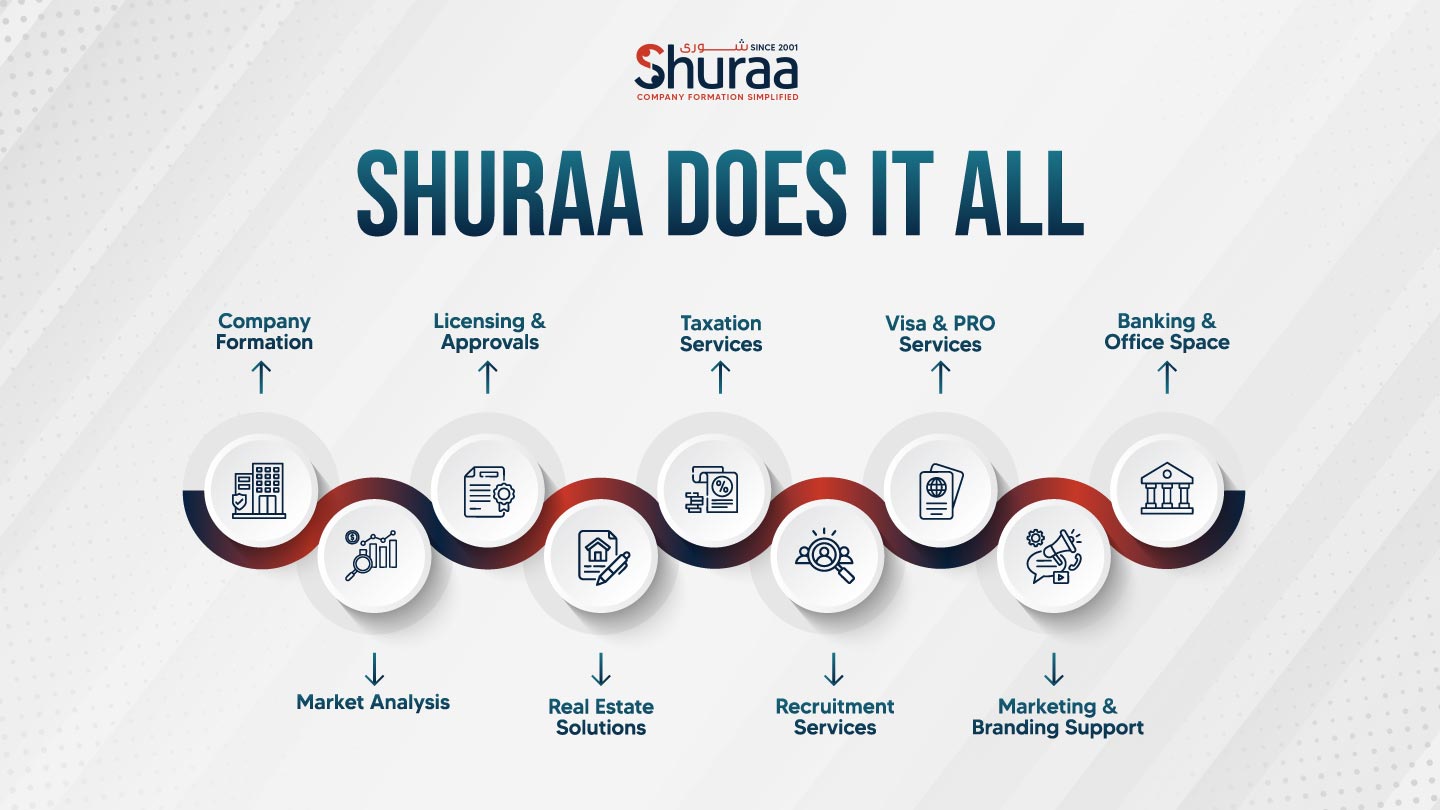
    At Shuraa India, we’ve already helped thousands of entrepreneurs from around the world start and grow their businesses in the UAE. Our team handles everything – from business licensing and legal paperwork to banking, visas, PRO services, and tax compliance, so you don’t have to stress about the details. 

    With Shuraa India by your side, you get step-by-step support that makes everything smooth and straightforward. We make sure you stay compliant while saving time, effort, and unnecessary stress. Talk to Shuraa’s business setup experts today! 

  • UAE Vision 2031: Key Goals, Strategies and Future Plans

    UAE Vision 2031: Key Goals, Strategies and Future Plans

    The United Arab Emirates (UAE) has always stood as a symbol of innovation, progress, and ambition. From building futuristic cities in the desert to launching space missions and embracing digital transformation, the UAE’s forward-thinking mindset continues to inspire the world. Staying true to its legacy of vision and excellence, the country has now charted a new course for the next decade through UAE Vision 2031, also known as “We the UAE 2031.” 

    This comprehensive national plan sets the foundation for the UAE’s growth journey between 2021 and 2031, focusing on four key pillars: society, economy, diplomacy, and ecosystem. Designed to shape a resilient, inclusive, and sustainable future, the vision aims to double the nation’s GDP, diversify its economy, and elevate its global standing as a hub for innovation and opportunity. 

    What is UAE Vision 2031? 

    Launched on November 22, 2022, during the UAE Government Annual Meetings, We the UAE 2031 outlines the country’s strategic direction for the next decade. It emphasises the UAE’s commitment to sustainable development, digital transformation, and global competitiveness. 

    More than a roadmap, UAE Vision 2031 is a national pledge to its citizens, residents, and global partners to build a prosperous, forward-looking society powered by innovation, inclusion, and sustainability. 

    At its core, this vision aims to: 

    • Strengthen the UAE’s position as a leading global economic and innovation hub 
    • Improve citizens’ quality of life through enhanced education, healthcare, and employment 
    • Support international partnerships built on diplomacy, peace, and mutual growth 
    • Create a thriving, sustainable ecosystem driven by digital transformation and innovative governance. 

    What are the Key Goals of the UAE Vision 2031? 

    The UAE Vision 2031 is more than just a roadmap; it’s a bold commitment to shape a thriving, secure, and globally admired nation. Built on innovation, inclusivity, and sustainability, this vision outlines transformative goals across key sectors: 

    1. Driving Economic Prosperity 

    The UAE aims to double its national economy, taking the GDP from AED 1.49 trillion to AED 3 trillion by 2031. The plan focuses on building a strong non-oil economy. It generates AED 800 billion in non-oil exports and strengthens tourism to contribute AED 450 billion to the national output. The vision also targets AED 4 trillion in foreign trade, reinforcing the UAE’s role as a global hub for business and investment. 

    2. Enhancing Global Competitiveness 

    The UAE strives to lead the world with proactive laws and policies for emerging industries, becoming a global model for forward-thinking governance.  

    It also aims to secure a top 10 international ranking in the Human Development Index and healthcare quality, while ensuring that Emirati cities rank among the world’s top 10 for quality of life. 

    3. Strengthening Security and Global Presence 

    As part of its long-term goals, the UAE seeks to become one of the world’s top 10 destinations for global talent, reinforcing its image as a magnet for innovators and professionals.  

    It also envisions being the safest country in the world, securing top positions in the Global Food Security Index and achieving a top 3 global ranking in cybersecurity, a testament to its resilience in an evolving digital era. 

    What are the Four Pillars of UAE Vision 2031? 

    At the heart of the UAE Vision 2031 lies a forward-thinking blueprint designed to secure a prosperous, inclusive, and sustainable future for the nation.  

    This vision stands tall on four transformative pillars: Forward Society, Forward Economy, Forward Diplomacy, and Forward Ecosystem. Together, they represent the UAE’s ambition to redefine progress, balance tradition with innovation, and lead as a global example of resilience and foresight. 

    1. Forward Society 

    The Forward Society pillar puts people at the centre of development. It’s about building a nation where every individual can expand through quality education, advanced healthcare, and strong community values. The goal is not just to enhance living standards but to nurture a society grounded in culture, compassion, and opportunity. 

    Key Focus Areas: 

    • Ensuring Leading education that promotes creativity, innovation, and lifelong learning. 
    • Strengthening healthcare systems and improving housing security for all residents is essential. 
    • Creating diverse employment opportunities to empower youth and professionals alike. 
    • Preserving Emirati heritage while promoting inclusivity and national pride is essential. 

    This pillar envisions a UAE where citizens and residents alike feel valued, supported, and inspired to contribute to the nation’s success story. 

    2. Forward Economy 

    The Forward Economy pillar represents the UAE’s determination to evolve into a globally competitive, knowledge-based economy. Moving beyond oil dependence, the country aims to embrace innovation, sustainability, and entrepreneurship as the engines of long-term growth. 

    Key Focus Areas: 

    • Expanding the digital economy, including fintech, AI, and advanced manufacturing. 
    • Investing in renewable energy and future-ready sustainable industries. 
    • Attracting global talent and investors to build an advanced innovation ecosystem. 
    • Strengthening the UAE’s leadership in biotechnology, space exploration, and emerging technologies. 

    This pillar ensures that the UAE remains not just a regional hub but a global powerhouse of creativity, productivity, and smart progress. 

    3. Forward Diplomacy 

    The Forward Diplomacy pillar underscores the UAE’s commitment to peace, dialogue, and international collaboration. With a foreign policy rooted in tolerance and cooperation, the nation strives to be a trusted partner and an active contributor to global development. 

    Key Focus Areas: 

    • Strengthening global trade networks and strategic investment partnerships. 
    • Promoting peaceful coexistence, intercultural dialogue, and global understanding. 
    • Leading humanitarian and sustainability efforts across borders. 

    By promoting connections built on respect and shared goals, the UAE continues to enhance its reputation as a bridge between cultures and a beacon of stability in an evolving world. 

    4. Forward Ecosystem 

    The Forward Ecosystem pillar focuses on creating a seamless, technology-driven environment that enhances governance, business, and daily life. It’s about building a UAE where innovation meets sustainability, where every system, from infrastructure to data, works in harmony with people and the planet. 

    Key Focus Areas: 

    • Accelerating digital transformation in government services using AI and automation. 
    • Developing smart cities powered by green infrastructure and renewable energy. 
    • Ensuring cybersecurity, transparency, and strong data protection is essential. 
    • Encouraging public-private partnerships for efficient, citizen-centred services. 

    This pillar envisions the UAE as a model for sustainable development, where technology not only drives progress but also enhances human potential and quality of life. 

    How will the UAE Vision 2031 impact the Nation? 

    The UAE Vision 2031 is not just a roadmap; it’s a bold commitment to redefining how the nation grows, succeeds, and leads on the world stage. Designed to shape a future rooted in innovation, inclusivity, and sustainability, its impact reaches far beyond traditional development. Here’s how this transformative vision is already reshaping the UAE across multiple fronts: 

    1. Social Transformation 

    At the heart of the UAE Vision 2031 lies the people. The government aims to cultivate a forward-thinking society by investing in quality education, advanced healthcare, and community well-being.  

    Schools are being redesigned to nurture creativity and critical thinking, while healthcare initiatives focus on preventive care and mental health support. The goal is to ensure that every resident, Emirati and expatriate alike, enjoys a high quality of life built on opportunity, equality, and happiness. 

    2. Economic Diversification 

    The UAE is taking decisive steps away from oil dependency and moving toward a resilient, knowledge-driven economy. Vision 2031 promotes innovation, entrepreneurship, and the digital economy, encouraging businesses to embrace technology and sustainability.  

    Startups, SMEs, and global investors are being welcomed with open arms, fueling growth in sectors like fintech, clean energy, and logistics. 

    3. Global Leadership and Competitiveness 

    With its advanced infrastructure and investor-friendly policies, the UAE is positioning itself as a global leader in business, tourism, and diplomacy.  

    The vision strengthens the nation’s reputation as a destination for innovation and collaboration, a place where ideas from around the world come to life. Whether it’s hosting international events, promoting cultural exchange, or leading climate action, the UAE continues to make its mark on the global map. 

    4. Environmental Sustainability 

    Sustainability is at the core of Vision 2031. From expanding renewable energy projects like solar and wind to encouraging eco-friendly urban design, the UAE is steering toward a green future.  

    Initiatives such as the Net Zero by 2050 strategy highlight the country’s commitment to environmental preservation and carbon neutrality. It’s a powerful statement that progress and sustainability can go hand in hand. 

    5. Digital Governance and Innovation 

    Under Vision 2031, the UAE is embracing digital transformation at every level of governance. AI-driven systems, innovative infrastructure, and data-driven policymaking are enhancing public services, making them faster, more transparent, and more accessible.  

    Citizens can now interact with the government seamlessly, reflecting the UAE’s push toward a fully digital, future-ready society. 

    In essence, the UAE Vision 2031 is shaping a future where innovation fuels prosperity, sustainability safeguards progress, and people remain at the centre of every initiative. It’s a vision that doesn’t just prepare the nation for tomorrow; it inspires the world today. 

    How will the UAE Vision 2031 be turned into reality? 

    Bringing the UAE Vision 2031 to life is not just a plan; it’s a shared journey that calls for collaboration across every sector. The roadmap focuses on several key areas: 

    • Forging global partnerships: Strengthening connections in education, technology, and business to position the UAE as a hub of innovation and knowledge. 
    • Bridging public and private efforts: Ensuring government policies and private sector initiatives work hand in hand for smooth and impactful implementation. 
    • Investing in tomorrow’s technologies: Driving growth through advanced fields like AI, blockchain, and space exploration, preparing the nation for the next frontier. 
    • Modernising core industries: Upgrading trade, finance, and tourism frameworks to enhance efficiency, competitiveness, and global appeal. 
    • Empowering citizens: Encouraging active civic participation and nurturing leadership at every level to create a society that thrives together.

    This roadmap is a living blueprint, guiding the UAE toward a future that balances innovation, opportunity, and shared prosperity. 

    How E-Invoicing is Driving Smart Governance in the UAE? 

    As part of its ambitious digital transformation agenda, the UAE is taking a significant step forward with the launch of its E-Invoicing initiative on February 6, 2025. Built on the Peppol-based Decentralised Continuous Transaction Control and Exchange (DCTCE) model, this system enables real-time invoice verification, ensuring greater transparency and seamless tax compliance for businesses. 

    Beyond streamlining financial processes, this innovation reflects the UAE’s broader vision of innovative governance, where technology enhances efficiency, accountability, and economic competitiveness. By integrating such advanced digital solutions, the UAE is not only modernising its business ecosystem but also strengthening its position as a global hub for innovation, a core objective of the UAE Vision 2031. 

    Shuraa India: Building Your Future with UAE Vision 2031 

    The UAE Vision 2031 is more than just a government plan; it’s a promise of progress, sustainability, and prosperity. It captures the UAE’s determination to shape a future where innovation drives growth; people thrive, and opportunities flourish. 

    As the nation moves towards achieving its ambitious 2031 targets, collaboration between the public and private sectors will be key. If you’re an entrepreneur, investor, or business owner seeking to align your goals with this national vision, partnering with experts can make all the difference. 

    Shuraa India helps businesses set up and expand in the UAE with ease, guiding you through every step of the process, from company formation to compliance and beyond. Together, let’s build your future in a nation that’s redefining progress every day. 

  • How to Get an Establishment Card in UAE

    How to Get an Establishment Card in UAE

    Once your business is officially licensed in the UAE, the next important step is getting your establishment card. This card, also known as a company card or immigration card, is what officially connects your business with the UAE immigration department. 

    This card is essential for businesses that plan to hire employees, sponsor staff visas, or carry out any immigration-related activities. Without it, companies cannot apply for or renew visas, making it a crucial step after obtaining a trade license. In simple terms, the establishment card in the UAE acts as your company’s ID in the country’s immigration system – confirming your business is registered and authorised to operate legally within the country. 

    What is an Establishment Card? 

    An establishment card, also known as a company card or immigration card, is an important document every UAE business needs after obtaining its trade license. It serves as your company’s official record with the General Directorate of Residency and Foreigners Affairs (GDRFA), the government body that oversees immigration and residency matters in the UAE. 

    Who Issues the Establishment Card? 

    The GDRFA is responsible for issuing establishment cards for mainland companies, while free zone authorities handle the process for businesses registered within their respective zones. This card confirms that your company is recognised by the UAE’s immigration system and is authorised to sponsor employees, business partners, and dependents under its name. 

    Details Included in the Establishment Card 

    An establishment card contains all the essential details that link your business to the immigration system, including: 

    • Company name 
    • Trade license number 
    • Unique Establishment ID number 
    • Date of issue and expiry 
    • Authorised signatory information 

    These details help immigration authorities verify your company’s identity whenever you carry out visa or residency-related activities. 

    What is the Importance of the Establishment Card in the UAE? 

    The establishment card plays a crucial role in the smooth functioning of any business in the UAE. It’s a key document that allows your company to operate legally and manage all immigration-related activities with ease. 

    1. Essential for Visa Applications 

    The establishment card is required every time your company applies for a new visa – whether it’s for business owners, employees, or dependents. It acts as proof that your company is registered with the UAE immigration system and has the right to sponsor individuals under its name. 

    2. Needed for Employee Hiring and Sponsorship 

    If you plan to hire foreign staff, your establishment card is a must. It authorises your company to sponsor employment visas and ensures that your employees are legally registered under your business. This step helps maintain transparency and compliance with UAE labour laws. 

    3. Required for Immigration Transactions 

    From visa renewals and cancellations to other immigration-related processes, the establishment card is used at every step. It serves as your company’s official identification for dealings with the GDRFA or free zone immigration departments. 

    4. Ensures Legal Compliance 

    Holding a valid establishment card helps your company stay compliant with UAE regulations. It confirms that your business is properly registered and recognised by immigration authorities. Not maintaining or renewing it on time can lead to fines or delays in processing important business activities. 

    5. Required for E-Channel Registration 

    For mainland companies, an establishment card is mandatory for e-channel registration, a digital system used by UAE immigration to process visa applications online. It simplifies submissions and reduces processing time for all immigration-related requests. 

    6. Simplifies Administrative Processes 

    Having an establishment card allows your company to access online immigration portals and government systems easily. This makes administrative work faster, saving you time on paperwork and approvals. 

    Documents Required to Apply for an Establishment Card 

    To apply for an establishment card in the UAE, you’ll need to prepare and submit a few important documents. Below is a list of the key documents typically required: 

    • Copy of a valid Trade License 
    • A passport copy of the company owner or partners 
    • Emirates ID of the owner or authorised signatory 
    • Copy of the Memorandum of Association (MOA) 
    • Tenancy contract and Ejari certificate (for mainland businesses) or lease agreement (for free zone companies) 
    • Company stamp 
    • Copy of Immigration E-Channel registration (if applicable) 
    • Passport-sized photo of the owner or authorised signatory 
    • Payment receipt or proof of government fee submission 

    How to Apply for an Establishment Card in the UAE

    Here is a step-by-step guide to applying for a new Establishment Card:

    Step 1: Ensure You Have a Valid Trade License 

    Before you begin, make sure your trade license is active and all company details are up to date. The establishment card can only be issued to businesses with a valid license. 

    Step 2: Register with the GDRFA or Free Zone Authority 

    For mainland companies, you’ll need to register with the General Directorate of Residency and Foreigners Affairs (GDRFA) in your respective emirate. If your business is located in a free zone, the application will go through that free zone’s immigration department or authority. 

    Step 3: Gather and Submit the Required Documents 

    Prepare all the necessary documents – including your trade license, MOA, Emirates ID, tenancy contract, and e-channel registration (if applicable). Submit them through the GDRFA portal, the free zone’s online system, or via an authorised PRO service provider like Shuraa India. 

    Step 4: Pay the Applicable Fees 

    Pay the government fees for the establishment card. The cost may vary depending on your business type and the emirate you are registered in. 

    Step 5: Wait for Approval and Card Issuance 

    Once your application is reviewed and approved, your UAE establishment card will be issued. In most cases, it is delivered digitally within a few working days and can be downloaded or accessed online through the respective authority’s portal. 

    Step 6: Keep the Card Safe and Up to Date 

    Your establishment card is valid for one year (in most cases). Make sure to renew it before it expires to avoid penalties or suspension of visa services. 

    Establishment Card in the UAE Fees 

    The standard fee for issuing a new Establishment Card in the UAE is between AED 100 to AED 200. This fee is applicable whether you’re applying through the GDRFA in Dubai or the Federal Authority for Identity and Citizenship (ICP) in other emirates. 

    In addition to the issuance fee, there are several mandatory charges: 

    • Value Added Tax (VAT): A 5% VAT is applied to the issuance fee, amounting to AED 10. 
    • Knowledge Dirham: A fee of AED 10 is levied. 
    • Innovation Dirham: Another fee of AED 10 is charged. 

    Validity and Renewal of the Establishment Card 

    An Establishment Card in the UAE is generally valid for one year from the date of issue. It is essential for sponsoring visas, completing immigration transactions, and ensuring your business stays compliant with UAE regulations. 

    Renewing the card is a straightforward process, butit  it should be done before it expires. Late renewal can lead to penalties, delays in visa processing, or restrictions on immigration-related activities. 

    The renewal process requires submitting the same documents as the initial application, including your trade license, MOA, Emirates ID, and tenancy contract. Government and service fees must also be paid during renewal. Typically, the renewal fee for the Establishment Card is around AED 200, with additional charges. If you need expedited processing, an urgent fee of AED 100 may apply. 

    Many businesses choose to use PRO services or typing centres to handle renewals efficiently, saving time and avoiding errors. 

    How Shuraa India Can Help 

    The Establishment Card is an important document for any business in the UAE. It helps your company run smoothly, sponsor employees, manage visas, and stay fully compliant with immigration rules. 

    Getting your establishment card or renewing it on time can sometimes feel complicated, especially with changing regulations and multiple documents to prepare. That’s where professional assistance makes a difference. Shuraa India can help you obtain or renew your establishment card quickly and efficiently, taking care of all the paperwork and government procedures. 

    We take care of everything – from preparing documents, registering with the GDRFA, handling renewals, to providing PRO services, so you don’t have to worry about the paperwork anymore. With our support, you can save time, avoid mistakes, and stay compliant with UAE rules. 

    If you want to get your Establishment Card without any hassle, connect with Shuraa India and let us handle everything for you. 

  • India Taxation vs UAE: Complete Comparison 2026

    India Taxation vs UAE: Complete Comparison 2026

    When it comes to business and investment, two names that often come up are the UAE and India. Both are fast-growing economies offering plenty of opportunities, but what truly sets them apart for investors is taxation. Taxes can make a big difference in how much profit you actually take home, and that’s why many entrepreneurs compare the UAE’s tax-friendly system with India’s more structured but higher-tax setup. 

    The UAE is known for its investor-friendly tax policies – there’s no personal income tax, no tax on capital gains or dividends, and even the newly introduced 9% corporate tax is among the lowest in the world. On the other hand, India’s tax system is more layered, with higher income tax rates, capital gains tax, and multiple GST slabs that can go up to 28%. While India continues to attract investors with its large market and growing economy, many are drawn to the UAE’s simpler and more relaxed tax environment. 

    Considering the complexity of both, we’ll make it easy for you to understand the key tax differences between the UAE and India, highlight the main benefits for investors, and explain why so many entrepreneurs and global businesses are choosing the UAE as their base for growth and expansion. 

    Overview of the Taxation System in the UAE in 2026 

    The United Arab Emirates (UAE) has built a reputation as a tax-friendly destination, making it a top choice for investors and entrepreneurs. Let’s take a look at the UAE’s taxation system in 2026 and why it’s so appealing. 

    1. Zero Personal Taxation 

    The UAE maintains its standing as one of the world’s most tax-efficient destinations for individuals: 

    • No Personal Income Tax: Residents, including expatriates and UAE nationals, are generally not required to pay tax on their salaries or personal earnings. 
    • No Tax on Investment Income: The government typically imposes a 0% tax on capital gains realised from the sale of assets (like stocks and real estate) and 0% tax on dividends earned by individuals. There is also generally no wealth tax or inheritance tax. 

    2. Corporate Tax 

    The UAE introduced a corporate tax in 2023, but it’s still very competitive compared to other countries. 

    • 0% Rate: For taxable profits up to AED 375,000 (to support small businesses and start-ups). 
    • Standard Rate: Businesses pay 9% on taxable income above AED 375,000. 
    • Free Zone Exemptions: Companies in designated Free Zones can enjoy 0% corporate tax on qualifying income if they meet certain requirements. 
    • Minimum Top-Up Tax: Starting January 2025, large multinational groups with annual global revenue over €750 million will be subject to a 15% minimum top-up tax. This ensures global standards are met while keeping the UAE attractive for international businesses. 

    3. Value Added Tax (VAT) 

    As a consumption tax, VAT is the primary source of indirect revenue for the government: 

    • Standard Rate: A 5% VAT is applied to most goods and services. This remains one of the lowest VAT rates globally. 
    • Exemptions/Zero-Rated: Certain essential services and sectors, such as exports, international transportation, the first supply of residential property, and some healthcare and education services, are either zero-rated or exempt from VAT. 

    Double Taxation Avoidance Agreements (DTAAs): 

    As of 2025, the UAE has signed over 140 DTAAs with countries worldwide, including major economies like the UK, India, China, and Singapore. These agreements aim to eliminate or reduce double taxation on income, providing clarity on tax rights and enhancing the attractiveness of the UAE as a global investment hub. 

    Overview of the Taxation System in India 

    India’s taxation system is structured to support its growing economy, offering a range of tax rates and compliance requirements. Here’s an overview of the key aspects as of 2026: 

    1. Personal Income Tax (PIT) 

    Personal income is taxed based on slabs, with two parallel regimes available for individuals (Old Regime with exemptions/deductions, and New Default Regime with lower rates and fewer deductions). 

    Old Tax Regime: Allows deductions and exemptions; tax rates are: 

    • Up to ₹2.5 lakh: Nil 
    • ₹2.5 lakh to ₹5 lakh: 5% 
    • ₹5 lakh to ₹10 lakh: 20% 
    • Above ₹10 lakh: 30% 

    Additional surcharges and cess may apply. 

    New Tax Regime: Offers reduced tax rates without deductions: 

    • Up to ₹3 lakh: Nil 
    • ₹3 lakh to ₹7 lakh: 5% 
    • ₹7 lakh to ₹10 lakh: 10% 
    • ₹10 lakh to ₹15 lakh: 15% 
    • ₹15 lakh to ₹20 lakh: 20% 
    • ₹20 lakh to ₹25 lakh: 25% 
    • Above ₹25 lakh: 30% 

    Taxpayers can choose the regime that best suits their financial situation. 

    Residential Status: Tax liability is tied to the taxpayer’s residential status. Resident and Ordinarily Resident (ROR) individuals are taxed on their worldwide income, while Non-Resident (NR) and Resident but Not Ordinarily Resident (RNOR) individuals are generally only taxed on income earned or accrued in India. 

    2. Corporate Tax Rates 

    Corporate tax rates in India vary based on the type and size of the company: 

    • For companies with a turnover up to ₹400 crore: 25% 
    • For companies opting for Section 115BAA: 22% 
    • For companies opting for Section 115BAB (new manufacturing companies): 15% 
    • Other domestic companies: 30% 
    • Foreign Companies: Generally taxed at a higher rate of 40%. 

    These rates are exclusive of applicable surcharges and cess 

    New Manufacturing Companies: Companies incorporated after October 1, 2019, that commence manufacturing and opt for a special regime can pay a much lower rate of 15% (subject to conditions and foregoing most deductions/incentives). 

    3. Capital Gains Tax 

    Capital gains tax in India depends on the holding period of the asset:

    Short-Term Capital Gains (STCG) Tax Rates in India: 

    Asset Type  Holding Period  Tax Rate 
    Listed Equity Shares, Equity Mutual Funds, Business Trust Units  Less than 12 months  20% (with Securities Transaction Tax) 
    Unlisted Shares, Real Estate, Gold, Bonds, Debt Mutual Funds  Less than 24 months  Taxed at applicable income tax slab rates 

    Note: The 20% tax rate applies to transactions completed on or after July 23, 2024, following the Union Budget 2024 revisions. 

    Long-Term Capital Gains (LTCG) Tax Rates: 

    Asset Type  Holding Period  Tax Rate 
    Listed Equity Shares, Equity Mutual Funds, Business Trust Units  More than 12 months  12.5% (above ₹1.25 lakh exemption) 
    Unlisted Shares, Real Estate, Gold, Bonds, Debt Mutual Funds  More than 24 months  12.5% (without indexation) 

    Note: For property acquired before July 23, 2024, taxpayers may choose between 12.5% without indexation or 20% with indexation. 

    4. Goods and Services Tax (GST) 

    India’s GST system has been streamlined to include the following key rates: 

    • 5%: Essential items such as life-saving drugs, footwear priced below ₹500, and textiles. 
    • 18%: Standard rate applied to most goods and services. 
    • 40%: Special rate for luxury and harmful products, including luxury cars, tobacco, aerated drinks, and gambling services. 

    5. Compliance Complexity and Filing Frequency 

    India’s tax system requires regular compliance: 

    • Income Tax Returns: Individuals and companies must file annual returns, with deadlines varying based on the type of taxpayer. 
    • GST Returns: Businesses must file monthly and annual GST returns, depending on their turnover and nature of business. 

    Get a free DTAA & tax planning consultation for your UAE business.

    India vs. UAE Tax Comparison Table 

    Let’s take a look at how taxes in the UAE and India compare for investors in 2026. 

    Feature  UAE (United Arab Emirates)  India 
    Personal Income Tax  0% (Zero on salaries, wages, and personal earnings for residents).  5% to 30% (Progressive slab-based system, plus Surcharge and Cess). 
    Corporate Tax (Standard)  9% on taxable profits exceeding AED 375,000 (approx. $102,000). 0% on profits up to this threshold.  25% to 30% (Varies based on turnover and type of company, plus Surcharge and Cess). Special low rate of 15% available for new manufacturing companies. 
    Corporate Tax (Special Cases)  0% for Qualifying Free Zone Persons (QFZPs) on “Qualifying Income.” 15% Domestic Minimum Top-Up Tax (DMTT) for MNEs with global revenue over €750M.  40% for Foreign Companies (plus Surcharge and Cess). 
    Capital Gains Tax (Individual)  0% (Generally no tax on gains from sale of stocks, real estate, or other personal assets).  20% (Short-Term Capital Gains); 12.5% (Long-Term Capital Gains). 
    Dividends  0% (Generally no tax on dividends received by individuals/investors).  Taxable at the individual’s slab rate (up to 30% + Surcharge/Cess). 
    Indirect Tax  5% Value Added Tax (VAT), one of the lowest consumption tax rates globally.  5%–18% GST (standard rates); 40% on luxury and harmful goods (e.g., tobacco, aerated drinks). 
    Compliance & Filing  Low: Annual filing for Corporate Tax (mandatory for most businesses, even those at 0% rate). VAT filing is typically quarterly.  High: Requires monthly/quarterly GST filings, quarterly TDS filings, and annual income tax filings, leading to a higher administrative burden. 
    Tax Treaties (DTAAs)  Over 140 signed, used extensively for global tax planning and profit repatriation.  Over 90 signed, providing relief from double taxation but requiring strict compliance with treaty conditions (e.g., Tax Residency Certificate – TRC). 

    Note: The tax rates and rules mentioned above are subject to change. Investors and businesses should always consult the latest regulations or a tax professional like Shuraa India before making decisions. 

    Key Tax Benefits for Investors in the UAE 

    The UAE has become a hub for global investors, and one of the main reasons is its tax-friendly environment. Here are the key reasons why entrepreneurs are choosing the UAE: 

    1. No Personal Income Tax 

    Individuals in the UAE don’t pay personal income tax, meaning your salary, investment income, and rental earnings remain completely yours. 

    2. Corporate Tax Benefits 

    Standard corporate tax is 9% on profits above AED 375,000. Companies in Free Zones can enjoy 0% corporate tax on qualifying income, making it highly attractive for startups and international businesses. 

    3. Ease of Repatriation 

    Investors can freely transfer profits and capital out of the UAE without restrictions, offering flexibility for global business operations. 

    4. Double Taxation Avoidance Agreements (DTAAs) 

    The UAE has over 140 DTAAs with countries worldwide, preventing the same income from being taxed twice and making cross-border investments smoother. 

    5. Special Incentives for Certain Sectors 

    Free Zones often offer tax holidays, customs duty exemptions, and other sector-specific incentives for tech, media, logistics, and finance businesses. 

    6. Encouragement for Wealth and Asset Diversification 

    With no tax on capital gains, dividends, or foreign income, investors can diversify portfolios internationally without facing high tax burdens. 

    Our India-UAE tax advisors help Indian entrepreneurs legally minimise double taxation — free first consultation.

    UAE: A Smarter Choice for Global Investors 

    When it comes to taxation, the UAE offers significant advantages over India – from zero personal income tax and capital gains exemptions to low corporate tax rates, Free Zone benefits, and easy repatriation of profits. These features make the UAE an attractive destination for entrepreneurs, investors, and global businesses looking to maximise returns while minimising tax burdens. 

    If you’re considering expanding or relocating your business to the UAE, Shuraa India can guide you every step of the way. From tax registration and compliance to choosing the right business structure, licensing, approvals, office space, and visas, we provide end-to-end support to make your UAE business journey smooth and hassle-free. 

  • Open UAE Doors for Your Clients with Shuraa India

    Open UAE Doors for Your Clients with Shuraa India

    Today, many clients are not just thinking locally – they’re thinking globally. They want to grow their business, restructure finances, or explore new opportunities outside their home country. As a lawyer, CA, or legal advisor, you’re often the first person they turn to for guidance. 

    But when it comes to setting up a business in the UAE, it’s not always easy. Without the right local knowledge or government connections, the process can quickly become slow, confusing, and expensive. 

    That’s where Shuraa Business Setup’s Associate Program steps in. For over 26+ years, we’ve been helping professionals like you give their clients smooth, hassle-free solutions for business expansion in the UAE, while also opening up new earning opportunities for your own practice. 

    The Challenge Professionals Face 

    Lawyers and financial advisors are often the first point of contact for clients seeking international business expansion. These clients trust you to provide solutions – whether it’s about opening a company abroad, restructuring their investments, or setting up a new branch. 

    But let’s be honest: not every professional has the local connections or in-depth knowledge of UAE laws, business practices, and licensing systems. Many end up referring their clients to international law firms or third-party agencies, who may not fully understand the local market dynamics. 

    The result? 

    • Clients spending excessive money and time.
    • Projects that get delayed or, in some cases, never materialise.
    • Dissatisfaction that reflects back on you as the trusted advisor.

    Why Work with Shuraa Business Setup? 

    At Shuraa, we make things simple for you and your clients. By becoming our channel partner, you’re not just passing your clients to another firm, you’re connecting them with one of the most trusted business setup experts in the UAE. 

    Here’s why so many professionals around the world choose to partner with us: 

    • 26+ Years of Experience: Under the leadership of Mr. Saeed Khalifa Mohammed Al Fuqaei, we’ve helped over 100,000 businesses, including quasi-government organization, start and grow in the UAE. 
    • A Global Network of Partners: Thousands of lawyers, CAs, and consultants worldwide already work with us. 
    • All-in-One Support: From market research and licensing to taxes, visas, and even banking, we take care of everything. 
    • Strong Local Ties: Our connections with UAE authorities and free zones help speed things up and keep everything compliant. 
    • Happy Clients, Happy You: Your clients get a smooth and cost-effective experience, and you get to build even stronger trust with them. 

    Refer your clients to Shuraa and earn commissions — join our associate program free

    What’s in It for You? 

    Our Associate Program is built to benefit both you and your clients. Here’s how: 

    Grow Your Services: 

    With Shuraa by your side, you don’t need to worry about having offices or contacts in the UAE. You can confidently tell your clients, “Yes, I can help you expand there.” 

    Keep Clients Happy: 

    When clients see you can handle everything, whether it’s licenses, taxes, or company setup, they’ll trust you more and keep coming back. 

    Win-Win: 

    Every time you refer a client to us, you also get rewarded. It’s a win-win: you earn, and your clients get reliable, cost-effective solutions. 

    Stay Competitive: 

    More and more clients now expect international solutions. By teaming up with Shuraa, you’ll stand out from others and offer exactly what they’re looking for. 

    Shuraa Does It All for Your Clients 

    When you bring your clients to Shuraa India, you’re not just introducing them to a consultancy, you’re connecting them to a one-stop shop for everything related to doing business in the UAE: 

    • Company Formation: Mainland, Free Zone, or Offshore setups, tailored to client needs. 
    • Licensing & Approvals: Handling all legalities and paperwork with precision. 
    • Taxation Services: Guidance on UAE tax compliance, VAT, and corporate tax. 
    • Visa & PRO Services: Smooth processing for employees, partners, and dependents. 
    • Banking & Office Space: Assistance with opening bank accounts and finding flexible office solutions. 
    • Market Analysis: Insights into the UAE market, helping clients make informed decisions. 
    • Real Estate Solutions: Assistance in securing office spaces, warehouses, or investment properties. 
    • Shuraa Recruitment Services: Helping clients hire the right talent to build and grow their teams. 
    • Marketing & Branding Support: Guidance to establish a strong brand presence in the UAE market. 

     In short, your clients won’t need to look elsewhere, because Shuraa covers it all. 

    Why Now Is the Right Time 

    The UAE is at the centre of global business expansion, with investor-friendly regulations, zero personal income tax, and access to both Middle Eastern and international markets. More companies are looking to establish a presence here than ever before. 

    By becoming a Shuraa India channel partner, you position yourself as the go-to advisor for clients exploring this opportunity. Instead of losing them to competitors or unreliable firms, you’ll be the one guiding them – backed by Shuraa’s trusted expertise. 

    200+ CAs, consultants & immigration advisors in India already partner with Shuraa India

    How to Join Shuraa’s Associate Program 

    Getting started is simple: 

    • Connect with us and express your interest. 
    • Sign up as an official associate partner. 
    • Refer your clients who are looking for expansion or restructuring in the UAE. 
    • Earn rewards and strengthen your client relationships while Shuraa handles the rest. 

    Let’s Partner for Growth 

    As a lawyer, CA, or legal advisor, your clients rely on you to guide them through important business decisions. With Shuraa as your partner, you don’t have to send them to firms that may not fully understand the UAE market. Instead, you can give them direct access to a trusted team that has been helping businesses grow here for more than 26+ years. 

    Whether your clients are SMEs, HNIs, MNCs, individuals, or aspiring entrepreneurs – We’re here for everyone. 

    By joining Shuraa’s Associate Program, you get more than just referral benefits – you get peace of mind knowing your clients are in safe hands, and you strengthen your own practice at the same time. 

    It’s a win-win. Your clients succeed, you succeed, and together, we build lasting growth. 

    Get in touch today: 

    Email us at Enquire@shuraa.in 

  • How to Use MOHRE Inquiry Services in UAE?

    How to Use MOHRE Inquiry Services in UAE?

    The Ministry of Human Resources and Emiratisation (MOHRE) is the UAE government body that manages all aspects of employment, workers, and labour laws. It works to create a fair and balanced job market by protecting workers’ rights, supporting employers, and helping the UAE economy grow. 

    MOHRE Inquiry Services are convenient and straightforward tools that allow people and businesses to get information quickly. Employees can check their labour contracts, work permit details, or salary complaints. Employers can verify employee records, track applications, and ensure they meet legal requirements. Job seekers can confirm their application status or learn about job opportunities. These services reduce confusion, save time, and make it easier to stay updated on labour matters. 

    The purpose of this guide is to give you a clear and straightforward explanation of MOHRE Inquiry Services in the UAE, what they do, how to use them, and why they are essential. Whether you are already working in the UAE, planning to start a job, or running a company, understanding these services will help you stay informed, avoid mistakes, and handle all aspects of your employment smoothly. 

    What are MOHRE Inquiry Services in UAE? 

    MOHRE Inquiry Services refer to the online and offline platforms provided by the Ministry of Human Resources and Emiratisation (MOHRE) in the UAE to help employees, employers, and job seekers access important labour-related information quickly and accurately.  

    These services are designed to offer details about work permits, employment contracts, labour complaints, company statuses, and other employment-related records without the need for lengthy procedures. 

    Why Do These Services Exist? 

    Promoting Transparency 

    MOHRE Inquiry Services ensure that both employees and employers have a clear understanding of their rights, obligations, and the status of official documents. By making information readily available, these services reduce confusion and prevent fraudulent practices in the job market.

    Ensuring Legal Compliance 

    The UAE has strict labour laws to protect workers and regulate businesses. MOHRE’s inquiry tools help individuals and companies verify compliance with these laws, such as checking whether a work permit is valid or if a company is registered and operating legally.

    Easy Access to Labour Information 

    Instead of visiting government offices and waiting in long queues, people can now access employment information online or through call centres. This saves time and effort while giving instant updates on labour-related requests or applications.

    MOHRE Inquiry Services acts as a bridge between the UAE government, employees, and employers, ensuring that all labour transactions are transparent, lawful, and easily accessible. 

    Types of MOHRE Inquiry Services Available in the UAE 

    The Ministry of Human Resources and Emiratisation (MOHRE) offers several inquiry services to make labour-related information easily accessible for employees, employers, and job seekers in the UAE. These services help maintain transparency, protect worker rights, and ensure compliance with UAE labour laws. Below are the main types of MOHRE inquiry services available: 

    Work Permit Status Inquiries 

    This service allows employers and employees to check the status of a work permit application, including its approval, pending, or rejection status. It ensures that workers only begin employment once their work permit is legally valid. 

    Labour Card Verification 

    Employees can verify the authenticity and validity of their labour card. It is an official document proving legal employment in the UAE. This helps prevent the use of fake or expired cards. 

    Employment Contract Inquiries 

    MOHRE enables employees to confirm the details of their employment contracts online, such as job title, salary, and contract terms. This ensures transparency between workers and employers and avoids disputes caused by contract misrepresentation. 

    Salary Dispute and Complaint Status Tracking 

    Workers who have lodged complaints regarding delayed or unpaid salaries can track the progress of their case through MOHRE’s inquiry system. This feature helps employees stay informed and speeds up resolution processes. 

    Company Information and Registration Status 

    Employers and employees can verify if a company is registered and compliant with UAE labour regulations. This helps job seekers avoid fraudulent employers and assists businesses in maintaining a good standing with MOHRE. 

    Employee Personal File Verification 

    Employees can check the accuracy of their personal records stored with MOHRE, such as passport details, designation, and employment history, to ensure there are no errors that could affect their legal status. 

    These MOHRE inquiry services simplify access to vital labour information, protect workers’ rights, and help companies maintain transparency and compliance with UAE labour laws. 

    How to Use MOHRE Inquiry Services in UAE? 

    The Ministry of Human Resources and Emiratisation (MOHRE) make it easy for employees, employers, and job seekers to access labour-related information through multiple channels.  

    Whether you prefer online methods, mobile applications, or direct assistance, MOHRE ensures help is always within reach. 

    Online Portal 

    MOHRE’s official website offers quick and convenient access to all inquiry services.
    Here’s how to use it: 

    1. Visit the official MOHRE website: https://www.mohre.gov.ae 
    2. Go to the “Services” section. 
    3. Select “Inquiry Services” from the menu. 
    4. Choose the specific service you need (work permit, labour card, contract status, etc.). 
    5. Enter the required details, such as passport number, labour card number, or application reference number. 
    6. Submit the information to view your inquiry results instantly. 

    MOHRE Mobile App

    MOHRE provides a dedicated mobile application available on both iOS and Android platforms. 

    • Download the MOHRE app from the App Store or Google Play Store. 
    • Log in using your UAE Pass or create an account. 
    • Navigate to the Inquiry Services section to check work permits, labour cards, complaints, or contract details anytime, anywhere. 

    Customer Happiness Centres

    For those who prefer face-to-face assistance, MOHRE has Customer Happiness Centres located across the UAE. 

    • Visit the nearest centre. 
    • Provide your labour card, passport, or application details. 
    • The staff will help you retrieve or verify the information you need. 

    Contacting MOHRE Call Centre

    MOHRE operates a call centre number (600590000) to assist employees and employers. 

    • Call the number and follow the automated instructions or speak to an agent. 
    • Provide the relevant details (such as application or labour card number) to get real-time updates on your inquiry. 

    Whether online, on the go with the mobile app, in person at a service centre, or over the phone, MOHRE ensures its inquiry services are easily accessible to everyone in the UAE. 

    Common Errors to Avoid While Checking 

    Below are the common errors to avoid while checking your Inquiry services:  

    Entering Incorrect Numbers 

    Even a single-digit mistake in your passport or labour card number can lead to no results being found. Double-check your entries. 

    Using Expired Information 

    Ensure the details you’re entering are current. Old or expired application numbers will not work. 

    Selecting the Wrong Service 

    If you want to check a work permit but select “Labour Card Inquiry,” you won’t get the right results. Always pick the correct service. 

    Browser Compatibility Issues 

    Use an updated browser (Google Chrome or Safari) to avoid technical glitches. 

    Ignoring CAPTCHA or Security Steps 

    Some inquiries require CAPTCHA verification for security. Skipping this step may prevent you from completing the inquiry.

    Note: You can also follow similar steps using the MOHRE mobile app, which is available for iOS and Android. It provides the same inquiry services in a mobile-friendly format. 

    Who Can Benefit from MOHRE Inquiry Services in UAE? 

    MOHRE inquiry services are designed to help all stakeholders in the UAE labor market, from employees and job seekers to employers and business service providers. Here’s how different groups can benefit: 

    Employees 

    • Verify Employment Contracts: Workers can confirm that the contract registered with MOHRE matches what they signed with their employer. 
    • Salary Protection and Dispute Tracking: Employees can check if their wages are registered under the Wage Protection System (WPS) and track any salary-related complaints. 
    • Check Labour Card and Work Permit Validity: Ensures legal employment status at all times. 

    Employers 

    • Ensure Compliance with UAE Labour Laws: Employers can verify their employees’ documents, contracts, and work permits to avoid penalties. 
    • Monitor Company Status: MOHRE inquiries help businesses confirm that their registration and labour approvals are up to date.
    • Simplify HR Processes: Saves time when managing large workforces by offering centralised access to employee records.

     Job Seekers 

    • Verify Company Legitimacy: Before accepting a job offer, candidates can confirm if the company is registered with MOHRE and operating legally. 
    • Avoid Recruitment Scams: Quick inquiries reduce the risk of falling victim to fraudulent job offers or fake employment contracts. 

    PROs (Public Relations Officers) and Business Owners 

    • Streamline Government Transactions: PROs handling multiple visa and labour processes can use MOHRE inquiries to check application statuses instantly. 
    • Stay Updated on Workforce Records: Business owners can confirm employee details and maintain compliance with MOHRE requirements.

    MOHRE inquiry services provide transparency, protect worker rights, and help businesses operate smoothly within UAE labour regulations. Everyone involved in the employment process, from individual workers to large organisations, stands to benefit. 

    Benefits of Using MOHRE Inquiry Services in UAE 

    The Ministry of Human Resources and Emiratisation (MOHRE) inquiry services are designed to make labour-related processes smooth, transparent, and easily accessible. These services offer multiple advantages for employees, employers, and job seekers alike. 

    Transparency and Trust in Employment 

    By allowing individuals to directly check work permits, contracts, and company records, MOHRE inquiry services remove doubts and build confidence between employers and employees. Both parties can verify official information without relying solely on verbal assurances. 

    Quick Problem Resolution 

    Whether it’s a salary complaint, a delayed work permit, or a contract dispute, MOHRE inquiry tools provide real-time updates. This speeds up the resolution process and helps prevent minor issues from escalating into major conflicts. 

    Reduced Dependency on Middlemen or Agents 

    Instead of paying agents or intermediaries to check labour records, employees and employers can access this information themselves. This not only saves money but also reduces the risk of being misled by unauthorised parties. 

    24/7 Online Availability 

    MOHRE inquiry services are accessible anytime, anywhere, through the website or mobile app. Users do not need to wait for office hours or visit government counters, making it especially convenient for urgent checks. 

    MOHRE inquiry services empower individuals and companies with direct access to accurate, official labour information, helping maintain legal compliance and fostering a fair, transparent work environment in the UAE. 

    Latest Updates & Announcements from MOHRE 

    Below are the coming updates and announcements from MOHRE in the UAE: 

    New & Enhanced Services 

    • Digital Work Permit Application
      Employers can now apply for work permits entirely online via the MOHRE website or mobile app, simplifying and accelerating the hiring process for overseas workers 

    Advanced Digital Transformation Initiatives 

    • AI-Driven Work Permit Issuance
      MOHRE has introduced an AI-powered system capable of issuing work permits in mere seconds. The initiative eliminates paperwork and bureaucracy, significantly enhancing user efficiency.  
    • Tawasul Communication Platform
      This unified platform now spans 14 digital channels, including video calls, WhatsApp, email, chat, and more—processing over 24 million interactions in H1 2025, with a customer satisfaction rate of 91.7%. 
    • Smart Services Rollout
      Over 18 million smart transactions have been conducted in the first half of 2025. MOHRE now offers more than 100 smart services via its website and app, featuring instant responses, reduced documentation, and AI enhancements.
    • Academic Qualification Verification Project
      In collaboration with the Ministry of Higher Education & Scientific Research (MoHESR), MOHRE has launched digital integration, enabling employers to electronically verify workers’ academic credentials, whether obtained in the UAE or abroad. 
    • ‘Digital Wallet’ for Corporate Payments
      MOHRE introduced a Digital Wallet (in partnership with Abu Dhabi Islamic Bank), enabling companies to pay for MOHRE services and fees seamlessly. This initiative boosts efficiency and supports the “Zero Bureaucracy” vision.
       

    MOHRE Inquiry Services in UAE: Your Gateway to a Transparent Job Market 

    The MOHRE Inquiry Services in UAE are more than just convenient tools; they are an essential bridge between employees, employers, and the government. By offering real-time access to critical labour information such as work permit status, employment contracts, salary disputes, and company registration details, these services help ensure transparency, legal compliance, and trust in every aspect of employment. 

    With MOHRE’s ongoing digital transformation, including AI-powered permit issuance, the Tawasul multi-channel platform, and innovative verification systems, the UAE is setting a global benchmark for efficient and worker-friendly labour governance. Individuals can now resolve issues faster, avoid fraudulent practices, and stay compliant, all without the need for middlemen or unnecessary paperwork. 

    How Shuraa India Can Help: 

    Navigating UAE labour laws, MOHRE applications, and compliance requirements can still feel tricky, especially for new businesses or first-time employees. Shuraa India specialises in guiding companies, entrepreneurs, and job seekers through every step, from verifying documents and ensuring MOHRE compliance to managing applications and resolving disputes quickly. Their expertise helps you make full use of MOHRE Inquiry Services in the UAE, while staying focused on your career or business growth. 

    Whether you’re working, hiring, or planning to set up a business in the UAE, mastering MOHRE Inquiry Services will keep you informed, compliant, and one step ahead, and with Shuraa India’s support, you’ll never have to face the process alone. 

  • How to Claim ILOE Insurance: A Step-by-Step Guide

    How to Claim ILOE Insurance: A Step-by-Step Guide

    Losing your job can be a challenging and uncertain time, but the ILOE Insurance (Involuntary Loss of Employment Insurance) introduced in the UAE is designed to help. It provides financial support to eligible employees who lose their jobs due to reasons beyond their control, such as company downsizing or restructuring.

    If you’ve already registered and are now wondering how to claim your benefits, don’t worry, this guide will make the process simple. 

    In this easy step-by-step guide, we’ll explain everything you need to know about how to claim ILOE Insurance in the UAE, what documents you’ll need, how long it takes, and some common mistakes. Whether you’re applying for the first time or just want to understand the process better, we’ve got you covered. 

    What is ILOE Insurance in the UAE? 

    ILOE stands for Involuntary Loss of Employment. It’s a mandatory unemployment insurance scheme in the United Arab Emirates designed to protect private‑sector and federal government employees in case they lose their job involuntarily (excluding resignations or disciplinary terminations).  

    What is ILOE? 

    • Established under Federal Decree Law No. 13 of 2022, the scheme became operational on January 1, 2023. It’s administered by the Ministry of Human Resources and Emiratisation (MOHRE) and managed through the national Insurance Pool (Dubai Insurance).  
    • The scheme is compulsory for virtually all UAE mainland and free zone private-sector and federal government employees (with a few exemptions such as investors, domestic workers, temporary and under‑18 workers, and retirees). 

    Premiums & Benefit Structure 

    There are two coverage tiers based on your basic monthly salary: 

    Category  Salary Range  Premium (per month)  Max Benefit (60%) 
    Category A  AED ≤ 16,000  AED 5 + VAT  Up to AED 10,000/month 
    Category B  AED > 16,000  AED 10 + VAT  Up to AED 20,000/month 

    Note: Benefits are capped at three consecutive months per claim, and a lifetime maximum of 12 months of benefits across all claims. 

    Benefits of ILOE Insurance in the UAE 

    The Involuntary Loss of Employment (ILOE) Insurance in the UAE is a government-backed initiative designed to support employees who unexpectedly lose their jobs due to reasons beyond their control. Here are the key benefits: 

    Financial Security During Job Loss 

    ILOE Insurance provides a monthly cash benefit for a limited period (usually up to 3 months) if you lose your job involuntarily. This financial support helps you manage essential expenses like rent, bills, and daily needs while you search for a new job. 

    Peace of Mind 

    Knowing you have a financial cushion in case of sudden unemployment offers peace of mind. This reduces stress and allows you to focus on finding the right opportunity without immediate financial pressure. 

    Affordable Premiums 

    The insurance is budget friendly. For most employees, the cost ranges from AED 5 to AED 10 per month, depending on their salary bracket. This makes it an accessible safety net for both UAE nationals and expatriates. 

    Mandatory Yet Beneficial 

    From January 2023, subscribing to ILOE Insurance is mandatory for employees in both the government and private sectors. However, the policy itself is highly beneficial and promotes financial stability across the workforce. 

    Easy Claim Process 

    The claim process is digital and user-friendly through the official ILOE portal or app. Once approved, you can receive your compensation promptly without lengthy delays. 

    Supports UAE’s Economic Vision 

    By reducing unemployment-related financial burdens, ILOE Insurance helps maintain economic stability and supports the UAE’s long-term vision of a secure and resilient workforce. 

    Who is Eligible to Claim ILOE Insurance in the UAE? 

    The Involuntary Loss of Employment (ILOE) Insurance in the UAE is designed to provide financial support to eligible employees who lose their jobs due to reasons beyond their control. However, not everyone qualifies for this benefit. Here’s a breakdown of who is eligible to claim ILOE Insurance: 

    Eligibility Criteria for ILOE Insurance Claim in the UAE: 

    Employment Type: 

    • Must be an employee in the private sector or the federal government sector in the UAE. 
    • Must be registered under the ILOE scheme (via the official ILOE portal or authorised channels).

    Minimum Contribution Period: 

    • Must have been subscribed to the ILOE scheme for at least 12 consecutive months.

    Reason for Job Loss: 

    • The job loss must be involuntary (e.g., company downsizing, financial difficulties). 
    • Voluntary resignation, disciplinary dismissal, or fraud-related termination are not covered.

    Residency Status: 

    • Must hold a valid UAE residence visa at the time of making the claim.

    Claim Submission Time: 

    • The claim must be submitted within 30 days of the date of job loss.

    Other Conditions: 

    • The claimant must not have an existing complaint or dispute with the employer. 
    • The claimant must be legally present in the UAE at the time of the claim. 

    Who Is Not Eligible? 

    • Investors or business owners (not employees) 
    • Temporary or part-time workers not registered with ILOE 
    • Domestic workers 
    • Juveniles under the age of 18 
    • Retirees who are receiving a pension and have joined a new job 

    Need help with your UAE ILOE claim or compliance? Our PRO team handles it for you

    How to Claim ILOE Insurance in the UAE? 

    If you’ve subscribed to the ILOE Insurance scheme in the UAE and recently lost your job due to non-disciplinary reasons, you may be eligible to receive monthly compensation. Here’s how to claim your ILOE Insurance benefits smoothly: 

    Step 1: Check Eligibility Criteria 

    Before initiating the claim, ensure that: 

    • You’ve subscribed to the ILOE Insurance scheme for at least 12 consecutive months. 
    • Your job loss is not due to resignation, disciplinary action, or criminal misconduct. 
    • You are legally residing in the UAE. 

    Step 2: File the Claim Within 30 Days 

    You must submit your ILOE Insurance claim within 30 days from the date of job loss (termination or redundancy). Delays beyond this window can lead to disqualification. 

    Step 3: Log in to the Official Portal 

    Visit the ILOE Insurance website or access it via the ILOE smart app. Use your Emirates ID or UID number to log in and access your profile. 

    Step 4: Submit the Required Documents 

    Upload the following documents while filing the claim: 

    • Emirates ID copy 
    • Passport copy with a valid visa page 
    • Termination letter from the employer 
    • Last payslip or bank statement showing salary 
    • ILOE subscription proof 

    Step 5: Wait for Application Review 

    After submission, your claim will be reviewed by the ILOE Insurance system. If eligible, you’ll receive approval within two weeks. 

    Step 6: Receive Compensation 

    Once approved, compensation will be transferred to your registered bank account. You will receive: 

    • Up to 60% of your basic salary for a maximum of 3 months. 
    • Monthly payouts are subject to the upper limits of your chosen insurance category. 

    Step 7: Actively Look for New Employment 

    To continue receiving benefits, you must actively look for new job opportunities and not leave the country during the claim period unless officially permitted. 

    We manage ongoing UAE employment & compliance requirements for 30,000+ Indian employers

    Need Help with Your ILOE Claim? 

    If you’re facing issues or need assistance in filing your ILOE Insurance claim, contact the support team via www.iloe.ae or reach out to your employer’s HR department. 

    How Much Can You Claim with ILOE Insurance? 

    ILOE Insurance in the UAE is designed to support employees who have lost their jobs due to reasons beyond their control. The amount you can claim depends on your salary and the category under which you’re insured. 

    Claim Amount Based on Salary 

    • Category 1: Employees earning AED 16,000 or less can claim up to AED 10,000 per month. 
    • Category 2: Employees earning more than AED 16,000 can claim up to AED 20,000 per month. 

    The compensation is paid monthly for up to 3 months from the date of unemployment, as long as the claim meets the eligibility requirements of ILOE Insurance. 

    Example Scenarios: 

    Scenario 1:
    Ali works in a logistics company and earns AED 12,000/month. He lost his job unexpectedly.
    → Under Category 1, Ali can claim up to AED 10,000/month for 3 months. 

    Scenario 2:
    Fatima works as a senior marketing executive with a salary of AED 22,000/month. She’s suddenly been made redundant.
    → Under Category 2, she can receive up to AED 20,000/month for 3 months. 

    Important Notes 

    • You must be subscribed to ILOE Insurance for at least 12 consecutive months. 
    • Job loss should be non-disciplinary and non-voluntary. 
    • You must not have left the country or taken on another job while claiming. 

    Deadlines and Timelines for Filing an ILOE Claim 

    Key Deadlines 

    • You must file your claim within 30 days of losing your job. 
    • Claims filed after 30 days may be rejected automatically, even if you meet other eligibility criteria. 

    Timelines for Processing Claims 

    Once your ILOE Insurance claim is submitted correctly: 

    • Claims are typically processed within 2 weeks (14 working days). 
    • Once approved, the first payment is disbursed within 2-3 business days. 
    • Monthly payments follow, continuing for up to 3 months. 

    Common Mistakes to Avoid When Claiming ILOE Insurance 

    • Missing the 30-day deadline to file your claim. 
    • Submitting incomplete or incorrect documents. 
    • Voluntarily resigning makes you ineligible. 
    • Failing to respond to follow-up queries from the insurance provider. 

    Make sure your ILOE Insurance policy is active and that you meet all conditions before applying. 

    What to Do if Your ILOE Claim is Denied? 

    If your ILOE Insurance claim is rejected: 

    1. Review the rejection reason provided by the insurer. 
    2. Gather necessary documents or evidence if the denial was due to a technical issue or misunderstanding. 
    3. Contact the insurance provider’s customer support for clarification or to submit an appeal. 
    4. If unresolved, raise a complaint with the UAE’s Ministry of Human Resources and Emiratisation (MOHRE). 

    ILOE Insurance provides vital financial support in times of job loss, but understanding the process, meeting deadlines, and avoiding common mistakes is key to a successful claim. 

    Claiming ILOE Insurance Made Simple — With Expert Support from Shuraa India 

    Managing a job loss is never easy, but with the UAE’s ILOE Insurance scheme, you have a strong safety net to rely on. As long as you meet the eligibility criteria, submit your documents on time, and follow the step-by-step claim process carefully, you can access valuable financial support during your transition period. From understanding the coverage categories to submitting your claim online and avoiding common mistakes, this guide has outlined everything you need to ensure a smooth and successful experience. 

    However, we understand that even the simplest processes can feel overwhelming, especially during a stressful time. That’s where Shuraa India comes in. 

    How Shuraa India Can Help You 

    At Shuraa India, we specialise in guiding individuals through UAE processes, including ILOE Insurance claims. Whether you need help checking your eligibility, compiling the required documents, or submitting your application without errors, our team is here to make the process stress-free and efficient. 

    • Personalised assistance for ILOE claim filing 
    • Help with documentation and portal navigation 
    • Support in case your claim is delayed or rejected 
    • Guidance on UAE employment laws and next steps after job loss 

    With Shuraa India by your side, you can focus on finding your next opportunity, while we take care of the rest.