Blog

  • How to Get an Establishment Card in UAE

    How to Get an Establishment Card in UAE

    Once your business is officially licensed in the UAE, the next important step is getting your establishment card. This card, also known as a company card or immigration card, is what officially connects your business with the UAE immigration department. 

    This card is essential for businesses that plan to hire employees, sponsor staff visas, or carry out any immigration-related activities. Without it, companies cannot apply for or renew visas, making it a crucial step after obtaining a trade license. In simple terms, the establishment card in the UAE acts as your company’s ID in the country’s immigration system – confirming your business is registered and authorised to operate legally within the country. 

    What is an Establishment Card? 

    An establishment card, also known as a company card or immigration card, is an important document every UAE business needs after obtaining its trade license. It serves as your company’s official record with the General Directorate of Residency and Foreigners Affairs (GDRFA), the government body that oversees immigration and residency matters in the UAE. 

    Who Issues the Establishment Card? 

    The GDRFA is responsible for issuing establishment cards for mainland companies, while free zone authorities handle the process for businesses registered within their respective zones. This card confirms that your company is recognised by the UAE’s immigration system and is authorised to sponsor employees, business partners, and dependents under its name. 

    Details Included in the Establishment Card 

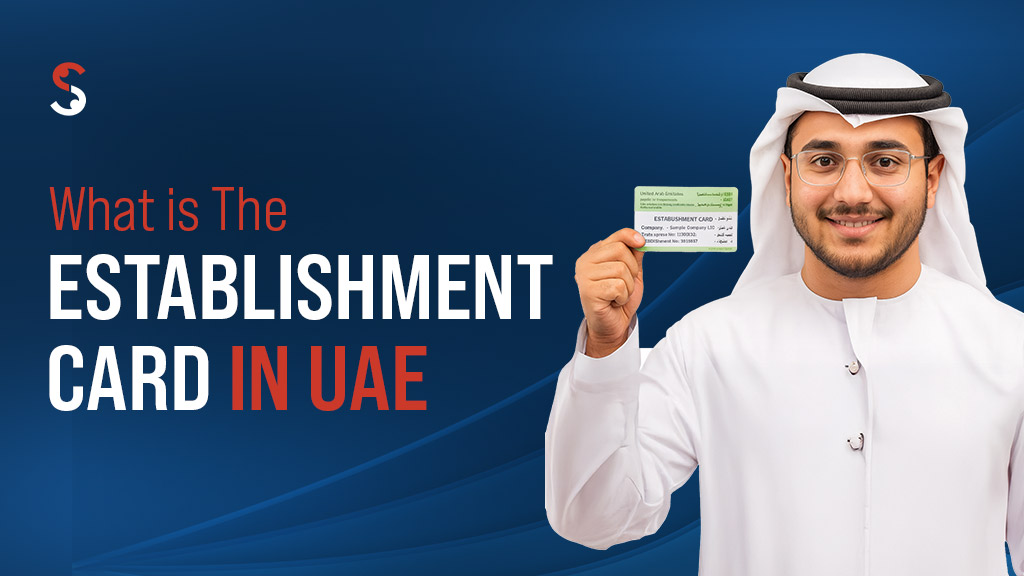
    An establishment card contains all the essential details that link your business to the immigration system, including: 

    • Company name 
    • Trade license number 
    • Unique Establishment ID number 
    • Date of issue and expiry 
    • Authorised signatory information 

    These details help immigration authorities verify your company’s identity whenever you carry out visa or residency-related activities. 

    What is the Importance of the Establishment Card in the UAE? 

    The establishment card plays a crucial role in the smooth functioning of any business in the UAE. It’s a key document that allows your company to operate legally and manage all immigration-related activities with ease. 

    1. Essential for Visa Applications 

    The establishment card is required every time your company applies for a new visa – whether it’s for business owners, employees, or dependents. It acts as proof that your company is registered with the UAE immigration system and has the right to sponsor individuals under its name. 

    2. Needed for Employee Hiring and Sponsorship 

    If you plan to hire foreign staff, your establishment card is a must. It authorises your company to sponsor employment visas and ensures that your employees are legally registered under your business. This step helps maintain transparency and compliance with UAE labour laws. 

    3. Required for Immigration Transactions 

    From visa renewals and cancellations to other immigration-related processes, the establishment card is used at every step. It serves as your company’s official identification for dealings with the GDRFA or free zone immigration departments. 

    4. Ensures Legal Compliance 

    Holding a valid establishment card helps your company stay compliant with UAE regulations. It confirms that your business is properly registered and recognised by immigration authorities. Not maintaining or renewing it on time can lead to fines or delays in processing important business activities. 

    5. Required for E-Channel Registration 

    For mainland companies, an establishment card is mandatory for e-channel registration, a digital system used by UAE immigration to process visa applications online. It simplifies submissions and reduces processing time for all immigration-related requests. 

    6. Simplifies Administrative Processes 

    Having an establishment card allows your company to access online immigration portals and government systems easily. This makes administrative work faster, saving you time on paperwork and approvals. 

    Documents Required to Apply for an Establishment Card 

    To apply for an establishment card in the UAE, you’ll need to prepare and submit a few important documents. Below is a list of the key documents typically required: 

    • Copy of a valid Trade License 
    • A passport copy of the company owner or partners 
    • Emirates ID of the owner or authorised signatory 
    • Copy of the Memorandum of Association (MOA) 
    • Tenancy contract and Ejari certificate (for mainland businesses) or lease agreement (for free zone companies) 
    • Company stamp 
    • Copy of Immigration E-Channel registration (if applicable) 
    • Passport-sized photo of the owner or authorised signatory 
    • Payment receipt or proof of government fee submission 

    How to Apply for an Establishment Card in the UAE

    Here is a step-by-step guide to applying for a new Establishment Card:

    Step 1: Ensure You Have a Valid Trade License 

    Before you begin, make sure your trade license is active and all company details are up to date. The establishment card can only be issued to businesses with a valid license. 

    Step 2: Register with the GDRFA or Free Zone Authority 

    For mainland companies, you’ll need to register with the General Directorate of Residency and Foreigners Affairs (GDRFA) in your respective emirate. If your business is located in a free zone, the application will go through that free zone’s immigration department or authority. 

    Step 3: Gather and Submit the Required Documents 

    Prepare all the necessary documents – including your trade license, MOA, Emirates ID, tenancy contract, and e-channel registration (if applicable). Submit them through the GDRFA portal, the free zone’s online system, or via an authorised PRO service provider like Shuraa India. 

    Step 4: Pay the Applicable Fees 

    Pay the government fees for the establishment card. The cost may vary depending on your business type and the emirate you are registered in. 

    Step 5: Wait for Approval and Card Issuance 

    Once your application is reviewed and approved, your UAE establishment card will be issued. In most cases, it is delivered digitally within a few working days and can be downloaded or accessed online through the respective authority’s portal. 

    Step 6: Keep the Card Safe and Up to Date 

    Your establishment card is valid for one year (in most cases). Make sure to renew it before it expires to avoid penalties or suspension of visa services. 

    Establishment Card in the UAE Fees 

    The standard fee for issuing a new Establishment Card in the UAE is between AED 100 to AED 200. This fee is applicable whether you’re applying through the GDRFA in Dubai or the Federal Authority for Identity and Citizenship (ICP) in other emirates. 

    In addition to the issuance fee, there are several mandatory charges: 

    • Value Added Tax (VAT): A 5% VAT is applied to the issuance fee, amounting to AED 10. 
    • Knowledge Dirham: A fee of AED 10 is levied. 
    • Innovation Dirham: Another fee of AED 10 is charged. 

    Validity and Renewal of the Establishment Card 

    An Establishment Card in the UAE is generally valid for one year from the date of issue. It is essential for sponsoring visas, completing immigration transactions, and ensuring your business stays compliant with UAE regulations. 

    Renewing the card is a straightforward process, butit  it should be done before it expires. Late renewal can lead to penalties, delays in visa processing, or restrictions on immigration-related activities. 

    The renewal process requires submitting the same documents as the initial application, including your trade license, MOA, Emirates ID, and tenancy contract. Government and service fees must also be paid during renewal. Typically, the renewal fee for the Establishment Card is around AED 200, with additional charges. If you need expedited processing, an urgent fee of AED 100 may apply. 

    Many businesses choose to use PRO services or typing centres to handle renewals efficiently, saving time and avoiding errors. 

    How Shuraa India Can Help 

    The Establishment Card is an important document for any business in the UAE. It helps your company run smoothly, sponsor employees, manage visas, and stay fully compliant with immigration rules. 

    Getting your establishment card or renewing it on time can sometimes feel complicated, especially with changing regulations and multiple documents to prepare. That’s where professional assistance makes a difference. Shuraa India can help you obtain or renew your establishment card quickly and efficiently, taking care of all the paperwork and government procedures. 

    We take care of everything – from preparing documents, registering with the GDRFA, handling renewals, to providing PRO services, so you don’t have to worry about the paperwork anymore. With our support, you can save time, avoid mistakes, and stay compliant with UAE rules. 

    If you want to get your Establishment Card without any hassle, connect with Shuraa India and let us handle everything for you. 
  • India Taxation vs UAE: Complete Comparison 2026

    India Taxation vs UAE: Complete Comparison 2026

    When it comes to business and investment, two names that often come up are the UAE and India. Both are fast-growing economies offering plenty of opportunities, but what truly sets them apart for investors is taxation. Taxes can make a big difference in how much profit you actually take home, and that’s why many entrepreneurs compare the UAE’s tax-friendly system with India’s more structured but higher-tax setup. 

    The UAE is known for its investor-friendly tax policies – there’s no personal income tax, no tax on capital gains or dividends, and even the newly introduced 9% corporate tax is among the lowest in the world. On the other hand, India’s tax system is more layered, with higher income tax rates, capital gains tax, and multiple GST slabs that can go up to 28%. While India continues to attract investors with its large market and growing economy, many are drawn to the UAE’s simpler and more relaxed tax environment. 

    Considering the complexity of both, we’ll make it easy for you to understand the key tax differences between the UAE and India, highlight the main benefits for investors, and explain why so many entrepreneurs and global businesses are choosing the UAE as their base for growth and expansion. 

    Overview of the Taxation System in the UAE in 2026 

    The United Arab Emirates (UAE) has built a reputation as a tax-friendly destination, making it a top choice for investors and entrepreneurs. Let’s take a look at the UAE’s taxation system in 2026 and why it’s so appealing. 

    1. Zero Personal Taxation 

    The UAE maintains its standing as one of the world’s most tax-efficient destinations for individuals: 

    • No Personal Income Tax: Residents, including expatriates and UAE nationals, are generally not required to pay tax on their salaries or personal earnings. 
    • No Tax on Investment Income: The government typically imposes a 0% tax on capital gains realised from the sale of assets (like stocks and real estate) and 0% tax on dividends earned by individuals. There is also generally no wealth tax or inheritance tax. 

    2. Corporate Tax 

    The UAE introduced a corporate tax in 2023, but it’s still very competitive compared to other countries. 

    • 0% Rate: For taxable profits up to AED 375,000 (to support small businesses and start-ups). 
    • Standard Rate: Businesses pay 9% on taxable income above AED 375,000. 
    • Free Zone Exemptions: Companies in designated Free Zones can enjoy 0% corporate tax on qualifying income if they meet certain requirements. 
    • Minimum Top-Up Tax: Starting January 2025, large multinational groups with annual global revenue over €750 million will be subject to a 15% minimum top-up tax. This ensures global standards are met while keeping the UAE attractive for international businesses. 

    3. Value Added Tax (VAT) 

    As a consumption tax, VAT is the primary source of indirect revenue for the government: 

    • Standard Rate: A 5% VAT is applied to most goods and services. This remains one of the lowest VAT rates globally. 
    • Exemptions/Zero-Rated: Certain essential services and sectors, such as exports, international transportation, the first supply of residential property, and some healthcare and education services, are either zero-rated or exempt from VAT. 

    Double Taxation Avoidance Agreements (DTAAs): 

    As of 2025, the UAE has signed over 140 DTAAs with countries worldwide, including major economies like the UK, India, China, and Singapore. These agreements aim to eliminate or reduce double taxation on income, providing clarity on tax rights and enhancing the attractiveness of the UAE as a global investment hub. 

    Overview of the Taxation System in India 

    India’s taxation system is structured to support its growing economy, offering a range of tax rates and compliance requirements. Here’s an overview of the key aspects as of 2026: 

    1. Personal Income Tax (PIT) 

    Personal income is taxed based on slabs, with two parallel regimes available for individuals (Old Regime with exemptions/deductions, and New Default Regime with lower rates and fewer deductions). 

    Old Tax Regime: Allows deductions and exemptions; tax rates are: 

    • Up to ₹2.5 lakh: Nil 
    • ₹2.5 lakh to ₹5 lakh: 5% 
    • ₹5 lakh to ₹10 lakh: 20% 
    • Above ₹10 lakh: 30% 

    Additional surcharges and cess may apply. 

    New Tax Regime: Offers reduced tax rates without deductions: 

    • Up to ₹3 lakh: Nil 
    • ₹3 lakh to ₹7 lakh: 5% 
    • ₹7 lakh to ₹10 lakh: 10% 
    • ₹10 lakh to ₹15 lakh: 15% 
    • ₹15 lakh to ₹20 lakh: 20% 
    • ₹20 lakh to ₹25 lakh: 25% 
    • Above ₹25 lakh: 30% 

    Taxpayers can choose the regime that best suits their financial situation. 

    Residential Status: Tax liability is tied to the taxpayer’s residential status. Resident and Ordinarily Resident (ROR) individuals are taxed on their worldwide income, while Non-Resident (NR) and Resident but Not Ordinarily Resident (RNOR) individuals are generally only taxed on income earned or accrued in India. 

    2. Corporate Tax Rates 

    Corporate tax rates in India vary based on the type and size of the company: 

    • For companies with a turnover up to ₹400 crore: 25% 
    • For companies opting for Section 115BAA: 22% 
    • For companies opting for Section 115BAB (new manufacturing companies): 15% 
    • Other domestic companies: 30% 
    • Foreign Companies: Generally taxed at a higher rate of 40%. 

    These rates are exclusive of applicable surcharges and cess 

    New Manufacturing Companies: Companies incorporated after October 1, 2019, that commence manufacturing and opt for a special regime can pay a much lower rate of 15% (subject to conditions and foregoing most deductions/incentives). 

    3. Capital Gains Tax 

    Capital gains tax in India depends on the holding period of the asset:

    Short-Term Capital Gains (STCG) Tax Rates in India: 

    Asset Type  Holding Period  Tax Rate 
    Listed Equity Shares, Equity Mutual Funds, Business Trust Units  Less than 12 months  20% (with Securities Transaction Tax) 
    Unlisted Shares, Real Estate, Gold, Bonds, Debt Mutual Funds  Less than 24 months  Taxed at applicable income tax slab rates 

    Note: The 20% tax rate applies to transactions completed on or after July 23, 2024, following the Union Budget 2024 revisions. 

    Long-Term Capital Gains (LTCG) Tax Rates: 

    Asset Type  Holding Period  Tax Rate 
    Listed Equity Shares, Equity Mutual Funds, Business Trust Units  More than 12 months  12.5% (above ₹1.25 lakh exemption) 
    Unlisted Shares, Real Estate, Gold, Bonds, Debt Mutual Funds  More than 24 months  12.5% (without indexation) 

    Note: For property acquired before July 23, 2024, taxpayers may choose between 12.5% without indexation or 20% with indexation. 

    4. Goods and Services Tax (GST) 

    India’s GST system has been streamlined to include the following key rates: 

    • 5%: Essential items such as life-saving drugs, footwear priced below ₹500, and textiles. 
    • 18%: Standard rate applied to most goods and services. 
    • 40%: Special rate for luxury and harmful products, including luxury cars, tobacco, aerated drinks, and gambling services. 

    5. Compliance Complexity and Filing Frequency 

    India’s tax system requires regular compliance: 

    • Income Tax Returns: Individuals and companies must file annual returns, with deadlines varying based on the type of taxpayer. 
    • GST Returns: Businesses must file monthly and annual GST returns, depending on their turnover and nature of business. 

    Get a free DTAA & tax planning consultation for your UAE business.

    India vs. UAE Tax Comparison Table 

    Let’s take a look at how taxes in the UAE and India compare for investors in 2026. 

    Feature  UAE (United Arab Emirates)  India 
    Personal Income Tax  0% (Zero on salaries, wages, and personal earnings for residents).  5% to 30% (Progressive slab-based system, plus Surcharge and Cess). 
    Corporate Tax (Standard)  9% on taxable profits exceeding AED 375,000 (approx. $102,000). 0% on profits up to this threshold.  25% to 30% (Varies based on turnover and type of company, plus Surcharge and Cess). Special low rate of 15% available for new manufacturing companies. 
    Corporate Tax (Special Cases)  0% for Qualifying Free Zone Persons (QFZPs) on “Qualifying Income.” 15% Domestic Minimum Top-Up Tax (DMTT) for MNEs with global revenue over €750M.  40% for Foreign Companies (plus Surcharge and Cess). 
    Capital Gains Tax (Individual)  0% (Generally no tax on gains from sale of stocks, real estate, or other personal assets).  20% (Short-Term Capital Gains); 12.5% (Long-Term Capital Gains). 
    Dividends  0% (Generally no tax on dividends received by individuals/investors).  Taxable at the individual’s slab rate (up to 30% + Surcharge/Cess). 
    Indirect Tax  5% Value Added Tax (VAT), one of the lowest consumption tax rates globally.  5%–18% GST (standard rates); 40% on luxury and harmful goods (e.g., tobacco, aerated drinks). 
    Compliance & Filing  Low: Annual filing for Corporate Tax (mandatory for most businesses, even those at 0% rate). VAT filing is typically quarterly.  High: Requires monthly/quarterly GST filings, quarterly TDS filings, and annual income tax filings, leading to a higher administrative burden. 
    Tax Treaties (DTAAs)  Over 140 signed, used extensively for global tax planning and profit repatriation.  Over 90 signed, providing relief from double taxation but requiring strict compliance with treaty conditions (e.g., Tax Residency Certificate – TRC). 

    Note: The tax rates and rules mentioned above are subject to change. Investors and businesses should always consult the latest regulations or a tax professional like Shuraa India before making decisions. 

    Key Tax Benefits for Investors in the UAE 

    The UAE has become a hub for global investors, and one of the main reasons is its tax-friendly environment. Here are the key reasons why entrepreneurs are choosing the UAE: 

    1. No Personal Income Tax 

    Individuals in the UAE don’t pay personal income tax, meaning your salary, investment income, and rental earnings remain completely yours. 

    2. Corporate Tax Benefits 

    Standard corporate tax is 9% on profits above AED 375,000. Companies in Free Zones can enjoy 0% corporate tax on qualifying income, making it highly attractive for startups and international businesses. 

    3. Ease of Repatriation 

    Investors can freely transfer profits and capital out of the UAE without restrictions, offering flexibility for global business operations. 

    4. Double Taxation Avoidance Agreements (DTAAs) 

    The UAE has over 140 DTAAs with countries worldwide, preventing the same income from being taxed twice and making cross-border investments smoother. 

    5. Special Incentives for Certain Sectors 

    Free Zones often offer tax holidays, customs duty exemptions, and other sector-specific incentives for tech, media, logistics, and finance businesses. 

    6. Encouragement for Wealth and Asset Diversification 

    With no tax on capital gains, dividends, or foreign income, investors can diversify portfolios internationally without facing high tax burdens. 

    Our India-UAE tax advisors help Indian entrepreneurs legally minimise double taxation — free first consultation.

    UAE: A Smarter Choice for Global Investors 

    When it comes to taxation, the UAE offers significant advantages over India – from zero personal income tax and capital gains exemptions to low corporate tax rates, Free Zone benefits, and easy repatriation of profits. These features make the UAE an attractive destination for entrepreneurs, investors, and global businesses looking to maximise returns while minimising tax burdens. 

    If you’re considering expanding or relocating your business to the UAE, Shuraa India can guide you every step of the way. From tax registration and compliance to choosing the right business structure, licensing, approvals, office space, and visas, we provide end-to-end support to make your UAE business journey smooth and hassle-free. 

  • Is Dubai Really Tax Free?

    Is Dubai Really Tax Free?

    Dubai is often seen as a dream destination where people can earn well and keep most of their money because it’s “tax-free.” This idea attracts thousands of expats, entrepreneurs, and investors every year. The absence of personal income tax in modern cities makes Dubai stand out compared to many other countries. It has become a significant reason why many choose to move here. 

    But the reality is slightly different. Although there is no income tax, Dubai is not entirely tax-free. The government has introduced VAT, corporate tax, and excise duties to support the economy. So, when we hear “Dubai is tax-free,” it’s partly true but also a myth.  

    In this blog, we’ll explore whether Dubai is truly tax-free or if it’s more about innovative taxation policies that still make it one of the most attractive places for expats and businesses. 

    How Much of Dubai is Actually Tax-Free? 

    When people hear about Dubai, one of the first things that comes to mind is that it’s a “tax-free haven.” But is Dubai truly tax free? The answer is both yes and no. Indeed, Dubai does not impose personal income tax on expatriates. That’s what makes it very attractive for professionals, entrepreneurs, and investors from around the world. You get to keep your full salary without deductions, which is rare in most countries. 

    However, this doesn’t mean Dubai is entirely tax-free. Additional taxes and fees may apply. For example, the UAE has Value Added Tax (VAT) at 5% on goods and services. Specific industries, such as oil and gas or foreign banks. It may also be subject to corporate taxes. Additionally, there are municipal taxes on items such as property rent, hotel stays, and utility bills. 

    So, while Dubai offers a unique tax-friendly environment, calling it completely “tax-free” is a myth. The real benefit lies in the absence of income tax, combined with low overall tax rates compared to many countries. This is what makes Dubai one of the most attractive places in the world to live, work, and do business. 

    Understanding Dubai’s Tax Structure 

    Dubai has built its global reputation as a tax-friendly destination, but that doesn’t mean it is 100% tax-free. Instead, the city has a unique tax system designed to attract expats, businesses, and investors, while still generating revenue through indirect taxes and duties. Let’s break it down: 

    1. No Personal Income Tax 

    The biggest attraction for expats in Dubai is the absence of personal income tax. Unlike many countries where a chunk of your salary goes to the government, in Dubai, you take home your entire paycheck. This is why so many professionals and entrepreneurs move here to maximise their savings. 

    2. Corporate Tax 

    Starting from June 2023, the UAE introduced a 9% corporate tax on business profits. However, this only applies to companies making profits above AED 375,000. Small businesses earning less than this threshold are exempt from this requirement.  

    This makes Dubai especially attractive for startups and small enterprises, while larger companies still benefit from relatively low tax rates compared to global standards. 

    3. Value Added Tax (VAT) 

    Introduced in 2018, Dubai applies a 5% VAT on most goods and services. While the rate is low compared to Europe or other parts of the world. It still means that day-to-day expenses include some level of taxation. Certain essential items, such as healthcare and education, may be zero-rated or exempt from VAT. 

    4. Excise Duty 

    To discourage the consumption of harmful products, the UAE imposes excise duties. These include: 

    • 100% tax on tobacco products 
    • 100% tax on energy drinks 
    • 50% tax on sugary and carbonated drinks 

    This not only boosts government revenue but also promotes healthier lifestyle choices. 

    5. Customs Duties 

    Dubai is a central hub for international trade, and imported goods are often subject to customs duties. The standard rate is 5% of the product’s value, although certain goods may be exempt or taxed at higher rates depending on the type of product. 

    Dubai doesn’t charge income tax, but it does collect revenue through corporate tax, VAT, excise duties, and customs duties.  

    This balanced system keeps the city attractive for expats and investors while ensuring the government has funds to invest in infrastructure, healthcare, and public services. 

    Get a free UAE tax planning session for your Indian-owned business.

    Dubai Income Tax for Expats: What You Need to Know? 

    One of the biggest reasons professionals and entrepreneurs move to Dubai is the absence of personal income tax. For expats, this means your entire salary is yours to keep, no monthly deductions, no income tax filings, and no hidden charges. This is a significant advantage compared to countries where income tax can consume 20–40% of earnings. 

    1. Zero Tax on Foreign Income and Savings 

    Another benefit is that Dubai does not tax your foreign income, investments, or savings. If you have money in overseas bank accounts, property investments abroad, or passive income sources, Dubai won’t tax them. This makes it an attractive hub for high-net-worth individuals and business owners who want to grow their wealth without additional tax burdens. 

    2. Home Country Tax Obligations 

    However, it’s essential to understand that living in Dubai doesn’t automatically free you from taxes in your home country: 

    • US Citizens: The United States taxes its citizens on worldwide income, even if they live abroad. Therefore, Americans in Dubai may still be required to file tax returns in their home country, although they may be eligible for exclusions and tax treaties. 
    • Indian Expats: Indians working in Dubai usually don’t pay income tax in India if they qualify as non-residents under Indian tax laws. But if they maintain financial ties in India or spend more time there, they might still be liable.  

    Dubai offers expats a tax-free salary and no tax on foreign wealth, but you should always check the tax rules of your own country to avoid surprises. 

    Dubai Tax Free Myth or Reality

    Many people believe Dubai is an entirely tax-free paradise, but the truth is a bit more balanced. Here are some common myths and their realities: 

    Myth 1: Dubai has zero taxes.

    Reality: Expats don’t pay personal income tax, but there are indirect taxes like VAT (5%), excise tax on certain goods (tobacco, energy drinks, soft drinks), and a 9% corporate tax for businesses above a certain profit level. 

    Myth 2: Businesses don’t pay anything to the government.

    Reality: While Dubai is business-friendly, companies are subject to corporate tax (on profits exceeding AED 375,000), as well as trade license fees, customs duties, and other charges, depending on the activity. 

    Myth 3: Real estate is tax-free.

    Reality: Buying property comes with a 4% property transfer fee, and renting property includes a housing fee (often added to utility bills). 

    Myth 4: No hidden costs for residents.

    Reality: Residents often pay government service fees, visa renewal charges, road tolls (Salik), and municipal fees, which serve as indirect taxes. 

    Myth 5: Dubai is the same for everyone’s taxes.

    Reality: Your home country’s tax laws matter. For example, US citizens must still report worldwide income, even if they live in Dubai. Indian residents may also have tax obligations if they qualify as Indian tax residents. 

    Dubai is tax-friendly (no income tax for individuals), but not entirely tax-free. Instead, it follows a system of low direct tax + indirect taxes and fees. 

    Benefits of Dubai’s Tax System for Expats & Businesses 

    Dubai has built a reputation as one of the most attractive destinations for both individuals and companies, due to the unique tax structure. Let’s look at the key benefits: 

    1. Higher Savings for Expats 

    Since there is no personal income tax, expats can take home their full salary. This makes Dubai especially appealing to professionals who want to save more compared to other countries, where a significant portion of their income is allocated to taxes. 

    2. Investor-Friendly Laws 

    Dubai offers business-friendly regulations, easy company setup processes, and clear rules for foreign ownership. This encourages entrepreneurs and investors to launch or expand their businesses without unnecessary hurdles. 

    3. Global Business Hub 

    With its prime location between Europe, Asia, and Africa, Dubai has become a significant hub for international trade, finance, and logistics. The tax advantages make it even more attractive for global companies looking to expand operations. 

    4. Lifestyle Appeal 

    Along with tax benefits, Dubai offers a high standard of living, modern infrastructure, top-notch healthcare, and luxurious lifestyle options. This makes it not just a place to work, but also a place to enjoy life. 

    5. Reinvestment Opportunities 

    Businesses can reinvest more profits into growth because of the low corporate tax rate (9%) compared to many other countries. Free zones also offer added tax exemptions and benefits.

    Dubai’s tax system enables individuals to save more, businesses to grow faster, and together, they enjoy the benefits of living in a global, modern, and opportunity-rich city. 

    No income tax. No capital gains. Our tax advisors help Indian businesses optimise their UAE structure for maximum savings.

    Comparison With Other Countries 

    Dubai’s tax system stands out when compared to major economies: 

    Country  Personal Income Tax  Corporate Tax  VAT/GST  Key Observation 
    Dubai (UAE)  0%  9% (above AED 375k profit)  5% VAT  Maximum salary retention + low overall tax burden 
    India  5% – 30% (slab-based)  22% – 30%  18% GST  High tax outflow reduces savings 
    UK  20% – 45%  25%  20% VAT  Heavy personal taxation, lower savings 
    US  10% – 37% (federal) + state taxes  21%  No federal VAT but state sales taxes apply  Complex tax system + worldwide income reporting for citizens 

    Why Dubai Remains Attractive Despite New Taxes 

    • Even after adding 5% VAT and 9% corporate tax, overall taxation is much lower than India, UK, or US. 
    • No personal income tax ensures higher disposable income and savings. 
    • Business set-up costs are offset by a low compliance burden and free zone incentives. 
    • Lifestyle and infrastructure add significant non-monetary value. 

    How Shuraa India Will Help You? 

    Setting up a business in Dubai or understanding its tax system can feel overwhelming, especially for first-time expats and entrepreneurs. That’s where Shuraa India steps in as your trusted guide. 

    We provide end-to-end support to help you handle Dubai’s business setup and tax rules with ease. Our services include: 

    • Business Setup & Licensing: From selecting the appropriate company structure to obtaining trade licenses, we handle all the paperwork so you can focus on growing your business. 
    • Tax Compliance & VAT Support: We simplify Dubai’s indirect taxes, such as VAT, ensuring your business stays fully compliant while maximising your savings. 
    • Advisory on Corporate Tax Laws: With the introduction of corporate tax in the UAE, we keep you updated on legal requirements and guide you on how to stay compliant. 
    • Personalised Consultation for Indian Entrepreneurs: If you’re moving from India to Dubai, we provide customised solutions that address your unique needs, from returning profits to understanding double taxation agreements.  

    With Shuraa India by your side, you don’t just start a business in Dubai; you start an innovative, compliant one, with the right strategy for success. 

  • What are the future sectors of the UAE?

    What are the future sectors of the UAE?

    The United Arab Emirates has transformed itself from an oil-dependent economy into a lively global business hub, driven by ambitious national agendas such as UAE Vision 2031 and the Dubai Economic Agenda (D33). These strategic plans focus on sustainable growth, innovation, and attracting top talent and investment from around the world. 

    For entrepreneurs and investors, identifying future business sectors in the UAE is no longer optional; it’s essential. As the country accelerates its diversification efforts, sectors such as technology, renewable energy, advanced manufacturing, healthcare, and space exploration are poised to lead the way in the next decade. Understanding where opportunities are emerging enables businesses to align with government priorities, capitalise on incentives, and stay ahead in an increasingly competitive market.  

    Government Vision and Economic Diversification 

    The UAE government has been developing a complete plan to build a strong and future-ready economy that is not reliant solely on oil. Significant initiatives, such as the Dubai Industrial Strategy 2030 and Abu Dhabi Vision 2030, are guiding this transformation. These plans focus on creating industries that are innovative, sustainable, and globally competitive, such as technology, clean energy, advanced manufacturing, and healthcare. 

    One of the most significant steps taken by the government is economic diversification, which encourages growth in non-oil sectors. To achieve this, the UAE has introduced regulatory reforms that facilitate the establishment and development of businesses.  

    For example, the country now allows 100% foreign ownership of companies in many sectors, which means investors don’t need a local partner to set up their business. This policy has attracted entrepreneurs and global companies to the UAE, as it provides them with complete control over their ventures. 

    The UAE is also investing heavily in the digital economy, supporting innovation in areas like artificial intelligence, fintech, e-commerce, and smart cities. These initiatives create opportunities for both local and international businesses to explore new markets and develop advanced products and services. 

    Top Future Business Sectors in the UAE 

    The UAE is rapidly shifting from an oil-based economy to a global innovation hub, creating new opportunities for entrepreneurs and investors. Future-ready sectors, such as AI, renewable energy, healthcare, and space exploration, are driving this growth. Here’s a look at the industries set to shape the UAE’s next decade and why now is the best time to invest. 

    1. Technology & Artificial Intelligence (AI) 

    The UAE is becoming a global leader in technology and AI. The government has launched initiatives, such as the UAE National AI Strategy 2031, to integrate AI in education, healthcare, transportation, and government services.  

    There’s also strong support for robotics, machine learning, and big data projects, which are helping businesses improve efficiency and make smarter decisions. Startups and investors utilising AI-powered solutions are discovering exciting opportunities to test and expand their ideas in the UAE. 

    2. Renewable Energy & Sustainability 

    To reduce its dependence on oil, the UAE is investing heavily in clean energy. Projects such as the Mohammed bin Rashid Al Maktoum Solar Park and the development of green hydrogen plants demonstrate the country’s commitment to sustainability.  

    Businesses in solar power, waste-to-energy, energy storage, and carbon-neutral technologies will play a key role in helping the UAE achieve its Net Zero 2050 goals. 

    3. Healthcare & Biotechnology 

    The UAE is transforming into a regional hub for advanced healthcare and life sciences. Medical tourism is growing as patients from around the world visit for high-quality treatments.  

    At the same time, research and development hubs are focusing on biotechnology, pharmaceuticals, and genetic research. Companies in healthcare innovation, from telemedicine to pharma manufacturing. It will find strong government backing and growing demand. 

    4. Financial Technology (FinTech) 

    The financial sector in the UAE is undergoing a digital revolution. From digital banking to blockchain platforms and instant payment solutions, FinTech companies are reshaping how people and businesses manage money.  

    Regulatory sandboxes, such as those in the Abu Dhabi Global Market (ADGM) and the Dubai International Financial Centre (DIFC). It enables FinTech startups to test new products in a secure environment, making the UAE a hub for financial innovation. 

    5. Logistics & Supply Chain 

    With its strategic location between Europe, Asia, and Africa, the UAE has already established itself as a global trade hub. Advanced ports, such as Jebel Ali Port, and top airports in Dubai and Abu Dhabi make logistics seamless.  

    Future investments in smart warehouses, automated systems, and AI-powered supply chains are creating opportunities for businesses involved in shipping, cargo, and international trade services. 

    6. E-commerce & Digital Retail 

    Online shopping is experiencing rapid growth in the UAE. As a result, more people are opting to purchase a wide range of items online, from groceries to high-end luxury goods. This shift is creating substantial opportunities for e-commerce platforms, online marketplaces, and last-mile delivery solutions.  

    Therefore, businesses that provide fast, reliable, and innovative digital retail services are well-positioned to capture this rapidly expanding market. 

    7. Tourism & Entertainment Innovations 

    Tourism has always been a significant strength of the UAE, but it’s now evolving beyond luxury shopping and skyscrapers.  

    The country is focusing on cultural tourism, mega-events (like Expo 2020 Dubai), and even space tourism in the future. Startups in entertainment, virtual reality, and theme park innovations are adding to this dynamic sector. 

    8. Space Exploration & Aerospace 

    The UAE’s ambitious space program, which includes landmark missions such as the Hope Probe to Mars, is driving significant advancements in the region. In particular, it is opening doors in aerospace engineering, satellite technology, and space research.  

    Moreover, by forging partnerships with global space agencies, the UAE is encouraging private companies and research institutions to collaborate. However, accelerating the development of advanced aerospace technology. 

    Together, these sectors highlight how the UAE is preparing for a post-oil economy, one that is digital, sustainable, and driven by innovation. As a result, businesses entering these industries today can benefit from government incentives, strong infrastructure, and access to a rapidly expanding market. 

    Our advisors track UAE’s Vision 2031 sectors — let us help you enter at the right time

    Why Entrepreneurs Should Act Now? 

    The UAE’s emerging industries are growing rapidly, and early movers stand to reap the most significant rewards. Entering these sectors now means building a strong presence before markets become crowded. 

    With investor-friendly policies, government grants, and startup incubators actively supporting innovation, entrepreneurs have access to funding, resources, and mentorship like never before. Acting today ensures a head start in shaping the UAE’s future economy while maximising long-term growth potential. 

    What challenges should businesses expect when entering future sectors in the UAE? 

    Breaking into emerging industries in the UAE offers enormous potential, but companies must handle strict regulations, licensing hurdles, rising competition, and the need to adapt to local market dynamics. 

    • Regulatory compliance: Understanding and adhering to UAE laws and sector-specific regulations is crucial. 
    • Licensing requirements: Certain industries require special approvals or permits to operate. 
    • Rising competition: As future sectors expand, more players are entering the market. 
    • Adapting to local dynamics: Businesses must align with the UAE’s cultural, legal, and market expectations to succeed. 
    • Keeping up with policy changes: Regulations evolve quickly, requiring constant awareness and agility. 

    How Shuraa India Can Help You Enter Future Business Sectors in the UAE? 

    Shuraa India simplifies your journey into the UAE’s high-growth industries by providing complete business setup solutions customised to emerging sectors: 

    • Market Feasibility Studies: Identify which future-ready sector aligns best with your vision, resources, and growth plans. 
    • Business Setup Guidance: Choose the correct structure (mainland or free zone) to maximise benefits and meet industry requirements. 
    • End-to-End Licensing & Approvals: Handling complex, sector-specific regulations without delays. 
    • Banking & Legal Support: Receive assistance with opening corporate bank accounts, processing visas, and ensuring compliance with UAE laws. 
    • Strategic Partnerships: Connect with government initiatives, incubators, and accelerators to scale your business faster. 

    With Shuraa India as your partner, you can focus on innovation and growth while they handle the groundwork to establish and expand your business in the UAE’s most promising industries. 

    The Future Starts Now: Partner with Shuraa India! 

    The Future Business Sectors in the UAE are no longer distant opportunities; they are rapidly taking shape, supported by visionary policies, strong infrastructure, and unmatched global connectivity. From AI and renewable energy to space exploration and advanced healthcare, what are the future sectors of the UAE? They are the industries redefining how the world does business and they are open to entrepreneurs who act today. 

    The UAE’s transformation into a diversified, innovation-driven economy means businesses entering these high-growth industries now will enjoy first-mover advantages, generous government incentives, and access to global markets. 

    This is where Shuraa India comes in. Whether you’re launching a startup or expanding an established business, Shuraa India helps you handle every step, from market feasibility studies to licensing, compliance, banking, and building strategic partnerships. 

    The future isn’t waiting, why should you? Partner with Shuraa India to turn your future-sector business idea into reality and secure your place in the UAE’s next decade of growth. 

  • Open UAE Doors for Your Clients with Shuraa India

    Open UAE Doors for Your Clients with Shuraa India

    Today, many clients are not just thinking locally – they’re thinking globally. They want to grow their business, restructure finances, or explore new opportunities outside their home country. As a lawyer, CA, or legal advisor, you’re often the first person they turn to for guidance. 

    But when it comes to setting up a business in the UAE, it’s not always easy. Without the right local knowledge or government connections, the process can quickly become slow, confusing, and expensive. 

    That’s where Shuraa Business Setup’s Associate Program steps in. For over 26+ years, we’ve been helping professionals like you give their clients smooth, hassle-free solutions for business expansion in the UAE, while also opening up new earning opportunities for your own practice. 

    The Challenge Professionals Face 

    Lawyers and financial advisors are often the first point of contact for clients seeking international business expansion. These clients trust you to provide solutions – whether it’s about opening a company abroad, restructuring their investments, or setting up a new branch. 

    But let’s be honest: not every professional has the local connections or in-depth knowledge of UAE laws, business practices, and licensing systems. Many end up referring their clients to international law firms or third-party agencies, who may not fully understand the local market dynamics. 

    The result? 

    • Clients spending excessive money and time.
    • Projects that get delayed or, in some cases, never materialise.
    • Dissatisfaction that reflects back on you as the trusted advisor.

    Why Work with Shuraa Business Setup? 

    At Shuraa, we make things simple for you and your clients. By becoming our channel partner, you’re not just passing your clients to another firm, you’re connecting them with one of the most trusted business setup experts in the UAE. 

    Here’s why so many professionals around the world choose to partner with us: 

    • 26+ Years of Experience: Under the leadership of Mr. Saeed Khalifa Mohammed Al Fuqaei, we’ve helped over 100,000 businesses, including quasi-government organization, start and grow in the UAE. 
    • A Global Network of Partners: Thousands of lawyers, CAs, and consultants worldwide already work with us. 
    • All-in-One Support: From market research and licensing to taxes, visas, and even banking, we take care of everything. 
    • Strong Local Ties: Our connections with UAE authorities and free zones help speed things up and keep everything compliant. 
    • Happy Clients, Happy You: Your clients get a smooth and cost-effective experience, and you get to build even stronger trust with them. 

    Refer your clients to Shuraa and earn commissions — join our associate program free

    What’s in It for You? 

    Our Associate Program is built to benefit both you and your clients. Here’s how: 

    Grow Your Services: 

    With Shuraa by your side, you don’t need to worry about having offices or contacts in the UAE. You can confidently tell your clients, “Yes, I can help you expand there.” 

    Keep Clients Happy: 

    When clients see you can handle everything, whether it’s licenses, taxes, or company setup, they’ll trust you more and keep coming back. 

    Win-Win: 

    Every time you refer a client to us, you also get rewarded. It’s a win-win: you earn, and your clients get reliable, cost-effective solutions. 

    Stay Competitive: 

    More and more clients now expect international solutions. By teaming up with Shuraa, you’ll stand out from others and offer exactly what they’re looking for. 

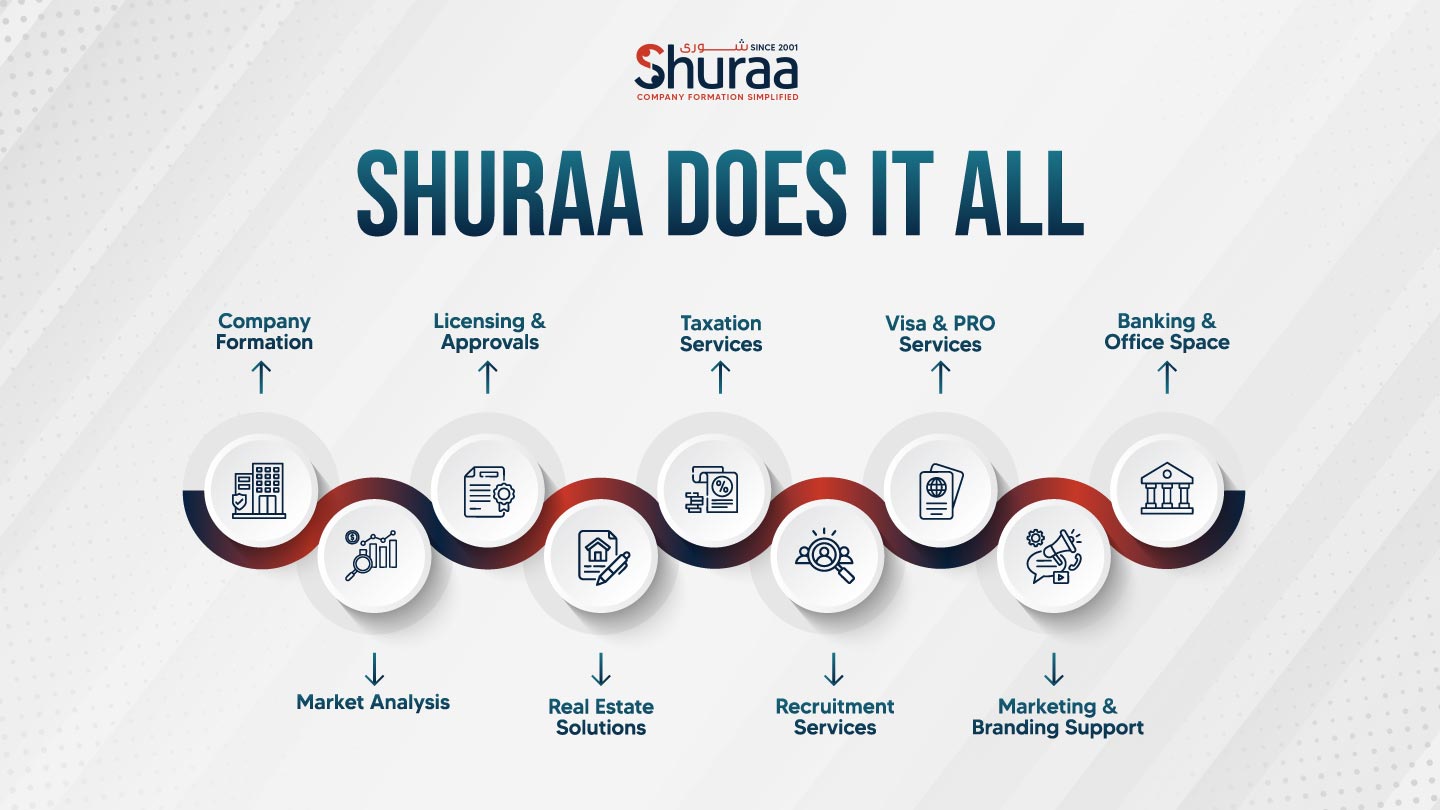
    Shuraa Does It All for Your Clients 

    When you bring your clients to Shuraa India, you’re not just introducing them to a consultancy, you’re connecting them to a one-stop shop for everything related to doing business in the UAE: 

    • Company Formation: Mainland, Free Zone, or Offshore setups, tailored to client needs. 
    • Licensing & Approvals: Handling all legalities and paperwork with precision. 
    • Taxation Services: Guidance on UAE tax compliance, VAT, and corporate tax. 
    • Visa & PRO Services: Smooth processing for employees, partners, and dependents. 
    • Banking & Office Space: Assistance with opening bank accounts and finding flexible office solutions. 
    • Market Analysis: Insights into the UAE market, helping clients make informed decisions. 
    • Real Estate Solutions: Assistance in securing office spaces, warehouses, or investment properties. 
    • Shuraa Recruitment Services: Helping clients hire the right talent to build and grow their teams. 
    • Marketing & Branding Support: Guidance to establish a strong brand presence in the UAE market. 

     In short, your clients won’t need to look elsewhere, because Shuraa covers it all. 

    Why Now Is the Right Time 

    The UAE is at the centre of global business expansion, with investor-friendly regulations, zero personal income tax, and access to both Middle Eastern and international markets. More companies are looking to establish a presence here than ever before. 

    By becoming a Shuraa India channel partner, you position yourself as the go-to advisor for clients exploring this opportunity. Instead of losing them to competitors or unreliable firms, you’ll be the one guiding them – backed by Shuraa’s trusted expertise. 

    200+ CAs, consultants & immigration advisors in India already partner with Shuraa India

    How to Join Shuraa’s Associate Program 

    Getting started is simple: 

    • Connect with us and express your interest. 
    • Sign up as an official associate partner. 
    • Refer your clients who are looking for expansion or restructuring in the UAE. 
    • Earn rewards and strengthen your client relationships while Shuraa handles the rest. 

    Let’s Partner for Growth 

    As a lawyer, CA, or legal advisor, your clients rely on you to guide them through important business decisions. With Shuraa as your partner, you don’t have to send them to firms that may not fully understand the UAE market. Instead, you can give them direct access to a trusted team that has been helping businesses grow here for more than 26+ years. 

    Whether your clients are SMEs, HNIs, MNCs, individuals, or aspiring entrepreneurs – We’re here for everyone. 

    By joining Shuraa’s Associate Program, you get more than just referral benefits – you get peace of mind knowing your clients are in safe hands, and you strengthen your own practice at the same time. 

    It’s a win-win. Your clients succeed, you succeed, and together, we build lasting growth. 

    Get in touch today: 

    Email us at Enquire@shuraa.in 

  • Corporate Tax Registration in UAE

    Corporate Tax Registration in UAE

    The UAE has long been known as a global hub for trade, investment, and entrepreneurship. However, with the implementation of corporate tax, businesses now have an added responsibility to ensure compliance. Corporate Tax Registration in the UAE is not only a legal requirement but also a crucial step in building trust and maintaining smooth operations.  

    By registering on time, companies can avoid substantial penalties, stay compliant with government regulations, and plan their finances more effectively. Whether you’re launching a new venture, running a small business, or managing a multinational corporation. Understanding the process of corporate tax registration is crucial for securing your company’s future growth in this evolving business landscape. 

    What is Corporate Tax Registration in the UAE? 

    Corporate Tax Registration in the UAE is the process by which businesses register with the Federal Tax Authority (FTA) to comply with the UAE’s corporate tax law.  

    Starting from 1 June 2023, the UAE introduced a federal corporate tax at a standard rate of 9% on taxable profits exceeding AED 375,000. Registration is mandatory for companies that fall under this regime. 

    Key points about Corporate Tax Registration in the UAE: 

    1. Who needs to register? 

    All UAE companies (mainland and free zone, unless specifically exempt), foreign companies earning UAE-sourced income, and partnerships or entities engaged in business activities in the UAE.  

    2. What is the purpose? 

    To ensure compliance with UAE tax laws and to obtain a Tax Registration Number (TRN) for filing corporate tax returns.

    3. How is it done? 

    Businesses apply online through the FTA’s EmaraTax portal by submitting company documents, trade licenses, and financial details. Once approved, the FTA issues a Corporate Tax Registration Certificate. 

    4. Are there exemptions? 

    Certain entities, such as government bodies, government-controlled entities, and qualifying free zone entities, may be exempt or taxed at 0% (if specific conditions are met). 

    5. What happens if you don’t register? 

    Penalties are imposed for late registration, non-compliance, or failure to file returns. 

    Corporate Tax Registration in the UAE is your company’s license to operate legally under the new tax law, ensuring you can report and pay corporate tax correctly. 

    Benefits of Corporate Tax Registration in UAE

    With the UAE’s introduction of corporate tax, businesses now have a clear framework to operate in a globally recognised and transparent tax environment. Far from being just a compliance requirement, corporate tax registration brings several primary advantages.  

    It enhances credibility, ensures legal protection, and supports long-term growth. Below are some of the key benefits of registering for corporate tax in the UAE: 

    1. Full Legal Compliance and Peace of Mind 

    Registering for corporate tax ensures your company operates within the legal framework set by the UAE Federal Tax Authority (FTA). This protects you from unexpected fines, audits, or business suspensions, giving you peace of mind to focus on growth and expansion. 

    2. Issuance of a Tax Registration Number (TRN) 

    Upon registration, your business is issued a TRN. An essential requirement for filing tax returns, maintaining compliance records, and facilitating clear communication with tax authorities. 

    3. Boosts Credibility with Stakeholders 

    Being tax registered reflects transparency and professionalism. It reassures investors, partners, banks, and clients that your company operates with integrity and complies with government regulations. 

    4. Easier Financial Management and Auditing 

    Tax registration encourages accurate bookkeeping and structured financial reporting. This simplifies audits, speeds up loan approvals, and enhances your ability to attract investors. 

    5. Access to Government Tenders and Incentives 

    Many government contracts, incentives, and business support schemes require proof of corporate tax compliance. Being registered positions your business to take advantage of these opportunities. 

    6. Improved International Reputation 

    A tax-registered business is perceived as reliable and compliant in global markets. This is particularly helpful when expanding overseas, forming partnerships, or opening international bank accounts. 

    7. Avoids Costly Future Liabilities 

    Registering early prevents backdated penalties or tax liabilities that could disrupt your cash flow if discovered later. 

    8. Facilitates Long-Term Strategic Planning 

    Businesses can plan more effectively for future tax obligations, restructure efficiently as needed, and scale without encountering regulatory hurdles. 

    9. Supports Business Continuity During Changes 

    If ownership changes, mergers occur, or new investors join the board, having proper tax registration ensures smooth transitions without legal complications. 

    10. Aligns with Global Compliance Standards 

    With the UAE adopting international tax practices to enhance transparency, corporate tax registration helps align your company with OECD and global compliance norms, a significant plus for multinational dealings. 

    Register for UAE corporate tax hassle-free — get expert help today.

    UAE Corporate Tax Rates

    The UAE corporate tax system is designed to remain business-friendly while aligning with international tax standards. As of now, UAE Corporate Tax rates are as follows: 

    • 0% corporate tax: For taxable income up to AED 375,000 (to support small businesses and startups).
    • 9% corporate tax: For taxable income above AED 375,000 (the standard corporate tax rate).
    • Different rates for large multinational companies: Multinationals that fall under OECD Pillar Two rules (with consolidated global revenues above EUR 750 million) may be subject to a 15% effective tax rate.
    • Free Zone businesses: Qualifying Free Zone Persons can continue to enjoy 0% tax on qualifying income, but non-qualifying income will be taxed at 9%.
    • Specific sectors exempt: Businesses engaged in natural resource extraction remain subject to Emirate-level taxation (not federal corporate tax).

    Specific exemptions also apply to government entities, pension funds, and investment funds under qualifying conditions. 

    Who Must Register for Corporate Tax in the UAE? 

    Corporate tax registration in the UAE applies to most businesses; however, specific rules govern who is required to register. Here’s a clear breakdown: 

    Entities Required to Register for Corporate Tax in the UAE 

    • All UAE companies and legal entities: This includes mainland companies and free zone companies (even if they are expected to benefit from a 0% free zone corporate tax rate, but they must pay 9% tax if they fall under this category). 
    • Foreign legal entities with a permanent establishment or earning UAE-sourced income: If a foreign company is doing business in the UAE or derives income from UAE sources, it generally must register. 
    • Partnerships and unincorporated joint ventures engaged in business in the UAE: Depending on their structure, they may be treated as transparent or taxable entities. 
    • Individuals conducting business activities under a license: Natural persons earning business or commercial income in the UAE (through sole proprietorships or freelancer permits) may also need to register. 

    Entities Not Required to Register 

    • Government entities and government-controlled entities (if exempt). 
    • Extractive and non-extractive natural resource businesses (if they meet specific exemption conditions). 
    • Qualifying investment funds, pension funds, and public benefit entities (if approved as exempt by the FTA). 
    • Individuals earning only employment income, dividends, or personal investment income (not from a licensed business). 

    Documents Required for Corporate Tax Registration

    Registering for Corporate Tax in the UAE is a streamlined online process, but it requires businesses to submit precise documentation to avoid delays or penalties. Companies should prepare the following essentials before starting the application: 

    • Valid Trade License 
    • Emirates ID 
    • Company Formation Papers 
    • Authorised Contact Information 
    • Registered Business Address 
    • Defined Tax Period 
    • Passport-sized photographs 
    • Company bank account details 

    Having these documents ready in advance ensures a smooth application and timely issuance of your corporate tax registration certificate. 

    How to Register Corporate Tax in the UAE? 

    Registering for corporate tax in the UAE is a straightforward process that can be completed online through the Federal Tax Authority (FTA). Here’s a clear step-by-step guide: 

    Step 1: Check if your business needs to register 

    Corporate tax applies to: 

    • All companies in the UAE mainland and free zones (unless specifically exempt). 
    • Foreign companies earning UAE-sourced income. 
    • Partnerships or other entities engaged in business activities in the UAE.  

    Entities exempt by law (such as certain government entities, extractive industries, or qualifying investment funds) may not be required to register but may still be required to file for exemption. 

    Step 2: Prepare the required documents 

    Typically, you’ll need: 

    • Trade license(s). 
    • Memorandum of Association (MoA) or Articles of Association (AoA). 
    • Passport copies and Emirates IDs of owners/partners. 
    • Contact details (email, phone). 
    • Business address details. 
    • Financial information (like audited statements if available). 

    Step 3: Register on the FTA’s EmaraTax portal 

    • Visit https://eservices.tax.gov.ae. 
    • Create an EmaraTax account or log in if you already have one. 
    • Select “Corporate Tax Registration” and fill in the form. 
    • Upload the required documents. 

    Step 4: Receive your Tax Registration Number (TRN) 

    • Once your application is reviewed and approved, the FTA will issue a corporate tax registration certificate with your TRN. 
    • This number is required for filing corporate tax returns and official correspondence with the FTA. 

    Step 5: Stay compliant after registration 

    • Maintain accurate accounting records. 
    • File corporate tax returns annually (within 9 months of the end of the financial year). 
    • Pay any due tax by the deadline to avoid penalties. 

    Shuraa’s tax team handles corporate tax registration, filing & compliance for 5,000+ Indian businesses in UAE — free consult.

    Why Choose Shuraa India for Corporate Tax Registration in the UAE? 

    Corporate Tax Registration in the UAE is more than just a legal obligation; it is a crucial step to ensure your business remains compliant, credible, and well-positioned for sustainable growth. Timely registration protects your company from penalties, builds stakeholder confidence, and positions you to benefit from government incentives and international opportunities. 

    Whether you’re an entrepreneur starting up, a growing SME, or managing a multinational corporation, handling the registration process correctly is critical. This is where Shuraa can make all the difference. With expert guidance in business setup, tax advisory, and compliance, Shuraa simplifies the entire process of Corporate Tax Registration in the UAE, ensuring you meet every requirement with ease and confidence. 

    By partnering with professionals like Shuraa India, you can focus on expanding your business while leaving the complexities of corporate tax to the experts, securing your company’s future in the UAE’s evolving business landscape. 

  • Top 10 AI and Tech Businesses to Start in Dubai

    Top 10 AI and Tech Businesses to Start in Dubai

    Today, everybody knows that Dubai is one of the most exciting places in the world for technology and innovation. What was once a trading hub is now a global centre for artificial intelligence (AI), fintech, smart infrastructure, and digital solutions. The city’s growth is powered by visionary leadership, advanced infrastructure, and strong government support for new technologies. 

    One of the biggest steps in this direction is the UAE Artificial Intelligence Strategy 2031, which aims to make the country a world leader in AI. By 2030, AI alone is expected to add over AED 335 billion (around USD 91–96 billion) to the UAE’s economy. 

    To make this vision a reality, Dubai has launched several ambitious initiatives: 

    • Smart Dubai (now Digital Dubai): Driving the city’s digital transformation with AI-based services in healthcare, transport, tourism, and more. 
    • Dubai Future Foundation and the Dubai Centre for AI: Supporting startups, researchers, and innovators through programs like the Dubai Future Accelerators and the newly launched Dubai AI Campus. 
    • DIFC Innovation Hub: A dedicated ecosystem in Dubai International Financial Centre that helps fintech, Insurtech, and other tech businesses grow with licensing, networking, and funding opportunities. 

    Dubai gives entrepreneurs everything they need: tax-friendly policies, 100% foreign ownership in many free zones, easy company setup, and direct access to global markets. This is why more and more entrepreneurs are choosing Dubai to launch their AI and tech businesses. So, here are the top 10 AI Business Ideas in Dubai that have the potential to thrive in the coming years. 

    Top 10 AI and Tech Businesses in Dubai 

    Here are some of the most promising tech startup opportunities in the UAE for tech entrepreneurs: 

    1. AI-Powered Healthcare Solutions 

    Healthcare is one of Dubai’s top priorities, and the government is investing in AI to build smart hospitals and digital health systems. AI can transform this sector by improving diagnostics, reducing human error, and making healthcare more accessible. 

    Opportunities for entrepreneurs: 

    • AI diagnostics & imaging: Tools that help doctors detect diseases like cancer or heart conditions earlier. 
    • Virtual health assistants: AI chatbots or apps that answer medical queries and provide basic consultations. 
    • Remote monitoring & wearables: Devices that track patient vitals and send real-time updates to doctors. 
    • Medical data analytics: Platforms that process huge patient data sets to predict outbreaks and treatment success. 
    • Telemedicine platforms: AI-enabled video consultations tailored for Dubai’s diverse expat population. 

    Dubai Healthcare City and the Dubai Health Authority often collaborate with startups, so entrepreneurs can tap into these ecosystems for growth. 

    2. FinTech & Digital Payments 

    Dubai is driving a cashless economy by 2030, and FinTech is at the heart of this transition. With a large expat population sending and receiving money globally, there’s strong demand for faster, safer, and smarter financial solutions. 

    Opportunities for entrepreneurs: 

    • AI-powered fraud detection to keep digital payments secure. 
    • Robo-advisors offering investment and wealth management to middle-class expats. 
    • Digital wallets & super apps combining payments, transfers, and utility bill management. 
    • AI credit scoring for SMEs and individuals without traditional banking histories. 
    • Blockchain-based cross-border payments to simplify remittances, especially to India, Philippines, and Africa. 

    Dubai International Financial Centre (DIFC) has innovation hubs that support FinTech startups with funding and regulatory help. 

    3. Smart City Solutions 

    Dubai aims to be the world’s smartest city by 2030, with projects like Dubai Smart City and Dubai Internet of Things Strategy already in motion. AI, IoT, and data analytics play a massive role here. 

    Opportunities for entrepreneurs: 

    • AI-driven traffic management to reduce congestion and improve public transport. 
    • Smart energy solutions like AI-based grids and predictive maintenance for utilities. 
    • Smart waste management powered by IoT bins and AI collection routes. 
    • AI-powered surveillance & cybersecurity for public safety. 
    • Green & sustainable city solutions – smart irrigation systems and energy-efficient building tech. 

    Startups can collaborate with government-backed projects, as Dubai often encourages public-private partnerships (PPP) for smart infrastructure. 

    4. E-commerce & AI-driven Retail Tech 

    Dubai is one of the world’s top shopping destinations, and e-commerce is growing rapidly. The Middle East’s e-commerce market is expected to hit $57 billion by 2026, and Dubai is leading the charge. AI can make online and offline shopping smarter, faster, and more personalised. 

    Opportunities for entrepreneurs: 

    • Personalised product recommendations powered by AI algorithms. 
    • AI-driven logistics for faster and more cost-efficient deliveries. 
    • Chatbots & virtual assistants to improve customer service. 
    • AR/VR shopping experiences for luxury retail, fashion, and real estate. 
    • Automated checkout systems for physical retail stores. 
    • Data-driven pricing & inventory management to optimise sales. 

    Dubai’s free zones like IFZA, DMCC, and Dubai CommerCity offer dedicated support for e-commerce startups, making it easier to enter the market. 

    5. AI in Real Estate & PropTech 

    Dubai’s property market is booming, and AI-driven PropTech can make real estate smarter, safer, and more transparent. 

    Opportunities for entrepreneurs: 

    • AI platforms for property valuation and market prediction. 
    • Smart property management systems with predictive maintenance. 
    • Virtual tours and AR/VR for property viewings. 
    • AI-based fraud detection in real estate transactions. 
    • Data-driven rental yield and investment analysis tools. 

    6. EdTech & AI Learning Platforms 

    Dubai is home to a large expat population and global schools. AI can reshape education by offering personalised learning experiences. 

    Opportunities for entrepreneurs: 

    • AI-driven tutoring platforms that adapt to student learning styles. 
    • Virtual classrooms with real-time performance tracking. 
    • AI tools for teachers to automate grading and assessments. 
    • Corporate AI learning platforms for upskilling employees. 
    • Language learning apps powered by AI for expats. 

     7. Cybersecurity & AI Risk Management 

    As Dubai goes digital, cybersecurity has become critical. AI can detect and prevent threats in real-time, protecting businesses, government, and individuals. 

    Opportunities for entrepreneurs: 

    • AI-powered platforms for fraud detection and threat intelligence. 
    • Cybersecurity tools for SMEs that can’t afford big systems. 
    • Risk management platforms using predictive analytics. 
    • Secure cloud and data storage services powered by AI. 
    • AI-driven compliance solutions for finance and healthcare sectors.  

    8. AI in Tourism & Hospitality 

    Dubai is one of the most visited cities in the world, and AI can make tourism and hospitality more personalised and seamless. 

    Opportunities for entrepreneurs: 

    • AI-driven concierge apps for personalised travel experiences. 
    • Smart chatbots for hotels and airlines to assist travellers 24/7. 
    • AI-powered recommendation engines for attractions and dining. 
    • Predictive demand analysis for tourism businesses. 
    • Smart translation tools for multilingual visitors. 

     9. Robotics & Automation Startups 

    Dubai has been actively investing in robotics and automation as part of its UAE Robotics and Artificial Intelligence Strategy. From smart factories to service robots in airports and malls, automation is no longer futuristic, it’s already happening. 

    Opportunities for entrepreneurs: 

    • Industrial automation: AI-powered robots for manufacturing, logistics, and warehousing. 
    • Healthcare robots: Surgical robots, hospital assistants, and automated disinfection systems. 
    • Service robots: Concierge and customer service bots for airports, hotels, and shopping centres. 
    • Delivery robots & drones: For food delivery, e-commerce, and last-mile logistics. 
    • Robotic process automation (RPA): AI tools to automate repetitive office and banking tasks. 

    10. GreenTech & AI-driven Sustainability Solutions 

    Dubai is aiming for Net Zero by 2050, and sustainability has become one of the hottest sectors for tech startups. AI and GreenTech can help optimise energy, reduce waste, and promote eco-friendly living. 

    Opportunities for entrepreneurs: 

    • AI-powered energy management systems to reduce electricity usage in buildings. 
    • Smart water conservation solutions like AI-driven irrigation and leak detection. 
    • AI-based recycling and waste management platforms. 
    • Carbon footprint tracking apps for businesses and individuals. 
    • Renewable energy optimisation – AI for solar panel efficiency and smart grids. 

    Ready to launch your AI or tech startup in Dubai? Get a free plan.

    How to Start Your AI or Tech Business in Dubai? 

    Starting an AI or tech business in Dubai is straightforward if you follow the right process. Here’s the quick overview: 

    1. Choose Your Jurisdiction 

    • Mainland: Suitable if you want to serve government projects or operate across the UAE without restrictions. 
    • Free Zones: Freezone is ideal for 100% foreign ownership, tax benefits, and access to innovation hubs (like DIFC Innovation Hub, Dubai Internet City, Dubai Silicon Oasis). 
    • Offshore: Suitable for holding companies, IP management, or international trade. 

    2. Select the Right Business Activity & License 

    Apply for a Commercial License (for trading software/hardware), Professional License (for AI/tech services, consultancy, software development), or a Specialised Tech License offered by innovation free zones. 

    Clearly define your business activity (AI solutions, SaaS, fintech, cybersecurity, etc.) since approvals depend on it. 

    3. Prepare the Required Documents 

    The requirements typically include: 

    • Passport copies of shareholders and directors 
    • Visa and Emirates ID (if applicable) 
    • No Objection Certificate (NOC) from the sponsor (for residents) 
    • Business plan (sometimes required for AI/tech companies, especially in DIFC or DSO) 
    • Application forms provided by the licensing authority 

    4. Register Your Business Name 

    Choose a unique trade name that follows UAE naming guidelines. Register with the Department of Economic Development (for the mainland) or the relevant Free Zone authority. 

    5. Set Up Office Space 

    For mainland businesses, a physical office is mandatory. For free zones, options like flexi-desk, coworking spaces, or private offices are available in tech hubs. Some zones (like DIFC Innovation Hub, Dubai Internet City) also offer startup packages with minimal office requirements. 

     7. Open a Corporate Bank Account 

    Essential for business transactions. UAE banks often ask for a solid business plan, shareholder details, and proof of operations. 

    8. Apply for Visas & Talent Recruitment 

    Get visas for founders, employees, and dependents. Dubai also offers Golden Visa options for tech entrepreneurs and AI specialists. 

    9. Ensure Compliance with Data & AI Regulations 

    Follow the UAE Personal Data Protection Law (PDPL) and Dubai’s AI ethics guidelines. If handling healthcare or fintech data, ensure sector-specific compliance. 

    We’ve set up 600+ AI, tech & software companies in Dubai — get a free sector-specific company formation plan in INR.

    Ready to Start Your AI Company in Dubai? 

    In Dubai, the future of technology isn’t just talked about; it’s being built every single day. The city has so much potential and lots of AI and Tech Business Ideas. However, we understand that starting a business here comes with its share of paperwork and approvals. That’s where Shuraa India can help. From getting your company registered and licensed to arranging visas, bank accounts, and even office space, we take care of everything. 

    Remember, the opportunities are already here in Dubai. All you need is the right partner to help you get started. So, get in touch with Shuraa India. 

  • How to Use MOHRE Inquiry Services in UAE?

    How to Use MOHRE Inquiry Services in UAE?

    The Ministry of Human Resources and Emiratisation (MOHRE) is the UAE government body that manages all aspects of employment, workers, and labour laws. It works to create a fair and balanced job market by protecting workers’ rights, supporting employers, and helping the UAE economy grow. 

    MOHRE Inquiry Services are convenient and straightforward tools that allow people and businesses to get information quickly. Employees can check their labour contracts, work permit details, or salary complaints. Employers can verify employee records, track applications, and ensure they meet legal requirements. Job seekers can confirm their application status or learn about job opportunities. These services reduce confusion, save time, and make it easier to stay updated on labour matters. 

    The purpose of this guide is to give you a clear and straightforward explanation of MOHRE Inquiry Services in the UAE, what they do, how to use them, and why they are essential. Whether you are already working in the UAE, planning to start a job, or running a company, understanding these services will help you stay informed, avoid mistakes, and handle all aspects of your employment smoothly. 

    What are MOHRE Inquiry Services in UAE? 

    MOHRE Inquiry Services refer to the online and offline platforms provided by the Ministry of Human Resources and Emiratisation (MOHRE) in the UAE to help employees, employers, and job seekers access important labour-related information quickly and accurately.  

    These services are designed to offer details about work permits, employment contracts, labour complaints, company statuses, and other employment-related records without the need for lengthy procedures. 

    Why Do These Services Exist? 

    Promoting Transparency 

    MOHRE Inquiry Services ensure that both employees and employers have a clear understanding of their rights, obligations, and the status of official documents. By making information readily available, these services reduce confusion and prevent fraudulent practices in the job market.

    Ensuring Legal Compliance 

    The UAE has strict labour laws to protect workers and regulate businesses. MOHRE’s inquiry tools help individuals and companies verify compliance with these laws, such as checking whether a work permit is valid or if a company is registered and operating legally.

    Easy Access to Labour Information 

    Instead of visiting government offices and waiting in long queues, people can now access employment information online or through call centres. This saves time and effort while giving instant updates on labour-related requests or applications.

    MOHRE Inquiry Services acts as a bridge between the UAE government, employees, and employers, ensuring that all labour transactions are transparent, lawful, and easily accessible. 

    Types of MOHRE Inquiry Services Available in the UAE 

    The Ministry of Human Resources and Emiratisation (MOHRE) offers several inquiry services to make labour-related information easily accessible for employees, employers, and job seekers in the UAE. These services help maintain transparency, protect worker rights, and ensure compliance with UAE labour laws. Below are the main types of MOHRE inquiry services available: 

    Work Permit Status Inquiries 

    This service allows employers and employees to check the status of a work permit application, including its approval, pending, or rejection status. It ensures that workers only begin employment once their work permit is legally valid. 

    Labour Card Verification 

    Employees can verify the authenticity and validity of their labour card. It is an official document proving legal employment in the UAE. This helps prevent the use of fake or expired cards. 

    Employment Contract Inquiries 

    MOHRE enables employees to confirm the details of their employment contracts online, such as job title, salary, and contract terms. This ensures transparency between workers and employers and avoids disputes caused by contract misrepresentation. 

    Salary Dispute and Complaint Status Tracking 

    Workers who have lodged complaints regarding delayed or unpaid salaries can track the progress of their case through MOHRE’s inquiry system. This feature helps employees stay informed and speeds up resolution processes. 

    Company Information and Registration Status 

    Employers and employees can verify if a company is registered and compliant with UAE labour regulations. This helps job seekers avoid fraudulent employers and assists businesses in maintaining a good standing with MOHRE. 

    Employee Personal File Verification 

    Employees can check the accuracy of their personal records stored with MOHRE, such as passport details, designation, and employment history, to ensure there are no errors that could affect their legal status. 

    These MOHRE inquiry services simplify access to vital labour information, protect workers’ rights, and help companies maintain transparency and compliance with UAE labour laws. 

    How to Use MOHRE Inquiry Services in UAE? 

    The Ministry of Human Resources and Emiratisation (MOHRE) make it easy for employees, employers, and job seekers to access labour-related information through multiple channels.  

    Whether you prefer online methods, mobile applications, or direct assistance, MOHRE ensures help is always within reach. 

    Online Portal 

    MOHRE’s official website offers quick and convenient access to all inquiry services.
    Here’s how to use it: 

    1. Visit the official MOHRE website: https://www.mohre.gov.ae 
    2. Go to the “Services” section. 
    3. Select “Inquiry Services” from the menu. 
    4. Choose the specific service you need (work permit, labour card, contract status, etc.). 
    5. Enter the required details, such as passport number, labour card number, or application reference number. 
    6. Submit the information to view your inquiry results instantly. 

    MOHRE Mobile App

    MOHRE provides a dedicated mobile application available on both iOS and Android platforms. 

    • Download the MOHRE app from the App Store or Google Play Store. 
    • Log in using your UAE Pass or create an account. 
    • Navigate to the Inquiry Services section to check work permits, labour cards, complaints, or contract details anytime, anywhere. 

    Customer Happiness Centres

    For those who prefer face-to-face assistance, MOHRE has Customer Happiness Centres located across the UAE. 

    • Visit the nearest centre. 
    • Provide your labour card, passport, or application details. 
    • The staff will help you retrieve or verify the information you need. 

    Contacting MOHRE Call Centre

    MOHRE operates a call centre number (600590000) to assist employees and employers. 

    • Call the number and follow the automated instructions or speak to an agent. 
    • Provide the relevant details (such as application or labour card number) to get real-time updates on your inquiry. 

    Whether online, on the go with the mobile app, in person at a service centre, or over the phone, MOHRE ensures its inquiry services are easily accessible to everyone in the UAE. 

    Common Errors to Avoid While Checking 

    Below are the common errors to avoid while checking your Inquiry services:  

    Entering Incorrect Numbers 

    Even a single-digit mistake in your passport or labour card number can lead to no results being found. Double-check your entries. 

    Using Expired Information 

    Ensure the details you’re entering are current. Old or expired application numbers will not work. 

    Selecting the Wrong Service 

    If you want to check a work permit but select “Labour Card Inquiry,” you won’t get the right results. Always pick the correct service. 

    Browser Compatibility Issues 

    Use an updated browser (Google Chrome or Safari) to avoid technical glitches. 

    Ignoring CAPTCHA or Security Steps 

    Some inquiries require CAPTCHA verification for security. Skipping this step may prevent you from completing the inquiry.

    Note: You can also follow similar steps using the MOHRE mobile app, which is available for iOS and Android. It provides the same inquiry services in a mobile-friendly format. 

    Who Can Benefit from MOHRE Inquiry Services in UAE? 

    MOHRE inquiry services are designed to help all stakeholders in the UAE labor market, from employees and job seekers to employers and business service providers. Here’s how different groups can benefit: 

    Employees 

    • Verify Employment Contracts: Workers can confirm that the contract registered with MOHRE matches what they signed with their employer. 
    • Salary Protection and Dispute Tracking: Employees can check if their wages are registered under the Wage Protection System (WPS) and track any salary-related complaints. 
    • Check Labour Card and Work Permit Validity: Ensures legal employment status at all times. 

    Employers 

    • Ensure Compliance with UAE Labour Laws: Employers can verify their employees’ documents, contracts, and work permits to avoid penalties. 
    • Monitor Company Status: MOHRE inquiries help businesses confirm that their registration and labour approvals are up to date.
    • Simplify HR Processes: Saves time when managing large workforces by offering centralised access to employee records.

     Job Seekers 

    • Verify Company Legitimacy: Before accepting a job offer, candidates can confirm if the company is registered with MOHRE and operating legally. 
    • Avoid Recruitment Scams: Quick inquiries reduce the risk of falling victim to fraudulent job offers or fake employment contracts. 

    PROs (Public Relations Officers) and Business Owners 

    • Streamline Government Transactions: PROs handling multiple visa and labour processes can use MOHRE inquiries to check application statuses instantly. 
    • Stay Updated on Workforce Records: Business owners can confirm employee details and maintain compliance with MOHRE requirements.

    MOHRE inquiry services provide transparency, protect worker rights, and help businesses operate smoothly within UAE labour regulations. Everyone involved in the employment process, from individual workers to large organisations, stands to benefit. 

    Benefits of Using MOHRE Inquiry Services in UAE 

    The Ministry of Human Resources and Emiratisation (MOHRE) inquiry services are designed to make labour-related processes smooth, transparent, and easily accessible. These services offer multiple advantages for employees, employers, and job seekers alike. 

    Transparency and Trust in Employment 

    By allowing individuals to directly check work permits, contracts, and company records, MOHRE inquiry services remove doubts and build confidence between employers and employees. Both parties can verify official information without relying solely on verbal assurances. 

    Quick Problem Resolution 

    Whether it’s a salary complaint, a delayed work permit, or a contract dispute, MOHRE inquiry tools provide real-time updates. This speeds up the resolution process and helps prevent minor issues from escalating into major conflicts. 

    Reduced Dependency on Middlemen or Agents 

    Instead of paying agents or intermediaries to check labour records, employees and employers can access this information themselves. This not only saves money but also reduces the risk of being misled by unauthorised parties. 

    24/7 Online Availability 

    MOHRE inquiry services are accessible anytime, anywhere, through the website or mobile app. Users do not need to wait for office hours or visit government counters, making it especially convenient for urgent checks. 

    MOHRE inquiry services empower individuals and companies with direct access to accurate, official labour information, helping maintain legal compliance and fostering a fair, transparent work environment in the UAE. 

    Latest Updates & Announcements from MOHRE 

    Below are the coming updates and announcements from MOHRE in the UAE: 

    New & Enhanced Services 

    • Digital Work Permit Application
      Employers can now apply for work permits entirely online via the MOHRE website or mobile app, simplifying and accelerating the hiring process for overseas workers 

    Advanced Digital Transformation Initiatives 

    • AI-Driven Work Permit Issuance
      MOHRE has introduced an AI-powered system capable of issuing work permits in mere seconds. The initiative eliminates paperwork and bureaucracy, significantly enhancing user efficiency.  
    • Tawasul Communication Platform
      This unified platform now spans 14 digital channels, including video calls, WhatsApp, email, chat, and more—processing over 24 million interactions in H1 2025, with a customer satisfaction rate of 91.7%. 
    • Smart Services Rollout
      Over 18 million smart transactions have been conducted in the first half of 2025. MOHRE now offers more than 100 smart services via its website and app, featuring instant responses, reduced documentation, and AI enhancements.
    • Academic Qualification Verification Project
      In collaboration with the Ministry of Higher Education & Scientific Research (MoHESR), MOHRE has launched digital integration, enabling employers to electronically verify workers’ academic credentials, whether obtained in the UAE or abroad. 
    • ‘Digital Wallet’ for Corporate Payments
      MOHRE introduced a Digital Wallet (in partnership with Abu Dhabi Islamic Bank), enabling companies to pay for MOHRE services and fees seamlessly. This initiative boosts efficiency and supports the “Zero Bureaucracy” vision.
       

    MOHRE Inquiry Services in UAE: Your Gateway to a Transparent Job Market 

    The MOHRE Inquiry Services in UAE are more than just convenient tools; they are an essential bridge between employees, employers, and the government. By offering real-time access to critical labour information such as work permit status, employment contracts, salary disputes, and company registration details, these services help ensure transparency, legal compliance, and trust in every aspect of employment. 

    With MOHRE’s ongoing digital transformation, including AI-powered permit issuance, the Tawasul multi-channel platform, and innovative verification systems, the UAE is setting a global benchmark for efficient and worker-friendly labour governance. Individuals can now resolve issues faster, avoid fraudulent practices, and stay compliant, all without the need for middlemen or unnecessary paperwork. 

    How Shuraa India Can Help: 

    Navigating UAE labour laws, MOHRE applications, and compliance requirements can still feel tricky, especially for new businesses or first-time employees. Shuraa India specialises in guiding companies, entrepreneurs, and job seekers through every step, from verifying documents and ensuring MOHRE compliance to managing applications and resolving disputes quickly. Their expertise helps you make full use of MOHRE Inquiry Services in the UAE, while staying focused on your career or business growth. 

    Whether you’re working, hiring, or planning to set up a business in the UAE, mastering MOHRE Inquiry Services will keep you informed, compliant, and one step ahead, and with Shuraa India’s support, you’ll never have to face the process alone. 

  • How to Launch a Product in Dubai, UAE

    How to Launch a Product in Dubai, UAE

    Launching a product is exciting but launching it in Dubai takes the game to a whole new level. Dubai isn’t just another market; it’s a global hotspot where trends are born, brands are built, and innovation is celebrated. A Product Launch in Dubai means putting your idea in front of a diverse audience that’s always ready to try something new. 

    But here’s the thing: Dubai’s business scene moves fast, and first impressions matter. Whether you’re a startup introducing your very first product or an established company looking to expand, you’ll need more than just a great idea. You’ll need to understand the city’s unique culture, market expectations, and competitive landscape. From choosing the perfect venue and timing your launch to crafting a marketing message that speaks to both locals and expats, every detail counts. 

    In this blog, we’ll walk you through exactly how to make your product launch in Dubai a success—step by step.  

    Why Choose Dubai for Your Product Launch? 

    Below are the reasons why you should choose Dubai for your product launch:  

    1. Elite Global Hotspot 

    Dubai’s prime geographic position makes it a natural hub between East and West. With seamless air connectivity to over 200 destinations and top ports, your product can easily reach markets across the Middle East, Africa, Europe, and Asia. This centrality reduces shipping times, simplifies logistics, and helps brands scale rapidly. 

    2. Tax-Friendly and Business-Friendly Policies 

    Dubai offers a pro-business ecosystem with minimal taxation, free zones providing 100% foreign ownership, and simplified business setup procedures. These incentives make launching a product more cost-effective and allow entrepreneurs to focus on growth rather than bureaucracy. 

    3. Wealthy, Multicultural Customer Base 

    Dubai is home to a cosmopolitan population with high disposable income and a strong appetite for premium products. Its diverse mix of residents and tourists creates a unique testing ground where brands can assess global acceptance before scaling to other markets. 

    4. Global-Standard Facilities for Events 

    Whether you’re planning a grand product unveiling or a niche industry launch, Dubai offers strong venues, luxury hotels, and advanced event management facilities. From the iconic Burj Khalifa to state-of-the-art convention centres, the city provides an unforgettable backdrop for brand activations. 

    5. Advanced Commerce and E-Retail Network 

    With booming e-commerce growth, a tech-savvy audience, and a strong physical retail network, Dubai supports both online and offline product launches. The market is receptive to innovation, making it ideal for introducing new concepts, innovative products, or luxury items. 

    6. Government Support for Innovation 

    Dubai actively promotes entrepreneurship through initiatives such as Dubai Future Accelerators and Expo 2020’s legacy programs. Companies launching products in sectors like technology, sustainability, and AI often benefit from funding opportunities, mentorship, and prime partnerships. 

    7. Premier Hub for Regional Business Networks 

    The city is a networking powerhouse where global investors, distributors, and influencers converge. Product launches in Dubai often attract key industry leaders and open doors to joint ventures, regional distribution agreements, and cross-border collaborations. 

    8. Tourism-Driven Global Exposure 

    With millions of international visitors every year, Dubai ensures that your product launch reaches not only local audiences but also travellers, influencers, and media outlets from around the globe. This international exposure can generate buzz far beyond the UAE. 

    9. Stable Regulatory System with Strong IP Enforcement 

    Dubai has developed solid intellectual property laws and transparent business regulations, providing peace of mind for brands launching new products. Your ideas, trademarks, and designs are safeguarded under well-enforced legal frameworks. 

    Understanding the Dubai Market Before Launch 

    Before introducing your product in Dubai, it’s essential to understand the market landscape thoroughly. Dubai’s economy is dynamic, competitive, and heavily driven by both local preferences and international trends. A well-defined Dubai market entry strategy can make the difference between a smooth launch and a costly misstep. 

    Conduct In-Depth Market Research 

    Start by analysing Dubai’s industry trends, consumer behaviour, and regulatory requirements. Look into import laws, product certifications, and any compliance standards specific to your sector. This groundwork helps you understand not just whether there’s demand, but also the scale and seasonality of that demand. 

    Analyse the Competitive Landscape 

    Dubai is a hub for global brands, which means you’re entering an environment full of well-established players. Study your direct and indirect competitors: What are they doing right? Where are the gaps? Competitive benchmarking helps you identify your unique value proposition and position your product more effectively. 

    Profile Your Target Audience 

    Dubai’s population is highly diverse, with varying cultural preferences, purchasing power, and buying patterns. Segment your audience by factors such as demographics, lifestyle, and spending habits. This ensures your marketing efforts and pricing strategies resonate with both local Emirati customers and expatriate communities. 

    Build a Clear Market Entry Strategy 

    Bring your research together into a structured plan. Decide whether to launch directly, partner with local distributors, or work with retail platforms. Include pricing strategies, promotional channels, and timelines for rollout. A precise strategy not only accelerates your entry but also minimises risks during the critical launch phase. 

    By thoroughly understanding the Dubai market, you set a strong foundation for a successful product launch, one that aligns with local expectations while standing out in a competitive arena. 

    Legal and Regulatory Requirements for Product Launch in Dubai 

    Launching a product in Dubai requires more than just a strong marketing plan; compliance with the city’s legal and regulatory framework is critical. Dubai’s government has clear guidelines to maintain quality, consumer safety, and market transparency, and any oversight can delay or even block your launch. Here’s what to focus on: 

    1. Obtain the Correct Trade License 

    Before you can sell any product, you must secure the appropriate trade license from the Department of Economy and Tourism (DET) or the relevant free zone authority. The license type depends on your business activity, whether you are importing, distributing, or retailing products. Without this license, operating legally in Dubai is impossible. 

    2. Secure Product Approvals 

    Many products, especially in sectors like food, cosmetics, healthcare, and electronics, require approval from Dubai Municipality or other regulatory bodies. Products are tested to ensure they meet local safety and quality standards. For example, cosmetics must comply with the Emirates Conformity Assessment Scheme (ECAS), while food items must pass safety inspections. 

    3. Follow Labelling and Packaging Laws 

    All products sold in Dubai must comply with strict labelling requirements. Labels should clearly state product information, ingredients, country of origin, manufacturing and expiry dates, and instructions in both Arabic and English. Incorrect or incomplete labelling can lead to fines or product recalls. 

    4. Understand Import and Customs Regulations 

    If you’re bringing products from outside the UAE, ensure they meet customs clearance rules. This includes paying duties (if applicable), providing certificates of origin, and ensuring the goods match declared specifications. Partnering with a local customs agent can streamline this process. 

    5. Ensure Compliance with Intellectual Property Laws 

    Protect your brand name, logo, and product designs by registering them with the UAE’s Ministry of Economy. This helps prevent counterfeiting and safeguards your brand identity in a highly competitive market. 

    By meeting Dubai’s legal and regulatory requirements upfront, you not only avoid costly penalties but also build consumer trust, showing your brand values transparency, quality, and compliance. 

    How to Launch a Product in Dubai in 2026

    Launching a product in Dubai is more than just a business move, it’s an opportunity to get into one of the world’s most growing markets.  

    Whether you’re a startup or an established enterprise, understanding how to launch a new product in UAE requires top level planning, legal compliance, and smart market positioning. Here are the steps to introduce a product in Dubai effectively: 

    Step 1: Conduct In-Depth Market Research 

    Before taking any step, analyze Dubai’s competitive market, consumer behavior, and price sensitivity. Identify whether your product targets premium buyers, mass-market consumers, or niche segments. This research ensures you position your product correctly from the start. 

    Step 2: Choose the Right Business Structure 

    To sell products legally, you need a proper business license in Dubai or another emirate of the UAE. Decide whether to set up a mainland company (for broad access to UAE markets) or a free zone entity (for tax benefits and full ownership). Shuraa India can guide you in selecting the best legal structure aligned with your product type and business goals. 

    Step 3: Get Regulatory Approvals and Product Registration 

    Certain products, like food, cosmetics, health items, or electronics. It requires approvals from Dubai Municipality, ESMA (Emirates Authority for Standardization and Metrology), or other authorities. Ensure labeling, safety standards, and certifications meet UAE requirements to avoid delays in your product launch. 

    Step 4: Develop a Localised Brand Strategy 

    Your branding should resonate with Dubai’s multicultural audience while respecting local culture and regulations. Adapt packaging, messaging, and advertising to Arabic and English markets. Position your product as premium, value-driven, or innovative, depending on your research insights. 

    Step 5: Build Distribution and Retail Channels 

    Plan how you’ll deliver your product to consumers. Use a mix of wholesale, retail, and e-commerce platforms like Amazon.ae and Noon. Partner with established distributors to fast-track market entry or set up your own retail presence for maximum brand control. 

    Step 6: Create a Launch-Specific Marketing Plan 

    Leverage Dubai’s strong digital ecosystem. Use influencer collaborations, targeted online ads, PR campaigns, and event launches to build excitement. Participation in trade shows and exhibitions (like GITEX or Gulfood) can give your product major visibility. 

    Step 7: Ensure Compliance with Customs and VAT 

    If importing goods, work with logistics experts to clear customs smoothly. Also, ensure your product pricing accounts for UAE VAT (currently 5%). Shuraa India helps businesses manage licensing, tax compliance, and documentation to keep operations hassle-free. 

    Step 8: Plan Your Post-Launch Support 

    After the launch, track customer feedback, monitor sales performance, and adjust your strategy quickly. Dubai’s market moves fast, continuous innovation, quality service, and timely product upgrades are essential to stay ahead. 

    Why Partner with Shuraa India? 

    Shuraa India provides end-to-end business setup support, from licensing and regulatory approvals to branding and market entry strategy. Their expertise ensures you follow all steps to introduce a product in Dubai seamlessly, saving time, money, and effort. 

    Learning how to launch a new product in UAE requires more than just a great product, you need a structured plan, legal compliance, and the right local partners.  

    Note: If you’re a foreign investor planning to launch a business in Dubai, UAE, setup costs start from AED 12,000*. For an accurate quote customised to your business, connect with our Shuraa India experts. 

    How Can You Build a Successful Brand Identity in Dubai? 

    Launching a Brand in Dubai requires more than just a catchy logo — it’s about creating a brand that resonates with Dubai’s multicultural audience. Focus on branding consistency, localisation, and cultural alignment.  

    Use Arabic in packaging alongside English, highlight quality and innovation, and ensure your messaging reflects the city’s global yet tradition-respecting character. A strong local presence builds credibility and long-term loyalty. 

    What Are the Top Marketing Strategies for a Product Launch in Dubai? 

    To stand out in Dubai’s competitive market, combine digital marketing campaigns, influencer collaborations, trade show participation, and high-profile PR events.  

    Social media platforms like Instagram and TikTok are powerful for creating buzz, while trade exhibitions such as GITEX or Gulfood connect you with buyers and industry leaders. A well-coordinated launch plan maximises visibility and accelerates market entry. 

    What Are the Best Distribution Channels in Dubai? 

    Success in Dubai depends on choosing the right mix of wholesale, retail, and e-commerce channels. Partner with reputable distributors for rapid market penetration, list products on popular online platforms like Noon and Amazon.ae and target premium retail outlets for visibility. A multi-channel strategy ensures your product reaches both high-end consumers and mass-market buyers efficiently. 

    Common Challenges in Product Launches & How to Overcome Them? 

    Launching a product in Dubai offers immense opportunities, but it also comes with unique challenges that can test even the most experienced brands. Here are the major hurdles, and how to tackle them effectively: 

    1. Intense Market Competition 

    Dubai attracts global and regional brands, making every market segment highly competitive. New products must stand out against established players.

    Solution: Conduct thorough competitor analysis to identify gaps and focus on a unique value proposition. Position your product as solving a specific problem or offering a premium experience that competitors lack. 

    2. Pricing Sensitivity in a Diverse Market 

    Dubai’s population spans high-income Emiratis, mid-level expatriates, and price-conscious buyers. Striking the right price point can be tricky.

    Solution: Develop a tiered pricing strategy, consider premium packaging for affluent segments and value-driven bundles for cost-sensitive buyers. Regularly review pricing to stay aligned with currency fluctuations and import costs. 

    3. Regulatory and Compliance Hurdles 

    Securing trade licenses, product approvals, and labelling clearances can delay launches if not planned correctly. 

    Solution: Work with local experts or business setup partners early in the process to handle documentation and approvals. Ensure all labels, certifications, and import paperwork meet Dubai Municipality and UAE federal standards to avoid last-minute setbacks. 

    Launch Smart, Launch Strong with Shuraa India!  

    Launching a product in Dubai isn’t just about entering a new market, it’s about stepping onto a global stage. From its high-spending, multicultural audience to its pro-business policies and strong infrastructure, Dubai gives brands everything they need to shine. But success depends on more than a great product; it requires deep market understanding, flawless compliance, and a launch strategy customised to Dubai’s fast-moving landscape. 

    That’s where Shuraa India comes in. Whether you’re securing trade licenses, navigating product approvals, or building a market entry plan, Shuraa ensures your launch is seamless, compliant, and strategically positioned for maximum impact. With the right guidance, your product won’t just enter Dubai — it will stand out, scale fast, and set the standard for success.