Blog

  • How to Start a Car Rental Business in Dubai?

    How to Start a Car Rental Business in Dubai?

    Dubai’s roads are full of possibilities and not just for travellers, but for entrepreneurs too. In the first half of 2025 alone, nearly 10 million international visitors came to the city, making it one of the top travel destinations globally. Along with tourists, Dubai has a large expatriate population and a thriving business scene, all of which create a strong demand for cars and convenient transport options. 

    The car rental market in Dubai is growing fast. Experts expect it to grow by around 13% every year from 2024 to 2030. This growth is driven by tourists, business travellers, and residents who need flexible mobility solutions. Short-term rentals are especially popular, but long-term and luxury rentals are also on the rise. 

    Starting a car rental business in Dubai isn’t just about buying cars. You also need to understand local rules, get the right licenses, and follow the proper business setup steps. Doing this the right way can save you time, money, and headaches. 

    Why Start a Car Rental Business in Dubai? 

    If you’re thinking about a business with steady demand and great growth potential, a car rental service in Dubai checks all the boxes. 

    1. High Tourism Numbers 

    Dubai attracts millions of tourists every year, from vacationers to business travellers. Many prefer renting a car over public transport to explore the city conveniently, creating a steady demand for rental services. 

    2. Massive Market Valuation 

    The car rental market across the UAE is not just growing – it’s booming. The market revenue is projected to reach $5.2 billion by 2030, growing at a healthy CAGR of over 13%. This signifies a long-term opportunity for new entrants. 

    3. Growing Expat Community 

    With thousands of expatriates living in Dubai, there’s a constant need for both short-term and long-term car rentals. Residents often rent cars while waiting for their own vehicle registrations or for temporary purposes. 

    4. Opportunities in Luxury and Exotic Cars 

    Dubai is famous for its love of luxury and high-end cars. A well-managed luxury or exotic car rental service can attract high-paying clients, boosting profitability. 

    5. Flexibility and Variety of Market Segments 

    The market allows you to cater to multiple segments: tourists, residents, corporate clients, luxury car enthusiasts, or even niche areas like electric vehicles and chauffeur services. This diversity increases profit potential. 

    6. New Revenue Opportunities 

    The market is evolving with new trends like car subscription models (projected to grow by 42% annually) and the rising adoption of Electric Vehicles (EVs), which are being supported by government incentives and infrastructure. These emerging niches offer new avenues for specialized services and competitive advantages. 

    Types of Car Rental Businesses in Dubai 

    Before starting a car rental business in Dubai, it’s important to decide which type of rental service you want to offer (or even combine a few for a wider reach). 

    1. Short-Term Rentals 

    These are daily or weekly rentals, popular among tourists and residents who need a car for a limited time. They usually generate higher margins but require frequent customer turnover and maintenance. 

    2. Long-Term Rentals 

    This is ideal for residents or companies that need vehicles for months at a time. Long-term rentals provide steady, predictable income and lower operational hassle compared to short-term rentals. 

    3. Corporate Rentals 

    Businesses often rent fleets for their employees or clients. This segment offers long-term contracts, repeat business, and stable cash flow. 

    4. Luxury and Exotic Car Rentals 

    Dubai’s love for luxury cars is unmatched. Renting out sports cars, convertibles, and high-end SUVs can be highly profitable if you target the right audience, such as tourists and influencers. 

    5. Chauffeur-Driven Services 

    Some clients prefer convenience and comfort over driving themselves. Offering cars with professional drivers (especially luxury or executive vehicles) can attract high-paying customers. 

    6. Electric and Eco-Friendly Rentals 

    As Dubai pushes for sustainable mobility, electric and hybrid car rentals are gaining attention. This emerging segment appeals to eco-conscious tourists and businesses. 

    7. Car Subscription Model 

    A growing trend offering all-inclusive monthly payments (insurance, maintenance included) with the flexibility to change the car model or pause the subscription. Appeals to those who value convenience and predictability. 

    Dubai Car Rental Business Setup Requirements 

    To start a car rental business in Dubai, you need to secure the right licenses and approvals to operate legally and avoid fines or delays. Here are the key requirements: 

    Business License: 

    To operate your car rental business, you’ll need a commercial license. If you’re setting up on the mainland, this license is issued by the Dubai Department of Economy and Tourism (DET). If you prefer a free zone setup, the license will be issued by the respective free zone authority. Your license should clearly state your business activity as “Car Rental” or “Passenger Vehicle Leasing.” 

    Car Rental Permit: 

    In addition to the business license, you’ll need a Car Rental Permit from Dubai’s Roads & Transport Authority (RTA). This permit ensures your company meets all safety, insurance, and operational standards set by the RTA for rental vehicles. 

    Other Approvals and Requirements: 

    Before you start operations, you’ll also need to register your trade name and get it approved, secure comprehensive vehicle insurance for your fleet, and obtain necessary municipality and traffic department approvals, depending on your office location and operations. 

    Documents Required for License: 

    To start a car rental business in Dubai, you’ll need to submit a few key documents for approvals and licensing. These typically include: 

    • Passport copies of all shareholders and partners 
    • Emirates ID and residence visa (for UAE residents) 
    • Trade name reservation certificate 
    • Initial approval certificate from the Dubai Department of Economy and Tourism (DET) or relevant free zone authority 
    • Tenancy contract or Ejari for the office space 
    • Memorandum of Association (MOA) and Articles of Association (AOA) 
    • RTA approval for operating a car rental service 
    • Comprehensive vehicle insurance documents 

    How to Start a Car Rental Business in Dubai, UAE? 

    Discover the essentials of starting a car rental business in Dubai, UAE. From licenses to costs, our guide covers everything you need for a successful launch in this thriving market. 

    1. Market Research and Business Plan 

    Research existing car rental companies in Dubai to understand their offerings, pricing structures, and customer service practices. This competitive analysis will help you pinpoint strengths and weaknesses in the market. 

    2. Choose Your Business Structure and Location 

    Decide whether you want to set up your company in the Dubai mainland or a free zone. Mainland setups allow you to operate anywhere in the UAE, while free zones may offer tax benefits and lower setup costs. 

    3. Select Your Car Rental Company Name 

    Pick a unique and relevant name for your business. Make sure it follows the UAE’s naming guidelines and get it approved by the Dubai Department of Economy and Tourism (DET) or your chosen free zone authority. 

    4. Apply for the Business License 

    Submit your business documents and apply for a commercial license under the activity “Car Rental” or “Passenger Vehicle Leasing.” The license is issued by the Dubai Department of Economy and Tourism (DET) (for mainland) or the respective free zone authority. 

    5. Obtain an RTA Car Rental Permit 

    Once your business license is approved, apply for a Car Rental Permit from the Roads & Transport Authority (RTA). This ensures your business complies with Dubai’s transport and safety regulations. 

    6. Lease or Purchase Your Fleet 

    Depending on your business plan and budget, you can buy vehicles or lease them from dealers. Choose cars that suit your target customers – from affordable models to luxury brands. 

    7. Get Comprehensive Vehicle Insurance 

    Every vehicle in your fleet must be insured. Opt for comprehensive insurance that covers accidents, theft, and damage to ensure protection for both your business and customers. 

    8. Set Up an Office and Digital Platform 

    You’ll need a physical office space for your operations and customer service. Alongside, build a user-friendly website or app for online bookings and payments. 

    9. Hire Staff and Drivers (if needed) 

    If you plan to offer chauffeur-driven services, hire experienced and licensed drivers. Also, employ customer service and maintenance staff to ensure smooth operations. 

    What is the Cost of Starting a Car Rental Business in Dubai? 

    The car rental business license fee can range from AED 12,000 to AED 20,000, depending on whether you choose a mainland or free zone setup. You’ll also need a car rental permit from the RTA, which may cost around AED 5,000–7,000. 

    Your vehicle fleet will be your biggest expense. The cost can vary widely based on how many cars you plan to start with and the type of vehicles. 

    You’ll also need a physical office and parking area for your vehicles. Renting a small office with basic parking can cost around AED 30,000 to AED 50,000 per year, depending on location. 

    To get a more accurate cost breakdown, talk to our business setup expert today. 

    Ready to Drive Your Business Forward? 

    Starting a car rental business in Dubai is a great business opportunity for entrepreneurs and investors. The city is full of tourists, residents, and companies that always need reliable transport. All you need is the right plan, proper paperwork, and the right marketing to get your business moving in the fast lane. 

    We understand that it might seem like a lot at first – licenses, RTA approvals, insurance, and more, but once you get through the setup, the rewards are worth it. If you’d like to make the process easier, Shuraa India can help. Our team takes care of all the legal steps and documentation so you can focus on growing your business. Reach out to Shuraa today and start your car rental business in Dubai the smart way. 

  • How to Start a Cybersecurity Business in Dubai?

    How to Start a Cybersecurity Business in Dubai?

    In today’s digital age, cybersecurity is a critical concern for businesses worldwide. Dubai, a global hub for innovation and technology, offers immense opportunities for entrepreneurs looking to start a cybersecurity business in Dubai. With increasing cyber threats and a supportive business environment, launching a cybersecurity venture in this dynamic city is a strategic move. This guide provides a detailed roadmap for starting a cybersecurity business in Dubai, covering market insights, licensing, costs, and actionable steps, with expert support from Shuraa India.

    Why Start a Cyber Security Business in Dubai?

    Dubai’s booming economy and tech-driven ecosystem make it an ideal location for cybersecurity ventures. The city’s strategic position, business-friendly policies, and growing demand for digital protection create a fertile ground for entrepreneurs. Here’s why launching a cybersecurity business in Dubai is a smart choice.

    1. High Demand for Cyber Security Services

    Cyber threats are on the rise globally, and Dubai is no exception. A recent survey revealed that 82% of UAE organizations face at least one cyberattack annually, driving demand for robust cybersecurity solutions. Businesses across sectors like finance, healthcare, and technology are actively seeking expert services to safeguard their digital assets.

    2. Supportive Government Initiatives

    The UAE government is committed to enhancing cybersecurity. Plans to introduce new standards for federal ministries, backed by significant funding, signal strong support for the industry. This creates a favorable environment for entrepreneurs to start a cybersecurity business in Dubai.

    3. Tax Benefits and Free Zones

    Dubai’s business-friendly environment includes minimal taxation, especially in free zones. Free zones like Meydan and Dubai Internet City offer 0% corporate tax and 100% foreign ownership, allowing businesses to maximize profits. These incentives make Dubai an attractive destination for cybersecurity startups.

    4. Access to a Skilled Workforce

    Dubai’s diverse population includes a pool of talented cybersecurity professionals. Entrepreneurs can tap into this skilled workforce to build competent teams. The city’s tech hubs also foster collaboration and innovation, supporting business growth.

    Steps to Start a Cyber Security Business in Dubai

    Launching a cybersecurity business in Dubai requires careful planning and adherence to legal requirements. Below is a step-by-step guide to help you navigate the process seamlessly, with insights from Shuraa India.

    Step 1: Identify Your Business Activity

    The first step to start a cybersecurity business in Dubai is selecting your business activity. The UAE government offers various licenses for cybersecurity services, each with specific requirements. Common activities include:

    • Cyber Risk Assessment: Evaluating vulnerabilities in systems.
    • Cyber Security Consulting: Providing strategic advice to businesses.
    • Penetration Testing: Simulating attacks to test system security.
    • Training and Awareness: Educating organizations on cyber threats.

    Consulting with experts like Shuraa India can help you choose the right license for your business. They guide you through the Dubai Department of Economy and Tourism (DET) or free zone regulations to ensure compliance.

    Step 2: Choose a Trade Name

    Your business name should reflect your cybersecurity services and comply with UAE naming conventions. Avoid offensive terms, acronyms with personal names, or names already in use. You can verify name availability on the DET website or through Shuraa India’s services.

    Step 3: Select a Business Location

    Choosing the right location is crucial for your business’s success. Dubai offers three jurisdictions: mainland, free zone, and offshore. Each has unique benefits:

    • Mainland: Ideal for local market access but requires a local sponsor for some activities.
    • Free Zone: Offers 100% foreign ownership, tax exemptions, and simplified setup. Popular free zones for cybersecurity include Meydan, Dubai Internet City, and Dubai Silicon Oasis.
    • Offshore: Suitable for international operations but not for local trading.

    Free zones are often preferred for cybersecurity businesses due to tax benefits and proximity to tech ecosystems. Shuraa India can help you select a location aligned with your goals.

    Step 4: Determine the Legal Structure

    Your business’s legal structure impacts licensing, liability, and operations. Common structures in Dubai include:

    • Limited Liability Company (LLC): Offers liability protection and flexibility for partnerships.
    • Sole Proprietorship: Suitable for solo entrepreneurs but with personal liability.
    • Free Zone Company: Provides full ownership and tax benefits.

    Shuraa India’s consultants can advise on the best structure based on your business model and growth plans.

    Step 5: Obtain a Cyber Security License

    To operate legally, you must secure a cybersecurity license. The licensing process varies by jurisdiction:

    • Mainland: Apply through the DET, which may require additional approvals from bodies like the Telecommunications Regulatory Authority (TRA).
    • Free Zone: Apply through the respective free zone authority, such as Meydan Free Zone, Dubai Internet City, or IFZA Free Zone

    Required documents typically include:

    • A completed application form detailing your services.
    • Passport copies of shareholders and directors.
    • A business plan outlining your cybersecurity offerings.
    • Proof of address and tenancy contract (for mainland setups).

    Shuraa India streamlines the licensing process, ensuring all paperwork is error-free and submitted promptly. The license is usually issued within a few days.

    Step 6: Submit Documents and Pay Fees

    Submit your application along with the required documents and fees. License costs vary based on jurisdiction, visa quotas, and business activities. For example:

    Additional costs may include visa fees, office space, and technology investments. Shuraa India provides a detailed cost breakdown tailored to your needs.

    Step 7: Open a Business Bank Account

    Once your license is approved, open a corporate bank account to manage transactions. Required documents include:

    • Trade license.
    • Passport copies.
    • Memorandum of Association.
    • Proof of address.

    Free zones like Meydan offer digital banking solutions like Meydan Pay for seamless operations. Shuraa India assists with bank account setup to ensure compliance.

    Step 8: Apply for Visas

    You’ll need visas for yourself, employees, and family members (if applicable). The process involves:

    • Obtaining an entry permit.
    • Changing visa status.
    • Undergoing a medical exam.
    • Securing an Emirates ID and visa stamp.

    Visa costs depend on the number of allocations, starting at AED 3,000 per visa. Shuraa India handles visa applications to avoid delays.

    Step 9: Invest in Technology and Talent

    A cybersecurity business requires specialized tools and skilled professionals. Invest in software for penetration testing, threat detection, and data encryption. Hire certified experts in areas like ethical hacking and risk assessment to deliver high-quality services.

    Step 10: Market Your Services

    Build a strong brand presence to attract clients. Strategies include:

    • Website Development: Create a professional website showcasing your services.
    • Networking: Attend tech events in Dubai to connect with potential clients.
    • Digital Marketing: Use SEO and social media to reach a broader audience.

    Shuraa India can connect you with local marketing experts to boost your visibility.

    Benefits of starting a cybersecurity business in Dubai

    If you have the necessary skills and experience, you can easily set up a cybersecurity company in Dubai. Some of the advantages of setting up your own cybersecurity business are as follows: 

    1. Huge demand

    As was previously indicated, it is anticipated that both public and private organizations would increase their investment in the cybersecurity sector in Dubai. This indicates that this business will surely see a surge in customers in the coming years. 

    2. Minimal taxation

    Dubai is known for its business-friendly policies. By setting up your cybersecurity business in a free zone, you can enjoy a 0% corporate tax rate. 

    3. Plethora of opportunities

    Many MNCs are attracted to Dubai’s business landscape because of its various benefits. By setting up your cybersecurity company in Dubai, you get the opportunity to work with clients across the globe. This will provide you with the required exposure essential for your company’s growth.  

    4. Assistance from the UAE government

    The UAE government is in the process of introducing a cybersecurity standard within the public sector. This will ensure the maintenance and encouragement of cybersecurity integrity within the nation. 

    5. Technological hub

    Over the years, Dubai has seen a lot of growth within the technological sector. This will enable you to hire individuals who are knowledgeable about the operations of a cybersecurity company and collaborate closely with other innovative companies. 

    How much does it cost to set up a cybersecurity company in Dubai?

    The cost of setting up a cybersecurity company is not fixed and depends on several factors such as the number of visas you are applying for, the location of your company, your business requirements, etc. The starting price of a cybersecurity license in Dubai is AED 18,500*. 

    Get in touch with our specialists at Shuraa India to find out the exact cost of a cybersecurity license in Dubai. 

    Documents Needed to Establish a Cybersecurity Firm in Dubai, UAE

    The following documents are required as part of the application procedure if you want to open a cybersecurity consultancy in Dubai.  

    • A filled-out application outlining the services you will provide for cybersecurity. 
    • Copies of your passport  
    • A duplicate of your visa for residency (if applicable) 
    • Copy of your Emirates ID, (if applicable) 

    Why Choose Shuraa India for Your Business Setup?

    Shuraa India, with over 26 years of experience, is a trusted partner for Indian entrepreneurs looking to start a cybersecurity business in Dubai. Here’s why they stand out:

    • End-to-End Support: From licensing to visa processing, Shuraa India handles all aspects of setup.
    • Cost-Effective Solutions: They provide tailored packages to minimize costs.
    • Expert Guidance: Their team navigates complex regulations, ensuring a hassle-free process.
    • Local Expertise: Shuraa India’s connections with the UAE authorities expedite approvals.

    With Shuraa India, you can focus on building your business while they manage the administrative details.

    Start your cybersecurity journey with Shuraa India!

    Owing to the increasing demand for cybersecurity services in Dubai, setting up your cybersecurity firm is a great opportunity for individuals aiming for growth and expansion. 

    However, the process of setting up your own cybersecurity business can be tedious and time-consuming. But worry not—the entire process becomes simpler with the assistance of experts at Shuraa India. 

    With over 26+ years of experience, we will help you understand the legal requirements, assist with document preparation, and ensure that all necessary steps are taken for a successful application. 

    Start your business journey today with Shuraa’s expert assistance! 

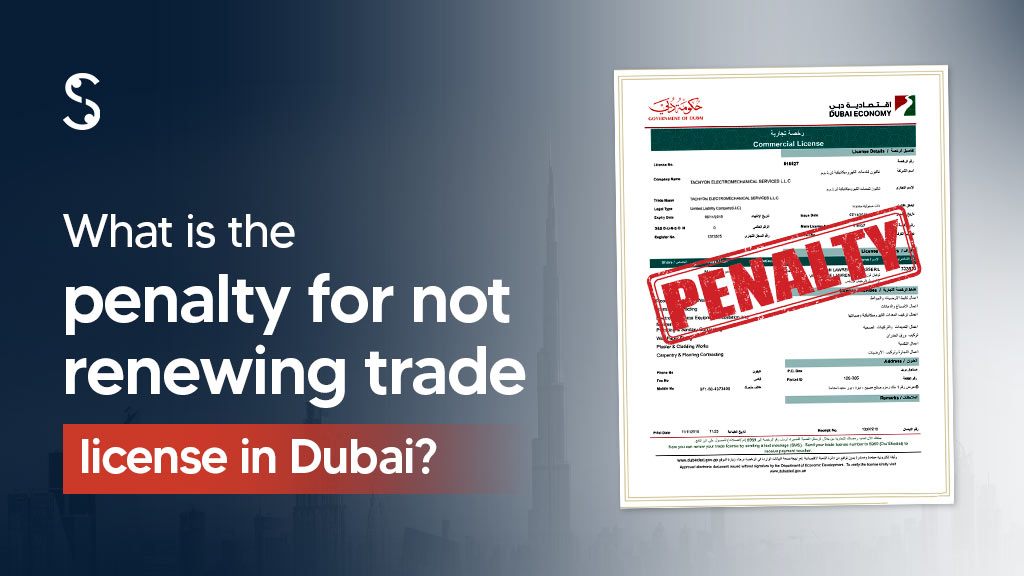
  • What is the penalty for not renewing a trade license in Dubai?

    What is the penalty for not renewing a trade license in Dubai?

    Running a business in Dubai comes with clear legal responsibilities, one of the most important being timely trade license renewal. Many Indian entrepreneurs managing their UAE companies remotely often overlook renewal deadlines, which can lead to heavy fines and operational disruptions. In this guide, we’ll explain the Dubai trade license renewal penalty, late renewal fines, the consequences of expiry, and how Indian business owners can renew their licenses or pay fines online from India.

    Understanding Dubai Trade License Renewal

    A Dubai trade license is an official approval issued by the UAE authorities that legally allows your business to operate. Whether your company is registered on the mainland or in a free zone, this license is usually valid for one year and must be renewed every year to keep your business compliant.

    Renewing your trade license on time is crucial. Missing the renewal deadline can result in late fees, visa issues, blocked bank accounts, and restrictions on business activities. In severe cases, authorities may even suspend or cancel the license.

    For Indian-owned businesses operating from India, the impact can be more serious. Delays in renewal can disrupt cross-border operations, affect contracts, and create legal complications in the UAE, making timely renewal essential for smooth and uninterrupted business continuity.

    What Happens If a Dubai Trade License Is Not Renewed?

    If a business fails to renew its Dubai trade license on time, the consequences can be serious and long-term, not just a simple late fee. Once the license expires, authorities may immediately start imposing restrictions.

    Key consequences of an expired Dubai trade license include:

    • Daily monetary penalties that continue to increase until renewal
    • Suspension of business activities, meaning you legally cannot operate
    • Inability to issue invoices or sign new contracts, impacting cash flow
    • Freezing of corporate bank accounts, restricting access to funds
    • Issues with residence visas, including renewal, issuance, or cancellation
    • Risk of blacklisting, making future business setup or licensing difficult

    For Indian entrepreneurs, an unrenewed Dubai company license can cause disruptions beyond the UAE. It may affect cross-border payments, client relationships, legal compliance, and operational continuity between India and the UAE, making timely renewal critical for business stability.

    Dubai Trade License Renewal Penalty & Late Renewal Fines

    Failing to renew your Dubai trade license on time can lead to escalating penalties and serious operational disruptions. Once your license expires, authorities take non-compliance seriously, and the financial impact can grow quickly.

    Dubai Trade License Renewal Penalty Structure

    After the expiry date, penalties generally begin immediately. While the exact fine amount depends on the issuing authority and business activity, the structure typically works as follows:

    • Daily fines apply from the first day of expiry
    • Penalties increase the longer the license remains unrenewed
    • Additional administrative charges may be imposed for prolonged delays
    • Repeated non-renewal can attract compliance warnings or inspections

    This means even a short delay can result in avoidable costs if not addressed promptly.

    Dubai License Late Renewal Fines

    If the renewal process is delayed beyond the allowed timeframe:

    • Fines continue to accumulate daily, increasing the total payable amount
    • After a specific grace period, extra penalties or black marks may be applied
    • Government portals may restrict access, blocking visa processing, contract renewals, or amendments
    • Banks, suppliers, and authorities may suspend company transactions

    Over time, the penalty for late renewal of a Dubai business license can become significantly higher than the original renewal cost, making timely renewal not just a legal requirement but a smart financial decision.

    We’ve handled 90,000+ trade license renewals in UAE — speak to an expert now

    Dubai Trade License Expiry Process for Indian Companies

    When a Dubai trade license expires and isn’t renewed on time, the impact is gradual but serious, especially for Indian-owned businesses operating in the UAE.

    What happens step by step:

    • License expiry date passes: The moment your trade license expires, your business becomes officially non-compliant.
    • Daily fines begin: Authorities begin charging daily penalties that continue to increase the longer the license remains expired.
    • Business activities are restricted: You may not be allowed to legally trade, issue invoices, sign contracts, or continue normal operations.
    • Visa and bank account problems: Investor visas, employee visas, and Emirates IDs may get blocked. Banks can freeze accounts or refuse transactions until the license is renewed.
    • Risk of legal action: If the situation is ignored for too long, authorities may impose heavy fines, blacklist the company, or even cancel the license.

    Why this matters:

    For Indian companies, ignoring trade license renewal doesn’t just cause short-term trouble; it can damage long-term credibility, affect future business setup, banking relationships, and even visa approvals in the UAE.

    Renewing your Dubai trade license on time protects your business reputation, finances, and legal standing.

    Impact on Indian Entrepreneurs & Businesses

    For Indian entrepreneurs managing Dubai companies remotely, license renewal can become tricky if not handled proactively. Common challenges include:

    • Missed renewal deadlines due to time zone differences or unclear procedures
    • Document coordination issues when paperwork needs to be arranged from India
    • Delays in paying trade license fines in Dubai are leading to additional penalties

    Without timely action, these small delays can quickly turn into compliance risks. That’s why Dubai license renewal for Indian entrepreneurs needs advance planning, clear documentation, and consistent follow-ups to ensure smooth business continuity and avoid unnecessary fines or disruptions.

    UAE Business License Renewal from India – Is It Possible?

    Yes, absolutely. UAE business owners based in India can renew their UAE business license without travelling to the UAE.

    Due to digital government portals and professional business setup services, the entire renewal process can be handled remotely. Indian entrepreneurs can submit required documents online, complete payments digitally, and even appoint an authorised representative in the UAE to manage formalities on their behalf.

    This remote process is especially helpful for Indian founders, investors, and directors who want to renew their Dubai trade license from India while saving time, travel costs, and effort, without disrupting business operations.

    In short, if your documents are in order, physical presence in the UAE is not mandatory for license renewal.

    Can Indian Business Owners Pay Fines for a Dubai License Online?

    Yes, in most cases, Indian business owners can conveniently pay Dubai trade license fines online, without needing to travel to the UAE.

    Dubai authorities have digitised most business-related services. It’s easy for overseas entrepreneurs to stay compliant and resolve penalties remotely.

    Here’s how Indian business owners can pay Dubai license fines online:

    1. Government Portals

    Fines related to mainland trade licenses can be paid through official Dubai government portals. These platforms allow secure online payments and provide instant confirmation once the fine is cleared.

    2. Free Zone Authority Platforms

    If your company is registered in a free zone, the respective free zone authority usually offers an online dashboard. Through this portal, you can view outstanding penalties and pay Dubai license late renewal fines directly from India.

    2. Authorised Consultants or PRO Services

    Business setup consultants and PRO service providers in Dubai can also handle fine payments on your behalf. They liaise with the relevant authorities, complete the process online, and share official receipts, saving you time and effort.

    Why This Is Helpful for Indian Entrepreneurs

    • No need to visit Dubai in person
    • Faster clearance of late renewal or compliance fines
    • Seamless online process with documentation support
    • Ensures your business remains compliant and operational

    Overall, the availability of online payment options makes it much easier for Indian business owners to clear Dubai license fines on time, avoid further penalties, and manage their UAE business smoothly from abroad.

    How to Avoid Dubai Trade License Renewal Penalties?

    Avoiding Dubai trade license renewal penalties is simple if you stay organised and act on time. Proactive compliance not only saves money but also protects your business from legal and operational disruptions. Here’s how you can stay penalty-free:

    1. Set Automated Renewal Reminders

    Use calendar alerts, accounting software, or compliance tools to set multiple reminders well before your license expires. This ensures you never miss critical renewal timelines.

    2. Track Expiry Dates Regularly

    Keep a central record of all important business documents, including trade licenses, establishment of cards, visas, and permits. Regular monitoring helps you plan renewals in advance and avoid last-minute stress.

    3. Ensure Your Lease Agreement (Ejari) Is Valid

    A valid Ejari is mandatory for mainland businesses in Dubai. Make sure your tenancy contract is active and renewed on time, as an expired Ejari can delay your trade license renewal and lead to penalties.

    4. Use Professional Business Setup or Compliance Services

    Authorised business setup consultants or PRO services can manage renewal deadlines, documentation, and government coordination on your behalf. This reduces the risk of errors and missed deadlines.

    Why Early Action Matters

    Taking early action helps you avoid Dubai trade license renewal penalties, prevents unnecessary fines, and keeps your business legally compliant. Most importantly, it allows uninterrupted operations and peace of mind.

    Staying ahead of renewal deadlines is always easier and far more cost-effective than dealing with penalties later.

    Documents Required for Dubai Trade License Renewal

    Indian business owners can renew their Dubai trade license remotely, provided all required documents are in order. Having the correct paperwork ready helps avoid delays, penalties, or multiple follow-ups during the renewal process.

    Typically, the following documents are required for a Dubai trade license renewal from India:

    1. Existing Trade License Copy

    A clear copy of your current or expired Dubai trade license is required to initiate the renewal process and verify business details.

    2. Passport Copies of Shareholders

    Valid passport copies of all shareholders, partners, or directors listed on the license. In some cases, visa pages may also be requested.

    3. Valid Lease Agreement (Ejari), if Applicable

    For mainland companies, a valid tenancy contract and Ejari are mandatory. An expired or missing Ejari can delay the renewal.

    4. Immigration Establishment Card

    A copy of the company’s immigration (establishment) card is required, especially if the business has sponsored employees or visas.

    5. Previous Payment Receipts (If Any)

    Receipts of past license renewals, fines, or government payments (if available) help authorities verify compliance history.

    Important Note

    Document requirements may vary slightly depending on whether your business is registered under mainland authorities or a specific free zone. Some free zones may request additional approvals or compliance documents.

    Preparing these documents in advance makes the Dubai trade license renewal process smoother and ensures you can complete it efficiently from India without unnecessary delays.

    Avoid costly fines — let Shuraa India renewal experts handle your Dubai trade license renewal fast, starting from AED 8,555*.

    Stay Compliant with Shuraa India!

    Failing to renew your Dubai trade license on time is not just a minor oversight; it can quickly turn into a costly compliance issue with long-term consequences. From daily fines and frozen bank accounts to visa complications and potential license cancellation, the penalties for late renewal can seriously disrupt your business operations, especially for Indian entrepreneurs managing UAE companies remotely.

    The good news is that with proper planning, timely reminders, and professional support, these penalties are completely avoidable. Renewing your Dubai trade license on time protects your business reputation, ensures uninterrupted operations, and saves you from unnecessary financial and legal stress. And if your license has already expired, acting quickly can help minimise fines and restore compliance without further damage.

    If you want a hassle-free, fully remote solution, Shuraa India can help you manage Dubai trade license renewals, clear penalties, and handle all compliance requirements smoothly from India. Their experienced team ensures deadlines are met, documents are in order, and your UAE business stays legally compliant, without the need for travel.

    Email: enquire@shuraa.in

    FAQs – Dubai Trade License Renewal & Penalties

    Q1. What happens if a Dubai trade license is not renewed?

    If your trade license in Dubai expires and isn’t renewed on time, the consequences can escalate quickly:

    • Daily fines start accumulating immediately after expiry
    • Business activities may be suspended, meaning you legally can’t operate
    • Visa problems may arise for owners, partners, and employees (renewals, cancellations, or new visas can be blocked)
    • Bank accounts may be restricted or frozen
    • Continued non-renewal can lead to blacklisting, legal notices, or company deregistration

    Q2. Can Indian owners renew a Dubai trade license after expiry?

    Yes, Indian business owners can still renew an expired license, but:

    • All penalties and late fees must be paid first
    • Authorities will not process renewal until dues are cleared
      Once fines are settled, the license can usually be renewed without reopening the company.

    Q3. Is there a grace period for Dubai license renewal?

    • Some licensing authorities (including those under the Dubai Department of Economy and Tourism) may offer a very short grace period
    • However, fines often apply immediately after the expiry date
    • Grace periods are not guaranteed and vary by jurisdiction (mainland vs free zone)

    Best practice: don’t rely on the grace period, renew before expiry.

    Q4. Can Indian business owners renew and pay fines from India?

    Yes, absolutely:

    • License renewal and fine payments can usually be done online
    • You can also appoint an authorised representative or business setup consultant in Dubai
    • No physical presence in Dubai is required in most cases

    This makes compliance manageable even if you’re running the business remotely from India.

  • Top 20 Profitable Business Opportunities in Dubai, UAE

    Top 20 Profitable Business Opportunities in Dubai, UAE

    Dubai has always been the kind of city that rewards ambition. But in 2026, the case for starting a business here is stronger than it has ever been. The UAE’s non-oil foreign trade crossed USD 1 trillion for the first time in 2025. The government’s D33 Economic Agenda, a 10-year masterplan to double Dubai’s economy by 2033, is well underway, with 100 transformative projects driving growth across trade, technology, healthcare, and sustainability. And for Indians specifically, Dubai has never been more accessible: Indian startups are now the largest foreign business group in the city, with participation growing by 33% in recent years. 

    If you have been weighing your options, here is a closer look at the business opportunities in Dubai that are generating real momentum in 2026. 

    Why Dubai Still Makes Sense for Business in 2026 

    Before getting into the list, a quick note on what makes this market compelling for foreign investors, particularly those coming from India. 

    Since the 2021 Companies Law amendment, foreigners can own 100% of a mainland business in most sectors without a local sponsor. In free zones, full foreign ownership has always been the norm. Add to that zero personal income tax, full profit repatriation, world-class logistics infrastructure, and a government that actively courts private enterprise, and the picture becomes clear. For Indians looking at business opportunities in Dubai for Indians, the bilateral trade relationship between India and the UAE, reinforced by the CEPA agreement, creates an additional layer of strategic advantage. 

    20 Business Opportunities in Dubai Worth Exploring in 2026 

    Looking to start a business in Dubai or the UAE? Explore these 20 promising business opportunities in Dubai and across the UAE to help you get started with confidence.

     1. E-Commerce and Online Retail 

    One of the fastest-growing business opportunities in Dubai right now. UAE e-commerce revenues are expected to surpass USD 8 billion in 2026, and online buying behaviour is now deeply embedded across all demographics. Whether you run a product-based store, a dropshipping operation, or a niche D2C brand, the infrastructure, from logistics to payment gateways, is already built for you. 

    Why it works: Low setup costs, established platforms like Noon and Amazon.ae, and one of the world’s highest internet penetration rates. 

    Read More about How to Start an eCommerce Business in Dubai

    2. Technology and IT Services 

    Dubai’s push to become a smart city has created a sustained demand for tech businesses – software development, cloud solutions, cybersecurity, IT consulting, and app development among them. The Dubai Chamber of Digital Economy supported over 1,200 digital startups in 2024 alone, and that number is only rising. 

    Why it works: Government-backed demand, access to enterprise clients across the GCC, and a growing startup ecosystem. 

    Read More about How to Start an IT Company in Dubai?

    3. Artificial Intelligence and Data Analytics 

    AI is no longer a niche, it is embedded in Dubai’s national strategy. Businesses offering AI-based solutions, automation tools, predictive analytics, and machine learning services are finding a ready market across healthcare, retail, logistics, and government sectors. 

    Why it works: The D33 Agenda targets adding AED 100 billion annually to GDP through digital transformation. AI businesses are at the centre of that push. 

    4. Real Estate and Property Management 

    Dubai’s property market continues to outperform most global cities. Rental yields of 5–9% annually, strong international demand, and a pipeline of new residential and commercial developments make this sector consistently attractive. Beyond buying and selling, there’s growing demand for short-term rental management, property consulting, and facilities management. 

    Why it works: Consistent capital appreciation, high rental yields, and an ever-growing expat population looking for quality housing. 

    Read More about How to start a Real Estate Business in Dubai

    5. Food and Beverage (F&B) 

    The food industry thrives everywhere, and Dubai is no exception – but what’s changed in 2026 is the variety of what works. Cloud kitchens, health-focused cafés, regional cuisines targeting Dubai’s diverse expat communities, and food tech startups are all performing strongly alongside traditional restaurant formats. 

    Why it works: Year-round tourist footfall, a large expat population with diverse tastes, and relatively straightforward licensing through DED or free zones. 

    Read More about How to Start a Foodstuff Trading Business in Dubai

    6. Healthcare and Wellness 

    Dubai’s population is increasingly health-conscious, and the government’s investment in healthcare infrastructure has attracted both patients and providers. Clinics, diagnostic centres, physiotherapy studios, mental wellness platforms, and health tech companies all have real room to grow here. 

    Why it works: High disposable incomes, a large working-age population, and strong regulatory support for private healthcare providers. 

    Read More about How to Start a Healthcare Business in Dubai

    7. Tourism and Hospitality 

    Dubai welcomed over 18 million international tourists in recent years, and that number keeps climbing. Business opportunities in Dubai for foreigners in this sector include boutique hotels, experience-led travel agencies, cultural tourism startups, eco-tourism ventures, and luxury hospitality services targeting the premium market. 

    Why it works: Dubai’s D33 target to become a top-three global destination for tourism means continued infrastructure investment and government marketing support. 

    Read More about How To Start A Tourism Business In Dubai

    8. Digital Marketing and Creative Services 

    As more businesses set up in Dubai, the demand for marketing – social media management, SEO, content creation, performance advertising, and branding has grown correspondingly. Agencies that specialise in GCC market knowledge and Arabic-English bilingual campaigns are particularly in demand. 

    Why it works: Every new business needs a marketing partner. Low startup costs, high scalability, and consistent demand across verticals. 

    9. Import and Export / International Trade 

    Dubai’s location between Asia, Europe, and Africa makes it a natural trading hub. The non-oil foreign trade milestone of USD 1 trillion in 2025 underscores how much activity flows through here. Businesses focused on textile imports, food commodities, electronics, and machinery continue to find strong margins. 

    Why it works: World-class port and airport infrastructure, a transparent customs regime, and strategic free zones like DMCC and Jafza designed to support trading businesses. 

    10. Financial and Accounting Services 

    A growing business ecosystem needs professional financial support. Accounting firms, VAT consultants, audit services, and CFO-on-demand businesses are all well-suited to Dubai’s market, especially with the UAE’s corporate tax now in effect since 2023, which has created new compliance demand. 

    Why it works: Ongoing corporate tax compliance requirements mean predictable, recurring revenue for professional service providers. 

    11. Construction and Infrastructure 

    Dubai does not stop building. Whether it is residential towers, commercial complexes, or smart infrastructure projects tied to the D33 Agenda, construction remains a high-demand sector. Businesses providing civil engineering, fit-out services, project management, or building material supply all have a stable market here. 

    Why it works: Government-backed mega projects, a booming real estate sector, and an ever-expanding urban footprint. 

    12. EdTech and Specialty Education 

    Dubai is home to more than 200 nationalities, and that diversity creates demand for specialised education – language schools, professional certification programmes, skills-based training, and online learning platforms that cater to the workforce upskilling needs driven by the D33 Agenda. 

    Why it works: High household spending on education, underserved niche segments, and the flexibility to run hybrid or fully digital formats. 

    13. Fintech and Cryptocurrency 

    The UAE’s crypto sector is projected to reach USD 395.8 million in revenue by 2028, and Dubai’s Virtual Asset Regulatory Authority (VARA) has created one of the world’s clearest regulatory environments for crypto and blockchain businesses. Beyond crypto, fintech services covering payments, lending, insurance tech, and embedded finance are actively supported by the government. 

    Why it works: Mature regulation, government enthusiasm, and a tech-savvy population that has already normalised digital financial services. 

    14. Renewable Energy and Sustainability 

    The UAE has committed to net-zero emissions by 2050, and Dubai’s clean energy goals are embedded into its infrastructure planning. Businesses offering solar energy installation, green building consultancy, energy auditing, water recycling technology, and sustainable product lines are finding strong tailwinds. 

    Why it works: Government contracts and incentives, rising corporate ESG commitments, and growing consumer awareness around sustainability. 

    15. Logistics and Supply Chain 

    Dubai’s geographic advantage makes it a natural logistics hub. Warehousing, last-mile delivery, freight forwarding, customs clearance, and supply chain consulting businesses thrive here, especially as e-commerce growth puts more pressure on fulfilment infrastructure. 

    Why it works: World-class Jebel Ali port, Al Maktoum International Airport, and a government-backed push to become the world’s most connected trade city. 

    16. Beauty, Aesthetics, and Personal Care 

    Grooming and wellness is one of the fastest-expanding consumer categories in Dubai. Salons, medical aesthetics clinics, skincare product lines, nail studios, and personalised beauty tech platforms are all growing rapidly, fuelled by social media-driven demand and high consumer spending. 

    Why it works: High per-capita income, a style-conscious population, and relatively straightforward licensing for beauty businesses. 

    17. Childcare and Early Education 

    Working professionals make up a large part of Dubai’s population, and dual-income households are the norm. Quality nurseries, after-school programmes, child activity centres, and developmental play spaces have consistent, recession-resistant demand. 

    Why it works: A young and growing expat family population, limited supply of premium childcare, and high willingness to spend on children’s development. 

    18. Human Resources and Recruitment 

    With businesses continuously setting up and scaling in Dubai, the demand for hiring specialists, HR consultants, payroll services, and executive search firms stays high. Business opportunities in Dubai with low investment exist here too – boutique recruitment agencies can be launched with minimal capital if you have the right network and expertise. 

    Why it works: Dubai’s fast-growing business ecosystem creates a continuous need for skilled professionals across every sector. 

    19. Event Management and Entertainment 

    Dubai hosts thousands of corporate events, trade shows, product launches, weddings, and international conferences each year. The city’s appetite for large-format experiences, from the Dubai Airshow to the global food and entertainment festivals, creates ongoing demand for professional event managers, production companies, AV specialists, and brand experience agencies. 

    Why it works: A business-friendly culture, strong MICE (Meetings, Incentives, Conferences, Exhibitions) sector, and year-round event calendar. 

    Read More: How to start an event management company in Dubai?

    20. Translation and Language Services 

    With over 200 nationalities calling Dubai home, language services are a practical and often overlooked sector. Legal translation (required for most official documents in the UAE), technical translation, business interpretation, and multilingual content production are all in consistent demand. 

    Why it works: Regulatory requirement for certified Arabic translation across legal and government documents, plus growing need from businesses entering Arabic-speaking markets. 

    How to Start a Business in Dubai: Key Considerations 

    Company formation in Dubai generally involves choosing between a mainland licence (via DED/DET) and a free zone licence, each with its own advantages depending on your activity and target market. Key steps typically include: 

    1. Choosing the right business activity and legal structure 
    2. Selecting a mainland or free zone jurisdiction 
    3. Applying for the relevant trade licence 
    4. Opening a corporate bank account 
    5. Applying for visas (for yourself and your team) 

    For Indians and other foreign nationals, the process is well-defined, but getting the details right from the start avoids costly delays and rework. 

    Ready to Explore Business Opportunities in Dubai? 

    If you are an Indian entrepreneur looking for business opportunities in Dubai for Indians, a first-time investor exploring Dubai business opportunities from scratch, or an experienced operator ready to expand, Shuraa India has been helping people navigate the UAE’s business landscape for over two decades. 

    From selecting the right licence to handling all paperwork and approvals, our team takes care of the entire setup process, so you can focus on building your business. 

    Get in touch with Shuraa India today, and let’s talk about what the right opportunity looks like for you. 

  • Top 21 Successful Business Ideas in Dubai, UAE

    Top 21 Successful Business Ideas in Dubai, UAE

    Dubai is known for its booming economy and business-friendly environment which makes it a hub for entrepreneurs and investors from around the world. With its strategic location, state-of-the-art infrastructure, and supportive government policies, Dubai is a popular choice among entrepreneurs for innovative business ideas in Dubai and startups.

    In recent years, Dubai witnessed a significant increase in startup registrations. The introduction of new visa options like the 5-year Green Visa and the 10-year Golden Visa specifically targets entrepreneurs and investors, attracting skilled professionals and high net-worth individuals to establish businesses in Dubai.

    However, with so many business ideas in Dubai with low investment, choosing the right one can be confusing. But worry not, we are here to explore the top 21 successful business ideas in Dubai including tech startups, luxury services, E-commerce, Pet care services and many more.

    We’ll also explain how you can tap into the market and build your business empire in this dynamic city of opportunities.

    Top 21 Business Ideas in Dubai in 2026

    If you’re an Indian entrepreneur planning to start a low-investment business in Dubai, UAE, here are some of the top business ideas in Dubai to help you build and grow successfully.

    1. E-commerce Business

    Electronic commerce, or e-commerce, refers to the buying and selling of goods and services online. This can include anything from fashion and electronics to groceries and homeware.

    Dubai has a high internet penetration rate and a growing population comfortable with online shopping. E-commerce allows businesses to reach a wider audience and eliminates the need for physical storefronts eventually reducing overhead costs.

    Read More about How to Start an eCommerce Business in Dubai?

    2. Tourism and Hospitality

    The tourism sector in the UAE is booming. The sector includes businesses that cater to tourists, such as hotels, travel agencies, restaurants, and tour operators. Dubai’s reputation as a global tourist destination attracts millions of visitors every year.

    The city’s luxurious accommodations, world-class attractions, and diverse cultural experiences make it a popular choice for travellers. Dubai’s tourism industry is highly competitive. To stand out, businesses can offer unique experiences and leverage online platforms for marketing and promotion.

    Read More about How To Start A Tourism Business In Dubai?

    3. Real Estate and Property Management

    Real estate in the UAE involves buying, selling, renting, and managing properties. It can include residential, commercial, and industrial properties. Dubai’s ever-growing population and booming real estate market create consistent demand.

    Property management services are also in high demand due to the transient nature of Dubai’s population. Whether you choose to focus on sales, rentals, or property management, ensure you have the necessary real estate licenses and expertise.

    Read More about How to start a Real Estate Business in Dubai?

    4. Fintech and Digital Payments

    Fintech (financial technology) refers to businesses that use technology to deliver financial services. This can include mobile payments, online banking, cryptocurrency, and investment platforms.

    Dubai is a major financial center with a government actively promoting innovation in the fintech sector. The UAE’s large unbanked population also presents an opportunity for financial inclusion through digital solutions.

    The fintech landscape is rapidly evolving, so staying updated on the latest trends and regulations is essential. Dubai requires fintech businesses to obtain specific licenses depending on the services offered.

    Turn your business idea into a UAE company — our advisors will guide you step-by-step from license to visa, free first call.

    5. Health and Wellness

    The health sector in the UAE caters to the growing demand for preventative healthcare, healthy living, and physical and mental well-being. It can include businesses like fitness centers, yoga studios, healthy cafes, personalized nutrition services, and wellness spas.

    Dubai’s increasingly health-conscious population and focus on preventative healthcare create a strong market. With a high disposable income, residents are willing to invest in their well-being, making this a lucrative sector.

    Read More: How to Start a Healthcare Business in Dubai?

    6. Event Management

    Dubai is a hub for international events, exhibitions, and conferences. The city’s focus on luxury and entertainment creates demand for high-end event experiences. Event management companies plan, organize, and execute events of all kinds, from corporate conferences and product launches to weddings and concerts. Having a strong online presence and effective marketing strategies are essential for attracting clients.

    Read More: How to start an event management company in Dubai?

    7. IT Solutions and Services – Best business in Dubai for indian

    Dubai’s rapidly growing economy and digital transformation initiatives create a strong demand for IT solutions and services. Entrepreneurs can establish IT consulting firms, software development companies, cybersecurity firms, or cloud computing services. Staying updated on the latest IT trends and specializing in a particular niche like cybersecurity or cloud solutions can be beneficial. Therefore, the IT Solutions business setup in Dubai is among the best business ideas in Dubai with low investment for entrepreneurs.

    Read More about How to Start an IT Company in Dubai?

    8. Logistics and Supply Chain Management

    Dubai’s strategic location as a global trade hub makes it a center for logistics activities. The booming e-commerce sector further fuels the demand for efficient and reliable logistics solutions. 

    Businesses can provide freight forwarding services, warehousing solutions, last-mile delivery services, or supply chain consultancy.

    Read more about How to Start a Logistics Company in Dubai?

    9. Consultancy Services – Best business in Dubai for indian

    Many businesses in Dubai lack in-house expertise in specific areas and rely on consultants for specialized knowledge. With a diverse range of industries operating in Dubai, there’s a demand for consultancy services across various sectors. Entrepreneurs can offer consultancy services in areas such as management, finance, marketing, human resources, real estate, or legal advisory.

    Read more: Top Business Consultant in Dubai

    10. Cryptocurrency Trading

    Cryptocurrency trading involves buying and selling digital assets like Bitcoin or Ethereum on cryptocurrency exchanges. Dubai is emerging as a global hub for cryptocurrency and blockchain technology. The government is actively creating a regulatory framework to support the growth of this sector. However, cryptocurrency trading is highly volatile and speculative.

    Read more about How to get a crypto license in Dubai?

    11. Bookkeeping and Accounting

    Bookkeeping involves recording financial transactions, while accounting analyzes, interprets, and communicates financial information. Businesses of all sizes need these services to maintain accurate financial records, comply with tax regulations, and make informed decisions.

    Many businesses in Dubai outsource their bookkeeping and accounting needs, especially startups and small businesses. Specializing in a specific industry like hospitality or real estate can help you attract clients.

    Read more: Accounting and Bookkeeping Services in Dubai

    12. HR Consultancy – Best For Indians

    Dubai’s diverse workforce and constantly evolving labour laws create a demand for HR expertise. Businesses may lack the in-house resources or expertise to handle complex HR tasks.

    HR consultancy firms provide expertise and guidance to businesses on all aspects of human resources management including recruitment and onboarding, payroll processing, employee relations, training and development, etc.

    Read more: How to Get an HR Consultancy License in Dubai?

    13. Renewable Energy and Sustainability Solutions

    Dubai has ambitious sustainability goals, and the government actively supports businesses in this sector. There’s a growing awareness of environmental issues that create the demand for eco-friendly solutions.

    Entrepreneurs can provide products and services that promote sustainability and reduce dependence on fossil fuels such as selling solar panels, energy-efficient building materials, waste management solutions, and green consultancy services.

    Have a business idea? Our advisors will tell you exactly how to set it up in Dubai — free call

    14. Cleaning Services

    Dubai’s busy lifestyle and growing population create a demand for convenient and professional cleaning services. Many people and businesses outsource their cleaning needs to free up their time. 

    Cleaning service companies can provide residential and commercial cleaning services, including regular maintenance cleaning, deep cleaning, carpet cleaning, window cleaning, and specialized cleaning services.

    Read More about: How can I start a cleaning company in Dubai?

    15. Car Rental and Transportation Services

    With a large expatriate population and a high demand for transportation, car rental and transportation services are essential in Dubai. 

    Entrepreneurs can start car rental businesses offering a range of vehicles, from budget-friendly options to luxury cars, to address the different customer segments. Building partnerships with travel agencies and hotels can increase your customer base.

    Read More about How to Start a Car Rental Business in Dubai?

    16. Freelance Services

    Freelancers are self-employed individuals who offer their skills and services to clients on a project-by-project basis. This can include web design, writing, marketing, graphic design, and IT consulting.

    The rise of the gig economy and the growing demand for specialized skills create opportunities for freelancers in Dubai.  Businesses may prefer to hire freelancers for specific projects rather than maintaining a large in-house staff.

    17. Restaurant

    Restaurants provide prepared meals and beverages for customers to eat on-site or take away. Dubai offers a diverse culinary scene with options ranging from international cuisine to local Emirati fare.

    Dubai’s large population with a high disposable income and a significant tourist market create a strong demand for dining options. There’s a growing trend for unique dining experiences and healthy food options.

    Read More: How to Open a Restaurant in Dubai?

    18. Construction and Infrastructure Development

    Dubai’s rapid urbanization and ambitious infrastructure projects create opportunities for entrepreneurs in the construction sector.

    Businesses can specialize in construction services such as residential and commercial building construction, infrastructure development, or renovation and restoration projects. Major government investments in infrastructure projects provide opportunities for construction companies.

    Read More about How to start a Real Estate Business in Dubai?

    19. Gold Trading

    Dubai is a global hub for gold trading, with a long history and established infrastructure. Businesses in this sector buy and sell gold bullion, coins, and jewellery. Dubai’s tax-free environment and strategic location make it attractive for gold traders. There’s a strong demand for gold from tourists and investors seeking a safe haven asset.

    Read More: How to Start Gold Trading Business in Dubai?

    20. VAT Consultancy

    The introduction of Value Added Tax (VAT) in the UAE has created a demand for VAT consultancy services. These businesses help companies comply with VAT regulations, including registration, record-keeping, and filing returns.

    Many businesses in Dubai lack the internal expertise to manage VAT compliance. VAT regulations can be complex, and penalties for non-compliance can be significant. Having qualified tax professionals on staff is essential for providing accurate and reliable advice.

    Read More about Detailed Guide to UAE VAT Registration Services in Dubai

    21. Fashion and Beauty

    Dubai’s status as a fashion and beauty hub attracts international brands and a style-conscious population. The growing disposable income and focus on luxury experiences create a strong market. There’s also a rise in demand for sustainable and ethical fashion options.

    Businesses can establish fashion brands offering trendy clothing, footwear, accessories, or luxury fashion collections. Additionally, setting up retail outlets in prominent shopping destinations or online e-commerce platforms can help fashion businesses reach a wider audience.

    Read More about How to set up a Beauty Salon in Dubai?

    Women entrepreneurs can also explore our dedicated guide: 20 profitable business ideas for ladies in Dubai.

    How can Shuraa India fulfill your business ideas in Dubai?

    This list of 21 successful business ideas in Dubai only scratches the surface of the possibilities that await in this city. However, it’s essential to remember that setting up a business in Dubai requires careful planning, understanding of the local market, and obtaining the necessary licenses and permits. If you have a great business idea but need help turning it into reality, discussing your plans with Shuraa can provide you with the guidance and support needed.

    Our comprehensive services include everything you need to get started, including company registration, obtaining the necessary licenses, PRO services, securing office space, and even visa assistance. So, if you have a brilliant business idea, Dubai is the place to bring it to life. Contact Shuraa India today, and let’s turn your vision into a flourishing reality.

    Faq

    1. What are the key factors contributing to the success of businesses in Dubai?

    The strategic location of the city, pro-business policies, World-class Infrastructure, high living standards, favorable visa regime, and a pool of skilled workforce are some of the key factors contributing to the success of businesses in Dubai.

    2. Which business is good in Dubai for Indians

    Dubai has a thriving environment for entrepreneurs which means almost all kinds of business can flourish in this city including real estate, construction, e-commerce, IT solutions, manufacturing, logistics, marketing, and others.

    3. What are the costs involved in starting a business in Dubai?

    The cost of setting up a business in Dubai majorly depends on the activity you choose to engage in. However, there are many other elements contributing to this cost. For example, license type, location, trade name, authority approvals, and more.

    4. What are the top 10 industries for new businesses in Dubai?

    Dubai is a great place for trade and commerce. Therefore, it is not that tough to make money out of a business opportunity. From e-commerce and hospitality to technology and real estate, one can capitalize on a plethora of business ideas.

    1. Import & export
    2. Cryptocurrency
    3. Artificial intelligence
    4. Gaming
    5. Healthcare
    6. Lab-grown diamonds & coloured gemstones
    7. E-commerce
    8. Renewable energy
    9. Gold
    10. Fitness technology

    5. Can foreigners start a business in Dubai?

    Yes, they can. Foreigners account for more than 50% population of Dubai. Hence, it is not just easy to grab a job but also to start a business, that too with 100% ownership. In addition, they are also exempted from personal income taxes, which they can repatriate or re-invest in their business.

    6. What are the benefits of starting a business in Dubai?

    The benefits of starting a new company in Dubai are not few but many. To begin with, you get huge tax benefits and wide access to international markets. Even the regulatory measures and legal procedures are also quite easy to deal with. You can speak with the business advisors at Shuraa for further information.

    7. How can I find more information about starting a business in Dubai from India?

    For all the information and specifics related to company formation in Dubai, you can reach out to Shuraa India, one of the leading corporate service providers in the city. From creating a solid business plan to obtaining the business license, they will be at your assistance at every step.

  • How to Start a Training Institute in Dubai?

    How to Start a Training Institute in Dubai?

    The UAE is renowned for its knowledge-based economy, and the credit for the same goes to its top-notch educational facilities and training institutes. Therefore, this presents a profitable business opportunity to all Indian investors and entrepreneurs looking to enter this industry and start a training institute in Dubai from India. 

    You can open IT training institutes, self-defence coaching centres, academic institutes, and the list goes on. All you need to do is apply for a training institute license in Dubai and get started with your business activities in the Emirates. Furthermore, the company formation experts at the Shuraa Business Setup are here to help you in this journey. 

    We provide cost-effective business incorporation packages in the UAE and take care of all the legalities involved in setting up a training institute in Dubai. 

    What is a Training Institute in the UAE? 

    You can open the training institute of your choice in the UAE by applying for the corresponding license. The investors can establish a private training centre, a child education institute, colleges for higher education, and many more institutes. In addition, you can also get in touch with KHDA to know more about the various educational frameworks in Dubai. 

    Furthermore, ensure that you submit supporting documents containing the details of the educators and trainers at your facility. In addition, always make sure that your institute abides by all the guidelines maintained by the UAE’s government. Note that any deviation in this regard can lead to the termination of your educational training license in Dubai. 

    What is KHDA in Dubai, UAE? 

    KHDA stands for Knowledge and Human Development Authority. It is a regulatory authority based in Dubai, UAE, responsible for overseeing the private education sector in the emirate. 

    Key Roles of KHDA 

    • Regulates private schools, universities, and training institutes in Dubai. 
    • Issues education permits and approvals for new institutions and programs. 
    • Conducts inspections and quality ratings of private schools. 
    • Ensures compliance with educational standards, health, and safety guidelines. 
    • Supports innovation in teaching and learning. 
    • Publishes reports on educational performance and improvement areas. 

    Institutions Covered by KHDA 

    • Private schools (like Indian, British, IB, and American curricula) 
    • Private universities and colleges (both local and international branches) 
    • Training institutes and professional development centres 

    KHDA plays a significant role in shaping Dubai’s education landscape and ensuring that students receive quality education aligned with international standards. 

    Types of Educational Institutes in Dubai, UAE 

    Here’s a detailed breakdown of the types of educational institutes that are available in Dubai, including examples, licensing authorities, and key features. This will help you understand your options if you’re planning to start an education institute in Dubai: 

    1. K-12 Schools (Nursery to Grade 12) 

    These are formal schools that serve students from early childhood (nursery) up to higher secondary education. 

    Types: 

    • Nurseries/Pre-Schools (ages 0–4) 
    • Primary & Secondary Schools (British, American, CBSE, ICSE, IB, UAE National Curriculum) 

    Licensing Authority: 

    • KHDA (Knowledge and Human Development Authority) for institutions in Dubai 
    • Ministry of Education (for some emirates outside Dubai) 

    Key Requirements: 

    • Purpose-built school building 
    • Qualified teachers and staff 
    • Approved curriculum 
    • Health & safety compliance 

    Example: 

    • GEMS Education 
    • Dubai International Academy 
    • Delhi Private School (DPS Dubai) 

    2. Higher Education Institutions 

    These include universities, colleges, and technical institutions offering: 

    • Undergraduate & postgraduate degrees 
    • Diplomas, certifications, and research-based programs 

    Options: 

    • Set up as a branch of an international university 
    • Start a new private college or university 

    Licensing Authority: 

    • KHDA (Dubai) in collaboration with Dubai International Academic City (DIAC) or Dubai Knowledge Park (DKP) 
    • Commission for Academic Accreditation (CAA) under the UAE Ministry of Education (for federal-level accreditation) 

    Examples: 

    • University of Wollongong Dubai 
    • Heriot-Watt University 
    • Murdoch University Dubai 

    3. Vocational Training Institutes 

    These offer hands-on training in specific trades or practical careers and are designed to meet industry needs. 

    Areas Covered: 

    • Automotive repair 
    • Hospitality 
    • Electrical, plumbing, and construction 
    • Aviation mechanics, maritime skills 

    Licensing: 

    • KHDA (for general vocational training) 
    • ACTVET (for Abu Dhabi) 
    • Dubai Economic Department (DED) in specific zones 

    Examples: 

    • SAE Institute (Creative Media) 
    • Emirates Aviation University (aviation-focused) 

    4. Professional & Corporate Training Institutes 

    These are ideal if you want to start a training institute in Dubai for adult learners or working professionals. 

    Popular Courses: 

    • Leadership & Management 
    • HR & Finance Training 
    • Sales, Marketing & Customer Service 
    • Project Management (PMP, Six Sigma) 
    • IT & Tech Certifications (Cisco, Microsoft, AWS) 

    Licensing: 

    • KHDA for non-academic training centres 
    • DED (Dubai Department of Economy and Tourism) for commercial activities 
    • Free zones like Dubai Knowledge Park 

    Examples: 

    • Informa Middle East 
    • PwC’s Academy 
    • Zabeel International Institute 

    5. Online Learning Platforms & EdTech Institutes 

    As demand for digital learning grows, you can open an online or hybrid education platform. 

    Services: 

    • E-learning apps or LMS platforms 
    • Online tutoring services 
    • Coding bootcamps 
    • Language learning platforms 

    Licensing: 

    • DED for commercial operations 
    • KHDA (if providing formal educational content in Dubai) 
    • Dubai Internet City for tech startups 

    Example: 

    • Noon Academy 
    • BYJU’S Middle East 
    • Udemy (global presence) 

    6. Special Needs Education Centres 

    Institutes offering education and support to students with: 

    • Learning disabilities (dyslexia, ADHD, etc.) 
    • Developmental conditions (autism, Down syndrome) 
    • Speech or motor skill delays 

    Licensing: 

    • KHDA with special permissions 
    • Must hire trained special educators and therapists 
    • Custom learning environment with assistive tools 

    Example: 

    • Dubai Centre for Special Needs 
    • Al Noor Training Centre 

    7. Creative Arts, Music & Performance Institutes 

    These centres focus on creative and performance arts, and are very popular for after-school programs. 

    Courses Offered: 

    • Music (instruments, vocals) 
    • Dance (ballet, contemporary, Indian classical) 
    • Fine arts (painting, sculpture) 
    • Acting and theatre workshops 

    Licensing: 

    • KHDA for formal training centres 
    • DED for informal, hobby-based training 

    Examples: 

    • Melodica Music & Dance Institute 
    • Art & Music Today 
    • Courtyard Playhouse 

    8. Sports, Fitness & Wellness Academies 

    These institutes focus on: 

    • Athletic coaching (football, cricket, swimming, etc.) 
    • Martial arts (karate, taekwondo) 
    • Yoga and wellness training 
    • Personal fitness certifications 

    Licensing: 

    • KHDA or DED, depending on whether it’s formal education or commercial training 
    • Dubai Sports Council (for some sports programs) 

    Examples: 

    • Evolve Gym Academy 
    • Desert Cubs Sports Academy 
    • Sharmila Dance School 

    How to Start a Training Institute in Dubai, UAE

    Dubai’s growing population, multicultural environment, and strong focus on skill development have made it a hotspot for setting up educational institutions.  

    Whether you’re aiming to start a vocational school, a professional training centre, or an academic institution, the process is straightforward but requires careful planning and compliance with local regulations. 

    Here’s a step-by-step guide to help you start an education institute in Dubai seamlessly: 

    Step 1: Identify the Type of Institute You Want to Open 

    Before you begin, decide what kind of educational setup you want to establish: 

    • Professional Training Institute UAE (e.g., business, finance, tech training) 
    • Vocational Institute Setup Dubai (e.g., hospitality, logistics, healthcare) 
    • Language centres, arts schools, or soft skills academies 

    Each type has different licensing requirements and regulations. 

    Step 2: Choose a Legal Structure 

    You can register your institute under: 

    • Mainland (with the Department of Economic Development – DED) 
    • Free Zone (like Dubai Knowledge Park or Dubai Academic City) 

    For most professional and training institutes, free zones offer a quicker and more cost-effective setup. However, if you want to operate freely across Dubai, the mainland might be a better option. 

    Step 3: Get Initial Approval from KHDA 

    The Knowledge and Human Development Authority (KHDA) regulates education in Dubai. You’ll need to submit: 

    • A business plan 
    • Proposed curriculum or training modules 
    • Instructor qualifications 
    • Premises plan 

    KHDA will review and approve the educational scope of your project. 

    Step 4: Secure a Physical Location 

    To start a training institute in Dubai, you must have a suitable facility. It should meet KHDA and Civil Defence guidelines, such as: 

    • Minimum space per student 
    • Adequate classrooms 
    • Safety and fire systems 

    KHDA will inspect and approve the premises before issuing the final license. 

    Step 5: Apply for the Dubai Training Centre License 

    Once you have KHDA’s approval, apply for the Dubai training centre license through either the DED or your chosen free zone authority. Documents generally required: 

    • Passport copies of shareholders 
    • Trade name reservation 
    • Initial approval certificate 
    • Lease agreement for premises 
    • KHDA NOC 

    Step 6: Hire Qualified Staff 

    Recruit trainers or educators who are qualified and experienced in the subjects you plan to offer. KHDA may require you to submit your credentials for approval. 

    Step 7: Finalise KHDA Registration and Inspection 

    After the business license is issued, KHDA will conduct a final inspection of your facility and review your complete documentation: 

    • Health and safety standards
      Training materials 
    • Teacher qualifications 

    Once satisfied, KHDA will issue an educational permit to begin operations. 

    Step 8: Launch Your Institute 

    Once you have both the commercial license and KHDA approval, you’re ready to go live! Begin marketing your courses, enrolling students, and conducting training sessions. 

    Setting up a professional training institute in the UAE is a promising opportunity in a city focused on innovation and growth. Whether you’re planning a vocational institute setup in Dubai or looking to offer niche professional skills, the process is quite structured, but manageable with the proper guidance. You can contact our experts at Shuraa Business Setup for a smoother process.  

    Documents Required for Indians to Start a Training Institute

    Here are the Documents Required to Set Up an Educational Institute in Dubai for a smooth registration process with the authorities. 

    • List of trade names (3 to 4) 
    • List of business activities 
    • A passport copy of the shareholders 
    • Entry stamp or visa page 
    • Passport-size photograph as per the protocols (size, background colour, etc.) 

    Suitable Jurisdictions to Start a Training Institute in Dubai 

    If you want to start a training institute in Dubai, choosing the right jurisdiction is key to your success. Dubai offers both mainland and free zone options, each with its own set of benefits depending on the type of training you plan to provide (academic, vocational, corporate, etc.). Here are the most suitable jurisdictions to set up a professional training institute in the UAE: 

    1. Mainland (with KHDA approval) 

    If your goal is to start an education institute in Dubai that targets residents and operates across the city, setting up on the mainland is ideal. 

    • Regulatory Authority: KHDA (Knowledge and Human Development Authority) 
    • Suitable for: Vocational training, professional development courses, language training, etc. 
    • Key Benefits: 
    • Access to a broader local market 
    • Can partner with corporate clients and government entities 
    • Allowed to offer physical classes anywhere in Dubai
    • License Type: Dubai training centre license from the Department of Economic Development (DED), followed by KHDA approval

     2. Dubai Knowledge Park (DKP) – Free Zone 

    A specialised free zone focused on education and training businesses. 

    • Regulatory Authority: TECOM and KHDA 
    • Suitable for: E-learning platforms, corporate training, HR development, and language institutions 
    • Key Benefits: 
    • 100% foreign ownership 
    • No personal or corporate tax 
    • Modern facilities and shared infrastructure 
    • No currency restrictions
    • License Type: Training Services License 

    3. Dubai Multi Commodities Centre (DMCC) – Free Zone 

    While not education-specific, DMCC allows professional services, including training and consultancy. 

    • Suitable for: Corporate training and industry-specific skill development (finance, trade, logistics, etc.) 
    • Key Benefits: 
    • Easy company setup process 
    • Flexible office options 
    • Access to a large business community
    • License Type: Consultancy or Service License with training activity 

    4. Dubai International Academic City (DIAC) 

    A premier zone for academic institutions and universities. 

    • Suitable for: Higher education institutions, university partnerships, international education providers 
    • Key Benefits: 
    • Academic environment with international reach 
    • Government support for expansion 
    • KHDA collaboration 
    • Ideal for: Long-term educational institutions rather than short courses 

    5. IFZA (International Free Zone Authority) 

    A cost-effective and flexible option for a vocational institute setup in Dubai, including training and coaching centres. 

    • Suitable for: Entrepreneurs or small teams offering niche or professional training 
    • Key Benefits: 
    • Low startup cost 
    • Quick registration process 
    • No requirement for a physical office in some cases
    • License Type: Professional License (with training activity) 

    Which Jurisdiction is Right for You? 

    Your Goal  Recommended Jurisdiction 
    Target Dubai residents with in-person training  Mainland (KHDA license) 
    Focus on HR, corporate, or online training  DKP or DMCC 
    Want academic collaborations  DIAC 
    Looking for cost-efficiency and quick setup  IFZA 

    If you’re serious about launching a professional training institute in the UAE, it’s essential to choose a jurisdiction that aligns with your target market and training scope. Each zone offers different benefits in terms of license flexibility, office requirements, cost, and market reach. 

    Cost of Opening an Institute in Dubai, UAE 

    The overall cost of registering for a training institute in the UAE is between AED 30,000* and AED 50,000*. The mandatory government payments include the fees for initial approval, license, name reservation, MoA/AoA notarization, etc. 

    Furthermore, you also need to settle the payments for labour card fees, KHDA approval fee, and many more. However, you don’t need to worry about these payments and approvals when you work with the consultants at Shuraa India. We supervise all the payments to ensure the correct amount is paid for each approval. 

    Start Your Training Institute in Dubai with Shuraa India 

    Your decision to start a training institute in Dubai is the right one, thanks to the lucrative business opportunities and well-regulated norms. Furthermore, you also enjoy several benefits, including complete business ownership, the freedom to choose your path, and many more. 

    All you need to do now is get in touch with the business advisors at Shuraa India. We offer end-to-end business assistance and also provide post-establishment support services. Moreover, we take pride in offering the most cost-effective business solutions in the UAE. 

  • What is No Objection Certificate in UAE?

    What is No Objection Certificate in UAE?

    Handling official approvals in the UAE can feel overwhelming, especially if you’re unfamiliar with local procedures. One such essential document is the No-Objection Certificate in Dubai, which is often required for employment changes, business activities, visas, property matters, or government approvals.

    Simply put, this certificate confirms that the concerned authority, employer, or sponsor has no objection to you proceeding with a specific request. Understanding how the process works and who needs to issue it can save you time, stress, and unnecessary delays.

    In this guide, we break down the process of obtaining a No-Objection Certificate in a clear, practical, and easy-to-understand way, so you know exactly what to expect at every stage.

    What is NOC in the UAE?

    A No-Objection Certificate (NOC) is an official document that confirms that one party has no objection to a specific action or request made by another party. In simple terms, it’s a written approval that says, “We’re aware of this, and we have no problem with it.”

    In the UAE, especially residents, employees, and business owners, a No-Objection Certificate in Dubai is commonly required to complete various legal, professional, or administrative processes. It helps authorities ensure that all involved parties are informed and that there are no conflicts or unresolved obligations.

    For example, an employer may issue an NOC to allow an employee to:

    • Start a side business
    • Change jobs or sponsors
    • Apply for certain government services

    Similarly, landlords, banks, or government entities may issue an NOC to approve activities like property-related changes, visa processes, or business setup formalities.

    Overall, a No-Objection Certificate acts as a trust-building document. It simplifies approvals, prevents disputes, and ensures that processes move forward smoothly, without unnecessary delays or legal complications.

    What is the Kafala System?

    The Kafala system is a sponsorship-based framework used in several Middle Eastern countries to regulate the employment and residency of foreign workers. Under this system, a migrant worker’s legal status is linked to a local sponsor (kafeel), who is usually the employer.

    In simple terms, the sponsor manages the worker’s visa, residency permit, and legal stay. Traditionally, this meant that workers needed their sponsor approval to change jobs or leave the country, and employment and residency were tied to a single employer.

    In response to criticism of limited worker mobility, many Gulf countries have introduced labour reforms. The UAE, for example, has updated its labour laws to allow greater job flexibility and stronger worker protections. Today, while sponsorship still exists for visa purposes, it operates in a more regulated, balanced manner.

    Benefits of Obtaining a No-Objection Certificate (NOC)

    A No-Objection Certificate in Dubai plays an important role in ensuring smooth approvals and hassle-free processes, whether you’re dealing with employment matters, business setups, visas, or property-related activities.

    1. Ensures Legal Compliance

    A No-Objection Certificate in Dubai confirms that the relevant authority, employer, or sponsor has no objections to your planned activity. This helps you stay compliant with local regulations and avoid legal complications.

    2. Speeds Up Approvals

    Many government departments and private entities require an NOC before processing requests. Having it ready can significantly reduce delays and make approvals faster and smoother.

    3. Builds Trust & Transparency

    An NOC acts as formal written consent, creating clarity between all parties involved. It shows transparency and builds trust with authorities, banks, employers, and service providers.

    4. Supports Business & Professional Growth

    For entrepreneurs and professionals, a No-Objection Certificate is often required to start a side business, change jobs, or apply for certain licenses. It enables growth without regulatory roadblocks.

    5. Facilitates Visa & Immigration Processes

    NOCs are commonly required for visa applications, sponsorship changes, or family-related approvals. Having one simplifies immigration procedures and reduces the risk of rejection.

    6. Prevents Disputes & Misunderstandings

    Since an NOC clearly states that there are no objections, it helps avoid future conflicts or misunderstandings between employers, sponsors, or authorities.

    7. Recognised by Authorities

    A No-Objection Certificate is widely accepted by government departments, free zone authorities, banks, and educational institutions, making it a reliable supporting document.

    Need a UAE NOC? Our PRO team handles the paperwork end-to-end — get started free

    Types of No-Objection Certificates in the UAE

    A No-Objection Certificate (NOC) is not a one-size-fits-all document in the UAE. Depending on your purpose, whether it’s for work, business, travel, or personal matters, different types of NOCs are issued by different authorities.

    Below are the most common types you may come across, including situations where a No-Objection Certificate in Dubai is required.

    1. Employment No Objection Certificate

    This NOC is issued by an employer to confirm they have no objection to an employee:

    • Changing jobs
    • Working part-time or freelance
    • Applying for a visa or bank loan

    In many employment-related processes, a No-Objection Certificate helps ensure smooth approvals and legal clarity.

    2. Business No Objection Certificate

    Issued by business partners, sponsors, or relevant authorities, this NOC is commonly required when:

    • Starting a new business
    • Adding or changing business activities
    • Opening a branch or modifying company ownership

    For entrepreneurs, a No-Objection Certificate is often part of company setup and compliance procedures.

    3. Visa-Related No Objection Certificate

    This type of NOC is required for immigration or residency matters, such as:

    • Sponsoring family members
    • Transferring visas
    • Applying for a visit or residence visa

    Authorities may request a No-Objection Certificate to confirm the current sponsor’s consent.

    4. Travel No Objection Certificate

    Frequently used for minors, employees, or dependents, this NOC confirms permission to travel. It is commonly required when:

    • A child travels with one parent or a guardian
    • Employees travel for official purposes

    A travel-related No-Objection Certificate in Dubai helps avoid issues at immigration checkpoints.

    5. Property No Objection Certificate

    Issued by developers, landlords, or relevant authorities, this NOC is required for:

    • Selling or transferring property
    • Making structural modifications
    • Connecting utilities

    If you’re buying or selling property, a No-Objection Certificate ensures there are no outstanding legal or financial issues.

    6. Bank & Financial No Objection Certificate

    Banks may issue or request an NOC when:

    • Closing a loan or credit facility
    • Opening certain accounts
    • Applying for financial approvals

    A financial No-Objection Certificate in Dubai confirms that there are no pending liabilities or objections.

    Key Considerations When Applying for an NOC

    Before applying for a No Objection Certificate (NOC), it’s important to understand a few key points to avoid delays and ensure a smooth approval process.

    • Purpose of the NOC: Clearly understand why the No Objection Certificate is required, whether for a job change, business setup, visa process, or legal approval.
    • Issuing Authority: Determine who should issue the NOC, the employer, the sponsor, the landlord, or a government authority.
    • Eligibility & Conditions: Ensure you meet all requirements, including contract terms, notice periods, and outstanding dues.
    • Supporting Documents: Keep the necessary documents ready, including a passport, a copy of the visa, an Emirates ID, and relevant contracts.
    • Validity Period: Some NOCs are time-bound, so use them within the specified period.
    • Legal Compliance: Ensure the NOC complies with current UAE laws and regulations, as rules may vary by emirate or situation.

    Taking these factors into account helps avoid delays and ensures a smooth NOC application process.

    How Indians Can Obtain a NOC in the UAE?

    Getting a No-Objection Certificate is usually a straightforward process if you know who to approach and what is required. Here’s how it typically works:

    Step 1: Identify Who Needs to Issue the NOC

    First, figure out who should give you the NOC. This could be your employer, sponsor, landlord, bank, or a government authority, depending on why you need the certificate (job change, business setup, visa process, etc.).

    Step 2: Make a Formal Request

    Submit a clear and polite request to the concerned party. In many cases, this can be done via email, through the company’s HR, or via an official application form. Mention the purpose of the No-Objection Certificate in Dubai to avoid confusion.

    Step 3: Prepare the Required Documents

    You may be asked to provide basic documents such as:

    • Emirates ID
    • Passport and visa copy
    • Employment contract or tenancy agreement
    • Details of the activity or process requiring the NOC

    Requirements can vary, so always confirm in advance.

    Step 4: Review and Approval

    Once submitted, the issuing authority will review your request to ensure there are no pending obligations, dues, or legal issues. If everything is in order, the request is approved.

    Step 5: Receive the NOC

    After approval, you’ll receive the No-Objection Certificate in Dubai, either as a signed physical letter or a digital document. Some authorities may also issue it directly through official portals.

    Step 6: Use the NOC for Your Application

    Submit the NOC to the relevant department or authority to proceed with your application. Make sure it’s valid and accepted for the specific purpose you’re applying for.

    Get NOC in Dubai Easily for Indians with Shuraa India

    Obtaining a No-Objection Certificate in Dubai doesn’t have to be complicated. When you clearly understand why the NOC is required, who needs to issue it, and what documents are involved, the process becomes much smoother and stress-free. Whether it’s for employment changes, business setup, visa matters, property transactions, or financial approvals, an NOC ensures transparency, legal compliance, and faster approvals.

    By following the right steps and staying aligned with UAE regulations, you can avoid delays and move forward confidently with your personal or professional plans. If you’re unsure about the requirements or want expert assistance to handle the process correctly, professional guidance can save you time and effort.

    For reliable support and end-to-end assistance with obtaining a No-Objection Certificate in Dubai, connect with Shuraa India. Call us at +971 501 549 180 or email us at enquire@shuraa.in.

    FAQs

    Q1. In what situations might I suddenly be asked for an NOC in the UAE?

    You may be asked for an NOC when you’re making a change that affects your legal, work, or residency status, such as switching employers, starting a side activity, modifying a rented property, or dealing with visas and approvals.

    Q2. Is an NOC only related to jobs, or does it apply to personal matters too?

    An NOC isn’t limited to employment. It can also be required for personal matters like sponsoring family members, enrolling in certain courses, making property changes, or completing government procedures.

    Q3. Who usually has the authority to approve or deny an NOC request?

    The authority depends on your situation. It could be your employer, visa sponsor, landlord, bank, or a government department, basically the party that has a formal stake in your request.

    Q4. Can residents in the UAE apply for an NOC without professional help?

    Yes, many NOCs can be requested directly if you know the process and documents. However, professional assistance is helpful when the request involves business setup, legal approvals, or multiple authorities.

    Q5. Does holding a valid UAE visa automatically mean I won’t need an NOC?

    No. Even with a valid visa, certain actions, like business registration, visa changes, or additional work, may still require an NOC to confirm there’s no conflict with existing obligations.

    Q6. Are students and interns also expected to provide an NOC?

    Yes, in some cases. Students and trainees may need an NOC from their sponsor or institution to take up internships, part-time roles, or skill-based training in the UAE.

    Q7. Is an NOC a one-time document, or does it expire?

    Most NOCs are issued for a specific purpose and for a specific time. Once that purpose is completed, the NOC usually cannot be reused for another request unless stated otherwise.

    Q8. Will government authorities process my request without an NOC if it’s missing?

    In most cases, no. If an NOC is listed as a requirement and isn’t provided, your application may be delayed, rejected, or put on hold until the document is submitted.

    Q9. Does every business-related activity in the UAE require an NOC?

    Not always, but many business actions, such as adding activities, partnering with another company, or operating alongside employment, often require an NOC to ensure compliance with local regulations.

    Q10. What is the main purpose of an NOC in the UAE system?

    The core purpose of an NOC is clarity and consent. It assures authorities that all relevant parties are informed, there are no objections, and the process can move forward legally and smoothly.

  • How to Relocate to Dubai as a Forex Trader from India

    How to Relocate to Dubai as a Forex Trader from India

    For many Indian forex traders and entrepreneurs, the last few years have felt increasingly uncertain. Tighter regulations, constant tax scrutiny, banking limitations, and grey areas around overseas trading have made it harder to focus on what truly matters – trading itself. At the same time, Dubai has quietly positioned itself as one of the world’s most trader-friendly cities.

    The UAE today hosts thousands of financial firms and some of the world’s most active trading platforms. Dubai’s financial ecosystem has grown rapidly, supported by clear regulations, modern infrastructure, and a business-friendly environment.

    Relocate to Dubai as a forex trader in 2026 is particularly a good time to make the move. While Indian traders are restricted to a few currency pairs on local exchanges, Dubai-based traders have seamless access to the $7.5 trillion-a-day global forex market through world-class regulators like the DFSA.

    Add to that the UAE’s tax-friendly structure, easy access to international markets, and a time zone that overlaps well with Asian, European, and US trading sessions, and Dubai starts to make a lot of practical sense for forex traders.

    Is Forex Trading Legal in Dubai?

    Yes, forex trading is legal in Dubai and across the UAE. Individuals in the UAE are free to trade forex using their own capital through recognised international or locally regulated brokers. There are no restrictions on:

    • Trading major or minor currency pairs
    • Using international trading platforms
    • Trading full-time as a resident of Dubai

    Where the law becomes stricter is when trading turns into a service or business activity.

    If you:

    • Trade only your own funds
    • Do not collect money from others
    • Do not advertise trading services

    You are treated as an independent trader, not a financial institution.

    However, once you start earning money by serving other traders or investors, the activity becomes regulated, and licensing is mandatory. This protects investors and keeps Dubai aligned with global financial standards.

    UAE Forex Regulators

    Dubai and the UAE don’t have a single regulator for everything. Instead, different authorities oversee different financial zones:

    1. Dubai Financial Services Authority (DFSA)

    The DFSA regulates financial activities inside the Dubai International Financial Centre (DIFC), which is Dubai’s most recognised financial hub.

    • Follows global standards similar to the UK and EU
    • Oversees brokers, asset managers, and advisory firms
    • Known for strict compliance and transparency

    If you plan to run a serious forex-related business, advisory firm, or brokerage from DIFC, DFSA approval is required. For personal trading, DFSA does not directly apply.

    2. Securities and Commodities Authority (SCA)

    The SCA is the main federal regulator for investment and trading activities across the UAE mainland.

    • Regulates forex brokers operating outside financial free zones
    • Oversees public investment activities and financial promotions
    • Works closely with UAE banks and exchanges

    If your forex activity involves clients, promotions, or financial services on the mainland, SCA regulations come into play.

    3. Abu Dhabi Global Market (ADGM)

    ADGM is a financial free zone in Abu Dhabi with its own independent regulator.

    • Popular with hedge funds, fintech firms, and institutional traders
    • Operates under an English common law framework
    • Highly respected by international banks and investors

    Mostly relevant for large-scale trading firms, fund managers, and professional financial institutions, not individual retail traders.

    Trading for Yourself vs. Running a Business in the UAE

    This is where many Indian traders get confused. There is a huge legal distinction between these two:

    Individual Trading (Proprietary Trading):

    If you are moving to Dubai to trade your own money (using your own savings), you do not need a specific Forex License. You simply need a Residency Visa (which we’ll cover in the next section) and a verified account with a regulated broker.

    Forex Business (Managing Funds):

    If you plan to manage other people’s money, start a brokerage, or offer copy trading services for a fee, you must have a Category 3A or similar license. Attempting to manage client funds on a personal visa is a fast way to get your bank account frozen and face heavy fines.

    Why Dubai Is a Preferred Destination for Indian Forex Traders?

    Dubai solves many of the regulatory, banking, and lifestyle challenges Indian forex traders face back home. Here’s how:

    1. Clear and Predictable Forex Regulations

    One of the biggest reasons Indian forex traders choose Dubai is regulatory clarity. The UAE clearly defines what is allowed and what requires licensing. Trading your own capital is legal and straightforward, while offering trading services to others falls under regulated activities.

    2. Tax-Friendly Environment for Active Traders

    While tax should not be the sole reason to relocate, it remains an important factor. The UAE does not impose personal income tax on individual trading profits. For full-time traders, this can significantly improve net earnings, especially when combined with proper tax residency planning and compliance.

    3. Legal Access to the $7.5 Trillion Global Market

    In India, you are restricted to trading pairs listed on Indian exchanges (like USD-INR or EUR-INR). Trading global cross-pairs like EUR/USD or gold (XAU/USD) on international platforms is a legal grey area that can lead to bank accounts being frozen. However, in Dubai, you can legally use any Tier-1 international broker (Interactive Brokers, Saxo Bank, etc.) and trade any asset class in the world without looking over your shoulder.

    4. Growing Fintech and Trading Ecosystem

    Dubai has steadily built a strong fintech and trading ecosystem, attracting global brokers, investment firms, and technology platforms. Regular financial events, expos, and networking opportunities allow traders to connect with industry professionals and stay updated with global trends.

    5. Strategic Time Zone for Forex Trading

    Dubai’s location allows traders to participate in major forex sessions without extreme working hours. Asian markets start in the morning, European markets are active in the afternoon, and US markets open in the evening. This natural overlap helps traders maintain consistency without burning out.

    Best Residency Options for Forex Traders in Dubai?

    Choosing the right residency option is one of the most important steps when relocating to Dubai as a forex trader. The best option for you depends on how you trade, whether you plan to set up a company, and how long you want to stay in the UAE.

    1. Investor/Company Owner Visa

    This is the most popular and practical option for full-time forex traders. By setting up a company in Dubai (mainland or free zone), you become eligible for an investor visa. Many traders choose this route even if they only trade their own funds, because it provides strong residency stability and helps with banking and long-term planning. An investor visa usually allows you to live in Dubai, open personal and corporate bank accounts, sponsor family members, and renew residency smoothly.

    2. The Dubai Freelance Permit – Most Cost-Effective

    If you are a solo retail trader and want the lowest entry cost, a Freelance Permit is the way to go. Authorities like Dubai Media City or RAKEZ issue these permits.

    Keep in mind, some traders do use freelance visas initially, but this can create confusion during banking or compliance checks. For traders who want long-term clarity and fewer issues, a company-based visa is generally a safer option.

    3. Golden Visa for High-Net-Worth Traders

    If you have had a highly successful run in the markets and want to lock in your life in Dubai, the Golden Visa is the Gold Standard. The most common path for traders is by purchasing a property worth AED 2 Million (approx. ₹4.5 Crores) or more.

    UAE Golden Visa offers 10 years of total security, no requirement to visit the UAE every 6 months to keep it active, and you can sponsor your children regardless of their age. Most traders first establish residency through a company or investor visa and then explore Golden Visa eligibility later.

    Essential Requirements to Relocate to Dubai as a Forex Trader

    Moving to Dubai as a forex trader from India is less complicated than many people assume, but it does require proper planning.

    A Valid Residency Visa:

    The first requirement is a valid UAE residency visa. Most forex traders choose an investor or company owner visa, as it offers flexibility and long-term stability. Your visa allows you to legally live in Dubai, open bank accounts, and carry out financial activities. Tourist visas are not suitable for long-term trading or banking needs.

    The Departure Checklist from India:

    Before you leave, you must prepare your Indian financial records. If you simply move without doing this, the RBI can view your overseas trading as a violation of FEMA.

    Convert Bank Accounts: You are legally required to convert your Resident Savings Accounts into NRO (Non-Resident Ordinary) accounts within 30 days of moving.

    Update KYC: You must update your residency status with your Indian brokers and AMCs (Mutual Funds).

    Clear Trading Activity Structure:

    You should be clear about how you trade. If you trade only your own capital, your activity is treated as personal trading. If you plan to manage funds for others, offer signals, or provide advisory services, licensing becomes mandatory.

    UAE Bank Account:

    Opening a UAE bank account is a key step. Banks typically require proof of residency, passport, Emirates ID, and an explanation of your source of funds. For forex traders, banks may also ask about trading history or broker details. Choosing the right bank and presenting your profile correctly can make a big difference.

    Reputable Forex Broker:

    You should trade through a well-known and compliant broker. Banks in the UAE are cautious about unknown or poorly regulated platforms. Using recognised international brokers improves your chances of smooth banking and uninterrupted trading operations.

    Proof of Funds and Income Source:

    UAE banks and authorities expect transparency. Being able to explain where your trading capital comes from, supported by bank statements or past trading records, helps build trust. This is especially important during bank account opening and compliance reviews.

    Basic Compliance and Documentation:

    Even though personal trading does not require a license, basic compliance still matters. Keeping records of trades, withdrawals, and deposits helps if questions arise from banks or tax authorities.

    Tax Residency Planning:

    If your goal is to benefit from the UAE’s tax structure, you must plan your tax residency carefully. This may involve spending sufficient time in the UAE and structuring your finances correctly. Proper planning avoids future disputes or misunderstandings.

    How to Relocate to Dubai as a Forex Trader?

    Instead of rushing into visas or banking, it’s important to get the basics right first. Below is a step-by-step breakdown of how to settle in Dubai as a traders from India.

    Step 1: Decide How You Will Trade

    Start by defining your trading activity. Decide whether you will trade only your own funds or if you plan to offer services such as signals, account management, or education. This decision affects everything that follows – from visa selection to company setup and banking.

    Step 2: Choose the Right Residency Option

    Based on your trading structure, select the most suitable residency visa. Most full-time traders opt for a company investor visa, while a small number explore freelance or employment visas. Choosing the correct visa early prevents complications later with banks and compliance.

    Step 3: Set Up a Company (If Required)

    If you choose an investor visa or plan to expand into related activities, the next step is company formation. This can be done either in a free zone (Meydan Free Zone and IFZA) or on the mainland, depending on your long-term plans. Many traders set up a company even if they trade personally, as it supports residency and banking.

    Step 4: Apply for Your UAE Residency Visa

    Once your company or sponsorship is in place, you can apply for your residency visa. This includes entry permit issuance, medical fitness tests, biometric registration, and Emirates ID application. The entire process is usually completed within a few weeks.

    Step 5: Move to Dubai and Complete Formalities

    After receiving your entry permit, you travel to Dubai to complete medical tests and visa stamping. This is also when you finalise accommodation and get your Emirates ID, which is essential for banking and day-to-day life.

    Step 6: Open a UAE Bank Account

    With your residency and Emirates ID in place, you can apply for a personal bank account. Forex traders should be prepared to explain their trading activity and source of funds. Choosing a bank experienced with trading profiles makes this step much smoother.

    Step 7: Set Up Your Trading Infrastructure

    Once banking is active, you can fund your trading accounts and set up your trading workspace. This includes broker onboarding, trading platforms, risk management tools, and secure access setups. Many traders also take this time to optimise their routine around Dubai’s trading-friendly time zone.

    Step 8: Plan Tax Residency and Compliance

    To fully benefit from Dubai’s tax structure, ensure your tax residency is properly established. This involves meeting physical presence requirements and maintaining clear financial records. Good tax planning protects you from future complications.

    Step 9: Settle In and Trade with Confidence

    With residency, banking, and trading set up, you can focus on trading without constant regulatory or payment worries. Many traders find that once the structure is right, their performance and peace of mind improve significantly.

    We’ve helped 10,000+ Indian traders and financial professionals establish legal entities in the UAE

    Cost of Relocating to Dubai as a Forex Trader in 2026

    Here are the major costs most Indian forex traders should expect when planning a move in 2026.

    Visa and Residency Costs:

    The foundation of relocation is your residency visa. A basic UAE residence visa (e.g., investor or company owner visa) generally falls in the range of around AED 3,000–5,000 (₹67,000–₹1.12 lakh) when you include government fees, medical tests, and Emirates ID charges.

    Freelance visas (less commonly used for full-time traders but still an option for some) typically range from around AED 7,000–15,000 per year, including permit and visa fees.

    Company Setup (If You Choose to Establish an Entity):

    While not mandatory for personal trading, many traders set up a company, especially if they want a company investor visa or plan to grow into related services.

    • Free Zone Company Setup: A basic trade licence in a Dubai free zone usually starts at about AED 12,000–30,000+ (approx. ₹2.8–₹7 lakh), depending on the zone and services included.
    • Packages with Visas: Some free zone packages that include a licence, registration, and one residency visa tend to fall roughly between AED 14,000–26,000 or more.
    • Mainland or Premium Zones: Costs can be higher, especially if office space or additional approvals are required.

    You should also factor in the Establishment Card (around AED 2,000), an immigration registration cost for company setup.

    Cost of Living in Dubai:

    Once you relocate to Dubai as a forex trader, expect living costs to be one of the most significant ongoing expenses:

    Expense  Monthly Cost (AED)  Monthly Cost (INR) 
    Rent (1BHK or Studio)  AED 4,500 – 6,000  ₹1.0L – 1.35L 
    Utilities (Electricity, Water, AC)  AED 600 – 900  ₹13,000 – 20,000 
    High-Speed Internet (Essential!)  AED 400  ₹9,000 
    Groceries & Food  AED 1,500 – 2,000  ₹34,000 – 45,000 
    Transport (Fuel/Public Transport)  AED 500 – 800  ₹11,000 – 18,000 
    Total Monthly  AED 7,500 – 10,000  ₹1.7L – 2.3L 

    Remember, Dubai can be as cheap or as expensive as your trading profits allow. 

    Miscellaneous & Setup Costs:

    • Medical insurance (mandatory for residency)
    • Document attestation and relocation services
    • Office or co-working space (if you want formal business premises)

    Family sponsorship visas (each family member often costs AED 3,000–5,000+ per visa)

    Legally trade forex from Dubai — get a complete setup plan: company + visa + bank account, tailored for Indian traders

    Taxation for Indian Forex Traders Moving to Dubai

    In India, your profits are often taxed at slab rates as high as 30%+, but in Dubai, you enter one of the most tax-friendly environments in the world.

    Personal Trading Profits Are Generally Tax-Free:

    One of the most talked-about benefits of moving to Dubai is the absence of personal income tax. In the UAE, individuals do not pay tax on personal income, including forex trading profits, whether they’re from day trading, swing trading, or other trading strategies.

    Dubai’s current tax regime does not impose capital gains tax or income tax on individual earnings, meaning traders can keep 100% of their profits if they’re trading their own money.

    Corporate Tax Rules (When They Matter):

    The UAE introduced a corporate tax that generally applies at a flat rate of 9% on profits above AED 375,000. However, as an individual trading your own funds, this corporate tax normally won’t apply to your personal trading profits. It becomes relevant if you set up a company and trade through it.

    Double Taxation Avoidance Agreement (DTAA):

    India and the UAE have a powerful treaty that prevents you from being taxed twice. If you are a tax resident of Dubai (holding a Tax Residency Certificate), you can use the DTAA to avoid paying Indian tax on certain Indian investments (like mutual funds or stocks) by proving your primary tax base is the UAE.

    Maintaining Indian Tax Residency vs. UAE Tax Residency:

    To benefit from Dubai’s tax rules and the DTAA, you typically need to establish tax residency in the UAE and cease being an Indian tax resident. Indian tax residency is based on how many days you stay in India during a financial year (e.g., the traditional 182-day rule). If you spend less time in India and meet the non-resident criteria, your global forex trading profits earned while a UAE resident generally won’t be taxed by India.

    If you temporarily spend time in India or do not clearly establish non-resident status, there’s a risk that Indian tax authorities could treat you as an Indian tax resident, which may subject your global income to Indian tax.

    Indian Sourced Income Still Taxed in India:

    Even if you become a UAE tax resident, income sourced from India (like rental income, interest from Indian bank accounts, or capital gains from Indian assets) may still be taxable in India, subject to the DTAA’s provisions.

    For example, while forex profits earned in Dubai are not taxed in the UAE, and generally not in India if you’re a non-resident, other Indian incomes may still attract tax in India with treaty-benefit adjustments.

    How Shuraa India Can Help Forex Traders Relocate to Dubai

    Relocating to Dubai as a forex trader isn’t about chasing shortcuts or just saving tax. For most Indian traders, it’s about finding a place where trading feels clearer and more stable. Dubai offers clear rules, smoother banking, and long-term residency options. That said, relocating works best when it’s done with a plan. Understanding visas, residency, banking, and tax status before you move can save you a lot of stress later.

    Shuraa India works closely with forex traders to make their move to Dubai simple and smooth. From choosing the right visa and setting up a company (if needed) to helping with banking and compliance, Shuraa India handles the details so you don’t have to. If you’re serious about trading with fewer restrictions and more peace of mind, Dubai can be a strong next step in 2026. And with the right guidance at Shuraa India, moving to Dubai as a forex trader is less overwhelming and far more rewarding.

  • Document Clearing Services in Dubai

    Document Clearing Services in Dubai

    Are you looking for reliable Document Clearing services in Dubai? We specialize in assisting you with the attestation of your business setup documents, ensuring a smooth and efficient process. Dubai and the UAE have been sought out throughout the world for the innumerable opportunities they offer.

    Although these opportunities often entice entrepreneurs, several legal and other complicated hurdles must be overcome for the successful establishment of the business. Document clearing is one such obstacle that must be conquered by enterprises to ensure a hassle-free establishment of business. 

    What is Document Clearance?

    Document clearance is the process of approving, validating, and securing the required clearances and approvals for various kinds of documents that are necessary to establish a business legally and successfully in the UAE. 

    In the modern, globalized world, document clearance services are essential. They streamline administrative procedures, guarantee that companies and individuals abide by the law, and enable seamless cross-border transactions. 

    The structure of your company, the strength of your employees, the investors, and similar other features determine the relevant clearances and documents you must procure. 

    The concerned governmental authorities oversee the entire business setup process, and the requisite approvals are granted by judicial bodies, indicating that the company can move forward with the setup process. 

    What are the Challenges for Document Clearing Services?

    International investors and businesses from various parts of the world often deem document clearance a challenging aspect of setting up their companies in the UAE. This can be primarily attributed to the elaborate guidelines that the UAE has in terms of business setup. Some of the reasons why acquiring sanctions and permission for business setups in the UAE can become a burdensome task are as follows: 

    • adapting corporate regulations and varying standards 
    • Unfamiliar rules and regulations 
    • currency and economic structure changes that affect foreign investors. 

    Despite the complexity of document clearing due to the above-mentioned causes, Shuraa provides document clearing services in Dubai at a very cost-effective rate. 

    What is the importance of document clearance services in Dubai?

    From handling to ensuring smooth processing of the paperwork, document clearance services encompass it all. These services are designed to protect businesses by making sure they follow the guidelines set forth by the appropriate government agencies. Document clearance is essential, whether you’re launching a new company, growing an existing one, or renewing licenses. 

    Document clearance services assist people and organizations in successfully navigating complicated paperwork procedures, whether for governmental, commercial, or personal use. The range of services offered for clearing documents can change based on needs and the type of documents in question. The following are some typical instances of documents that may necessitate clearing services: 

    • Documents for travel 
    • Commercial Documents 
    • Legal papers 
    • Documents about import and export. 
    • Formal documents 

    The Document Clearing Process in Dubai

    The Document Clearing process in Dubai includes collection, review, submission to authorities, authentication, and obtaining final approvals for business setup.

    1. Document Collection

    Gather all necessary documents for business setup, ensuring completeness to facilitate a smooth clearing process in Dubai.

    2. Review and Verification

    Thoroughly review and verify documents for accuracy, ensuring compliance with Dubai’s regulations before submission to government authorities.

    3. Submission to Government Authorities

    Submit verified documents to the relevant government authorities in Dubai, streamlining the process for efficient processing and approvals.

    4. Document Authentication

    Authenticate your documents through official channels, ensuring they meet legal standards for recognition in Dubai’s business environment.

    5. Final Approvals

    Receive final approvals for your documents, completing the clearing process and allowing you to proceed with your business setup in Dubai.

    The Advantages of Outsourcing for Document Clearing Services in Dubai

    Outsourcing document clearing services in Dubai saves time, reduces stress, ensures compliance, and provides expert guidance for efficient processing.

    1. Experience and Industry Knowledge

    We offer outstanding document-clearing services thanks to our wealth of experience and industry knowledge. We have extensive knowledge of the rules and regulations that apply in Dubai, United Arab Emirates and are well-versed in the industry. Your documents will be processed accurately and quickly if you entrust us with your document clearing. 

    2. Time and Reduced Expenses

    You can save a significant amount of time and money by outsourcing document clearance. It can be difficult and time-consuming to manage autonomously; it calls for tools, instruction, and ongoing awareness of changes in the law. You may concentrate on your main business while we take care of the paperwork if you use our services. Time is saved, and expenses related to hiring and training new employees are decreased. 

    3. Diminish Errors and Penalties

    Making mistakes or experiencing delays in processing documents can result in severe penalties and legal ramifications. Our staff will ensure that your paperwork is accurate, comprehensive, and submitted on time because they have extensive knowledge of the intricacies of document-clearing procedures. We protect your company’s interests and maintain a strong reputation by cutting down on mistakes and avoiding fines.’ 

    What difficulties arise in the absence of the providers of document-clearing services?

    1. Enhanced Risk

    You run a greater risk of making blunders or errors if you don’t have assistance in clearing your documents. This is due to the lack of an individual to verify the accuracy and correctness of the data in your documents. 

    2. Challenges with the application process

    Corporations that focus on document clearance are very beneficial in simplifying and expediting the application process. They offer a comprehensive range of services that streamline the procedure for both people and companies from start to finish. 

    4. Higher Expenses for Administration

    A corporation must employ a Public Relations Officer (PRO) if it does not already have a document clearance provider. They will have to cover the PRO’s salary, transportation, car upkeep, and other expenses, so this might get pricey. 

    5. Insufficient Experience

    In the absence of document-clearing service providers, individuals who don’t know much about the application procedures may find it difficult to understand. 

    The cost involved in Document clearance in Dubai.

    The cost of Document clearing services in Dubai from AED 150 to AED 300, is variable and depends on several factors, such as the nature of the document, the length of the process, and various other legal charges. Contact our consultants at Shuraa to get a detailed cost estimation involved in document clearance. 

    Why Shuraa for Document Clearing Services in the UAE

    Setting up a business in Dubai requires you to obtain clearance from the relevant government bodies. It is always possible to obtain the necessary approval on one’s own, but it will definitely cost a lot of money and effort. 

    The best method for resolving this is to utilize the document-clearing services offered by the business setup service provider. By doing so, you’ll save time by hiring experts to handle the work. Not only will you save a lot of precious time, but it will also allow you to concentrate on other crucial areas of your company. 

    Consider this straightforward question: Why worry about obtaining sanctions and approvals when our professionals at Shuraa India will take care of everything? Shuraa India is renowned for its proficiency as the top organization in the UAE for business setup. We provide Document Clearing Services in Dubai and we assist you in attesting your Business setup documents. we will also handle the processes related to PRO services. 

    To get your business needs taken care of, buckle up and give Shuraa India a call! 

  • How to Start Accounting and Bookkeeping Firm in Dubai

    How to Start Accounting and Bookkeeping Firm in Dubai

    If you want to get into one of the most promising business opportunities in the UAE, starting an accounting and bookkeeping firm in Dubai could be the perfect choice. Dubai’s strong economy, business-friendly laws, and modern infrastructure make it an ideal place for offering professional financial services.  

    With more businesses launching every year, the demand for reliable accounting and bookkeeping support continues to grow. Many small and medium-sized companies prefer to outsource these services rather than hire full-time staff, creating an excellent opportunity for entrepreneurs with finance experience to step in and succeed. 

    Moreover, setting up a business in Dubai is straightforward, and the government actively supports new ventures through flexible regulations, tax benefits, and free zone options. This ease of doing business makes it even more appealing for professionals who want to start an accounting and bookkeeping firm in Dubai.  

    Whether you’re an experienced accountant or a financial consultant, you can get into a large market of clients looking for trusted partners to manage their financial records, ensure compliance, and help their businesses grow. 

    What is an Accounting and Bookkeeping Firm? 

    An Accounting and Bookkeeping Firm in the UAE is a professional services company that specialises in managing and maintaining financial records for businesses, individuals, or organisations operating within the United Arab Emirates. These firms are crucial in ensuring their clients comply with local financial regulations, tax laws, and international accounting standards. 

    Key Functions of an Accounting and Bookkeeping Firm in the UAE: 

    Bookkeeping Services 

    • Recording daily financial transactions 
    • Managing ledgers, journals, and trial balances 
    • Reconciling bank statements 
    • Ensuring accuracy and organisation of financial data 

    Accounting Services 

    • Preparing financial statements (income statement, balance sheet, cash flow statement) 
    • Budgeting and forecasting 
    • Monitoring financial performance 
    • Advising on financial planning and strategy 

    VAT and Tax Compliance 

    • Registering businesses for VAT with the Federal Tax Authority (FTA) 
    • Preparing and filing VAT returns 
    • Advising on tax planning and compliance 
    • Ensuring alignment with the UAE VAT Law and Corporate Tax Law (applicable from 2023 onward) 

    Audit and Assurance Support 

    • Assisting in internal and external audits 
    • Preparing documents for auditors 
    • Ensuring financial practices are audit-ready and transparent 

    Payroll Services 

    • Managing employee salaries and benefits 
    • Ensuring compliance with UAE labour laws and WPS (Wage Protection System) 
    • Handling gratuities and end-of-service benefits 

    CFO Services / Financial Advisory 

    • Providing part-time or virtual CFO services 
    • Strategic financial planning 
    • Investment analysis and risk management 

    Importance in the UAE Business Landscape: 

    • The UAE has a dynamic and rapidly growing economy with thousands of SMEs and large enterprises that need reliable financial oversight. 
    • Compliance with the UAE Corporate Tax Law (introduced in 2023) and Value Added Tax (VAT) regulations (introduced in 2018) is mandatory, making accounting services critical. 
    • Firms offer business owners peace of mind, allowing them to focus on core operations while professionals handle financial regulations and reporting. 

    Who Uses These Firms? 

    • Small and medium enterprises (SMEs) 
    • Free zone and mainland companies 
    • Startups and entrepreneurs 
    • Multinational corporations 
    • Government and semi-government entities 

    Benefits of Opening an Accounting Agency in the UAE 

    Starting an accounting agency in the UAE offers immense potential due to the country’s thriving economy and business-friendly environment. Below are five key advantages that make this venture a wise choice for entrepreneurs. 

    1. Tax-Free Environment 

    The UAE’s tax-free policies are a significant draw for businesses. Accounting agencies face no corporate or personal income taxes, maximising profits. This allows firms to reinvest earnings into growth, technology, or client services, ensuring long-term success. 

    2. Prime Location 

    The UAE’s position as a global trade hub connects Europe, Asia, and Africa. Accounting agencies benefit from easy access to international clients and markets. This prime location fosters networking opportunities and effectively positions firms to serve diverse, high-value industries. 

    3. Growing Economy 

    The UAE’s dynamic economy, driven by finance, tourism, and tech sectors, creates high demand for accounting services. Agencies can tap into a steady stream of clients needing bookkeeping, auditing, and compliance. This growth ensures a stable revenue flow. 

    4. Business-Friendly Regulations 

    Supportive government policies streamline starting an accounting agency in the UAE. Free zones offer full ownership, quick licensing, and minimal bureaucracy. These perks simplify setup and operations, letting agencies focus on delivering quality services. 

    5. Access to Talent 

    The UAE attracts skilled professionals globally, providing access to top-tier accountants and financial experts. Agencies can build strong teams to deliver exceptional client services. This talent pool enhances credibility and competitiveness in the market. 

    How to Start Accounting and Bookkeeping Firm in Dubai, UAE?

    Dubai is a global business hub with thousands of companies needing professional financial services. If you’re looking to start an accounting and bookkeeping firm in Dubai, you’re entering a lucrative and stable industry. However, setting up such a firm involves regulatory, licensing, and legal compliance. Here’s everything you need to know. 

    Step 1: Choose Your Business Structure 

    To start accounting and bookkeeping firm in Dubai, you must first choose the appropriate legal structure: 

    • Sole Proprietorship: Suitable for individual professionals holding relevant qualifications. 
    • Civil Company: Ideal for partnerships between qualified accountants. 
    • Limited Liability Company (LLC): Common for firms wanting liability protection and local market access. 
    • Free Zone Entity: Provides 100% foreign ownership, tax benefits, and simplified setup. 

    Recommended Free Zones for financial services: 

    • Dubai Multi Commodities Centre (DMCC) 
    • Dubai International Financial Centre (DIFC) 
    • Dubai Silicon Oasis (DSO) 
    • Dubai South 

    Step 2: Obtain Professional Qualifications 

    To start accounting and bookkeeping firm in Dubai, the primary requirement is to hold valid accounting certifications. The key accepted qualifications include: 

    • ACCA (Association of Chartered Certified Accountants) 
    • CPA (Certified Public Accountant) 
    • CA (Chartered Accountant) 
    • CMA (Certified Management Accountant)

    At least one partner or owner must hold a recognised certification and have relevant experience in accounting or finance. 

    Step 3: Get Licensing from the Relevant Authority 

    Licensing is a critical part of the process. Here’s how to go about it: 

    • Mainland Firms: Apply through the Department of Economy and Tourism (DET). You will need to apply for a “Professional License.” 
    • Free Zone Firms: Apply through the relevant Free Zone Authority. 

    Step 4: Register with UAE Authorities 

    Depending on your business model and location, you may also need to: 

    • Register with the Federal Tax Authority (FTA) if VAT services are offered. 
    • Comply with Anti-Money Laundering (AML) and Know Your Customer (KYC) regulations. 
    • Get approval from the Dubai Financial Services Authority (DFSA) if operating in DIFC. 

    Step 5: Office Space Requirements 

    To operate legally, your firm must have a physical office space. This can be: 

    • A commercial office in mainland Dubai (Ejari required) 
    • A Flexi-desk or co-working space in a Free Zone  

    This is essential for license issuance and visa allocation. 

    Step 6: Hire Qualified Staff 

    To successfully start accounting and bookkeeping firm in Dubai, you’ll need professionals with expertise in: 

    • Financial accounting 
    • Auditing 
    • Bookkeeping 
    • Tax compliance (especially VAT) 
    • Financial analysis and reporting  

    Ensure all staff qualifications are verifiable and comply with UAE labour regulations. 

    Step 7: Open a Corporate Bank Account 

    After licensing, open a corporate bank account in Dubai. This may require: 

    • Valid trade license 
    • Shareholder documents 
    • Business plan 
    • Proof of office lease 
    • KYC compliance documents 

    UAE banks perform due diligence so that account opening may take a few weeks. 

    Step 8: Marketing and Client Acquisition 

    To grow after you start an accounting and bookkeeping firm in Dubai, implement strong marketing strategies: 

    • Launch a professional website 
    • Optimise for SEO using keywords like “accounting services Dubai”, “bookkeeping firms UAE”, etc. 
    • Network with local businesses and attend industry expos 
    • Offer initial consultation discounts or packages.  

    To start an accounting and bookkeeping firm in Dubai, you need more than just qualifications—a straightforward legal setup, regulatory compliance, and business acumen. Dubai’s business-friendly environment and demand for financial transparency make it ideal for such a venture. 

    If you need step-by-step assistance, Shuraa India specialises in helping financial professionals launch their firms seamlessly. 

    Documents Required

    To start an Accounting and Bookkeeping Firm in Dubai, you must comply with regulations set by the Department of Economy and Tourism (DET) and other relevant authorities. Below is a list of key documents and steps required to set up such a firm: 

    • Valid Passport 
    • Passport-size photograph  
    • Emirates ID 
    • Trade Name Reservation Certificate 
    • Initial Approval Certificate 
    • Educational and Professional Qualifications 
    • Office Lease Agreement (Ejari for Mainland) 
    • External Approvals (if applicable) 
    • Final DED License Issuance 
    • Company Stamp and Corporate Bank Account 
    • Business plan 

    Cost of starting a Tax Consulting Business in the UAE 

    Starting a tax consulting business in the UAE typically costs between AED 15,000 and AED 30,000. This covers initial registration fees, professional license fees, and potential visa expenses. The cost depends on business structure (mainland or free zone), location, and visa requirements.   

    Start your Accounting & Bookkeeping Company Today! 

    Your decision to start an accounting & bookkeeping firm in Dubai is correct, thanks to many business benefits. Moreover, the crime-free business ecosystem makes it a no-brainer for Indian investors to launch their companies in this region. 

    All you need to do now is contact the business consultants at Shuraa India. We take care of all your business requirements. Furthermore, when you work with us, you don’t need to worry about licensing, banking, etc.