Blog

  • How to Get a Home Business Licence in Dubai?

    How to Get a Home Business Licence in Dubai?

    Home-based businesses are becoming increasingly popular in Dubai. More and more businesses are breaking the confines of the conventional office. Moreover, the pandemic also made many people well-versed in working from home. Dubai is one of the greatest destinations in the world for home-based businesses because of its tax exemptions, competitive economy, strategic position, avant-garde infrastructure, modern technology, and many other advantages.

    If you want to reward the entrepreneur inside you with the finest of the facilities, a home-based business in Dubai appears to be a promising decision. But, before you begin, you will require a home business license. Here’s everything you need to know about a home business license In Dubai.

    What is a home business license? 

    In Dubai, entrepreneurship is praised. In fact, many small business sectors have seen enormous growth as a result of government incentives that have been implemented in recent years. This has also led a lot of people to think about setting up a home-based business in Dubai. 

    Due to the strong support provided by UAE authorities, beginning business owners, entrepreneurs, and even those looking to launch a side business, can now do so without difficulty. 

    A home business license enables you to operate a business entirely from your home in accordance with UAE regulations. Dubai Department of Economy and Tourism (DET) makes obtaining a home business license for prospective entrepreneurs simple (DET). 

    Benefits of Starting a Home-Based Business in Dubai

    A home-based business is a venture that you can start and operate in your own home as your base of operations. Setting up a home-based business in Dubai comes with a host of benefits.

    1. Flexible Operations from Home

    A home-based business allows you to launch and manage your venture from the comfort of your own home, offering a convenient and flexible work environment.

    2. Increased Demand for Freelance Services

    According to a survey by Bayt.com, nearly 87% of freelance professionals reported an increase in demand for their services since the Covid-19 outbreak, with 78% eager to take on more freelance work.

    3. Leverage Social Media for Marketing

    With 99% of the UAE population active on social media, you can effectively market your home-based business using various platforms to reach your target audience.

    4. Access to B2B Opportunities

    The presence of numerous companies in both the mainland and free zones provides ample B2B opportunities, allowing for collaboration and growth.

    5. Cost Savings on Commuting

    Operating from home eliminates commuting costs, allowing you to invest those extra hours into expanding your business.

    6. Reduced Startup Costs

    By running your business from home, you avoid expenses associated with office space, such as leasing, furnishing, and setting up office equipment, significantly lowering your startup costs.

    7. Advanced Technology and POS Systems

    Dubai, known for its technological advancements, offers reliable Point of Sale systems and other essential tools to streamline your home-based business operations.

    8. Convenient Logistics and Supply Chain Access

    With Dubai’s strategically located seaports and airports, logistics are simplified, allowing easy access to manufacturers, producers, and suppliers.

    9. Complete Control and Tax Benefits

    You have full control over your home-based business, with the ability to fully repatriate income and capital invested. Plus, Dubai’s tax-free environment means you won’t incur any business taxes, maximizing your profits.

    How to Obtain a Home Business License in Dubai?

    You will have to go through a simple, streamlined process to obtain a home business license in Dubai. The license would authorise you to operate your home-based business in Dubai legally. These steps will help you understand how to apply for the license.

    1. Decide the Business Activity

    The first step in acquiring a home-based business license is to choose a business activity. The United Arab Emirates permits a wide range of business activities. It takes a lot of time with consistent hard work to get your business running. So, pick a business activity that you can carry out confidently. 

    2. Register the Name 

    The name of your home-based business will reflect its identity. So, choose a suitable name for your home-based business. 

    Avoid using any obscene or blasphemous name. Avoid well-known corporate names and acronyms if you are naming your home-based business after yourself. Check if the name you want to use is available for registration. Then, register the name of your home-based business with the concerned authorities.

    3. Decide Your Company Structure

    It’s vital to choose a proper company structure for your home-based business. An appropriate company structure is a crucial factor when it comes to your home-based business success, growth, and profit. It ensures that responsibilities are clearly defined. 

    Thus, select a suitable structure for your business. The structure could be a Sole proprietorship or Limited Liability Company (LLC).

    4. Apply for the Licence 

    Make sure you apply for the appropriate license for the activity your home-based business will be performing. If you have decided that the Dubai mainland is a preferable location for your home-based business, you can reach out to Shuraa India.

    Alternatively, if you have decided on a free zone location, you can apply directly to the free zone of your choice. You do not need additional approvals to operate in free zones because they are self-regulated, making the procedure faster and more efficient. A home-based business does not need a separate space as its office location. However, there are many other important conditions to meet before applying for the license. 

    5. Get Your Home-Based Business Licence

    You can receive your home-based business license once you have concluded all the steps successfully.

    Documents needed in Dubai to apply for a home business license 

    You have to submit some documents before you start the process of getting a license for your home-based business. Correct and valid documentation will prevent any obstacles in the application process. 

    The following are some of the documents you will need to submit to the concerned authorities:

    • Copies of passports and visas of you and your partners
    • Two colored passport-size photographs of you and your partners
    • Entry visa and stamp pages

    The home-based business owner should meet some conditions before applying for a home business license in Dubai. The experts at Shuraa India can assist you with the complete list of conditions, required documents, fees, and other aspects. 

    What Is the Cost of Getting a Home Business License In Dubai?

    The cost of a Home Business License In Dubai varies from AED 12,000 to AED 25,000, depending on factors such as jurisdiction, types of licenses, visa requirements, and office rent. So, providing a precise figure is impossible. However, the UAE authorities being extremely cooperative ease getting a home business license in Dubai.

    Experts at Shuraa India will assist you in understanding the license prices. They would also ensure that you do not spend more than required.

    Top 7 Best Home Business Ideas In Dubai for 2026

    The options for those looking to launch a home business are numerous. It is possible to make a living from home by freelancing, providing IT consulting, and blogging on YouTube. In fact, several industries are currently experiencing growth in Dubai, Abu Dhabi, and the UAE. 

    In Dubai, a home-based business is allowed to engage in several business activities, such as: 

    1. E-commerce 

    In any case, establishing an online store in Dubai is a surefire way to make money while staying at home comfortably. Online sales of your goods or services can help you achieve the work-life balance you’ve always wanted. 

    2. Graphic Design 

    Starting a home business is a fantastic way for graphic designers to market themselves in Dubai and showcase their talents. Additionally, as a small business owner, you will have the ability to work from home to assist other companies in realizing their branding objectives. 

    3. Web Development & Design 

    Web design is another excellent option for a home-based business for those with IT, software, and web development skills. The simple truth is that having a website makes your company seem more credible. As a result, there is a rising and significant demand for qualified and experienced web designers. Undoubtedly, it has the potential to be a lucrative venture for home-based business owners. 

    4. Social Media Specialist 

    It is more crucial than ever to have a social media presence to market your brand and company. A great way to work from home and assist regional or global companies in making their mark on social media is to become a social media consultant. 

    The potential for business growth is enormous if you are a savvy social media expert and are familiar with these platforms. In the UAE, there is a huge demand for starting a social media consultancy business that assists clients in turning their social content into sales. You can put these skills to use and take pleasure in creating brands while making money for yourself as well with a home business license in Dubai. 

    5. Consultant for PR and marketing 

    Most consulting businesses can be run remotely, and the marketing and public relations industries are no exception. You must also obtain a management consultancy license from the DED in addition to a home business license. 

    6. Design and Market Handmade Goods 

    This could be a great business opportunity for you if you have a creative flair for handmade jewelry, crafts, artwork, pottery, or other goods you want to sell. With a home-based business license, marketing and selling handmade goods from the comfort of your home is now simple. 

    To make this home-based business idea profitable, either use your own website to attract customers or make use of your social media accounts. Additionally, using e-commerce websites like Amazon, Etsy, and Noon streamlines and simplifies the process for home-based businesses. 

    7. Dropshipping 

    A home-based drop shipping business is a great way to make some extra money. Drop shipping is a method of product fulfilment in which the store owner does not maintain a stock of the goods being sold. Instead of stocking goods, it purchases them from independent sellers who then ship them right to customers. Drop shippers act as middlemen by connecting customers and manufacturers.

    Start Your Home Business With Shuraa India

    Although the process of setting up a home business is comparatively easy and straightforward, assistance from experts will do no harm. Shura’s skilled consultants will walk you through the process of obtaining a home-based business license. We will also guide you through the most recent government regulations.

    Also, Shuraa India experts will provide you with an updated and detailed list of documentation you will need to submit to the relevant authorities. We will also help you organise them and get additional permits if needed. Shuraa India will ease the process of starting a home business in Dubai. To get started, simply get in touch with us!
  • Dubai Mainland Company Formation Cost

    Dubai Mainland Company Formation Cost

    Dubai is a hotspot for businesses, and setting up your company here is a dream for many global investors. When people talk about launching a business in the UAE, they often mean a Dubai Mainland Company, especially popular forms like the Limited Liability Company (LLC). Why? Because a mainland setup gives you the ultimate freedom: you can trade anywhere in the UAE and work directly with the local market and government clients.

    This open access and growth potential is why so many entrepreneurs prefer the mainland route. However, a big question mark for anyone planning this exciting move is the Dubai mainland company formation cost.

    It’s totally natural to feel a bit worried about the investment. You want to know exactly what you’re signing up for before you start. So, to help you budget confidently, we’re going to give you a clear, easy-to-understand breakdown of the financial commitment. 

    We will walk you through all the necessary charges, from the essential trade license fees and mandatory government charges to other important one-off and annual key expenses. 

    What is a Mainland Company in Dubai? 

    A mainland company is a business registered under the Dubai Department of Economy and Tourism (DET), which means it can operate anywhere in the UAE, not just in specific areas or zones. This setup is ideal for entrepreneurs who want to trade freely within the local market, work with government entities, and expand their operations both locally and internationally. 

    Business Activities Allowed Under a Mainland License: 

    A Dubai mainland license covers a wide range of business activities, including: 

    • Commercial activities: Trading, retail, import/export, general trading, etc. 
    • Professional activities: Consultancy, accounting, marketing, IT, legal, and more. 
    • Industrial activities: Manufacturing, production, and related operations. 
    • Tourism activities: Travel agencies, tour operators, and hospitality services. 

    Dubai Mainland Company Setup Cost: Full Breakdown (2026)

    The Dubai mainland company formation cost in 2026 starts from approximately AED 15,000 to AED 50,000, depending on the business activity and specific requirements.

    Below is a detailed breakdown of all major cost components:

    Cost Component Description Estimated Cost (AED) Frequency
    Trade Name Registration Reserving your company name with DET AED 620 – 750 One-Time
    Initial Approval Fee Government preliminary approval to proceed AED 310 – 500 One-Time
    DET Trade License Fee Core license fee (varies by activity) AED 10,000 – 30,000+ Annual
    MOA & Notarization Drafting and notarizing the Memorandum of Association AED 1,500 – 3,000 One-Time
    Office Space / Ejari Mandatory office rent and Ejari registration AED 15,000 – 50,000+ Annual
    Chamber of Commerce Fee Dubai Chamber registration AED 1,000 – 3,000 Annual
    Foreign Trade Name Fee If trade name includes foreign words AED 1,000 – 2,000 One-Time
    Establishment & Immigration Card Required for visas, labour, and bank account opening AED 1,500 – 3,000 Annual / Bi-Annual

    Note: Actual costs vary based on your specific business activity, office location and size, number of employee visas, and any special government approvals required. Contact Shuraa India for a customised cost estimate tailored to your setup.

    Get a transparent mainland company cost in INR — instant estimate.

    Average Total Cost of Setting Up a Dubai Mainland Company

    Based on the components above, the typical first-year cost for setting up a standard Dubai Mainland LLC or Professional Company with a small office space starts at: Approximate Total Cost Range for Dubai Mainland Company Formation (First Year, 2026): AED 25,000 – AED 75,000.

    • Lower-End Cost ( AED 15,000 – AED 50,000): Ideal for startups and Indian entrepreneurs, this usually covers a basic Professional License, minimal activity approvals, and low-cost shared office or flexi-desk space with Ejari.
    • Higher-End Cost ( AED 50,000 – AED 75,000): Suitable for trading businesses, this typically includes a Dubai mainland Commercial License, a dedicated office in a prime location, and the first investor visa.

    Shuraa India understands that one size doesn’t fit all. We offer customisable setup packages tailored precisely to your budget, desired business activity, and visa requirements, ensuring you only pay for what your business truly needs. 

    Additional Costs to Factor Into Your Budget

    While the main setup fees cover most of the essentials, there are a few extra costs that new business owners should keep in mind when planning their Dubai mainland company formation. 

    1. Local Service Agent or Sponsor Fees (if applicable) 

    While most mainland businesses are now allowed 100% business ownership, if your business activity requires a local service agent (for professional licenses) or a UAE national sponsor (for certain activities), there may be an annual fee involved. This can range anywhere from AED 5,000 to AED 15,000+, depending on the agreement. 

    2. Trade License Renewal Costs 

    Every year, your trade license must be renewed to keep your business legally active. The renewal cost is usually similar to your initial DET license fee, typically around AED 10,000 to AED 15,000, depending on your business type and size.  

    3. Additional Approvals from Other Authorities 

    Some business activities require extra approvals from relevant government departments, such as: 

    • Dubai Municipality (for food, beauty, or construction-related activities) 
    • RERA (for real estate businesses) 
    • KHDA (for education-related businesses) 

    These approvals may add a few thousand dirhams to your overall setup cost. 

    4. Insurance and Labour Card Fees 

    If you plan to hire staff, you’ll need to factor in employee insurance, labour cards, and work permit fees. These costs can vary but usually fall between AED 1,000 to AED 3,000 per employee, depending on the role and visa type. 

    No hidden charges. Get a full Dubai mainland company formation cost breakdown from our licensed advisors — in INR.

    How to Reduce Your Mainland Company Setup Costs in Dubai

    Setting up on the mainland doesn’t have to strain your budget. Here are five practical ways to keep costs manageable:

    1. Choose the Right Business Activity from the Start:

    Choose a business activity that exactly matches what you’ll be doing. This helps you avoid paying extra for unnecessary approvals or licenses. 

    2. Start with a Shared or Virtual Office:

    Instead of renting a big office right away, start with a shared or flexi-desk space. It’s affordable and still meets the legal requirements for mainland setups. 

    3. Work with a Professional Setup Firm

    Partnering with a professional setup firm can save you time and money. Shuraa India helps you find the best options, handle paperwork, and avoid costly mistakes or fines. 

    4. Plan for Recurring Costs from Day One

    Don’t just focus on setup expenses – plan for renewals, visa fees, and office upgrades. Having a clear budget from the start helps avoid surprises later. 

    5. Take Advantage of Setup Packages:

    Look for bundled setup packages that include trade license, visas, and PRO services. These are often cheaper than paying for each service separately. 

    Why Indian Entrepreneurs Choose Shuraa India for Mainland Company Formation

    At Shuraa India, we’ve helped thousands of Indian entrepreneurs successfully launch their mainland businesses in Dubai. Our process is straightforward, our pricing is fully transparent, and our team handles every detail — from your first license application to your Emirates ID and bank account.

    • Customised setup packages for every business size and activity
    • No hidden charges — complete cost clarity from day one
    • End-to-end support: licensing, documentation, visas, PRO services, and banking
    • 25+ years of expertise in UAE business setup for Indian nationals

    Ready to get started? Book a free consultation with our experts today and receive a precise cost estimate tailored to your business idea and goals.

  • Low-Cost Business Setup in UAE

    Low-Cost Business Setup in UAE

    If you’re an Indian founder planning a UAE company on a tight budget, the good news is you can start lean in year one. The not-so-good news is that “low-cost” packages often hide extra charges (visa, renewals, compliance, banking support). This guide keeps it simple: which setup route is usually cheapest, what costs to expect, and how to avoid common mistakes—so you can start legally, look credible, and scale when revenue comes in.

    Quick summary (read this first)

    • Low-cost UAE setups commonly start around AED 10,000–25,000 for a basic licence, depending on your activity, jurisdiction, and authority.
    • Cheapest “starter” routes for Indians are usually freelance/professional services and e-commerce.
    • To keep costs low, start with 0–1 visa (only if needed), then add visas after revenue starts.
    • UAE Corporate Tax is 0% up to AED 375,000 taxable income and 9% above that (plan accounting from Day 1).
    • VAT registration becomes mandatory at AED 375,000 taxable supplies/imports (rules differ for non-residents).

    Why do many Indians pick the UAE

    For Indian entrepreneurs, the UAE works well when you want international trust, faster access to GCC clients, and a business-friendly ecosystem. It also helps if your client base is outside the UAE (India, UK, US, GCC), because you can run a service business with a lighter office setup and fewer moving parts. For trade-focused founders, India–UAE CEPA has strengthened business connections and made cross-border activity more attractive for many small and mid-sized companies.

    Tip: If you already sell to international customers, add an internal link here to your “How to invoice international clients” page.

    Free Zone vs Mainland vs Offshore

    This is the first choice that decides your cost and flexibility. Most “low-cost” plans for first-time founders sit in free zones, but the mainland can be a better pick if your business model depends on selling widely inside the UAE.

    Option Best for Cost control in Year 1 Watch-outs
    Free Zone Online services, exports, international clients, e-commerce Often easiest to start lean (packages + flexi desk) Selling inside UAE can have extra steps depending on structure
    Mainland Local UAE contracts, broader UAE market access, retail Can still be efficient if you truly need mainland flexibility Office/approvals can increase costs for some activities
    Offshore Holding structures and specific international use-cases Can be cost-effective for its purpose Not meant for running a typical on-ground operating business

    Quick selector: If you’re a solo consultant or agency serving clients outside the UAE, free zone packages often keep year-one spending lower. If your plan is to sell broadly inside the UAE or you need maximum local operating flexibility, the mainland is worth considering.

    Cheapest licence options Indians commonly choose

    These are popular because they keep overhead low and match real business models. Pick a licence that matches how you actually earn money—banks and authorities prefer clarity.

    1) Freelance / Solo professional licence

    Best for designers, developers, marketers, consultants, and creators who work alone. This is often the simplest path if you want to start quickly and test the market without hiring or taking office space right away.

    2) Professional services licence

    Great for IT services, digital marketing agencies, management consulting, bookkeeping support, and similar service businesses. It also scales well: start solo, then add staff when you have stable revenue.

    3) E-commerce licence

    Good for online selling, dropshipping, branded products, and marketplace models. Many founders combine e-commerce licensing with a light office arrangement in year one and upgrade later.

    4) Trading licence (start carefully)

    Trading can be profitable, but it becomes expensive if you need warehouse space, multiple visas, or extra approvals. If you’re starting small, keep the trading model simple and avoid over-committing early.

    Top Low-Cost Setup Options

    Not all Dubai setups are expensive. Focus on these budget-friendly paths tailored for Indians:

    1. Free Zone Packages (Cheapest for Export/Trading)

    • IFZA (International Free Zone Authority): Flagship low-cost choice. Flexi-desk from AED 12,500/year (₹1.1L). 100% ownership, multi-activity license (trading + consulting). Ideal for Indians in e-commerce—zero customs on re-exports.
    • RAKEZ (Ras Al Khaimah): Starts AED 6,000 (₹52k) for media licenses. Remote setup is possible.

    Pros: Instant visa, no audits. Cons: Trading is limited outside the UAE unless there is a mainland branch.

    2. Mainland LLC (For Local Sales)

    AED 15,000-20,000 (₹1.3-1.75L). Now 100% ownership for most sectors post-2021 reforms. Great for retail/services targeting Dubai locals/Indians.

    3. Freelance/Zero Visa Permits

    AED 7,500 (₹65k) via GoFreelance or IFZA. Perfect for solo Indian consultants in SEO, design, or marketing—no office needed.

    Option Min Cost (AED/₹) Ownership Visas Processing Time Best For
    IFZA Free Zone 12,500 / ₹1.1L 100% 1+ 3-7 days Trading, E-com
    RAKEZ 6,000 / ₹52k 100% 0-1 1 week Media/Creative
    Mainland LLC 15,000 / ₹1.3L 100% 0-2 2 weeks Retail/Services
    Freelance 7,500 / ₹65k 100% 1 5 days Solopreneurs
    Choose based on activity: Export? Free zone. Local sales? Mainland. Shuraa handles all for seamless Indian paperwork.

    Real costs: what “low-cost setup” usually includes (and what it doesn’t)

    Many people compare offers by the first number they see. That’s risky. A “low-cost setup” is usually a basic licence plus registration steps. But visas, renewals, and compliance are often separate.

    Usually included in basic packages

    • Trade name reservation / initial approvals
    • Basic registration/incorporation steps
    • Licence issuance for selected activities
    • Office arrangement (often flexi desk or a basic lease option, depending on the package)

    Common extras (budget for these)

    • Visas: investor/partner or employee visas, medical, and Emirates ID
    • Annual renewals: Year 2 may cost more than Year 1
    • Accounting/bookkeeping: especially important now due to Corporate Tax rules
    • Banking support: KYC documentation help (banks still decide independently)

    Before you pay any provider, ask this:

    • Does the price include the licence only, or licence + registration?
    • Is a visa included? If yes, how many, and what are the medical/Emirates ID fees?
    • What is the renewal cost estimate for Year 2?
    • What kind of office arrangement is included (flexi desk / virtual/physical)?
    • What support is included for Corporate Tax readiness and bookkeeping?

    Step-by-Step Process for Low-Cost Business Setup in Dubai

    Setting up a business in Dubai on a budget is easier than you think. Follow these five streamlined steps for a Low-Cost Business Setup in Dubai and kickstart your entrepreneurial journey confidently.

    1. Choose the Right Business Activity & Jurisdiction 

    Start by identifying your business activity (e.g., trading, consulting, freelancing) and selecting the appropriate jurisdiction: 

    • Mainland: Operate anywhere in the UAE. 
    • Free Zone: Enjoy 100% ownership, tax benefits, and low-cost packages. 
    • Offshore: Ideal for international trade with minimal setup costs. 

    Free zones like IFZA or DMCC offer affordable options for small businesses. 

    2. Finalise Legal Structure & Trade Name Registration 

    Decide on a legal structure such as: 

    Choose a unique trade name that complies with UAE regulations (e.g., no offensive or religious terms). Freelancer permits are among the most cost-effective options for individuals starting on a budget. 

    3. Apply for a Business License in Dubai

    Submit your business application, together with all necessary paperwork and approvals. The Dubai Department of Economy and Tourism (DET) is in charge of licensing businesses that want to establish themselves on the mainland. 

    When applying for a free zone trading license, the independent regulating organizations of free zones take care of licenses. Copies of the applicant’s passport and visa, an initial approval certificate, coloured photographs of the applicant, and other documents are included in the obligatory paperwork. 

    4. Choose Affordable Office Space in Dubai

    Select the workspace option that fits your budget: 

    • Shared office spaces or co-working areas for mainland businesses. 
    • Flexi-desk or virtual office solutions in free zones. 

    Some free zones bundle office space with licensing packages, reducing costs further. 

    5. Complete Company Registration & Visa Processing

    Register your business with the appropriate authority, then apply for visas for yourself and any employees (if required). Start with a single investor visa to minimize initial costs and scale as your business grows. 

    Pro tip: If you need guidance, Shuraa India can make the process seamless and help you save time and money. 

    Documents checklist for Indian founders

    For individual shareholders

    • Passport copy + passport-size photo
    • Address proof
    • Basic profile (sometimes asked for certain professional activities)

    If an Indian company is the shareholder

    • Company incorporation documents
    • Board resolution authorising the UAE setup
    • MOA/AOA and UBO details (attestation depends on the case)

    Visa planning: the easiest way to control your costs

    If you don’t need a visa immediately, don’t buy it just because it’s bundled. Many Indian founders keep year-one cost low by starting with 0–1 visa and adding more only after revenue becomes stable. If you need a visa for residency or hiring, plan it early because visa count often affects office requirements and total package cost.

    Bank account reality in 2026 (and how to avoid delays)

    Banking still depends on KYC and the bank’s risk checks. But Dubai has announced initiatives like the Dubai Unified Licence to reduce the average time required to open business bank accounts (the goal is a big reduction compared to older timelines). In practical terms, you’ll still move faster if your documents are strong and your licence activity matches what you actually do.

    Keep this “bank-ready” file prepared

    • 1-page business summary (services/products, target markets, expected monthly invoices)
    • Website or portfolio (even a basic one is better than nothing)
    • Sample invoice + sample contract/service agreement
    • Proof of past work (for service businesses)
    • Clear explanation of source of funds (simple, honest, consistent)

    Corporate Tax & VAT basics (simple and safe)

    Many people still say “the UAE is tax-free.” That’s not the full picture anymore. The UAE has Corporate Tax rules for businesses, and VAT rules apply when turnover crosses certain thresholds. You don’t need to fear it—just plan it.

    UAE Corporate Tax (CT) in one minute

    • 0% on taxable income up to AED 375,000
    • 9% on taxable income above AED 375,000

    If you’re starting small, the best move is not “ignore tax”—the best move is keep clean books from month one. It makes filings easier later and helps with banking.

    VAT (Value Added Tax) basics

    VAT registration becomes mandatory when taxable supplies and imports exceed AED 375,000 (rules vary for resident vs non-resident businesses). If you’re close to this line, speak to an accountant early so you register on time and invoice correctly.

    Common mistakes Indians should avoid

    • Choosing the wrong activity because it looks cheaper, then facing banking or approval issues later
    • Buying the cheapest package without checking what’s included (visa, office, renewals)
    • Not planning Year 2 renewal cost
    • Ignoring bookkeeping until the last minute
    • Trying to open a bank account with weak documentation and no website/portfolio

    Mini checklist: keep your first year truly low-cost

    • Pick a licence type that matches your real work (freelance/pro services/e-commerce are usually lean)
    • Start with a minimum visa requirement (0–1 if possible)
    • Use a light office arrangement (flexi desk) if allowed
    • Plan renewals before you buy the first-year offer
    • Set up basic accounting from Day 1

    Get a Free Consultation for Low-Cost Business Setup in Dubai

    Higher business costs can dampen your aspirations. However, with Shuraa India, that’s never the case. We value your investment and ensure that every penny is spent with monitored calculations. In addition, we offer customized business packages and offer exclusive cost-efficient solutions at the initial stage to provide adequate breathing space. Furthermore, our nominal upfront fees model is the best choice for all business types, be it an up-and-coming startup, a branch office, or a limited liability company.

    Get in touch today for a free consultation with our experts at Shuraa India and learn more about a Low-Cost business setup in Dubai.

    FAQs (for Indian founders)

    1. What is the cheapest way to start a business in the UAE as an Indian?

    For many Indians, the cheapest start is a freelance or professional services licence with a light office arrangement and minimal visas. It keeps your overhead low while you validate your market.

    2. How much does a low-cost UAE business setup usually cost?

    A low-cost business setup in Dubai typically starts from AED 10,000 to AED 25,000, depending on activity, jurisdiction, and authority. Your final number changes mainly due to visas, office requirements, and what the package includes.

    3. Should I choose a free zone or the mainland?

    If your customers are mostly outside the UAE (or you operate online), free zones often make year one simpler. If you need broad local market access or local UAE contracts, the mainland can be a better fit.

    4. Is the UAE still tax-free for businesses?

    There is no personal income tax, but the UAE Corporate Tax applies to businesses. The standard headline rate is 0% up to AED 375,000 taxable income and 9% above that.

    5. When do I need VAT registration?

    VAT registration becomes mandatory when taxable supplies and imports cross AED 375,000, with different rules for resident and non-resident businesses.

    6. Can I set up a UAE company from India without visiting?

    Many founders can start the process remotely, but visa steps, bank requirements, and certain verifications can be easier (or sometimes necessary) in person, depending on your case.

    7. How do I avoid bank account delays?

    Keep your documents ready: a clear business summary, website/portfolio, sample invoices/contracts, and a simple source-of-funds explanation. The clearer you are, the smoother KYC becomes.

  • How to Become an Entrepreneur in Dubai?

    How to Become an Entrepreneur in Dubai?

    Dubai is known for having a thriving business environment that attracts entrepreneurs from all over the world. One of the key factors that make Dubai attractive for business is its strategic location, which serves as a gateway between East and West.

    Additionally, the city has a highly developed infrastructure, with world-class transportation, communication, and financial systems. Moreover, Dubai’s government has established policies and initiatives to encourage entrepreneurship, such as the Dubai Plan 2026, which aims to make Dubai a global hub for entrepreneurship and innovation. Here, we will discuss in detail how to become an esteemed entrepreneur in Dubai. 

    It is obvious how far Dubai’s influence has stretched, with over 200 different nationalities represented among the over 80% of people who are expatriates. It is simple to understand the reasons for the emirate’s fame. Doing business in this region of the world has several advantages, including a favorable tax system, a friendly atmosphere, and a fantastic location. 

    How Indians Can Become Entrepreneurs in Dubai?

    Here are the simple and easy steps to become an entrepreneur in Dubai, UAE:

    1. Conduct Market Research  

    To become an entrepreneur in Dubai, the first step is to conduct market research to identify potential business opportunities. You can start by researching the current market trends, the needs of the target audience, and the existing competition. This will help you identify gaps in the market that you can fill with your business idea. 

    2. Develop a Business Plan 

    Once you have identified a business idea, the next step is to develop a comprehensive business plan. This plan should outline your business goals, target audience, marketing strategy, financial projections, and operations plan. A well-written business plan can help you secure funding and investors for your business idea. Overall, developing a comprehensive business plan is a critical step in becoming an entrepreneur in Dubai. 

    3. Register Your Business 

    To legally operate a business in Dubai, you will need to register your company with the Department of Economy and Tourism (DET). This process involves obtaining a trade license, registering your business name, and obtaining any necessary permits and approvals. The trade license is essential to operate your business in Dubai. The type of license required depends on the nature of your business activity. 

    4. Set up Your Office 

    Once you have secured funding and obtained the necessary licenses, you can start setting up your office. This involves finding a suitable location, setting up your infrastructure, and hiring staff. You must consider the skills and experience required for each role, and the cost of salaries, benefits, and other expenses. Moreover, you can advertise your job openings on job portals or enlist the services of a recruitment agency to find suitable candidates. 

    5. Launch Your Business 

    With everything in place, it is time to launch your business. This involves implementing your marketing strategy, launching your products or services, and establishing your brand in the market. This includes developing a brand name, logo, and visual identity, as well as building a strong online presence through your website and social media accounts. Launching a business in Dubai can be a challenging process, but with a solid business plan, you can establish a strong presence in the market and grow your business over time. 

    6. Monitor and Adjust 

    The last step is to monitor your business’s progress and make necessary adjustments to improve its performance. You should regularly review your financial statements, analyze customer feedback, and make changes to your business strategy as needed. Overall, monitoring your business’s progress and making necessary adjustments is an ongoing process that requires careful attention to detail and a willingness to adapt.  

    Benefits Of Entrepreneurship in Dubai

    Explore the benefits of becoming an entrepreneur in Dubai, including tax incentives, a diverse market, strategic location, and robust support systems for startups.

    1. Strategic Location

    Dubai’s strategic location makes it an ideal place to establish a business, with easy access to markets in the Middle East, Asia, Europe, and Africa. 

    2. Diverse Economic Opportunities

    The city’s diverse economy provides many opportunities for entrepreneurs to tap into different industries, from finance and logistics to tourism and technology. 

    3. Business-Friendly Environment

    Dubai has a business-friendly environment with a supportive legal framework and tax incentives that can help entrepreneurs save money and reduce the bureaucratic burden.

    4. World-Class Infrastructure

    The city has a well-developed infrastructure with world-class facilities that can support the growth of your business, including transportation, communication, and technology. 

    5. Skilled Workforce

    Dubai offers a skilled and multilingual workforce, making it easy to find talented and experienced professionals to join your team and help you achieve your business goals. 

    6. Strong Networking Culture

    The city’s strong networking culture can provide you with valuable connections and partnerships that can help your business thrive. 

    7. High Quality of Life

    Dubai offers a high quality of life, with excellent healthcare, education, and leisure facilities, providing you and your employees with a comfortable lifestyle while pursuing your entrepreneurial dreams. 

    Top 10 Successful Indian Entrepreneurs in the UAE

    Discover the top 10 famous Indians entrepreneurs, showcasing their innovative ventures and contributions to the UAE’s thriving business landscape.
    # Entrepreneur Company Industry Key Achievement
    1 Yusuf Ali M.A. Lulu Group International Retail Built one of the largest hypermarket chains in the Middle East
    2 Sunny Varkey GEMS Education Education Founded one of the world’s largest private school networks
    3 Rizwan Sajan Danube Group Construction & Real Estate Grew a trading firm into a multi-billion-dirham group
    4 Mukesh Jagtiani Landmark Group Retail Expanded major retail brands across the GCC
    5 Shamsheer Vayalil Burjeel Holdings Healthcare Built a leading healthcare network in the UAE
    6 B.R. Shetty NMC Health Healthcare Pioneer in the UAE’s private healthcare sector
    7 P.N.C. Menon Sobha Group Real Estate Developed premium real estate projects in Dubai
    8 Azad Moopen Aster DM Healthcare Healthcare Built a major hospital and clinic chain in GCC
    9 Firoz Merchant Pure Gold Jewellers Jewellery Established leading jewellery retail brand
    10 Micky Jagtiani Landmark Group Retail Built one of the largest retail empires in the region

    Top 10 Challenges Indian Entrepreneurs Face in Dubai

    To start a company, new entrepreneurs in Dubai can face a lot of difficulties. The following is a list of typical obstacles an entrepreneur in Dubai will encounter when starting a business: 

    1. Navigating VAT Regulations and Tax Compliance

    Until January 2018, Dubai and the broader United Arab Emirates operated as a completely tax-free jurisdiction. Many entrepreneurs from India and around the world leveraged these tax incentives to launch and scale their businesses in the region, enjoying significant competitive advantages through zero taxation on personal income and corporate profits.

    However, the UAE has since adopted the Value Added Tax (VAT) system aligned with the Gulf Cooperation Council framework, implementing a 5% VAT on most goods and services. More recently, in June 2023, the UAE introduced a federal corporate tax of 9% on taxable profits exceeding AED 375,000.

    Challenges Indian Entrepreneurs Face:

    • Understanding which goods and services are subject to VAT and which are exempt
    • Implementing proper accounting systems to track VAT on purchases and sales
    • Filing accurate VAT returns on time (quarterly for most businesses)
    • Managing cash flow implications of VAT collection and payment
    • Adapting to corporate tax regulations and compliance requirements
    • Maintaining economic substance to benefit from tax exemptions in free zones
    • Navigating transfer pricing regulations for businesses with Indian parent companies

    2. Hiring and Retaining the Right Workforce

    Building a skilled, motivated team is fundamental to business success anywhere in the world, but Dubai presents unique workforce challenges for Indian entrepreneurs.

    Key Workforce Challenges:

    • Talent shortage in specialized sectors: Finding professionals with niche skills in technology, healthcare, finance, and other specialized sectors can be extremely challenging and time-consuming.
    • High competition for talent: Dubai attracts professionals from over 200 nationalities, creating intense competition for qualified candidates, especially in high-demand sectors.
    • Visa and labor regulations: Understanding Emiratisation requirements (quotas for UAE national employees in certain sectors), visa sponsorship obligations, and labor law compliance adds complexity to hiring.
    • Salary expectations: Dubai’s tax-free salary structure means candidates often have high compensation expectations that may strain startup budgets.
    • Cultural diversity management: Managing teams comprising multiple nationalities requires strong cross-cultural leadership skills.
    • Employee retention: High mobility among expatriate workers means retention can be challenging, particularly for startups competing against established corporations.

    Impact on Indian Startups:

    The hiring process can consume valuable time that small teams need for core business development activities. A lack of qualified candidates can result in severe operational delays, postponing the introduction of new products or services. No startup, especially in the early stages, can afford extended hiring timelines or frequent employee turnover.

    3. Limited Funding Availability and Access to Capital

    Securing adequate funding remains one of the largest obstacles to launching and scaling a new business in Dubai for Indian entrepreneurs. Despite Dubai’s reputation as a financial hub, startups often struggle with capital access.

    Funding Challenges:

    • Conservative banking approach: UAE banks typically require substantial collateral, established business history, and proven cash flows before extending credit to startups. New businesses often don’t meet these criteria.
    • Misunderstood business models: Banks and traditional investors sometimes fail to understand innovative startup models, particularly in technology and digital sectors, making them hesitant to invest.
    • Long-term investment hesitancy: The necessity of patient, long-term capital for startups to achieve profitability is not always appreciated by conventional financing sources.
    • Limited venture capital: While growing, the venture capital ecosystem in Dubai is still developing compared to mature markets like India’s major cities, Silicon Valley, or London.
    • Cross-border funding complications: Indian entrepreneurs may face regulatory hurdles when attempting to bring investment capital from India due to Reserve Bank of India regulations and UAE financial compliance requirements.

    Available Funding Sources:

    Despite these challenges, several funding avenues exist for persistent entrepreneurs:

    • Government initiatives: Dubai SME, Mohammed Bin Rashid Fund for SMEs, and Khalifa Fund offer financing programs
    • Angel investor networks: Dubai Angel Investors, MENA region angel groups
    • Venture capital firms: Emerging VC ecosystem focused on MENA startups
    • Crowdfunding platforms: Regulated equity and reward-based crowdfunding
    • Business accelerators and incubators: In5, Dubai Future Accelerators, TURN8, Sheraa
    • Family offices: Significant wealth concentration in the UAE creates family office investment opportunities
    • Strategic corporate investors: Established companies seeking innovation partnerships

    4. Locating the Ideal Office Space

    Choosing the optimal location for your business in Dubai is a critical decision that significantly impacts operational efficiency, brand perception, customer accessibility, and overall business success.

    Office Space Challenges:

    • High rental costs: Prime business locations in areas like Dubai Marina, Downtown Dubai, Business Bay, and DIFC command premium rental rates that can strain startup budgets.
    • Lease terms and deposits: Commercial leases typically require multiple cheques (3-12 post-dated cheques for the year), substantial security deposits, and commission payments to agents.
    • Size restrictions: Depending on your business license type and chosen jurisdiction (mainland vs. free zone), minimum office space requirements may apply.
    • Ejari registration: All commercial leases must be registered with Ejari, the Dubai Land Department’s official tenancy registration system, adding administrative steps.
    • Fit-out requirements: Many commercial spaces are delivered as shells, requiring significant investment in fit-out, furniture, IT infrastructure, and utilities setup.
    • Location-license alignment: Your office location must align with your license jurisdiction—mainland licenses require mainland offices, free zone licenses require offices within the specific free zone.

    5. Effective Financial Management in a High-Cost Environment

    Managing finances carefully is crucial for any new business, but in Dubai, this becomes particularly critical due to the city’s high cost of living and reputation for luxury.

    Financial Management Challenges:

    • High operational costs: Beyond rent, costs for utilities, telecommunications, employee benefits, and business services can quickly accumulate.
    • Luxury lifestyle temptation: Dubai’s premium lifestyle offerings can tempt entrepreneurs to make unnecessary expenditures on office furnishings, entertainment, and status symbols that don’t contribute to business growth.
    • Cash flow management: The common practice of post-dated cheques and delayed payment terms in B2B transactions requires careful cash flow planning.
    • Currency fluctuations: For Indian entrepreneurs maintaining connections with India, AED-INR exchange rate fluctuations can impact cross-border transactions and remittances.
    • Seasonal business variations: Many sectors experience significant seasonal fluctuations due to summer exodus and Ramadan business patterns.

    Statistics to Consider:

    According to various business studies, inadequate financial management is cited as the primary reason over 80% of startups in Dubai fail within their first three years. Poor budgeting, overexpansion, and insufficient cash reserves are the most common financial mistakes.

    6. Overcoming the Language Barrier

    While English is widely spoken in Dubai’s business community, Arabic remains the official language of the UAE, creating specific challenges for Indian entrepreneurs.

    Language-Related Challenges:

    • Government documentation: Many official documents, forms, and regulations are published in Arabic first, with English translations sometimes delayed or requiring interpretation.
    • Legal contracts: Commercial agreements, tenancy contracts, and supplier agreements may be in Arabic or bilingual, requiring accurate translation to ensure full understanding of terms and obligations.
    • License applications: Certain business license applications and government approvals require Arabic documentation or translation of supporting documents.
    • Court proceedings: Should any legal disputes arise, court proceedings are conducted in Arabic, necessitating official translation services.
    • Local market access: When targeting local Emirati customers or government entities, Arabic language capabilities provide significant advantages.
    • Cultural nuances: Understanding Arabic honorifics, business etiquette, and communication styles enhances relationship building with local partners and clients.

    7. Navigating Intense Market Competition

    Dubai’s attractive business environment and strategic location have created a highly competitive marketplace across virtually every sector.

    Competitive Challenges:

    • Market saturation: Popular sectors like trading, retail, hospitality, and real estate consulting face significant saturation with established competitors.
    • International competition: Indian entrepreneurs compete not only with local businesses but also with companies from Europe, Asia, Africa, and the Americas, all leveraging Dubai as a regional hub.
    • Price pressure: Intense competition often leads to price wars that can erode profit margins, particularly challenging for startups with limited resources.
    • Innovation imperative: To differentiate and capture market share, continuous innovation in products, services, and customer experience is essential.
    • Quality expectations: Dubai’s affluent customer base maintains high expectations for quality, service, and brand experience, requiring consistent excellence.
    • Digital disruption: Technology-enabled competitors and e-commerce platforms continuously disrupt traditional business models.

    8. Understanding Complex Governmental and Legal Regulations

    The UAE’s regulatory framework, while increasingly streamlined, remains complex with frequent updates and sector-specific requirements that can challenge new entrepreneurs.

    Regulatory Challenges:

    • Multiple jurisdiction options: Choosing between mainland, free zone (with 40+ options), or offshore structures requires understanding complex trade-offs regarding market access, ownership, taxation, and operational flexibility.
    • Ownership structures: While 100% foreign ownership is now permitted for most mainland activities, certain strategic sectors still require local partnership or have specific ownership limitations.
    • License classifications: Selecting appropriate business activities and license types (commercial, professional, industrial, tourism) has significant implications for permitted operations and costs.
    • Regulatory changes: Business and tax regulations are subject to periodic updates, requiring ongoing monitoring and adaptation. The introduction of corporate tax and economic substance regulations are recent example of significant changes.
    • Sector-specific regulations: Industries like healthcare, education, food services, and financial services face additional regulatory oversight from specialized authorities beyond basic commercial licensing.
    • Compliance costs: License fees, approval costs, and ongoing compliance requirements represent a substantial investment, particularly for complex business structures.
    • Free zone vs. mainland restrictions: Free zone companies face limitations on conducting business directly in the UAE mainland market, requiring distributor arrangements or mainland branch offices.

    9. Adapting to and Respecting Cultural Values

    Dubai is renowned for its multicultural workforce and cosmopolitan environment, with over 200 nationalities living and working in the emirate. This diversity creates tremendous opportunities but also requires cultural sensitivity and adaptation.

    Cultural Considerations:

    • Islamic traditions: While Dubai embraces modernity and forward-thinking business practices, it maintains strong Islamic cultural foundations that influence business conduct, social norms, and legal frameworks.
    • Business etiquette: Understanding appropriate greetings, meeting protocols, negotiation styles, and relationship-building approaches differs from Indian business culture in subtle but important ways.
    • Ramadan considerations: The holy month of Ramadan brings specific regulations regarding working hours, eating/drinking in public, and business pace that require adaptation.
    • Dress codes: Professional appearance standards, particularly in government interactions and formal business settings, tend toward conservatism.
    • Gender dynamics: While Dubai is progressive in gender equality compared to the broader region, understanding appropriate professional interactions and cultural sensitivities is important.
    • Weekend schedules: The UAE weekend is Saturday-Sunday, while many Indian businesses operate on Sunday-Monday or Saturday-Sunday schedules, requiring coordination.
    • Hierarchy and respect: Emirati culture places significant emphasis on respect for authority, seniority, and social hierarchy in business relationships.

    10. Effective Human Resource Management Across Cultures

    Managing people effectively is crucial for business success anywhere in the world, but Dubai’s extremely diverse workforce creates unique human resource challenges and opportunities.

    HR Management Challenges:

    • Cultural diversity: Managing teams comprising employees from India, the Philippines, Western countries, Arab nations, Africa, and elsewhere requires sophisticated cross-cultural leadership skills.
    • Communication styles: Different cultural backgrounds bring varying communication preferences, from direct to indirect, hierarchical to egalitarian, creating potential for misunderstanding.
    • Labor law compliance: UAE labor law governs employment contracts, working hours, leave entitlements, end-of-service benefits, and dispute resolution, requiring a thorough understanding and consistent application.
    • Emiratisation requirements: Certain sectors and company sizes face quotas for hiring UAE nationals, requiring proactive recruitment strategies.
    • Visa sponsorship responsibilities: As a sponsor, employers bear legal and financial responsibilities for employee visas, including potential penalties for violations.
    • Compensation structures: Balancing competitive compensation across different nationalities with varying cost-of-living expectations and market benchmarks is complex.
    • Performance management: Establishing fair, culturally sensitive performance evaluation and feedback systems that work across diverse teams requires thoughtful design.
    • Conflict resolution: Cultural differences can lead to workplace conflicts requiring culturally aware mediation and resolution approaches.

    Overcome These Challenges with Expert Support from Shuraa India

    As you can clearly see, even in Dubai, where business setup processes are increasingly streamlined, significant obstacles and complexities exist when starting and growing a company. The challenges span regulatory compliance, financial management, cultural adaptation, talent acquisition, and operational execution—each requiring specific knowledge, experience, and resources to navigate successfully.

    This is precisely why Shuraa India provides comprehensive, hassle-free business establishment services specifically designed for Indian entrepreneurs entering the Dubai market. With a deep understanding of both Indian business culture and UAE regulatory requirements, Shuraa India serves as your trusted bridge to successful Dubai business operations.

    Get your Dubai entrepreneur visa with Shuraa India

    In recent years, Dubai has emerged as a leading hub for entrepreneurship and innovation, attracting entrepreneurs from around the world to establish and grow their businesses. The city’s strategic location, diverse economy, business-friendly environment, well-developed infrastructure, skilled workforce, and high quality of life make it an ideal place to pursue entrepreneurial dreams and achieve business success. 

    To become an entrepreneur in Dubai, there are several important steps mentioned above. In conclusion, becoming an entrepreneur in Dubai can be a challenging and rewarding journey, with many opportunities for growth, innovation, and success. By following these steps and leveraging the city’s unique advantages, you can establish and grow a successful business in Dubai and contribute to the city’s vibrant and dynamic entrepreneurial ecosystem. 

    Ready to Become an Entrepreneur in Dubai? Enjoy tax-free income, full ownership & a booming market in the UAE’s top business destination! Contact at Shuraa India.

  • Overview of the UAE’s seven Emirates

    Overview of the UAE’s seven Emirates

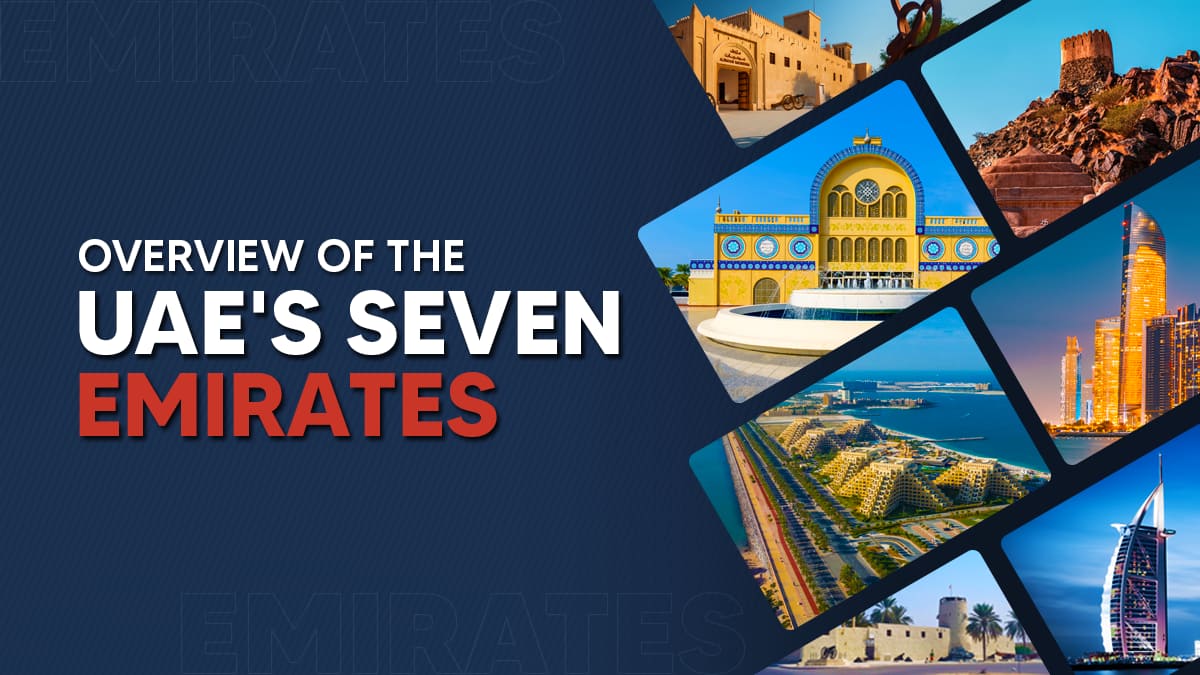
    The United Arab Emirates (UAE) is a nation known for its rapid development, modern architecture, and booming economy. It consists of seven emirates, each with its unique characteristics and significance. These 7 emirates of the UAE have collectively transformed the country into a global hub for trade, tourism, and innovation.

    In this blog, we will explore the overview of the UAE’s seven Emirates: Abu Dhabi, Dubai, Sharjah, Ajman, Umm Al Quwain, Ras Al Khaimah, and Fujairah. 

    If you’re an Indian entrepreneur, explore how you can invest in Dubai from India and choose the right emirate for your business.

    What are the 7 UAE Emirates? 

    7 UAE Emirates” refers to the seven emirates that comprise the United Arab Emirates (UAE). These are not separate countries but are individual emirates within the UAE. Each emirate is governed by its ruler. 7 Emirates of the UAE in order below:

    1. Abu Dhabi: The capital and largest emirate. 
    2. Dubai: The most populous and well-known emirate. 
    3. Sharjah: Known as the cultural capital of the UAE. 
    4. Ajman: The smallest emirate by area. 
    5. Umm Al Quwain: Known for its quiet, traditional lifestyle. 
    6. Ras Al Khaimah: Noted for its mountainous landscape. 
    7. Fujairah: The only emirate on the eastern coast along the Gulf of Oman. 

    These emirates together form the country of the United Arab Emirates. 

    Who is the current leader of the UAE?

    His Highness Sheikh Mohamed bin Zayed Al Nahyan was elected the third and current president of the UAE by the Federal Supreme Council on 14 May 2022.

    7 Emirates of the UAE and Their Rulers 

    While the UAE is a unified nation, each of its seven emirates is governed by its royal family. The seven emirates of the United Arab Emirates (UAE) are ruled by the following dynasties: 

    Emirate   Ruling Family  Present Ruler 
    Abu Dhabi  Al Nahyan  His Highness Sheikh Mohamed bin Zayed Al Nahyan 
    Dubai  Al Maktoum  His Highness Sheikh Mohammed bin Rashid Al Maktoum 
    Sharjah  Al Qasimi  His Highness Dr. Sheikh Sultan bin Mohammed Al Qasimi 
    Ajman  Al Nuaimi  His Highness Sheikh Humaid bin Rashid Al Nuaimi 
    Umm Al Quwain  Al Mualla  His Highness Sheikh Saud bin Rashid Al Mu’alla 
    Ras Al Khaimah  Al Qasimi  His Highness Sheikh Saud bin Saqr Al Qasimi 
    Fujairah  Al Sharqi  His Highness Sheikh Hamad bin Mohammed Al Sharqi 

     7 Emirates of the UAE and their specialities  

    The 7 Emirates of the UAE each boast their unique specialities, ranging from cultural heritage. Mentioned below are the seven emirates of the UAE and their specialities:   

    1. Abu Dhabi 

    Abu Dhabi is the UAE’s largest emirate and capital. It is nearly around 87% of the country’s land area.  As the country’s capital, it is also its political and administrative centre. 

    Abu Dhabi is famous for its top attractions. Notable among them is the Sheikh Zayed Grand Mosque, also one of the biggest in the world. It is also a world-class art gallery (check out the Louvre Abu Dhabi). 

    Additionally, Abu Dhabi has beautiful natural wonders to enjoy. Liwa Oasi is a peaceful area with Liwa dunes and Sir Bani Yas Island, populated by numerous species of animals are among them. 

    Specialities of Abu Dhabi: 

    • Political and administrative centre. 
    • A major contributor to the UAE’s economy. 
    • Home to the Sheikh Zayed Grand Mosque and Louvre Abu Dhabi. 
    • Features the Liwa Oasis and Sir Bani Yas Island. 
    • Initiatives like Masdar City focus on sustainability. 

    Looking to set up in the capital? Explore company formation in Abu Dhabi and understand the Abu Dhabi business setup cost.

    2. Dubai 

    This is the most populous and well-known emirate, with a futuristic skyline, fantastic architecture, luxury shops, and exciting nightlife in Dubai. It attracts millions of tourists each year as a global city. 

    Initially, Dubai was a small fishing village in a major metropolis. Other sectors, such as real estate, tourism, and finance, have contributed to Dubai’s growth. Entrepreneurs can set up via mainland company formation or through one of Dubai’s many free zones.

    Boasting one of Dubai’s most recognisable features. The fantastic view, the experiences and the tallest building in the world, Burj Khalifa. You can start a business in Dubai Free zone which includes IFZA, JAFZA, IFC, DIFZ, Ajman, and Meydan, the most popular free zones in Dubai. Check our guide on Dubai company formation costs to plan your budget.

    Specialities of Dubai: 

    • Known for its futuristic skyline and booming economy. 
    • Attractions like the Burj Khalifa, Palm Jumeirah, and Dubai Mall. 
    • A major centre for finance, real estate, and trade — explore the top business opportunities in Dubai.
    • It is Home to Expo 2020 and other groundbreaking developments. 
    • Famous for luxury shopping, hotels, and nightlife. 

    Ready to start? Learn about getting a business trade license in Dubai.

    3. Sharjah 

    Aimed at preserving their heritage, art and culture – it is the home of UAE’s cultural scene -Sharjah. Moreover, in 2019, UNESCO declared Sharjah the World Book Capital. It aligns with its cultural-conscious pledge. 

    It is one of the best museums you can visit in Dubai, where displays usually are gone through and actualised. For example, the Sharjah Museum of Islamic Civilization and the Sharjah Art Foundation are vital attractions. Sharjah is also the home of three of the five Middle Eastern Airports in the World: Sharjah/Port. 

    In addition, Sharjah is the economic centre within a travel triangle, highlighting manufacturing and logistics-based production as well as education. This friendly business environment makes business setup in Sharjah an attractive option for entrepreneurs.

    Specialities of Sharjah: 

    • Known for its museums, art galleries, and cultural festivals. 
    • Named World Book Capital in 2019. 
    • Known for its parks, heritage sites, and family-oriented attractions. 
    • Strong focus on manufacturing, logistics, and education sectors. 

    4. Ajman 

    Ajman, the smallest of the 7 emirates in both area and population, has seen significant development in recent years. This growth has been concentrated mainly in the real estate and construction sectors. 

    Additionally, Ajman’s economy is primarily driven by its port. Businesses can take advantage of Ajman Free Zone company formation for cost-effective setup with 100% foreign ownership. which stands as one of the UAE’s leading maritime hubs. Furthermore, the emirate boasts an industrial sector, contributing to its economic hub. 

    Specialities of Ajman: 

    • Compact size with significant recent development. 
    • Offers tranquil, less crowded coastal areas. 
    • Rapid expansion in construction and housing. 
    • Active port and manufacturing sector. 
    • Known for a more budget-friendly lifestyle compared to other emirates. 

    Explore Ajman mainland company formation for businesses targeting the local UAE market.

    5. Umm Al Quwain 

    Umm Al Quwain is the least populated emirate. It is known for its relaxed and traditional lifestyle. Unlike the other cities of Dubai and Abu Dhabi, Umm Al Quwain offers a more laid-back atmosphere. 

    The emirate is committed to preserving its natural environment and cultural heritage. It is known for its coastal mangroves, scenic beaches, and the Dreamland Aqua Park. These are one of the UAE’s largest water parks. 

    In addition to its natural attractions, Umm Al Quwain has a rich historical backdrop. Moreover, the archaeological sites, such as Al-Dour, date back to the 3rd century, adding to the emirate’s cultural significance. 

    Specialities of Umm Al Quwain: 

    • Known for its peaceful, traditional lifestyle. 
    • Features coastal mangroves and pristine beaches. 
    • Home to the ancient Al-Dour archaeological site. 
    • Houses Dreamland Aqua Park, a popular water park. 
    • Ideal for fishing, sailing, and other water sports. 

    6. Ras Al Khaimah 

    Ras Al Khaimah (RAK) is located in the northernmost part of the UAE. For entrepreneurs, RAKEZ (Ras Al Khaimah Economic Zone) offers one of the UAE’s most affordable and flexible free zone setups. RAK is popular destination for people who are interested in outdoor activities. It offers a range of activities, such as hiking, mountain climbing, and water sports. 

    Among its key attractions is Jebel Jais Mountain. The emirate also features historical sites like Dhayah Fort and the National Museum of Ras Al Khaimah. It highlights its rich heritage. 

    Additionally, Ras Al Khaimah has a growing economy focusing on tourism, manufacturing, and real estate. Its free zones include the Ras Al Khaimah Economic Zone (RAKEZ). It offers appealing incentives for businesses and investors. 

    Specialities of Ras Al Khaimah: 

    • Includes mountains, deserts, and beaches. 
    • Home to the UAE’s highest peak and a popular destination for outdoor activities. 
    • Features historical sites like Dhayah Fort and the National Museum of Ras Al Khaimah. 
    • Known for adventure sports, such as zip-lining and mountain climbing. 
    • Focuses on tourism, manufacturing, and real estate. Browse the full RAKEZ business activities list to find your permitted activity.

    You can also explore RAK mainland company formation for direct UAE market access.

    7. Fujairah 

    Fujairah is the only emirate located entirely on the eastern coast of the UAE along the Gulf of Oman. It is celebrated for its rugged mountains, stunning beaches, and historical sites. Its strategic location makes it an important centre for trade and commerce, particularly in shipping and logistics. 

    The emirate boasts a diversified economy with critical agriculture, fishing, and tourism industries. Fujairah is home to Fujairah Port. It’s one of the region’s most significant oil-exporting ports. 

    Additionally, Fujairah’s historical landmarks include the Fujairah Fort and Al-Bidyah Mosque. It attracts tourists seeking a blend of cultural and natural experiences. 

    Specialities of Fujairah: 

    • Unique position along the Gulf of Oman, contrasting with the western coast’s Arabian Gulf. 
    • Features rugged mountains and scenic landscapes. 
    • Home to Fujairah Fort and Al-Bidyah Mosque, one of the oldest in the UAE. 
    • Known for its beautiful beaches and excellent diving spots. 
    • Important for maritime trade and oil exports. 

    Not sure which emirate suits your business? Read our guide on the best location to set up a business in Dubai and the UAE.

    Must-See Attractions in the 7 Emirates of the UAE 

    Explore the top must-see attractions across the 7 emirates of the UAE. It is where each destination offers its distinctive blend of culture, history, and adventure. 

    In Abu Dhabi 

    • Sheikh Zayed Grand Mosque   
    • Qasr Al Hosn 
    • Ferrari World Abu Dhabi 
    • Louvre Abu Dhabi  
    • Mangrove Parks 

    In Dubai 

    • Burj Khalifa 
    • The Museum of the Future 
    • Palm Jumeirah 
    • Dubai Mall 
    • Al Fahidi District   
    • Dubai Opera 
    • Dubai Souks 

    In Sharjah 

    • Sharjah Art Museum 
    • Sharjah Safari Park 
    • Al Noor Mosque 

    In Ajman 

    • Ajman Museum 
    • UAE Pygmy Zoo 
    • Al Zorah Nature Reserve  

    In Umm Al Quwain 

    • Falaj Al Mualla Fort 
    • Ed-Dur Site 
    • Umm Al Quwain National Museum 

    In Ras Al Khaimah 

    • Jebel Jais 
    • Wadi Shawka 
    • National Museum of Ras Al Khaimah 

    In Fujairah 

    • Fujairah Beaches 
    • Tim’s Reef   
    • Madhab Spring Sulphuric Park   
    • Wadi Wurayah National Park 

    If you’re considering a free zone, see our comparison: IFZA vs Meydan vs RAKEZ — how to choose the right free zone.

    Ready to explore your business in 7 Emirites

    The UAE is made up of seven emirates: Abu Dhabi, Dubai, Sharjah, Ajman, Umm Al Quwain, Ras Al Khaimah, and Fujairah. Each one offers something unique, from Dubai’s towering skyscrapers to Sharjah’s cultural richness and Fujairah’s natural beauty. The UAE is full of opportunities for residents, tourists, and investors. 

    If you’re considering starting a business in any of these emirates, Shuraa India is here to help. With over 26+ years of experience, we provide expert guidance on business registration, licensing, and legal compliance.  

    Whether you’re interested in Dubai’s bustling city life or Fujairah’s peaceful landscapes, Shuraa India makes the process easy and smooth. Reach out to us today to turn your business dreams into reality! 

    Shuraa India offers end-to-end company formation services across all 7 UAE emirates — from license to visa to bank account.

  • Small Business License Cost in Dubai

    Small Business License Cost in Dubai

    Starting a small business in Dubai can be an excellent opportunity for entrepreneurs aiming to establish themselves in a growing and dynamic market. With a small business license cost in Dubai being very affordable and the licensing process straightforward, now is the perfect time to seize this opportunity and build a strong presence for your brand in the city.

    However, one of the key aspects that entrepreneurs need to consider when starting a business in Dubai is understanding the licensing costs involved. Licensing costs can vary depending on the type of business and the activities being conducted, so it’s essential to do thorough research and planning before diving in. 

    In addition, the business consultants at the Shuraa India are always available to provide end-to-end business assistance as well. You can get in touch with us, and we’ll help you launch your small business in the UAE. 

    How Much Does a Small Business License Cost in Dubai?

    Dubai small business license costs typically range from AED 6,000 to AED 30,000, covering initial approval, trade name reservation, and the base license fee. In INR, this is approximately ₹1.47 lakh to ₹7.38 lakh. The final amount varies depending on business activity, legal structure, location, and additional services required. Accurate costing requires consultation with Shuraa Business Setup.

    Factors Influencing UAE Business License Cost

    There are several key factors that can influence the cost of a small business license in Dubai: 

    1. Nature of the Business Activity 

    This is the most significant factor.  Dubai issues licenses based on the type of business you operate, and some industries have higher fees than others. For instance, a license for a restaurant will likely cost more than one for a consultancy. 

    2. Business Location 

    Another critical factor that impacts the business license fee in Dubai is your business location. Opening a venture in a specialized free zone is cost-effective if your business activities match the requirements. 

    However, it can quickly become a costly affair if you don’t analyze the rules and regulations of the specified free zone. In addition, you don’t need to think a lot about the location if you want access to Dubai’s local market. All you need to do is get in touch with the DET and launch your small company on the mainland. 

    3. Rented Office Space 

    If you plan to have a physical office, the cost of renting that space will impact your license fee. The Dubai Department of Economic Development requires businesses to pay a 2.5% surcharge on their total rent towards the license cost. So, finding affordable office space can be a good way to keep your fees down. 

    4. External Approvals 

    Certain business activities may require additional permits or approvals from other government entities. These approvals can add to the overall cost of your license. 

    5. Number of Business Partners

    The number of people you have sharing ownership in your business can affect the license cost. Generally, more partners mean more visa applications, which translates to additional fees. 

    6. Visa Requirements

    The number of visas you need for employees can add to the overall cost. Some licenses may allow for a specific number of visas, while others may require additional fees for each additional visa. 

    7. Company Legal Structure 

    The legal form you choose for your business, such as a sole proprietorship, limited liability company (LLC), or branch of a foreign company, can also impact the license cost. 

    8. eTrader License

    Dubai offers a simplified eTrader license for home-based businesses with limited activity.  This license typically has a lower cost compared to a standard Mainland license. 

    Due to the various factors involved, the best way to get a precise estimate for your situation is to consult with a business setup consultant in Dubai at Shuraa. We can assess your specific needs and provide a more accurate cost breakdown. 

    How to Secure a Small Business License in Dubai? 

    Obtaining a small business license in Dubai can seem complex, but following these steps will simplify the process: 

    1. Identify Your Business Activity

    First, clearly define what your business does. Dubai categorizes licenses based on trade, industry, or services. Research the specific category that best fits your operations. 

    2. Choose a Business Name

    Select a unique and appropriate name that complies with Dubai’s naming regulations. Avoid offensive terms and ensure it’s not already registered. Our business setup consultants at Shuraa can assist with name selection. 

    3. Decide on a Legal Structure

    There are various options like sole proprietorship, limited liability company (LLC), etc. Each has its own advantages and implications for licensing. Consider consulting a professional for guidance. 

    4. Register with DET

    Apply for initial approval from the Dubai Department of Economy and Tourism (DET) in Dubai. This typically involves submitting basic documents like business plans and paying initial fees. Some industries require permits from other government entities. Research any additional approvals needed for your specific business activity. 

    5. Finalize Your Business Location 

    Choose physical office space or opt for a free zone with its own regulations. Consider factors like cost, proximity to your target market, and free zone benefits (if applicable). 

    6. Register with Ejari

    Register your tenancy agreement with Ejari, the official Dubai rental registration system. This is mandatory for obtaining a license. 

    7. Prepare Required Documents

    Gather all necessary documents as per the DET requirements. These typically include: 

    • Passports and visas of owners and partners 
    • Business plans (if required) 
    • Tenancy contract (if applicable) 
    • Proof of any additional approvals obtained 
    • Memorandum of Association (MOA) and Articles of Association (AOA) for some legal structures 

    8. Apply for Business License

    Once you have all the documents and approvals, submit the completed application form and supporting documents to the DET. You can submit it electronically or in person at their service centers. 

    9. Pay Licensing Fees

    After your application is approved, you’ll need to pay the relevant licensing fees. 

    10. Visa Requirements 

    Factor in the number of visas you’ll need for employees, as this can add to the overall cost. Research visa options and fees associated with your chosen legal structure. 

    Keep in mind, consulting with a business setup consultant in Dubai can significantly streamline the process. 

    Benefits of Opening a Small Business in the UAE

    The UAE, particularly Dubai, has become a global hub for entrepreneurs and businesses of all sizes. If you’re considering opening a small business there, here are some of the key benefits to attract you: 

    1. Favorable Tax Structure

    The best part about opening a small business in Dubai is the tax-free regime. In addition, you can also repatriate 100% of your profits and capital gains. Note that mainland companies need to pay a reasonable VAT of 5%. 

    2. Global Connectivity

    Dubai is a major transportation hub that offers easy access to markets in Europe, Asia, and Africa. This makes it a prime location for import/export businesses or those seeking international expansion. 

    3. Top-Notch Infrastructure

    The UAE has invested heavily in developing world-class infrastructure, including advanced transportation networks, reliable communication systems, and modern business facilities. 

    4. Access to Funding

    The UAE has a growing venture capital scene, with investors actively seeking promising startups. This provides an opportunity for startups to secure funding for growth and expansion. 

    5. Networking and Collaboration

    There are numerous business incubators, co-working spaces, and networking events in the UAE. These platforms allow startups to connect with potential investors, mentors, and collaborators within the entrepreneurial ecosystem. 

    Secure your Small Business License in Dubai!

    Many factors contribute to the small business license cost in Dubai. However, you don’t need to worry about them when you collaborate with the business experts at Shuraa India. We take care of everything related to company incorporation in the UAE. 

    Moreover, we offer our expert guidance to ensure you don’t pay a single penny extra for setting up your business. Our consultants maintain complete procedural transparency and offer post-establishment services too. 

    Book a free consultation today with our experts at Shuraa India and learn more about license costs for small businesses in Dubai. 

  • UAE Residence Visa 2026 | Costs, Documents & Process

    UAE Residence Visa 2026 | Costs, Documents & Process

    The United Arab Emirates (UAE) has long been a top destination for expats looking to live and work in a dynamic environment. With its booming economy, tax-free incentives, and year-round sunshine, it’s no wonder many dream of calling the UAE home.

    One of the key attractions for many expats is the opportunity to obtain a UAE residence visa, which opens up a host of benefits, including the ability to reside and work in the country for an extended period of time, access to world-class healthcare and education facilities, and the potential to sponsor family members. 

    If you’re considering a move to the UAE for work, retirement, or simply a change of scenery, understanding the residence visa process is essential. 

    What is a UAE Residence Visa?

    A residency visa in the UAE is a document that allows foreign individuals to live and work in the country for a longer period, typically ranging from 2 to 10 years. It’s different from a visitor visa, which is for shorter stays and cannot be used for work or business.

    Unlike some countries, most residency visas in the UAE require a sponsor. This sponsor can be: 

    • Employer: For employment visas, the company you’ll be working for acts as your sponsor. They initiate the visa application process and handle the paperwork. 
    • UAE Resident: If you’re not tied to a specific job, a UAE resident can sponsor your visa. This is typically seen with family members, where a husband sponsors his wife’s visa and vice versa. 

    The sponsor system essentially takes responsibility for your immigration status. It assures the government that you have a reason for being in the country and someone to vouch for you. 

    There are exceptions, though. The UAE recently introduced a new visa option called the Green Visa, which allows freelancers, self-employed individuals, and even some skilled employees to sponsor themselves for a five-year residency visa. This eliminates the need for a company or a UAE citizen as a sponsor. 

    Types of UAE Residence Visas

    There are various types of UAE residence visas to cater to different purposes of stay. Here are some of the most common ones: 

    1. Employment Visa

    This is the most common type of visa, issued to individuals who have secured a job with a UAE-based company. The employer acts as the sponsor and handles most of the visa application process. A 2-year employment visa in Dubai generally ranges between AED 3,000 and AED 7,000.  To know the exact cost, consult your employer.

    2. Investment (Investor) Visa

    The UAE Investment Visa (long-term residency) is for foreigners who make a significant investment in the UAE. This visa is valid for a longer period than other resident visas (up to ten years) and does not require a sponsor if you qualify.   

    Read More about How to get an investor visa in Dubai

    3. Family Visa

    This visa is reserved for close family members of UAE citizens or international residents.  

    4. Student Visa

    This visa is for international students enrolled in a UAE-based educational institution. The university or educational institute acts as the sponsor for the visa application.  

    5. Retirement Visa

    This visa is for individuals aged 55 and above with a good monthly income (around AED 20,000 or more) to comfortably retire in the UAE. They can also be sponsored by a UAE resident child. 

    6. Business Visa

    As a part of the UAE’s visa system, a business visa is a residency permit that allows foreign investors to work, stay, and run their business operations. 

    Read our complete guide: How to apply for a Dubai business visa — eligibility, documents and fees explained.

    7. Green Visa

    This is a relatively new visa category. It is a five-year renewable visa aimed at attracting skilled professionals, freelancers, and entrepreneurs.  Under the Green Visa program, individuals can sponsor themselves without the need for an employer. 

    8. Golden Visa

    This is a long-term visa (either 5 or 10 years) aimed at attracting high-net-worth individuals, investors, entrepreneurs, and specialists in specific fields. 

    See also: UAE Golden Visa salary and investment requirements — full eligibility criteria for 2026.

    Required Documents for UAE Residence Visa

    The following is the list of documents that you require for your UAE Residency visa: 

    • Completed the UAE Visa Application Form 
    • Original Passport (with at least 6 months’ validity remaining) 
    • Passport-Sized Photographs 
    • Proof of Medical Fitness 
    • UAE Health Insurance Plan 
    • Company registration documents — required for investor/business visa applicants
    • Property Ownership Documents (For property investor visa)
    • If you are changing employers or sponsors, a No Objection Certificate (NOC) may also be required as part of your application.
    Use our UAE business compliance checklist to track all required documents and avoid application delays.

    How to Apply for a UAE Residence Visa? 

    Here is the step-by-step process for obtaining a Dubai residence visa in 2026:  

    1. Determine your eligibility and visa type

    Research the different types of UAE residency visas to identify the one that best suits your purpose. Ensure you meet the eligibility criteria for your chosen visa category.  

    2. Secure a Sponsor (if required)

    Most UAE residency visas require a sponsor who takes legal responsibility for your stay. This can be your employer, a UAE national relative, or a university. Exceptions include the Investor Visa and the Green Visa, which allow for self-sponsorship, typically through free zone company formation or qualifying investments.

    3. Apply for Entry Permit

    Once you have a sponsor and a confirmed visa category, your sponsor or a visa processing agency will typically initiate the application for an entry permit. This permit allows you to enter the UAE for residency processing. 

    4. Medical Examination and Emirates ID

    After entering the UAE with the entry permit, you’ll need to undergo a medical fitness test at an approved medical facility. You’ll also apply for an Emirates ID, a mandatory national identification card for all UAE residents, required for banking, driving, and government services.

    5. Visa Application and Collection

    Once you have the entry permit, medical test results, and Emirates ID application submitted, your sponsor can proceed with the formal residency visa application. This will involve submitting the required documents through typing centres or GDRFA (General Directorate of Residency and Foreigners Affairs) channels.

    6. Visa Approval and Collection

    After processing, the authorities will notify you of the visa application decision. Upon approval, you can collect your Emirates ID and officially become a UAE resident. You can also track your application progress — see our guide on UAE visa status check by passport number.

    Benefits of having a UAE residence visa

    A UAE Residence Visa is mandatory to live and work in the country legally. Individuals intending to do business have to apply for a residence visa in the UAE. Here’s a more detailed breakdown of the benefits:

    1. Easy to open a bank account

    If you want to open a bank account in Dubai from India, a UAE residence visa and an Emirates ID are mandatory prerequisites. Nevertheless, you need to have a UAE Residence Visa to procure an Emirates ID. It allows you to open a non-resident bank account. 

    2. Access to financial facilities

    By having a residence visa, you can avail many financial facilities in the UAE. For instance, you can easily apply for a car loan, personal loan, or mortgage without any potential legal troubles. Residence visa holders can also explore wider investment opportunities in Dubai from India — including property, equities, and business ventures.

    Indians who become UAE residents may also qualify for NRI tax status — read our UAE vs India taxation comparison for the full financial picture.

    3. Easy to obtain a driver’s license

    A driver’s license could be one of the basic requirements for individuals moving to the UAE. A residence visa in the UAE enables the conversion of a current license into a UAE driver’s license for certain nationalities, while others can take driving lessons and a test to get their license in the UAE. Whatever the scenario is, a UAE residence visa is mandatory to get a driver’s license. 

    4. Access to healthcare and educational services

    Health insurance is mandatory, especially when you move to another country. The cost of healthcare services can become a financial burden without this facility. In Dubai, the residents must have health insurance to cover their medical expenses, which is possible through a UAE residence visa. 

    Likewise, the residence visa holders can also sponsor their children, enroll them in any of the leading institutions, and provide them with the best quality education in the country. 

    5. Dependants’ sponsorship

    The UAE residence visa holders are allowed to bring their spouses, parents, and children into the country, provided they meet certain salary conditions specified by the authorities. In addition, they can also sponsor visas for their maids, drivers, or other domestic workers as well. 

    Looking for longer-term security? The UAE Golden Visa offers 5 or 10-year residency with no sponsor required.

    What is the Cost of a UAE Residence Visa in 2026 

    UAE residence visa fees in 2026 can be anywhere near AED 100 Application Fees. The UAE residence visa cost depends on several significant parameters, such as the applicant’s location, the length of their intended stay, the insurance required for family members, etc. For two years, the UAE Residence Visa fee is AED 3,990*.

    Based on those factors, below is a specified list of the approximate Dubai residence visa costs. 

    • The cheapest 2-year residence Visa in Dubai costs you around AED 3,500* without medical insurance and AED 4,200* with medical insurance. 
    • The 3-year residence visa in Dubai costs for applicants in Dubai without insurance will be approximately AED 3,700, and AED 5,472 with insurance. (Expired)
    • For investors Visa – Golden Visa (10 years), the cost is generally around AED 5,000* for application processing + medical test fees + typing centre charges. 
    • For the Retirement Visa, the cost is approximately. AED 3,000* for application processing + medical test fees + typing centre charges .

    Remember, these are estimates, and the actual costs can vary. It’s always best to check with the official UAE authorities or consult with one of our experts at Shuraa India for the most up-to-date fee structure for your specific situation. 

    Note: If you’re setting up a company, an immigration establishment card is an additional mandatory cost — get our guide on fees and the process.

    UAE Residence Visa Renewal in 2026

    UAE residence visa renewal fees in 2026 range from AED 3,000* to AED 7,000*, depending on application and issuance fees, typing centre charges, Emirates ID renewal, medical insurance, and mandatory Knowledge and Innovation Dirham costs. You can renew your UAE residency visa as long as it’s the type that allows renewal. Exceptions include visit visas or temporary work permits. It’s crucial to initiate the renewal process before your visa expires. There might be penalties for late renewals. 

    The general process for UAE residency visa renewal involves: 

    • You or your sponsor (except Green Visa holders) will start the process by contacting the relevant authorities or a typing centre. 
    • Prepare the required documents (passport, Emirates ID, visa application form, proof of income/employment) 
    • Pay the associated fees. 
    • Medical Test (if required) 
    • Emirates ID Renewal 

    Once submitted, the authorities will process your application. Upon approval, you can collect your renewed visa and Emirates ID. 

    After submitting your renewal, track your application using our guide: how to check UAE visa status by passport number.

    UAE Entry Permit vs. Residence Visa: Key Differences

    UAE Entry Permit allows you to enter the UAE for a specific purpose. It’s valid for a short duration, typically 1 month for most visa types. With an entry permit, you cannot legally reside or work in the UAE. It’s meant for activities like finalizing your residence visa application, attending events, short-term work projects, or medical treatment. 

    Whereas the UAE Residence Visa allows you to live and work in the UAE for an extended period. Residence visas typically range in validity from 2 years to 10 years. With a residence visa, you can legally reside, work, and sponsor family members (depending on the visa type). 

    Entry permits are generally not renewable, but a residence visa can be renewed upon meeting specific requirements and paying the associated fees. 

    Get your UAE residency visa with expert help — free consultation.

    Get Your UAE Residence Visa with Shuraa India

    Living and working in the UAE is exciting, and a residence visa makes it a reality. But getting that visa can be complicated. There’s a lot of paperwork, medical checks, and legal stuff to follow. To avoid any delays or mistakes, it’s wise to get help from an expert. 

    That’s where Shuraa India comes in. We have years of experience helping people and businesses secure visas and set up shop in the UAE. We’ll handle the complexities so you can focus on your dreams in the Emirates. Shuraa India has processed 40,000+ UAE investor visas for Indian nationals — get guided, expert visa support from day one

  • How to Start a Cosmetics Business in Dubai?

    How to Start a Cosmetics Business in Dubai?

    Dubai’s fast-growing beauty sector creates substantial potential for starting a cosmetics venture there. Being a significant destination for travellers and home to many Indians, boosts its appeal for new trade businesses in skincare or makeup across the UAE. Demand is climbing steadily; at the same time, clear rules and reliable supply chains make operations smoother. Entrepreneurs looking into beauty products will find more favourable conditions here than in other markets. 

    Starting a beauty products trade firm in the UAE is simple due to transparent rules and an organised permit system. It gets easier if you partner with Shuraa’s experienced advisors; these professionals support you from paperwork to clearance, so your venture launches fast while meeting regulations. 

    Is starting a cosmetics business in Dubai profitable?

    Yes, starting a cosmetics business in Dubai offers solid returns due to growing customer interest and market expansion. While the UAE’s beauty sector reached $2.55B in 2025, annual growth remains consistent across segments. For instance, makeup sales may reach $487M by 2030, suggesting clear potential for new labels.  

    As buyers favour clean, ethical, or halal-certified goods and given Dubai’s appeal as a premium shopping center, founders aiming to launch cosmetic lines locally could gain traction through thoughtful planning. Favourable registration rules, access to diverse clients, and elevated spending capacity support startup success here. 

    Benefits of Establishing a Cosmetics Trading Company in UAE

    Starting a cosmetic import-export business in the UAE offers strong potential, due to rising demand for beauty products, simple regulations for investors, and its prime location for worldwide commerce. 

    1. High Demand for Beauty Products

    The UAE shows a strong interest in beauty; locals and visitors alike need skincare products. While demand grows, imported cosmetic goods remain popular, with options available across cities.  

    2. Tax Benefits for Businesses

    Tax advantages attract business owners: no personal income tax, low corporate taxes, and a 5% VAT rate, enabling cosmetics ventures to achieve substantial returns in the UAE.  

    3. Large Customer Base from Tourism

    Dubai and Abu Dhabi attract countless visitors annually, opening doors for beauty brands to connect with people from many countries. These cities serve as hubs where firms meet buyers from different cultures, helping them grow their reach across borders.  

    4. Multiple Business Setup Options

    Investors can choose between Mainland, Free Zone, or Offshore based on goals, costs, and market needs, with distinct advantages depending on activity type and location preferences.  

    5. Efficient Logistics and Global Shipping

    Simple shipping in and out due to strong transport systems, top-tier harbours, and trade agreements, enabling the movement of beauty items across borders. While the UAE’s setup helps traders reach global markets fast, its infrastructure supports quick customs processing.  

    6. Growing E-Commerce Opportunities

    The e-commerce sector is growing fast; as more people shop online, beauty brands find it easier to expand via sites such as Amazon and Noon, as well as through social selling channels.  

    7. Wide Range of Permitted Products

    A broad selection is permitted for trade in skincare or perfumes, hair products, natural makeup, beauty gadgets, and similar items, offering room to diversify and expand steadily.  

    8. Strict Regulations That Ensure Quality

    Strict rules help ensure quality. To align with Dubai Municipality and ESMA oversight, companies uphold strong practices, earning the confidence of global clients.  

    9. Strategic Global Access

    Because of its location, the UAE provides easy access to the Middle East and Africa, including the GCC countries, parts of Europe, and many African nations.  

    10. Supportive Business Ecosystem

    Set up guides, team up with legal experts, shipping helpers, and work alongside promotion teams to give complete help to startup founders.  

    Essential Guidelines for Cosmetics Business Setup in Dubai

    Starting a cosmetics business in Dubai requires meeting specific licensing, product registration, and safety standards to ensure your products are legally approved and safe for consumers. Here are the key guidelines you must follow: 

    1. Choose the Right Business Setup

    • Form a company in the Mainland or the Free Zone. 
    • Get a cosmetic trading license or manufacturing license based on your activity. 

    2. Register All Products with Dubai Municipality

    • Mandatory registration through Montaji before importing or selling. 
    • Valid for 5 years; must meet safety and ingredient standards. 

    3. Meet Health & Safety Requirements

    • Follow storage, hygiene, and handling rules set by Dubai Municipality and Trakhees. 
    • Ensure proper compliance with warehouse or retail shop requirements. 

    4. Follow Packaging & Label Rules

    • Labels must be in Arabic and English, and include ingredients, batch number, expiry date, usage, and warnings. 

    5. Ensure Product Safety & Testing

    • Provide safety reports, lab tests, Free Sale Certificate, and GMP/ISO proof if needed. 
    • Some items may require ESMA’s Certificate of Conformity. 

    6. Import & Distribution Compliance

    • Ensure all documents are correct during customs clearance. 
    • Maintain proper storage conditions and separate expired goods. 

    7. Borderline Products

    • Items with medical claims may need approval from the Ministry of Health. 

    8. Trademark Protection

    • Register your brand with the UAE Ministry of Economy. 

    Get your UAE cosmetics business license — free cost estimate today

    How to Start a Cosmetics Business in Dubai, UAE

    Starting a cosmetics venture in Dubai makes strong sense right now. As consumer spending rises, the UAE’s beauty sector is expanding rapidly, and tourism also plays a role here. Demand for luxury skincare grows stronger, and fragrances see increased interest as well, driven by shifting preferences. 

    If you’re thinking of bringing international labels into the UAE or starting your own beauty brand, launching a cosmetics trading business there can be straightforward, provided you take the proper steps. Guidance from Shuraa India makes the process smoother by giving practical support customised to your goals. 

    Step 1: Select Your Business Activity

    Begin by identifying the nature of your cosmetics business: 

    • Trading cosmetics 
    • Importing & exporting products 
    • Manufacturing your own line 
    • Wholesale distribution 
    • Online retailing 

    Your activity defines the specific license you must obtain and the approvals you’ll need. 

    Step 2: Choose the Right Jurisdiction

    You can start a Cosmetics Business in Dubai either on the Mainland or in a Free Zone. 

    • Mainland: Lets you trade anywhere in the UAE, partner with salons, spas, and retail outlets, and bid for government contracts. 
    • Free Zone: Offers 100% foreign ownership, full profit return, and lower setup costs. You can also take advantage of modern warehousing and logistics facilities. 

    Choosing the proper jurisdiction depends on your business model and long-term goals. 

    Step 3: Register Your Trade Name

    Pick a unique and brand-friendly name that aligns with UAE naming laws, no offensive words, religious references, or abbreviations. Submit it to the relevant authority (DET or Free Zone) for approval. A distinct name helps build a strong cosmetic brand identity. 

    Step 4: Obtain the Cosmetics Trading Licence

    To officially start a cosmetics business in Dubai, you must apply for a cosmetics trading license.
    This licence allows you to: 

    • Legally buy and sell cosmetics 
    • Import and distribute products 
    • Supply to salons, retailers, and wholesalers 
    • Sell online or offline across the UAE 

    The application requires submitting documents like passport copies, business plans, and initial approvals. 

    Step 5: Complete Dubai Municipality Product Registration

    This is a mandatory step in the UAE. Every cosmetic product, from lotions and perfumes to makeup and haircare, must be registered with Dubai Municipality.

    The process includes: 

    • Submitting product samples 
    • Providing ingredient lists 
    • Ensuring products meet UAE health & safety standards 
    • Once approved, your product can be freely imported, marketed, and sold within the UAE. 

    Step 6: Secure an Office or Warehouse Space

    Depending on your licensing requirements, you may need: 

    • An office for administrative operations 
    • A warehouse for storage and distribution 
    • Retail space, if you plan to sell directly to customers 

    Free Zones often provide affordable office and warehouse packages, while Mainland setups may require Ejari (tenancy contract) registration. 

    Step 7: Set Up Import/Export Compliance

    If your business involves importing cosmetics, complete the following: 

    • Register with Dubai Customs 
    • Get your Importer Code 
    • Work with trusted logistics partners 

    This ensures hassle-free import of beauty products from countries like Korea, France, India, and the US. 

    Step 8: Develop a Strong Marketing & Distribution Strategy

    With your Cosmetic Trading Business in the UAE ready to operate, focus on building your presence. 

    • Create a strong online brand through social media 
    • Partner with salons, spas, beauty clinics, and luxury retailers 
    • Launch e-commerce platforms 
    • Offer samples, influencer collaborations, and trial kits 

    Dubai’s diverse market allows you to scale quickly with the right marketing approach. 

    We’ve licensed 100+ beauty and cosmetics businesses in Dubai — expert guidance on MOHAP approvals & trade licensing

    Documents Required to Start a Cosmetic Business in Dubai, UAE

    Starting a cosmetics venture in Dubai requires proper documentation to ensure a smooth licensing and approval process. Below is a newly refined list of key paperwork you must prepare: 

    • Passport copies 
    • Passport-sized photographs 
    • Emirates ID 
    • Recent bank statements for financial verification 
    • Attested Memorandum of Association (MoA) 
    • Attested lease or tenancy contract for your business premises 
    • Approvals from relevant government bodies, depending on product type 
    • Address proof of all directors and shareholders

    Note: Additional documents may be requested based on your business activity (e.g., trading, manufacturing, or distribution) and your selected jurisdiction (Mainland, Free Zone, or Offshore). 

    Cost to Start a Cosmetic Business in Dubai 

    The cost of a cosmetic business in Dubai ranges from AED 28,000* to AED 50,000*, depending on business size and activities. Indian investors and expatriates should also consider one-time and recurring setup expenses as part of the overall establishment cost. 

    Shuraa Business Setup company formation experts ensure that you don’t pay a single penny extra to start your company. Our transparent procedures help you save a handful of money and time that can be utilised in other activities. 

    Why Choose Shuraa India? 

    Setting up a cosmetics company can get technical with product registration, licensing, and approvals, but Shuraa India makes the entire process seamless. Their experts assist with: 

    • End-to-end business setup 
    • Dubai Municipality product registration 
    • Customs and import approvals 
    • Trade licensing and documentation 
    • Legal compliance and office solutions 

    Shuraa India ensures your business is fully compliant and ready to operate in record time. 

    Start your Cosmetics Business in Dubai Today! 

    Your decision to start a cosmetics business in Dubai is the right one, due to several business benefits. You can deal with a wide variety of products, choose the desired business location, and enjoy various tax exemptions. 

    All you need to do now is connect with the business experts at Shuraa India. We handle licensing, banking, translation, and much more for your convenience. Now is the right time to set up a cosmetics business in Dubai, and Shuraa Business Setup is your ideal business partner. 

    FAQs

    Q1. What type of license do I need to launch a cosmetics business in Dubai?

    You will need either a Commercial License (for trading/import/export of cosmetics) or an Industrial License (if you plan to manufacture cosmetics locally). Most businesses choose a commercial license issued by the Dubai Department of Economy and Tourism (DET) or a relevant free zone authority. 

    Q2. What makes Dubai an ideal place to set up a cosmetics business?

    Dubai offers a high-demand beauty market, strong tourism inflow, tax advantages, easy business setup processes, and access to global buyers. Its multicultural population and strong purchasing power make it one of the best destinations for launching a cosmetics brand. 

    Q3. What new trends are shaping the cosmetic industry in Dubai?

    Some key trends include: 

    • Rising demand for clean and organic beauty products 
    • Popularity of K-beauty and professional-grade skincare 
    • Increased interest in Halal-certified cosmetics 
    • Growth of men’s grooming products 
    • Substantial shift towards e-commerce beauty retail 

    Q4. How does a commercial license differ from an industrial license in the UAE?

    • Commercial License: For trading activities, importing, exporting, and selling cosmetics. 
    • Industrial License: For manufacturing cosmetics or carrying out large-scale production within the UAE. 

    Your choice depends on whether you want to trade products or produce them. 

    Q5. What key guidelines should I follow when setting up a cosmetics business in Dubai?

    • Obtain the correct license (commercial or industrial). 
    • Comply with UAE health, safety, and product standards. 
    • Ensure that every cosmetic product is approved and safe for consumers. 
    • Follow Dubai Municipality’s product registration rules. 
    • Maintain proper labeling with ingredients, expiry dates, and usage instructions. 

    Q6. Is it mandatory to register my cosmetic products with the Dubai Municipality?

    Yes. Product registration is compulsory through the Dubai Municipality’s Montaji system. Every cosmetic item must be evaluated and approved for sale in Dubai to ensure it meets safety and quality standards.

  • What are the Different Types of Trade License in Dubai?

    What are the Different Types of Trade License in Dubai?

    When conducting business in the UAE, a trade license is required. The licenses are issued by the Dubai Department of Economy and Tourism (DET), and the process varies from one emirate to another. Commercial, industrial, professional, and tourism licenses are the main categories of licenses in the UAE. However, the government also grants a number of additional licenses that are particular to other kinds of activities.

    Each company will need a unique Dubai trade license depending on the type of business. The cost of a Dubai trade license will vary depending on the kind of business and the license that is being sought.

    What Is a Trade License?

    trade license in Dubai is an official permit issued by the Dubai Department of Economy and Tourism (DET) that legally authorizes businesses to operate within Dubai. It is mandatory for all business entities operating in Dubai Mainland, and the type of license required depends on your specific business activities.

    4 Main Types of Trade Licenses in Dubai

    One of the most crucial elements of company formation in Dubai is a trade license. With proactive assistance and direction from knowledgeable consultants, obtaining a business license in Dubai is not at all a difficult task. We have compiled a list of the various types of trade licenses which you can get in Dubai:

    1. Professional License in Dubai

    In Dubai, professional licenses are provided to those who meet the necessary academic standards and intellectual and technical proficiency requirements. For instance, individuals who offer IT services, professionals, artists, and craftsmen, among others, can apply for a professional license in Dubai. The company entity can also be registered as a Civil Works Company if there are multiple owners.

    Who Can Apply for a Professional License in Dubai?

    Persons wishing to work in the following fields can apply for a professional license in Dubai:

    • Information Technology Network Services
    • Information Technology Consultancies
    • Marketing and Research Consultancies
    • Human Resource Consultancy
    • Commercial Brokerage
    • Marketing Management
    • Tax Consultancy
    • Legal Consultancy
    • Accounting and Auditing Services
    • Engineering Consultancy
    • Architectural Services
    • Interior Design Services
    • Photography and Videography
    • Educational Services

    Cost of Professional License in Dubai: Starting from AED 7,500 to AED 15,000 depending on the business activity and location.

    2. Industrial License in Dubai

    For businesses and individuals engaged in the production of goods for the industrial sector in Dubai, an industrial license is required in order to start and operate without any hindrances. For an industrial license to be granted, it is a must that the concerned business should have a physical location in the UAE, typically in designated industrial zones.

    Types of Industrial Licenses Available in Dubai:

    • Appliance and Machinery Factory
    • Furniture Manufacturing
    • Dairy Products Manufacturing
    • Animal & Birds Feed Manufacturing
    • Meat Products Manufacturing
    • Carpet Production
    • Garment Production
    • Electronics Assembly
    • Food Processing
    • Plastic Manufacturing
    • Textile Production
    • Chemical Manufacturing

    Cost of Industrial License in Dubai: Starting from AED 15,000 to AED 50,000 depending on the manufacturing activity and facility requirements.

    3. Commercial License in Dubai

    Dubai issues commercial licenses to people and businesses engaged in the purchase and selling of goods. Companies are able to carry out trading operations both inside and outside of the UAE with the help of a commercial license. In Dubai, there are various commercial license categories available depending on the type of business activity.

    For instance, there are numerous company license types and business activity listings in Dubai for the trade of specific products like computers, automobiles, equipment, and building materials. When registering the company with the relevant authorities, whether on the mainland or in free zones, the investor must select a specific business license in Dubai.

    Commercial Trade Licenses Available for Your Business:

    • Trade related to Automobiles
    • Trading of Safety Gear
    • Trading of Used Furniture
    • Trade in Oil and Gas
    • Trading in Spare Parts
    • Trading of Publishing and Media Materials
    • Trading in Precious Metals and Gold
    • Trading of Chemicals
    • General Trading
    • E-commerce Trading
    • Food and Beverage Trading
    • Electronics and IT Equipment Trading
    • Construction Materials Trading
    • Textiles and Garments Trading
    • Medical Equipment Trading

    Cost of Commercial License in Dubai: Starting from AED 12,000 to AED 35,000 depending on the trading activities and business setup.

    4. Tourism License in Dubai

    Individuals and businesses that offer travel and tourist-related services in Dubai are awarded a tourism license. This license is the one that companies utilize the most, as Dubai is one of the UAE’s most popular tourist destinations. They are made available to business owners that run establishments that offer services including hotel rentals, campgrounds for tourists, cruise ship rentals, dining establishments, bed and breakfasts, and travel agencies, among others.

    What Commercial Activities Can You Undertake with a Tourism License?

    • Travel Agent Services
    • Inbound Tour Operator
    • Outbound Tour Operator
    • Sell tourism packages offline & online
    • Issue travel insurance
    • Provide accommodation and stay options
    • Provide supporting services related to visa
    • Sell flight, railway & bus tickets
    • Provide car rental services
    • Sell adventure tour packages
    • Hotel and Restaurant Management
    • Tourism Consultancy
    • Event Management for Tourism
    • Desert Safari Operations
    • Yacht and Cruise Services

    Cost of Tourism License in Dubai: Starting from AED 10,000 to AED 25,000 depending on the scope of tourism activities.

    Additional Specialized Licenses in Dubai

    Apart from the four main categories, the Dubai Department of Economy and Tourism (DET) also issues specialized licenses for:

    • E-commerce License – For online businesses and digital marketplaces
    • Freelance License – For independent professionals and freelancers
    • Instant License – Fast-track licensing for approved business activities
    • Agricultural License – For farming and agricultural activities
    • Healthcare License – For medical and healthcare services (requires DHA approval)
    • Educational License – For schools, training centers, and educational institutions

    Documents Required for Trade License in Dubai (2026)

    To apply for any trade license with DET, you’ll need the following documents:

    • Duly filled license application form
    • Passport copies of all shareholders and partners
    • Passport-size photographs (as per DET specifications)
    • Trade name reservation certificate
    • Tenancy contract (Ejari registered)
    • Memorandum of Association (MOA) – for LLCs
    • No Objection Certificate (NOC) from sponsor (if applicable)
    • Emirates ID copies of UAE residents
    • Business plan (for certain activities)
    • Educational certificates (for professional licenses)
    • Initial approval certificate from DET
    • External approvals (if required – DHA, KHDA, etc.)

    Step-by-Step Process to Get a Trade License in Dubai

    Cost of Trade License in Dubai (2026 Price Guide)

    The trade license cost in Dubai varies based on several factors:

    License Type Approximate Cost (AED) Validity Period
    Professional License 7,500 – 20,000 2 Year
    Commercial License 12,000 – 45,000 2 Year
    Industrial License 15,000 – 50,000 2 Year
    Tourism License 10,000 – 25,000 2Year
    E-commerce License 11,500 – 23,000 2 Year
    Freelance License 7,500 – 20,000 12Year

    Note: These are approximate costs and may vary based on:

    • Number of business activities
    • Business location and office space
    • Number of visa allocations
    • Legal structure chosen
    • External approval requirements

    How to Renew Your Trade License in Dubai (2026 Update)

    The Dubai Department of Economy and Tourism (DET) mandates that the holder of a trade license should receive all necessary permits and authorizations from pertinent governmental and local bodies in order to renew the trade license annually to keep operating hassle-free.

    Trade License Renewal Process:

    Step 1: Renew your tenancy contract (Ejari)

    Step 2: Gather required documents:

    • Original trade license
    • Renewed tenancy contract (Ejari)
    • Renewal application form
    • Updated external approvals (if applicable)
    • Passport and Emirates ID copies of shareholders
    • Previous year’s financial statements (if required)

    Step 3: Submit renewal application through DET portal or approved business centers

    Step 4: Pay renewal fees (typically 70-90% of initial license cost)

    Step 5: Receive your renewed trade license

    Trade License Renewal Fees in Dubai:

    • Professional License Renewal: AED 5,000 – 12,000
    • Commercial License Renewal: AED 8,000 – 25,000
    • Industrial License Renewal: AED 10,000 – 35,000
    • Tourism License Renewal: AED 7,000 – 18,000

    Important: You can renew your trade license up to 30 days before expiry. Late renewals incur penalty fees of approximately AED 1,000 for the first month and additional charges for subsequent delays.

    Can I Change the Business Activity of My Existing Trade License?

    Yes, you can modify or add business activities to your existing trade license. Follow the below-mentioned process to get your business activity changed:

    Process to Change Business Activities:

    Step 1: Submit an application to DET for activity modification

    Step 2: Obtain approval from relevant government authorities (if the new activity requires external approvals)

    Step 3: Provide required documents:

    • Updated Memorandum of Association (MOA) reflecting new activities
    • Board resolution approving the activity change (for companies)
    • Original trade license
    • Approval certificates for the new activities
    • NOC from existing shareholders
    • Proof that your business location permits the new activities

    Step 4: Pay the activity modification fees (approximately AED 1,000 – 3,000 per activity)

    Step 5: Publish an announcement in local newspapers (if required for significant changes)

    Step 6: Receive your updated trade license from DET

    Important Considerations:

    A company’s ability to modify its trade name is subject to a number of requirements:

    • The business location must be suitable for the new activities
    • The trade name may need to be changed if it doesn’t reflect the new activities
    • All shareholders must approve the changes
    • The MOA must be updated and certified by the UAE Ministry of Economy

    Cost of Changing Business Activity: Ranges from AED 2,000 to AED 5,000, depending on the number and nature of activities being added or modified.

    Penalties for Operating Without a Valid Trade License

    In Dubai, operating a business without a valid trade license is against the law and can result in:

    • Fines ranging from AED 10,000 to AED 50,000
    • Immediate business closure
    • Confiscation of goods and equipment
    • Legal prosecution
    • Potential ban on future business activities
    • Visa cancellation for business owners and employees

    In light of this, it is essential to ensure that the Dubai trade license renewal is completed promptly to avoid further fines and legal complications.

    Why Choose Shuraa India for Your Dubai Trade License?

    Getting a trade license from the Dubai Department of Economy and Tourism (DET) is your first step toward building a successful business in one of the world’s most dynamic economies. Whether you’re an entrepreneur, freelancer, or established company looking to expand, Dubai offers the perfect ecosystem for growth.

    All of this may seem complicated or time-consuming, but there are numerous businesses in Dubai that are skilled in managing all trade license-related processing. Working in tandem with knowledgeable consultants can help you save time and money because they can maintain workflow while your company concentrates on expanding your business.

    Shuraa India is a great place to start when looking for a trustworthy consultant. With over 26 years of experience in UAE business setup, we offer:

    Our Services Include:

    • Complete Trade License Processing – From application to issuance
    • Business Activity Selection Guidance – Help choosing the right license type
    • Document Preparation – All paperwork handled professionally
    • External Approvals Management – Liaison with DHA, KHDA, and other authorities
    • Office Space Solutions – Ejari-registered business locations
    • PRO Services – Government relations support
    • Visa Processing – Employee and investor visa assistance
    • Bank Account Opening – Corporate Banking Solutions
    • License Renewal Services – Annual renewal management
    • Activity Amendment Support – Modifying existing licenses

    Frequently Asked Questions (FAQs)

    How long does it take to get a trade license in Dubai?

    Typically 5-10 business days with all documents ready. Complex activities requiring multiple approvals may take 2-4 weeks.

    Can foreigners get 100% ownership with a Dubai trade license?

    Yes, since 2021, foreign investors can own 100% of their mainland business in most sectors without requiring a UAE national partner.

    What is the difference between mainland and free zone licenses?

    Mainland licenses (issued by DET) allow you to trade anywhere in UAE and internationally, while free zone licenses have geographical restrictions but offer other benefits like 100% repatriation of profits and tax exemptions.

    How many business activities can I include in one license?

    You can typically include multiple activities under one license category, but each additional activity may incur extra fees (approximately AED 1,000 per activity).

    Do I need a physical office for a trade license?

    Yes, most licenses require a registered business address with a valid Ejari-registered tenancy contract. However, flexi-desk and virtual office options are available for certain professional licenses.

    Can I operate an online business with a Dubai trade license?

    Yes, you’ll need either a commercial license with e-commerce activity or a dedicated e-commerce license issued by DET.

  • UAE Business Culture for Entrepreneurs

    UAE Business Culture for Entrepreneurs

    If you plan to work or set up a company in the UAE, understanding the business culture is a crucial first step. Known for its rapid growth, global connectivity, and multicultural environment, the UAE, especially Dubai, offers a unique blend of traditional values and modern business practices. From formal greetings to negotiation styles, every aspect of Dubai business culture is shaped by deep-rooted customs and international influence. 

    In this blog, we’ll take a closer look at the key elements of UAE business culture, explore essential business etiquette in Dubai, and help you navigate the nuances of business culture UAE to build strong, respectful, and successful professional relationships. 

    Understanding the Foundations of UAE Business Culture 

    The UAE is a thriving hub of global commerce, yet its business culture is deeply rooted in long-standing traditions. Understanding the foundational elements of the UAE business culture is crucial for anyone seeking to build strong relationships, conduct effective negotiations, or establish a company in the region. From respecting hierarchical norms to aligning with Islamic values, the business culture in the UAE reflects a blend of time-honoured customs and forward-looking modernity, especially in dynamic cities like Dubai. 

    Traditional Values vs. Modern Practices 

    The business culture UAE professionals experience today is a mix of heritage and innovation. While the country is known for its futuristic infrastructure and openness to global markets, traditional values such as hospitality, personal relationships, and trust remain central.  

    In Dubai business culture, for instance, formal meetings are often preceded by casual conversations to establish rapport—a practice rooted in Bedouin hospitality. Modern practices, such as email communication and business automation, coexist with traditional face-to-face negotiations and relationship building. 

    Influence of Islam on Business Etiquette 

    Business etiquette in Dubai and across the UAE is significantly shaped by Islamic principles. Respect for religious practices, such as daily prayers and Ramadan observances, is expected.  

    Meetings may be scheduled around prayer times, and during Ramadan, it’s essential to avoid eating or drinking in public during fasting hours. Ethical business conduct, honesty, and fairness core Islamic values, are integral to UAE business culture, influencing both internal operations and external dealings. 

    Role of Hierarchy and Respect 

    A clear understanding of hierarchy is vital in navigating the business culture in the UAE. Decision-making authority typically lies with top-level executives, and it’s essential to address the most senior person in the room first.  

    In both Emirati-owned and multinational firms operating in Dubai, respect for titles, age, and experience is crucial. In Dubai business culture, showing deference and using polite, formal language enhances credibility and trust, which are foundational to successful business relationships. 

    Key Elements of Business Etiquette in Dubai 

    Understanding the key elements of business etiquette in Dubai is crucial for building successful professional relationships. Whether you’re visiting or planning to establish a company, respecting local norms reflects professionalism and cultural awareness. Rooted in traditional values and shaped by a global workforce, business culture in the UAE blends formality with hospitality. Here’s what you need to know: 

    Greetings and First Impressions 

    In Dubai business culture, greetings are formal and respectful. A firm handshake (often longer than in Western cultures) combined with eye contact is typical, especially among men. Always use the right hand when greeting or offering items, as the left is considered impolite.  

    Titles and honorifics like “Mr.” or “Sheikh” followed by the first name are preferred. First impressions matter deeply in the UAE business culture, so polite introductions and courteous behaviour set the right tone. 

    Dress Code and Professional Appearance 

    Professional attire is a key part of business etiquette in Dubai. Men should wear tailored suits, while women should opt for conservative business wear that covers their shoulders and knees. Although Dubai is a cosmopolitan city, modesty remains highly valued in the business culture of the United Arab Emirates (UAE). Dressing appropriately signals respect for local customs and helps build trust. 

    Gift Giving and Cultural Sensitivities 

    Gift giving isn’t mandatory, but can be a thoughtful gesture, particularly after concluding a business deal. Avoid alcohol or products made from pork, and ensure gifts are high-quality but not overly lavish.  

    During Ramadan, it’s best to avoid eating or offering food in public during daylight hours. Respect for religion and local traditions is essential in the Dubai business culture, and sensitivity to these details can strengthen relationships. 

    Punctuality and Scheduling 

    Although meetings may not always start on time, punctuality remains highly valued in the business culture of the UAE. Always arrive early and be patient if meetings are delayed. It’s common for meetings to be interrupted or rescheduled, so flexibility is key. Scheduling meetings in advance, confirming them a day in advance, and accommodating prayer times reflect good manners and an understanding of UAE business culture. 

    Communication Style in the UAE 

    Understanding the communication style in the UAE is essential for anyone looking to navigate the professional landscape effectively. The UAE business culture, especially in cities like Dubai, blends traditional values with modern corporate norms. Whether you’re interacting with Emirati locals or the diverse expatriate community, effective communication is crucial for building lasting relationships and driving business success. 

    Indirect Communication and Reading Between the Lines 

    In Dubai business culture, confrontation is often avoided. Emiratis and many expats prefer an indirect communication style, where tone, gestures, and context convey meaning. It’s important to read between the lines, pay attention to subtle cues, and avoid blunt criticism or overly assertive language, which may be seen as disrespectful. 

    Language Preferences – Arabic vs. English 

    Arabic is the official language and holds cultural significance in the business culture of the UAE, but English is widely used, especially in business settings. Most communication in corporate environments, especially with expatriates, happens in English. However, using basic Arabic greetings or expressions can leave a strong positive impression and show cultural sensitivity. 

    Body Language and Personal Space 

    Non-verbal cues play a significant role in the communication style in the UAE. A firm (but not overpowering) handshake, eye contact, and respectful posture are appreciated. It’s also essential to maintain appropriate personal space, especially when interacting with individuals of the opposite gender, in line with business etiquette in Dubai. 

    Legal and Ethical Considerations 

    Adhering to local laws and ethical practices is not just mandatory, but also a reflection of professionalism in the Dubai business culture. 

    Business Conduct and Anti-Corruption 

    The UAE takes business ethics seriously. Bribery, fraud, and unethical practices are strictly prohibited and may result in severe penalties. Companies are expected to promote integrity and fairness. 

    Observing UAE Laws and Regulations 

    It is vital to comply with the UAE’s labour laws, commercial codes, and industry regulations is vital. Staying informed and aligned with legal expectations helps maintain credibility and trust. 

    Corporate Social Responsibility 

    Corporate Social Responsibility (CSR) is a growing and increasingly important aspect of business culture in the UAE. Many firms are encouraged to contribute to community initiatives, sustainability efforts, and charitable activities, reflecting the nation’s values of generosity and social cohesion. 

    Tips for Success in the UAE Business Scene 

    Dos and Don’ts of Business Culture UAE 

    To thrive in the UAE business culture, it’s essential to understand the appropriate behaviours and avoid common missteps. Do show respect for hierarchy and titles, dress modestly and professionally, and always be punctual—even if local counterparts are late. Avoid engaging in aggressive negotiation tactics, rushing relationship-building, or discussing controversial topics such as politics or religion. A firm handshake, polite demeanour, and attention to formality are all part of business etiquette in Dubai and across the Emirates. 

    Leveraging Local Business Consultants 

    Navigating the intricacies of Dubai business culture can be smoother when you work with experienced local business consultants. These professionals understand local laws, government procedures, and unwritten cultural norms that influence how deals are made. Whether you’re setting up a company or entering into partnerships, their insights can be invaluable in helping you comply with regulations and adapt to the business culture in the UAE. 

    Staying Culturally Aware and Adaptive 

    Success in the UAE requires a deep appreciation of its multicultural environment and Islamic values. Being culturally aware means recognising the importance of Ramadan, local holidays, and prayer times. It also involves adapting your communication style, being patient during negotiations, and showing genuine respect for diverse traditions. Embracing cultural sensitivity is crucial for integrating seamlessly into the UAE’s business culture, earning trust, and fostering long-term professional relationships. 

    What are some excellent business opportunities in the UAE at present?   

    Dubai’s government has become the first in the world to be entirely digital. Business opportunities in Dubai are thus accessible to both foreign investors and UAE citizens. Dubai’s economy is significantly bolstered by foreign businesses, which attract substantial investments from international investors.   

    Here are the top 7 business opportunities in the UAE for 2024 if you’re looking to start a business in Dubai.   

    Mastering Business Etiquette in Dubai for Long-Term Growth 

    Understanding the nuances of the UAE business culture is key to achieving long-term success in this vibrant and competitive market. From respecting business etiquette in Dubai to adapting your communication style and staying aware of cultural sensitivities, each step plays a vital role in building strong professional relationships.  

    Whether you’re engaging in negotiations or setting up a company, embracing both the traditional and modern aspects of the business culture in the UAE will set you apart. To navigate the complexities of Dubai business culture and ensure your business aligns with local customs and legal frameworks, partnering with experienced consultants like Shuraa India can provide the expert support you need. 

    FAQ 

    Q1. What is the significance of respect in the UAE business culture? 

    Respect is fundamental in UAE business culture. Building strong relationships and understanding local customs are essential for successful interactions. 

    Q2. How important are personal relationships in business dealings? 

    Personal relationships play a crucial role. Networking and establishing trust are essential for business success, often leading to improved collaboration and increased opportunities. 

    Q3. What language is predominantly used in business? 

    Arabic is the official language, but English is widely spoken in business settings. It’s helpful to have materials in both languages. 

    Q4. How do business meetings typically unfold in the UAE? 

    In-person meetings are preferred over phone calls or emails, especially for negotiations. It’s common to engage in small talk before addressing business matters. 

    Q5. Are there any specific business etiquette practices that should be followed? 

    Yes, some key practices include dressing conservatively, being punctual, using formal greetings, and being mindful of cultural sensitivities during discussions. 

    Q6. What is the role of corporate social responsibility (CSR) in UAE businesses? 

    Corporate Social Responsibility (CSR) is becoming increasingly important in the UAE. Companies are encouraged to engage in socially responsible activities, and many seek financial incentives for their corporate social responsibility (CSR) initiatives. 

    Q7. How does the UAE support women in the workforce? 

    The UAE promotes gender equality through laws supporting workplace rights, flexible work arrangements, and initiatives aimed at increasing women’s participation in various sectors. 

    Q8. What are the common business sectors with growth opportunities in the UAE? 

    Key growth sectors include technology, tourism, logistics, real estate, and consultancy, making the UAE a growing market for entrepreneurs. 

    Q9. How can foreigners adapt to the business culture of the UAE? 

    Foreigners can adapt by learning about local customs, being respectful of traditions, and actively engaging in networking to build relationships. 

    Q10. What are the legal requirements for starting a business in the UAE? 

    Legal requirements vary depending on the business structure and location. Generally, you will need to obtain a trade license, register your business, and comply with local regulations.