Category: Visa Dubai

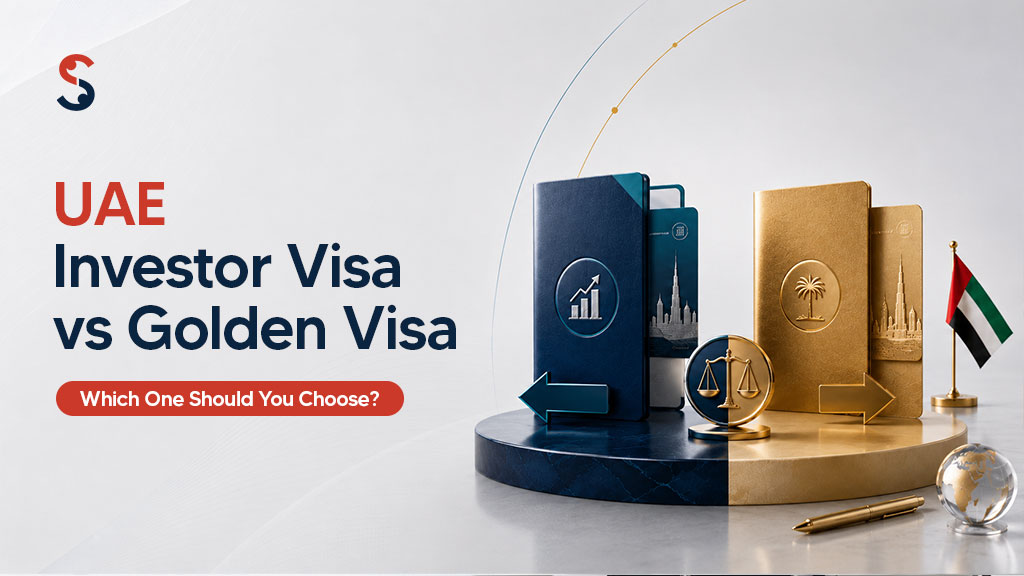
  • UAE Investor Visa vs Golden Visa: Which One Should You Choose?

    UAE Investor Visa vs Golden Visa: Which One Should You Choose?

    After helping thousands of Indian entrepreneurs establish their businesses in the UAE for more than two decades, we have noticed one question that comes up almost every time. 

    Usually, there is little confusion about the business activity itself or the overall company formation process. Most entrepreneurs already have a fair idea of how they want to enter the UAE market. However, the confusion often begins with finer details. 

    For instance, you may already know that a Free Zone company is the right choice for your business, but deciding which Free Zone best suits your requirements can be challenging. 

    Similarly, most investors and business owners know they will need a UAE residency visa. The real question is which visa to choose from. In most cases, entrepreneurs find themselves comparing two popular options: the UAE Investor Visa and the UAE Golden Visa. 

    Both provide residency benefits. Both support long-term business and investment goals. However, both come with their own advantages, requirements, and limitations. Additionally, factors such as travel flexibility, family sponsorship, renewal requirements, and long-term residency goals can also significantly influence your decision. 

    In this guide, we’ll compare the UAE Investor Visa vs Golden Visa in detail, understand the eligibility requirements, costs, benefits, and key differences so you can choose the residency option that best aligns with your goals. 

    What is a UAE Investor Visa? 

    A UAE Investor Visa is a residency visa issued to individuals who have made a qualifying investment in the UAE. In most cases, this visa is obtained through business ownership, company formation, or eligible property investments. 

    An investor visa typically offers a validity period of two years. It can be renewed as long as the qualifying investment remains active and all relevant requirements are met. 

    One of the biggest advantages of the Investor Visa is its accessibility. Compared to the Golden Visa, it generally requires a lower investment threshold. This makes it a practical option for startup founders, SME owners, and first-time investors. 

    Key Benefits of a UAE Investor Visa 

    • Relatively lower investment requirements 
    • Renewable residency status 
    • Ability to sponsor eligible family members 
    • Access to banking and business services in the UAE 
    • Suitable for entrepreneurs launching a new venture 
    • Potential pathway to upgrade to a Golden Visa later 

    The Investor Visa often provides the right balance of affordability and residency benefits. It is convenient for entrepreneurs who are still exploring the UAE market or establishing their initial operations. It allows business owners to build their presence without making a significantly larger investment from the outset. 

    What is a UAE Golden Visa? 

    The UAE Golden Visa is a long-term residency programme designed for investors, entrepreneurs, business owners, skilled professionals, and other eligible individuals who meet specific criteria. 

    For investors, one of the most common routes is through a qualifying investment of AED 2 million or more. 

    Unlike a standard Investor Visa, the Golden Visa offers long-term residency of up to 10 years with greater flexibility and fewer renewal concerns. 

    The Golden Visa has become particularly attractive for individuals seeking long-term stability in the UAE, whether for business expansion, family relocation, or wealth diversification. 

    Key Benefits of a UAE Golden Visa 

    • Long-term residency of up to 10 years 
    • Reduced renewal frequency 
    • Greater travel flexibility 
    • Enhanced family sponsorship benefits 
    • Self-sponsored residency status 
    • Ideal for investors with long-term UAE plans 

    The Golden Visa is generally preferred by investors who already have a clear long-term vision for their presence in the UAE. Instead of dealing with frequent renewals, they can focus on growing their investments, expanding their businesses, and planning for the future with greater confidence. 

    UAE Investor Visa vs Golden Visa: Key Differences 

    Both the Investor Visa and the Golden Visa provide residency rights in the UAE. However, they are designed for different investor profiles. 

    The Investor Visa is often more suitable for entrepreneurs who are entering the UAE market, setting up a new company, or looking for a cost-effective residency option. 

    The Golden Visa, on the other hand, is typically preferred by investors seeking long-term residency, greater flexibility, and fewer administrative obligations. 

    Here’s a quick comparison: 

    Factor  UAE Investor Visa  UAE Golden Visa 
    Validity  Usually 2 years  Up to 10 years 
    Investment Requirement  Lower investment threshold  Typically, AED 2 million+ 
    Renewal Frequency  More frequent  Less frequent 
    Family Sponsorship  Available  Extended benefits available 
    Travel Flexibility  Subject to residency requirements  Greater flexibility 
    Best For  Entrepreneurs and SME owners  Long-term investors and HNWIs 

    For many investors, the choice eventually comes down to balancing affordability with long-term convenience. Understanding your future plans can often make the choice much clearer. 

    Investor Visa vs Golden Visa UAE: Eligibility Requirements 

    Visa eligibility requirements vary depending on your selected visa category and investment route. For an Investor Visa, eligibility is generally linked to business ownership or a qualifying investment. 

    The Golden Visa offers multiple eligibility pathways. This makes it suitable for a wider range of investors and entrepreneurs. 

    UAE Investor Visa 

    Common eligibility routes include: 

    • Business ownership in a UAE company 
    • Shareholding in a qualifying business 
    • Eligible real estate investment 
    • Compliance with applicable licensing and immigration requirements 

    UAE Golden Visa 

    Common investor eligibility routes include: 

    • Real estate investment valued at AED 2 million or more 
    • Qualifying business investment 
    • Ownership stakes meeting relevant government criteria 
    • Compliance with UAE immigration regulations 

    Eligibility requirements can change over time as immigration regulations evolve. Therefore, it is always advisable to verify the latest criteria before making any investment decisions. 

    Planning your UAE investment journey? Speaking with experienced Shuraa India consultants early can help you choose the right residency pathway and avoid unnecessary costs later. 

    Golden Visa Cost Dubai vs Investor Visa Cost 

    Budget is often one of the first factors investors consider when comparing visa options. 

    On average, applying for a 2-year UAE Investor Visa costs between AED 10,000 and 12,000, covering government fees, medical testing, and Emirates ID processing. A 10-year Golden Visa runs roughly AED 10,000–15,500 in application fees, depending on your category and whether you use a service provider. 

    While investment requirements are important, focusing solely on the upfront cost can sometimes result in a decision that may not serve your long-term interests. 

    Cost Factor  Investor Visa  Golden Visa 
    Initial Investment  Lower  Higher 
    Visa Validity  Shorter  Longer 
    Renewal Costs  Recurring  Less frequent 
    Administrative Effort  Higher over time  Lower over time 
    Long-Term Convenience  Moderate  High 

    A lower initial investment can certainly make the Investor Visa attractive. However, investors who intend to maintain a long-term presence in the UAE often find that the additional flexibility and reduced renewal requirements of a Golden Visa provide greater value over time. 

    Instead of looking only at today’s costs, it is important to evaluate how each visa fits into your long-term business and residency plans. 

    Family Sponsorship and Travel Flexibility 

    Business decisions are rarely made in isolation. Behind every entrepreneur or investor are family commitments, travel plans, and future aspirations that influence decision-making. 

    This is one area where the difference between an Investor Visa and a Golden Visa becomes particularly important. 

    The Investor Visa allows eligible holders to sponsor family members and establish residency in the UAE. However, visa holders generally need to pay closer attention to residency requirements and renewal timelines. 

    The Golden Visa offers greater flexibility in this regard. It is particularly beneficial for investors who frequently travel internationally or spend significant periods outside the UAE. 

    For families planning long-term residency in the UAE, the Golden Visa can also provide a stronger sense of stability due to its longer validity period and reduced administrative requirements. 

    Although many investors initially focus on investment amounts, travel flexibility and family considerations often become much more important after relocation. 

    Can You Upgrade From an Investor Visa to a Golden Visa? 

    Yes, and this is actually a common path followed by many entrepreneurs. 

    Many business owners begin their UAE journey with an Investor Visa while setting up and growing their businesses. As their investments increase or they become eligible under the Golden Visa criteria, they may choose to upgrade. 

    This approach allows investors to establish a presence in the UAE without immediately committing to a larger investment requirement. 

    For many entrepreneurs, the Investor Visa serves as a practical starting point, while the Golden Visa becomes a long-term objective once their business or investment portfolio expands. 

    This flexibility allows investors to progress at a pace that aligns with their financial and business goals. 

    Which One Should You Choose? 

    There is no single correct answer to that question. The right choice depends entirely on your investment capacity, business objectives, travel requirements, and long-term plans in the UAE. 

    Choose an Investor Visa if: 

    • You are setting up a new business in the UAE 
    • You prefer a lower investment commitment 
    • You are entering the UAE market for the first time 
    • You want residency linked to your business activities 

    Choose a Golden Visa if: 

    • You meet the AED 2 million investment threshold 
    • Long-term residency is a priority 
    • You travel frequently outside the UAE 
    • You want greater long-term flexibility 
    • You are relocating with family and seeking stability 

    Ultimately, there is no universal “better” option. The best visa is the one that aligns with your personal and business objectives. 

    Common Mistakes Investors Make When Choosing a UAE Residency Visa 

    Many investors focus heavily on visa duration or investment requirements while overlooking other equally important factors. 

    Here are some of the most common mistakes we see: 

    1. Choosing Solely Based on the Lowest Investment Amount

    A lower investment requirement may appear attractive initially. However, investors often overlook factors such as renewal frequency, administrative requirements, and long-term flexibility. Looking beyond the upfront cost usually leads to a more informed decision. 

    2. Ignoring Future Business Expansion Plans

    Some entrepreneurs choose a visa based on their current business size without considering future growth. If you plan to expand your operations or investments in the coming years, your visa choice should support those plans. 

    3. Underestimating Renewal Obligations

    Visa renewals involve documentation, processing, and compliance requirements. Investors who fail to account for these recurring obligations may face avoidable inconvenience later. 

    4. Failing to Consider Family Sponsorship Requirements 

    Family needs often evolve over time. Investors should evaluate sponsorship benefits carefully, especially if they intend to relocate with spouses, children, or other dependents. 

    5. Confusing Residency Status with Tax Residency

    Many people assume that obtaining a UAE visa automatically makes them a UAE tax resident. In reality, tax residency depends on several factors and should be assessed separately with professional guidance. 

    6. Not Seeking Professional Guidance Before Applying

    Every investor’s situation is different. Seeking professional advice before making a decision can help avoid costly mistakes and ensure you choose the most suitable residency pathway. 

    Avoiding these common mistakes can save both time and money while ensuring your chosen visa continues to support your long-term goals. 

    How Shuraa India Helps You Choose the Right UAE Residency Path 

    Choosing between an Investor Visa and a Golden Visa is not always an easy decision. Every investor has different objectives, budgets, family considerations, and business plans. What works for one entrepreneur may not be the ideal solution for another. 

    That’s why at Shuraa India, we help investors and business owners evaluate their options, understand eligibility requirements, and identify the most suitable residency route based on their goals. 

    Our team assists with everything from company formation and investment planning to visa processing, documentation support, and regulatory guidance. Rather than simply helping you obtain a visa, we help you choose the residency pathway that aligns with your long-term vision in the UAE. 

    Ready to secure UAE residency through investment? Connect with Shuraa India for personalised guidance and end-to-end support. 

    Frequently Asked Questions 

    1. Which is better- UAE Investor Visa or Golden Visa? 

    Neither visa is universally better. The right option depends on your investment amount, residency goals, travel requirements, and long-term plans in the UAE. 

    2. What is the validity of an Investor Visa in the UAE?

    The UAE Investor Visa is commonly issued for a validity period of two years. It can be renewed as long as the qualifying investment remains active and all relevant immigration requirements continue to be met. 

    3. What is the minimum investment required for a UAE Golden Visa? 

    One of the most common investor routes requires a qualifying investment of AED 2 million or more. However, eligibility criteria may vary depending on the investment category and current regulations. 

    4. Can I sponsor my family with an Investor Visa?

    Yes. Investor Visa holders can generally sponsor eligible family members, subject to applicable UAE immigration regulations. 

    5. Can I upgrade from an Investor Visa to a Golden Visa?

    Yes. Many investors begin with an Investor Visa and later transition to a Golden Visa once they meet the relevant eligibility criteria. 

    6. Does a UAE visa automatically make me a tax resident?

    No. Tax residency depends on several factors, including your physical presence in the country and applicable tax regulations. 

    7. Is the Golden Visa worth the higher investment?

    The Golden Visa offers long-term residency, fewer renewal requirements, greater travel flexibility, and enhanced stability for families. Whether it is worth the higher investment depends on your personal goals and how long you intend to maintain your presence in the UAE. 
  • UAE Visa Rule Update 2026

    UAE Visa Rule Update 2026

    UAE’s 2026 visa updates focus on attracting skilled talent, easing tourist entry, and offering longer-term residency options. Key changes include specialized visas for AI experts, multiple-entry visas for cruise passengers, and simplified sponsorship for family members. Indian nationals also benefit from streamlined visit visa processes, making travel more accessible. In 2026, new changes have been introduced to make it easier for people to live, work, and do business in the UAE.

    If you’re an expat living in the UAE, a business owner looking to invest, or a tourist planning a visit, it’s important to stay updated on these new rules. For Indian travellers, the new visit visa rules in the UAE for Indian nationals bring important updates, making travel more convenient and accessible.

    They affect everything from residency visas and work permits to tourist visas and long-term stay options like the Golden Visa. So, here are the latest New Visa Rules in the UAE 2026 in a simple and easy-to-understand way. 

    What are the New Rules for UAE Visa 2026?

    The UAE has introduced significant visa rule changes in 2026 to make it easier for residents, investors, and visitors, especially Indian nationals. Here’s a summary of the latest updates:

    1. New Visit Visa Rules for the UAE

    • Extended Stay Options: Visitors can now apply for 60-day and 90-day visit visas, offering more flexibility for tourism or business trips.
    • Multiple-Entry Tourist Visa: A 5-year multiple-entry visa allows stays of up to 90 days per entry, extendable for another 90 days. Ideal for frequent travelers and business visitors.
    • Required Documents: Applicants need to provide proof of funds (AED 5,000), accommodation confirmation, and return flight tickets.
    • Grace Period Removal: The 10-day grace period for overstaying has been removed. Fines and deportation will now apply for overstaying your visa.

    2. Visa Extension Policies

    • In-Country Extensions: Visitors can extend their visas within the UAE without leaving the country, with up to two 30-day extensions, allowing a total stay of 120 days in a year.

    3. New Visit Visa Rules for Indians

    • Starting in 2026, Indian nationals with a valid passport (minimum 6 months) can get a 14-day visa on arrival, simplifying travel to the UAE for business or tourism.

    4. Updates on UAE Residence Visas

    • Retiree Visa: A 5-year renewable visa for expatriates over 55 with a certain financial background.
    • Golden Visa Expansion: The Golden Visa program now includes superyacht owners, scholars, and humanitarian leaders, offering 10-year residency.
    • Blue Visa for Environmental Leaders: A 10-year residency for professionals in sustainability, encouraging environmental leaders to move to the UAE.
    • Dubai Gaming Visa: This 10-year visa targets professionals in the gaming industry, including game developers and esports athletes.

    5. Unified GCC Visa

    • GCC Grand Tours: A unified visa system allows travel to all six GCC countries (UAE, Saudi Arabia, Qatar, Oman, Bahrain, and Kuwait) with a single visa.

    6. Stricter Compliance Measures

    • The UAE has enforced tougher penalties for overstaying visas, including fines and bans on future entry. Adhere to the visa validity to avoid penalties.

    7. New Employment Visa Rules in the UAE

    • Employment visas are now more flexible and provide faster processing for skilled workers, making it easier for Indian professionals to work in the UAE.

    How These New Visa Rules Benefit Expats and Foreign Nationals

    The UAE’s new visa rules benefit Indians significantly:

    • Easier Access: With 14-day visas on arrival, longer stays, and multiple-entry options, Indian nationals can visit the UAE more easily.
    • Business and Investment: The changes support Indian entrepreneurs and investors looking to set up businesses or invest in the UAE’s growing economy.

    How to Apply for UAE Visas?

    Applying for a UAE visa in 2026 involves a few essential steps, depending on the type of visa you’re applying for. Here’s a guide for Indian nationals:

    1. Determine the Type of Visa 

    The UAE offers various visa types, including: 

    • Tourist Visa (Short-term & Long-term) 
    • Visit Visa (For family or business visits) 
    • Residency Visa (Employment, Investor, Freelancer, Retirement, Golden Visa, etc.) 
    • Student Visa 
    • Freelance Visa 
    • Green Visa & Golden Visa 
    • Dubai Gaming Visa (For professional gamers and e-sports industry experts) 

    2. Check the Eligibility Criteria 

    Each visa type has different eligibility criteria. Some key requirements include: 

    • Passport validity (minimum of six months) 
    • Sufficient financial proof (for self-sponsored visas) 
    • Employment contract (for work visas) 
    • Investment proof (for investor and entrepreneur visas) 
    • Sponsorship (for family visas) 

    3. Gather Required Documents 

    The required documents vary based on the visa type but typically include: 

    • Passport-size photographs (as per UAE standards) 
    • Valid passport with at least six months’ validity 
    • Proof of accommodation (hotel booking or rental agreement) 
    • Flight tickets (return tickets for short-term visas) 
    • Bank statements (for certain visa types) 
    • Health insurance coverage 
    • Sponsor’s Emirates ID (for family or employment visas) 

    3. Submit the Application Online or Through an Agency 

    • For Tourist & Visit Visas: Apply through airlines (Emirates, Etihad), travel agencies, or hotel partners. 
    • For Residency & Work Visas: Apply through a company, sponsor, or the General Directorate of Residency and Foreigners Affairs (GDRFA). 
    • For Golden, Green, & Investor Visas: Apply through the Federal Authority for Identity and Citizenship (ICP) or GDRFA Dubai. 

    Applications can be submitted: 

    • Online via ICP (icp.gov.ae) or GDRFA Dubai (gdrfad.gov.ae) 
    • Through Amer Centers in Dubai for certain visa types 
    • Through authorized travel agencies 

    4. Pay the Visa Fees 

    Visa fees vary depending on the type and duration of stay. 

    5. Undergo Medical Examination & Biometric Registration 

    Medical fitness tests are mandatory for employment, investor, and long-term residence visas. Biometric registration (fingerprints & eye scan) is required for new applicants. 

    6. Receive Visa Approval & Stamping 

    Once approved, the visa will be electronically issued. For residency visas, the passport must be submitted for visa stamping. 

    7. Entry & Emirates ID Registration 

    Upon arrival, complete the Emirates ID application (for residency holders). Collect the Emirates ID after visa stamping to complete the process. 

    How Shuraa India Helps with UAE Visa and Updates?

    Shuraa India offers expert assistance in navigating the latest UAE visa regulations and updates. Whether you’re an expat, business owner, or tourist, Shuraa India ensures you understand the new rules, including visas for skilled professionals, AI specialists, tourist entry, and family sponsorship.

    With tailored guidance, we help Indian nationals secure the right visas quickly and efficiently. Our team provides end-to-end support, from application processing to visa renewals, ensuring a smooth experience. Stay updated with Shuraa India to simplify your UAE immigration process and take advantage of the most recent visa opportunities.

    • Visa Application: Streamlined application process for Indian nationals.
    • Document Preparation: Help with the required documents to ensure your visa is approved.
    • Visa Processing: Fast-track processing for work visas, business visas, and residency applications.

    Act Now and Get Your UAE Visa Today!

    • Limited-time offer: Get 10% off on your UAE visa application when you apply by 19 Mar, 2026!
    • Free consultation: Speak with our experts to understand which UAE visa suits you best.

    Frequently Asked Questions (FAQs)

    1. What is the recent update on business visas in the UAE?

    The UAE has streamlined the business visa process, making it easier for entrepreneurs and investors to set up businesses. New long-term residency options have been introduced for significant investors.

    2. What are the eligibility changes with the job seeker visa?

    Eligibility for the job seeker visa has expanded to include professionals in specialized fields. Applicants need to prove qualifications, skills, and financial stability, enabling easier access to job opportunities in the UAE.

    3. What are the mandatory requirements for a job visa?

    To obtain a job visa, you must provide proof of employment, pass a medical fitness test, submit valid educational documents, and meet the minimum salary requirement, depending on the sector.

    4. Was the visit visa extension a point in the new visa rules in UAE?

    Yes, the new visa rules allow a longer visit visa duration with easier extensions. Visitors can extend their stay in the UAE for additional 60 to 90 days based on conditions.

    5. What is the duration of getting a renewed residence visa as per new rules in UAE?

    The renewed residence visa processing time is typically 2-4 weeks. Applicants must meet updated requirements, including medical tests and proof of employment or investment, for quicker processing.

  • What is the New Rule for Family Visa in Dubai, UAE?

    What is the New Rule for Family Visa in Dubai, UAE?

    The family visa in Dubai, also known as the dependant visa, allows family members of UAE residents to reside and work in Dubai. Many Families living in Dubai often need to reintroduce their UAE family residence visas regularly, as the country does not offer permanent residency to expats. This blog provides the latest updates regarding the renewal fees for UAE family residence visas in 2026. Since an important portion of the UAE’s population, particularly its workforce, comprises expats, many individuals and their families choose to extend their stay beyond their visa expiry.  

    However, overstaying results in penalties, motivating individuals to renew their visas before expiration to avoid penalties. Refreshing a visa typically involves returning to one’s home country, reapplying for the visa, and returning to the UAE after a month.  

    What is a Family Visa in Dubai? 

    A family visa in UAE or a Dependent visa allows family members of Dubai to reside and work in Dubai. UAE residents need an immigration document for families moving to the UAE. Family members, including the visa holders’ spouses, parents, and children, are eligible to renew their visas. 

    Dubai Family Visa Requirements 

    To get a family visa in the UAE as per the 2026 regulations: 

    • The sponsor needs a valid residence visa and a minimum monthly salary (AED 4,000 or AED 3,000 with accommodation). 
    • Female sponsors require a minimum salary (AED 10,000 or AED 8,000 with accommodation). 
    • Mothers cannot sponsor if the father is present and can sponsor their children. 
    • Sponsors must initiate dependents’ residence permits within 60 days of their arrival. 
    • Applicants aged 18+ need a UAE medical fitness exam. 
    • The sponsor’s wife needs a translated, authenticated marriage certificate. 
    • Unmarried daughters of any age can be sponsored. 
    • Unmarried sons can be sponsored until age 25. 
    • No age limit for sponsoring children with disabilities. 
    • Sponsoring parents require a guarantee from the immigration department per parent. 

    Sponsor your family in Dubai — get a free eligibility check today.

    Family Visa Cost in Dubai 2026 

    The Dubai family visa cost 2026 for Indians ranges from AED 4,500 – 5,500, excluding insurance. For applicants outside Dubai, a 2-year family visa price in Dubai, including insurance, is AED 5,000 – 6,000. Costs cover entry permit, medical test, Emirates ID, visa stamping, and sponsor fees. Use Shuraa India for accurate cost estimation and smooth processing.

    • Entry Permit: AED 550.
    • Medical Test: AED 300 – 500.
    • Emirates ID (2 years): AED 250 – 450.
    • Visa Stamping: AED 500 – 580.
    • Mandatory Health Insurance (per person): AED 1,500 – 3,000.
    • Sponsor File Fees: AED 268 – 1,138.

    How to apply for a family visa in Dubai?  

    You can apply for a family visa online or offline in Dubai or the UAE. The required documents and conditions differ based on whether you sponsor children, a spouse, parents, or stepchildren. After gathering all the necessary documents, the next step is to start the visa application process.  

    This includes submitting the application and paying the required fee for a family visa in Dubai. It’s worth noting that the costs for a UAE residence visa can vary depending on the type of visa you are applying for. 

    Required Documents for Family Visa Dubai- Application 

    Below are the required documents for a family visa application:   

    • Photocopy of passport/visa  
    • Emirates ID 
    • One passport-sized photo with a white background  
    • Photocopy of the passport  
    • Salary certificate (if employed in a free zone company)  
    • Three months’ bank statement and memorandum of agreement (if an investor or partner)  
    • Labour contract (if employed in the private sector)  
    • Marriage certificate attested by MOFA (if sponsoring a wife)  
    • Birth certificate attested by MOFA (if sponsoring children)  
    • Ejari (if the sponsor is renting)  
    • Title deed (if the sponsor owns the house)  
    • DEWA bills (proof of utility payments)  
    • IBAN number  
    • Opening file number  
    • Medical results  
    • EIDA application  
    • Family medical insurance  

    What is the Validity Duration for a UAE Family Visa?  

    A Family visa in Dubai typically lasts 2 years if renewed promptly before expiry. It’s crucial to note that the validity of these visas hinges on the sponsor’s visa status. If the sponsor’s visa expires or is cancelled, the family visas become invalid. 

    However, UAE authorities provide a 30-day grace period for visa renewal. Starting the renewal process within this period is highly recommended to prevent penalties and legal issues. 

    Our visa team handles complete family visa sponsorship for Indian residents in UAE — 40,000+ visas processed successfully.

    What are the Renewal Fees for the UAE Family Visa?

    Before initiating the renewal process, it’s crucial to meet these requirements: 

    • Employed residents in the UAE can renew family members’ visas if they meet certain criteria, such as earning a minimum salary of AED 4,000 or AED 3,500 with company-provided accommodation. 
    • Individuals aged 18 and above require a valid medical test report. 
    • Emirates ID renewal is necessary before renewing the residence visa. 
    • Basic health insurance is mandatory in Dubai, ensuring family members have adequate coverage. 

    New UAE Family Visa Rules 2026  

    Here are the 2026 rules for UAE family visas: 

    • Employers and employees with valid residence visas and a minimum salary of AED 4,000 or AED 3,000 with accommodation can sponsor their families. 
    • Professional nature no longer affects eligibility for a family visa. 
    • Fathers in the UAE can sponsor children; mothers cannot. 
    • Visa issuance depends on job type and labour contract terms. 
    • Sponsors have 60 days to apply for dependents’ visas after arrival. 
    • Applicants aged 18+ need a UAE medical fitness test. 
    • For wives, an Arabic-translated marriage certificate is required. 
    • Certain Muslims can sponsor two wives under specific conditions. 
    • Sponsorship for unmarried children up to 18 (or 21 if in education). 
    • Stepchildren sponsorship under GDRFA guidelines. 
    • Parents sponsored by employees with immigration department guarantees. 
    • Women in specific professions with an AED 8,000+ salary plus accommodation can sponsor families. 

    Who Can You Sponsor for a Family Visa in Dubai?  

    Below is the list of people who you can sponsor for a Family Visa in the UAE: 

    • Wife: Male expatriates with a UAE Residence Visa can sponsor their wives. Muslim residents may sponsor up to two wives, subject to GDRFA conditions. 
    • Sons: Male expatriates can sponsor sons aged 18 or younger. Sons over 18 must be students under 21 and visit the UAE every six months to maintain their visas. 
    • Daughters: Male expatriates can sponsor unmarried daughters. 
    • Parents: Male expatriates can sponsor both parents under specific conditions: sponsorship is required unless one parent has passed away, an AED 2,500 deposit per parent is needed, and parents must have medical insurance. The sponsor’s salary should be at least AED 20,000 or AED 19,000 with a two-bedroom accommodation. 
    • Stepchildren: Male expatriates can sponsor stepchildren with written consent from the biological parent. The stepchildren’s visa is initially valid for one year and can be renewed. 

    Is it possible for a woman to sponsor her family members for a UAE family visa? 

    A woman can sponsor her family members, but the criteria are stricter compared to men: 

    • She can sponsor her husband and children. 
    • Her monthly salary with accommodation must be at least AED 10,000, or AED 8,000. 
    • She must work as an engineer, teacher, or in a medical-related profession (such as a doctor or nurse). 
    • In some cases, approval from the DRND may allow sponsorship even if she does not work in the specified categories. 
    • If her husband can sponsor the children, she cannot sponsor them herself; the husband must do the sponsorship. 

    Choose Shuraa India for Your Visa Processing 

    Reorganisation of visa processing is easy with dependable and seasoned PRO service providers. Shuraa India excels at analysing your visa needs and facilitating the smooth acquisition of your family visa in the UAE.  

    We at Shuraa make sure of smooth documentation by expertly handling the clearance process at government offices. Our team acts as your primary point of contact for all service requirements. The efficient management of tasks from entry permit processing to visa stamping. Reach out to us now for further information! 

    FAQs  

    Q1. Is it permissible for my wife to work under my sponsorship on a family visa? 

    Yes, it is allowed. The required procedures can be carried out through the “Thasheel” company. 

    Q2. Can I get medical insurance after obtaining family visa status for my family or parents? 

    Certainly! It is permissible to apply for medical insurance even after receiving the family visa stamp. The family visa sponsor can choose a medical insurance plan from an external insurance provider according to their specific needs.  

    Q3. How can I cancel my separated wife’s family visa? 

    Cancelling the family visa of your separated wife is a simple procedure. As the sponsor, you are required to submit the following documents: 

    • Emirates ID of both the sponsor and the dependent 
    • Soft copies of the passport and visa pages 
    • Additionally, the sponsor is responsible for covering all applicable processing charges and government fees. 
  • Dubai Business Visa for Indians

    Dubai Business Visa for Indians

    Dubai’s reputation as a global business hub is undeniable. With a staggering 10% year-on-year growth in foreign direct investment and a vibrant free zone network, the city is a powerhouse for international trade. However, to conduct business activities, it is essential to obtain a Dubai business visa. For those looking to engage in business activities in Dubai, understanding the visas, requirements, costs, and steps to get a business visa for Dubai is essential. Therefore, here we provide all the valuable information for anyone looking to establish or expand their business presence in this dynamic city. 

    What is a Dubai Business Visa?

    A Dubai Business Visa is for entrepreneurs and investors aiming to start or grow a business in Dubai or other regions of the United Arab Emirates (UAE). This visa is part of the UAE’s long-term visa program, designed to attract skilled individuals and investment to the country.

    Types of Dubai Business Visas

    There are two main categories of UAE Business Visas: Visit visas and Residency visas.

    A. Dubai Visit Visa for Business Purposes

    A visit visa is a temporary visa that allows foreign nationals to enter Dubai for business purposes. These visas are ideal for short trips, such as attending meetings or conferences. There are two types of Visit visas:

    1. Single Entry Visa

    This visa is valid for 30 days and is ideal for short business trips.

    2. Multiple Entry Visa

    This visa is valid for 180 days (6 months) and allows for multiple entries into Dubai. This can be useful for business people who need to make repeated visits to Dubai over a longer period.

    Both visas can be converted into residency visas if you decide to stay and work in Dubai longer.

    B. Dubai Residency Visas for Entrepreneurs & Investors

    3. Residency visa

    A residency visa is a visa that allows foreign nationals to live and work in Dubai for an extended period. Residency visas are typically sponsored by an employer or by the government of Dubai. There are a few different types of residency visas available for entrepreneurs and investors, including:

    Read More About –  How to Get a Residency Visa in Dubai?

    4. Green Visa

    A green visa is a renewable residency visa valid for two years. It’s ideal for business owners, partners, freelancers, and self-employed individuals. Requirements can vary depending on your specific situation, but you may need to show proof of an existing business or sufficient financial resources to support yourself during your stay.

    5. Investor Visa

    This visa is for individuals who invest in a business or property in Dubai. It typically requires a significant financial investment and provides residency for a certain period, which can be renewed.

    Read More About –  How to Get an Investor Visa in Dubai?

    6. Golden Visa

    Golden visa offers a longer residency period of five or ten years, making it a good option for those seeking a more permanent establishment in Dubai.  There are different eligibility criteria for the Golden Visa, but for entrepreneurs, it typically involves:

    • Investing at least AED 2,000,000 (around $545,500 USD) in a new company or buying a share in an existing one.
    • Getting approval for a business idea from a UAE Ministry of Economy-approved incubator program.

    Read More About –  How to Apply for a Golden Visa in Dubai?

    7. Freelance Visa

    The freelance visa is a relatively new visa available. It is ideal for freelancers and remote workers who want to live and work in Dubai. To qualify for a freelance visa, you will need to have a valid freelance permit and a contract with a client outside of the UAE.

    8. Employment Visa

    The employment visa is sponsored by a UAE-based company. This is the most common visa for working professionals in Dubai. The company handles the application process and ensures you meet the requirements

    9. Free Zone Visa

    Issued to individuals working in one of Dubai’s many free zones. These zones offer special economic regulations and benefits, including tax exemptions and full foreign ownership.

    Dubai Business Visa Requirements

    Here are the general requirements for obtaining a business visa in Dubai:

    • A valid passport with at least six months’ validity remaining from your intended arrival date in Dubai.
    • A completed visa application form.
    • Two recent passport-size photographs against a white background.
    • A copy of your confirmed return flight ticket.
    • Proof of accommodation for your stay in Dubai, such as a hotel booking confirmation or a letter from your host.
    • An invitation letter from a company in the UAE sponsoring your visit.
    • A letter from your employer stating your position and salary (if applicable).
    • Proof of sufficient funds to cover your stay in Dubai, such as bank statements or payslips.
    • Health insurance with coverage for the duration of your stay.

    Additional requirements may apply depending on your nationality and the specific type of business visa you are applying for.

    Business Visa Eligibility for Indian Entrepreneurs

    To apply for a Dubai business visa from India. There are a couple of visa options for Indian entrepreneurs looking to set up a business in Dubai. The best option for you will depend on your specific circumstances, such as the nature of your business and how much investment capital you have.

    For instance, the Golden Visa program offers a long-term residency visa option for entrepreneurs. This visa is valid for 10 years and can be renewed.  There are two main ways to qualify for a Golden Visa:

    • Invest at least AED 2 million (around $545,000) in a property in Dubai.
    • Invest at least AED 10 million (around $2.7 million) in a fund or company based in the UAE. The Golden Visa is valid for up to 10 years and can be renewed.
    • Be a founder of a startup that meets specific criteria set by the UAE government. These criteria include having a minimum viable product, a clear business plan, and a team with relevant experience.

    In addition, a 5-Year Residency Visa is a good option for entrepreneurs who are looking for a longer-term residency option than a business visa but don’t meet the criteria for the Golden Visa. The 5-year residency visa is valid for five years and can be renewed.

    How to Get a Dubai Business Visa?

    The application process for a Dubai business visa for Indians will vary depending on the specific visa type you’re applying for. However, here’s the general process:

    1. Choose the Right Visa Type

    Dubai offers Visit Visas for short stays and Residence Visas for longer stays with work permits. Identify which category best suits your needs (e.g., attending a conference or working for a company).

    2. Prepare Required Documents

    Gather all necessary documents, which typically include:

    • Valid passport with a minimum validity of six months.
    • Passport-size photographs.
    • Business plan or investment proposal.
    • Proof of financial stability and investment (e.g., bank statements, investment certificates).
    • Professional and academic credentials.
    • Proof of existing business (if applicable).

    3. Register Your Business (if applicable)

    If you are establishing a new business, you need to:

    • Choose a business structure (e.g., LLC, branch office, free zone company).
    • Register the business with the relevant authorities (e.g., Dubai Department of Economic Development for mainland businesses or respective free zone authorities).
    • Acquire an “Ejari” tenancy agreement for a physical or virtual office space.
    • Obtain a trade license for your business activity.

    Once your business is registered, you can apply for a residence visa as a business owner or investor. Your company will act as your visa sponsor, initiating the application process.

    Consult with business setup experts at Shuraa India for all your company formation needs in the UAE.

    4. Apply for the Visa

    Many visas can now be applied for electronically through official government websites or portals of visa processing centers. This is often the quickest and easiest option.

    For residence visas, some employers or business partners might handle the application process on your behalf. They will guide you on the specifics and ensure you meet all the requirements.

    5. Pay the Visa Fee

    Visa applications typically involve fees that vary depending on the visa type and processing speed. You’ll be required to pay the fee during the online application process or upon submission through a visa sponsor.

    6. Medical Test

    Once your application is approved, you might need to undergo a medical test in a UAE-approved clinic. This is mandatory for residence visas.

    7. Collect Your Visa

    After successful processing, you’ll receive your visa either electronically (e-Visa) or through your visa sponsor.

    Dubai business visa processing time can take anywhere from 7 to 30 days. The initial review by Dubai authorities can take around 30 days. Once approved, you’ll have another 30 days to fulfill additional requirements set by the Federal Authority for Identity and Citizenship (ICA).

    Dubai Business Visa Cost

    The cost of a business visa in Dubai typically starts from AED 3,500 to AED 4,000 (around ₹78,000 to ₹90,000 for Indians), depending on the visa category and individual requirements. Below is a simplified cost breakdown for better clarity:

    • Visit Visa (Short-Term): AED 350 to AED 1,000 (approx. ₹7,800 to ₹22,500)
    • Green Visa (5-Year): AED 5,000 to AED 10,000 (approx. ₹1.12 lakh to ₹2.25 lakh)
    • Golden Visa (10-Year): Application fee AED 2,790 + Emirates ID AED 1,070 (approx. ₹86,000), excluding investment eligibility costs

    For those looking for the cheapest business visa in the UAE, options start from AED 5,500 (around ₹1.24 lakh). Since visa fees can vary based on nationality, duration, and approvals, consulting experts like Shuraa India ensure accurate pricing and a smooth application process for Indian entrepreneurs.

    Business visa Processing Time & Validity

    The processing time for a Dubai business visa usually ranges from 7 to 15 working days, depending on the visa type, document accuracy, and approval from relevant authorities. Delays may occur if additional checks or external approvals are required.

    Most business visas are issued with a validity of 2 or 3 years, while long-term options like the Green Visa (5 years) and Golden Visa (10 years) offer extended stay benefits. Renewal should be initiated 30–60 days before expiry to avoid fines and maintain legal residency in the UAE.

    Why Choose Shuraa India for a Dubai Business Visa?

    Getting a Business Visa in Dubai comes with many benefits, like the chance to live and work in one of the world’s most exciting business locations. Dubai’s booming economy, geographical location, and friendly business environment provide great opportunities for entrepreneurs to grow their businesses.

    It’s important to plan your visa application ahead of time to avoid any delays or issues. If you’re thinking about moving to Dubai or starting your business in the UAE, getting help from experts can make things much easier.

    At Shuraa India, we can assist with everything from company registration and licensing to visa help, PRO services, and finding office space. Our team is here to support you at every step to make sure your business setup in Dubai is smooth and successful.

    Reach out to Shuraa India today and start your journey towards building your business in the UAE!

  • UAE Residence Visa 2026 | Costs, Documents & Process

    UAE Residence Visa 2026 | Costs, Documents & Process

    The United Arab Emirates (UAE) has long been a top destination for expats looking to live and work in a dynamic environment. With its booming economy, tax-free incentives, and year-round sunshine, it’s no wonder many dream of calling the UAE home.

    One of the key attractions for many expats is the opportunity to obtain a UAE residence visa, which opens up a host of benefits, including the ability to reside and work in the country for an extended period of time, access to world-class healthcare and education facilities, and the potential to sponsor family members. 

    If you’re considering a move to the UAE for work, retirement, or simply a change of scenery, understanding the residence visa process is essential. 

    What is a UAE Residence Visa?

    A residency visa in the UAE is a document that allows foreign individuals to live and work in the country for a longer period, typically ranging from 2 to 10 years. It’s different from a visitor visa, which is for shorter stays and cannot be used for work or business.

    Unlike some countries, most residency visas in the UAE require a sponsor. This sponsor can be: 

    • Employer: For employment visas, the company you’ll be working for acts as your sponsor. They initiate the visa application process and handle the paperwork. 
    • UAE Resident: If you’re not tied to a specific job, a UAE resident can sponsor your visa. This is typically seen with family members, where a husband sponsors his wife’s visa and vice versa. 

    The sponsor system essentially takes responsibility for your immigration status. It assures the government that you have a reason for being in the country and someone to vouch for you. 

    There are exceptions, though. The UAE recently introduced a new visa option called the Green Visa, which allows freelancers, self-employed individuals, and even some skilled employees to sponsor themselves for a five-year residency visa. This eliminates the need for a company or a UAE citizen as a sponsor. 

    Types of UAE Residence Visas

    There are various types of UAE residence visas to cater to different purposes of stay. Here are some of the most common ones: 

    1. Employment Visa

    This is the most common type of visa, issued to individuals who have secured a job with a UAE-based company. The employer acts as the sponsor and handles most of the visa application process. A 2-year employment visa in Dubai generally ranges between AED 3,000 and AED 7,000.  To know the exact cost, consult your employer.

    2. Investment (Investor) Visa

    The UAE Investment Visa (long-term residency) is for foreigners who make a significant investment in the UAE. This visa is valid for a longer period than other resident visas (up to ten years) and does not require a sponsor if you qualify.   

    Read More about How to get an investor visa in Dubai

    3. Family Visa

    This visa is reserved for close family members of UAE citizens or international residents.  

    4. Student Visa

    This visa is for international students enrolled in a UAE-based educational institution. The university or educational institute acts as the sponsor for the visa application.  

    5. Retirement Visa

    This visa is for individuals aged 55 and above with a good monthly income (around AED 20,000 or more) to comfortably retire in the UAE. They can also be sponsored by a UAE resident child. 

    6. Business Visa

    As a part of the UAE’s visa system, a business visa is a residency permit that allows foreign investors to work, stay, and run their business operations. 

    Read our complete guide: How to apply for a Dubai business visa — eligibility, documents and fees explained.

    7. Green Visa

    This is a relatively new visa category. It is a five-year renewable visa aimed at attracting skilled professionals, freelancers, and entrepreneurs.  Under the Green Visa program, individuals can sponsor themselves without the need for an employer. 

    8. Golden Visa

    This is a long-term visa (either 5 or 10 years) aimed at attracting high-net-worth individuals, investors, entrepreneurs, and specialists in specific fields. 

    See also: UAE Golden Visa salary and investment requirements — full eligibility criteria for 2026.

    Required Documents for UAE Residence Visa

    The following is the list of documents that you require for your UAE Residency visa: 

    • Completed the UAE Visa Application Form 
    • Original Passport (with at least 6 months’ validity remaining) 
    • Passport-Sized Photographs 
    • Proof of Medical Fitness 
    • UAE Health Insurance Plan 
    • Company registration documents — required for investor/business visa applicants
    • Property Ownership Documents (For property investor visa)
    • If you are changing employers or sponsors, a No Objection Certificate (NOC) may also be required as part of your application.
    Use our UAE business compliance checklist to track all required documents and avoid application delays.

    How to Apply for a UAE Residence Visa? 

    Here is the step-by-step process for obtaining a Dubai residence visa in 2026:  

    1. Determine your eligibility and visa type

    Research the different types of UAE residency visas to identify the one that best suits your purpose. Ensure you meet the eligibility criteria for your chosen visa category.  

    2. Secure a Sponsor (if required)

    Most UAE residency visas require a sponsor who takes legal responsibility for your stay. This can be your employer, a UAE national relative, or a university. Exceptions include the Investor Visa and the Green Visa, which allow for self-sponsorship, typically through free zone company formation or qualifying investments.

    3. Apply for Entry Permit

    Once you have a sponsor and a confirmed visa category, your sponsor or a visa processing agency will typically initiate the application for an entry permit. This permit allows you to enter the UAE for residency processing. 

    4. Medical Examination and Emirates ID

    After entering the UAE with the entry permit, you’ll need to undergo a medical fitness test at an approved medical facility. You’ll also apply for an Emirates ID, a mandatory national identification card for all UAE residents, required for banking, driving, and government services.

    5. Visa Application and Collection

    Once you have the entry permit, medical test results, and Emirates ID application submitted, your sponsor can proceed with the formal residency visa application. This will involve submitting the required documents through typing centres or GDRFA (General Directorate of Residency and Foreigners Affairs) channels.

    6. Visa Approval and Collection

    After processing, the authorities will notify you of the visa application decision. Upon approval, you can collect your Emirates ID and officially become a UAE resident. You can also track your application progress — see our guide on UAE visa status check by passport number.

    Benefits of having a UAE residence visa

    A UAE Residence Visa is mandatory to live and work in the country legally. Individuals intending to do business have to apply for a residence visa in the UAE. Here’s a more detailed breakdown of the benefits:

    1. Easy to open a bank account

    If you want to open a bank account in Dubai from India, a UAE residence visa and an Emirates ID are mandatory prerequisites. Nevertheless, you need to have a UAE Residence Visa to procure an Emirates ID. It allows you to open a non-resident bank account. 

    2. Access to financial facilities

    By having a residence visa, you can avail many financial facilities in the UAE. For instance, you can easily apply for a car loan, personal loan, or mortgage without any potential legal troubles. Residence visa holders can also explore wider investment opportunities in Dubai from India — including property, equities, and business ventures.

    Indians who become UAE residents may also qualify for NRI tax status — read our UAE vs India taxation comparison for the full financial picture.

    3. Easy to obtain a driver’s license

    A driver’s license could be one of the basic requirements for individuals moving to the UAE. A residence visa in the UAE enables the conversion of a current license into a UAE driver’s license for certain nationalities, while others can take driving lessons and a test to get their license in the UAE. Whatever the scenario is, a UAE residence visa is mandatory to get a driver’s license. 

    4. Access to healthcare and educational services

    Health insurance is mandatory, especially when you move to another country. The cost of healthcare services can become a financial burden without this facility. In Dubai, the residents must have health insurance to cover their medical expenses, which is possible through a UAE residence visa. 

    Likewise, the residence visa holders can also sponsor their children, enroll them in any of the leading institutions, and provide them with the best quality education in the country. 

    5. Dependants’ sponsorship

    The UAE residence visa holders are allowed to bring their spouses, parents, and children into the country, provided they meet certain salary conditions specified by the authorities. In addition, they can also sponsor visas for their maids, drivers, or other domestic workers as well. 

    Looking for longer-term security? The UAE Golden Visa offers 5 or 10-year residency with no sponsor required.

    What is the Cost of a UAE Residence Visa in 2026 

    UAE residence visa fees in 2026 can be anywhere near AED 100 Application Fees. The UAE residence visa cost depends on several significant parameters, such as the applicant’s location, the length of their intended stay, the insurance required for family members, etc. For two years, the UAE Residence Visa fee is AED 3,990*.

    Based on those factors, below is a specified list of the approximate Dubai residence visa costs. 

    • The cheapest 2-year residence Visa in Dubai costs you around AED 3,500* without medical insurance and AED 4,200* with medical insurance. 
    • The 3-year residence visa in Dubai costs for applicants in Dubai without insurance will be approximately AED 3,700, and AED 5,472 with insurance. (Expired)
    • For investors Visa – Golden Visa (10 years), the cost is generally around AED 5,000* for application processing + medical test fees + typing centre charges. 
    • For the Retirement Visa, the cost is approximately. AED 3,000* for application processing + medical test fees + typing centre charges .

    Remember, these are estimates, and the actual costs can vary. It’s always best to check with the official UAE authorities or consult with one of our experts at Shuraa India for the most up-to-date fee structure for your specific situation. 

    Note: If you’re setting up a company, an immigration establishment card is an additional mandatory cost — get our guide on fees and the process.

    UAE Residence Visa Renewal in 2026

    UAE residence visa renewal fees in 2026 range from AED 3,000* to AED 7,000*, depending on application and issuance fees, typing centre charges, Emirates ID renewal, medical insurance, and mandatory Knowledge and Innovation Dirham costs. You can renew your UAE residency visa as long as it’s the type that allows renewal. Exceptions include visit visas or temporary work permits. It’s crucial to initiate the renewal process before your visa expires. There might be penalties for late renewals. 

    The general process for UAE residency visa renewal involves: 

    • You or your sponsor (except Green Visa holders) will start the process by contacting the relevant authorities or a typing centre. 
    • Prepare the required documents (passport, Emirates ID, visa application form, proof of income/employment) 
    • Pay the associated fees. 
    • Medical Test (if required) 
    • Emirates ID Renewal 

    Once submitted, the authorities will process your application. Upon approval, you can collect your renewed visa and Emirates ID. 

    After submitting your renewal, track your application using our guide: how to check UAE visa status by passport number.

    UAE Entry Permit vs. Residence Visa: Key Differences

    UAE Entry Permit allows you to enter the UAE for a specific purpose. It’s valid for a short duration, typically 1 month for most visa types. With an entry permit, you cannot legally reside or work in the UAE. It’s meant for activities like finalizing your residence visa application, attending events, short-term work projects, or medical treatment. 

    Whereas the UAE Residence Visa allows you to live and work in the UAE for an extended period. Residence visas typically range in validity from 2 years to 10 years. With a residence visa, you can legally reside, work, and sponsor family members (depending on the visa type). 

    Entry permits are generally not renewable, but a residence visa can be renewed upon meeting specific requirements and paying the associated fees. 

    Get your UAE residency visa with expert help — free consultation.

    Get Your UAE Residence Visa with Shuraa India

    Living and working in the UAE is exciting, and a residence visa makes it a reality. But getting that visa can be complicated. There’s a lot of paperwork, medical checks, and legal stuff to follow. To avoid any delays or mistakes, it’s wise to get help from an expert. 

    That’s where Shuraa India comes in. We have years of experience helping people and businesses secure visas and set up shop in the UAE. We’ll handle the complexities so you can focus on your dreams in the Emirates. Shuraa India has processed 40,000+ UAE investor visas for Indian nationals — get guided, expert visa support from day one

  • UAE Golden Visa – Requirements and How to Apply

    UAE Golden Visa – Requirements and How to Apply

    The UAE Golden Visa is your ticket to enjoying a long-term, secure, and prosperous life in one of the world’s most exciting countries. Launched to attract investors, entrepreneurs, skilled professionals, creative talents, and top-performing students, this special visa offers incredible up to 10 years of residency, full business ownership, and the freedom to sponsor your family. Why is the UAE Golden Visa so popular? Well, since its introduction, over 158,000 Golden Visas have been issued, making it a highly sought-after option for people worldwide. The UAE continues to attract talent with its world-class lifestyle, booming economy, and endless business opportunities. 

    What is the UAE Golden Visa?  

    The UAE Golden Visa is a long-term residency visa introduced by the UAE government to attract and retain talented individuals, investors, entrepreneurs, specialized professionals, and outstanding students from around the world. Unlike regular visas, the Golden Visa offers residency for 5 or 10 years, which can be easily renewed, providing more security and stability for its holders. 

    Who Can Apply for a UAE Golden Visa? Eligibility Criteria 

    The Golden Visa is available to several categories of individuals: 

    1. Investors 

    • Public Investment: Individuals who invest at least AED 10 million in public investments, such as an investment fund or a company. 
    • Real Estate Investment: Those who invest in real estate with a minimum value of AED 2 million. 

    2. Entrepreneurs 

    Individuals with an existing project with a minimum capital of AED 500,000, or those who have the approval of an accredited business incubator in the UAE. 

    3. Specialized Talents and Researchers 

    Includes scientists, doctors, specialists, inventors, and creative individuals in culture and art. Eligibility requires accreditation from respective UAE authorities. 

    4. Outstanding Students and Graduates 

    High-performing students in UAE secondary schools, and graduates from UAE universities or the best 100 universities worldwide, with specific academic achievements. 

    5. Humanitarian Pioneers 

    Individuals who have made significant contributions to humanitarian causes, including distinguished members of international and regional organizations, outstanding members of associations of public benefit, and recipients of recognition awards in humanitarian fields. 

    6. Skilled Professionals 

    Professionals with specialized talents in various fields such as science, engineering, health, education, information technology, and business management. Applicants should have a valid employment contract in the UAE and meet educational and salary requirements. 

    Salaried professionals can qualify for the UAE Golden Visa under the Skilled Professionals category. The key requirements include: 

    • A bachelor’s degree or higher in a field relevant to your profession.  
    • A valid employment contract in the UAE.  
    • A monthly salary of at least AED 30,000. 

    What is the UAE Golden Visa Requirements? 

    The documents required for a UAE Golden Visa may vary slightly depending on the category under which you are applying (Investors, Entrepreneurs, Specialized Talent, Scientists, etc.). However, the general list of required documents includes: 

    • Valid passport  
    • Passport-size photograph 
    • UAE residency visa (if applicable) 
    • Medical insurance 
    • Proof of residence 

    For Investors (Real Estate & Business Investors): 

    • Proof of investment (such as property title deed, or business ownership documents) 
    • Bank statements 
    • Trade license (if applicable) 

    For Entrepreneurs: 

    • Proof of owning or being a partner in a registered business in the UAE 
    • Business plan and financial statements 
    • Proof of startup investment or business funding (if applicable) 

    For Specialized Talents (Doctors, Scientists, Creative Professionals, etc.): 

    • Academic certificates or professional qualifications 
    • Proof of employment or contract with a UAE-based organization 
    • Recommendations from government bodies or recognized entities (if applicable) 

    For High-Skilled Workers: 

    • Proof of employment from a UAE-based company 
    • Employment contract and salary certificates 
    • Academic certificates and professional licenses 

    For Outstanding Students & Graduates: 

    • Academic transcripts and certificates 
    • Letter of recommendation or proof of exceptional academic performance 

    For Humanitarian Pioneers & Frontline Heroes: 

    • Proof of outstanding contributions or awards in the humanitarian sector 
    • Recommendation letter from relevant government bodies 

    How to Apply for a UAE Golden Visa from India

    Applying for the UAE Golden Visa is a straightforward process, but it requires careful preparation and adherence to eligibility criteria. Here’s a detailed guide to help you through the entire process: 

    1. Determine Your Eligibility 

    Identify the category under which you qualify, such as investor, entrepreneur, specialized talent, researcher, outstanding student, or humanitarian pioneer.  

    2. Gather Required Documents 

    Prepare all necessary documents specific to your category. This generally includes: 

    • Passport and recent photographs 
    • Proof of investment, employment, or academic achievement 
    • Educational certificates (attested if applicable) 
    • Health insurance coverage (if needed) 
    • Emirates ID (if already residing in the UAE) 

    3. Submit Your Application 

    Apply online through the Federal Authority for Identity and Citizenship (ICA) website. Ensure all information is accurate and complete.  

    For those residing in the UAE, you can also apply through GDRFA (General Directorate of Residency and Foreigners Affairs) and AMER centres 

    4. Pay the Application Fee 

    The application fee varies based on the visa category and duration (5 or 10 years). Payment can be made online through the ICA or GDRFA portals. Ensure you receive a payment receipt for future reference. 

    5. Application Review & Approval 

    Once your application is submitted, authorities will review your documents, verify your credentials, and conduct necessary background checks. Golden visa processing time typically takes 2 to 4 weeks. If additional documents are required, you will be notified via the application portal or by email. 

    6. Receive Approval Notification 

    If your application is approved, you will receive an approval notification via email or the portal you applied through. 

    7. Complete Residency Procedures (If applicable) 

    If you are already in the UAE, you may need to: 

    • Undergo a medical fitness test: Typically required for those applying within the UAE. 
    • Apply for an Emirates ID: Complete the necessary biometrics and paperwork. 
    • Submit additional documents: If requested by the immigration authorities. 

    8. Obtain Your Golden Visa 

    Upon successful completion of all steps, your UAE Golden Visa will be issued and affixed to your passport. You will also receive a digital copy of your visa, accessible through official UAE government apps or websites. 

    What is the cost of a UAE Golden Visa?

    A ten-year UAE Golden Visa typically costs AED 11,000  to AED 25,000 (approximately INR 2,51,000 to INR 5,70,000), provided you have a real estate investment worth AED 2 million or more. This visa offers long-term residency benefits, making it an attractive option for investors seeking stability in the UAE.

    Benefits of the UAE golden visa

    Explore the top 13 UAE Golden Visa benefits 2026 and why it’s an excellent choice for long-term residency in this dynamic country. 

    1. Long-Term Residency (10 Years)  

    The UAE Golden Visa grants you a 10-year residency, providing the security of a stable and long-term home in the UAE. Consequently, this extended duration allows you to plan your future confidently. Moreover, knowing that you and your family can stay in the UAE for an extended period without frequent renewals offers added peace of mind. 

    2. Family Sponsorship  

    With a Golden Visa, you can sponsor your family members, including your spouse, children, and parents. As a result, you can stay close to your loved ones. Furthermore, this golden visa Dubai benefit allows your entire family to enjoy the quality of life and opportunities in the UAE. However, it creates a comfortable and cohesive family environment. 

    3. Multiple Entry Visa  

    The Golden Visa allows you to enter and exit the UAE as often as possible without any restrictions. It also offers great flexibility for travel. Whether you need to travel for business, leisure, or personal reasons, you can do so without worrying about reapplying for entry permits each time. 

    4. Esaad Privilege Card  

    Golden Visa holders receive an Esaad privilege card. This card provides discounts and offers at numerous retail outlets, restaurants, and services across the UAE. Therefore, it enhances your lifestyle by making everyday expenses more affordable. Additionally, the Esaad privilege card helps you access exclusive deals & savings. 

    5. Property Ownership  

    You can buy and own property in the UAE without needing a local sponsor, allowing you to invest in real estate. This opens up opportunities for both residential and commercial property investments. It allows you to grow wealth and secure your future in the UAE’s booming real estate market. 

    6. Business Opportunities  

    The visa opens many business opportunities, allowing you to set up and operate a business in the UAE’s booming market. Furthermore, the UAE is known for its business-friendly environment. This reputation helps you choose from various free zones and incentives, which make it easier for entrepreneurs to start and grow their businesses. 

    7. Healthcare Access  

    Enjoy access to the UAE’s world-class healthcare system. Health care ensures that you and your family receive top-notch medical care. The UAE has state-of-the-art hospitals and clinics staffed by highly qualified medical professionals. It provides you with peace of mind regarding your health and well-being. 

    8. Travel Benefits  

    Travel easily within the UAE and to various countries without the hassle of frequent visa renewals. In addition, the Golden Visa’s multiple-entry feature simplifies travel planning and makes international trips more convenient. Furthermore, it allows you to explore new destinations and maintain global business connections. 

    9. Sponsorship Independence  

    The Golden Visa frees you from needing a local sponsor, granting you the independence to live and work in the UAE on your terms. This autonomy allows you to pursue your career or business goals without being tied to a specific employer or sponsor. 

    10. No Personal Income Tax  

    The UAE has no personal income tax. It helps you keep more of your earnings and enjoy a higher standard of living. This financial benefit can significantly increase your disposable income, making saving, investing, and enjoying a luxurious lifestyle easier. 

    11. Educational Access  

    Your children can access the UAE’s excellent educational institutions, from schools to universities, ensuring a bright future. The country is home to many prestigious international schools and universities. Consequently, it provides high-quality education that prepares students for global opportunities. 

    12. Retirement Planning  

    The Golden Visa is an excellent option for retirement planning. It provides a peaceful and secure place to enjoy your later years. The UAE offers a high standard of living, a safe environment, and various leisure activities, making it ideal for retiring and enjoying a relaxed lifestyle. 

    13. No Sponsor Required  

    Unlike many other visas, the Golden Visa in Dubai doesn’t require a sponsor, making the application process more straightforward. This eliminates the need for a local partner or employer to support your visa application, giving you more control over your residency status. 

    These are the top 13 Golden Visa Dubai Benefits, if you want to get a Golden Visa, you can connect with our Shuraa India experts.  

    Get your Golden Visa with Shuraa India 

    Applying for the UAE Golden Visa is a great opportunity if you’re looking for a stable and successful life in the UAE. While the process might seem complicated, it’s definitely achievable if you follow the steps carefully and meet the eligibility requirements. 

    But here’s the good news, you don’t have to do it alone. Shuraa India is here to make your Golden Visa application process easy and hassle-free. From checking your eligibility and preparing the required documents to submitting your application and keeping track of your progress, we handle everything for you. 

    With our experienced team by your side, you can apply for your UAE Golden Visa with confidence and peace of mind. Get in touch with Shuraa India today and let us help you secure your future in the UAE. 

    Frequently Asked Questions 

    1. How to apply for a UAE Golden Visa from India? 

    You can apply for the UAE Golden Visa from India through the Federal Authority for Identity and Citizenship (ICA) website or the General Directorate of Residency and Foreigners Affairs (GDRFA) portal. Shuraa India can also assist you throughout the process. 

    2. What are the requirements for the UAE Golden Visa? 

    The requirements vary based on your category (investor, professional, entrepreneur, etc.), but generally include passport, photographs, proof of eligibility, sponsorship documents (if applicable), and relevant certifications. 

    3. Can I sponsor my family with a UAE Golden Visa? 

    Yes, Golden Visa holders can sponsor their spouse, children, and dependents, with no age limit for sponsoring children. 

    4. Can salaried employees apply for the UAE Golden Visa? 

    Yes, salaried employees with exceptional skills and qualifications in fields like science, engineering, health, education, and more can apply if they meet the eligibility criteria. 

  • How to Get Ajman Freelance Permit in UAE

    How to Get Ajman Freelance Permit in UAE

    The UAE has long been a business hotspot for entrepreneurs worldwide. But did you know that it’s also a booming destination for freelancers? According to a 2025 study by the UAE Chamber of Commerce, the number of freelancers in the country has increased by a remarkable 30%, a trend set to continue in 2026. This surge has made the UAE, especially Ajman, a top hub for independent professionals looking to establish themselves in the Middle East.

    One of the key benefits for freelancers is the Ajman Freelance Permit, which allows you to legally work in the UAE, enjoy access to local services, and tap into networking opportunities that will help grow your business. If you’re an aspiring freelancer, here’s everything you need to know about the Ajman Freelance Permit, its requirements, costs, and the process of obtaining it.

    What is a UAE Freelance Permit?

    The UAE Ajman Freelance Permit allows you to legally work for yourself as a freelancer in the United Arab Emirates (UAE). This visa option is for people with a variety of skills and professions and doesn’t require you to be employed by a company.

    Here are some key points about the UAE Ajman Freelance Permit:

    • Issued by the Ministry of Human Resources and Emiratisation (MoHRE)
    • Valid for up to two years with a requirement to renew annually
    • Allows you to work remotely or anywhere within the UAE

    Who is Eligible for an Ajman Freelance Permit?

    To be eligible for the Ajman Freelance Permit, you must meet the following criteria:

    1. Age: You must be at least 18 years old.
    2. Passport: You need a valid passport with at least 6 months’ validity remaining from the application date.
    3. Educational Qualifications: Typically, a bachelor’s degree or a specialized diploma is required.
    4. Freelancing Experience: While not always mandatory, some visa options might require proof of experience in your freelancing field, often around two years.
    5. Minimum Income: This depends on the type of visa. The Green Residence Visa has a high minimum annual income requirement of AED 360,000 (around $98,000) proven over the past two years. The Freelance Permit option may not have a minimum income threshold, but you’ll need to demonstrate financial stability.
    6. Medical Fitness Test: You’ll need to pass a medical fitness test conducted by approved healthcare facilities in UAE.
    7. Clean Criminal Record: A background check is required to ensure you don’t have a criminal record.

    Get your Dubai freelance visa with expert help — free consult today.

    Types of Ajman Freelance Permits

    There are two main types of freelance permits in Ajman:

    1. Green Residence Visa

    Valid for 5 years, this visa requires a minimum annual income of AED 360,000 (approximately ₹98 lakh). It is ideal for highly skilled professionals, freelancers, and entrepreneurs.

    2. Freelance Employment Visa

    This visa is valid for one or two years and is generally more affordable than the Green Residence Visa. There is no minimum income requirement, but you will need to obtain a freelance permit.

    Freelance Permit allows you to work as a freelancer in the UAE. It is issued by the Ministry of Human Resources and Emiratisation (MoHRE).

    Benefits of an Ajman Freelance Permit

    There are several advantages to obtaining an Ajman Freelance Permit:

    1. Tax-Free Income

    With no personal income tax on your freelance earnings, you have the potential to save a significant portion of your income. This financial freedom allows you to invest in your future, pursue further education, or simply enjoy a more comfortable lifestyle.

    2. BWork Flexibility

    As a freelancer with a UAE visa, you have the freedom to choose your projects, set your rates, and work on your own schedule. This allows you to create a work-life balance that suits your needs and preferences.

    3. Residency and Sponsorship

    The Ajman Freelance Permit allows you to legally reside in the UAE for the duration of the visa (typically 1-2 years for the Freelance Permit, 5 years for the Green Residence Visa). You may even be eligible to sponsor your family for residency under the Green Residence Visa.

    4. Government Support

    The UAE government actively supports freelancers through various initiatives. These can include access to co-working spaces, business development workshops, and networking events specifically designed for freelancers.

    5. Personal and Professional Growth

    The freelance lifestyle in the UAE encourages you to be self-sufficient and resourceful. You’ll develop strong business acumen, marketing skills, and client management expertise, all while working on projects that you’re passionate about.

    6. Freelance-Friendly Free Zones

    UAE boasts several free zones specifically designed to cater to freelancers and startups. These zones offer additional benefits like full ownership of your business, fast-track company setup, and access to world-class facilities.

    How to Apply for an Ajman Freelance Permit in UAE (2026)

    The process of obtaining an Ajman Freelance Permit is relatively simple. Here’s how to apply:

    1. Apply for the Ajman Freelance Permit

    For an Ajman freelance permit, you need to apply for the “GoFreelance” program. Register and submit the online application form. The documents needed will vary slightly depending on the visa type you choose. Generally, you’ll need:

    • Valid passport with sufficient validity
    • Educational certificates (diploma or degree)
    • Proof of experience (if required)
    • Medical fitness test results
    • Passport-sized photos
    • Health insurance documents
    • No Objection Certificate (if currently employed)
    • Proof of funds/bank statements (might vary)
    • Application forms and fees

    2. Secure Your Freelance Permit

    Once your application is approved, you’ll receive a freelance permit.

    3. Apply for a Residency Visa

    Once you have the freelance permit, apply for the residency visa through the General Directorate of Residency and Foreigners Affairs (GDRFA) UAE’s online portal. This visa allows you to live and work in the UAE. The process generally involves:

    • Undergoing a medical fitness test.
    • Applying for an Emirates ID.
    • Get your residence visa stamped on your passport.

    4. Set Up a Bank Account

    With your freelance permit and residence visa, you can open a bank account in UAE to manage your earnings and expenses.

    5. Renew Your Permit and Visa

    Freelance permits and residence visas typically need to be renewed annually. Ensure you keep track of the renewal dates and fulfill any requirements in advance to avoid fines or penalties.

    Ajman Freelance Permit costs can vary depending on the chosen free zone. Research different free zones to find the most suitable option for your needs.

    Consider seeking help from business setup experts in the UAE at Shuraa, who specialize in Ajman Freelance Permit applications in the UAE. They can guide you through the process and ensure you meet all the requirements.

    We’ve processed 5,000+ UAE freelance visas for Indian professionals — get expert guidance and transparent pricing.

    What Types of Freelance Activities Are Allowed in the UAE?

    UAE offers a wide range of freelance activities across various sectors, including:

    • Creative & Design Industries (Graphic design, Web design & development, Interior design, Photography, etc.)
    • Marketing & Communications (Content writing & editing, Social media marketing, Public relations, etc.)
    • Technology & IT (Software development, Web development, Data analysis, etc.)
    • Business & Consulting (Management consulting, Human resources consulting, etc.)
    • Education & Training
    • Personal Training & Fitness Coaching
    • Translation Services
    • Virtual Assistant Services

    While these categories are broad, some specific professions might have limitations or require additional approvals. It’s always best to consult with a business setup consultant in the UAE, like Shuraa India, for the most accurate information on allowed freelance activities.

    Ajman Freelance Permit Cost for Indian Freelancers

    The cost of a 2-year Ajman Freelance Permit typically ranges from AED 7,500 to AED 22,000 (approximately ₹1.70 lakh to ₹5.00 lakh). This covers the cost of the permit and residency visa processing. Additional costs may include medical tests, Emirates ID, and visa stamping.

    These costs are subject to change. For the most accurate and up-to-date cost information, consult an expert at Shuraa India.

    Can I Live in the UAE with an Ajman Freelance Permit?

    Yes, the Ajman Freelance Permit allows you to live and work in the UAE as an independent professional. With this permit, you can legally operate as a freelancer, and you can sponsor your family members for residency under certain conditions.

    The visa allows you to reside in the UAE for the duration of the visa (typically one year, with the option to renew, or potentially five years with a Green visa).

    Getting a UAE Ajman Freelance Permit with Shuraa India

    A UAE Ajman Freelance Permit is a viable option if you’re looking to live and work in the UAE as a freelancer. Freelancers need to understand the visa types available, the application process, and other essential factors before making the move to the UAE. Therefore, consider partnering with a reliable business setup consultant like Shuraa India.

    Our team of experts can guide you through every step of the process, from selecting the most suitable visa type to handling administrative tasks like renewals and PRO services. This way, you can focus on what you do best – building your freelance business in UAE.

    Get in touch with them today to make your freelancing journey easy and stress-free.

    Faq

    Q1: How much does the Ajman Freelance Permit cost for Indian freelancers?

    The cost generally ranges from AED 7,500 to AED 22,000 (approximately ₹1.70 lakh to ₹5.00 lakh), depending on the free zone and services selected.

    Q2: Can I sponsor my family with an Ajman Freelance Permit?

    Yes, with the Green Residence Visa, you can sponsor your family members for residency in the UAE.

    Q3: How long does it take to get an Ajman Freelance Permit?

    The entire process typically takes between 7 to 14 working days, depending on document approvals and medical test results.

    Q4: What types of freelance work are allowed in Ajman?

    Freelancers can work in creative industries, technology, marketing, education, and many other fields.

  • Dubai Investor Visa – Requirements, Cost & Benefits

    Dubai Investor Visa – Requirements, Cost & Benefits

    Indian business aspirants and entrepreneurs looking to set up their dream venture in the Emirates can streamline their path by obtaining an investor visa in Dubai. It’s a multi-benefit visa that provides hassle-free residence assurance, tax exemptions, and a lot more. In addition, you can also apply for the investor visa of your preference, depending on your business aspirations and model. Hence, you have the chance to apply for a 2-year investor visa in Dubai, a 5-year visa, and even a 10-year visa in the UAE. 

    The business advisors at the Shuraa India are experts in the visa domain. Therefore, it’s better to connect with them before applying for a Dubai Investor Visa in 2026.

    What is the Dubai investor visa?

    A Dubai Investors Visa, also known as a partner visa, is issued to foreign nationals who want to start a company in Dubai or invest in an existing one. This visa enables them to live and work in the Emirate and also bring in their family to live with them.

    Apply for your UAE investor visa — free eligibility check today.

    Who can apply for an investor visa in Dubai?

    To apply for the investor visa in Dubai, you must meet specific eligibility criteria. According to the UAE investor visa rules, this visa is granted to individuals who either: Invest in existing firm shares with a minimum value of AED 2 million. Establish is a new Company with a capital investment of AED 2 million.

    Eligibility Criteria for Obtaining the Dubai Investor Visa

    To prove their eligibility for an investor visa in Dubai, the individual has to provide certain documents showing their qualifying investment in Dubai and financial support to sustain in the city. They may also be required to provide a medical test report and a police clearance certificate.

    Read our complete guide: How to invest in Dubai from India — covering all investment routes and visa pathways.

    Dubai Investor visa validity

    The validity of an Investor visa in the UAE depends on the respective categories, which go by 2 to 5 years for investment in a property, 2 years for investment in a company, and 5 to 10 years for a Golden visa.

    What are the Steps to Register for a UAE Investor Visa?

    Investor visa holders in the UAE are entitled to several exclusive advantages. Hence, if your business requirements satisfy the required essentials, you should not miss out on the chance to apply for an investor visa in the UAE. Here are the procedures to follow to achieve the same:

    1. Submit an Application for Your Visa

    You should take your visa application to the local typing center to get it typed without any mistakes or contradictions. Furthermore, you can apply for a partner visa if he or she owns a minimum of 25% of the venture.

    In addition, make sure you have all of the mandatory documentation with you when you go to the verified typing facility for identity verification. If the immigration council approves your request, you’ll receive an email with the consent for your partner visa application.

    2. Complete the Change Status Request

    After you’ve completed your UAE investor visa 2026 application, you’ll need to complete the change status procedure. Wait for the consent from the GDRFA (General Directorate of Residency and Foreigners Affairs Dubai), and then wind up the change status processing at a sanctioned typing center once you receive GDRFA’s approval (through email).

    The best way to avoid this headache is by contacting the visa professionals at Shuraa India, who’ll do all the heavy lifting for you.

    3. Appear for the Required Medical Examination

    As part of the entire process of acquiring an investor visa in the UAE, you must undertake an obligatory medical examination. To be qualified for the medical examination, you must first complete the medical typing.

    After that, you can travel to the authorized medical center on your planned date and do the medical test that the authority has organized. You won’t have to be concerned because your medical test will be confirmed quickly.

    4. Emirates ID Typing

    You must have an authentic Emirates ID to ensure your safe stay in the United Arab Emirates. Therefore, once you’re done with the medical typing and health exam, you can focus on the Emirates ID typing procedure.

    All legitimate permits, including the Dubai investor visa for Indians, must be linked to a valid Emirates ID. Depending on the genre of application and industry standards, fingerprint authorization may be required.

    5. Obtain a Stamp on Your Investor Visa

    Once you’ve winded up all of the above requirements, Learn more about the full UAE residence visa process and what to expect after stamping. Applicants can commence the visa stamping process by going to an authorized location.

    After you’ve finished your application, the Immigration Department will share an approval or rejection message via SMS to your official mobile number. You’ll also need to provide the airway bill number to Zajel. This step is imperative to get your original passport.

    Types of UAE Investor Visa

    Each type of visa in Dubai comes with its set of benefits and limitations. You need to meet the eligibility criteria to acquire these visas. They are:

    1. Investor Visa for a 2-Year Term

    The 2-year Investor Visa in Dubai is a type of residency visa that allows foreign nationals to live and work in Dubai for a period of two years. It is granted to individuals who invest at least AED 12,500 to AED 25,500* in Dubai, in a business. Most 2-year investor visas are obtained through free zone company formation, the most common route for Indian entrepreneurs. The visa is renewable for an additional two years, as long as the investor maintains their investment.

    See our Dubai free zone company setup cost guide for a full breakdown of investment amounts and packages.

    2. Investor Visa for a 5-Year Term

    You’re eligible to apply for this category of Dubai visa if you make hefty investments in real estate in the UAE. Note that this investment should amount to at least AED 2 million and the sum shouldn’t be loaned and the investor needs to maintain his/her investment for 3 years.

    3. Investor Visa for a 10-Year Term

    The investor needs to have an investment plan of a minimum of AED 2 million in the public sector if they wish to obtain a Golden Visa in Dubai, the UAE’s premier long-term residency programme. Moreover, you can also be a partner in an existing firm in the UAE to apply for this visa, given that you still have a minimum of AED 10 million worth of shares in the company.

    Note that this money shouldn’t be loaned, and you need to maintain this investment for at least 3 years to be considered eligible. The UAE’s government also offers an investor visa to people with specialized talent in the fields of science, healthcare, cutting-edge technology, etc.

    See also: UAE Golden Visa salary and investment requirements — eligibility criteria explained.

    Cost of Investor Visa for Dubai

    A 2-year investor visa in Dubai typically costs around AED 3,500 without medical insurance and approximately AED 4,200 with insurance included. The renewal cost for a 2-year Dubai investor visa is approximately AED 1,750, depending on the applicable government fees.

    Each stage of the Dubai investor visa application process involves specific government fees that applicants must pay. For instance, the entry permit fee typically ranges between AED 1,000 and AED 1,100. Additionally, the status change request costs approximately AED 670.

    Once these steps are completed, applicants must proceed with visa stamping, which usually costs around AED 900.

    Apart from these charges, the total Dubai investor visa cost may also include expenses for the medical fitness test, Emirates ID application, and other mandatory documentation such as the Immigration establishment card (required for company visa quota).

    The experienced legal advisors at Shuraa India assist investors throughout the entire process to ensure a smooth and cost-effective visa application. Our experts help you obtain a 2-year investor visa in Dubai without unnecessary expenses and also support applications for 5-year and 10-year UAE investor visas, including the prestigious Golden Visa.

    Shuraa India has processed 90,000+ UAE investor visas for Indian nationals — get guided, expert visa support from day one.

    Benefits of an Investor Visa for Dubai

    Listed below are a few of the many advantages of having a business visa in Dubai:

    1. An investor visa in Dubai secures your stay in the Emirates. In addition, you can connect with the concerned governing council for your visa extension, too.
    2. Another advantage of possessing an investor visa in the UAE is the permit to sponsor your immediate family members. Thus, you can safeguard the stay of your parents, wards, and spouse.
    3. This visa enables stress-free traveling within the various Emirates in the UAE. Moreover, it also streamlines the visa procedures in other GCC regions as well.
    4. The investor visa facilitates Indian entrepreneurs to apply for the golden visa. It’s a premier UAE residency visa with perennial benefits for both your personal and corporate life.
    5. As a UAE investor visa holder, you also benefit from the UAE’s 0% personal income tax — maximising your earnings from day one.

    Wondering about the total visa allowance for your company? Read: How many visas can I get for my company in the UAE?

    Documents Required For Investor Visa In Dubai

    Here’s a curated list of documents and relevant paperwork that you must submit to the governing bodies for evaluation:

    • Copy of your passport
    • Personal photograph per the government’s established photo standards (size, background color, etc.)
    • MoA (memorandum of association)
    • A valid UAE trade license — ensure it is current and matches your business activity
    • Immigration establishment card 

    In some cases, a No Objection Certificate (NOC) may also be required, depending on your visa category and employer situation.

    Use our UAE business compliance checklist to ensure all your documents and registrations are in order before applying.

    Get Your Investor Visa in Dubai!

    The process of obtaining a Dubai Investor Visa in 2026 is well-structured, with all legal procedures carefully regulated by the UAE government. If your business model and investment plan meet the UAE investor visa requirements, applying for this visa can be a strategic step toward establishing your presence in the Emirates.

    At Shuraa India, we simplify the entire process by managing all the legal formalities involved in securing your investor visa. Our experienced consultants guide you through every stage—from documentation and approvals to visa issuance—ensuring a smooth and stress-free experience.

    Partner with our experts to set up your company in the UAE and obtain your Dubai investor visa with complete professional support. Start your journey toward successful business setup in Dubai with Shuraa today.

    Confused about the difference? Read: Business visa vs work permit in the UAE — key differences explained.

  • Why Is the UAE Rejecting Indian Visas?

    Why Is the UAE Rejecting Indian Visas?

    Over the past few months, many Indian travellers have noticed a growing challenge: their UAE visa applications are being rejected. Whether for a business trip, a holiday, or visiting family, the phrase “UAE rejecting Indian visas” has become a hot topic. 

    At Shuraa India, we’ve received numerous inquiries from clients and travellers confused about why this is happening and how to avoid it. Let’s break it down in simple terms, what’s really going on, why these rejections are happening, and what you can do to ensure a smoother approval next time. 

    Understanding the Situation 

    The UAE remains one of the top destinations for Indians, not just for tourism, but for work, business setup, and investment. However, recently, several Indian applicants have faced unexpected visa rejections. 

    It’s important to note that this doesn’t mean the UAE has suddenly turned away from Indian visitors. Instead, the immigration system has become more stringent to ensure transparency, compliance, and security. The UAE government is tightening its verification process and making sure every visitor meets the updated travel requirements. 

    Why Is the UAE Rejecting Indian Visas in 2026

    Here are some of the most common reasons why visa applications from India are being rejected lately: 

    1. Incomplete or Incorrect Applications 

    Even a small mistake, like a spelling error in your name, mismatched passport details, or unclear passport scans, can lead to immediate rejection. 

    2. Weak Financial Documentation 

    The UAE authorities want to ensure travellers can afford their stay. Submitting incomplete or outdated bank statements or failing to demonstrate sufficient financial stability can raise red flags. 

    3. Previous Visa Issues 

    If you’ve overstayed in the UAE, had a visa that wasn’t appropriately cancelled, or applied multiple times without using previous visas, your record may be flagged. 

    4. Incorrect Visa Category 

    Applying for a tourist visa when your purpose is business (or vice versa) is one of the most common mistakes. Your visa type must match your intended travel. 

    5. Occupation-Related Restrictions 

    Some passport professions listed as unskilled may be subject to stricter scrutiny or rejected entirely under current immigration rules. 

    6. Unclear Travel Itinerary or Weak Ties to India 

    If your return details, accommodation bookings, or travel reasons aren’t convincing, or if you lack strong ties (like a job or property) in India, your visa may be rejected. 

    What’s Changed from Last Year? 

    The UAE government is focusing on streamlined, yet secure, visa policies. Since Indian travellers make up a large share of inbound visitors, even minor policy shifts affect thousands of applicants. 

    Some of the recent updates include: 

    • More verification of supporting documents (especially financials and employment proofs). 
    • Cross-checking visa history to prevent overstays or misuse. 
    • New rules for on-arrival and transit visas that have stricter eligibility checks.

    This doesn’t mean Indian travellers are being singled out; it simply reflects the UAE’s commitment to maintaining security and compliance amid growing inflows of tourists and business travellers. 

    How Can You Avoid Visa Rejection? 

    At Shuraa India, we’ve helped hundreds of clients successfully secure their UAE visas, even after previous rejections. Based on our experience, here are some tips that truly work: 

    • Submit complete and verified documents: Double-check everything before submission. Even minor errors can delay or deny your visa. 
    • Show financial stability: Provide recent bank statements (last 3–6 months) that clearly show regular transactions. 
    • Match the visa type to the purpose: Always apply for the correct visa category, tourist, business, or investor. 
    • Cancel old or unused visas: Before applying for a new one, make sure all past visas are properly cancelled. 
    • Highlight your ties to India: Include proof of employment, family, or assets that show your intent to return. 
    • Apply through trusted channels: Use verified partners or consultancy firms like Shuraa India to ensure accuracy and compliance. 

    Why Choose Shuraa India? 

    Handling the UAE visa process can be overwhelming, especially with new rules and stricter screenings. That’s where Shuraa India steps in, making your visa journey simple, transparent, and hassle-free. 

    We provide: 

    • Expert guidance on choosing the right visa category 
    • Accurate documentation and application support 
    • Assistance in case of previous rejections 
    • End-to-end help for business, residency, or investor visas 

    Whether you’re travelling for business expansion, tourism, or relocation, our experienced consultants ensure your UAE visa process is smooth from start to finish. 

    If you’ve been wondering why the UAE is rejecting Indian visas, remember, it’s not personal. It’s all about compliance, clarity, and correctness. With the right preparation and expert support, getting your UAE visa approved is absolutely achievable. 

    Let Shuraa India help you make your UAE travel or business dream a reality, without the stress of rejection. 

  • How many visas can I get for my company?

    How many visas can I get for my company?

    Every year, thousands of Indian entrepreneurs pack their bags for Dubai, and not just for its skyline or lifestyle, but for the freedom it offers to do business. From small startups to global brands, the city has become a launchpad for anyone with big ambitions. But beyond licenses and offices, one key question most business owners have is – how many visas can I get for my company in Dubai? Knowing how business visas work is important because it helps you plan your team, hire staff, and even sponsor your family members. The number of visas you can get depends on a few things, such as the size of your office, the type of business activity you do, and whether your company is in the mainland or a free zone. 

    In this guide, we explain everything in simple, easy-to-understand terms for Indian entrepreneurs – how the Dubai visa quota system works in 2026, what affects your eligibility, and how Shuraa India can help you manage the entire process smoothly.

    What Is a Company Visa Quota in Dubai? 

    Simply put, the Company Visa Quota in Dubai is the maximum number of residency and work visas your business is officially allowed to sponsor under its current trade license. 

    Every company established in Dubai (whether in the Mainland or a Free Zone) is allocated a specific visa quota by the relevant government authority (like the Ministry of Human Resources and Emiratisation – MoHRE, for Mainland, or the respective Free Zone authority). 

    The number of visas you get is directly dependent on your business setup. Factors like the size of your physical office space, the type of business activity on your trade license, and the classification of your company (which often relates to the local workforce contribution) all play a role in determining this initial number. 

    Who Can Be Sponsored Under a Dubai Company Visa? 

    Companies in Dubai can typically apply for three main types of visas: 

    • Owner/Partner Visas: These are the residency visas issued to the shareholder(s) or owner(s) of the company. These people will occupy a slot in the quota. 
    • Employee Visas: These are the work and residency visas for the salaried staff you hire to run your operations. These are the primary visas managed by the quota system. 
    • Family Visas (Crucially, Not Part of the Quota): It’s important to note that once the owner or employee secures their personal residency visa through the company (which does use a quota slot), they can then sponsor their immediate family (spouse and children) for residence visas. These dependent visas do NOT count against the company’s established visa quota. 

    If your business expands or requires more staff, you can always apply for a quota increase, provided you meet the necessary criteria, such as larger office space or additional approvals 

    Factors That Determine How Many Visas You Can Get in the UAE

    The number of visas your company in Dubai or anywhere in the UAE can obtain isn’t fixed, it depends on several factors related to your business setup, size, and activity. 

    1. Office Space Size 

    The size of your office or workspace is one of the biggest factors affecting your visa quota. In most cases, the rule is one visa for every 9 square meters of office space (for mainland companies). For example, if your office is 180 square meters, you may be eligible for around 20 visas. Free zone authorities also use a similar approach, but their rules can vary depending on the free zone’s internal policies and office package. 

    2. Type of Business Activity 

    Your company’s business activity also influences how many visas you can get. Service-oriented businesses (like consultancy or marketing) usually require fewer employees, so they’re allocated a smaller quota. On the other hand, trading, manufacturing, or construction companies that need more manpower can apply for a higher number of visas. Authorities assess your business model to ensure the quota aligns with your actual staffing needs. 

    3. Company Location (Mainland vs. Free Zone) 

    Visa rules differ between the Dubai Mainland and the Free Zones: 

    • Mainland companies follow the MOHRE and GDRFA system, where visa allocation is linked to your office space (Ejari) and labour card registration. 
    • Free zone companies have their own immigration and visa policies. Depending on the free zone, the quota can range from 1 to 6 visas for small setups and increase with larger offices or warehouses. 

    4. Type of Office Setup 

    If your business uses a flexi-desk or shared workspace, your visa eligibility will likely be limited (usually 1–3 visas). But if you lease a dedicated office, retail space, or warehouse, your company can qualify for a much higher visa quota. 

    5. Legal Structure of the Company 

    Your company’s ownership type can also impact visa allocation.  

    • Sole establishments and civil companies might have smaller quotas since they often represent individual professionals. 
    • LLCs and branches of foreign companies, on the other hand, can obtain larger quotas based on business activity and space. 

    6. Government Approvals and Labour Compliance 

    Sometimes, the number of visas also depends on approvals from specific authorities or ministries, especially for regulated sectors (like healthcare or education). Maintaining a clean compliance record with labour and immigration authorities also helps in getting visa extensions or quota increases approved faster. 

    Find out your company’s visa quota — free advisor consultation

    Visa Allocation for Dubai Mainland Companies

    In Dubai Mainland, the process for determining your company’s visa quota is managed primarily through the Department of Economy and Tourism (DET / formerly DED), along with the Ministry of Human Resources and Emiratisation (MoHRE) and the General Directorate of Residency and Foreigners Affairs (GDRFA). 

    How It Works:

    Ejari Registration is Mandatory: To get a Mainland trade license and open your immigration file, you must first lease a commercial property and register its tenancy contract through the Ejari system. This verified lease is essential proof that your company has a genuine, operational presence. 

    Quota is Tied to Size: The physical size of the office space is directly used to calculate your initial visa quota capacity. The standard calculation is roughly 1 visa slot for every 80 to 100 square feet (approx. $7.5$ to $9$ square meters) of office space. 

    For example, a small commercial office of 200 sq. ft. can comfortably accommodate an initial quota of 2 to 3 visas (for the owner/partner and one or two employees). 

    MoHRE Controls the Quota: While the DET issues the trade license and verifies the Ejari, the actual work permit quota for employees is approved and managed by MoHRE. MoHRE uses the office space as a baseline but also considers the company’s size, business activity, and compliance record to finalize the number. 

    If your company needs more visas than your current quota allows, you can apply for a visa quota increase through MOHRE. 

    Visa Allocation for Dubai Free Zone Companies

    The process for obtaining a visa quota in a Dubai Free Zone is quite different from the Mainland, offering more flexibility but adhering to zone-specific rules. The central point to remember is that each Free Zone operates as its own regulatory authority and sets its own visa policy. The visa quota is nearly always determined by the package and office facility you choose when you register your company. 

    Here’s a quick look at how visa quotas differ across some of Dubai’s popular free zones: 

    • Dubai Multi Commodities Centre (DMCC): Allows up to 6 visas, depending on the size of your leased office or physical workspace. 
    • Dubai Internet City (DIC) and Dubai International Financial Centre (DIFC): Visa quotas depend on your lease agreement and the nature of your business activity, especially for finance, tech, and consulting firms. 
    • IFZA (International Free Zone Authority), Meydan Free Zone, and SHAMS (Sharjah Media City): Usually offer 1 to 6 visas, depending on your selected business package or office size. 

    Flexi-Desk and Virtual Office Setups:  

    If you opt for a flexi-desk or virtual office setup, your visa quota will typically be limited. Most free zones allow 1 to 3 visas under these packages, since the workspace is shared and not a dedicated office. This setup is ideal for entrepreneurs or small businesses that don’t require a physical office presence but still want a UAE residency and business license. 

    How Can Indian Entrepreneurs Increase Their Visa Quota?

    As your business grows, you may need to hire more employees or sponsor additional dependents, and that means you’ll need a higher visa quota. So, here’s how you can do it: 

    1. Upgrade Office Space

    The most common way to increase your visa quota is by leasing a larger office or warehouse. Since the number of visas is directly linked to your Ejari (tenancy contract), expanding your space allows you to sponsor more employees. 

    • For mainland companies: Typically, one visa is granted for every 9 square meters of space. 
    • For free zone companies: The quota increases depending on the free zone’s internal rules and your office package. 

    Once you’ve upgraded your space, you’ll need to submit the updated Ejari and lease agreement to the relevant authorities for approval. 

    2. Apply for Quota Increase

    Mainland companies must apply for a quota increase through the Ministry of Human Resources and Emiratisation (MOHRE), while free zone companies can submit a request directly to their free zone authority. 

    You’ll usually need to provide: 

    • A valid justification for why more staff are needed. 
    • Updated company documents (trade license, tenancy contract, establishment card, etc.). 
    • Labour and immigration records showing compliance with UAE regulations. 

    3. Maintain Strong Compliance

    Authorities review your company’s record before approving additional visas. Maintaining a clean compliance history, such as paying salaries on time, renewing employee visas promptly, and following labour laws can increases your chances of approval. 

    4. Get Expert Assistance 

    The visa quota increase process can involve several departments, including DET, MOHRE, GDRFA, and your free zone authority. Working with experts like Shuraa India can make this process faster and stress-free. Shuraa’s PRO and visa specialists handle everything from documentation and submission to approvals, ensuring your business gets the quota it needs without delays. 

    Our visa specialists have processed 10,000+ UAE employment and investor visas — get a free visa quota assessment today

    Cost of  Visas in Dubai (For Indians)

    The cost of a visa in Dubai depends on several factors such as the visa type, validity period, and whether it’s for the mainland or a free zone. Generally, the total cost for a UAE visa ranges from AED 3,000 to AED 7,000 per person. This includes entry permits, medical tests, Emirates ID registration, and stamping fees. For investor or partner visas, the fees are slightly higher—around AED 4,000 to AED 7,500. Employee visas usually cost less, depending on the job role and company size. 

    Keep in mind that free zones may have all-inclusive visa packages, while mainland companies pay each component separately. Renewal costs are similar to initial visa costs and are paid every two or three years, depending on the visa duration. 

    If you’re unsure about your company’s visa budget, Shuraa can help you calculate the total cost accurately and guide you through the entire visa application process. 

    How Shuraa India Helps Indian Entrepreneurs

    Figuring out how many visas your Dubai company can get doesn’t have to be confusing. With Shuraa India, you’ll have experts who guide you through every step – from quota approvals to visa processing. Our team helps you secure business visas for owners, employees, and dependents with complete end-to-end support. From quota allocation and increase requests to PRO and documentation services, we make the entire visa process smooth and hassle-free. 

    Why get stuck in the paperwork when Shuraa India can handle it all?” From start to finish, we’ll make sure your visa process is quick, compliant, and stress-free.