Tag: VAT in UAE

  • VAT on Courier Services in the UAE

    VAT on Courier Services in the UAE

    In 2018, the UAE introduced Value-Added Tax (VAT), which is a 5% tax added to most goods and services sold in the country. This includes VAT on courier services, which are an important part of the UAE’s economy. With so many businesses relying on fast and reliable delivery services, understanding how VAT affects courier services is important for both businesses and individuals.

    Courier services play a key role in the UAE, helping businesses deliver packages to customers locally and around the world. Whether you’re running an e-commerce business or sending packages across the UAE, knowing how VAT is applied to these services can help you avoid surprises and stay compliant with the law.

    So, let’s break down everything you need to know about VAT on courier services in the UAE.

    Is VAT Applicable to Courier Services In UAE?

    Yes, VAT on courier services in the UAE is typically applied at the standard rate of 5%. Whether you’re using local delivery or sending packages internationally, most courier companies must register for VAT and charge their customers accordingly. However, the way VAT is applied varies for domestic vs. international services.

    Domestic vs. International Courier Services VAT in UAE

    Domestic Courier Services:

    For domestic courier services in the UAE, a 5% VAT is charged to both individuals and businesses. For example, if you’re sending a package from Dubai to Abu Dhabi, the courier company adds 5% VAT to the delivery fee, ensuring that the tax is properly applied.

    International Courier Services:

    For international courier services in the UAE, the VAT rate is usually zero-rated (0%). Although these services are subject to VAT, no VAT is collected from the customer. This applies when shipping from the UAE to countries like the USA, making international shipments more cost-effective for businesses and consumers.

    VAT Exemptions for Courier Services

    In the case of international courier services, while they are zero-rated, they are not fully exempt from VAT. A zero-rated service still requires the courier company to report the transaction for VAT purposes, even though no VAT is charged to the customer. 

    Most courier services, whether domestic or international, are not fully exempt from VAT. International services may qualify for the zero-rated VAT (0%), but they still need to be reported for VAT purposes, while domestic services are taxed at the standard 5%.

    How is VAT on Courier Services Calculated?

    To calculate VAT on courier services in the UAE, simply add 5% to the delivery fee for domestic shipments. For example, if a courier charges AED 200, an additional AED 10 (5%) VAT is applied, bringing the total to AED 210.

    For international deliveries, since the service is zero-rated, no VAT is added to the courier fees. For international shipments, no VAT is added to the courier fee, so if the charge is AED 300, you pay exactly that amount, with no extra taxes.

    VAT Registration for Courier Services

    Courier service providers must register for VAT if their annual turnover exceeds AED 375,000. Providers earning less than this amount can voluntarily register if their turnover exceeds AED 187,500. Once registered, couriers must charge VAT on eligible services and file regular returns with the Federal Tax Authority (FTA).

    VAT Registration Process:

    1. Courier service providers must apply for VAT registration through the Federal Tax Authority (FTA) portal.

    2. The business will need to provide details such as:

    • Company trade license.
    • Financial records showing turnover.
    • Details of the business activities.

    3. Once registered, the business will receive a VAT registration number (TRN), which must be included on all VAT invoices issued to customers.

    Failure to register for VAT when required can result in significant penalties. The FTA can impose fines for late registration, failure to charge VAT correctly, or not filing VAT returns on time.

    Input Tax Credits for Courier Service Providers

    Courier service providers in the UAE can claim input tax credits on VAT paid for business expenses related to their services. These include VAT incurred on fuel, vehicles, packaging materials, and other operational costs.

    By claiming input tax credits, courier companies can reduce their VAT liability, allowing them to deduct the VAT paid on these expenses from the VAT collected from customers.

    VAT on Imported Goods via Courier

    When importing goods into the UAE, VAT is charged on the value of the items, including any customs duties. The courier company typically collects the VAT and remits it to the FTA, ensuring compliance with UAE tax regulations.

    However, there may be specific exemptions or reduced VAT rates for certain types of imported goods, depending on their classification and intended use. It’s important to consult with a VAT experts such as Shuraa Tax to determine the correct VAT treatment for imported goods.

    VAT on Goods Shipped Within the UAE

    For goods shipped within the UAE, VAT is applied both to the value of the goods and the delivery service if the courier company is VAT-registered. The VAT treatment depends on whether the transaction is business-to-business (B2B) or business-to-consumer (B2C):

    • B2B Transactions: In B2B transactions, the supplier of the goods is generally responsible for accounting for VAT on the sale of the goods. The courier service provider is not typically required to collect or remit VAT on the value of the goods themselves.
    • B2C Transactions: In B2C transactions, the courier service provider is usually responsible for collecting and remitting VAT on the value of the goods, in addition to the delivery fee.

    Taxes Applicable to Delivery Services in the UAE

    When running a delivery service in the UAE, you may be subject to the following taxes:

    1. Value-Added Tax (VAT)

    The UAE charges 5% VAT on most goods and services, including domestic courier services, while international shipments are zero-rated for VAT purposes.

    2. Customs Duties

    Duties apply to goods entering the UAE, typically between 5% and 10%. Couriers may help facilitate customs payments.

    3. Corporate Tax

    A 9% corporate tax is levied on profits exceeding AED 375,000. Profits below this threshold are not taxed.

    4. Excise Tax (If Applicable)

    If your delivery service involves the transport of excise goods like tobacco, sugary drinks, or energy drinks, excise tax will apply.

    5. Social Security and Insurance Contributions

    While the UAE doesn’t have traditional social security taxes, delivery service businesses must ensure their employees have health insurance, which is mandatory under UAE law.

    Need Help with VAT on Courier Services? Contact Shuraa Tax Today!

    Staying VAT-compliant is crucial for businesses using courier services in the UAE. If you need assistance navigating VAT regulations or have questions about how VAT impacts your business, reach out to Shuraa Tax today! We’ll help ensure you’re fully compliant with all VAT requirements.

    If you find all this a bit overwhelming, you’re not alone! Getting professional advice is a smart move. At Shuraa Tax, we offer a range of tax services to help your business meet all VAT requirements easily.

    Don’t hesitate to reach out to us today at +971508912062 or info@shuraatax.com and see how we can support you.

    Frequently Asked Questions

    1. How does VAT apply to courier services in the UAE?

    VAT is applicable to courier services in the UAE at a standard rate of 5% for domestic shipments. For international courier services, the transportation of goods is typically zero-rated, meaning no VAT is charged.

    2. What VAT rate applies to importing and exporting goods?

    When importing goods into the UAE, a 5% VAT is generally applicable, along with any customs duties. For exported goods, the VAT rate is zero-rated, meaning that no VAT is charged when goods leave the UAE.

    3. How does VAT apply to e-commerce businesses using courier services?

    E-commerce businesses that use courier services are responsible for charging 5% VAT on domestic shipments. For international deliveries, VAT is typically zero-rated.

    4. What are the record-keeping requirements for courier service providers in the UAE?

    Courier service providers in the UAE are required to maintain detailed records of their VAT transactions, including invoices, receipts, and payment records. These records should be kept for a period of five years from the end of the tax period in which the transaction occurred.
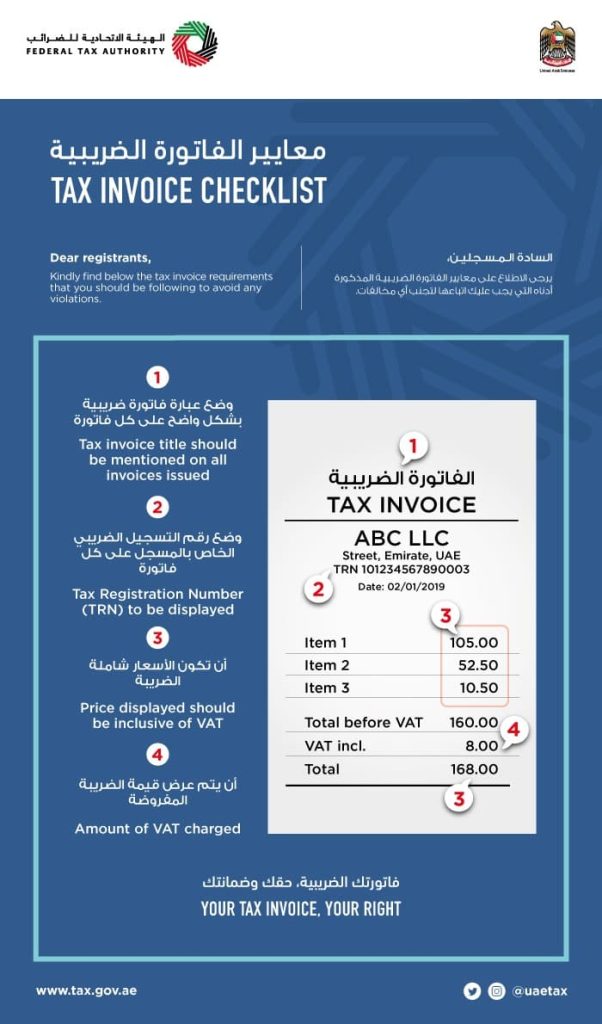
  • Tax Invoice Format UAE – FTA VAT Invoice Format

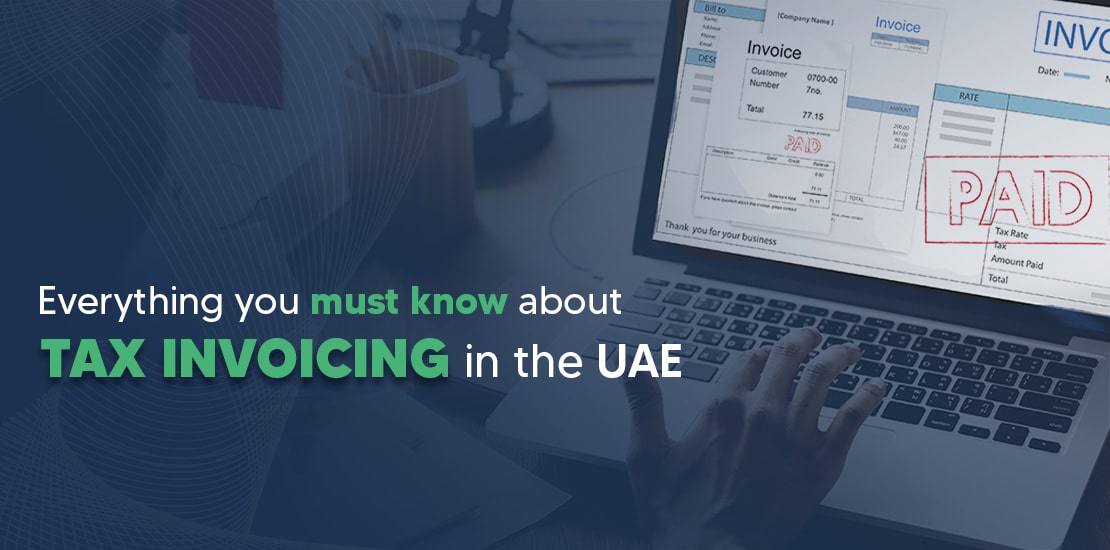
    Tax Invoice Format UAE – FTA VAT Invoice Format

    A tax invoice is a written or electronic document that documents the occurrence and specifics of a taxable supply and is defined as such by the UAE VAT Law.  Article 65 of the VAT Law requires the tax registrants making taxable supplies to issue an original Tax Invoice Format in the UAE and send it to the recipients of the goods and services. In cases where the provisions exceed AED 10,000, all tax registrants must produce tax invoices on taxable deliveries to other registrants with all mandatory details.

    Businesses that don’t send out tax invoices are subject to administrative fines. The UAE VAT Law has established several requirements for issuing tax invoices. Businesses in the UAE must strictly adhere to these requirements to avoid administrative VAT penalties.

    Requirements for Tax Invoice Format UAE

    Understanding the Tax Invoice Format in UAE is essential for businesses. To comply with the requirements, a UAE tax invoice must include the following details:

    1. Title: The words “Tax Invoice” must be displayed.
    1. Invoice Number: A unique sequential number for each invoice.
    1. Date of Issuance: The date the invoice was issued.
    1. Seller Information:
    • Name
    • Address
    • Tax Registration Number (TRN)
    1. Buyer Information:
    • Name
    • Address
    • TRN (if applicable)
    1. Description of Goods/Services: Detailed description of the goods or services provided.
    1. Quantity and Unit Price: Breakdown of the quantity and unit price of the supplies.
    1. Tax Details:
    • Applicable Tax rate
    • The exact amount of Tax charged

    Meeting these requirements ensures that your tax invoices are clear, comprehensive, and legally compliant, facilitating accurate VAT calculation and reporting. This helps protect businesses from potential penalties and legal issues in the UAE.

    UAE Requirements for Issuing Tax Invoices

    To issue a tax invoice in the UAE, businesses must meet certain requirements according to Article 59 of the Executive Regulations. Here are the key points:

    Tax Invoice Requirement:

    • Companies must provide a tax invoice whenever a supply is made.
    • The recipient of the supply must receive the tax invoice.

    Simplified Tax Invoice:

    • Only eligible suppliers can issue a simplified tax invoice.
    • A simplified tax invoice does not require a net value (amount excluding tax).

    Full Tax Invoice:

    • Each line item’s tax value and net value must be displayed.
    • Gross value is not required.

    Mandatory Details:

    • Date of issuance.
    • Unique invoice number.
    • Description of the goods or services supplied.

    VAT Amount:

    • Indicate the amount of VAT being charged.
    • This should be separate from the total amount being charged.

    Zero-Rated or Exempt Supplies:

    • Clearly state that no VAT is charged for zero-rated or exempt supplies.

    Record Keeping:

    • Keep a record of all VAT invoices issued and received.
    • Helps in staying on top of VAT reporting requirements.

    Compliance:

    • Ensure the VAT invoice format complies with UAE VAT regulations.
    • The format should include all mandatory information and be easy to understand.

    Proper Signing and Dating:

    • Ensure VAT invoices are properly signed and dated to avoid disputes.

    Following these guidelines ensures your tax invoices comply with UAE regulations and helps avoid potential issues.

    UAE’s Issuance of a Simplified Tax Invoice for VAT

    The Federal Tax Authority permits the tax invoice’s contents to contain less information than is customary in certain circumstances. In the United Arab Emirates, these invoices are simplified tax invoices, which are permitted by Article 59(5) of the Executive Regulations. It is possible to issue a simplified tax invoice in the following situations:

    • If the recipient is a VAT-registered party and the supply’s consideration is AED 10,000 or less.

    VAT Invoice Format UAE

    VAT invoice Format in UAE is an important activity for all organisations registered for VAT. When a taxable supply of goods or services is made, a registrant must issue a tax invoice, a crucial document.

    All firms must adhere to the VAT invoice format established by the FTA to avoid VAT fines and penalties in the UAE. For all organisations, knowing how to create a tax invoice in the UAE is a crucial duty and question.

    VAT Invoice Format UAE
    Source: www.tax.gov.ae

    UAE FTA Tax Invoice Format

    Maintaining the correct VAT invoice format in the UAE is important for complying with the UAE VAT regulations. The Federal Tax Authority (FTA) has specific requirements for VAT invoices that businesses must follow. These requirements help ensure accurate reporting and payment of VAT.

    Why Proper VAT Invoice Format is Important

    • Compliance: Avoid penalties and fines from the FTA for non-compliance.
    • Accurate Record-Keeping: Helps businesses track VAT transactions and calculate VAT liabilities accurately.

    Types of Tax Invoices

    • Simplified Tax Invoice
    • Full Tax Invoice

    By following the FTA’s requirements, businesses can stay compliant and manage their VAT transactions effectively.

    Simplified Tax Invoice

    Line items will be displayed at the gross value in a streamlined tax invoice.

    The following information must be included in a simplified tax invoice format UAE:

    • The invoice plainly states that it is a “Tax Invoice”.
    • The supplier’s name, address, and Tax Registration Number (TRN).
    • The day the tax invoice was sent out.
    • A summary of the products or services offered.
    • The total consideration was received, and the taxes were paid.
       

    The whole consideration (or total gross value) is displayed at the bottom of the simplified tax invoice, and the tax included in that value is shown on a separate line.

    Full Tax Invoice

    Businesses are typically required to provide a complete tax invoice. The following information should be included in a comprehensive tax invoice format UAE:

    • A clear depiction of the text Tax Invoice.
    • The supplier’s name, address, and tax identification number.
    • The recipient’s name, address, and tax identification number.
    • Tax invoice number in order.
    • When the invoice was first issued.
    • Supply date.
    • A summary of the products or services.
    • Total amount due in AED.
    • Each line must contain net value and tax amount

    Tax Invoices Issued in Foreign Currencies

    When issuing a tax invoice in a foreign currency, the following details are required:

    1. Tax Amount: The tax amount payable must be expressed in AED.
    1. Exchange Rate: The exchange rate applied, as per the rates published by the UAE Central Bank on the date of supply, must be included.

    Tax Invoice Rounding

    When a tax invoice must be made, and the tax owed on the supply is expressed as a fraction of a Fils, the amount may be rounded mathematically to the closest Fils.

    As previously stated, the tax amount should be calculated line by line. In practice, any rounding should also be done line by line.

    Mathematical logic should be used to round the tax value on the tax invoice to the closest whole Fils or two decimal places. This is meant by “rounding the value on a mathematical basis.”

    For instance: 9.862 AED would change to 9.86, while 2.357 AED would become 2.36.

    VAT for Discounted Bills

    VAT will be applied to the value that is calculated after taking the discount into account. After the discount, VAT will be added to the pricing.

    Only if the following requirements, which are outlined in UAE VAT Executive regulations, are satisfied will the discount be permitted to be deducted from the value of supply:

    • The price drop has been advantageous to the buyer.
    • The discount was funded by the supplier.

    For example, if the supply value is 10,000 AED and the discount is 500 AED. In this instance, after considering the discount value, the value of the supply is determined to be AED 9,500. VAT will be applied to AED 9,500.

    Tax Invoice-Related Administrative Penalties format

    The UAE Tax Procedures Law makes it illegal to disregard tax invoice standards. According to the amended VAT penalties regime, firms that fail to produce a tax invoice when making any supply will receive an AED 2,500 fine for each case.

    Businesses that issue tax invoices electronically, if they do not follow the rules and regulations for the UAE’s issue of electronic tax invoices, will be subject to a fine of AED 2,500. Dubai’s VAT advisors can help companies avoid fines.

    FTA Approved Tax Agents in the UAE

    Businesses that fail to send tax invoices will be subject to severe fines, but VAT consultants in Dubai, like Shuraa Tax Consultants, can help you avoid the penalty. One of the top FTA-approved tax agents in the UAE, our knowledgeable staff can assist you with requirements such as UAE VAT registration, VAT deregistration, VAT compliance / VAT Return, excise tax services, and services linked to VAT reconsideration, Corporate Tax filing, etc. Get in touch today at +971508912062. You can also email us at info@shuraatax.com.

  • VAT on Free Zones in UAE – Dubai

    VAT on Free Zones in UAE – Dubai

    Value Added Tax (VAT) has become an important part of running a business in the UAE since it was introduced in January 2018. With a standard rate of 5%, VAT applies to many goods and services, meaning businesses need to be aware of the rules and how to comply with them. One of the unique features of the UAE is its free zones.

    Free Zone is a term for free trade zones that encourage foreign ownership of businesses. Businesses in Free Zones must follow the rules set by the Free Zone Authority to do business in this area. Under UAE law, certain Free zones are known as “designated zones.” According to Article 51 of the Executive Regulations, the following meet the description of marked zones:

    • A particular geographic region that is enclosed and secured.
    • Security measures and customs rules are in place to keep track of who comes and goes and what moves in and out of the area.
    • It has internal rules about how things should be kept, stored, and worked on in the area.
    • The person in charge of the Designated Zone must follow the rules set by the FZ Authority.

    Therefore, any Free zone that satisfies the requirements and is listed on the cabinet’s list will be considered a Designated zone. Some of the famous free zones include IFZA, JAFZA, DIFC, and RAKEZ.

    While free zones provide great opportunities, they also have specific VAT rules that businesses need to understand, especially regarding VAT for free zone companies in UAE. For example, knowing the difference between designated and non-designated zones, what qualifies for zero-rated supplies, and the steps for VAT compliance can all affect a company’s finances. That’s why it’s essential for businesses operating in Dubai’s free zones to get a clear grasp of VAT implications.

    Is there VAT for Freezone Companies in the UAE?

    Yes, VAT can apply to Free Zone companies in the UAE, but it depends on several factors. Some people think that only limited companies can sign up for VAT in the UAE. Any business that meets the minimum requirement for VAT registration in the UAE must go through the FTA’s VAT registration process. A free zone company in the UAE can register independently if it makes between AED 187,500 and AED 375,000.

    For free zone companies, understanding whether they reach this threshold is crucial, as it determines their VAT registration requirements. If they exceed the threshold, they must comply with all VAT obligations, including charging VAT on their taxable supplies and filing regular VAT returns. This is an important aspect of VAT registration for free zone companies in UAE.

    Distinction Between Designated Zones and Non-Designated Zones

    One of the key concepts in VAT for free zone companies is the distinction between designated zones and non-designated zones.

    Designated Zones

    Designated free zones in the UAE are specific free zones that have been designated by the Federal Tax Authority (FTA) as being outside the territorial scope of the UAE for VAT purposes. This means that goods and services supplied within these zones are generally exempt from VAT.

    However, there are some exceptions:

    • Supply of Services to Mainland Businesses: If a free zone company supplies services to a mainland business, VAT is applicable at a standard rate of 5%.
    • Supply of Goods or Services to Non-Business Consumers: If a free zone company supplies goods or services to non-business consumers within the zone, VAT may be applicable.

    Non-Designated Zones

    On the other hand, non-designated zones do not enjoy the same VAT benefits as designated zones. Businesses operating in these areas are subject to the standard VAT rates. Therefore, it’s important for companies to know which category their free zone falls into to understand their VAT obligations better.

    VAT Treatment in the UAE Free Zones

    The standard VAT rate in the UAE Free Zone is set at 5%. This rate applies to most goods and services that do not qualify for any exemptions or special treatment. However, there are also zero-rates supplies and tax-exempt supplies.

    Tax-Exempt VAT

    Tax-exempt supplies are goods and services that are not subject to VAT. This means that businesses do not charge VAT on these supplies, and they also cannot claim any input tax credits on related purchases. Examples of tax-exempt supplies include certain healthcare and educational services.

    Zero-Rated VAT

    Zero-rated VAT means that the VAT rate charged on a good or service is 0%. Businesses can still recover the VAT incurred on their purchases related to these supplies. This treatment often applies to exports and specific goods and services that meet certain criteria. In designated free zones in the UAE, goods that are moved outside the zone may also qualify for zero-rated VAT.

    Specific VAT Treatments for Goods and Services within Free Zones

    The VAT treatment of goods and services in free zones can vary, with several important considerations:

    Import and Export

    In designated zones, imported goods can be stored without VAT until they are moved outside the zone. This can significantly reduce the cash flow burden for businesses. Exports from these zones are typically zero-rated, allowing companies to sell goods to international customers without adding VAT.

    Services

    When it comes to services, VAT may apply depending on the nature of the service and where it is supplied. For instance, services provided within a designated zone may not incur VAT, while services supplied to customers outside the zone might be subject to VAT.

    VAT Refunds

    Free zone companies may also be eligible for VAT refunds on certain expenses incurred within the zone. This can provide a financial advantage and enhance cash flow management.

    How to Register for VAT in UAE Free Zone?

    While most free zones in the UAE are designated zones, exempting them from VAT, some may require VAT registration depending on their specific activities and the nature of their supplies. Here’s a general process on how to register for VAT in a UAE Free Zone:

    1. Determine VAT Registration Requirement

    Not all free zones are designated. Designated zones are generally exempt from VAT. However, if you supply goods or services to non-business consumers within the zone or to entities outside the zone, you may need to register.

    Companies in non-designated zones are subject to VAT and must register if they meet the standard VAT registration threshold i.e. AED 375,000 per year. However, businesses below this threshold can still register voluntarily if they choose.

    2. Prepare Required Documents

    Gather the necessary documents before beginning the registration process. Commonly required documents include:

    • Trade license of the free zone company
    • Copy of the owner’s passport or identification
    • Proof of business address in the free zone
    • Bank account details
    • Financial statements (if applicable)
    • Information about taxable supplies and imports

    3. Access the Federal Tax Authority (FTA) Website

    Visit the official website of the Federal Tax Authority (FTA) of the UAE. This is the government body responsible for managing tax matters, including VAT registration.

    4. Create an Account on the FTA Portal

    If you do not already have an account, you will need to create one on the FTA portal. Click on the registration section and follow the instructions to set up your account. You’ll need to provide your email address and set a password for your account.

    5. Complete the VAT Registration Application

    Once logged in, navigate to the VAT registration section and fill out the application form. You’ll need to provide details about your business, including:

    • Business activities
    • Estimated annual turnover
    • Details about your free zone

    Ensure all information is accurate and complete, as any discrepancies can delay the registration process.

    6. Submit the Application

    After filling out the application form, review all the information and submit it through the FTA portal.

    7. Review and Approval

    The FTA will review your application. If they require any additional information or documentation, they will contact you. Upon approval, you will receive a Tax Registration Number (TRN).

    What happens if a company does not register for VAT?

    If a company that works in and out of a free zone in the UAE doesn’t register for VAT in time though required as per law, the FTA will register the business from the date it should have been registered for VAT.

    So, Businesses failing to comply with VAT registration rules will receive fines and must retroactively apply the correct VAT rate to all past sales. If your yearly sales hit the threshold, you can hire a licenced tax agent in the UAE to help you. This is very important if you don’t know when your business needs to be registered or if it has already reached the required size.

    VAT Registration in Freezone with Shuraa Tax

    Understanding VAT for free zone companies in UAE is essential for businesses operating in these areas. Whether you’re in a designated or non-designated zone, knowing the VAT rules helps you stay compliant, avoid fines, and make informed financial choices. Since VAT regulations can be tricky, it’s smart to get professional guidance to ensure your business follows all the rules.

    Shuraa Business Setup not only help business owners set up their companies in mainland, free zone, and overseas areas, but we also help you get our in-house finance teams ready for accounts reporting, auditing, UAE tax support like VAT, Corporate tax, Excise Tax, Tax Residency Certification.

    Our qualified tax team of advisors and UAE tax agents assist businesses to be UAE tax compliant and to have effective documentation which is required by UAE authority. Contact us today at +971508912062 or info@shuraatax.com to make the process simple and hassle-free.

    Frequently Asked Questions

    1. What is VAT for freezone companies in UAE?

    VAT for freezone companies in the UAE is the value-added tax that businesses operating in free zones must comply with, depending on whether they are in a designated or non-designated zone. The standard VAT rate in the UAE is 5%, but designated zones enjoy special VAT treatment, such as exemptions or zero-rated supplies for certain transactions.

    2. What are Designated Free Zones in UAE?

    Designated free zones are specific free zones that have been designated by the Federal Tax Authority (FTA) as being outside the territorial scope of the UAE for VAT purposes. This means that goods and services supplied within these zones are generally exempt from VAT.

    3. Do freezone companies need to register for VAT in the UAE?

    Yes, freezone companies must register for VAT if their taxable supplies and imports exceed AED 375,000 per year. Even if they don’t meet this threshold, companies can voluntarily register for VAT to benefit from input tax recovery on their purchases.

    4. How does VAT impact goods moving in and out of free zones?

    In designated free zones in UAE, goods moving in and out of these areas can be VAT-free, particularly when they are exported outside the UAE. However, if goods are transferred into the UAE mainland from a designated zone, VAT will be charged at the standard rate.

  • Documents Required for VAT registration in Dubai

    Documents Required for VAT registration in Dubai

    Documents required for VAT registration will be submitted to the Federal Tax Authority (FTA) via a web portal. To obtain the Tax Registration Number (TRN) for the firm, several conditions for VAT registration in the UAE must be met.  

    If a company’s taxable supply and imports surpass the statutory registration level of AED 375,000, it must register for VAT. Furthermore, a company may voluntarily register for VAT if the total amount of its taxable supplies and imports (or taxable costs) exceeds the AED 187,500 voluntary registration threshold.  

    Penalties may apply for non-compliance with the UAE VAT Executive Regulations and law. There is also the risk of a firm losing its legal position and consumer confidence due to noncompliance with regulatory requirements.   

    What is VAT in the UAE? 

    Value Added Tax (VAT) in the UAE is an indirect tax applied to most goods and services at each stage of the supply chain. Simply put, it’s a small percentage added to the price of products or services when they’re sold. Introduced on January 1, 2018, VAT is currently charged at a standard rate of 5%. Businesses collect this tax on behalf of the government and later remit it to the Federal Tax Authority (FTA). 

    VAT plays a crucial role in supporting the UAE’s vision to reduce its reliance on oil revenue and build a sustainable economy. While it may seem like a small addition, VAT helps fund essential public services such as healthcare, education, and infrastructure, ultimately contributing to the country’s long-term growth and stability. VAT in the UAE ensures that everyone contributes a fair share to the nation’s development while maintaining a transparent and balanced tax system. 

    What is VAT Registration? 

    VAT registration is the official process through which a business becomes recognised by the Federal Tax Authority (FTA) as a taxpayer in the UAE. Once registered, the company is authorised to collect VAT from customers on taxable goods and services and remit it to the government. In simpler terms, VAT registration gives a business its Tax Registration Number (TRN), a unique ID used for all VAT-related transactions, invoices, and filings. 

    Businesses in the UAE must register for VAT if their annual taxable turnover exceeds AED 375,000, which is the mandatory registration threshold. However, those with turnover above AED 187,500 but below the required limit can register voluntarily to claim input tax and enhance business credibility. Registering for VAT ensures compliance with UAE tax laws and builds trust with clients and authorities, a key step for any business operating in the country’s evolving financial landscape. 

    Mandatory vs Voluntary VAT Registration in the UAE 

    When it comes to understanding VAT registration requirements in the UAE, it’s essential to know that businesses can either register mandatorily or voluntarily depending on their turnover and taxable activities. Let’s break down the two types and why they matter for your business. 

    1. Mandatory VAT Registration in the UAE 

    If your business is growing rapidly, this part concerns you. Mandatory VAT registration applies when your total taxable supplies and imports in the past 12 months exceed AED 375,000

    Alternatively, if you expect your business turnover to cross this threshold within the next 30 days, you must register as well. This rule ensures that all qualifying businesses remain compliant with the VAT registration requirements set by the Federal Tax Authority (FTA) in the UAE

    However, it’s important to note that this threshold doesn’t apply to foreign businesses operating in the UAE; they follow different VAT obligations. 

    2. Voluntary VAT Registration in the UAE 

    Not hitting the mandatory limit doesn’t mean you’re out of the VAT system. In fact, smaller businesses can still register voluntarily, and there are good reasons to do so. 

    If your taxable supplies and imports or even taxable expenses over the past 12 months exceed AED 187,500, or if you expect to cross that in the next 30 days, you can apply for voluntary VAT registration

    This gives startups and small enterprises a strategic edge by allowing them to claim VAT refunds on business purchases and establish credibility in the market. 

    Why does VAT Registration Matters Businesses in the UAE? 

    Whether your registration is mandatory or voluntary, completing your VAT registration is not just about compliance; it’s about building business credibility. 

    Here’s why it’s so important: 

    • It ensures your business complies with the UAE’s tax laws. 
    • You can reclaim VAT paid on business expenses, reducing operational costs. 
    • Being VAT-registered boosts your company’s image, showing you operate transparently and professionally. 
    • It allows seamless transactions with other VAT-registered companies in the UAE. 

    Ignoring VAT registration can be costly. Businesses that fail to register or file VAT returns face a fine of AED 10,000, plus AED 1,000 per tax period for missed returns. Additionally, non-registered companies lose input tax credits, directly affecting their profits. 

    Documents Required for VAT Registration in the UAE 

    Businesses must complete the required documentation to register for VAT in the UAE. VAT registration and fee payment (for paid services) will be completed online. The documents listed below are necessary for VAT registration in the UAE.  

    • Business Trade License or Commercial License   
    • Passport copies of the owner or partners of the company mentioned on the license 
    • Emirates ID of the owners/ partners of companies (as per the business license)  
    • Memorandum of Association (MOA)  
    • Complete Company Address  
    • Authorised Signatory’s Contact with email, number  
    • Company Bank Details, including IBAN letter 
    • Details of branch (if any)  
    • Turnover Declaration (Signed & Stamped by the owner or the manager)  
    • Amount of the expected revenue, turnover, and taxable expense for the next 30 days   
    • To specify if the Company does GCC export or import   
    • Provide the custom code along with a copy of the Dubai Customs letter (if any) 
    • Specify if your company would like to be registered as a tax group   
    • As per the Federal Tax Authority, you may also require additional documents or authorisation depending on your business activity, the jurisdiction of your business and other such factors.  

    What is the Timeline for VAT Registration? 

    The materials will be submitted electronically. Upon completing online VAT registration, you will receive your Tax Registration Number (TRN) from the Federal Tax Authority (FTA). The Processing time is 20 business working days from the date of sharing complete information with FTA. The application may take longer if additional details are required.   

    What is the Significance of VAT Registration in Dubai?   

    Paying taxes is viewed by some business owners as an expense. They have no idea that registering their businesses for VAT might bring several benefits.   

    • It raises the company’s profile. Companies may, of course, show their VAT registration to key stakeholders and business associates, thereby enhancing their credibility and customer preference. Customers are more inclined to prefer a company that has registered for VAT than one that does not.   
    • Tax avoidance is sometimes considered a crime, and if found guilty, the corporation may face severe financial penalties in case of non-compliance or delayed compliance. Registering your business for VAT in Dubai avoids these situations and ensures your firm grows while also benefiting society. 
    • It should be underlined that VAT is not intended to burden enterprises. VAT refunds are available in certain instances. 
    • Overall, it helps the company capture a broader market and boost its reputation, thereby expanding its client base.  

    Required Documents for Tax Group Registration  

    Businesses in the UAE can make a tax group registration application. Several enterprises of various types can also form a tax group. According to the Federal Tax Authority (FTA), if entities are related to parties with a common ownership of 50% or more, then all those companies can be combined into one tax group. The FTA will issue a single TRN for the entire group of companies. Group structure, no objection letter, and turnover declaration need to be submitted.  

    How do I register for VAT in Dubai?  

    Online registration for VAT is available. To register for VAT, individuals or businesses must first create an account on the Federal Tax Authority (FTA) website.  

    Several official documents are needed for VAT registration. Before submitting a VAT registration application to the FTA, a few crucial documents must be attached to the application. After the Tax Registration Number (TRN) has been approved, a VAT Certificate will be issued. A distinctive, specific Tax Registration Number (TRN) will be assigned to each VAT certificate.  

    How to Register a Tax Group in the UAE? 

    Only the group’s representative company may apply for tax group registration. A representative firm of the group must apply for VAT registration. Each potential member of the Tax Group is required to:  

    • Being a person of law (not a natural person)  
    • Be a UAE resident who is not a part of another Tax Group.  
    • Must have a place of establishment or a fixed establishment in the UAE  
    • Must be a related party of the group members and the representative  
    • One or more persons conducting business in a partnership must control the others  

    How to Register for a Tax Registration Number in the UAE? 

    If you’re running a business in the UAE, one of the first steps after understanding VAT is getting your Tax Registration Number (TRN). This number is issued by the Federal Tax Authority (FTA) and acts like your business’s unique tax identity; it’s what officially makes your company recognized for VAT purposes. 

    Getting a TRN might sound complicated, but the process is actually straightforward if you know what to expect. Here’s a simple, step-by-step guide to help you through it: 

    Step 1: Create an FTA e-Services Account 

    Start by visiting the Federal Tax Authority’s official website — https://tax.gov.ae
    Click on “Sign Up” to create your e-Services account. You’ll need to provide basic details like your email address and set a password. Once you confirm your email, you can log in and start your tax registration journey. 

    Step 2: Begin Your VAT Registration Application 

    After logging in, head to the “VAT Registration” section. This is where you’ll fill out the form to apply for your TRN. Make sure you have all your business details ready, including: 

    • Your trade license number and copy 
    • Owner’s Emirates ID or passport copy (for non-residents) 
    • Contact details (email, phone, address) 
    • Bank account details 
    • Financial records showing your turnover 

    These details help the FTA verify your eligibility for VAT registration. 

    Step 3: Fill Out the VAT Application Form 

    Now comes the main part, completing the VAT registration form. The form will ask for information about your business structure (LLC, sole establishment, etc.), business activities, and financial data. You’ll also need to specify whether your registration is mandatory or voluntary, based on your annual taxable supplies. 

    Note: Be careful here; any incorrect information could delay your TRN approval. 

    Step 4: Submit the Application 

    Once you’ve filled everything out and attached all required documents, review the form carefully. After double-checking, click “Submit for Approval.” 

    The FTA will then review your application, which can take anywhere between 5 to 20 working days, depending on the accuracy of your submission and current processing times. 

    Step 5: Receive Your TRN Certificate 

    If your application is approved, you’ll receive your Tax Registration Number (TRN) via email. You can also download your VAT Certificate from your FTA account. 

    Your TRN will be a 15-digit number; this is what you’ll need to include on your invoices, tax returns, and official documents related to VAT. 

    Why Shuraa tax?  

    Businesses must create an online account on the FTA website and complete the VAT registration form to register for VAT in the UAE. The documents mentioned above can be uploaded, and the procedure can be completed while registering for VAT on the website. Contact Shuraa Tax Consultants if you are confused about how to proceed or if you have any questions concerning the paperwork necessary for VAT registration in Dubai.  

    Shuraa Tax Consultants provides a complete solution for UAE VAT registration services, including the documentation required for VAT registration in Dubai and throughout the UAE, as well as assistance with the online registration process. Our tax consultants guarantee that the VAT registration procedure is simple. We provide comprehensive counselling in terms of FTA VAT registration online, tax accounting services, financial record keeping, bookkeeping services, corporate taxation, and so forth. Contact Shuraa Tax Consultants right away for UAE VAT implementation! All you need to do is reach out to us at:

    📞 Call: +(971) 44081900
    💬 WhatsApp: +(971) 508912062
    📧 Email: info@shuraatax.com

  • Impact of UAE VAT on Business-to-Business supplies of Healthcare Services

    Impact of UAE VAT on Business-to-Business supplies of Healthcare Services

    The Federal Tax Authority (FTA) in UAE recently issued a public clarification on business-to-business supplies of healthcare facilities & services. According to it, healthcare services that are necessary to be supplied to patients in need will be subjected to zero-rated VAT in UAE. Below conditions must be fulfilled in order to treat supply of healthcare services at zero rate: –

    • Services must be made by a healthcare body or institution, doctor, nurse, technician, dentist, or pharmacy, licensed by the Ministry of Health or by any other competent authority.
    • Relate to the wellbeing of a human being.

    However, VAT @zero rate on healthcare services is applicable only if the provider is supplying its healthcare services directly to the patient. If in any case, the “recipient of supply” of healthcare services are different people other than end patient then the supply will no longer be qualified as zero-rated and a standard rate of VAT will be charged.

    Let’s understand a little better about VAT implications on healthcare services:

    As per the UAE VAT law, healthcare services are defined as any service supplied that is accepted in the medical profession for the treatment of the patients or “recipient of supply” of the treatment. It also includes preventive healthcare services. The recipient of the healthcare services must be the patient receiving the treatment and if that’s not the case then 5% VAT will be levied on the supply of these services. As a result of this, healthcare providers need to make sure who is on the receiving end of the treatment to determine if the supply shall be zero-rated, else a standard rate of VAT will be charged.

    Here are some of the examples of different health scenarios to help you better understand under what conditions will the supply of healthcare services be zero-rated. Each supplier of healthcare services should consider the VAT rules while supplying their healthcare services.

    1st situation: A doctor has contracted with the hospital to provide its healthcare services to the patient within the hospital premises. This will involve two kinds of supply/transaction situation-

     A) Supply by the doctor to the hospital: The doctor is seen supplying its services to the hospital and not directly to the patient. Even though it’s related to the health of patients, it won’t be treated as “healthcare services” taxable at zero rate. Now, as the doctor has contracted with the hospital to provide its services to the patients, the services will be subjected to 5% UAE VAT

     B) Supply by the hospital to the patients: The hospital is supplying its healthcare services directly to the “recipient of supply” of the services. Therefore, these are subjected to zero-rated VAT.

    1. A hospital suggests a laboratory to a patient for conducting its medical test. As a result, the patient enters into a separate and direct contract with the laboratory for the supply of medical tests. Because the laboratory is directly supplying its services to the “recipient of the supply” it will be subjected to zero-rated VAT as per the UAE VAT laws.
    2. A hospital needs to perform a specialized test/procedure on its patient and therefore enters into a contract with another hospital to perform the test/procedure. It will involve two different supply situations:

     A) Supply of services by hospital 2 (specialist hospital) to hospital 1: The hospital 2 is supplying its specialist healthcare services to hospital 1 and not the patient directly so the cannot be marked as “zero-rated”.

     B) Supply of services by hospital 1 to the patients: Hospital 1 is treating the patient directly so the supply of services from it to the patient will be constituted as a part of the definition of “healthcare services” as defined by UAE law of VAT and therefore will be treated as “zero-rated”.

    To get the best tax consultants in UAE contact Shuraa Tax Consultants and Accountants which is the leading tax agency of Dubai. Their team of dedicated experts promise to resolve all VAT related queries of various businesses. Speak to our tax agents and consultants and get professional guidance and support on managing taxation and VAT issues at affordable rates. Contact us today:

    Email: info@shuraatax.com

    Phone: +971 508912062

  • What are the Types of Taxes in the UAE?

    What are the Types of Taxes in the UAE?

    The UAE is known around the world as one of the most tax-friendly countries. One of the biggest attractions for expats, investors, and entrepreneurs is that there’s no personal income tax or capital gains tax here. In fact, Dubai and Abu Dhabi have even been ranked among the most tax-friendly cities globally, which makes the UAE a hotspot for people who want to live, work, and grow their businesses in a low-tax environment.

    That being said, the UAE isn’t completely tax-free. Over the past few years, the government has introduced several types of taxes to support economic growth and reduce reliance on oil revenues. These include the 5% Value Added Tax (VAT) introduced in 2018, the 9% Corporate Tax that started in 2023, as well as Excise Tax on certain goods, Customs Duties on imports, and municipality and tourism-related fees.

    So, let us break down the main types of taxes in the UAE in simple terms, so that both residents and businesses can better understand how the system works and what it means for them.

    Does Dubai Have Taxes?

    Dubai is often seen as a tax-free city, but the reality is a bit more nuanced. While there is no personal income tax, no capital gains tax, and no inheritance tax, Dubai does have certain other taxes and fees that residents, businesses, and visitors should know about.

    Some of the key taxes include:

    • Value Added Tax (VAT)
    • Corporate Tax
    • Excise Tax
    • Customs Duties
    • Municipal and Tourism Taxes

    So, while Dubai doesn’t tax personal income, it does have a structured system of indirect and business-related taxes.

    Types of Taxes in the UAE

    Here are the different types of taxes in Dubai and other Emirates for businesses and individuals:

    1. Value Added Tax (VAT)

    Value Added Tax (VAT) is a consumption tax that is levied on the supply of most goods and services at each stage of the supply chain. While businesses collect and account for the tax on behalf of the government, the tax is ultimately borne by the end consumer.

    Current VAT Rate:

    The standard VAT rate in the UAE is 5%, which applies to most goods and services. This is actually quite low compared to many other countries around the world.

    Types of VAT in the UAE:

    The UAE has three main VAT categories:

    • Standard Rate (5%): This applies to most things you buy – groceries, clothes, electronics, restaurant meals, hotel stays, and most services.
    • Zero Rate (0%): Exports outside the GCC, international flights, some education services (schools, universities), healthcare services (approved treatments, medicines), and investment-grade precious metals. Businesses still need to report these in VAT returns but at 0%.
    • Exempt: Some goods and services are completely exempt from VAT, meaning no tax is charged and businesses can’t claim input tax credits on these items.

    Who needs to register for VAT in UAE?

    Businesses must register for VAT if their annual turnover exceeds AED 375,000. There’s also a voluntary registration option for businesses with turnover between AED 187,500 and AED 375,000. If you’re a non-resident business making supplies in the UAE where VAT should be charged, you need to register regardless of your turnover amount.

    VAT Refunds for Tourists:

    Visitors can claim a VAT refund on purchases over AED 250 (including VAT) when shopping at participating stores, similar to tax-free shopping in other countries.

    How VAT works (example):

    If a restaurant sells a meal for AED 100, it must add 5% VAT (AED 5). The customer pays AED 105, and the restaurant passes AED 5 to the Federal Tax Authority (FTA). The restaurant can also claim back VAT it paid on supplies (like ingredients).

    2. Corporate Tax (CT)

    Corporate Tax (CT) is a direct tax levied on the net profit or taxable income of corporations and other businesses from their activities. It is a significant shift in the UAE’s long-standing, low-tax environment.

    Current Corporate Tax Rates:

    The UAE has a three-tier corporate tax system:

    • 0% on profits up to AED 375,000.
    • 9% on profits above AED 375,000 (one of the lowest corporate tax rates globally).
    • 15% on certain large multinational companies with global revenues over EUR 750 million, following OECD’s global minimum tax rules.

    Who pays Corporate Tax in the UAE?

    • All mainland companies.
    • Free Zone companies are also within scope, but qualifying free zone income (such as trade with outside UAE or other free zones) can still enjoy 0% tax, provided they meet the UAE’s substance rules.
    • Foreign companies with a permanent establishment in the UAE.

    Exemptions:

    • Government entities and government-controlled companies.
    • Extractive industries (like oil & gas) are taxed separately by the emirates.
    • Certain non-profits, charities, and public benefit organisations (if approved by the Cabinet).

    What Counts as Taxable Income?

    Corporate tax is calculated on net taxable profits, which means:

    • Your total business income
    • Minus allowable business expenses
    • Minus any applicable deductions or exemptions

    Deductions & Reliefs:

    • Businesses can deduct expenses like salaries, rent, utility bills, and R&D costs before calculating taxable income.
    • Losses can be carried forward and offset against future taxable profits.
    • Small Business Relief: Companies with revenues below AED 3 million (until 2026) can elect for relief and be treated as if they made no taxable income.

    3. Excise Tax

    Excise tax is an indirect tax levied on specific goods that are deemed to be harmful to human health or the environment. It is a form of “sin tax” and was introduced to discourage the consumption of these products and to generate additional revenue for the government. Unlike VAT, which is applied at each stage of the supply chain, excise tax is a one-time tax collected at the point of import or production.

    Products & Rates:

    • 100% on tobacco and tobacco products.
    • 100% on energy drinks.
    • 50% on carbonated drinks (except plain sparkling water).
    • 50% on sweetened drinks (introduced in December 2019).
    • 100% on electronic smoking devices and related liquids.

    Who pays the Excise Tax in the UAE?

    Excise tax is paid by importers, producers, and stockpilers of excisable goods. Ultimately, the cost is passed on to the consumer through higher retail prices.

    4. Custom Duties

    Customs duties are taxes levied on goods imported into the UAE. They are collected by UAE Customs at the border and then distributed among the emirates or GCC states (since the UAE is part of the GCC Customs Union).

    Standard Rate:

    Generally, 5% of the cost, insurance, and freight (CIF) value of most goods.

    Exceptions & Special Rates:

    • 50% duty on alcohol.
    • 100% duty on tobacco products.
    • Some goods may be subject to higher/lower rates depending on trade agreements.

    Free Zones Advantage:

    Goods imported into the UAE Free Zones are exempt from customs duties as long as they stay within the zone. If they are later imported into the mainland, then customs duty applies.

    Exemptions:

    • Goods imported within the GCC states (if meeting the rules of origin).
    • Diplomatic and military imports.
    • Personal belongings and household items of UAE nationals returning to the country.
    • Imports for charities and certain public organisations.

    While the overall customs policy is governed by federal law, customs administration and collection are managed by the individual Emirate’s customs departments, such as Dubai Customs, Abu Dhabi Customs, etc., under the general oversight of the Federal Authority for Identity, Citizenship, Customs, and Ports Security (ICP).

    5. Municipal Taxes

    Municipal taxes are local-level taxes imposed by emirates on residents, property users, and hospitality services. These are not federal taxes but are collected by municipal authorities in each emirate.

    1. Dubai:

    Housing Fees: A municipal tax levied on residential tenants. It is calculated as 5% of the annual rental value, as specified in the tenancy contract. The fee is typically paid monthly and is included as a separate line item on the tenant’s Dubai Electricity and Water Authority (DEWA) bill.

    Market Fees: A similar tax, also at a rate of 5%, that applies to commercial properties.

    2. Abu Dhabi:

    Rental Fees: A fee of 5% of the annual rental value is levied on tenancy contracts. This fee is added to the monthly Abu Dhabi Distribution Company (ADDC) utility bill. It’s crucial to note that these fees apply to expatriate residents, while UAE citizens are typically exempt from this charge on residential contracts.

    6. Personal Income Tax

    Income tax is a tax on salaries, wages, and personal earnings. In most countries, individuals pay income tax directly from their monthly salary or annual income.

    However, the UAE is famous for having no personal income tax. Residents and expatriates do not pay tax on salaries, wages, or investment income (like dividends, rental income, or capital gains). There is also no inheritance tax or wealth tax in the UAE.

    7. Other Fees & Indirect Taxes

    In addition to VAT, Corporate Tax, Excise, and Customs Duties, the UAE also has smaller but important indirect taxes and fees that residents, visitors, and businesses should know about:

    Road Tolls:

    • Dubai (Salik): Introduced in 2007, each time a car passes through a Salik gate, AED 4 is deducted automatically via a prepaid Salik tag. There’s no daily maximum cap.
    • Abu Dhabi (Darb): Introduced in 2021, AED 4 per crossing during peak hours at selected toll gates. Maximum daily cap is around AED 16 per vehicle.

    Stamp Duties and Administrative Fees:

    • These are one-time fees paid to government departments for specific transactions, particularly in the real estate sector.
    • Property Transfer Fees: When a property is bought or sold, a mandatory fee is paid to the relevant Land Department. In Dubai, this fee is 4% of the property’s sale price or market value, typically split between the buyer and the seller. In Abu Dhabi, the fee is 2% of the property’s value. Other emirates have similar charges.
    • Mortgage Registration Fees: In Dubai, a fee of 0.25% of the loan amount is charged for registering a mortgage.

    Note: Keep in mind, tax rates are subject to change. Contact experts at Shuraa Tax for up-to-date information.

    Stay Compliant, Stay Stress-Free with Shuraa Tax

    The UAE continues to stand out as one of the world’s most tax-friendly countries. With no personal income tax and low rates on business profits, it’s a great place to live, work, and build a business. But at the same time, there are now a few taxes like VAT, Corporate Tax, Excise Tax, and municipal fees that both individuals and companies need to understand.

    For business owners, keeping up with tax rules and filing everything correctly can feel tricky. That’s where Shuraa Tax can help. From corporate tax and VAT registration to excise tax, accounting & bookkeeping, payroll, and tax residency certificates, our experts handle it all so you can focus on running your business with peace of mind.

    If you want expert help and a smooth, hassle-free way to handle your taxes in the UAE, just reach out to Shuraa Tax today.

    📞 Call: +(971) 44081900
    💬 WhatsApp: +(971) 508912062
    📧 Email: info@shuraatax.com

  • 10 things you need to know about the new UAE tax law 2018

    10 things you need to know about the new UAE tax law 2018

    The legal framework in the United Arab Emirates has been imminent and divergent, to bring about progressive changes and development in the country. Aiming similar outcomes for the region, the new UAE tax law was introduced recently on 1st January 2018.

    According to the new tax law in Dubai – UAE, Value Added Tax (VAT in UAE) is applicable to various categories of businesses and services. All the commercial activities are now subjected to the payment of five percent (5% VAT) value-added tax VAT in Dubai, UAE.

    NEW TAX LAW IN BRIEF

    The Federal Decree Law No. (8) Of 2017 Value Added Tax stated by the Ministry of Finance (MoF) summaries the tax possibilities within the country; the VAT rate, the responsibilities that will be carried out by the collection of these taxes for the growth of the country; the taxes that will be applied to the supply chain. The new UAE tax law also defines the UAE tax registration and deregistration, as well as the mandatory threshold for tax registration, tax group, registration exceptions, tax registration for government bodies as well as voluntary registration. The Article 85 of the UAE VAT Law, showcases the effective date of this Decree – as 1 January 2018.

    This new UAE tax law environment in the country has also brought about a series of confusion and uncertainties. Moreover, businesses and commercial entities are also having a hard time understanding the new tax law in Dubai and all other parts of the UAE.As consumers, traders and end-users across the UAE need to familiarize themselves with a value-added tax (VAT) system and to be able to identify their role as taxpayers, we at Shuraa Tax Consultants offer you suitable help in this regard.

    NEVERTHELESS, HERE ARE THE 10 THINGS THAT YOU MUST KNOW ABOUT THE NEW UAE VAT TAX LAW:

    1. The VAT law in UAE is based on the VAT guidelines agreed in the Unified GCC Agreement for Value Added Tax (VAT) published in the Official Gazette on 21 April 2017. However, specifications on the implementation of VAT in UAE incorporated in Federal Tax Authority FTA regulations.
    2. Businesses operating across UAE need to adhere to the changes in the cost structure, compliances as well as organizational structure as well as file tax returns on Monthly and Quarterly basis due to the VAT implementation in UAE and comply with the UAE VAT requirements and updates at all times.
    3. The mandatory threshold to register for VAT in UAE is Dh375,000 and the voluntary threshold to register for VAT is Dh187,500. Business in the process of establishment/company formation in UAE needs to get their VAT registration under the new UAE VAT law within 30 days of establishing the company/business, while older companies had to register before 31 December 2017 to avoid penalties.
    4. Companies in UAE must obtain Tax Registration Number from the Federal Tax Authority to pay VAT. The Tax Registration Number also called for TRN number or tax identification number which is required to print all the invoices and bills of the company. The UAE TRN Number is also used while filing tax returns and dealing with the FTA.
    5. Companies and business entities in the UAE must follow a four-processes 1) Obtain VAT registration from the FTA 2) Charge VAT in UAE on taxable goods or services; 3) Reclaim any UAE VAT they have paid on business-related goods or services; 4) keep a range of commercial and business records for FTA’s evaluation.
    6. As of now, FTA has stated that exemption on VAT is on basic education, healthcare, residential real estate, local transport and zero-rate on some sector. The VAT exemption or zero-rating in these commercial sectors are currently a huge saver for VAT payers in UAE. However, except VAT exemption or zero-rated supplies all other goods and services in the UAE, even if supplied by the governmental bodies and governing authorities are chargeable to VAT.
    7. VAT penalties are outlined by the Federal Tax Authority and can be applied to 1) companies and businesses failing to register for VAT in UAE; 2) companies and businesses, who do not submit a tax return or make a payment within the determined period; 3) companies and businesses, who do not maintain  the records as per the VAT guidelines of the tax legislation; 4) any kind of tax evasions, deliberate act or omission was done intentionally to violate the provisions the FTA will impose VAT penalties.
    8. As per the new UAE Tax Law, the credit of input VAT is not allowable on the expenses incurred for producing exempted supplies. Moreover, input tax cannot be claimed if it is incurred in respect of specific expenses such as obtaining a vehicle for rent or lease for personal use, entertainment expenses, etc. For e.g. employee entertainment as per Article (53) of federal Decree-Law No (8) of 2017 on Value Added Tax.
    9. In case of a UAE nonresident, the new UAE Tax law who makes supplies of goods and services in the country requires registration in accordance with the provisions of the Decree-Law. The Federal Tax Authority shall register him with effect from the date on which he or she started making supplies in the UAE. It could be an earlier date if agreed by the FTA and the non-resident entity.
    10. All the UAE companies and businesses within the country – whether registered for VAT or not, must retain their financial records. These financial records include Balance Sheet, Profit and Loss reports, fixed assets reports, payroll sheet, reports on inventory, stock level reports and accounting records (including payments, receipts, purchases, sales, revenues and expenses).

    Concludingly, it is also important to know that almost all commercial individuals or companies require to change their financial management practices as well as core operations to follow the procedures levied by the legislation in terms of accounting books and records. Also, the technology of accounting practices and human resources such as chartered accountants, tax advisers and UAE tax consultants are a must!

    The most easy and quick solution to maintain all sorts of communication and understand guidelines provided by the Federal Tax Authority is to get in touch with SHURAA TAX CONSULTANTS.

    SHURAA TAX CONSULTANTS support you with each and every requirement for UAE VAT & Dubai Taxation Services. Speak to our Tax consultants to understand the taxation system in UAE. Call us on +971508912062 or visit www.shuraatax.com.