Tag: uae vat

  • Understanding VAT Reimbursement and Disbursement in the UAE: A Comprehensive Guide 

    Understanding VAT Reimbursement and Disbursement in the UAE: A Comprehensive Guide 

    Value Added Tax (VAT) has become an integral part of the UAE’s tax system since its introduction in 2018. It affects both businesses and individuals, so it’s important for everyone to understand how it works. Two important parts of VAT are reimbursement and disbursement—these processes help people manage their tax payments and stay compliant with the law. 

    In simple terms, VAT reimbursement allows businesses and eligible individuals to recover VAT paid on expenses related to their operations, while VAT disbursement involves recovering exact amounts paid on behalf of clients without additional VAT charges. 

    If you’re a business owner looking for a tax refund or an individual eligible for VAT reimbursement on expenses in the UAE, knowing these processes is essential. A Shuraa tax, we will assist you through everything you need to know about VAT reimbursement and disbursement in the UAE, so you can handle them easily and stay on the right side of the rules.

    VAT Reimbursement in the UAE

    VAT reimbursement in the UAE is a process whereby businesses and individuals can claim a refund of the Value-Added Tax (VAT) they have paid. This is typically applicable when the VAT paid is not recoverable as input tax against taxable supplies or when a surplus of input tax exists. 

    Eligibility Criteria for VAT Reimbursement

    Several types of entities may be eligible to claim VAT reimbursement in the UAE:

    Businesses

    Companies registered for VAT in the UAE have paid VAT on business-related expenses, such as office supplies, rent, and professional services. 

    Tourists

    Non-UAE residents who have purchased goods from VAT-registered retailers wish to claim VAT refunds when exiting the country. 

    Learn more about how you can claim VAT refund in Dubai as a tourist: VAT Refund in Dubai for Tourists  

    Government Entities and Diplomatic Missions

    Some government bodies and diplomatic missions may be eligible for VAT refunds on purchases made in the UAE. 

    Foreign Businesses

    Under certain conditions, foreign companies with no business presence in the UAE can also reclaim VAT incurred on expenses during their operations in the UAE. 

    Generally, to be eligible for a VAT refund: 

    • The VAT must have been paid on eligible business expenses. 
    • The entity must be registered for VAT with the FTA and have an active VAT number. 

    The claim should be submitted within the set time frame and accompanied by proper documentation, such as receipts and invoices. 

    Common Scenarios Leading to VAT Reimbursement Claims

    VAT reimbursement claims are typically made in several scenarios, including:  

    1. Business Purchases

    Companies reclaim VAT on eligible expenses like office rent, utilities, equipment purchases, marketing services, and other operational costs.

    2. Tourist Refunds  

    Tourists shopping in the UAE can claim back VAT on goods purchased from registered retailers when they leave the country through designated refund points.

    3. Conferences and Events 

    Businesses participating in exhibitions, conferences, or business events in the UAE can claim VAT paid on entry fees and related services.

    4. Cross-border Trade

    Companies involved in importing and exporting goods may be eligible for VAT refunds on cross-border transactions if they meet the FTA’s conditions. 

    5. Excess VAT Paid

    If a business has paid more VAT than it is entitled to collect, it can claim a refund for the excess amount

    The VAT Reimbursement Process in the UAE 

    The VAT reimbursement process in the UAE involves several key steps: 

    1. Register on the FTA Portal 

    Ensure that your business is registered with the FTA and has an active account [https://tax.gov.ae/en/taxes/Vat/refunds.aspx]. Tourists can apply for VAT refunds through designated refund points at airports and other exit points. 

    2. Collect and Prepare Documentation 

    Businesses need to gather and prepare the necessary documentation to support their reimbursement claim. This typically includes: 

    • Tax registration certificate 
    • VAT returns 
    • Invoices for purchases and sales 
    • Bank statements 
    • Any other relevant supporting documents 

    3. Submit the Claim 

    Log in to the FTA’s online portal, complete the VAT refund application form, and upload the required documents. 

    4. Review and Approval 

    The FTA reviews the submitted claim and may request additional information if needed. Once approved, the FTA processes the refund. 

    5. Receive the Refund 

    If the claim is approved, the VAT amount will be reimbursed through the specified payment method, such as a bank transfer or other available options. 

    VAT Disbursement in the UAE 

    VAT disbursement in the UAE refers to the recovery of an expense that a business has paid on behalf of a client. When a business incurs a cost directly related to providing a service or product to a client and later recovers that exact amount without any markup, this transaction is classified as a disbursement. 

    When it comes to VAT on reimbursement of expenses in UAE, it’s essential to distinguish it from disbursement. Reimbursement occurs when a business incurs an expense related to a service or product it provides, and then charges the client for that cost. Unlike disbursements, reimbursements are generally considered taxable supplies under the UAE VAT regime. This means that VAT may apply when a business recovers these costs from its client. 

    Key Features of VAT Disbursement: 

    • Exact Recovery: The amount recovered from the client is exactly the same as the amount paid, with no additional charges.
    • No VAT Implications: Since disbursements are not treated as taxable supplies, they do not attract VAT when the client repays the business. 

    To qualify as a disbursement under UAE VAT law, a recovery of expense must meet the following conditions: 

    1. The expense must be incurred directly for the benefit of a client.
    1. The amount recovered by the client must be the exact same amount that was paid by the business, with no additional markup or profit included.
    1. The reimbursement must not involve the supply of any goods or services. If there is a supply element, the reimbursement may be subject to VAT.
    1. The business should not recover input tax (VAT) associated with the expense paid on behalf of the client, as disbursements do not qualify for input tax recovery. 

    Example of VAT Disbursement in the UAE 

    A marketing agency, XYZ Marketing, has arranged a photoshoot for its client, ABC Enterprises. The agency hires a professional photographer and pays AED 1,050 for the service. This amount includes AED 50 VAT (5% of AED 1,000, the base cost of the service). The agency incurs this expense directly on behalf of ABC Enterprises. 

    • Total Amount Paid by XYZ Marketing: AED 1,050 (including AED 50 VAT).
    • Base Cost of the Photoshoot Service: AED 1,000.
    • VAT Paid: AED 50. 

    When XYZ Marketing requests reimbursement from ABC Enterprises: 

    • XYZ Marketing charges ABC Enterprises exactly AED 1,050, the same amount it paid the photographer. 
    • This transaction is considered a disbursement, not a supply, so no additional VAT is added by XYZ Marketing when billing ABC Enterprises. 
    • ABC Enterprises pays XYZ Marketing AED 1,050, covering the expense exactly as incurred. 

    Difference Between VAT Disbursement and VAT Reimbursement 

    While both terms involve recovering costs, there are distinct differences between VAT disbursement and VAT reimbursement: 

    1. Nature of the Transaction 

    • VAT Disbursement: It involves the recovery of expenses incurred on behalf of a client without any markup. The payment is treated as a pass-through and not as a supply, so no VAT is charged on the recovery.
    • VAT Reimbursement: This refers to claiming back VAT that a business has paid on its own expenses. When businesses incur costs that include VAT, they can file a claim with the Federal Tax Authority (FTA) to recover the VAT portion if the expenses are eligible. 

    2. VAT Treatment 

    • VAT Disbursement: The disbursed amount is not subject to VAT because it is not considered a supply. For example, if a business pays AED 500 (including VAT) on behalf of a client and recovers that amount, it does not charge any additional VAT.
    • VAT Reimbursement: Involves a business recovering VAT from the FTA on its business-related expenses. This means if a business pays AED 1,000 for supplies and VAT is included, it can claim back the VAT amount from the FTA if the supplies are eligible. 

    3. Examples 

    • VAT Disbursement Example: A company pays AED 1,050 (including AED 50 VAT) for a service on behalf of a client and recovers exactly AED 1,050 from the client.
    • VAT Reimbursement Example: A company incurs AED 1,000 in expenses for office supplies that include AED 50 VAT. The company can file a claim to recover the AED 50 VAT from the FTA. 

    How Shuraa Tax Can Help with VAT Reimbursement and Disbursement 

    Understanding VAT reimbursement and disbursement in UAE is really important for businesses and individuals who want to manage their expenses effectively. Knowing how these processes work can help you recover costs and stay compliant with VAT rules, which are essential for maintaining good cash flow. 

    If you ever feel overwhelmed by VAT regulations or have questions, it’s a great idea to seek professional help. At Shuraa Tax, we’re here to guide you through all things VAT, including how to handle reimbursement and disbursement. Our experienced team has the experience to help you navigate these processes and make sure you’re meeting all requirements while maximizing your potential refunds. 

    Contact us today at +971508912062 or email us at info@shuraatax.com to find out how we can help you. 

    Frequently Asked Questions 

    1. What is VAT on reimbursement of expenses in the UAE? 

    VAT on reimbursement of expenses in the UAE applies when a business incurs costs related to a service or product it provides and then charges the client for these costs. In the UAE, such reimbursements are generally considered taxable supplies. 

    2. Can tourists claim VAT reimbursement in the UAE? 

    Yes, tourists can claim VAT reimbursement in the UAE. The UAE has a Tourist Refund Scheme that allows eligible tourists to get a refund on the VAT they have paid on goods purchased during their stay. 

    3. What is the difference between VAT reimbursement and VAT disbursement? 

    VAT reimbursement involves claiming back VAT that a business has paid on its expenses if those expenses are eligible under VAT rules. VAT disbursement, on the other hand, refers to the recovery of an exact amount that a business has paid on behalf of a client without charging any additional VAT, as it is not treated as a taxable supply. 

    4. Are all expenses eligible for VAT reimbursement in the UAE? 

    Not all expenses are eligible for VAT reimbursement in the UAE. Only business-related expenses that meet the FTA’s criteria, such as costs incurred for taxable supplies, can be claimed. 

    5. How much VAT is refunded in the UAE? 

    You can typically claim a VAT refund of 85% of the total VAT amount paid in the UAE, after deducting a fee of AED 4.80 per tax-free tag. This refund is available to tourists and visitors who meet certain criteria, such as being non-residents, purchasing eligible goods, and exporting them out of the UAE within a specified timeframe.
  • Essential Documents Required for VAT Return Filing in UAE 

    Essential Documents Required for VAT Return Filing in UAE 

    Filing VAT returns is a mandatory step for businesses in the UAE to stay compliant with the Federal Tax Authority (FTA). This process requires businesses to submit VAT returns quarterly or monthly, depending on their taxable supplies.

    In this guide, we’ll explore the essential documents required for VAT return filing in UAE, helping you avoid penalties and ensure smooth compliance.

    What is VAT Return in UAE?

    In the UAE, a VAT return is a mandatory filing for businesses registered under the Value Added Tax (VAT) system. It serves as a formal statement to the Federal Tax Authority (FTA), detailing the VAT collected on sales (output VAT) and the VAT paid on purchases (input VAT) during a specific tax period.

    The filing frequency can be quarterly or monthly, depending on the business size and type. A VAT return includes information on total sales, purchases, and any adjustments from previous periods. If the VAT collected on sales exceeds the VAT paid on purchases, the business must pay the difference to the government.

    Conversely, if the VAT paid on purchases increases, the business may claim a refund or carry the amount forward. VAT returns must be filed online via the FTA portal within 28 days of the tax period’s end.

    VAT Return Filing Requirements in the UAE

    To ensure compliance with UAE VAT laws, businesses must adhere to specific requirements when filing VAT returns. Understanding the critical aspects of this process is essential for accurate and timely submissions. Here’s an overview of the core elements involved:

    Tax Periods

    The Federal Tax Authority (FTA) determines the frequency of VAT returns based on a business’s taxable supplies over the preceding twelve months. Businesses with taxable supplies exceeding AED 150 million must file their VAT returns monthly.

    Those with supplies between AED 37.5 million and AED 150 million file returns quarterly, while businesses with taxable supplies below AED 37.5 million can file biannually.

    Due Dates

    VAT returns are typically due by the 28th day of the month following the end of the tax period. However, businesses registered as part of a Tax Group enjoy an additional 15-day grace period.

    It allows them to file by the 15th day of the following month. Adhering to these deadlines is critical, as late submissions may incur penalties.

    Filing Methods

    Businesses can file VAT returns electronically via the FTA’s official portal (EmTax). Alternatively, companies may engage a Tax Agent to manage the filing process.

    These agents are authorised professionals who ensure compliance with VAT regulations, providing peace of mind for businesses with more complex tax requirements.

    By understanding these requirements—tax periods, deadlines, and filing methods—businesses can direct VAT return filing in the UAE more effectively and avoid potential fines or compliance issues.

    Documents Required for VAT Return Filing in UAE

    To file your VAT return successfully in the UAE, certain documents required for VAT return filing in UAE must be prepared in advance.

    Trade License: A valid trade License is a must for any business operating in the UAE. It serves as your legal foundation for VAT registration and future filings.

    Tax Registration Certificate (TRC): Issued by the FTA upon registration, your TRC includes your VAT registration number, necessary for filing VAT returns.

    Tax Invoices: Every transaction should be supported by accurate tax invoices containing essential details such as supplier and recipient information, VAT amounts, and descriptions of goods or services.

    Purchase Invoices: Document VAT paid on purchases to claim input VAT credits.

    Financial Reports and Bank Statements: Clear financial records help ensure accurate VAT calculations and compliance.

    Import and Export Declarations: Required if your business engages in international trade to validate VAT payments and claim zero-rating.

    Credit Notes and Debit Notes

    Credit and debit notes adjust previously issued invoices due to errors, returns, or cancellations. Proper documentation and justification of these notes are essential for maintaining correct VAT records.

    Records of Reverse Charge Mechanism

    For industries where the reverse charge mechanism applies, the recipient, rather than the supplier, is responsible for paying VAT. Maintaining accurate records of these transactions is crucial for VAT return filing.

    Audited Financial Reports

    If your business is subject to external audits, you may need to provide audited financial reports when filing VAT returns. These reports should be prepared thoroughly to avoid penalties from the FTA.

    Additional Requirements

    In some cases, businesses may also need to submit specific details such as:

    Profit Margin Scheme: Provide the required documentation if your business is part of this scheme.

    Goods Transferred to GCC States: Any transfer of goods to other GCC countries must be reported.

    VAT Paid on Personal Imports: Personal imports subject to VAT should be recorded.

    Transportation of Goods: Details on transportation of goods to other GCC countries need to be documented.

    Key Points for VAT Return Filing

    Here are some essential tips to remember:

    • All amounts should be reported in UAE Dirhams (AED).
    • Round off all amounts to the nearest fields.
    • VAT returns must be submitted to the FTA by the 28th day following the end of the tax period. If this falls on a weekend or public holiday, the deadline extends to the next business day.

    Failure to submit VAT returns on time can result in penalties. For instance, an initial fine of AED 1,000 may apply, with a further fine of AED 2,000 for repeat offences within 24 months.

    How Shuraa Tax Can Help You with VAT Return Filing

    Navigating VAT return filing in the UAE can be challenging, especially when it comes to ensuring that all documents required for VAT return filing in UAE are prepared correctly. Shuraa Tax provides expert services to help you meet compliance standards, submit accurate VAT returns, and avoid costly penalties.

    Contact us today at +971508912062 or info@shuraatax.com to learn how we can assist with your VAT return filing. By staying organised and compliant, you can focus on running your business while we handle your tax obligations efficiently.

    Related guides:

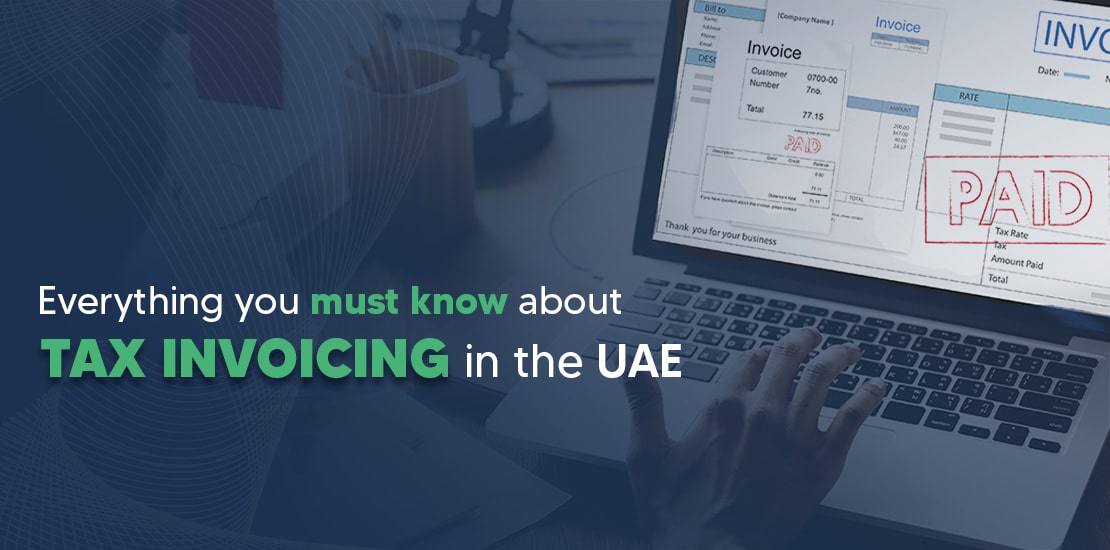
  • Tax Invoice Format UAE – FTA VAT Invoice Format

    Tax Invoice Format UAE – FTA VAT Invoice Format

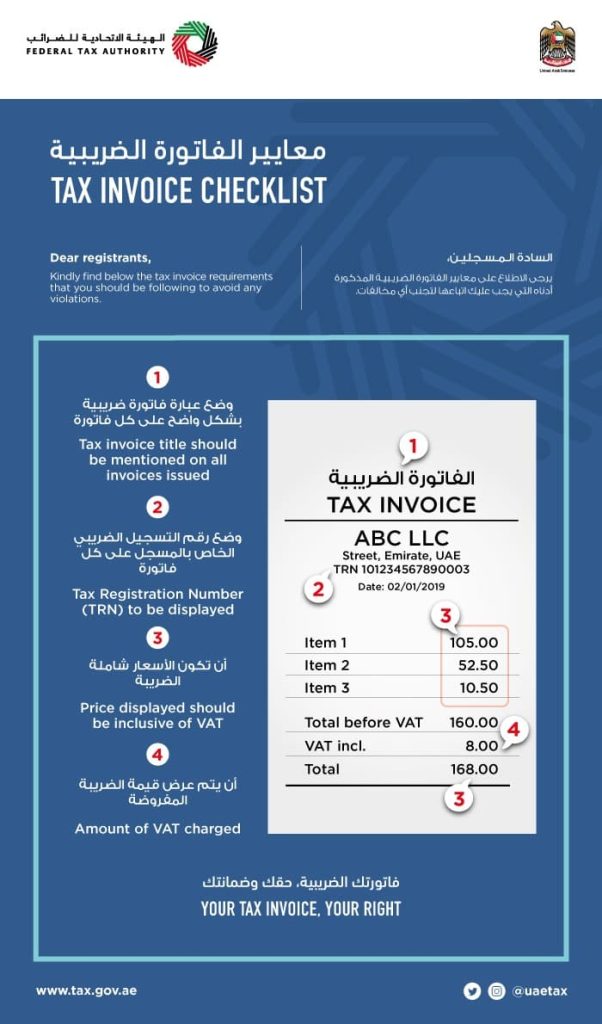
    A tax invoice is a written or electronic document that documents the occurrence and specifics of a taxable supply and is defined as such by the UAE VAT Law.  Article 65 of the VAT Law requires the tax registrants making taxable supplies to issue an original Tax Invoice Format in the UAE and send it to the recipients of the goods and services. In cases where the provisions exceed AED 10,000, all tax registrants must produce tax invoices on taxable deliveries to other registrants with all mandatory details.

    Businesses that don’t send out tax invoices are subject to administrative fines. The UAE VAT Law has established several requirements for issuing tax invoices. Businesses in the UAE must strictly adhere to these requirements to avoid administrative VAT penalties.

    Requirements for Tax Invoice Format UAE

    Understanding the Tax Invoice Format in UAE is essential for businesses. To comply with the requirements, a UAE tax invoice must include the following details:

    1. Title: The words “Tax Invoice” must be displayed.
    1. Invoice Number: A unique sequential number for each invoice.
    1. Date of Issuance: The date the invoice was issued.
    1. Seller Information:
    • Name
    • Address
    • Tax Registration Number (TRN)
    1. Buyer Information:
    • Name
    • Address
    • TRN (if applicable)
    1. Description of Goods/Services: Detailed description of the goods or services provided.
    1. Quantity and Unit Price: Breakdown of the quantity and unit price of the supplies.
    1. Tax Details:
    • Applicable Tax rate
    • The exact amount of Tax charged

    Meeting these requirements ensures that your tax invoices are clear, comprehensive, and legally compliant, facilitating accurate VAT calculation and reporting. This helps protect businesses from potential penalties and legal issues in the UAE.

    UAE Requirements for Issuing Tax Invoices

    To issue a tax invoice in the UAE, businesses must meet certain requirements according to Article 59 of the Executive Regulations. Here are the key points:

    Tax Invoice Requirement:

    • Companies must provide a tax invoice whenever a supply is made.
    • The recipient of the supply must receive the tax invoice.

    Simplified Tax Invoice:

    • Only eligible suppliers can issue a simplified tax invoice.
    • A simplified tax invoice does not require a net value (amount excluding tax).

    Full Tax Invoice:

    • Each line item’s tax value and net value must be displayed.
    • Gross value is not required.

    Mandatory Details:

    • Date of issuance.
    • Unique invoice number.
    • Description of the goods or services supplied.

    VAT Amount:

    • Indicate the amount of VAT being charged.
    • This should be separate from the total amount being charged.

    Zero-Rated or Exempt Supplies:

    • Clearly state that no VAT is charged for zero-rated or exempt supplies.

    Record Keeping:

    • Keep a record of all VAT invoices issued and received.
    • Helps in staying on top of VAT reporting requirements.

    Compliance:

    • Ensure the VAT invoice format complies with UAE VAT regulations.
    • The format should include all mandatory information and be easy to understand.

    Proper Signing and Dating:

    • Ensure VAT invoices are properly signed and dated to avoid disputes.

    Following these guidelines ensures your tax invoices comply with UAE regulations and helps avoid potential issues.

    UAE’s Issuance of a Simplified Tax Invoice for VAT

    The Federal Tax Authority permits the tax invoice’s contents to contain less information than is customary in certain circumstances. In the United Arab Emirates, these invoices are simplified tax invoices, which are permitted by Article 59(5) of the Executive Regulations. It is possible to issue a simplified tax invoice in the following situations:

    • If the recipient is a VAT-registered party and the supply’s consideration is AED 10,000 or less.

    VAT Invoice Format UAE

    VAT invoice Format in UAE is an important activity for all organisations registered for VAT. When a taxable supply of goods or services is made, a registrant must issue a tax invoice, a crucial document.

    All firms must adhere to the VAT invoice format established by the FTA to avoid VAT fines and penalties in the UAE. For all organisations, knowing how to create a tax invoice in the UAE is a crucial duty and question.

    VAT Invoice Format UAE
    Source: www.tax.gov.ae

    UAE FTA Tax Invoice Format

    Maintaining the correct VAT invoice format in the UAE is important for complying with the UAE VAT regulations. The Federal Tax Authority (FTA) has specific requirements for VAT invoices that businesses must follow. These requirements help ensure accurate reporting and payment of VAT.

    Why Proper VAT Invoice Format is Important

    • Compliance: Avoid penalties and fines from the FTA for non-compliance.
    • Accurate Record-Keeping: Helps businesses track VAT transactions and calculate VAT liabilities accurately.

    Types of Tax Invoices

    • Simplified Tax Invoice
    • Full Tax Invoice

    By following the FTA’s requirements, businesses can stay compliant and manage their VAT transactions effectively.

    Simplified Tax Invoice

    Line items will be displayed at the gross value in a streamlined tax invoice.

    The following information must be included in a simplified tax invoice format UAE:

    • The invoice plainly states that it is a “Tax Invoice”.
    • The supplier’s name, address, and Tax Registration Number (TRN).
    • The day the tax invoice was sent out.
    • A summary of the products or services offered.
    • The total consideration was received, and the taxes were paid.
       

    The whole consideration (or total gross value) is displayed at the bottom of the simplified tax invoice, and the tax included in that value is shown on a separate line.

    Full Tax Invoice

    Businesses are typically required to provide a complete tax invoice. The following information should be included in a comprehensive tax invoice format UAE:

    • A clear depiction of the text Tax Invoice.
    • The supplier’s name, address, and tax identification number.
    • The recipient’s name, address, and tax identification number.
    • Tax invoice number in order.
    • When the invoice was first issued.
    • Supply date.
    • A summary of the products or services.
    • Total amount due in AED.
    • Each line must contain net value and tax amount

    Tax Invoices Issued in Foreign Currencies

    When issuing a tax invoice in a foreign currency, the following details are required:

    1. Tax Amount: The tax amount payable must be expressed in AED.
    1. Exchange Rate: The exchange rate applied, as per the rates published by the UAE Central Bank on the date of supply, must be included.

    Tax Invoice Rounding

    When a tax invoice must be made, and the tax owed on the supply is expressed as a fraction of a Fils, the amount may be rounded mathematically to the closest Fils.

    As previously stated, the tax amount should be calculated line by line. In practice, any rounding should also be done line by line.

    Mathematical logic should be used to round the tax value on the tax invoice to the closest whole Fils or two decimal places. This is meant by “rounding the value on a mathematical basis.”

    For instance: 9.862 AED would change to 9.86, while 2.357 AED would become 2.36.

    VAT for Discounted Bills

    VAT will be applied to the value that is calculated after taking the discount into account. After the discount, VAT will be added to the pricing.

    Only if the following requirements, which are outlined in UAE VAT Executive regulations, are satisfied will the discount be permitted to be deducted from the value of supply:

    • The price drop has been advantageous to the buyer.
    • The discount was funded by the supplier.

    For example, if the supply value is 10,000 AED and the discount is 500 AED. In this instance, after considering the discount value, the value of the supply is determined to be AED 9,500. VAT will be applied to AED 9,500.

    Tax Invoice-Related Administrative Penalties format

    The UAE Tax Procedures Law makes it illegal to disregard tax invoice standards. According to the amended VAT penalties regime, firms that fail to produce a tax invoice when making any supply will receive an AED 2,500 fine for each case.

    Businesses that issue tax invoices electronically, if they do not follow the rules and regulations for the UAE’s issue of electronic tax invoices, will be subject to a fine of AED 2,500. Dubai’s VAT advisors can help companies avoid fines.

    FTA Approved Tax Agents in the UAE

    Businesses that fail to send tax invoices will be subject to severe fines, but VAT consultants in Dubai, like Shuraa Tax Consultants, can help you avoid the penalty. One of the top FTA-approved tax agents in the UAE, our knowledgeable staff can assist you with requirements such as UAE VAT registration, VAT deregistration, VAT compliance / VAT Return, excise tax services, and services linked to VAT reconsideration, Corporate Tax filing, etc. Get in touch today at +971508912062. You can also email us at info@shuraatax.com.

  • FTA’s VAT Administrative Exceptions in UAE

    FTA’s VAT Administrative Exceptions in UAE

    UAE VAT Administrative Exception is a way to provide registrants with concessions or exceptions allowed by the Federal Decree-Law No. 8 of 2017 on Value Added Tax (“Law”). UAE VAT Administrative Exception also stands under the Cabinet Decision No 52 of 2017 on the Executive Regulations of the Federal Decree-Law No. 8 of 2017 on Value Added Tax (“Executive Regulations”)

    The UAE VAT Administrative Exception is under mechanism if difficult circumstances prevent businesses and companies from following certain procedural aspects of the Law or the Executive Regulations.

    Eligibility Criteria for UAE VAT Administrative Exception

    Three conditions describe the eligibility for UAE VAT Administrative Exception for companies and businesses in the UAE: 

    1. It is crucial that the applicant is registered as a commercial entity with the Federal Tax Authority in the UAE.
    1. Fulfil the requirements regarding the relevant Exception Request, as outlined by your tax agent in Dubai or as advised by the FTA.
    1. Be sure to submit all the supporting documents related to the UAE VAT Administrative Exception.

    Categories of UAE VAT Administrative Exceptions

    Only specific categories can make UAE VAT Administrative Exception FTA Requests. Such categories and the fundamental conditions for the exceptions, along with reference from the Law

    UAE VAT Administrative Exceptions are grouped into the following categories –

    Tax Invoices

    The registrant must demonstrate the available records describing the particulars of any supply. The records must also prove that issuing a tax invoice per Article 59(1) or Article 59(2) of the Executive Regulations for UAE Tax Invoices would be impractical.

    Tax Credit Notes

    It is crucial for the registrants or applicants to show the records available to ascertain the particulars of any supply. They also must prove that it would be impractical to issue a Tax Credit Note as per Article 60(1) of the Executive Regulations for UAE Tax Credit Notes.

    Length of the Tax Period

    The registrant should provide the reasons for requesting a change in the length of the Tax Period. The FTA considers the request to change the length of the tax periods in UAE to only for certain categories.

    Nevertheless, while requesting a change, the applicants will have to provide the required information depending on the categories segregated, those are as follows –

    • Individuals: Board members, property owners, and others, such as freelancers, can apply to change the Tax Period. The FTA will consider all the supplies made by persons on these designations before deciding. These commercial individuals must submit the number of invoices issued in the preceding 12 months, including the total tax paid in the preceding 12 months.
    • Constant Tax Refunds: Businesses are in a continual refund position throughout the tax period in the preceding 12 months and expect to remain in the same position. UAE VAT Administrative Exception Requests here are conditioned on whether the registrant expects any change in the business model that may result in a change of refund position.
    • SMEs with funding: Registered SMEs receive official financing approved by the government and can apply for a change in their tax period. You must submit the documentation for the total tax paid and the taxable supplies for the past 12 months.
    • SMEs without funding: Registered SMEs that do not receive official funding approved by any government entity provided the total value of taxable supplies in the preceding 12 months was equal to or less than AED 5 million. The SMEs without Government funding can submit their UAE VAT Administrative Exception requests after displaying total tax paid, taxable supplies or any penalties paid in the last 12 months.

    Change Stagger

    An applicant or registrant who files UAE taxes quarterly uses a stagger. The applicant may request a change in the stagger assigned to him when the Tax Period ends, depending on the month he requests. However, the condition here is that the registrant must provide the reasons for requesting the change in stagger.

    How do you submit a VAT administrative request in the UAE

    Once you have completed the VAT Administrative Exception Application Form, you can view the status of your application on the Emaratax portal. The status will be updated to reflect the current stage, such as “in review,” “approved,” “rejected,” or “additional information requested.

    Who Can Submit the VAT Administrative Exception Application Form on Your Behalf?

    The VAT Administrative Exception Application Form can be submitted by:

    • The authorised signatory of the registrant.
    • The registrant’s appointed tax agent.
    • The registrant’s appointed legal representative.

    If you are a member of a tax group, the request should be submitted by the tax group’s representative.

    Guidance for Completing the VAT Administrative Exception Application Form

    This guidance is designed to help applicants understand the questions in the VAT Administrative Exception application form and ensure accurate completion. A separate Emaratax user guide provides detailed instructions on submitting the exception request.

    Selecting the Relevant Category

    • Once you select the relevant category for your Administrative Exception, the system will direct you to the appropriate form.

    Completing the Form

    • In addition to filling out the form, you must describe why you seek a VAT Administrative Exception. This should include:
    • A description of why you are requesting based on the outlined criteria.
    • A supporting letter detailing your request’s background and facts, including reasons why you cannot meet the legal requirements and therefore need an exception.

    Providing Supporting Documents

    • You must also submit any documentary proof supporting your request’s factual and legal grounds. This may include alternative documents, sample invoices, contracts, payment slips, or other relevant documents.
    • The type of documents required will depend on the exception category.
    • Accepted file types are PDF, DOC, XLS, XLSX, JPG, PNG, and JPEG, with a total file size limit of 15 MB.

    Following this guidance, you can ensure your VAT Administrative Exception in UAE application is complete and accurate.

    Time Extension for the export of goods

    The FTA can extend the 90 days from the date of supply. In case, if the FTA has determined after the supplier has applied in writing, then the time extensions proceeded in the way segregated below:

    • Due to the nature of the supply, it is not practicable for the supplier to export the goods, or the class of goods, within 90 days of the date of supply.
    • The registrant must provide the actual reasons/circumstances, as prescribed under the law, to seek an extension of time to export goods.

    Need to know more about UAE VAT Administrative Exception or get through your UAE VAT Administrative Exception Requests? Speak to Shuraa Tax Consultants and Accountants in Dubai, we will solve all your problems related to UAE taxation. Get your free VAT consultation by Getting in touch today at +971508912062. You can also drop us an email at info@shuraatax.com.

  • VAT Implications on Independent Director fees

    VAT Implications on Independent Director fees

    The fees charged by independent Directors to the Companies are subject to VAT in UAE. Independent Directors who provide managerial services to Companies and where their annual revenue exceeds the VAT registration criteria in UAE, such independent Directors must apply for VAT registration and should comply with UAE VAT regulations.

    The Federal Tax Authority (FTA) has levied certain VAT implications on the fees of Independent Directors of Companies. It mandated a basis for accounting VAT for the registered members providing independent Director’s services to Companies. According to which the date of supply for VAT concerning the independent Directors’ services is determined either as per the general laws or special laws of date of supply. The date of supply is greatly determined by whether the Director’s fee is known from the outset or not.

    When the Director knows the fees from the outset, the date of supply shall be determined based on Article 25 or 26 of Federal Decree-Law No. (8) of the year 2017 on Value Added Tax.. While in case such fees are not known from the outset, they shall be determined upon the conclusion of the Annual General Meeting and only then the date of supply shall be known. These could be classified as three conditions for determining the date of supply for the Director’s fees.

     With Shuraa’s excellent consultancy services and guidance, let’s understand it in a more detailed format.

    Independent Director unaware of the fee at the outset and gets to know only after the conclusion of the Annual General Meeting

    In certain cases, to know the Director’s fee, it’s possible only upon the conclusion of the Annual General Meeting. It’s after this point that attempts can be made to determine the Independent Directors’ fees and only then the date of supply shall be triggered. As the Director is not able to issue an invoice or receive any payment before the date of the conclusion of the AGM, the date of supply for VAT would be that date on which provisions of services may have been completed according to Article 25 of the Federal Decree-Law of the VAT law.

    For FTA, the Director’s services seem to be completed only when the fees are known to the Directors which is after the AGM’s conclusion, in spite of the fact that provision of services may have been completed earlier. Hence, according to this view, Independent Directors are required to account for VAT only after they know about their fees as only then the date of supply for VAT could be known. As per Article 67 of UAE’s VAT law, the Director is supposed to issue invoices within 14 days of the date of supply, if there is no periodic/ consecutive invoice issuance system.

    Independent Director knows the fee at the outset and periodic payments and invoices are made timely

    When the Independent Director knows its fee and periodic or multiple payments and invoices are made, the date of supply would be determined under Article 26 of the Federal Decree-Law Nos. (8) of 2017 on VAT law, which is earliest of below dates:-

    1. When the tax invoices will be issued
    2. Due date of payment as mentioned in the Tax invoice
    3. The date on which payment is received

     In situations where none of the events take place, the date of supply shall be triggered by the end of 12 months.

    Independent Director knows the fee at the outset but no periodic payments or invoices are made.

    When Directors make no periodic payments or issue any invoices, the date of supply is known as per Article 25 of UAE’s law on VAT according to which the date of supply would be determined at the earliest of:

    1. Date of issue of the tax invoice
    2. Date of payment receipt
    3. Date when the provision of services was completed

    Enquire now for more updates with Shuraa Tax Consultants and Accountants. Get easy and affordable tax consultation and advice from the best professionals in the industry. VAT Dubai Independent director fees.

  • What are the VAT guidelines on the Transfer of a business as a going concern in UAE?

    What are the VAT guidelines on the Transfer of a business as a going concern in UAE?

    A person planning to make a business transfer should know the VAT guidelines centered around the TOGC i.e. Transfer of a business as a going concern. According to Article 7(2) of the Federal Decree-Law No. (8) of 2017 on VAT “transferring the whole business or an independent part of the business from a person to a taxable person for the reason of continuing the business (TOGC) is not treated as a supply for VAT purposes. These are a type of business asset transfers, which is not treated as supply, hence no VAT can be imposed. 

    Here are the conditions for any transfer business to be treated as a TOGC which is not subject to UAE VAT

    1. The transfer of a whole or an independent part of the company

    When an owner decides to make a transfer of its business, it should involve a complete takeover of the business or independent part of the business by the purchaser and not just transfer of assets as the latter does not qualify the conditions for TOGC. The transferred business should be in a working condition before and during the time of making the transfer so that the purchaser finds no difficulty in running the business. 

    1. A buyer is a taxable person

    For a transfer of a business to be treated as a TOGC, the buyer must be a taxpayer at the time of transfer. This means he/she should be registered for VAT or has applied for the VAT registration and that application has been approved by FTA. 

    1. The buyer should genuinely be interested in running the business

    The buyer’s intention for running a business should be genuine. They should continue the business exactly the way it was handed over to them without making any fundamental changes in the business. At the moment, there are no restrictions about how long a buyer should run a business however, what matters is the genuine intention of the buyer for running it.

     Federal Tax Authority (FTA) has also clarified the concept of an asset sale, share sale, business sale. Details are as below: –

    Asset sale and share sale

    There’s a difference between share sale and an asset sale. A company is easily sold or bought using the shares sale. Because the company is not directly involved in the transaction, so such share transfers don’t affect the ongoing business operations, and everything stays the same except for the change in the ownership. The new owner takes over the company with all its assets and liabilities which also includes the company’s existing tax obligations.

    While in the assets sale because only assets get transferred there is no change in the ownership of the businesses. The buyer of assets has nothing to do with the existing liabilities of the company.  TOGC is a type of asset sale, which should qualify above mentioned three conditions and not a share sale.

    Assets sale and business sale

    On one hand, there’s a normal asset sale and on the second there’s asset sale involving TOGC. When a taxable person sells the assets of its company, it’s treated as a taxable supply since its supplying a good to the buyer and therefore VAT gets included. However, when the sale of assets happens as a part of TOGC, there is no real supply of goods, hence no VAT is applicable.

    For example, a business owner decides to sell it’s a machinery that will be eligible for VAT. However, if the owner decides to sell ‘all machinery related to one business unit along with factory space’, which can be run independently, it should be treated as a Transfer of a business as a going concern (TOGC), meaning it is not subject to UAE VAT. 

    We, Shuraa Tax and Accounting Services LLC, are among the best VAT Companies in Dubai, promising to give you the best Tax agency, VAT registration, and consultancy services in the UAE. To inquire more, contact our expert team members and know more about the VAT guidelines under TOGC.

  • Top 10 Key Facts About VAT in UAE

    Top 10 Key Facts About VAT in UAE

    The taxation rules in the UAE underwent a modification in 2018. Over 170 nations impose VAT as a means to improve revenue with UAE also doing the same to boost overall revenue. Value Added Tax, also known as VAT, went into effect on January 1st, 2018, in UAE. According to UAE VAT Law, 5% of the price of delivered goods and services are subject to VAT. 

    In certain places, VAT is also called as a consumption tax or a goods and services tax (GST). The final consumer in the UAE is responsible for paying Value Added Tax (VAT) at every stage of the supply chain. Businesses, on the other hand, represent the government by acting as agents to collect and account for taxes.

    Read on the points or simply watch the video to understand the UAE VAT procedures –

    https://www.youtube.com/watch?v=tDTSIZrJXvk

    1.) What is VAT?

    A levy known as Value-Added Tax (or VAT) is imposed on the majority of products and services that are supplied. One of the most widespread consumption taxes in the world is this one. The Goods and Services Tax (or VAT) is present in more than 170 nations, including all 29 EU member states, Canada, New Zealand, Australia, Singapore, and Malaysia. At each point of the supply chain, VAT is calculated. Typically, businesses collect and account for the Tax, but the final consumer is responsible for paying the VAT. Businesses collect the taxes on behalf of the government.

    2.) When should businesses register for VAT in the UAE?

    VAT registration in the United Arab Emirates falls into two categories: mandatory VAT registration and voluntary VAT registration

    The two main methods for registering a VAT in the UAE are as follows: 

    Voluntarily registering for VAT: 

    If a business’s annual (or less for new companies) taxable turnover and imports reaches AED 187,500, it may choose to voluntarily register for VAT. 

    Mandatory VAT Registration:

    Businesses with annual (or less for new companies) taxable turnover and imports of more than AED 375,000 or expected taxable revenue is more than AED 375000 must mandatorily register for VAT. 

    Note: Companies in the UAE are not required to register for VAT if their annual taxable turnover and import is less than 187,500 and expected revenue is nil.

    3.) What are the UAE’s VAT exemptions?

    The UAE Executive VAT Regulations list the exempt supplies that are not taxable.

    According to UAE VAT Law, a person is not eligible for an input tax credit on purchases they make if they supply UAE VAT exempt goods and services. 

    Consider a manufacturer who purchases raw materials at a 5% tax rate and creates tax-free goods or exempt goods as an example. In such a situation, he will be responsible for paying the 5% input tax on the raw materials because he will be unable to claim the input tax credit. 

    In addition, the UAE exempts several financial services, residential property supplies, the supply of bare land, etc. from paying VAT.

    4.) Important records to retain

    In addition to accounting records (payments, receipts, purchases, sales, revenues, and expenses), all firms, registered and unregistered, must keep financial records such as balance sheets, profit and loss statements, records of fixed assets, payroll, inventory, and stock levels if any.

    Changes to a company’s basic practices, financial management processes, methods for maintaining accounting records and books, technology used in those practices, and human resources (accountants, tax advisors, etc.) may all be necessary.

    5.) Which products are subject to VAT in the United Arab Emirates?

    Most products and services in the UAE charge VAT @ 5%, which are not exempt or zero rated, or out of VAT scope. Items like office supplies, school uniforms, extracurricular activities, transportation services, automobiles, oil and gas, electronics, cellphones, second-hand goods, import goods, as well as insurance coverage for health, motor, property, reinsurance, water, electricity, etc, are liable to charge VAT.

    6.) What services in the UAE are subject to VAT? 

    In the UAE, certain services are in fact subject to VAT, including plastic, cosmetic, or elective surgery, education offered by private higher education institutions, fee-based financial services, automobile servicing, repairs, catering services, hotels, and restaurants, as well as telecom and electronic services.

    7.) UAE VAT liability payment by the deadline

    In the UAE, the 28th day of the next month serves as both the deadline for filing the VAT return and the deadline for paying the VAT liability.  Deadline will be shifted to the very next day if 28th is public holiday. You can pay VAT liability to FTA in a number of ways, including by bank transfer, or credit card. Processing times and fees vary depending on the mode. Charges for credit card payments are between 2 and 3 percent. The bank fees determine the cost of a bank transfer.

    8.) What is the process in the UAE for filing tax returns?

    A VAT-registered company submits a quarterly VAT Return. As a result, the authority may require specific enterprises to submit a return each month in order to verify compliance with the VAT Laws and lower the likelihood of tax evasion. 

    A registered business must fill out the VAT Return Format according to UAE VAT Executive Regulations. All VAT-registered firms in the UAE submit their returns by logging in to the FTA portal because the return filing process is entirely online.

    9.) How Does the VAT Audit/Tax Audit System Work in the United Arab Emirates?

    A field tax audit is when the FTA conducts a VAT audit or tax audit in the UAE at the company’s or person’s business location. 

    The taxable person typically provides all the data in the FTA Audit File (FAF), a format that has been prescribed. The UAE requires businesses that register for VAT to keep thorough financial records of all transactions in order to submit periodic VAT returns.

    FTA chooses which companies to audit for taxes at its discretion. A VAT audit also seeks to confirm the accuracy of a taxable person’s tax liability. 

    The FTA has the right to request original copies of any records during a tax audit, check the business’s assets and inventories, and even confiscate them if necessary. 

    Additionally, the taxpayer or his tax agent must support and assist the tax authority by offering all required documentation proof. 

    The FTA has the authority to issue a notice to the taxable person asking him to pay the VAT along with penalties if it discovers anomalies after reviewing his financial and tax records.

    10.) What are a Business’s Primary Responsibilities in the UAE?

    Any business primary responsibility includes the following: 

    • Maintain accounting records while making sure that the account information is correct.
    • Register for VAT within the deadline if the minimum or mandatory turnover requirements are met.
    • In case the turnover is below the minimum criteria, keep accurate financial records to demonstrate why it is not required to register for VAT. 
    • If it has a valid TRN, it can charge VAT on both taxable products and services. 
    • Declare an input tax credit for the VAT you paid when buying taxable suppliers. 
    • Timely submission of VAT returns. 
    • If the amount of VAT charged exceeds the amount of VAT paid, you must pay taxes to the government.
    • Comply with UAE VAT laws.

    Conclusion

    As we know, getting our taxes in order is not as easy as it seems. Our tax experts do, however, put our words into action. The characteristics listed above are parts of who we are, and we are proud of each one. Shuraa Tax are the top pick for businesses looking for the best tax consulting firm in the UAE because of this. 

    We provide you with the representation you require to win over investors and stakeholders. In addition to being your tax associate, Shuraa Tax is also your growth partner.

    We would be honored to be a part of your success story if you are looking for the best tax and accounting consulting in the UAE to handle the full procedure. Call us on or WhatsApp at +971508912062 or email us on info@shuraatax.com.

  • Your questions related to VAT filing answered

    Your questions related to VAT filing answered

    How to file VAT returns in the UAE?

    Companies that are registered with the FTA, need to file their return using the Federal Tax Authority portal and their online services. VAT e-filing will be active on the portal of Federal Tax Authority www.tax.gov.ae. But, the best and easiest to do this is through appointing a tax consultant or taking guidance from tax advisories.

    When to file VAT returns to avoid penalties?

    The interval to file a tax return is likely to be 3 months for most of the companies, that can be calculated as 4 times a year. Nevertheless, there are also some companies that need to file VAT in the UAE on monthly basis.

    What are the penalties for not filing VAT return in the UAE?

    The procedures to file a VAT return in the UAE is quite simple and can be done with the help of a Tax Advisory firm. After the VAT implementation has been done by a company. Regular bookkeeping procedures and tax filing routine must be followed to avoid any penalties.

    Any delay is filing the tax return can attract penalties such as 1,000 AED for the first time and 2,000 AED in case of repetition within 24 months.

    Why is it crucial to file VAT returns?

    Filing VAT return in the UAE is a recognized process to report the financial proceeding of a company. VAT is paid every interval and must be accurate to the substantial records, ledgers, and the financial statements of the company. The main purpose of filing a return is to show the summary of the value added tax to the authorities. It stands as evidence that VAT obligations are thoroughly followed by the company.

    Get in touch with Shuraa Tax Consultants to file your first tax return.

    Shuraa Tax Consultants can help you with Tax Consultation, Tax Registration, VAT filing and everything related to VAT in the UAE. To know more about the VAT / Tax in the UAE or to get a free consultation email us at info@shuraatax.com and we will call you back to answer your questions.