Blog

  • UAE Introduces New Tiered Excise Tax on Sweetened Drinks

    UAE Introduces New Tiered Excise Tax on Sweetened Drinks

    In a major move towards promoting healthier lifestyles, the UAE government has approved a new excise tax policy on sweetened drinks, shifting from a flat-rate system to a tiered, sugar-based model. This announcement, made in early November 2025, aligns with the UAE’s ongoing public health goals and its commitment to maintaining a transparent and progressive tax environment.

    So, let’s break down what this new policy means for businesses and consumers in the UAE.

    What’s New in the Excise Tax Policy in UAE?

    Previously, all sweetened beverages (regardless of their sugar content) were subject to a flat 50% excise tax under the UAE Excise Tax Law (Federal Decree-Law No. 7 of 2017). This meant that both high-sugar and low-sugar drinks were taxed equally.

    Under the new tiered volumetric model, which is set to take effect from 1 January 2026, the excise tax will now be determined by the sugar concentration in the beverage, measured in grams per 100ml. The higher the sugar content, the higher the tax rate.

    This model makes the system fairer and more health-focused, encouraging both consumers and manufacturers to make better dietary choices.

    For instance, a beverage containing 9g of sugar per 100ml will fall under the “high-sugar” tier and be taxed at the highest rate, while one with 3g per 100ml will be taxed at the lowest rate.

    The New Tiered Sugar Tax Categories

    Under the new excise tax structure, sweetened drinks will be classified into four tiers:

    Category Sugar Content (per 100ml) Tax Tier / Expected Rate
    High-sugar drinks 8g or more Highest tax rate (above current 50%)
    Moderate-sugar drinks 5g – less than 8g Medium tax rate
    Low-sugar drinks Less than 5g Lowest tax rate
    Artificially sweetened drinks No added sugar, only artificial sweeteners 0% excise tax


    In short:

    • Drinks with less sugar will now cost less tax, giving companies an incentive to reformulate their products.
    • Artificially sweetened or sugar-free beverages will not be taxed, promoting healthier alternatives.
    • Drinks with only natural sugars (e.g., 100% fruit juice with no additives) will be fully exempt from excise tax.

    What Counts as a “Sweetened Drink”?

    Under the new framework, a “sweetened drink” refers to any beverage that has an added source of sugar or other sweeteners, whether they are natural or artificial.

    This definition includes not only bottled and canned beverages but also concentrates, syrups, powders, gels, and drink mixes that are meant to be diluted or prepared for consumption.

    Examples of products covered:

    • Carbonated drinks like colas and flavoured sodas
    • Energy drinks and sports drinks with added sugar
    • Sweetened iced teas, flavoured waters, and juices
    • Instant drink powders or syrups used to make sugary beverages

    Even if a drink contains natural sugars along with added sweeteners, it will fall under the excise tax scope. However, drinks that contain only natural sugar from fruits or vegetables, without any added sweeteners, will be excluded.

    Exemptions from the New Excise Tax

    Certain beverages are specifically excluded from the new Sweetened Drink definition and tiered model:

    • Energy Drinks: These remain subject to the existing, separate 100% Excise Tax calculation.
    • 100% Natural Juices: Juices made of 100% natural fruit or vegetable content with no added sugar or other sweeteners.
    • Dairy Products: Milk, dairy, and related products.
    • Infant Products: Baby formula, follow-up formula, or baby food.
    • Special-Use Beverages: Beverages and concentrates intended for special dietary or medical uses.
    • Non-Commercial & Restaurant Preparations: Drinks prepared by individuals for personal, non-commercial use, or drinks prepared in restaurants and similar places that are served in an open container for direct consumption (i.e., not pre-packaged for sale).

    Why This Change?

    The shift to a tiered model serves several important goals:

    • Encouraging Healthier Habits: With obesity and diabetes rates rising globally, the UAE’s sugar tax policy aims to discourage the overconsumption of sugary drinks and encourage healthier options.
    • Promoting Product Reformulation: Beverage manufacturers now have a strong motivation to reduce sugar levels in their products to qualify for lower tax tiers.
    • Aligning with Global Standards: Countries like the UK, Mexico, and Saudi Arabia have already adopted similar sugar tax systems, and the UAE’s move reflects its alignment with international health and taxation practices.
    • Supporting Sustainable Taxation: A tiered approach ensures fair taxation, where the tax burden is proportional to the sugar level, not just the product category.

    What UAE Businesses Need to Do?

    The Federal Tax Authority (FTA) has advised all taxable persons (producers, importers, and distributors of sweetened drinks) to start preparing early. Here’s what that involves:

    • Assess Product Formulas: Review your beverage ingredients to determine total sugar content, including natural, added, and other sweeteners.
    • Obtain Laboratory Certification: Businesses must provide a lab report from an FTA-approved UAE laboratory showing the sugar composition. The Ministry of Industry and Advanced Technology (MOIAT) will soon publish a list of accredited labs for testing and certification.
    • Update Excise Registration: Once the policy takes effect, all sweetened drinks must be registered or re-registered on the FTA’s Excise Goods portal, with the lab report as supporting documentation.
    • Review Pricing and Labels: Update your pricing structure and product labelling to reflect new tax rates and sugar content disclosures.
    • Plan Inventory Management: Transitional rules will apply to prevent stockpiling products before 1 January 2026 for tax advantages.
    • Stay Compliant: In the absence of a lab report, the FTA will automatically classify a beverage under the high-sugar category, until proper documentation is submitted, meaning higher taxes by default.

    Talk to Experts at Shuraa Tax

    The UAE’s new tiered excise tax on sweetened drinks marks a smart step toward healthier consumption habits and fairer taxation. For businesses, this means staying informed, compliant, and ready to adapt to the upcoming rules by January 2026.

    If you’re unsure how these changes affect your business (whether in excise tax registration, corporate tax compliance, or VAT reporting), Shuraa Tax is here to help. Our experts will guide you through every step, from understanding new FTA requirements to filing accurate tax reports, so you stay compliant and confident in your operations.

    Stay compliant. Stay prepared. Reach out to Shuraa Tax today and let’s make your transition to the new excise tax regime smooth and stress-free.

    Frequently Asked Questions

    1. What is the new excise tax policy on sweetened drinks in the UAE?

    The UAE has approved a new tiered excise tax system for sweetened drinks, effective 1 January 2026. Instead of a flat 50% rate, taxes will now depend on the sugar content per 100ml — higher sugar means higher tax.

    2. How will the sugar levels be classified under the new policy?

    Drinks will be divided into four categories:

    • High-sugar: 8g or more per 100ml
    • Moderate-sugar: 5g to less than 8g per 100ml
    • Low-sugar: Less than 5g per 100ml
    • Artificially sweetened only: 0% excise tax

    3. Which drinks are exempt from the new excise tax?

    Drinks containing only natural sugars with no added sweeteners are exempt. Examples include 100% natural fruit or vegetable juices, milk and dairy drinks, baby formula, and medical or dietary beverages.

    4. When will the new excise tax in the UAE come into effect?

    The new tiered excise tax model will take effect from January 1, 2026, giving businesses time to adjust their formulations, pricing, and compliance processes.

    5. Are carbonated drinks still a separate tax category?

    No. Under the new rules, Carbonated Drinks will be abolished as a separate category of Excise Good and will instead be taxed based on their sugar content and classification as Sweetened Drinks.

    6. What must businesses provide to the FTA to comply with the UAE new tax?

    Businesses must register their products and provide a lab report from a UAE-accredited laboratory detailing whether the drink has added sugar, other sweeteners, or artificial sweeteners, and showing the total sugar content.

  • Accounting Services for Construction Companies in UAE

    Accounting Services for Construction Companies in UAE

    Running a construction business in the UAE comes with unique financial challenges, including managing project costs and supplier payments, as well as tracking labour expenses and equipment investments. That’s where accounting services for construction companies make a real difference. With the best construction bookkeeping, businesses can stay on top of their budgets, ensure accurate cost tracking, and maintain healthy cash flow.

    In this guide, we’ll explore how bookkeeping for the construction industry can simplify complex financial tasks, help you make informed business decisions, and keep your operations compliant with UAE accounting standards. Whether you’re managing multiple projects, dealing with subcontractors, or handling client payments, having a reliable accounting system ensures transparency and efficiency. By the end of this article, you’ll understand why partnering with professional accountants is key to building a financially strong and sustainable construction business in the UAE.

    Importance of Accounting for Construction Companies in the UAE

    In the fast-paced construction sector, financial accuracy can make or break a project. Accounting for construction companies in the UAE isn’t just about balancing books; it’s about managing complex projects, complying with local tax laws, and ensuring long-term profitability.

    1. Project-Based Financial Oversight

    Every construction project has its own budget, timeline, and set of challenges. With professional accounting services for construction companies, each project’s expenses, from materials and labour to subcontractor fees, can be tracked in real-time. This ensures accurate cost control and helps prevent budget overruns.

    2. Compliance with UAE Tax Regulations

    With the UAE’s VAT and corporate tax systems in place, staying compliant is crucial. Experienced construction accounting firms ensure that your company meets all financial and tax reporting requirements, helping you avoid penalties and maintain transparent records for audits.

    3. Efficient Cash Flow and Payment Management

    In construction, payments can stretch over months or even years. Practical construction business accounting helps streamline supplier and subcontractor payments, manage receivables, and maintain steady cash flow, keeping operations running smoothly even during long project cycles.

    4. Accurate Profitability & Risk Analysis

    Knowing which projects drive profit and which ones drain resources is vital. Customised accounting for contracting companies enables detailed job-cost analysis, identifies profit margins, and flags potential financial risks early, enabling more intelligent business decisions.

    5. Multi-Project and Site Coordination

    Construction companies often juggle several sites at once. Advanced bookkeeping for the construction industry helps allocate resources efficiently, track on-site expenses, and handle frequent equipment movement, all while maintaining cost transparency.

    6. Retention and Contract Tracking

    It’s common in the UAE construction market to retain a portion of payment until project completion. The best bookkeeping for construction ensures these retrievals are tracked accurately, supporting proper cash management and avoiding delays in fund recovery.

    7. Transparent Financial Reporting

    Accurate, up-to-date financial reports, including income statements, project summaries, and monthly expense reports, provide stakeholders with a clear view of your company’s financial health. Reliable construction accounting ensures your business stays audit-ready and investor-friendly at all times.

    Types of Accounting Services for Construction Companies in Dubai

    Running a construction business in Dubai requires more than just completing projects; it demands strong financial management. That’s where professional accounting for construction contractors comes in. With the right support from an experienced construction accounting firm, companies can manage costs, track budgets, and ensure compliance with UAE financial regulations. Here’s a look at the key types of accounting services that every construction company should consider:

    1. Bookkeeping

    Accurate bookkeeping is the foundation of any successful contracting business. Professional bookkeeping for construction companies ensures that every transaction, from equipment purchases to subcontractor payments, is recorded accurately.

    A specialist familiar with construction industry bookkeeping can handle basic tasks for construction companies, such as tracking expenses, managing invoices, and reconciling accounts. This helps business owners maintain cash flow clarity and make informed financial decisions.

    2. Payroll Services

    Managing payroll in the construction sector can be complex, especially when dealing with multiple projects, part-time workers, and varying pay rates.

    Expert accounting for contracting company services ensures that payroll is processed accurately, that workers are paid on time, and that all employee benefits, allowances, and deductions comply with UAE labour laws.

    3. Tax Filing and VAT Management

    With VAT regulations in place across the UAE, construction companies must stay compliant to avoid penalties.

    An experienced construction accounting firm can assist with timely VAT registration, filing, and reporting. They also help track taxable supplies and input credits, ensuring your business remains compliant while maximising efficiency in tax management.

    4. Financial Planning and Analysis

    Beyond basic accounting, construction businesses benefit from financial planning and analysis. Professionals use accounting programs for construction companies to forecast costs, analyse project profitability, and identify potential risks.

    This data-driven approach helps owners make strategic decisions, optimise budgets, and ensure long-term financial stability.

    5. Audit Services

    Auditing ensures transparency and accuracy in financial statements. Regular audits by accounting experts for construction contractors help detect discrepancies, maintain investor confidence, and ensure compliance with UAE audit standards.

    Construction companies that undergo periodic internal or external audits are better positioned to attract investors and partners.

    6. Contract Management

    Since every project involves multiple contracts and financial commitments, contract management is a critical accounting function. Professionals experienced in accounting for contracting company operations help review, manage, and monitor project contracts to ensure all financial obligations are met.

    This includes progress billing, cost tracking, and ensuring contractual compliance across different projects.

    Working with a trusted construction accounting firm gives you more than just accurate numbers; it provides peace of mind. Whether you need basic bookkeeping for construction company tasks or advanced financial analysis through accounting programs, having the right financial partner ensures your projects run smoothly, profitably, and in full compliance with UAE regulations.

    How is Construction Accounting Different from General Accounting?

    Running a construction business is not the same as running a regular company, and neither is the accounting behind it. Construction accounting is a specialised branch that handles the unique challenges of project-based work, fluctuating costs, and extended timelines. While general accounting focuses on standard income and expenses, construction accounting delves deeper into project-specific details such as job costing, progress billing, and contract management.

    In general accounting, financial flows are often steady and predictable. But in the construction industry, every project is different, with varying materials, labour, locations, and durations. That’s why construction business accounting needs to track costs and profits for each project separately, ensuring accuracy in budgeting and forecasting.

    Another key difference lies in revenue recognition. Unlike general accounting, where income is recorded when a sale is completed, construction accounting uses methods such as percentage-of-completion or completed-contract, depending on when the work is delivered, and payments are received.

    Construction accounting firms also help manage complex areas such as equipment depreciation, subcontractor payments, and change orders, ensuring compliance with UAE tax and VAT regulations.

    In short, accounting services for construction companies go beyond simple bookkeeping; they provide a complete financial picture for every project, helping construction firms stay profitable, organised, and compliant in a highly competitive market.

    What Shuraa Tax Offers for Construction and Contracting Accounting in UAE?

    In construction accounting, precision and project-based financial control are essential. Shuraa Tax understands the complexities of the industry, from tracking material costs to managing project-based billing and provides customised accounting services for construction companies across the UAE.

    Here’s what makes Shuraa Tax one of the most trusted construction accounting firms in the region:

    1. Specialised Construction Bookkeeping

    Shuraa Tax offers comprehensive bookkeeping for construction companies, ensuring that every transaction, expense, and invoice is recorded accurately. This helps contractors maintain real-time visibility of their financial position and project profitability.

    2. Project-Based Cost Tracking

    Construction projects often run simultaneously, making cost tracking challenging. Our experts in construction business accounting monitor each project’s expenses, materials, and labour costs to ensure better cost control and improved margins.

    3. Compliance with UAE Tax Regulations

    As an experienced construction accounting firm, Shuraa Tax ensures your company complies with VAT and corporate tax requirements. Our accountants handle all your tax filings and reporting with precision, reducing the risk of penalties.

    4. Payroll and Contractor Payments

    Managing staff and subcontractor payments can be complex. Our accounting for construction contractors service simplifies payroll management, ensuring timely payments and accurate deductions.

    5. Financial Reporting and Analysis

    Gain insights into your company’s performance through detailed financial statements and cash flow analysis. This enables better budgeting and forecasting for upcoming projects.

    6. Audit and Advisory Support

    Beyond basic bookkeeping, Shuraa Tax also offers audit support and strategic financial advisory, making it more than just an accounting service for a contracting company or service provider. We help you make informed financial decisions for sustainable growth.

    By combining technical expertise with a deep understanding of the construction industry, Shuraa Tax provides end-to-end solutions that simplify financial management for builders, contractors, and developers.

    If you’re looking for reliable accounting for construction companies in the UAE, Shuraa Tax is the partner you can trust to keep your projects profitable and compliant.

    Build a Strong Financial Foundation with Shuraa Tax!

    Running a construction company in the UAE requires more than just completing projects; it demands precision, transparency, and financial discipline. With the right accounting services for construction companies, you can streamline operations, ensure compliance with UAE tax laws, and maintain accurate control over every project’s cost and profitability.

    Whether it’s bookkeeping for construction companies, accounting for contracting company operations, or implementing accounting programs for construction companies, having expert financial support helps you stay organised and make data-driven decisions. Reliable accounting for construction contractors ensures that each project runs smoothly; payments are managed efficiently, and your business remains compliant and profitable.

    As one of the leading accounting firms for construction in the UAE, Shuraa Tax offers tailored solutions designed specifically for builders, developers, and contractors. From project-based accounting and payroll management to VAT compliance and audit support, our experts provide end-to-end financial services that empower your business to grow with confidence.

    Take the next step towards building a stronger financial foundation with Shuraa Tax.

    📞 Call: +(971) 44081900
    💬 WhatsApp: +(971) 508912062
    📧 Email: info@shuraatax.com

    FAQs

    Q1. How does accounting help with cash flow management in construction companies?

    Accounting for construction companies helps track project costs, supplier payments, and client invoices to maintain a steady cash flow. Professional construction accounting firms ensure timely reporting and forecasting to prevent financial bottlenecks.

    Q2. What types of accounting services are provided to construction companies in Dubai?

    Services include bookkeeping for construction companies, payroll management, VAT filing, audit services, and project cost analysis. These accounting services for construction companies ensure accuracy and compliance with UAE regulations.

    Q3. Why do construction companies in Dubai need specialised accounting services?

    Because construction projects are complex and long-term, construction business accounting helps monitor expenses, recognise revenue, and ensure compliance. Specialised accounting for contracting companies ensures transparency and control over project finances.

    Q4. What are cost-plus contracts?

    Cost-plus contracts allow contractors to get reimbursed for actual costs plus a profit margin. Accounting for construction contractors in this model helps accurately track all project-related expenses.

    Q5. What makes you different from other accounting service providers?

    We offer personalised accounting services for construction companies, combining industry expertise with modern accounting software to deliver real-time financial insights and seamless communication.

    Q6. What is the pricing structure for your accounting service?

    Our pricing is flexible and depends on project size and service scope, whether you need basic bookkeeping for construction companies or complete financial management for large projects.

    Q7. What are the contract revenues and costs?

    Contract revenue refers to income earned from a project, while contract costs include materials, labour, and overhead. Proper bookkeeping for the construction industry ensures accurate recording of both.

    Q8. Why is the percentage of completion methods used widely to recognise revenue?

    This method provides a clear picture of ongoing project performance by recognising revenue as work progresses, making it ideal for construction business accounting.

    Q9. What accounting software is used for Contract Accounting?

    Most construction accounting firms use specialised accounting programs for construction companies, such as QuickBooks, Sage, or Zoho Books, to manage project-based finances efficiently.

    Q10. Can we capitalise the equipment purchased for project sites?

    Yes, equipment used for multiple projects can be capitalised. Expert accounting firms for construction to ensure proper classification and depreciation in accordance with UAE accounting standards.

    Q11. Do you have experience in the application of IFRS 15?

    Yes, our team has in-depth experience applying IFRS 15, ensuring compliance in revenue recognition for accounting for construction companies and contractors.

    Q12. Can small contracting companies benefit from construction accounting services in Dubai?

    Absolutely! Even small contractors gain bookkeeping for construction companies, which helps control costs, manage taxes, and improve profitability.

    Q13. How do you ensure clear and easy communication with my dedicated accountant?

    We assign a dedicated expert who provides regular updates, uses easy-to-understand reports, and leverages modern tools for transparent accounting for contracting companies.

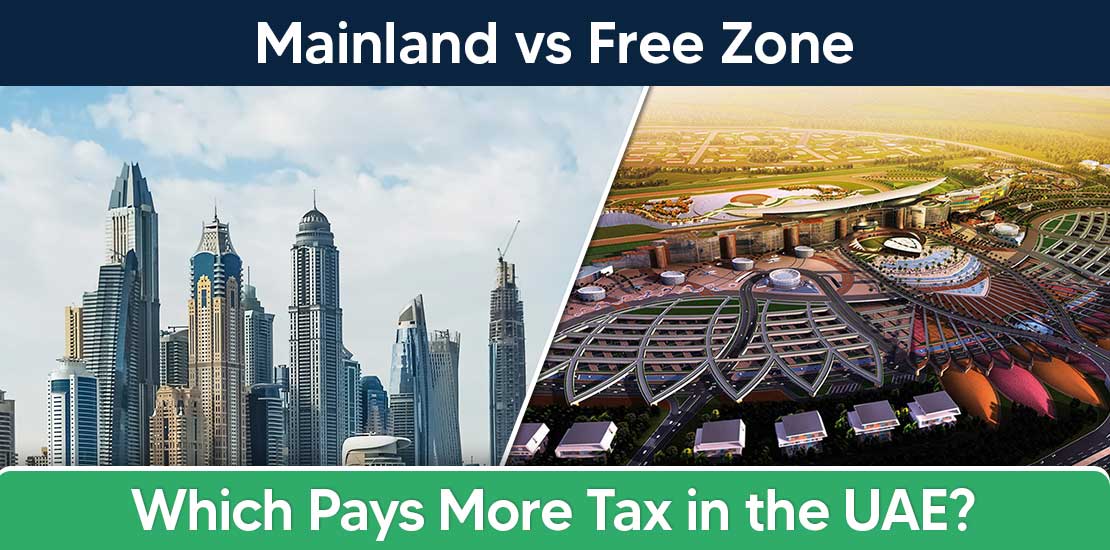
  • Corporate Tax in Mainland Vs Freezone in the UAE

    Corporate Tax in Mainland Vs Freezone in the UAE

    The UAE introduced corporate tax in 2023, a big change for businesses across the country. The goal was to align with global standards and support the nation’s growing economy. But with this new system came one common question: How does corporate tax apply to mainland and free zone companies?

    While both fall under the same tax law, the rules aren’t exactly the same. Mainland companies are generally taxed at 9%, whereas free zone businesses can still enjoy a 0% rate on qualifying income, as long as they meet the set conditions.

    Knowing these differences is important, as it helps you stay compliant but also lets you plan your taxes smartly, which can save you both money and stress.

    What is Corporate Tax in the UAE?

    Corporate tax is a direct tax on the profits of businesses. Simply put, it’s the amount companies pay to the government based on what they earn. The UAE introduced this tax to align with international tax practices, boost transparency, and support the country’s long-term economic growth. It also helps attract responsible global investors by building a stable financial environment.

    Who Needs to Pay Corporate Tax?

    Corporate tax generally applies to:

    • All mainland and free zone companies (depending on their qualifying status)
    • Foreign businesses earning income from the UAE
    • Individuals engaged in business activities that require a commercial license

    Current Corporate Tax Rate in the UAE:

    The standard corporate tax rate in the UAE is 9% on profits above AED 375,000.

    Any income below AED 375,000 is taxed at 0%, which means small and growing businesses can operate with minimal tax burden. This threshold was introduced to encourage entrepreneurship and support SMEs.

    Key Exemptions and Relief

    Not all entities are required to pay corporate tax. The following are exempt under UAE law:

    • Government and public entities
    • Extractive and natural resource businesses
    • Certain qualifying investment funds
    • Businesses wholly owned by the UAE government

    Corporate Tax for Mainland Companies in the UAE

    Mainland companies in the UAE are fully subject to corporate tax under the Federal Decree-Law No. 47 of 2022. This means that all profits earned from business activities (both within the UAE and abroad) are taxable, unless specifically exempt. The aim is to create a fair, transparent tax environment that supports the country’s sustainable economic development.

    1. Tax rates and thresholds:

    Mainland businesses are taxed at:

    • 0% on taxable income up to AED 375,000
    • 9% on taxable income above AED 375,000 

    This tiered structure ensures small and medium-sized businesses aren’t overburdened, while larger companies contribute fairly based on their profits.

    2. Treatment of Local and Foreign Income:

    Mainland companies are required to report and pay tax on their worldwide income, meaning both local and foreign profits are subject to UAE corporate tax. However, foreign income may be exempt or credited if it has already been taxed in another country, helping to avoid double taxation.

    3. Compliance Requirements:

    To stay compliant, mainland companies must:

    • Registration: Mandatory for all taxable persons (including those benefiting from the 0% threshold). Businesses must register with the Federal Tax Authority (FTA) via the EmaraTax platform and obtain a Tax Registration Number (TRN).
    • Accounting Standard: Financial statements must be prepared according to International Financial Reporting Standards (IFRS) or other accounting standards accepted in the UAE, which serves as the starting point for calculating taxable income.
    • Filing & Payment: An annual Corporate Tax Return must be filed with the FTA, and any tax due must be paid, within 9 months after the end of the relevant financial year.
    • Record Keeping: Accurate records, including all financial statements, invoices, and supporting documents, must be maintained for at least 7 years.
    • Transfer Pricing: Mainland companies with transactions involving Related Parties (local or international) must ensure these transactions comply with the internationally recognized Arm’s Length Principle.

    Proper accounting and record-keeping are crucial, as the FTA may request to review these records during audits.

    4. Example Scenario:

    Let’s say you run a trading company in Dubai mainland that earns a profit of AED 500,000 in a financial year.

    Here’s how your corporate tax would be calculated: 

    The first AED 375,000 is taxed at 0%

    The remaining AED 125,000 is taxed at 9%, resulting in a tax amount of AED 11,250 

    Corporate Tax for Free Zone Companies in the UAE

    Free zones in the UAE have long been popular for their tax incentives and business-friendly environment. Under the new corporate tax law, free zone companies can still enjoy certain tax benefits, but these depend on whether they qualify for special treatment. In short, not all free zone businesses are automatically tax-free anymore, they must meet specific conditions to keep their 0% corporate tax rate.

    1, Corporate Tax Rate for Free Zone Companies

    Here’s how the corporate tax applies to free zone entities:

    • 0% on qualifying income (if the company meets all QFZP conditions)
    • 9% on non-qualifying income or if the company fails to maintain QFZP status

    This approach allows genuine free zone operations to retain their tax advantage while ensuring fairness across all UAE businesses.

    2. Qualifying vs. Non-Qualifying Income

    Free zone companies are taxed based on the type of income they earn:

    • Qualifying income: Subject to 0% corporate tax
    • Non-qualifying income: Subject to the standard 9% corporate tax

    Qualifying income generally includes revenue from: 

    • Transactions with other free zone companies
    • Income from foreign customers outside the UAE
    • Certain regulated activities as listed by the Ministry of Finance

    Non-qualifying income usually covers: 

    • Income from business activities conducted in the UAE mainland (unless it’s considered a “passive” source like rent or dividends)
    • Any income that doesn’t meet the qualifying criteria

    3. Who is a Qualifying Free Zone Person (QFZP)?

    A Qualifying Free Zone Person (QFZP) is a company registered in a UAE free zone that meets the required conditions to enjoy a 0% corporate tax rate on qualifying income.

    To be treated as a QFZP, a business must:

    • Maintain adequate economic substance in the UAE
    • Earn qualifying income as defined by the law
    • Not elect to be subject to mainland tax
    • Comply with transfer pricing and other FTA regulations

    If any of these conditions are not met, the company will lose its qualifying status and be taxed at 9% on all income.

    4. Conditions to Make the 0% Tax Status

    To remain a QFZP and enjoy the 0% rate, a Free Zone company must satisfy the following five non-negotiable conditions:

    1. Maintain Adequate Substance: The company must demonstrate a substantial physical presence, including:

    • Sufficient Core Income Generating Activities (CIGA) being performed in the Free Zone.
    • Adequate assets, employees, and operating expenditures in the Free Zone, relative to its business activities.

    2. Derive Qualifying Income: The majority of its income must meet the ‘Qualifying Income’ definition, subject to the De Minimis rule.

    3. No Election for Standard Rate: The company must not have voluntarily elected to be subject to the standard 9% UAE Corporate Tax.

    4. Comply with Transfer Pricing: All transactions with related parties (both inside and outside the UAE) must comply with the Arm’s Length Principle and related documentation requirements.

    5. Audited Financial Statements: QFZPs are generally required to prepare and maintain audited financial statements.

    5. Example Scenario

    Imagine a tech company in Dubai Internet City that provides software development services to clients overseas. Since its income comes from foreign customers and it operates within the free zone with real substance, it can qualify for the 0% corporate tax rate.

    However, if the same company starts offering IT services to mainland businesses directly, that portion of income will be treated as non-qualifying and taxed at 9%.

    Key Differences: Mainland vs Free Zone Corporate Tax

    Here’s a quick comparison to help you see the difference at a glance:

    Criteria  Mainland Company  Free Zone Company 
    Tax Rate  9% on taxable income above AED 375,000 0% on qualifying income; 9% on non-qualifying income
    Tax Scope  Taxed on worldwide income Taxed only on non-qualifying or mainland income
    Qualifying Status  Automatically subject to corporate tax Must meet conditions to be a Qualifying Free Zone Person (QFZP)
    Eligibility for 0% Tax  Not available Available for qualifying income under QFZP rules
    Mainland Business Dealings  Can freely trade within the UAE Restricted — direct mainland trading may trigger 9% tax
    Compliance Requirements  Must register, file annual returns, and maintain records Must register, file returns, and prove QFZP compliance annually
    Example  Trading company in Dubai mainland selling locally Tech company in Dubai Internet City serving international clients

    Common Misconceptions About Corporate Tax in the UAE

    Even though the UAE’s corporate tax law is designed to be clear, a few misunderstandings still circulate among business owners. Let’s clear up some of the most common ones:

    “All free zone companies are tax-free”

    This isn’t entirely true. While many free zone businesses still enjoy a 0% corporate tax rate, this benefit only applies to qualifying income and if the company meets the Qualifying Free Zone Person (QFZP) conditions. If a free zone company earns income from the mainland or doesn’t meet the legal requirement, such as maintaining economic substance or keeping proper records – it will be taxed at 9%, just like a mainland company.

    “Free zone companies can freely trade with mainland”

    Free zone companies cannot directly trade with the UAE mainland unless they follow specific rules. If they sell goods or services to mainland customers, they must either:

    • Work through an approved mainland distributor, or
    • Open a mainland branch or subsidiary that’s subject to corporate tax.

    Direct mainland dealings can disqualify a free zone company from the 0% tax rate, so it’s important to structure such transactions carefully.

    “Corporate tax doesn’t apply to small businesses”

    Small businesses are not automatically exempt from corporate tax. However, the UAE offers a Small Business Relief program.

    If a company’s revenue does not exceed AED 3 million in a financial year (as per the latest FTA guidelines), it can opt for this relief , meaning it will be treated as having no taxable income.

    Once the revenue crosses that limit, regular corporate tax rules apply.

    We’ll Help You Make Corporate Tax Simple

    Corporate tax can sound a little confusing at first, especially when the rules differ for mainland and free zone companies. But understanding how it applies to your business can really help you plan better and avoid surprises later. If you’re not sure where your company fits in or what steps to take, Shuraa Tax can make it easy for you.

    Our team can help with corporate tax registration and Corporate tax filing, guide free zone companies on qualifying income, and offer practical tax advice for both mainland and free zone businesses.

    With Shuraa Tax guiding you, managing corporate tax becomes simple, clear, and stress-free.

    For expert advice and support, you can reach Shuraa Tax:

    📞 Call: +(971) 44081900
    💬 WhatsApp: +(971) 508912062
    📧 Email: info@shuraatax.com

    Frequently Asked Question

    1. What is corporate tax in the UAE?

    Corporate tax is a 9% tax on the profits of businesses operating in the UAE. It applies to both mainland and free zone companies, depending on their income and qualifying status.

    2. Do all free zone companies get a 0% tax rate?

    No, only Qualifying Free Zone Persons (QFZPs) can enjoy the 0% rate and only on qualifying income. If a free zone company earns non-qualifying income or trades with the mainland, it may be taxed at 9%.

    3. What is the corporate tax rate for mainland companies?

    Mainland companies pay 0% on profits up to AED 375,000, and 9% on profits above that amount.

    4. Can free zone companies trade with the UAE mainland?

    Yes, but under certain conditions. They must either work through an approved mainland distributor or open a mainland branch, which will then be subject to corporate tax.

    5. Does corporate tax apply to small businesses in the UAE?

    Small businesses can qualify for Small Business Relief if their revenue is AED 3 million or less. This allows them to be treated as having no taxable income for that financial year.

  • DMCC Audit Deadline 2025

    DMCC Audit Deadline 2025

    The DMCC audit deadline plays an essential role for businesses operating in the Dubai Multi Commodities Centre, ensuring each company maintains transparency and financial accountability. Under DMCC regulations, every licensed entity must submit its annual DMCC audit report prepared by an approved auditor.

    This isn’t just a formality; your audit filing confirms that your books are accurate, your operations are compliant, and your business is in compliance with the authority’s financial standards. As the 2025 deadline approaches, companies should start gathering financial statements, cross-checking documentation, and coordinating with auditors early to avoid unnecessary stress, penalties, or delays. Staying proactive now means running your business with confidence and maintaining a strong standing within one of Dubai’s most respected free zones.

    What is DMCC Dubai, UAE?

    The Dubai Multi Commodities Centre (DMCC) is one of the most popular free zones in the UAE, known for offering a business-friendly environment and easy access to international markets.

    Located in the heart of Dubai at Jumeirah Lakes Towers (JLT), DMCC is home to thousands of companies from small start-ups to global trading giants. It provides a well-structured ecosystem in which businesses can operate smoothly, with clear support services and strong legal frameworks.

    Audit Submission Deadline Extended

    The DMCC audit deadline for the financial year 2024 has now been officially moved to September 30, 2025. Previously, businesses were required to submit their audited financial statements by June 30, 2024.

    However, the new timeline provides companies with more breathing space to organise their records, collaborate with auditors, and ensure that their submissions are fully aligned with DMCC regulations.

    Why Was the Deadline Extended?

    This extension isn’t just a date of change; it reflects DMCC’s understanding of the fundamental challenges businesses face. Preparing for a DMCC audit involves gathering financial data, reviewing accounts, coordinating with auditors, and ensuring compliance with all applicable standards. These tasks can be time-consuming, especially for growing companies.

    By extending the deadline, DMCC aims to: 

    • Support businesses in maintaining accurate and reliable financial reporting
    • Reduce the pressure of rushed submissions
    • Encourage transparency and good governance among member companies

    In other words, the new deadline is meant to make the audit process smoother, more transparent, and more manageable, without compromising quality or compliance.

    Audit Requirements in the DMCC Free Zone

    If your company is registered in the DMCC (Dubai Multi Commodities Centre) Free Zone, conducting an annual audit isn’t just a formality; it’s a mandatory compliance requirement. DMCC has clear regulations that every business must follow, and submitting audited financial statements is among the most important. This audit helps DMCC ensure that companies maintain transparency, follow proper accounting standards, and operate in a responsible and compliant manner.

    Once the audited financial statements are prepared, they must be submitted through the DMCC member portal. The Authority then reviews the audit report and financial statements to verify accuracy and compliance with established standards. If everything meets the required guidelines, DMCC issues a Certificate of Compliance, confirming that the company has successfully met its annual audit obligations.

    Timeline to remember: 
    Companies operating in DMCC must submit their audited financial statements within 180 days from the end of their financial year. (Earlier, it was within 90 days, but updated timelines now allow more flexibility.)

    Documents Required for the DMCC Audit

    To complete the audit smoothly, the appointed auditor will request key financial and legal records. Some commonly required documents include:

    • Trade License and Company Profile
    • Office Lease Agreement or Tenancy Contract
    • Trial balance and general ledger reports
    • Passport copies of shareholders/directors
    • Share Certificates
    • Memorandum & Articles of Association (MoA & AoA)
    • Fixed asset and depreciation schedule
    • VAT registration details (if applicable)
    • Bank statements and bank confirmation letters
    • Customer and supplier listings
    • Management accounts (Balance Sheet & P&L)
    • Invoices, bills, receipt books, and supporting documents
    • Fixed asset and depreciation schedule

    Why is Audit So Important in DMCC?

    Apart from being a regulatory requirement, the audit serves multiple valuable purposes:

    Benefit  Why It Matters 
    Compliance  Ensures the business meets DMCC and UAE financial regulations
    Trade License Renewal  You cannot renew your DMCC license without submitting the audit
    Financial Clarity  Helps business owners clearly understand financial health
    Investor & Bank Confidence  Builds credibility when applying for loans or funding
    Fraud Prevention  Highlights irregularities or weak internal controls
    Corporate Tax Readiness  Helps align with UAE Corporate Tax requirements

    What If a Company Fails to Submit the Audit?

    Not submitting the audit is considered a compliance violation. The most immediate consequence is that DMCC will not renew your trade license, which can eventually lead to penalties, restrictions, or even business suspension.

    That’s why working with a DMCC-approved audit firm is essential; they ensure your accounts are correctly maintained, and your audit is completed on time.

    How to Prepare Your DMCC Audit in the UAE?

    Preparing for your DMCC audit doesn’t have to be stressful. In fact, if you organise your financial records throughout the year, the audit becomes a smooth and straightforward process. Since the DMCC (Dubai Multi Commodities Centre) requires companies registered in the free zone to undergo an annual audit, it’s essential to know what to expect and be prepared.

    Below are some practical steps you can follow to ensure your audit goes off without any last-minute panic:

    Step 1: Keep Your Financial Records Organised

    Your auditor will need access to complete and accurate records. Make sure you maintain:

    • Sales and purchase invoices
    • Expense receipts
    • Bank statements
    • VAT records (if VAT registered)
    • Payroll details

    Simple accounting software (like Zoho, QuickBooks or Xero) can make your life easier.

    Step 2: Reconcile Your Accounts Regularly

    Don’t wait until the audit deadline.
    Ensure your: 

    • Bank accounts match your internal records
    • Petty cash balances are updated
    • Inventory counts are accurate

    Step 3: Understand DMCC Accounting Guidelines

    DMCC requires financial statements prepared in accordance with International Financial Reporting Standards (IFRS). Your accountant should already be aware of this, but if you handle your own books, make sure your statements comply with IFRS rules.

    Step 4: Choose a DMCC-Approved Auditor

    Not every auditor can sign off on your DMCC audit.

    • You must appoint an auditor from the DMCC Approved Auditors List.
    • This ensures that the authority will accept your audit report without complications.

    Step 5: Keep Corporate Documents Updated

    Auditors may request supporting documents like:

    • Trade License copy
    • MoA (Memorandum of Association)
    • Passport copies of shareholders
    • Tenancy / flexi-desk agreement
      Make sure all documents are current and valid.

    Step 6: Prepare an Internal Review Before Audit

    Do a basic internal check with your accountant:

    • Are all expenses justified?
    • Are there any unusual or unclear transactions?
    • Do closing balances tie up correctly?

    Step 7: Know Your Deadline

    DMCC requires companies to submit audited financial statements every year, usually within a specific timeframe after your financial year-end. Missing the DMCC audit deadline may result in fines or delays in license renewal, so plan accordingly.

    Common Mistakes to Avoid During the DMCC Audit Process

    Preparing a DMCC audit doesn’t have to be overwhelming, but many businesses end up facing delays or penalties due to avoidable mistakes. Understanding these common slip-ups can help your company stay compliant and submit its audit smoothly.

    1. Delaying the Audit Process

    One of the most significant issues is waiting until the last moment to start the audit. Auditors need time to review financial records, request clarifications, and prepare the final reports. Starting late often leads to rushed work and potential errors.

    2. Incomplete or Disorganised Financial Records

    The DMCC audit requires well-organised accounts. If invoices, bank statements, ledgers, or reconciliations are incomplete or scattered, the auditor cannot verify your company’s financial position accurately. This leads to time-consuming back-and-forth communication.

    3. Not Reconciling Bank Statements

    Bank statement mismatches are a common red flag. Ensure all transactions recorded in your books match your bank’s statements; any discrepancies must be resolved or explained before the audit begins.

    4. Ignoring DMCC Reporting Standards

    DMCC requires financial statements to be prepared in accordance with International Financial Reporting Standards (IFRS). Using different accounting formats or informal internal spreadsheets can lead to rejection of the audit report.

    5. Choosing Unapproved or Unqualified Auditors

    DMCC only accepts audits performed by DMCC-approved auditors. Hiring an unapproved audit firm wastes time and money because DMCC will not receive the report.

    6. Not Tracking Related Party Transactions

    Transactions such as loans, salaries, or expenses between shareholders or sister companies must be appropriately recorded and supported. Lack of transparency in these areas can delay audit approval.

    7. Neglecting to File the Audit on Time

    Even after completing the audit, some companies forget to upload the report to the DMCC portal before the deadline. Late submissions can result in penalties or restrictions on license renewal.

    Benefits of Submitting Your Audit on Time in the UAE

    Submitting your audit report on time isn’t just about following regulations; it’s about building credibility and creating a strong financial foundation for your business. In the UAE, especially in free zones and mainland jurisdictions where audit compliance is mandatory, timely submission reflects how responsibly your company operates. Here are some key benefits:

    1. Maintains Full Legal Compliance

    Timely audit submission ensures your business aligns with UAE laws and free zone authority requirements. This helps you avoid penalties, warnings, or compliance-related delays while renewing your licenses.

    2. Smooth Trade License Renewal

    Submitting your audited financial statements on time speeds up and simplifies the license renewal process. Authorities often require the audit report before allowing renewal, so having it ready keeps operations running smoothly.

    3. Enhances Business Credibility

    A company that regularly audits its accounts and files records on time is seen as transparent, reliable, and well-managed. This can positively impact your brand reputation with clients, partners, and suppliers.

    4. Builds Stronger Relationships with Banks

    Banks often request audit reports when opening accounts, increasing credit limits, or approving loans. On-time audit submissions help maintain trust and make financial approvals easier and faster.

    5. Facilitates Accurate Financial Planning

    An audit provides a clear and accurate view of your company’s financial health. This helps management make informed decisions related to budgeting, expansion, cost control, and investments.

    6. Avoids Fines and Penalties

    Delays can lead to monetary penalties and administrative complications. Submitting time helps you avoid unnecessary financial loss and stress.

    7. Supports Investor and Stakeholder Confidence

    Investors prefer financially disciplined companies. A timely audit shows that the business is being managed responsibly, which can attract or retain potential investors and partners.

    Stay Ahead of the DMCC Audit Deadline with Shuraa Tax!

    In the end, staying on top of your DMCC audit isn’t just about meeting a requirement; it’s about protecting the credibility and continuity of your business in one of Dubai’s most reputable free zones. With the DMCC audit deadline now extended, companies have a valuable opportunity to organise their financial records, coordinate with auditors, and ensure their submissions fully comply with DMCC regulations.

    Preparing early helps you avoid stress, penalties, and last-minute complications, and more importantly, it keeps your trade license renewal smooth and your business reputation strong.

    If you want professional assistance in handling your DMCC audit, choosing the right, approved auditor makes all the difference. Shuraa Tax supports businesses with accurate audit preparation, compliance guidance, and complete documentation handling, ensuring your audit is submitted correctly and on time.

    Need Help with Your DMCC Audit? Contact Shuraa Tax

    📞 Call: +(971) 44081900
    💬 WhatsApp: +(971) 508912062
    📧 Email: info@shuraatax.com

    Let Shuraa Tax make your DMCC audit process worry-free, smooth, and fully compliant.

  • Tax Savings Strategies for UAE Businesses in 2026

    Tax Savings Strategies for UAE Businesses in 2026

    The UAE has long been known as a tax-free business hub, attracting entrepreneurs and investors from across the globe. But over the years, things have changed – first with the introduction of Value Added Tax (VAT) in 2018, and then Corporate Tax in 2023. Even with these updates, the UAE still offers one of the lowest tax rates and most business-friendly environments in the world.

    In 2026, businesses are still adjusting to the new Corporate Tax system. It’s becoming clear that simply following the rules isn’t enough – smart planning can make a big difference. By using the right tax-saving strategies, businesses can reduce their tax burden legally, keep more of their earnings, and plan for long-term growth.

    So, here are some practical and effective tax-saving strategies for UAE businesses in 2026 to help you manage your taxes wisely and make the most of the UAE’s favourable tax system.

    Overview of the UAE Tax System in 2026

    The UAE’s tax system has become more structured in recent years. As of 2026, companies need to comply with three main types of taxes: Corporate Tax, Value Added Tax (VAT), Excise Tax, and the newly introduced Domestic Minimum Top-Up Tax (DMTT).

    1. Corporate Tax:

    Introduced in June 2023, the UAE’s Corporate Tax applies to business profits (exceeding AED 375,000) at a rate of 9%, making it one of the lowest in the world. The first AED 375,000 of taxable income is exempt, which helps small businesses and startups. Certain Free Zone companies may still enjoy 0% tax on qualifying income if they meet specific conditions.

    2. Value Added Tax (VAT):

    Implemented in 2018, VAT is charged at a standard rate of 5% on most goods and services. Some sectors, such as education, healthcare, and exports – may be zero-rated or exempt, depending on the nature of their transactions.

    3. Excise Tax:

    This tax applies to specific goods that are harmful to health or the environment, such as tobacco products, energy drinks, and sugary beverages. It aims to encourage healthier consumption habits and promote social responsibility.

    4. Domestic Minimum Top-Up Tax (DMTT):

    Starting June 2025, the UAE will introduce the Domestic Minimum Top-Up Tax (DMTT) to align with the OECD’s Pillar Two global minimum tax rules. Under this framework, large multinational groups with global revenues exceeding EUR 750 million will be required to pay a minimum effective tax rate of 15%.

    If a UAE entity’s effective tax rate falls below 15%, the DMTT ensures the difference is collected locally rather than by another jurisdiction, keeping tax revenues within the UAE.

    Top Tax Savings Strategies for the UAE Businesses for 2026

    As UAE businesses continue to adjust to the new Corporate Tax and DMTT framework, smart planning has become essential. Here are the top tax-saving strategies UAE businesses can use in 2026:

    1. Choose the Right Business Structure

    Your company’s structure can make a big difference in how much tax you pay.

    • Free Zone companies can still benefit from 0% Corporate Tax on qualifying income if they meet the conditions set by the UAE’s Ministry of Finance.
    • Mainland businesses, on the other hand, are subject to a 9% Corporate Tax on profits exceeding AED 375,000, but can deduct legitimate business expenses.

    Choosing the right setup based on your business model, clients, and operations can help you save significantly in the long run.

    2. Make the Most of Small Business Relief

    If your annual revenue is below the threshold specified by the UAE Corporate Tax law (currently AED 3 million until the end of 2026), you may qualify for Small Business Relief.

    This allows eligible businesses to be treated as having no taxable income, meaning you won’t need to pay corporate tax. It’s one of the simplest yet most effective ways for SMEs to legally reduce their tax burden.

    3. Keep Accurate Books and Claim Deductions

    Every dirham counts when it comes to tax deductions. Businesses can deduct expenses that are “wholly and exclusively” incurred for generating taxable income, such as:

    • Salaries and staff benefits
    • Rent and utilities
    • Marketing and advertising costs
    • Depreciation of business assets

     Keeping detailed and accurate financial records not only ensures compliance but also helps you claim every eligible deduction, reducing your taxable income.

    4. Use Group Relief and Loss Carry-Forward

    If your business is part of a group, you can transfer losses between group companies or offset past losses against future profits.

    This “group relief” mechanism allows companies to reduce their overall taxable income within the group. Additionally, unused losses can be carried forward to future tax periods.

    5. Review Cross-Border Transactions and DTAAs

    If your business deals internationally, make sure you’re making use of Double Taxation Avoidance Agreements (DTAAs).

    The UAE has signed DTAAs with 100+ countries, helping businesses avoid paying tax twice on the same income. Proper structuring of cross-border transactions, combined with transfer pricing compliance, can significantly reduce your global tax exposure while keeping you aligned with UAE tax laws.

    6. Review Related Party Transactions

    If your company has transactions with related parties (like parent companies, subsidiaries, or shareholders), ensure they are conducted at arm’s length prices – the same terms you’d use with an unrelated party.

    Proper transfer pricing documentation helps you avoid penalties and ensures compliance with UAE Corporate Tax rules. It’s also a good opportunity to identify potential areas for tax efficiency within group transactions.

    7. Take Advantage of R&D and Innovation Deductions

    If your business invests in research, technology, or product innovation, keep track of all related expenses.

    Many jurisdictions encourage innovation through tax incentives, and the UAE is increasingly supporting R&D-driven industries – particularly in technology, sustainability, and advanced manufacturing. Properly documenting these costs may help qualify for deductions or exemptions in the future as UAE tax regulations evolve.

    8. Conduct Regular Tax Health Checks

    Don’t wait for an audit to review your tax compliance. Conduct periodic tax reviews with a certified consultant to identify risks, missed deductions, or overpaid taxes.

    A professional audit or review can uncover hidden savings opportunities and help your business stay fully compliant with the latest FTA and Ministry of Finance guidelines. This proactive approach can save you time, stress, and money.

    9. Separate Personal and Business Expenses

    Mixing personal and business finances is one of the most common tax mistakes. Keeping them separate not only makes accounting easier but also ensures that only legitimate business expenses are claimed as deductions.

    Open dedicated business bank accounts and use accounting software to track transactions – this simple step can help you avoid compliance issues and maximise allowable deductions.

    10. Get Expert Consultation and Tax Planning Support

    Even with the UAE’s straightforward tax system, understanding all the rules, reliefs, and exemptions can be challenging – especially as new regulations like the Domestic Minimum Top-Up Tax (DMTT) come into play. This is where expert guidance can make a big difference.

    Partnering with experienced consultants such as Shuraa Tax ensures your business remains 100% compliant while taking full advantage of every possible tax-saving opportunity. Their team of certified tax advisors, accountants, and auditors can:

    • Identify deductions and exemptions you might overlook.
    • Help you structure your business for maximum tax efficiency.
    • Manage VAT, Corporate Tax, and DMTT filings accurately.
    • Offer ongoing support to stay updated with new FTA guidelines.

    Why Tax Planning is Essential for UAE Businesses

    Gone are the days when companies could simply rely on a “tax-free” system – now, smart financial planning is key to staying compliant while maximising profits.

    • Reduce Tax Liabilities Legally: Proper tax planning helps you take advantage of exemptions, deductions, and reliefs available under UAE law, allowing you to minimize your tax payments without breaking any rules.
    • Improve Cash Flow and Profitability: By forecasting your tax obligations in advance, you can manage your cash flow more efficiently and ensure your business retains more working capital for growth and operations.
    • Avoid Penalties and Compliance Issues: Late or incorrect filings can result in hefty fines from the Federal Tax Authority (FTA). Planning ahead ensures your returns are accurate and submitted on time, keeping you fully compliant.
    • Support Business Growth: When your taxes are well-managed, you gain better visibility into your company’s finances. This helps in making informed decisions about investments, expansion, and reinvestment opportunities.
    • Adapt to Changing Regulations: The UAE’s tax landscape is evolving quickly, and what worked last year may not work this year. Regular tax reviews and planning help businesses stay aligned with the latest laws and benefit from new reliefs or incentives.

    How Shuraa Tax Can Help Your Business Save More in 2026

    The UAE’s tax rules are changing, and 2026 is a key year for businesses to get their tax planning right. With Corporate Tax, VAT, and the new Domestic Minimum Top-Up Tax (DMTT), it can feel complicated, but a smart plan can reduce your taxes legally, improve cash flow, and help your business grow.

    This is where Shuraa Tax can help. With a team of certified tax advisors, accountants, and auditors, Shuraa Tax provides end-to-end support for your business:

    • Designing personalised tax strategies to maximise savings
    • Ensuring full compliance with UAE tax laws
    • Handling corporate tax, VAT, and DMTT filings efficiently
    • Keeping you updated on new regulations and reliefs

    With Shuraa Tax by your side, you can focus on running and growing your business, knowing your taxes are handled smartly. Start planning today and turn tax compliance into a tool for saving and growth.

    📞 Call: +(971) 44081900
    💬 WhatsApp: +(971) 508912062
    📧 Email: info@shuraatax.com

    Commonly Asked Questions

    1. What is the corporate tax rate in the UAE in 2026?

    The standard corporate tax rate is 9% on taxable profits above AED 375,000. Certain Free Zone companies may still benefit from 0% tax on qualifying income.

    2. What is the Domestic Minimum Top-Up Tax (DMTT)?

    DMTT ensures that large multinational groups with global revenues over EUR 750 million pay a minimum 15% effective tax rate. It applies if a UAE entity’s effective tax is below this threshold.

    3. Can small businesses reduce their corporate tax?

    Yes. Eligible small businesses may qualify for Small Business Relief, which can exempt them from paying corporate tax on income below the threshold.

    4. Which expenses can UAE businesses deduct to reduce taxes?

    Businesses can deduct expenses wholly and exclusively used for generating income, such as salaries, rent, utilities, marketing, and depreciation of assets.

    5. How can Free Zone companies save on taxes?

    Many Free Zones offer 0% corporate tax on qualifying income if businesses meet specific conditions set by the UAE Ministry of Finance.

  • UAE to Introduce 15% Minimum Tax for Large Multinationals

    UAE to Introduce 15% Minimum Tax for Large Multinationals

    The United Arab Emirates (UAE), long celebrated for its business-friendly environment, is preparing to implement a significant tax reform. Starting January 1, 2025, large multinational companies (MNCs) operating in the UAE will face a 15% corporate tax, while regular businesses will continue to enjoy the standard 9% rate. This landmark move ensures that the UAE aligns with international tax standards and creates a fairer business landscape for global corporations.

    The introduction of the 15% minimum tax reflects the UAE’s commitment to maintaining its reputation as a competitive yet transparent business hub. By targeting large multinationals, the government aims to balance economic growth with compliance with global tax frameworks, preventing base erosion and profit shifting. This reform not only enhances the UAE’s credibility on the international stage but also encourages sustainable investments from both local and foreign businesses.

    For companies operating in the UAE, understanding these changes is crucial for strategic financial planning. Shuraa Tax, with its expertise in UAE corporate regulations, can guide businesses through this transition, ensuring full compliance while optimising tax strategies.

    Why Is the UAE Introducing This Tax?

    The decision to introduce a UAE tax on multinational companies stems from global efforts led by the OECD (Organisation for Economic Co-operation and Development). Many large corporations have historically leveraged low-tax jurisdictions to minimise their tax obligations. To address this, the OECD developed a two-pillar framework establishing a global minimum tax for MNCs.

    By implementing a 15% minimum tax on large multinationals, the UAE positions itself as a transparent and globally responsible hub, ensuring that major corporations contribute fairly to the economy without compromising the country’s investment appeal.

    Who Will Be Affected?

    The new 15% minimum tax in the UAE is primarily aimed at large multinational corporations. Specifically, it applies to:

    • Multinational companies with global revenues of €750 million (approximately AED 3.15 billion) or more in at least two of the last four financial years.
    • Enterprises meeting the OECD’s threshold for global minimum taxation align with the UAE policy with international tax standards.

    This means that major global corporations operating in or through the UAE will need to comply with the new rules, report their financials, and ensure the correct tax is paid on qualifying profits.

    Who is Not Affected?

    • Small and medium-sized enterprises (SMEs) and local businesses with revenues below the threshold will not be subject to this tax.
    • Free zone companies that already benefit from tax incentives and exemptions will largely remain unaffected.

    By targeting only large multinationals, the UAE balances the need for fair taxation with its commitment to fostering entrepreneurship, attracting investment, and maintaining a business-friendly environment. This approach ensures that the country remains a competitive hub for both local and international businesses.

    Business Implications for MNCs

    The introduction of the 15% minimum tax in the UAE carries several important implications for multinational corporations:

    • Compliance and Reporting: Affected companies must ensure their accounting systems and financial statements align with the new tax regulations. Accurate reporting and timely submission will be critical to avoid penalties.
    • Operational Costs: With the additional corporate tax, profit margins may be impacted. Companies will need to reassess budgets, pricing strategies, and investment plans to maintain financial stability.
    • Strategic Planning: Beyond immediate financial impacts, businesses should evaluate long-term implications, including global tax structuring, transfer pricing, and intra-group transactions.
    • Expert Guidance: Handing these new regulations can be complex. Engaging professional advisors, such as Shuraa Tax, can help ensure compliance, optimize tax positions, and streamline the adaptation process.

    By proactively addressing these considerations, multinational companies can continue to operate efficiently in the UAE while meeting their obligations under the new global tax framework.

    Strategic Significance for the UAE

    While the UAE has long been celebrated for its low-tax environment, the introduction of a 15% minimum corporate tax underscores the country’s commitment to global standards and economic transparency. This move carries several strategic benefits:

    • Enhanced Global Credibility: By aligning with international tax norms, the UAE strengthens its reputation as a transparent, forward-looking economy, attracting responsible global investors.
    • Simplified Compliance for Multinationals: Multinational corporations operating in the UAE can now meet their tax obligations locally, reducing the risk of complex audits and disputes in multiple jurisdictions.
    • Sustained Investment Appeal: Despite the new tax, the UAE remains highly attractive for business due to its world-class infrastructure, strategic geographic location, and extensive network of double-taxation treaties.
    • Balanced Economic Policy: The tax ensures fair contribution from large multinationals while preserving incentives for SMEs, startups, and free zone companies, maintaining the country’s pro-business stance.

    By adopting this measured approach, the UAE not only strengthens its fiscal framework but also reinforces its position as a leading global hub for investment, trade, and innovation.

    Preparing for the Transition

    Multinational companies operating in the UAE should take proactive measures to adapt seamlessly to the new 15% corporate tax:

    • Review Financial and Operational Strategies: Assess current cost structures, profit margins, and investment plans to understand the impact of the new tax and adjust strategies accordingly.
    • Seek Expert Guidance: Engage experienced tax consultants and legal advisors, such as Shuraa Tax, to navigate compliance requirements, reporting obligations, and any potential tax planning opportunities.
    • Optimise Internal Processes: Update accounting systems, reporting frameworks, and internal controls to efficiently manage new tax obligations and ensure timely submissions.
    • Plan: Consider long-term implications for global operations, including transfer pricing, intercompany transactions, and cross-border tax strategies.

    Shuraa Tax offers comprehensive support to help multinational companies transition smoothly, ensuring full compliance while minimising operational disruptions and maximising strategic efficiency.

    Preparing for the UAE’s 15% Multinational Tax

    The UAE imposing a 15% tax on multinational companies marks a historic shift in the country’s economic framework. By introducing a UAE tax on multinational companies, the government ensures fair contribution from global corporations while maintaining a conducive environment for business. For companies looking to adapt seamlessly to this new regulation, professional guidance is essential.

    For expert advice and support, you can reach Shuraa Tax:

    📞 Call: +(971) 44081900
    💬 WhatsApp: +(971) 508912062
    📧 Email: info@shuraatax.com

    Handling this new tax landscape proactively will position businesses to thrive in the UAE’s dynamic economy while staying aligned with global tax standards.

  • Input VAT and Output VAT in the UAE – What’s the Difference?

    Input VAT and Output VAT in the UAE – What’s the Difference?

    The UAE introduced Value Added Tax (VAT) on January 1, 2018, at a standard rate of 5% on most goods and services. Two terms you’ll hear a lot are Input VAT and Output VAT, and knowing how they work can make a big difference to your finances.

    Simply put, Output VAT is the tax you collect from your customers when you sell goods or services, while Input VAT is the tax you pay to your suppliers when buying goods or services for your business. The difference between the two determines whether you owe money to the Federal Tax Authority (FTA) or can claim a refund.

    Knowing the difference between Input and Output VAT in UAE can save your business money and help keep your cash flow healthy.

    UAE VAT Overview

    Value Added Tax (VAT) is a type of tax that is applied to most goods and services at each stage of production and supply. In the UAE, the standard VAT rate is 5%.

    Unlike a sales tax that’s only charged at the final sale, VAT is collected at every stage of the supply chain, from manufacturing to wholesale to retail. Each business in the chain charges VAT on its sales (Output VAT) and can recover the VAT it paid on purchases (Input VAT).

    What is Output VAT?

    Output VAT is the Value Added Tax that a VAT-registered business charges and collects from its customers when it supplies taxable goods or services. In simple terms, it’s the tax portion of your sales. Since the VAT is ultimately borne by the consumer, your business acts as a tax collector on behalf of the UAE Federal Tax Authority (FTA).

    Who is Responsible for Charging Output VAT?

    Any business registered for VAT in the UAE is responsible for charging Output VAT on taxable sales. This applies to both goods and services. Businesses must issue proper tax invoices showing the Output VAT amount separately to ensure transparency and compliance.

    How Output VAT is Calculated

    Output VAT = Sale Price × VAT Rate

    Example: 

    • Sale price of a product: AED 1,000
    • VAT rate: 5%
    • Output VAT: AED 1,000 × 5% = AED 50
    • Total amount charged to the customer: AED 1,050

    The AED 50 collected is Output VAT, which your business must later report and pay to the FTA.

    Impact of Output VAT on Business Cash Flow

    • Temporary Holding: While businesses collect Output VAT from customers, this money does not belong to them. It is essentially held on behalf of the government.
    • VAT Returns: The total Output VAT collected over a period is reported in VAT returns. If your Output VAT exceeds your Input VAT (VAT paid on purchases), you pay the difference to the FTA.
    • Cash Flow Planning: Proper tracking ensures you don’t accidentally spend the Output VAT, which could cause cash flow problems when it’s time to remit it.

    What is Input VAT?

    Input VAT is the VAT that a business pays on goods or services it purchases for business purposes. Unlike Output VAT, which is collected from customers, Input VAT is something your business pays to suppliers.

    Input VAT applies to business purchases such as:

    • Raw materials and Inventory for resale.
    • Utilities (electricity, water, internet).
    • Office supplies and Equipment (laptops, furniture).
    • Professional services (accounting, legal fees, consultancy).
    • Imported goods (where Reverse Charge applies).

    How Input VAT Can Be Recovered

    Registered businesses in the UAE can reclaim Input VAT from the Federal Tax Authority (FTA) when filing their VAT returns. The amount of Input VAT can be offset against the Output VAT collected from customers.

    Formula: VAT Payable / Refundable} = Output VAT Collected – Input VAT Paid (Recoverable) 

    If Output VAT > Input VAT: Your business pays the positive difference to the FTA.

    If Input VAT > Output VAT: Your business is in a net refundable position and can either claim the excess amount back from the FTA or carry it forward as a credit against future VAT liabilities.

    Example: 

    Your business buys office furniture for AED 2,000 + 5% VAT (AED 100).

    This AED 100 is Input VAT.

    When filing your VAT return, you can subtract this AED 100 from the Output VAT collected on sales.

    Conditions for Claiming Input VAT in the UAE

    To successfully reclaim Input VAT, the following conditions must be met:

    • Valid Tax Invoice: You must have a proper VAT invoice from the supplier.
    • Business Use: The purchase must be used for business purposes. Personal expenses cannot be claimed.
    • VAT Registration: Only VAT-registered businesses can reclaim Input VAT.
    • Eligible Goods/Services: VAT paid on exempt or non-business activities cannot be claimed.

    Impact of Input VAT on Business Finances

    • Reduces Net VAT Payable: Input VAT offsets the Output VAT, reducing the total amount payable to the FTA.
    • Cash Flow Benefits: Claiming Input VAT ensures your business is not overpaying taxes and helps maintain healthy cash flow.
    • Record Keeping: Maintaining accurate invoices and purchase records is crucial to claim Input VAT without issues.

    Key Differences Between Input VAT and Output VAT

    Here’s a quick comparison to help you understand how Input VAT and Output VAT differ in the UAE.

    Feature Input VAT Output VAT
    Definition VAT paid on business purchases or expenses. VAT collected on sales of goods or services.
    Who Pays It? Business pays it to suppliers. Customers pay it to the business.
    Who Can Claim/Collect VAT-registered businesses can reclaim it from the FTA. VAT-registered businesses must collect it and remit to the FTA.
    Impact on VAT Returns Reduces the total VAT payable; can result in a refund if Input VAT > Output VAT. Increases the total VAT payable; the difference with Input VAT determines net liability.
    Examples Raw materials, office rent, utilities, professional services, equipment. Product sales, service fees, consultancy charges, retail invoices.
    Purpose Ensures businesses don’t overpay VAT on purchases. Ensures VAT is collected on taxable sales for the government.
    Documentation Required Valid tax invoice showing VAT paid; purchase must be for business use. Tax invoice issued to customer showing VAT charged.
    Effect on Cash Flow Helps reduce VAT burden and improves cash flow. Temporary cash held for the government; must be remitted to FTA.

    VAT Return Process in the UAE

    VAT-registered businesses in the UAE must file periodic VAT returns, usually quarterly or monthly depending on their revenue and the FTA’s requirements. During this process, businesses:

    1. Report Output VAT: The total VAT collected from customers on all taxable sales and services during the period.
    2. Report Input VAT: The total VAT paid on all business-related purchases and expenses, including goods, utilities, office rent, and services.
    3. Calculate Net VAT: Subtract Input VAT from Output VAT to determine the net VAT payable to the FTA or refundable from the FTA.

    Proper documentation, like valid tax invoices and receipts, is crucial to support both Input and Output VAT claims. Failure to maintain accurate records can result in fines or rejection of VAT claims.

    Other Essential Considerations for UAE Businesses

    Besides basic VAT calculations, there are a few important points businesses should keep in mind to manage VAT effectively.

    • Cross-Border Transactions: Importing goods may involve Input VAT on customs, which can also be claimed if properly documented. Export sales may be zero-rated, affecting Output VAT calculations.
    • Partial Exemptions: Businesses engaged in both taxable and exempt activities may only claim Input VAT proportionate to taxable supplies.
    • Regular Monitoring: Keeping track of VAT collected and paid throughout the period helps avoid errors and ensures timely filing of VAT returns.

    Simplify Your VAT Process with Shuraa Tax

    Knowing the difference between Input VAT and Output VAT is important for every business in the UAE. Output VAT is the tax you collect from customers, while Input VAT is the tax you pay on business purchases. Keeping track of both helps you stay compliant, avoid fines, and manage your cash flow better.

    If you want to make VAT easy and stress-free, experts like Shuraa Tax can help with registration, filings, and ongoing guidance. Get in touch today.

    📞 Call: +(971) 44081900
    💬 WhatsApp: +(971) 508912062
    📧 Email: info@shuraatax.com

    Commonly Asked Questions

    1. What is Input VAT and Output VAT?

    Input VAT is the tax your business pays on purchases and expenses, while Output VAT is the tax you collect from customers on sales. The difference determines your net VAT payable or refundable.

    2. Is Input VAT an expense?

    No, Input VAT is not a business expense if you are VAT-registered. You can reclaim it from the FTA, reducing your net VAT payable.

    3. How can I minimise my VAT liability in the UAE?

    Keep accurate records of Input and Output VAT, claim all eligible Input VAT, ensure proper tax invoices, and file VAT returns on time. Consulting experts can also help optimise VAT legally.

    4. Can I reclaim VAT on all purchases?

    No, only VAT paid on business-related purchases with valid invoices can be reclaimed. VAT on personal or non-business expenses cannot be claimed.

    5. What happens if I collect more Output VAT than I paid in Input VAT?

    If Output VAT exceeds Input VAT, you pay the difference to the FTA. If Input VAT is higher, you can claim a refund from the FTA.

  • What is Layering in Money Laundering?

    What is Layering in Money Laundering?

    Layering in money laundering is the tricky middle act that transforms dirty cash into a web of seemingly legitimate transactions. At this stage, criminals attempt to obscure the origins of the money through transfers, purchases, and complex financial manoeuvres.

    Understanding this stage is crucial because it’s where illicit funds are hidden within layers of transactions designed to confuse investigators. It makes detection far more difficult than the initial placement of illegal proceeds.

    In this post, we’ll unpack how layering works, the standard techniques used, and why identifying these patterns matters for compliance teams, law enforcement, and anyone concerned with maintaining the integrity of the financial system.

    What is Money Laundering?

    Money laundering might sound like something straight out of a crime movie, but it’s a very real and serious financial crime that happens across the world every day. At its core, money laundering is the process of making illegally gained money, often called “dirty money”, appear legitimate or “clean.” Criminals use it to disguise the origins of funds earned through activities like drug trafficking, fraud, corruption, or tax evasion.

    Consider this: imagine someone earns money through illicit means. They can’t just deposit it directly into a bank account without raising suspicion. Instead, they move it through a complex web of financial transactions, fake businesses, or overseas accounts, making it almost impossible to trace its source.

    Money laundering doesn’t just harm governments or big institutions; it impacts everyone. It fuels corruption, weakens economies, and can even fund activities that pose a threat to public safety. That’s why authorities around the world work hard to detect and prevent it, enforcing strict regulations on financial systems and businesses.

    What are the Three Stages of Money Laundering?

    Money laundering is the process by which criminals disguise illegal money to make it appear legitimate. Thinking of it like cleaning a muddy shirt helps; you want to remove the obvious dirt so it looks like it belonged on the shelf all along. The 3 stages of money laundering are Placement, Layering, and Integration.

    1. Placement

    This is the moment the illicit cash first meets the financial system. It’s risky for the launderer because it’s obvious: large sums of money deposited at banks, big purchases in cash, or cash dropped into a business’s daily takings. Banks monitor unusual cash deposits and daily takings that don’t align with the business profile.

    2. Layering

    Layering is the clever, yet noisy, part: the launderer deliberately creates complexity so that tracing the origin becomes difficult. Transactions jump between accounts, companies, countries, assets, and sometimes into crypto. The goal is to separate the money from its criminal source through many layers of movement.

    Think of layering like shifting the muddy shirt through a dozen washing machines in different laundromats; by the time you look, you can’t tell where it started.

    3. Integration

    After layering, funds re-enter the economy as apparently legitimate assets, such as loans, investments, business revenues, or property. At this point, the launderer can spend or invest with far less suspicion.

    What is Layering in Money Laundering?

    Think of money laundering like cleaning a muddy shirt. Layering is the middle, sneaky part, where the dirt (the illegal origin of funds) is deliberately hidden, making it hard to trace back to the source.

    In anti‑money‑laundering (AML) jargon, laundering usually happens in three steps: placement → layering → integration. Placement puts the dirty money into the system (cash deposits, buying assets).

    Layering is a method where criminals move money through numerous transactions, often across multiple accounts, countries, companies, or financial products, to break the paper trail. Integration is when the money looks “clean” again and gets reintroduced into the economy (buying legitimate businesses, property, luxury goods).

    Example

    Imagine you get a suspiciously large envelope of cash. Instead of depositing it directly into one account (placement), you:

    • Split it into small deposits across many bank accounts,
    • Transfer money between online wallets, shell companies, and foreign banks,
    • Buy and resell assets quickly to generate numerous transactions.

    After all that movement, it becomes challenging for investigators to trace the final money back to the original dirty cash. That web of transactions is layering in money laundering.

    Why layering is effective

    • It creates complexity and distance between the criminal act and the funds.
    • It uses legal financial services, legitimate‑looking companies, or jurisdictions with weak transparency.
    • It exploits speed (real‑time transfers), anonymity tools, and modern payment rails.

    Common layering techniques

    • Multiple wire transfers between accounts and countries.
    • Using shell companies or nominee owners to obscure who truly controls the funds.
    • Rapid buying/selling of high‑value items (art, gems, luxury cars).
    • Smurfing: many small transactions to avoid reporting thresholds.
    • Over/under‑invoicing in international trade to shift value.

    How does AML tackle it?

    AML programs focus on the entire chain, including AML placement layering integration, rather than just one step. Practical measures include:

    • Strong customer due diligence (KYC) to know who’s behind accounts.
    • Transaction monitoring systems that spot suspicious patterns and layering behaviours.
    • Sharing intelligence across banks, regulators, and jurisdictions.
    • Enhanced due diligence for high‑risk customers or countries.
    • Freezing and reporting suspicious transactions to authorities.

    Layering is the middle act of a laundering play, all about making dirty money look ordinary by sending it on a wild goose chase through banks, businesses, and borders.

    For anyone working in finance, compliance, or running a small business, the easiest way to help stop it is to know your customers, identify unusually complex or roundabout financial transactions, and report what doesn’t add up.

    What are the Methods of Layering in Money Laundering?

    Layering is the middle step in money laundering, where criminals shuffle funds around to obscure the trail. Instead of spending the cash, they rearrange it so tracing the original crime becomes harder. Common methods include:

    • In‑bank transfers: moving funds between accounts they control (personal, business) to create a complex transaction history.
    • Asset purchases: buying high‑value items (real estate, cars, art, precious metals) or financial products and later selling them for “clean” cash.
    • Cross-border moves: shifting money to jurisdictions with weaker AML rules, converting currencies, or re-investing abroad to add layers.
    • Business routes & shell companies: mixing illicit cash into real businesses or routing it through shell corporations that hide who really owns the money.
    • Financial instruments: using money orders, traveller’s checks, wire transfers, etc., to add extra transactional steps.
    • Cryptocurrency techniques: exchanging, tumbling/mixing, or routing crypto through many wallets and platforms to sever identity links.

    Layering is about making the money’s history messy. Spotting it needs pattern recognition — unusual transfers, frequent high‑value buys, or convoluted ownership structures are red flags.

    How to Identify Layering in Money Laundering?

    Layering is the second stage of money laundering, coming after placement and before integration. Its main goal is to make illicit funds difficult to trace by moving them through complex financial transactions. Detecting layering requires careful monitoring of unusual patterns and financial behaviors.

    1. Complex or Unusual Transactions

    Layering often involves moving money through multiple accounts, banks, or countries to obscure its origin. Transactions that seem unnecessarily complicated or don’t align with the client’s usual business activities can be a red flag.

    2. Structuring or Smurfing

    Breaking large sums into smaller amounts to avoid reporting thresholds is a common tactic. Frequent deposits or withdrawals just below regulatory limits may indicate layering.

    3. Frequent International Transfers

    Sudden cross-border transfers, especially to high-risk jurisdictions or offshore accounts, can signal attempts to hide the money trail.

    4. Use of Shell Companies or Third Parties

    Funds routed through multiple corporate entities or intermediaries, often with no clear business purpose, are a typical layering technique.

    5. Rapid Buying and Selling of Assets

    Purchasing high-value assets such as real estate, vehicles, or securities and then quickly selling them helps launder money by making it hard to trace. Convertible assets like cryptocurrencies or precious metals are also commonly used.

    6. Layering Through Financial Instruments

    Complex instruments such as derivatives, letters of credit, or multiple currency accounts can be used to move money in ways that obscure its origin.

    7. Unexplained Changes in Transaction Patterns

    Sudden spikes in transaction volume, unusually frequent interactions between accounts, or patterns that don’t make business sense can indicate layering activity.

    Strengthening AML Controls Through Layering Awareness

    Layering in money laundering is the sneaky middle act of the money laundering process 3 stages, the point where criminals scramble funds across accounts, assets and borders to hide their origin. Understanding the stages of money laundering (placement → layering → integration) and spotting aml placement layering integration patterns, from aml layering examples like smurfing and shell‑company routes to rapid cross‑border swaps, is how compliance teams break the chain.

    Remember: treating the three stages (3 stages of money laundering / 3 layers of aml / 3 layers of money laundering) as a single, connected risk, and investing in strong KYC, transaction monitoring and intelligence sharing, makes it far harder for illicit funds to re-enter the economy. For specialist support and AML advice, contact Shuraa Tax.

    📞 Call: +(971) 44081900
    💬 WhatsApp: +(971) 508912062
    📧 Email: info@shuraatax.com

    Frequently Aksed Questions

    Q1. How does layering differ from placement in money laundering?

    Placement is the first stage where illicit funds are introduced into the financial system. Layering in money laundering is the second stage, focusing on moving and disguising funds to make tracing difficult. Both are part of the money laundering process in 3 stages.

    Q2. What are common techniques used in layering?

    Layering often involves wire transfers between multiple accounts, shell companies, converting funds into different currencies or assets, and complex financial transactions. These are typical AML layering examples.

    Q3. How can authorities prevent or identify layering of illegal funds?

    Through transaction monitoring, suspicious activity reporting, KYC checks, and cross-border cooperation, regulators can detect and prevent layering in money laundering.

    Q4. What are the AML compliance requirements in the UAE?

    Businesses must implement KYC procedures, maintain proper records, report suspicious transactions, and comply with VARA or SCA regulations. This ensures compliance across the 3 layers of AML.

    Q5. Can you give real examples of layering?

    Transferring illicit funds through multiple offshore accounts, buying and selling assets to disguise origin, and using shell companies for transactions are common AML layering examples.

    Q6. Which activities suggest layering in money laundering?

    Frequent large transfers, unusual currency exchanges, rapid account movements, and use of multiple accounts or entities indicate layering in money laundering.

    Q7. What makes detecting layering challenging?

    Complex transactions, multiple jurisdictions, anonymity of shell companies, and advanced financial instruments make tracking layering in money laundering difficult.

    Q8. How can money laundering activities be identified?

    Look for unusual account behavior, structured transactions, inconsistent income sources, and sudden large transfers, these align with the 3 layers of money laundering.

    Q9. What is structuring in money laundering?

    Structuring (or smurfing) is breaking large sums into smaller transactions to avoid detection, often used during the placement stage and sometimes continuing into layering.

    Q10. What is smurfing, and how is it linked to layering?

    Smurfing is a method of placement that feeds into layering, where funds are moved through multiple small transactions to disguise their origin.

    Q11. What red flags indicate layering in money laundering?

    Red flags include multiple transfers between accounts, inconsistent transaction patterns, use of shell companies, and sudden asset conversions.

    Q12. What are the three stages of money laundering?

    The three stages of money laundering are: Placement → Layering → Integration, forming the money laundering process 3 stages.

    Q13. What happens in the second stage of money laundering?

    Layering in money laundering occurs here, where illicit funds are moved, split, and disguised to make tracing extremely difficult.

    Q14. How is layering applied in banking?

    Banks may notice layering when funds are rapidly moved through multiple accounts, involving various financial products or offshore transfers.

    Q15. How can layering be identified in anti-money laundering efforts?

    By monitoring transaction patterns, cross-checking beneficiaries, analyzing complex transfers, and flagging unusual account activity, key steps in AML placement layering integration.

    Q16. What is the main goal of layering?

    The main goal of layering in money laundering is to obscure the origin of illicit funds, making them appear legitimate before integration.

    Q17. How does placement differ from layering in AML?

    Placement introduces illicit funds into the system; while layering focuses on making the money difficult to trace, both are essential steps in the 3 stages of money laundering.

    Q18. What defines the layering stage?

    The layering stage is the second phase in the money laundering process where funds are moved through complex transactions to hide their illegal origin.

  • France and UAE Double Tax Treaty: All You Need to Know

    France and UAE Double Tax Treaty: All You Need to Know

    Paying taxes in two different countries for the same income sounds unfair, right? That’s exactly why double tax treaties exist. These agreements between countries make sure you don’t end up paying tax twice on the same earnings. They clearly define where your income should be taxed – in the country where you earn it or the country where you live – making cross-border business and investment much simpler and fairer.

    The France–UAE Double Tax Treaty, first signed on 19 July 1989 and updated in 1993, is one such agreement. It sets out clear rules for how various types of income such as like salaries, dividends, capital gains, or business profits are taxed when money flows between France and the UAE. The treaty also explains what it means to be a “tax resident” and when a business is considered to have a “permanent establishment” in either country.

    This treaty is especially valuable for investors, expatriates, and companies working between France and the UAE. For example, French citizens or businesses earning in the UAE can enjoy more clarity and fewer tax obligations since the UAE does not impose personal income tax. Similarly, UAE residents or firms investing in France can benefit from reduced withholding taxes and fairer tax treatment.

    In simple terms, understanding this treaty can help you save money and plan your taxes smarter.

    What is a Double Tax Treaty?

    A Double Tax Treaty (DTT) is an agreement between two countries that ensures the same income isn’t taxed twice. Imagine you earn money in one country while living in another – without a treaty, both countries could ask you to pay tax on the same income. That’s where a DTT comes in to prevent this problem. Beyond protecting individuals and businesses from extra taxes, DTTs also encourage cross-border trade and investment.

    Overview of the France-UAE Double Tax Treaty

    The UAE and France Double Tax Treaty was signed in 1989 and came into effect in 1990. This agreement was created to make cross-border financial activities between the two countries simpler, fairer, and more predictable.

    Key Objectives:

    The treaty serves three main purposes:

    • Avoidance of double taxation: Ensures that individuals and businesses do not pay tax twice on the same income in both countries.
    • Prevention of tax evasion: Encourages transparency and cooperation between France and the UAE’s tax authorities.
    • Encouragement of mutual investment: Provides certainty and protection for investors, making it easier to invest or do business across borders.

    Taxes Covered Under the Treaty:

    The treaty mainly applies to income taxes and corporate taxes, covering various forms of income, including:

    • Salaries and wages
    • Business profits
    • Dividends, interest, and royalties
    • Capital gains

    Key Provisions of the France–UAE Double Tax Treaty

    The France–UAE Double Tax Treaty aims to prevent individuals and businesses from being taxed twice on the same income. Here’s a breakdown of the main provisions:

    1. Residence & Permanent Establishment

    • Resident: The treaty defines who is considered a “resident” of France or the UAE for tax purposes.
    • Dual residency: If a person or company qualifies as a resident in both countries, the treaty provides tie-breaker rules to determine primary residency.
    • Permanent establishment (PE): Businesses are considered to have a PE if they have a fixed place of business in the other country, which determines where business profits are taxable.

    2. Withholding Tax (WHT) Rates on Passive Income

    One of the most favourable aspects of the France-UAE DTT is the zero-rate withholding tax on key passive income streams flowing between the two countries.

    Type of Income Source Country WHT Rate (Treaty) Key Details
    Dividends 0% Dividends paid by a French company to a UAE resident (or vice-versa) are generally subject to a 0% withholding tax rate in the source country.
    Interest 0% Interest payments arising in one country and paid to a resident of the other are subject to a 0% withholding tax rate in the source country.
    Royalties 0% Royalties (payments for the use of intellectual property, patents, trademarks, etc.) are subject to a 0% withholding tax rate in the source country.

    Note: While the DTT sets the maximum rate for France to impose WHT on payments to the UAE, the UAE’s domestic law currently maintains a 0% WHT rate on most payments to non-residents (including dividends, interest, and royalties) under its Corporate Tax Law.

    3. Taxation of Capital Gains

    The treaty allocates the right to tax capital gains based on the nature of the asset being sold:

    • Immovable Property: Gains derived from the disposal of real estate (immovable property) are taxed in the country where the property is located (situs principle).
    • Real Estate Rich Companies: Gains from the alienation of shares in a company whose assets consist predominantly (typically more than 50% or 80%) of immovable property located in France are generally taxable in France.
    • Other Assets: Gains from the disposal of non-real estate assets, such as shares not related to property and other financial securities, are generally taxed only in the country where the seller is a tax resident (e.g., in the UAE if the seller is a UAE resident).

    4. Employment Income

    • UAE Residents: Employment income earned in the UAE is generally exempt from French tax, unless the individual performs services in France for more than 183 days in a year.
    • French Residents: Employment income earned in the UAE is generally exempt from French tax, subject to specific conditions.

    5. Taxation of Business Profits (Permanent Establishment – PE)

    The DTT uses the concept of a Permanent Establishment (PE) to determine when a company from one country must pay corporate tax in the other.

    • General Rule: Business profits of an enterprise of one country are only taxable in the other country if the enterprise carries on business through a PE situated in that other country. If a PE exists, only the profits attributable to that PE may be taxed in the host country.
    • Fixed Place PE: A PE typically includes a place of management, branch, office, factory, or workshop.
    • Construction/Installation Projects: A building site or construction, installation, or assembly project constitutes a PE only if it continues for a period of more than six months.
    • Dependent Agent PE: An enterprise is deemed to have a PE if a dependent agent habitually exercises authority to conclude contracts on behalf of the enterprise in the host country.

    6. Inheritance and Wealth Tax

    • Inheritance Tax: Covered under the treaty; however, French inheritance tax applies to French real estate.
    • Wealth Tax (IFI): Non-residents are subject to IFI only on French real estate; foreign assets are not taxed.

    7. Tax Residency and Treaty Benefits

    To claim treaty benefits, UAE residents must provide a Tax Residency Certificate issued by the UAE Federal Tax Authority. The treaty includes provisions to prevent abuse and ensure that benefits are not granted to entities lacking substantial economic activity.

    Who Benefits from the Treaty?

    The France–UAE Double Tax Treaty is designed to help individuals and businesses that have financial ties between the two countries. Here’s who can benefit:

    1. Expatriates and Employees

    Individuals living in one country but earning income from the other – like a French citizen working in the UAE or a UAE resident earning French dividends- can avoid being taxed twice. Salaries, pensions, and other personal income are covered, making it easier to plan finances and reduce tax liabilities.

    2. Businesses and Companies

    • Companies operating in both countries can benefit from lower withholding taxes on dividends, interest, and royalties.
    • Businesses with permanent establishments in the other country know exactly how their profits will be taxed, helping them make smarter investment and expansion decisions.
    • The treaty also encourages cross-border trade, making it easier for French and UAE businesses to collaborate without facing double taxation issues.

    3. Investors

    • Individuals or companies investing in property, stocks, or businesses in the other country benefit from reduced or exempt taxes on returns.
    • Investors enjoy legal certainty when it comes to tax obligations, making the France–UAE market more attractive for long-term investment.

    Avoidance of Double Taxation – How It Works

    One of the main goals of the France–UAE Double Tax Treaty is to ensure that income isn’t taxed twice. The treaty uses two common methods to achieve this: the exemption method and the credit method.

    1. Exemption Method

    Under the exemption method, certain types of income earned in one country are completely exempt from tax in the other country. For example, if a UAE resident earns income in France that falls under the treaty’s exemption rules, France may tax it, but the UAE will not. This method completely removes the risk of being taxed twice on the same income.

    2. Credit Method

    The credit method allows the country of residence to give a tax credit for taxes already paid in the other country. For instance, if a French resident earns income in the UAE and pays UAE taxes, France may still tax the income, but the French tax authority will deduct the UAE tax paid from the French tax liability. This ensures the total tax doesn’t exceed what would have been paid in one country alone.

    How to Claim Benefits Under the Treaty

    If you’re earning income or running a business between France and the UAE, you can take advantage of the treaty to avoid double taxation. Here’s how you can claim the benefits:

    1. Get a Tax Residency Certificate

    A tax residency certificate proves that you are a resident of either France or the UAE. This certificate is usually issued by your country’s tax authority and is required to apply for treaty benefits

    2. Determine the Type of Income

    Identify the income type (e.g., dividends, interest, royalties, business profits, employment income). The treaty provides different rules and exemptions depending on the type of income.

    3. Submit the Required Documentation

    Provide the tax residency certificate, proof of income, and any other supporting documents to the tax authority where you’re claiming relief.

    4. Apply for Tax Relief

    Depending on the method used (exemption or credit), request either a full exemption from double taxation or a tax credit for taxes already paid in the other country.

    5. Consult a Tax Expert

    The process can be complex, and small mistakes can delay or reduce your benefits. Firms like Shuraa Tax can guide you through every step, from preparing documents to submitting applications, ensuring you get the full benefit of the treaty.

    Benefits for French Businesses Investing in the UAE

    The France–UAE Double Tax Treaty provides several important advantages for French companies looking to invest or operate in the UAE:

    • Avoids double taxation: Profits earned in the UAE are generally taxed only in one country, reducing the overall tax burden and providing financial certainty.
    • No UAE withholding tax: Dividends, interest, and royalties paid to French businesses are exempt from withholding tax, allowing profits to be repatriated efficiently.
    • Clear rules on business profits: The treaty defines what constitutes a permanent establishment (PE), helping companies understand where their income is taxable and avoid disputes.
    • Encourages long-term investment: Reduced tax risks and clear regulations make the UAE an attractive destination for French businesses to expand, establish branches, or hold long-term stakes.
    • Simplifies cross-border operations: From paying employees to distributing profits or receiving royalties, the treaty provides guidance that streamlines financial and administrative processes.

    Maximize Treaty Benefits with Shuraa Tax Guidance

    The France–UAE Double Tax Treaty plays a vital role in simplifying taxation for individuals, expatriates, and businesses operating between the two countries. It helps avoid paying taxes twice and provides clear rules on how different types of income are taxed, making cross-border work and investment simpler and more predictable.

     That said, international tax rules can still be tricky. Getting advice from tax experts is important to make sure you’re following the rules, claiming all the benefits you’re entitled to, and planning your taxes in the best way. Firms like Shuraa Tax can help with treaty applications, paperwork, and smart tax planning so you don’t have to worry about mistakes.

    If you’re a French national or business operating in the UAE, Shuraa Tax can help you make the most of this treaty and ensure full compliance with UAE Corporate Tax regulations.

    For customised advice and assistance, you can reach out to Shuraa Tax:

    📞 Call: +(971) 44081900
    💬 WhatsApp: +(971) 508912062
    📧 Email: info@shuraatax.com

    Commonly Asked Questions

    1. What is the France–UAE Double Tax Treaty?

    It’s an agreement between France and the UAE to prevent individuals and businesses from paying tax on the same income in both countries.

    2. Who can benefit from this treaty?

    French or UAE residents, businesses, and investors earning income or operating in the other country can benefit.

    3. What types of income does the treaty cover?

    It covers dividends, interest, royalties, business profits, employment income, capital gains, and real estate income.

    4. How does the treaty avoid double taxation?

    Through the exemption method (income taxed in only one country) and the credit method (tax paid in one country is credited in the other).

    5. Can French businesses investing in the UAE get tax relief?

    Yes. They may benefit from reduced withholding taxes, clear rules on business profits, and legal certainty when operating across borders.

  • How to Cancel VAT Registration in UAE?

    How to Cancel VAT Registration in UAE?

    If you’re a business owner in the UAE, you might reach a stage where staying VAT-registered is no longer necessary. Maybe your company’s revenue has fallen below the mandatory threshold, or perhaps you’ve stopped making taxable supplies altogether. In such cases, understanding how to cancel VAT registration in UAE becomes crucial.

    VAT cancelation, also referred to as how to deregister from VAT UAE, is not just about closing a tax account; it’s about ensuring your business remains fully compliant with the Federal Tax Authority (FTA) rules. The process involves submitting the correct application, settling any outstanding liabilities, and ensuring your tax returns are up to date. While it might sound complex at first, it’s actually a straightforward and manageable process when broken down step by step.

    In this guide, we’ll cover everything you need to know about VAT deregistration in the UAE, from eligibility conditions to the application process, timelines, and important points to watch out for, so you can smoothly handle your VAT exit without any penalties.

    When Should You Cancel Your VAT Registration in the UAE?

    Knowing when to cancel your VAT registration in the UAE is crucial for staying compliant and avoiding unnecessary penalties. VAT cancelation isn’t just paperwork; it reflects that your business no longer meets the conditions for VAT or chooses to step back voluntarily.

    You must apply for VAT deregistration in the UAE under these circumstances (as per Article 21 of the VAT Law):

    • Business activities have stopped: If your company has completely stopped supplying taxable goods or services, it’s time to deregister.
    • Turnover falls below the threshold: If your business turnover in the past 12 months was less than AED 187,500 and you do not expect it to exceed this threshold in the next 30 days, cancelation becomes necessary.

    In these cases, deregistering is mandatory.

    Voluntary VAT Deregistration

    Sometimes, businesses can choose to deregister even if it’s not strictly required. According to Article 22, a business may voluntarily apply for VAT deregistration if:

    • Taxable supplies in the previous 12 months were less than AED 375,000.

    However, Article 23 adds an important rule: a business that initially registered voluntarily cannot deregister within the first 12 months of registration.

    What is the Eligibility to Cancel VAT in the UAE?

    VAT cancelation in the UAE is a formal process that allows a business to cancel its VAT registration when it no longer meets the criteria for being a taxable person. Understanding VAT deregistration rules is essential to ensure compliance and avoid penalties.

    A business or individual can apply for VAT deregistration in the UAE under the following conditions:

    1. Business Stops Taxable Supplies: If your business ceases to provide goods or services subject to VAT, you are eligible to deregister. This includes firms that close operations entirely or pivot to activities not subject to VAT.
    2. Annual Revenue Falls Below Threshold: Businesses whose taxable supplies (and imports) fall below the mandatory VAT registration threshold, currently AED 187,500, may apply for voluntary cancelation.
    3. Temporary Suspension of Business Activities: If your business temporarily halts all taxable activities for more than six months, you may request VAT cancelation.
    4. Non-Trading Entities: Companies that were registered for VAT but never commenced trading can apply for deregistration immediately.
    5. Changes in Business Structure: If your company merges, dissolves, or is liquidated, it becomes eligible to cancel its VAT registration.

    It’s essential to comply with the VAT deregistration rules established by the Federal Tax Authority (FTA) to avoid fines or legal consequences. Businesses must submit accurate records of all taxable supplies and ensure that all outstanding VAT is paid before approval for deregistration is granted.

    Documents Required for VAT Cancelation in UAE

    If you’re planning to cancel your VAT registration in the UAE, it’s essential to understand the VAT deregistration rules and ensure all necessary documents are ready.

    The Federal Tax Authority (FTA) requires specific paperwork to process your request efficiently. Here’s a comprehensive guide to the documents required for VAT deregistration in UAE:

    • Most recent financial statements & turnover template
    • Copy of revoked trade or business license
    • Board resolution authorising VAT deregistration
    • Letter of liquidation (if closing)
    • Evidence suggests that business operations have ceased
    • Updated HR records & Ministry of Labour letter on employees
    • Sample invoices & letters confirming chargeable expenses
    • Previous and updated sales agreements or licenses
    • TRNs, correspondence mentioning TRNs, and Head Office Business Certificate
    • Diagram of business operations (suppliers, customers, countries)
    • Outline of suppliers, importers, and partners
    • Modified business setup agreement (if applicable)
    • Sealed letter confirming non-operation in the UAE (if required)

    By preparing these documents in advance, you ensure a smooth process when applying for VAT deregistration. Following the VAT deregistration requirements in UAE carefully helps avoid delays and ensures compliance with local tax laws.

    How to Cancel VAT Registration in UAE?

    Following VAT deregistration rules, here’s how you can deregister VAT in UAE step by step:

    Step 1: Log in to Your EmaraTax Account

    The first step is to access your EmaraTax account, which is the UAE’s official tax portal.

    • Use your registered username and password or log in using UAE PASS.
    • If two-factor authentication is enabled, you’ll receive a One-Time Password (OTP) via your email or mobile. Enter it to proceed.
    • New users: Click Sign Up to create an account and link to your business.

    Tip: Ensure your account details are up to date, including your email address and mobile number, as all VAT deregistration communications will be sent to this address.

    Step 2: Select Your Company Profile

    Once logged in, you’ll see a dashboard with a list of Taxable Persons linked to your account.

    • Select the company for which you want to cancel VAT registration and click ‘View’.
    • If your company isn’t listed, you’ll need to create a Taxable Person in EmaraTax by entering your company details, trade license, and VAT registration number.

    This step ensures you are deregistering the correct entity and prevents errors in the application.

    Step 3: Initiate VAT Deregistration Application

    Now it’s time to officially start the process of deregistering from VAT in the UAE:

    • On the company’s VAT dashboard, click Actions on the VAT tile.
    • Select Deregister to open the VAT deregistration form.

    Tip: This form is the central application where all your details, documents, and reasons for deregistration will be captured.

    Step 4: Update or Review Your Business Information

    Before submitting the deregistration application:

    • Click “Edit/Review” if you need to update details such as bank account, contact information, or company address.
    • Ensure that all essential documents, such as financial statements, are prepared.
    • Click ‘Proceed to De-Registration’ and then ‘Start’ to initiate the formal process.

    Note: If your business is registered under the Tourist Refund System (TRS), your VAT deregistration won’t be finalised until TRS deregistration is completed.

    Step 5: Provide Required Information and Upload Documents

    You will now need to fill in all necessary information and submit supporting documents.

    • Fill every mandatory field accurately to avoid rejections.
    • Upload documents in accepted formats, such as PDF or Excel.
    • Select the reason for deregistration: e.g., business closure, suspension of taxable activities, or turnover below the VAT threshold.
    • Depending on your selected reason, the system will display additional fields to capture specific details.

    Tip: Keep scanned copies of all documents ready before starting this step, as it saves a significant amount of time.

    Step 6: Specify Eligible Deregistration Date

    Next, you’ll enter the date from which your business becomes eligible for VAT deregistration.

    • Automatic date: EmaraTax often calculates this based on your business records.
    • Custom date: If you have a specific reason, you can request a different effective date.

    Important: This date determines your VAT liability period, so make sure it is accurate.

    Step 7: Enter Taxable Supplies and Expenses

    To support your deregistration, you must provide evidence of taxable supplies and expenses:

    • Use the Excel sheet provided in the system to record figures.
    • All amounts must be in AED (UAE Dirhams).
    • After completing the sheet, click Next Step to go to the Authorised Signatory section.

    Tip: Double-check your numbers, as errors in taxable supplies or expenses can cause delays in approval.

    Step 8: Verify Authorised Signatory

    This step ensures that the person applying is authorised:

    • Check the details of the Authorised Signatory listed in the system.
    • You can handle back and forth using the Previous and Next buttons to review details.
    • Confirm the signature, name, and designation.

    Tip: Only an authorised signatory can finalise the deregistration application.

    Step 9: Review and Submit the Application

    Finally, go through the entire application before submitting:

    • Review every detail, including personal information, business details, taxable supplies, and uploaded documents.
    • Once confirmed, click Submit.
    • After submission, EmaraTax will process your deregistration, and you will receive confirmation once it has been approved.

    Tip: Keep a copy of the submitted application and acknowledgement for your records.

    By following these steps carefully, you can complete the VAT deregistration process in the UAE smoothly while complying with the relevant VAT deregistration rules.

    Common Mistakes During VAT Deregistration in UAE

    Deregistering VAT in the UAE can seem straightforward, but businesses often stumble due to misunderstandings or oversights. Here are some of the most common mistakes:

    1. Applying Before Meeting Eligibility Criteria

    Many businesses attempt to deregister before meeting the requirements outlined by the Federal Tax Authority (FTA), such as having taxable supplies below the mandatory threshold or ceasing business operations altogether. Failing to meet these criteria may result in the rejection of your application.

    2. Incomplete or Incorrect Documentation

    Submitting documents with missing information, such as revoked trade licenses, financial statements, or employee details, can cause delays in the process. It’s essential to ensure all required documents are accurate, updated, and aligned with FTA guidelines.

    3. Neglecting Outstanding VAT Payments

    Some businesses overlook pending VAT liabilities or unfiled returns before applying for deregistration. Any unpaid VAT must be settled to avoid fines or rejection of the deregistration request.

    4. Incorrect Reporting of Supplies

    Errors in reporting taxable, zero-rated, or exempt supplies can lead to discrepancies. Accurate records of turnover and VAT transactions are crucial when deregistering.

    5. Failure to Update Business Records

    Failing to reflect changes in HR records, contracts, or financial agreements may create inconsistencies that raise red flags during FTA review.

    6. Ignoring VAT Deregistration Deadlines

    Businesses must apply for deregistration within a specified period after becoming eligible. Missing this window can result in penalties or continued VAT obligations.

    7. Not Using the Emara Tax Portal Properly

    Attempting deregistration outside the official online portal or not following the correct steps in the Emara Tax Account can lead to delays or rejected applications.

    8. Assuming Deregistration Cancels All Liabilities

    Some businesses mistakenly believe VAT deregistration eliminates all past liabilities. Any prior obligations or audits remain enforceable.

    Smoothly Handle Your VAT Exit with Shuraa Tax!

    Understanding how to cancel VAT registration in UAE may seem overwhelming at first, but with the proper guidance, it becomes a straightforward process. By following the VAT cancelation rules, meeting the eligibility criteria, and preparing all the necessary documents for VAT deregistration in the UAE, you can ensure a smooth exit without incurring penalties.

    Remember, whether you’re figuring out how to deregister for VAT in the UAE, learning how to deregister from VAT in the UAE, or handling the process of deregistering VAT in the UAE, staying compliant is key. Carefully following the VAT deregistration requirements in the UAE, from logging into your EmaraTax account to submitting accurate financial records, will save you time, stress, and unnecessary fines.

    For expert assistance and to make sure your deregistration process is handled seamlessly, turn to Shuraa Tax. Their team can guide you through every step and ensure your VAT exit is fully compliant with the Federal Tax Authority.

    📞 Call: +(971) 44081900
    💬 WhatsApp: +(971) 508912062
    📧 Email: info@shuraatax.com

    Frequently Asked Questions

    1. What is the timeline for VAT deregistration approval in the UAE?

    After submitting your deregistration application on EmaraTax, the Federal Tax Authority (FTA) typically takes 20 business days to review and respond. However, this can vary based on:

    • The accuracy of your application and documents.
    • Whether you have outstanding liabilities or returns.
    • The need for any additional clarification or audits.

    It’s recommended to track your application status regularly and respond promptly to FTA requests.

    2. When is a business required to cancel VAT registration in the UAE?

    A business is mandated to cancel its VAT registration if it no longer meets the conditions set by the Federal Tax Authority (FTA). This includes situations where:

    • The business stops making taxable supplies, or
    • Its taxable turnover falls below AED 187,500 over the past 12 months and is not expected to exceed that amount in the next 30 days.

    3. Can a business apply for voluntary VAT deregistration in the UAE?

    Yes, a business may apply for voluntary deregistration if its taxable supplies over the past 12 months are less than AED 375,000. However, if the business registered voluntarily in the first place, it cannot deregister within the initial 12 months of registration, as per Article 23 of the UAE VAT Law.

    4. Can a business re-register for VAT in the future?

    Yes. If a deregistered business later meets the VAT registration threshold (currently AED 375,000 for mandatory registration), it may apply to re-register with the FTA through EmaraTax. It is important to note that previous non-compliance may impact the approval process.

    5. Is a final VAT return required before deregistration is approved?

    Yes. Before a deregistration request can be processed, the business must:

    • File all pending VAT returns
    • Submit a final VAT return up to the deregistration date
    • Pay any outstanding VAT liabilities

    The FTA will only approve the cancellation once the business is fully compliant and all obligations have been fulfilled.