Category: UAE Taxation

  • What is Double Taxation Avoidance Agreement (DTAA)?

    What is Double Taxation Avoidance Agreement (DTAA)?

    Paying tax on the same income in two different countries can be a big burden for many people, especially for international investors and expatriates. This situation is known as double taxation. To help avoid this, countries around the world sign agreements called Double Taxation Avoidance Agreements (DTAA).

    These agreements make sure that individuals and businesses don’t have to pay tax twice on the same income. The UAE has signed DTAAs with many countries to support global trade, attract foreign investment, and show its strong commitment to fair and transparent tax practices.

    What is DTAA (Double Taxation Avoidance Agreement)?

    A Double Taxation Avoidance Agreement (DTAA) is a treaty between two or more countries designed to prevent individuals and businesses from being taxed twice on the same income. This situation often arises when income is earned in one country (the source country) and the taxpayer resides in another (the residence country).

    DTAAs establish clear guidelines to determine which country has the right to tax specific types of income, thereby eliminating or reducing the burden of double taxation.

    How DTAA Works Globally?

    Globally, DTAAs play a crucial role in facilitating international trade and investment by providing tax clarity and reducing the risk of double taxation. These agreements typically follow models like the OECD Model Tax Convention or the UN Model Double Taxation Convention, which outline standardised provisions for taxing rights and relief mechanisms. By doing so, DTAAs help in avoiding tax disputes and encourage cross-border economic activities.

    Key Principles & Benefits of DTAA

    Understanding the key principles of a DTAA helps individuals and businesses know how these agreements work and how they can benefit from them.

    1. Tax Residency

    Determines where an individual or entity is considered a resident for tax purposes. In cases where a person qualifies as a resident in both countries, DTAAs provide “tie-breaker” rules to establish a single country of residence for tax purposes.

    2. Source of Income

    Identifies the country where the income originates. DTAAs specify which country has taxing rights over various types of income, such as salaries, dividends, interest, and royalties.

    3. Elimination of Double Taxation

    DTAAs employ methods like:

    • Exemption Method: Where income is taxed in only one country and exempted in the other.
    • Credit Method: Where the resident country taxes the income but provides a credit for the tax paid in the source country.

    4. Reduced Withholding Tax Rates

    DTAAs often stipulate lower tax rates on cross-border payments like dividends, interest, and royalties, making international transactions more tax-efficient.

    5. Mutual Agreement Procedure

    Provides a mechanism for resolving disputes arising from the interpretation or application of the treaty, ensuring that taxpayers are not subjected to double taxation.

    6. Exchange of Information

    Facilitates the sharing of tax-related information between countries to prevent tax evasion and ensure compliance.

    UAE’s Network of Double Taxation Agreements

    The UAE has established an extensive network of Double Taxation Avoidance Agreements (DTAAs) to promote international trade, attract foreign investment, and prevent the double taxation of income. As of 2025, the UAE has signed DTAAs with over 140 countries, covering most of its major trade and investment partners, such as:

    • India
    • United Kingdom
    • Germany
    • France
    • United States
    • China
    • Singapore
    • Malaysia
    • Japan
    • Canada
    • Saudi Arabia
    • Qatar

    Sectors Benefiting the Most from DTAA

    Several sectors in the UAE significantly benefit from the DTAA network, including:

    1. Finance and Banking

    Reduced withholding taxes on interest and dividends enhance the attractiveness of the UAE as a financial hub.

    2. Oil and Gas

    Energy companies benefit from clear tax frameworks, reducing the risk of double taxation on international operations.

    3. Shipping and Logistics

    DTAAs provide tax relief for shipping companies operating across borders, promoting the UAE’s position as a global logistics centre.

    4. Aviation

    Air transport firms benefit from tax exemptions or reductions, supporting the UAE’s aviation industry’s growth.

    5. Technology and Telecommunications

    Tech companies enjoy favourable tax treatments on royalties and service fees, encouraging innovation and investment.

    How DTAA Works in the UAE

    Understanding how the Double Taxation Avoidance Agreement (DTAA) operates within the UAE is essential for individuals and businesses engaged in international activities.

    1. Tax Residency Certificate

    To benefit from the provisions of a DTAA, one must establish tax residency in the UAE. This is achieved by obtaining a Tax Residency Certificate (TRC) from the UAE’s Federal Tax Authority (FTA). The TRC serves as official proof of residency and is a prerequisite for claiming DTAA benefits.

    2. Eligibility Criteria

    • Individuals: Must meet specific conditions, such as spending a certain number of days in the UAE or having their primary residence and financial interests in the country.
    • Companies: Entities incorporated in the UAE or those effectively managed and controlled within the UAE are considered tax residents and can apply for a TRC.

    3. Application Process

    1. Applications are submitted through the FTA’s Emara Tax portal.
    2. Applicants must provide necessary documentation, including financial statements and proof of residency.
    3. The TRC is typically issued for a specific tax period and must be renewed annually.

    Methods of Avoiding Double Taxation in UAE

    DTAAs employ two primary methods to prevent the same income from being taxed in both countries:

    1. Exemption Method

    Under this approach, income is taxed in only one of the two countries involved.

    For example, if a UAE resident earns income in a country with which the UAE has a DTAA, and the agreement specifies the exemption method, that income may be taxed only in the UAE and exempted in the other country.

    2. Tax Credit Method

    Here, the income is taxed in both countries, but the resident country (e.g., the UAE) provides a credit for the tax paid in the source country, reducing the overall tax liability.

    For Example,

    XYZ LLC, a company incorporated and managed in the UAE, provides consulting services to clients in Country Y, which has a DTAA with the UAE. Under the exemption method, the income from Country Y may be taxed only in the UAE, with Country Y exempting it. If the tax credit method applies, XYZ LLC would pay tax in both countries but claim a credit in the UAE for taxes paid in Country Y, minimising double taxation.

    How to Claim DTAA Benefits in the UAE?

    To leverage the benefits of the UAE’s DTAAs, individuals and companies must establish their tax residency in the UAE by obtaining a Tax Residency Certificate (TRC).

    Eligibility for DTAA Benefits in the UAE:

    • Individuals: Must have resided in the UAE for at least 183 days during the relevant financial year.
    • Companies: Must be established in the UAE and have completed at least one year of operation.
    • Ineligible Entities: Branches of foreign companies and offshore companies are not eligible to obtain a TRC, as they are not considered established in the UAE.

    Documents Required for TRC Application:

    For Individuals: 

    • Copy of passport
    • Copy of UAE residence visa
    • Copy of Emirates ID
    • Certified copy of residential lease agreement or tenancy contract
    • Entry and exit report from the Federal Authority for Identity and Citizenship
    • Salary certificate or proof of income

    For Companies: 

    • Copy of trade license
    • Memorandum of Association or equivalent
    • Copies of passports, Emirates IDs, and residence visas
    • Certified copy of audited financial statements for the relevant year
    • Certified copy of the company’s lease agreement
    • Six months of corporate bank statements

    Steps to Apply for DTAA Benefits in UAE:

    1. Create an Account: Register on the UAE Federal Tax Authority’s (FTA) EmaraTax portal.
    2. Prepare Documentation: Gather all necessary documents before applying.
    3. Submit Application: Complete the TRC application form on the EmaraTax portal and upload the required documents.
    4. Pay Fees: Upon approval, pay the applicable fees through the portal.
    5. Receive Certificate: The TRC will be issued and can be downloaded from the portal.

    Avoid Double Taxation the Easy Way with Shuraa Tax

    Double Taxation Avoidance Agreement helps expats and businesses in the UAE avoid paying taxes twice on the same income. It’s a great benefit for those earning income in more than one country, giving them financial relief and more clarity on their tax responsibilities.

    But claiming DTAA benefits can get confusing without proper guidance. That’s why Shuraa Tax and Business Consultants are here to help. Our experts will guide you in getting your Tax Residency Certificate, explain the terms of the agreement clearly, and handle the paperwork for you. With Shuraa, you can enjoy the benefits of DTAA without any hassle.

    Frequently Asked Questions

    1. What is DTAA and how does it help in the UAE?

    DTAA stands for Double Taxation Avoidance Agreement. It helps UAE residents avoid paying tax on the same income in both the UAE and their home country, depending on the treaty terms.

    2. Can I avoid taxes in my home country if I live in the UAE?

    In many cases, yes. If your home country has a DTAA with the UAE and you qualify as a UAE tax resident, you may be able to reduce or avoid paying tax back home.

    3. Do freelancers in the UAE get DTAA benefits?

    Yes, freelancers who live in the UAE and hold a valid residency visa can apply for DTAA benefits if they meet the eligibility requirements and get a Tax Residency Certificate.

    4. How long does it take to get a Tax Residency Certificate in the UAE?

    It usually takes around 4 to 5 working days after submitting all required documents and fees to receive the certificate.


  • Non-Recoverable Tax on Entertainment Services in UAE

    Non-Recoverable Tax on Entertainment Services in UAE

    The UAE’s taxation system is one of the most favorable tax systems in the world. In fact, it levies no federal income tax – a fact that may come as a surprise to you. This is also one of the significant reasons that draw hundreds and thousands of expats to this region.

    However, all businesses in the UAE must levy VAT (Value Added Tax) on all taxable goods. The good part is that the VAT paid on purchases of products and services used for business activities in the UAE can be recovered by registered companies. Unfortunately, this is not for all services. VAT on some special services expenses cannot be recovered by the companies. For instance, entertainment service expenses.

    Entertainment services include a wide range of activities, including concerts, live performances, movie screenings, and more. Understanding how non-recoverable tax applies to these services is crucial for businesses operating in the entertainment industry, as it can have a significant impact on their bottom line.

    What is Non-Recoverable Tax?

    Non-recoverable tax refers to the portion of Value Added Tax (VAT) paid by a business that cannot be claimed back as a credit against the VAT charged to customers. Essentially, it’s a tax expense that directly impacts the business’s profitability.

    In contrast, recoverable tax is the VAT paid on purchases directly related to the business’s taxable supplies. This amount can typically be offset against the VAT collected from customers, effectively neutralizing the tax burden.

    Common examples of non-recoverable VAT in the UAE include: 

    • VAT paid on entertainment expenses (e.g., tickets to events, lavish meals)
    • VAT on personal use of company vehicles
    • VAT on goods and services used for exempt supplies

    A non-recoverable tax directly impacts a business’s profitability. As it cannot be offset against the VAT collected, it increases the overall cost of operations. Consequently, it can reduce profit margins if not managed effectively. 

    What are Entertainment Services Under UAE Law?

    Under UAE VAT law, entertainment services are broadly defined as any service that primarily aims to provide pleasure, diversion, or amusement. Here are some common examples of entertainment services: 

    • Restaurants and cafes
    • Cinemas, theatres, and concert venues
    • Nightclubs, bars, and lounges
    • Sports events
    • Amusement parks and theme parks
    • Gaming and betting activities

    Non-Recoverability of Tax on Entertainment Services

    The UAE VAT law explicitly states that input tax incurred on entertainment services is generally non-recoverable. This means that businesses cannot claim back the VAT they paid on entertainment expenses as a credit against the VAT they charge their customers.

    Article 53 of the UAE VAT Executive Regulations outlines the specific provisions for non-recoverable tax on entertainment services. Primarily, it states that VAT paid on entertainment services provided to anyone other than the business’s employees is non-recoverable. This includes

    • Customers
    • Potential customers
    • Officials
    • Shareholders
    • Owners

    When Can VAT on Entertainment Services Offered to Employees Be Recovered?

    While the general rule is that VAT on entertainment services is non-recoverable, there are specific circumstances where VAT on entertainment services provided to employees can be recovered.

    To claim back the VAT on entertainment services offered to employees, a business must demonstrate that:

    • The employer has a legal or contractual obligation to provide the services to employees.
    • Providing the services is considered a normal business practice within the industry or specific role.
    • The entertainment services are directly linked to the employee’s well-being, motivation, or performance.

    For example, a company provides lunch for its employees during mandatory training sessions. This could be considered a recoverable expense if it can be demonstrated that the meals are directly related to the training and are not excessive in cost.

    However, the taxable entity will not be reimbursed for taxes paid on events such as Iftar parties given to staff members and employees, goodbye celebrations, staff birthday parties, music festivals, gala dinners, birthday parties, wedding parties, etc.

    It’s essential to note that even if the VAT on entertainment services provided to employees is recoverable, it doesn’t automatically mean that the entire cost is deductible for tax purposes. Other tax rules and regulations may apply.

    Circumstances Under Which Tax on Entertainment Services Might Be Recoverable

    There are specific exceptions where businesses can claim back the tax paid:

    Business Meetings 

    If a business meeting includes a meal or refreshments as a necessary part of the meeting, the VAT on these expenses may be recoverable. The primary purpose of the gathering should be conducting business, and the entertainment element should be incidental. 

    Staff Training and Development 

    If entertainment is directly linked to a staff training or development program and is essential for achieving the program’s objectives, the associated VAT might be recoverable. 

    Employee Welfare 

    VAT on entertainment services provided to employees can be recovered if it’s considered a normal business practice or a legal or contractual obligation. Examples include meals provided in a company canteen, refreshments during working hours, or health and wellness activities directly linked to employee performance.

    Conditions for Claiming Recoverability: 

    • The expenses must have a direct and necessary link to the business’s core activities.
    • Detailed records, including invoices, receipts, and expense reports, should be maintained to support the claim.
    • The claim should adhere to all relevant VAT laws and regulations. 

    It’s essential to note that the burden of proof lies with the business to demonstrate that the VAT on entertainment services is recoverable. Tax authorities may scrutinize these claims, and businesses should be prepared to provide detailed evidence to support their position. 

    How Businesses Can Identify Non-Recoverable Expenses 

    Accurately identifying non-recoverable expenses is crucial for effective tax planning. 

    • Clearly classify all expenses into categories such as direct costs, operating expenses, and entertainment expenses.
    • Stay updated with the latest VAT rules and guidelines regarding entertainment services.
    • Scrutinize expense claims to ensure they align with VAT regulations and business objectives.
    • Utilize software or tools to track and categorize expenses efficiently. 

    Most Importantly – Seek expert advice! 

    Understanding non-recoverable tax on entertainment services in the UAE is important for any business. Knowing what counts as non-recoverable expenses and how they affect your cash flow and profits helps you manage your finances better. Keeping good records and tracking expenses carefully can save you from penalties and legal issues. 

    Given how complex VAT and tax rules can be, it’s smart to get expert help. At Shuraa Tax, we take care of all your business tax needs in the UAE, including VAT. Our experienced, in-house tax agents are ready to assist you in every way necessary. Let us handle your tax management, so you can focus on growing your business. 

    All you need to do is get in touch with us on info@shuraatax.com or call us on +971508912062.

  • Tax Residency Certificate in UAE

    Tax Residency Certificate in UAE

    Tax Residency Certificates (TRCs) are essential documents for individuals and businesses in the UAE. A TRC is a certificate issued by the UAE government that confirms an individual’s tax residency status in the country. This document is crucial for those looking to take advantage of Double Taxation Avoidance Agreements (DTAAs) between the UAE and other countries.

    These agreements ensure that individuals and businesses are not taxed on the same income in both their home country and the UAE.

    Therefore, it is important for you to understand the importance of TRCs in the UAE, how to obtain one, and why they are vital for those looking to understand the complex world of international taxation.

    What is a Tax Residency Certificate in UAE?

    A Tax Residency Certificate (TRC) in the UAE or Tax Domicile Certificate (TDC) is an official document issued by the Federal Tax Authority (FTA) that verifies your tax residency status to claim benefits under Double Tax Avoidance Agreements (DTAAs).

    But what exactly is DTAA?

    Imagine you’re an Indian citizen working in the UAE. You earn a salary in the UAE.

    Normally, you might have to pay taxes on that income in both India (because you’re a citizen) and the UAE (because you’re earning there). This is called double taxation.

    However, if India and the UAE have a DTAA in place, the agreement will determine which country has the right to tax your income. This could be based on factors like your residency status, the source of the income, or specific articles within the agreement.

    Tax Residency Certificates (TRCs) allow applicants to take benefits of Double Tax Avoidance Agreements (DTAA) on income signed by the UAE.

    The UAE has signed DTAAs with many countries to avoid residents being taxed on the same income in both countries. A TRC can help you get reduced or eliminated tax rates on certain types of income earned in another country, depending on the specific DTAA in place.

    Types of Tax Residency Certificate in the UAE

    There are two main types of UAE Tax Residency Certificates (TRCs):

    1. Domestic TRC

    This certificate is primarily used within the UAE. It can be helpful for various purposes, but it doesn’t directly relate to international tax treaties.

    2. TRC for DTA purposes (Double Tax Avoidance)

    This specific type of TRC is crucial for claiming benefits under agreements the UAE has signed with other countries to avoid double taxation. It proves your tax residency in the UAE for these international transactions.

    Who Can Apply for a Tax Domicile Certificate in the UAE?

    The eligibility to apply for a TRC or TDC in the UAE depends on whether you’re applying for a domestic TRC or a TRC for DTA purposes:

    Domestic TRC: Any resident or business entity in the UAE can apply, but it’s recommended to consult the Federal Tax Authority (FTA) for specific details on its purpose and uses.

    TRC for DTA purposes:

    Individuals:

    • Must have resided in the UAE for at least 183 days during the requested financial year.
    • Should have a valid UAE residence visa and Emirates ID.

    Businesses:

    An applicant applying for a tax residency certificate for treaty purposes must have established a business in the UAE for at least one year.

    Offshore companies generally cannot apply for a TRC as they aren’t considered established within the UAE’s tax system.

    Documents Required for Tax Residency Certificate

    The documents required for a TRC in the UAE vary depending on whether you’re applying as an individual or a business:

    For Individuals:

    • Passport copy
    • Valid UAE residence visa copy
    • Emirates ID copy
    • A certified copy of your residential lease agreement (Ejari or similar)
    • Latest salary certificate (if employed)
    • Latest & validated 6-month bank statement (stamped by the bank)
    • Entry and exit report from the Federal Authority of Identity and Citizenship (FAIC) or a local competent government entity (demonstrating at least 183 days of residence in the UAE)

    For Business:

    • Valid company trade license copy
    • Establishment contract certified by official authorities (if not a Sole Proprietorship)
    • Shareholders & manager passport copies
    • Shareholders & manager residence visa copies
    • Shareholders & manager Emirates ID copies
    • Certified copy of the latest audited financial statements/Audit Report
    • Latest and validated 6-month company bank statement (stamped by the bank)
    • Certified copy of company lease agreement or tenancy contract

    How to Apply for a TRC in the UAE

    Applying for a Tax Domicile Certificate or Tax Residency Certificate in the UAE involves a series of steps to verify your residency status for tax purposes. This includes:

    1. Registration

    Register with the Federal Tax Authority (FTA) through their online portal. Create an account if you do not already have one.

    1. Choose the relevant Tax Registration Number (TRN) or select “No TRN” if you don’t have one. (TRN might pre-fill details if available)
    1. Select “Type of Requested Certificate” and choose “Tax Residency Certificate.”
    1. Complete the online application form accurately.

    2. Submission of Documents

    Upload all the required documents to the FTA portal. Ensure all documents are clear and legible.

    3. Payment and Processing

    Once your application is complete, you’ll need to pay a processing fee online. The FTA will review your application and documents.

    4. Issuance of Tax Residency Certificate

    Once your application is approved, the TRC will be issued. You will be notified via the FTA portal, and you can download the certificate from there.

    The TRC submission fess is generally AED 50 for all applicants, regardless of their tax registration status.

    Consider seeking guidance from a tax professional like Shuraa tax if you have any complexities or require assistance throughout the application process.

    The processing time for a TRC application typically ranges from 2 to 4 weeks, but it can take longer depending on the completeness of your application and the FTA’s workload.

    Validity and Renewal of TRC

    The validity of a Tax Residency Certificate (TRC) in the UAE is typically one year from the date it’s issued.

    You’ll need to re-apply for a new TRC if you want to continue claiming tax residency benefits beyond the initial one-year validity period.

    The renewal process generally involves following the same steps as the initial application, including submitting updated documents and paying any applicable fees.

    Benefits of Getting Tax Domicile Certificate in the UAE

    There are several benefits to obtaining a Tax Residency Certificate (TRC), also referred to as a Tax Domicile Certificate, in the UAE:

    1. Avoiding Double Taxation

    A key advantage is the ability to claim benefits under Double Tax Avoidance Agreements (DTAAs) that the UAE has signed with over 76 countries. These agreements prevent you from being taxed on the same income in both the UAE and another country.

    2. Streamlining Import-Export Processes

    The TRC can be helpful for businesses involved in importing and exporting goods. It can assist in obtaining exemptions or reduced rates on import and export duties in specific situations.

    3. Legal Recognition of Tax Residency

    The TRC serves as an official document from the Federal Tax Authority (FTA) that confirms your tax residency status in the UAE. This can be valuable for various purposes, such as banking procedures or compliance requirements.

    4. Streamlining International Business

    The TRC can facilitate smoother cross-border business activities by providing evidence of your tax residency and potentially reducing tax hurdles. This can be beneficial for companies operating in multiple jurisdictions.

    5. Reduced Withholding Tax Rates

    Some countries levy withholding taxes on dividends, interest, and royalties paid to non-residents. With a TRC proving your UAE residency, you might qualify for reduced withholding tax rates under DTAAs.

    6. Improved Business Reputation

    Having a TRC demonstrates your commitment to tax compliance in the UAE, which can portray your business positively to potential partners, investors, and clients.

    Expert Guidance from Shuraa Tax

    Getting a Tax Residency Certificate in the UAE is very important for both individuals and businesses. It helps you benefit from tax treaties and avoid paying taxes twice. While the process is simple, you need to make sure you have all the right documents and meet the eligibility requirements.

    If you find this process challenging, it’s a good idea to consult with tax professionals. At Shuraa Tax, we are a team of experienced and qualified tax agents, accountants, auditors, and finance advisors based in Dubai, UAE. We help you with everything from evaluating your current finances to planning your taxes and keeping your books in order. We can assist you in gathering the necessary paperwork for your UAE Tax Residency Certificate and guide you through the application process.

    Trust Shuraa Tax to make the process of getting your Tax Residency Certificate easy and stress-free. Contact us today at +971508912062 or info@shuraatax.com.

    Frequently Asked Questions

    1. What is a Tax Residency Certificate (TRC) in the UAE?

    A TRC is an official document issued by the Federal Tax Authority (FTA) that verifies your tax residency status in the UAE. This can be helpful for claiming benefits under Double Tax Avoidance Agreements (DTAAs) signed by the UAE with other countries.

    2. How many days does it take to get the UAE Tax Residency Certificate?

    Processing times can vary, but typically it takes 2-4 weeks to receive your TRC after a complete application is submitted to the FTA.

    3. What is a Double Tax Avoidance Treaty (DTT)?

    A DTT (also known as Double Tax Avoidance Agreement) is an international treaty signed between two countries to prevent a situation where the same income gets taxed in both countries. A TRC can help you prove your residency for tax purposes under a DTT.

    4. Is a Tax Domicile Certificate the same as a TRC?

    Yes, in the UAE, the terms “Tax Residency Certificate” (TRC) and “Tax Domicile Certificate” are generally used interchangeably. They serve the same purpose of verifying your tax residency status in the UAE.

  • Difference Between Direct and Indirect Taxes

    Difference Between Direct and Indirect Taxes

    Direct taxes are paid by individuals or businesses directly to the government, while indirect taxes are levied on goods and services and paid by consumers. It’s crucial for eligible people to comply with the country’s tax laws and pay the applicable taxes. Understanding the distinction between Direct Tax and Indirect Tax is essential for taxpayers.

    Taxes serve as a significant revenue source for governments worldwide, collected in various forms such as income tax on salaries, sales tax on restaurant meals, toll fees for driving, or taxes on groceries at stores. As responsible citizens, we have a duty to fulfil our tax obligations and understand the different tax types we encounter. Broadly, taxes are categorised into Direct Taxes and Indirect Taxes. In this blog, Shuraa Tax will help clarify the differences between these two tax types.

    Understanding Taxes

    Taxes are compulsory financial charges or levies imposed by a government on individuals or entities to fund public expenditures and various governmental functions.  

    Most nations implement a tax system to finance public services, societal needs, and government operations. Taxes can be levied at a fixed percentage on personal income, or they may be progressive, increasing with higher income brackets.  

    Taxation is integral to a country’s economy, generating revenue for the government to invest in infrastructure, education, healthcare, public safety, and more. Additionally, taxes can shape economic behaviour by incentivising savings or investments through tax breaks and discouraging detrimental activities like smoking by imposing higher taxes on tobacco products. 

    In general, taxes can be categorised into two main types: 

    – Direct Taxes 

    – Indirect Taxes 

    Every tax is either direct or indirect. Taxation policies can vary widely between countries, making it essential for individuals and businesses to conduct thorough research, understand, and adhere to the best tax practices when earning income or running a business. 

    Understanding Direct and Indirect Taxes

    Differentiating between direct and indirect taxes is crucial as they each have distinct economic implications and impact individuals differently. Direct taxes directly influence a taxpayer’s disposable income, influencing their spending, saving, and investment choices. In contrast, indirect taxes can alter consumer behaviour by raising the prices of certain goods or services, potentially reducing their demand. 

    Direct Tax 

    Direct taxes are levies paid directly to the taxing authority by the taxpayer. For example, income tax is directly paid to the government by the taxpayer. Direct taxes cannot be shifted to another individual or entity. In most countries, the tax authority oversees all tax-related matters. 

    These taxes are generally based on an individual’s income or wealth; the tax amount is determined using a progressive tax system. This means higher-income individuals pay a higher percentage of their income in taxes. Common types of direct taxes found globally include income tax, property tax, and wealth tax. 

    Once the tax amount is calculated, the taxpayer is responsible for paying it to the government. Payment methods can vary, including electronic transfers, checks, or credit card payments. Failure to pay the owed tax can lead to penalties, interest charges, or legal actions. 

    Indirect Tax 

    Indirect taxes are levied on the consumption of goods and services. Unlike direct taxes, these taxes are not directly based on a person’s income. Instead, the taxpayer pays the tax indirectly as part of the purchase price of goods or services. For instance, when buying a candy bar, the price includes an indirect tax like a sales tax, which the store collects and forwards to the government. 

    Consumers often pay indirect taxes without realising it, as they are embedded in the prices of goods and services they purchase. Common examples of indirect taxes worldwide include sales tax, value-added tax (VAT), and excise duties. 

    Understanding these tax types is essential for individuals and businesses to manage their finances effectively and comply with tax regulations. 

    Direct Tax and Indirect Tax- Differentiation  

    Direct tax and Indirect tax are distinguished by their method of imposition and who ultimately shoulders the economic impact of the tax. Direct taxes are imposed on individuals or businesses based on their income, profits, or assets. In contrast, indirect taxes are imposed on goods and services rather than directly on individuals or businesses. These taxes are embedded in the prices of goods or services and are ultimately borne by the end consumer. 

    Here’s a breakdown of the differences between direct and indirect taxes:

    S.noDirect taxIndirect Tax
    1.Direct taxes are paid by taxpayers directly to the government, and the tax burden directly impacts the taxpayer.The burden of indirect taxes is passed on to the consumer indirectly, as they end up paying the tax through increased prices for goods and services.
    2.Examples include income tax, property tax, wealth tax, and corporate tax imposed on businesses.Examples include VAT, GST, and central excise duty. VAT is levied on product prices, while excise tax is on manufacturing and retail.
    3.Collecting direct tax, unless deducted at the source, like for salaried individuals, is complex. Tax avoidance is common for businesses, making identification and penalties challenging. Taxes on goods and services are included in the product price, making them unavoidable. Taxes are typically listed on consumer product packaging.
    4.Direct taxes help boost the economy and control inflation.Indirect taxes boost the economy but can cause inflation.
    5.Direct taxes apply to moderate to high-income individuals and businesses.Indirect taxes impact low-income individuals more than high-income ones.
    6.Direct taxes reduce income and discourage savings. Tax avoidance shifts the burden to a smaller part of society.Indirect taxes reduce personal consumption and encourage savings. Consumers are cautious with heavily taxed products.
    7.Direct taxes like income tax reduce socioeconomic inequality by funding societal welfare, benefiting everyone. Public transport is a prime example.Indirect taxes widen the wealth gap. The rich can afford quality essentials, while the poor may miss out on certain goods.

    Should Everyone Contribute to Both Direct Tax and Indirect Tax?

    Absolutely, eligible individuals and businesses should pay both types of taxes to finance public services and investments. Eligibility is determined by each country’s tax laws and income sources. Governments collect direct taxes on income and profits, and indirect taxes on goods and services. Regular tax payments are essential to avoid penalties.

    Which Taxes, Direct or Indirect, Are More Vital to the Economy?

    Both direct and indirect taxes contribute nearly equally to government revenue in advanced economies. They fund public services and investments and are structured to generate revenue effectively. In 2020, the International Monetary Fund (IMF) reported that direct taxes made up 50.6% of total tax revenues in advanced economies, while indirect taxes accounted for 49.4%. 

    What are the Direct Tax and Indirect Tax in the UAE? 

    In the UAE, the primary direct and indirect taxes include:

    1. Corporate income tax: A 9% tax on businesses will be implemented starting June 1, 2023.
    1. Value-added tax (VAT): On January 1, 2018, a 5% VAT was introduced on most goods and services.
    1. Excise tax: Tobacco and energy drinks are subject to a 50% excise tax, while carbonated drinks and alcohol are subject to a 100% excise tax.
    1. Customs duties: Applied to certain imported goods, with exemptions for some products.

    Tax Consultancy Services

    Tax consultants worldwide provide valuable insights into various direct and indirect taxes in the country, ensuring compliance with government regulations. Shuraa Tax stands out as a leading firm in the UAE, offering experienced tax consultants and agents to global clients. Our corporate tax specialists help businesses maintain tax compliance with local laws and regulations.  

    We also assist with tax-related tasks like registration, filing returns, and refunds to avoid penalties. Do you have questions about direct or indirect taxes? Shuraa is always ready to assist. Call us today at +971508912062 or email info@shuraatax.com.

  • Dubai Import Tax: A Complete Guide for Businesses

    Dubai Import Tax: A Complete Guide for Businesses

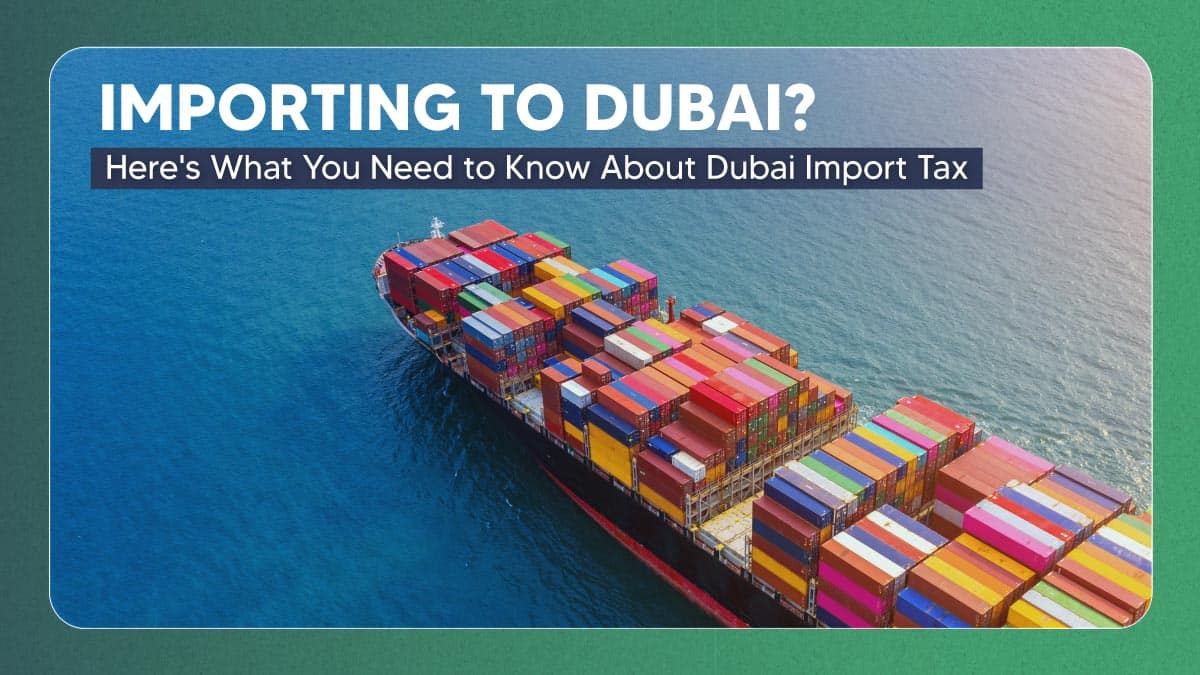
    Dubai is one of the world’s top trade hubs, connecting businesses from all over the globe. Thanks to its strategic location, advanced ports, and strong infrastructure, Dubai plays a major role in international trade. In fact, Dubai’s total non-oil trade in 2023 was over AED 1.2 trillion, making it a prime destination for businesses looking to import goods.

    If you’re running a business in Dubai or planning to import goods into the city, understanding import taxes is essential. Dubai import tax system primarily revolves around two key components – Customs Duty & Value Added Tax (VAT). This essentially means the tax is applied to the total value of your goods, including their cost, insurance during transport, and freight charges.

    Taxes like customs duties and VAT (Value Added Tax) can affect your costs, pricing, and overall profitability. If you’re an importer or just starting out in the world of international trade, having a solid understanding of Dubai’s import tax regulations can help you understand the market more effectively and make informed decisions for your business.

    What is Dubai Import Tax?

    Import tax refers to the charges imposed by the government on goods brought into a country. Dubai import tax includes customs duties and Value Added Tax (VAT), which are levied on goods entering the emirate. These taxes are collected by Dubai Customs, the government agency responsible for regulating imports and ensuring compliance with trade laws.

    Types of Taxes Applicable to Imports in Dubai

    Dubai’s import tax system involves three main charges handled by the Dubai Customs department:

    1. Customs Duties

    Customs duties are taxes imposed on imported goods. In Dubai, the standard customs duty rate is 5% of the value of the goods, though rates can vary depending on the type of product. Certain goods, like alcohol or tobacco, may attract higher duties, while others may be exempt.

    2. VAT (Value Added Tax)

    VAT is a 5% tax applied to most goods and services in the UAE, including imported products. This tax is added to the value of the imported goods when they enter the country. Businesses importing goods must pay VAT at the point of entry but can reclaim the tax if they are VAT-registered and the goods are used for business purposes.

    3. Excise Tax

    In addition to customs duties and VAT, certain goods such as tobacco, sugary drinks, and energy drinks are subject to excise tax. This tax is meant to discourage the consumption of these products for health and environmental reasons and can significantly increase the cost of importing them.

    General Import Duty Rate in Dubai

    Customs duties, or import taxes, are fees levied by the government on goods imported into a country. The general import duty rate in Dubai is 5%. This is applied to the CIF value of the imported goods. CIF (Cost, Insurance, and Freight) value refers to the total landed cost of the imported goods. It includes three components:

    • Cost: The price you pay for the goods themselves to the seller.
    • Insurance: The cost of insuring the goods during transport from the seller to Dubai.
    • Freight: The cost of transporting the goods from the seller’s location to Dubai, including any loading and unloading charges.

    Essentially, the 5% import duty is calculated based on the total cost of acquiring and bringing the goods to Dubai, which takes into account the initial purchase price, insurance, and transportation expenses.

    How Import Duties are Calculated in Dubai?

    Here’s the formula to calculate the total Dubai import tax:

    Total Import Tax = Customs Duty + VAT

    Customs Duty = CIF value x Customs Duty Rate (e.g., 5%)

    VAT = (CIF value + Customs Duty) x VAT Rate (e.g., 5%)

    For example, you’re importing a shirt with a CIF value of AED 100 from a country that doesn’t have a special trade agreement with the UAE. Here’s how the import taxes would apply:

    Customs Duty: AED 5 (5% of AED 100)

    VAT: AED 5.25 (5% of AED 105, which includes the AED 5 customs duty)

    Total Import Tax: AED 10.25

    If the imported goods originate from a country with a free trade agreement with the UAE, a reduced or zero customs duty rate might apply.

    Dubai Import Tax Payment Process

    Paying import tax in Dubai involves a clear and structured process managed by Dubai Customs. Businesses must ensure that taxes are paid on time to avoid delays, penalties, or legal consequences. Here’s a step-by-step payment process:

    1. Register with Dubai Customs

    Businesses must first register with Dubai Customs and obtain a customs code. This is a mandatory requirement to import goods into Dubai. Registration can be completed online through the Dubai Trade Portal.

    2. Prepare and Submit Import Declaration

    Submit an import declaration for the goods through the Dubai Trade Portal or at customs offices. The declaration must include details such as the type of goods, their value, and relevant shipping information. Attach all required documents, including:

    • Commercial invoice
    • Packing list
    • Bill of lading/airway bill
    • Certificate of origin

    3. Calculation of Import Taxes and Duties

    Customs will review the import declaration and calculate the applicable customs duty (usually 5%) and VAT (5%) based on the declared value of the goods (Customs Value). If any exemptions apply, these must be documented and verified at this stage.

    4. Pay the Import Taxes

    After calculation, the business must pay the applicable taxes and duties. Payments can be made online through the Dubai Trade Portal or at Dubai Customs’ designated payment counters.

    5. Receive Clearance and Release of Goods

    Once payment is confirmed, customs clearance will be granted. The goods can then be collected or delivered to their destination.

    Exceptions to the General Import Duty Rate

    There are several exceptions to this general import duty rate in Dubai, including:

    1. Excise Goods

    These are specific products considered harmful or luxurious, and they are subject to a higher tax rate than the general rate. This additional tax is called excise tax, and it’s levied on top of any applicable customs duty and VAT. Here are some examples of excise goods and their typical excise tax rates:

    • Tobacco Products (including cigarettes): 100%
    • Energy Drinks: 50%

    It’s essential to note that these are just examples, and the specific excise tax rate can vary depending on the product category.

    2. Specific Goods with Different Duty Rates

    Certain goods have pre-defined customs duty rates that deviate from the general 5%. For example:

    • Alcohol: 50% customs duty rate.

    3. Free Trade Agreements (FTAs)

    Dubai has Free Trade Agreements with many countries. These agreements often involve reduced or eliminated customs duties in the UAE for goods originating from those partner countries. This promotes trade and strengthens economic ties between Dubai and its FTA partners.

    For instance, if you’re importing a garment from a country with a relevant FTA, the import duty might be lower than the general 5% rate, or even zero in some cases. 

    Import Tax Exemptions in Dubai

    Free Trade Agreements are the most significant way to achieve lower or zero import duties in the UAE. There might also be exemptions, or duty guarantees for specific situations like importing goods for exhibitions or re-export purposes. However, these typically involve procedures and guarantees to ensure the goods eventually leave the country.

    Dubai Customs allows exemptions for used personal effects and household items brought in by returning residents or newcomers. There are conditions to meet, such as proof of residency and quantities appropriate for furnishing a house.

    Most goods imported into Dubai’s Free Zones are exempt from customs duties, provided they are used within the Free Zone or re-exported to other markets. This exemption can significantly lower the cost of doing business for companies importing goods for storage, processing, or redistribution within the zone.

    Goods and Categories Exempt from Dubai Import Tax or VAT

    1. Basic Food Items

    Many basic food products, such as rice, bread, vegetables, fruits, and grains, are exempt from customs duties in Dubai. This is part of the government’s effort to ensure affordable access to essential goods for residents and businesses. However, there may be exceptions, so it is important to check the classification of specific items.

    2. Medicines and Medical Equipment

    Essential medicines and medical supplies are often exempt from both customs duties and VAT. These exemptions support Dubai’s healthcare system and facilitate the import of critical health-related goods. However, certain medical equipment may require specific certifications or approvals before being imported.

    3. Books, Educational Materials, and Publications

    Educational materials, such as books, scientific journals, and other publications, are generally exempt from VAT in Dubai. This exemption encourages the importation of educational resources and supports the growth of the education sector.

    4. Relief Supplies and Donations

    Goods that are imported for charitable or relief purposes are often exempt from taxes. This includes products sent by humanitarian organizations or in response to crises, such as food, clothing, and medical aid.

    How to Claim for Import Tax Exemption in Dubai, UAE?

    The procedure for claiming import tax exemption in Dubai depends on the reason for the exemption.

    1. Importing Personal Effects and Household Items

    This applies to nationals returning to Dubai or foreigners coming to reside in Dubai for the first time.

    You will need to submit the following documents at customs:

    • A packing list detailing the contents of the shipment
    • Proof of residence abroad for nationals
    • Proof of work and residency visa for foreigners

    2. Importing Industrial Inputs (Machinery, Equipment, and Raw Materials)

    This applies to businesses registered in the UAE. You will need to apply online through the Ministry of Industry and Advanced Technology (MoIAT) e-services platform. The process involves:

    • Registering or logging in to the platform
    • Completing the Customs Exemption Request Form
    • Paying any applicable fees
    • Downloading a copy of the application for your customs declaration

    In some cases, you can claim a refund or drawback on import duties in the UAE if they were overcharged due to errors in classification, valuation, or calculation of the duty. This typically involves a process of filing a claim with the customs authorities within a specific timeframe.

    Documents Required for Importing Goods to Dubai

    Proper documentation is essential for a smooth import process, avoiding delays, fines, or legal issues. Here are some key documents typically required for importing goods to Dubai:

    1. Commercial Invoice:

    • Description of the goods
    • Quantity and unit price
    • Total value of the shipment
    • Details of the buyer and seller

    2. Packing List:

    • Number of packages
    • Weight and dimensions of each package
    • Content descriptions

    3. Bill of Lading or Airway Bill:

    • Shipment details
    • Port of loading and discharge
    • Carrier information
    • Terms of transport

    4. Certificate of Origin:

    Issued by the exporter’s chamber of commerce, this certificate specifies the country of origin of the goods.

    5. Customs Code:

    All importers must register with Dubai Customs and obtain a customs code. This unique identification number is used for customs transactions and clearance.

    6. Insurance Certificate:

    This document proves that the shipment is insured during transit.

    7. Sales Agreement or Purchase Order:

    While not always mandatory, this document can help verify the transaction details between the importer and exporter, especially in cases of disputes.

    8. VAT Registration Certificate:

    If your business is VAT-registered, you may need to provide your VAT registration certificate to claim input tax credits on imported goods.

    Ensure all documents are translated into Arabic (if required) or accompanied by certified translations. Work with a professional at Shuraa Business Setup if you are unsure about compliance requirements.

    Let Shuraa Tax Be Your Guide!

    Importing goods into Dubai can be a great business opportunity, but understanding the Dubai import tax system is crucial for smooth operations and accurate cost calculations

    Shuraa Tax is here to simplify your UAE taxation journey. Our team of knowledgeable and qualified accountants, auditors, and tax advisors can provide comprehensive assistance with Dubai import tax, UAE VAT, tax management auditing, and accounting services across various Emirates.

    Contact Shuraa Tax today and let us handle the complexities, so you can focus on your business growth. Get in touch today at +971508912062. You can also drop us an email at info@shuraatax.com.

  • Withholding Tax in the UAE: A Guide for Business Owners in 2026

    Withholding Tax in the UAE: A Guide for Business Owners in 2026

    For entrepreneurs and business owners in the UAE, grasping the intricacies of withholding tax within the broader spectrum of corporate taxation is indispensable for adhering to the nation’s evolving tax laws. In December 2022, the UAE Federal Tax Authority made substantial progress by releasing a decree that specified the obligations related to withholding tax within the corporate tax framework of the United Arab Emirates.

    This exhaustive guide by Shuraa Tax aims to demystify corporate taxes, focusing on withholding tax. It delves into the latest legislation and its ramifications for business operations in the UAE. Whether navigating tax liabilities or aiming to optimise your tax strategy, this blog provides valuable insights and addresses any inquiries concerning the prevailing corporate tax landscape, particularly on withholding tax in UAE.

    Understanding Withholding Tax in the UAE

    Withholding tax in the UAE involves deducting a portion of an employee’s or contractor’s income at the source, typically by their employer or business entity. This deducted amount is an advance payment towards the individual’s annual income tax liability. If too much is withheld, the individual may be eligible for a tax refund, while insufficient withholding may lead to owing taxes when filing returns.

    Tax regulations and rates vary between countries, affecting collection methods. Globally, withholding tax rates typically range from 15% to 25%, applying to various income sources such as dividends, interest payments, and royalties. This practice ensures timely revenue collection for governments worldwide.

    Implications of Withholding Tax Regulations for UAE Businesses

    On December 9, 2022, the Ministry of Finance (MoF), working in conjunction with the Federal Tax Authority (FTA), introduced Federal Decree-Law No. 47, which outlines the current guidelines governing corporate tax (CT) and withholding tax in UAE. According to the decree, withholding tax is now set at 0%. These changes came into effect on June 1, 2023, and apply to all subsequent financial years.

    Income Sources Exempt from Withholding Tax

    Presently, withholding tax exemptions in the UAE encompass the following income sources:

    1. Income generated by a foreign company within the UAE that is not attributed to its Permanent Establishment (PE) in the country.
    1. Mainland-sourced income benefits from the Free Zone’s 0% corporate tax regime, excluding transactions conducted through an onshore branch.
    1. Dividends or other profit distributions issued by a Free Zone Person are subject to zero taxation for mainland shareholders. For instance, if a DMCC company distributes dividends to a resident of the JAFZA free zone, withholding tax is waived at a rate of 0%.

    Withholding Tax Versus Value-Added Tax (VAT)

    Certainly, here’s a comparison table between Withholding Tax and Value-Added Tax (VAT) in the UAE:

    Aspect Withholding Tax Value-Added Tax (VAT)
    Implementation Introduced earlier than VAT Implemented in 2018
    Taxation Scope Levied on certain types of income payments Charged on the sale of goods and services
    Collection Method Deducted at the source of income Added to the price of goods and services
    Taxpayer Responsibility Businesses pay tax on behalf of employees Companies collect tax from customers
    Government Role Ensures tax compliance and collection Collects tax revenue from businesses
    Tax Rate Variable, depending on income type and rate Fixed rate of 5%
    Registration Requirement Not applicable to most businesses Mandatory for companies exceeding the threshold
    Impact on Businesses Directly affects income payments and cash flow Affects pricing and profit margins

    This table outlines key differences between Withholding Tax and Value-Added Tax (VAT) in terms of implementation, scope, collection method, taxpayer responsibility, government role, tax rate, registration requirement, and business impact.

    Understanding Corporate Tax in the UAE

    Corporate Tax in the UAE has transformed its taxation landscape, positioning it as a leading jurisdiction with a progressive tax framework. This legislation profoundly influences business operations within the country. While all businesses and commercial activities in the United Arab Emirates are subject to corporate tax, various exceptions exist, notably for industries engaged in natural resource extraction, which remain subject to emirate-level taxation. Below, you’ll find detailed information on corporate tax regulations applicable to businesses and individuals.

    Related Insights: Withholding Tax in Saudi Arabia

    Entities Subject to Corporate Tax in the UAE

    Under UAE Tax Law, entities liable for corporate tax, referred to as “taxable persons,” encompass the following:

    • UAE companies and other corporate entities established and operated within the UAE.
    • Individuals conducting business or commercial activities within the UAE, subject to forthcoming Cabinet Decision regulations.
    • Foreign legal entities with a Permanent Establishment in the UAE are known as non-resident juridical persons.

    Entities Exempted from Corporate Tax in the UAE

    Specific business sectors or organisations are exempt from corporate tax owing to their significant societal and economic contributions to the UAE. These entities, known as Exempt Persons, include:

    • Government bodies.
    • Extractive and non-extractive natural resource businesses, subject to specific regulations.
    • Qualifying public benefit entities as defined in Article 9 of the CT Law.
    • Public or private Pension and Social Security funds.
    • Qualifying investment funds as specified in Article 10 of the CT Law.
    • Wholly owned UAE subsidiaries of governing organisations, government entities, qualifying investment funds, or public/private pension/social security funds are eligible for zero income tax under Article 18 of the CT Law.
    • Free zone persons meeting certain conditions outlined in Article 18.

    Types of Exempt Income

    When determining taxable income, the following expenses are exempt:

    • Dividends and other distributions received from either resident individuals or foreign holdings.
    • Participating interests, as Article 23 of the CT Law defines.
    • Income obtained by non-resident individuals from operating aircraft or ships during international transport, provided it meets the conditions specified in Article 25 of the CT Law.
    • Revenue generated from a permanent foreign establishment, following Article 24 of the CT Law.

    Corporate Tax Structure in the UAE

    The corporate tax regime in the UAE mandates that companies and commercial entities pay taxes on their net income. Here’s how the rates are structured:

    • A 0% tax rate is implemented on business profits up to AED 375,000. This measure is designed to bolster support for small businesses and startups.
    • For-profits exceeding AED 375,000 from their inaugural financial year onward, companies are subject to a 9% tax rate. This rate has been uniformly applied to all companies since June 1st, 2023.

    Advantages of Withholding Tax Implementation

    Tax regulations offer numerous advantages for governments and businesses, contributing to financial stability and regulatory compliance. Here’s a closer look at the key benefits:

    Regulatory Compliance Assurance

    Withholding tax ensures businesses adhere to local laws and regulations, shielding them from potential fines or penalties arising from non-compliance.

    Enhanced Accountability

    It holds foreign individuals accountable for income earned within the UAE’s borders, promoting transparency and tax adherence.

    Prevention of Double Taxation

    Withholding tax mechanisms efficiently monitor and collect taxes from non-residents, averting the risk of double taxation and related conflicts.

    Combatting Tax Evasion

    By deterring tax evasion, withholding tax contributes to additional government revenue and bolsters fiscal sustainability.

    Flexible Tax Management

    Withholding taxes often replaces income taxes, offering businesses greater flexibility in managing their tax obligations.

    Employee Incentives

    Withholding tax can serve as an employee incentive, allowing companies to deduct taxes from salaries and rewarding staff with bonuses or additional benefits.

    Benefits of Business Operations in the UAE

    Below are the benefits of Business Operations in the UAE:

    Business-Friendly Environment

    The UAE offers a conducive environment for business growth, characterised by pro-business policies and a vibrant economic culture, setting it apart globally.

    Favorable Tax Regime

    The introduction of a low corporate tax rate and exemptions for specific businesses and organisations demonstrates the UAE’s commitment to attracting entrepreneurs and companies worldwide.

    Tax Incentives

    These tax incentives reduce financial burdens on businesses, enhance profitability, and create opportunities for reinvestment, making the UAE an attractive destination for businesses.

    Strategic Geographical Location

    Situated as a gateway between Europe, Africa, and Asia, the UAE provides unparalleled access to international trade routes and global markets, bolstering opportunities for business expansion.

    World-Class Infrastructure

    The UAE boasts state-of-the-art infrastructure, including advanced transportation, logistics, and telecommunications facilities, facilitating seamless business operations and global connectivity.

    Investor Protection

    The UAE’s legal framework safeguards the interests of foreign investors, offering them security and confidence in their investments that contribute to a stable business environment.

    Stable Political Environment

    With a stable political environment and progressive regulatory policies, the UAE further enhances its attractiveness as a business hub, fostering growth and innovation.

    Economic Reputation

    These benefits collectively contribute to the UAE’s reputation as a leading global business destination, with low corporate tax rates and targeted exemptions playing a crucial role in its economic allure, driving growth and diversification.

    Expert Guidance for Your Business with Shuraa Tax

    The UAE government supports business growth through various initiatives, offering an ideal environment for expansion. To ensure compliance, stay informed on corporate tax law changes, including withholding tax rules in UAE. Reach out to our experienced accounting professionals for assistance.

    Shuraa Tax consultants simplify Dubai business setup and tax compliance. We provide comprehensive support from registration to obtaining licenses and securing tax residency certificates. Contact us at +971508912062 or info@shuraatax.com for expert advice and peace of mind in tax matters.

    FAQs

    Q1. What is withholding tax?

    Withholding tax is a form of income tax collected by the government from individuals receiving payments such as salaries, wages, commissions, dividends, interest, or royalties. It’s deducted at the source before payment to the recipient, depending on their earnings, tax requirements, and available exemptions.

    Q2. Is there a withholding tax in the UAE?

    Businesses in the UAE aren’t subject to withholding taxes, as their corporate income and profits are taxed at a 0% rate. For specific exemptions applicable to your business, seek advice from a corporate tax consultant or accountant.

    Q3. What are the Compliance requirements for withholding tax?

    Based on current guidance from the Federal Tax Authority, UAE-sourced income paid to non-residents may qualify for a 0% withholding tax rate, eliminating the need for tax withholding or related paperwork for UAE businesses or foreign recipients. For further compliance guidance, contact our team of specialist accountants.

    Q4. How is withholding tax calculated?

    Non-residents without a permanent UAE presence may be exempt from withholding tax if they receive no UAE-derived revenue related to their establishment. Withholding tax is standard for cross-border payments like dividends, royalties, and interests. UAE resident individuals are exempt from withholding tax for transactions among themselves.

  • UAE Tax Penalties: 2022 Guide with Latest Updates

    UAE Tax Penalties: 2022 Guide with Latest Updates

    Everyone knows that UAE used to follow a no-tax policy. However, the UAE government introduced Excise tax in 2017 and VAT in 2018. Ever since then, there has been a 5% VAT applicable to most goods and services. There are certain goods and services subject to a 0% rate or exemption from VAT. And just like any other country, you are entitled to pay the penalty if you delay the tax payment or violate any regulations.  

    Recently, the UAE government has made a few amendments to the Tax penalties. According to the new updates, each fine or penalty will be no less than AED 500 and can be no more than triple the tax value of the transaction in question. This blog will cover all the tax penalties with the latest updates and their benefits for taxpayers.  

    The UAE Tax Penalties with Latest Updates 

    Below mentioned is a detailed list of UAE tax penalties with the latest updates: 

    1. Fixed Penalties for Voluntary Disclosure  

    Trigger Old Amount New Amount 
    First Voluntary Disclosure AED 3,000 AED 1,000 
    Subsequent Voluntary Disclosure AED 5,000 AED 2,000 

    2. Late Payment Penalty for Under-Paid VAT as Per the Voluntary Disclosure or Tax Assessment 

    As per the new rules, taxpayers in the UAE will now be given up to 20 days to settle any unpaid or underpaid tax before any late payment tax penalties apply. The due dates for the calculation of the late payment penalty can be done this way: 

    1. 20 business days following the submission of a voluntary disclosure 

    2. 20 business days following the receipt of a Tax Assessment 

    Trigger Amount 
    Taxpayers fail to pay within the 20 days 2% 
    One Month from the Due Date 4% per month 
    CAP 300% 

    3. Variable penalty where a voluntary disclosure is submitted before the taxpayer is notified of an audit by the Federal Tax Authority (FTA) 

    As per the update, the penalty now ranges from 5% to 40%. However, that totally depends on when taxpayers submit the voluntary disclosure. 

    Year in which the error is disclosed New Amount Old Amount 
    Year 1 5% of the underpaid tax 5% of the underpaid tax 
    Year 2 10% of the underpaid tax 
    Year 3 20% of the underpaid tax 
    Year 4 30% of the underpaid tax 
    Year 5 or more 40% of the underpaid tax 
       

    4. Late payment penalty for failure to settle the stated VAT in the submitted VAT return 

    Trigger Old Amount New Amount 
    Day After Due Date 2% 2% 
    One Week After Due Date 4% 2% 
    One Month After Due Date  1% per day 4% per month 
    CAP 300% 300% 

    5. Variable penalty where a voluntary disclosure is submitted/tax assessment is received after the taxpayer is notified of an audit by the FTA 

    Here, the government has declared a significant increase in the penalties if the error is corrected after the taxpayer is notified of an audit. The previous penalty was 30% and 50% of the underpaid tax upon error discovered during an FTA audit. However, as per the new penalty, the taxpayer will now be charged 50% of the underpaid tax. Moreover, they will have to pay 4% of the underpaid tax per month from the due date of the VAT return till the payment of tax liability.

    Apart from these, the UAE government has extended the redetermination period of administrative penalties to 31st December 2022. Moreover, Non-UAE businesses can now claim a refund of VAT raised in the UAE under the business visitor refund scheme. This offers refunds to foreign businesses that do not have a place of establishment or a fixed establishment in the UAE, subject to the fulfillment of certain conditions. However, this refund is available only to foreign business visitors from an approved list of countries that provide the same reciprocal refunds. The minimum refund claim is AED 2,000 and can cover a period of twelve calendar months. 

    Other UAE Tax Penalties Reductions 

    In order to offer some relief to the taxpayers, the UAE government has imposed reductions in a few more tax penalties. They are as follows: 

    1. The penalty for late registration: reduced from AED 20,000 to AED 10,000. 

    2. The penalty for failing to submit a deregistration application on time:  reduced from AED 10,000 to AED 1,000 per month (capped at AED10,000). 

    3. The penalty for failing to display prices inclusive of VAT: brought down to AED 5,000 from AED 15,000. 

    4. The penalty for failing to issue a tax invoice or tax credit note: reduced from AED 5,000 to AED 2,500 

    How Do These Tax Penalties’ Amendments Benefit Businesses in The UAE? 

    These amendments in the tax penalties offer an incentive to businesses to review their overall filling positions. Moreover, they get the time to reveal any errors before they are notified of an audit.  

    The best part is that now taxpayers who have been subject to penalties can request a waiver or installment of penalties. Furthermore, they can choose between either disputing tax penalties through the TDRC and the Federal Courts or appealing for installment. 

    Partner With Shuraa for Tax Compliances 

    Although we are optimistic that after reading this blog, you’ve got a fair idea of all the tax penalties, we understand that it might get overwhelming. Since you already have a lot on your plate as an entrepreneur, keeping up with the legal stuff too can be challenging. But you cannot ignore the fact how important it is to comply with the tax regime. Therefore, we suggest that you get in touch with a tax agency

    Legal experts at Shuraa Tax Consultants and Accountants can advise and assist you. We ensure that your company follows all its obligations by filing your return on time. Also, we efficiently communicate with the FTA and legally represent you wherever and whenever required. 

    We have cordial ties with the ministry that enable us to stay in step with many commercial legislation and tax regulations applicable to the UAE. Moreover, we guarantee that your company is ready for potential economic repercussions. We will take care of everything for you. All you need to do is reach out to us on info@shuraatax.com or call us on +971 508912062 and focus on other important business matters at hand.

  • The Importance of a Reliable Tax Agency for UAE Companies

    The Importance of a Reliable Tax Agency for UAE Companies

    The United Arab Emirates is popular worldwide for its profitable tax regimes for businesses of all sizes and kinds. In fact, it is one of the many reasons why entrepreneurs and businessmen want to set up or expand their businesses in the UAE. Globally renowned for its oil business, the UAE has worked systematically to break the shackles and transform itself into a modern state that caters to businesses on a wide spectrum. And one of the ways it has managed to achieve the status of a business hub is by reforming its policies, including its tax regimes.  

    To strengthen and maintain its position, the UAE has several tax regimes in place. These regimes also ensure that businesses here maintain a highly professional environment and strive to meet international standards. Although the UAE does not levy any income tax on individuals, it levies taxes on companies under certain conditions. And while the tax system may look straightforward, it is always better to get some assistance from a reliable tax agency in UAE. But why? Read on.  

    This blog will walk you through all you need to know about a tax agency – what it is, why it is important to partner with a reliable agency, and more.  

    What Is a Tax Agency in the UAE? 

    Simply put, a Tax Agency is an entity that is registered with the Federal Tax Authority (FTA) and has a valid license to operate as a tax agency.  

    Furthermore, a company cannot register and work as a Tax Agency without having at least one FTA-accredited Tax Agent on staff. Likewise, a registered tax agent must be affiliated with a licensed tax agency before being permitted to work as a tax agent. 

    Who Is a Tax Agent? 

    The UAE Federal Decree-Law describes and defines a tax agent as — 

    Any natural person registered with the authority in the register of Tax Agent who is appointed on behalf of another person to represent him before the authority and assist him in the fulfilment of his tax obligations and the exercise of his associated tax rights. 

    Simply put, they are licensed and FTA approved specialists qualified to represent your company before the authorities. They are there to offer you comprehensive tax-related support, so your company is compliant from the start. 

    Read Also: Dubai Import Tax: A Complete Guide for Businesses

    Why Should You Partner With a Reliable Tax Agency for your UAE business? 

    Given the strict laws and the penalties outlined by the UAE government for operating companies, it is important that you stay compliant with the laws at all times. Furthermore, you must register and file your tax returns within the stipulated time to avoid hefty penalties. And for this, you must have in-depth knowledge of the tax system since the UAE categories taxes as –  

    • Corporate Tax – For businesses or individuals operating with a commercial license in UAE Free Zones and Mainland.
    • Excise Tax – Levied on businesses dealing in excise goods (goods harmful to human health and the environment).
    • Value Added Tax – Levied at point of sale for the use of goods and services.
    • Other Taxes – Levied on tourist facilities and hotel businesses. For instance, Municipality tax. 

    Within these taxes, especially for Corporate tax, UAE follows a slab structure. The question is: Do you, as an entrepreneur or businessman, have the in-depth knowledge to follow proper tax rules? Are you updated with the latest changes, and do you understand key terms? Do you have internal control mechanism to file VAT return complaint with Tax laws?  

    This is why choosing a reliable tax agency is important. A reliable tax agency is a tax agency that:  

    • Holds a valid license.  
    • Has a team of registered tax agents? 
    • Has a proven track record?
    • Has in-depth knowledge of UAE tax regimes, processes, and penalties? 
    • Is up to date with the latest announcements.

    But why do you need to partner with them? Because a reliable tax agency in UAE will –  

    • Always operate and represent the company lawfully and in compliance with the Federal Tax Authority
    • Ensure that your business activities are compliant with the obligations.  
    • Assist with the timely filing of tax returns
    • Register your company with the FTA and lawfully represent you. 
    • Guide you.
    • Assist you with formalities and advise you on how to stay out of trouble and minimise fines.
    • Provide the FTA and its inspectors with essential legal and accounting information if the authorities ask you for records 
    • Forewarn you about changes to both the business and tax legislation 
    • Make communication easier and provide quick answers while following up with the Federal Tax Authority (FTA) 

    Besides this, partnering with a reliable tax agency will save you time and effort. A company’s tax concerns are varied, ranging from registering, planning, filing, and consulting. As a result, allocating resources and managing tax affairs becomes a time-consuming and expensive endeavour. By partnering with a tax agency, you can save time and money while benefiting from their in-depth understanding of and experience working with various clients. 

    Partner With Shuraa for Tax Compliances  

    Awareness of tax compliances differs greatly from ensuring that your company is tax compliant. The process can be overwhelming, especially when you have to wear multiple hats as an entrepreneur and businessman.  

    Furthermore, failing to meet the tax requirements can result in strict action against your company. Additionally, you must follow the procedure and apply for voluntary disclosures in the event of indifference. Under particular circumstances, you can also be required to submit an objection to the Tax Disputes Resolution Committee (TDRC).  

    A reliable tax agency like Shuraa Tax Consultants and Accountants can advise and assist you. We will ensure that your company follows all the tax obligations by filing your return on time, efficiently communicating with the FTA, and legally representing you wherever and whenever required.  

    Our cordial ties with the ministry enable us to stay current on the many commercial legislation and tax regulations applicable to the UAE. We also guarantee that your company is ready for potential economic repercussions. We will take care of everything for you. All you need to do is reach out to us on info@shuraatax.com or give us a call on +971 508912062.

  • How to Select a Reliable Bookkeeping & Accounting Partner for your Business in Dubai?

    How to Select a Reliable Bookkeeping & Accounting Partner for your Business in Dubai?

    Accounting is a core aspect of any business. Professionally and precisely maintained books can help a business streamline their finances and even save big on taxes and fines. Moreover, accounting and bookkeeping are crucial for regulation & compliance. For instance, the new VAT laws in UAE require the companies to maintain books as per the new guidelines! SMEs or a start-up might not find it convenient and financially viable to hire an in-house accountant. It makes sense to seek assistance from a professional bookkeeping and accounting partner.

    If you’ve set up a company or are planning for the same, this article will help you choose the right tax consultant in Dubai or right accounting firm.

    Here, you will learn about the top factors to consider before choosing amongst reliable Accounting Services in UAE or tax services in UAE. Let us get going!

    Team & Expertise

    It pays to get associated with a versatile & capable accounting firm and tax agency in UAE that possesses experience in legal, financial & economic domains of the UAE market. The reason behind looking for such bookkeeping expertise is transition of the economy into new tax structures & regulatory changes. For instance, Shuraa Tax Consultants and Accountants bring in robust & reliable accounting outsourcing services. The team is adept in handling any volume of accounting tasks within a short turnaround.

    Industry & Service Specialization

    You must also assess two areas of specialization for any bookkeeping firm- 1) Industries served & 2) service specialization. Find out if the firm serves clients from a particular industry or serves everyone. If they specialize in your industry, it is a best reason to partner with them. If they turn out to serve versatile businesses, then look for their service specialization. Bookkeeping firms usually specialize in Accounting, Tax, VAT & Audit services. You must select the one that caters to your area of interest.

    Availability & Support

    You must look for an accounting & bookkeeping firms that keeps in touch with your business frequently. Which can give the contemporary reports. This enables you, as a business owner, to make quick decisions, solve tax/cost doubts & bolster your planning for further business growth. Accounting firms like Shuraa, that provide regular communication support & guidance to its clients has the following benefits.

    • Stay updated on any anticipated UAE Tax regulations changes
    • Proactive planning for your business growth from a tax perspective
    • Get expert advice whenever you want
    • Professional MIS reports for better decision making
    • Report discussions, meetings with client

    Fee Charging Structure

    You must evaluate the fees structure of different firms to outsource your accounting needs. The fee will vary for each of them (your cost of outsourcing) and the way they charge it will differ too. Payment terns should also be checked. Assess your major accounting needs and outsource your accounting accordingly.

    The right accounting partner will provide you end-to-end support besides the core bookkeeping services. Thus, it is crucial that you ally with an experienced firm with a sizable client portfolio. Outsourced accounting services helps to have accurate accounts which are reviewed by qualified Accounts professional.

    Keep in mind the above factors and do ask these questions to the shortlisted firms for selecting the right accounting partner in Dubai. Get in touch with the expert consultants at Shuraa Tax, one of the top accounting and tax firms in Dubai, specialized in Accounting, VAT, Excise, Internal Audit, Economic Substance Regulation (ESR) compliance, Business Valuations. Reach out to our experts on info@shuraatax.com or give us a call on +971 508912062.

  • Treatment of VAT in Free zones of UAE

    Treatment of VAT in Free zones of UAE

    The VAT in UAE was introduced from 1 January 2019 and applies to those supplies of goods and services which take place within the territorial boundaries of the UAE. As in the case of goods and services supplied within free zones in the UAE, the rules of VAT are applicable to undergo a certain change.

    Free zones are defined as those areas which are specifically designed to promote international businesses in the UAE by providing attractive incentives to foreign investors and businesses. In the UAE, there are currently more than 37 Free Zones such as:

    • Jebel Ali Free Zone
    • Dubai Airport Free Zone
    • Dubai Cars and Automotive Zone and many more

    As per UAE VAT law and Executive Regulations, not all Free zones are ‘VAT Free Zones’ and only those listed in a Cabinet Decision are eligible for the special VAT treatment. These Free Zones are referred to as Designated Zones for VAT purposes, according to Cabinet Decision No. 59 of 2017.

    Few supplies occurring within the Designated Zones will not invite the standard rate of VAT i.e. 5% under circumstances mentioned in VAT regulations. This is only in the case of a supply of goods. However, suppliers of services in the designated zone will be subjected to the usual VAT rate at 5%. It’s important to understand the conditions which businesses need to follow for the VAT-free supply of goods between the Designated Zones as prescribed by UAE VAT Executive Regulations.

    Following are the conditions which are mandatory to consider any UAE free zone as a Designated Zone to

    1. It should be enclosed within a specific fenced geographical area.
    2. It should have security measures and customs controls in place for monitoring the entry and exit of individuals and goods to and from the area.
    3. There should be laid out internal procedures related to the method of keeping, storing and processing goods within the Designated Zone.
    4. The operator of the Designated Zone should show support or comply with the procedures laid down by the Federal Tax Authority (FTA) of UAE.

    If any free zone no longer fulfills the above conditions, it cannot be then treated as a designated zone. It will be considered and treated as a part of the UAE And general VAT rules will be applicable to such free zones.

    Below are few examples of Free zones which are designated zones:

    • Jebel Ali Free Zone (North-South)
    • Dubai Cars and Automotive Zone (DUCAMZ)
    • Free Zone Area in Al Quoz
    • Umm Al Quwain Free Trade Zone in Ahmed Bin Rashid Port
    • FOIZ (Fujairah Oil Industry Zone)
    • Khalifa Industrial Zone

    As per the registration for VAT is considered, these businesses within the Designated Zone have to register, report and account for VAT as per the UAE laws. In case of failing to register for VAT within the due date, a penalty of AED 20,000/- will be levied as per the UAE Federal Cabinet Decision No.40.

    Consult Shuraa Tax Consultants and Accountants to get assured and accurate help on the VAT laws related to the Free Zones in the UAE. We are a group of FTA approved tax agents in Dubai with a goal to provide accurate services of VAT in UAE (VAT registration and implementation, Tax compliance & VAT Return Filing). Contact us to get complete assistance and guidance on the VAT registration in UAE. All you need to do is reach out to us at info@shuraatax.com or call us at +971 508912062.