Category: Corporate Tax

  • A guide to Corporate Tax Groups in the UAE

    A guide to Corporate Tax Groups in the UAE

    Corporate taxation in the UAE has transformed the business landscape, and one of the most beneficial frameworks introduced under the new tax regime is the corporate tax group concept. This arrangement allows eligible companies to be treated as a single taxable entity, making tax filing and compliance more efficient.

    In a guide to corporate tax groups in the UAE, we explore how forming a UAE corporate tax group can optimise tax responsibilities, reduce administrative burden, and support smoother financial management for businesses operating across multiple entities.

    What is a Corporate Tax Group?

    A Corporate Tax Group refers to a structure where two or more eligible companies are treated as a single taxable entity for corporate tax purposes. Instead of filing separate tax returns, the group submits one consolidated tax return, simplifying compliance and potentially reducing the overall tax burden.

    In the UAE corporate tax group framework, companies must share common ownership (at least 95% direct or indirect shareholding), follow the same financial year, and be resident of legal entities. When formed, a corporate tax group in the UAE allows businesses to offset profits and losses among group members, centralise tax management, and improve financial efficiency.

    Creating a corporate tax group is especially beneficial for organisations with multiple subsidiaries or diverse business operations seeking streamlined reporting and tax advantages under UAE Corporate Tax Law.

    Who Can Form a Tax Group in the UAE?

    To form a Tax Group in the UAE, the following conditions and eligibility criteria must be met:

    1. Legal Persons Only

    • The parent company and subsidiaries must be juridical persons (e.g., LLCs, PJSCs, free zone companies, etc.)
    • Natural persons (individuals) cannot form or be part of a tax group.

    2. UAE Tax Residents

    • All entities must be tax residents in the UAE.
    • Foreign companies can qualify only if they have a permanent establishment in UAE.

    3. Parent–Subsidiary Relationship

    The parent company must own at least 95% of the subsidiary’s share of capital, voting rights, and profits.

    • Same Financial Year: All group members must follow the same financial year for accounting and tax reporting.
    • Unified Accounting Standards: All companies must use the same accounting standards (such as IFRS).

    4. Corporate Tax Registration

    Each entity must be registered for UAE corporate tax before applying to form a tax group.

    These requirements ensure compliance and allow businesses to benefit from streamlined reporting and consolidated tax filings under a corporate tax group

    Main Objectives of Forming a Tax Group

    The main objectives of forming a tax group in the UAE are as follows:

    • Streamline corporate tax management by submitting one consolidated tax return instead of multiple filings.
    • Allow group entities to offset internal profits and losses to improve the overall taxable position.
    • Simplify the movement or transfer of assets, liabilities, and internal transactions between group companies without creating separate tax consequences.
    • Optimise and potentially reduce the total corporate tax payable across the entire group.

    Eligibility Criteria for Forming a Corporate Tax Group in the UAE

    Businesses can create a corporate tax group only if they fulfil specific regulatory requirements set out under the UAE corporate tax regime. These include:

    • Shared Ownership Structure: A single parent entity must control a minimum of 95% of the subsidiary’s shareholding, voting power, and profit entitlements. This control may be exercised directly or through multiple levels of ownership.
    • UAE Tax Residency Requirement: Every company within the group must be classified as a UAE tax resident. Foreign or non-resident entities cannot be part of the group structure.
    • Aligned Financial Reporting Timeline: All participating companies must operate on the same financial year calendar to maintain unified tax reporting.
    • Consistent Accounting Approach: Members must adhere to identical accounting frameworks, typically based on International Financial Reporting Standards (IFRS), to ensure accurate consolidation.
    • Entities Not Eligible to Join: Certain businesses are restricted from forming or joining a corporate tax group, such as Free Zone companies claiming the 0% Corporate Tax incentive (unless they voluntarily switch to 9%), regulated financial sector entities, and companies where the ownership threshold falls below 95%.

    Key Benefits of Forming a Corporate Tax Group in the UAE

    Setting up a corporate tax group in the UAE isn’t just about combining companies under one umbrella; it requires strategic planning, documentation, and regulatory approval.

    The UAE Corporate Tax Grouping process is structured to ensure transparency and accurate financial reporting across all participating entities. Here’s a clear roadmap to guide your corporate tax group formation:

    Step 1: Confirm Eligibility

    Before starting the registration process, verify that all companies meet the legal and financial criteria for a tax group, UAE corporate tax setup:

    • Every member must be a UAE tax resident and classified as a resident person under corporate tax law.
    • The parent entity should meet the minimum ownership and control requirements over each subsidiary.

    Step 2: Compile Required Documentation

    Prepare essential records and agreements that demonstrate structure and compliance:

    • Valid trade licences for the parent company and all subsidiaries.
    • Recent financial statements for each entity.
    • An organisational chart outlining ownership percentages.
    • A signed agreement confirming all parties’ consent to join the UAE corporate tax group.

    Step 3: File the Application with the FTA

    The parent company is responsible for applying electronically through the Federal Tax Authority portal. You will also need to indicate the intended first tax period for the group. During the review, the FTA may request additional evidence or clarification.

    Step 4: FTA Assessment & Decision

    The Federal Tax Authority examines the request to confirm eligibility and regulatory compliance. Formal approval is granted only if all requirements are met throughout the process.

    Step 5: Formation & Tax Registration

    Once approved, the tax group will officially be recognised from the date determined by the FTA. A unique Tax Registration Number (TRN/TIN) will be issued for the entire group, while each entity retains its individual TRN for internal administrative purposes. From this point, the parent company becomes legally responsible for tax filings, reporting, and payments on behalf of the group.

    Although the process is straightforward in theory, practical challenges can arise during audits or documentation reviews. Partnering with a certified corporate tax agent in Dubai, such as Shuraa Tax, can simplify compliance, reduce delays, and ensure accurate group procedures under the UAE corporate tax grouping regulations.

    Challenges of Forming a Tax Group in the UAE

    While tax grouping delivers many operational and financial advantages, it also comes with specific challenges that companies should evaluate before proceeding:

    1. Collective Tax Responsibility: Every entity within the group becomes jointly accountable for the total corporate tax due. If one company fails to meet its obligations, the burden may fall on the others.
    2. Financial Reporting Complexity: Creating consolidated accounts requires consistent accounting policies, coordinated financial management, and, often, external professional support, increasing time and costs.
    3. Complications During Structural Changes: Restructuring the group, such as adding a subsidiary or removing an existing member, can trigger tax consequences and require approval, documentation, and recalculation of taxable positions.

    Criteria for Transferring Tax Losses Within a Group

    Tax loss transfers can help balance profitability across group members, but only under specific conditions:

    • The company receiving the loss must be at least 75% owned (directly or indirectly) by the same parent company.
    • The receiving entity cannot be exempt from corporate tax and must not be based in a 0% Free Zone regime.
    • The losses transferred are limited; they cannot exceed 75% of the company receiving the transfer taxable income.

    The UAE corporate tax framework enables businesses with shared ownership to form tax groups to simplify compliance, reduce administrative effort, and optimise overall tax outcomes.

    With a clear understanding of requirements, procedures, and associated risks, companies can maximise the advantages of tax grouping and manage their corporate tax responsibilities more efficiently in the UAE.

    Empowering Businesses Through Strategic Tax Grouping

    In summary, forming a corporate tax group under the UAE corporate tax regime is a strategic way for businesses to simplify compliance, optimise tax planning, and streamline financial management.

    As explained in A Guide to Corporate Tax Groups in the UAE, UAE Corporate Tax Grouping enables eligible companies to file a single tax return, offset profits and losses, and improve overall tax efficiency. While there are regulatory requirements and challenges to consider, the long-term benefits make corporate tax group formation a valuable option for multi-entity businesses.

    For expert support with the tax group, UAE corporate tax setup and compliance, connect with Shuraa Tax today.

    📞 Call: +(971) 44081900

    💬 WhatsApp: +(971) 508912062

    📧 Email: info@shuraatax.com

    Frequently Asked Questions

    Q1. What does forming a Corporate Tax Group in the UAE mean?

    A corporate tax group allows multiple companies under the same ownership structure to be treated as a single taxable entity. Instead of filing several tax returns, the parent company submits one consolidated return for the entire group, simplifying compliance and tax administration.

    Q2. How is ownership eligibility assessed when creating a UAE Corporate Tax Group?

    To establish a corporate tax group, the parent entity must hold a minimum of 95% of the subsidiary’s equity, voting power, and rights to profits. This level of control ensures unified financial management and tax oversight across the group.

    Q3. Is it possible for a member of the company to leave the Corporate Tax Group?

    Yes, a subsidiary can be withdrawn or removed if it fails to meet the required conditions, for example, by falling below the ownership threshold or becoming a Qualifying Free Zone Person (QFZP). Any removal takes effect at the start of the following tax period.

    Q4. Are there challenges associated with forming a Corporate Tax Group in the UAE?

    One of the main limitations is that every member must follow the same financial year and accounting standards. This requirement may complicate internal restructuring and delay operational flexibility when expanding or reorganising the business.

    Q5. What are the key benefits of forming a Corporate Tax Group?

    Tax grouping enables offsetting profits and losses within the group, reduces overall tax payable, streamlines record-keeping, and avoids double taxation on internal transactions.

    Q6. Can Free Zone companies join a Corporate Tax Group?

    Free Zone entities may join only if they are not Qualifying Free Zone Persons (QFZPs). QFZP-status businesses cannot be part of a group to retain their 0% tax benefit.

    Q7. How does VAT registration differ from Corporate Tax Grouping?

    VAT groups and corporate tax groups are independent of each other. Even if companies are part of a VAT group, they must apply separately to form a corporate tax group under UAE corporate tax rules.

    Q8. Who is responsible for tax payments within a Corporate Tax Group?

    The parent company is legally responsible for submitting the tax return and paying the due corporate tax for the entire group, although internal agreements may allow cost-sharing among members.

    Q9. Does forming a Corporate Tax Group require approval?

    Yes, businesses must apply to the Federal Tax Authority (FTA). Grouping becomes valid only after formal approval has been granted.

    Q10. Can companies with different business activities join the same tax group?

    Yes, as long as all eligibility criteria are satisfied, including ownership thresholds, tax residency, and unified financial reporting.
  • UAE Corporate Tax Registration: Who Must Register?

    UAE Corporate Tax Registration: Who Must Register?

    Corporate tax has transformed the business landscape in the UAE, bringing the country in line with global transparency and tax standards. Whether you operate a multinational company, a free zone entity, a small consultancy, or a freelance business, understanding the UAE Corporate Tax Registration rules is essential for staying compliant and protecting your license.

    The new tax framework is governed by Federal Decree-Law No. 47 of 2022, and registration is managed through the Federal Tax Authority (FTA) via the EmaraTax digital portal. Once registered, companies receive a Tax Registration Number (TRN) and are required to file an annual return, usually within nine months from the end of the financial year.

    Many assume that registration is only required for businesses that actually pay tax. However, under the law, registration is mandatory even if your income is below the taxable limit, or you qualify for exemptions. It proves your compliance, enables access to reliefs, and strengthens trust with banks, partners, investors, and regulators.

    Failing to register can result in:

    • An AED 10,000 penalty
    • Potential licensing restrictions or renewal blocks
    • Reputational risk and compliance issues

    Who Is Required to Register for Corporate Tax in the UAE?

    The Corporate Tax Law defines a wide range of entities that must complete corporate tax registration UAE procedures. Key categories include:

    1. Mainland and Free Zone Companies

    All incorporated legal entities operating in the UAE must register, regardless of size, revenue, or tax rate. This includes:

    • Mainland companies, LLCs, PJSCs, PSCs, and other registered entities
    • Free Zone companies, including those eligible for 0% tax on qualifying income
    • Holding companies and special purpose vehicles
    • Dormant companies that hold an active commercial license

    If you possess a UAE trade license, you are required to register. Free zones are not exempt from registration; only the potential tax payment varies.

    2. Foreign Companies with Taxable Nexus

    Foreign companies must register if they have a taxable presence in the UAE through:

    • A Permanent Establishment (PE), such as a branch, office, or fixed site
    • Effective place of management in the UAE
    • Income derived from real estate or immovable property inside the UAE

    Foreign investors should evaluate whether strategic decisions or operations in the UAE trigger the need for registration.

    3. Individuals Earning More Than AED 1 million Annually

    Corporate tax also applies to natural persons conducting business activities in the UAE. Must register once annual UAE business income exceeds AED 1 million, including:

    • Freelancers & consultants
    • Influencers and online earners
    • Sole proprietorships and traders
    • Independent professionals under permits or licenses

    Not included: salary income, personal dividends, savings, returns on real estate owned personally.

    4. Independent Partnerships

    Professional partnerships such as:

    • Legal firms
    • Accounting & audit firms
    • Medical or engineering partnerships

    These partnerships are treated as single taxable entities, not as individual partners.

    Who Is Exempt from Corporate Tax Registration?

    Specific categories are exempt, but may still need to apply for a TRN:

    Exempt Category Notes
    Government entities Fully exempt by law
    Government-controlled sovereign entities Exempt for specific activities
    Approved charities & public benefit organisations Must apply for recognition
    Qualifying investment funds Must meet conditions to maintain exemption
    Extractive and non-extractive natural resource activities Taxed under separate regimes

    Note: Some exempt persons must still register to file annual declarations.

    Voluntary UAE Corporate Tax Registration

    Businesses can voluntarily register before they become liable. Benefits include:

    • Enhanced credibility with banks and investors
    • Better accounting structure and record keeping
    • Easier scaling and compliance readiness
    • Ability to claim future exemptions or reliefs

    Voluntary registration does not trigger tax payments until thresholds are met.

    EmaraTax Pre-Registration

    The FTA introduced pre-registration invitations within the EmaraTax portal, encouraging businesses to register before deadlines. If your company did not receive an invitation, you should register manually without delay to avoid penalties.

    Documents Required for Corporate Tax Registration

    Below are the documents required for corporate tax registration in the UAE:

    For Companies

    • Trade license copy
    • MOA / AOA or partnership agreement
    • Passport & Emirates ID for shareholders/directors
    • Contact information and registered business address
    • Financial year details
    • Financial statements (if requested)

    For Individuals

    • Emirates ID or passport
    • Trade license or permit (for business activities)
    • Proof of UAE business income
    • Contact information and address details

    Strategic Benefits of Early Registration

    • Banking and investor confidence
    • Access to Free Zone relief & Small Business Relief
    • Smooth license renewals
    • Avoidance of penalties and delays
    • Strong compliance reputation

    Large Multinationals & OECD Pillar 2 Alignment

    For multinational groups with revenues exceeding €750 million (approx. AED 3.15 billion):

    • The UAE has implemented the Domestic Minimum Top-Up Tax (DMTT) at 15%
    • Applies to financial years beginning 1 January 2025
    • Applies to groups with multiple international entities operating across jurisdictions

    Multinationals should:

    • Review structure and data systems
    • Register all constituent entities
    • Prepare transition readiness

    Expert Guidance With UAE Corporate Tax Registration

    Understanding who needs to register for UAE Corporate Tax is the first step; executing it correctly is crucial to avoid penalties and secure compliance confidence.

    Shuraa Tax supports SMEs, free zone companies, partnerships, investors, individuals, and multinationals with complete compliance management, including:

    Start your registration with expert support

    📞 Call: +(971) 44081900
    💬 WhatsApp: +(971) 508912062
    📧 Email: info@shuraatax.com

    Frequently Aksed Questions

    Q1. Do all UAE businesses need to register for corporate tax?

    Yes. All companies must register, even if they have no profit.

    Q2. Do dormant companies need to register?

    Yes, if they still hold a valid trade license.

    Q3. Do small businesses below AED 375,000 profit need to register?

    Yes. Relief affects tax payable, not registration requirements.

    Q4. Are charities required to obtain a TRN?

    Most must register first and then apply for exemption.

    Q5. Can individuals register voluntarily below AED 1M?

    Yes, useful for credibility and growth readiness.

    Q7. Does registration mean tax must be paid?

    No. Filing is required, but payment depends on thresholds and reliefs.

    Q8. What is the penalty for late registration?

    AED 10,000.

    Q9. What if a business shuts down?

    Submit a deregistration request via EmaraTax.

  • Corporate Tax Registration for Offshore Companies in UAE

    Corporate Tax Registration for Offshore Companies in UAE

    Corporate tax registration for offshore companies has become a crucial compliance step for foreign investors operating in the UAE. With the country’s evolving tax framework and growing emphasis on transparency, understanding how Offshore corporate tax registration in the UAE works can help businesses avoid penalties and maintain smooth operations.

    Whether you’re managing international holdings, conducting cross-border transactions, or maintaining an offshore setup for global expansion, registering for UAE corporate tax ensures your entity remains aligned with federal regulations while benefiting from the region’s investor-friendly environment.

    What is Offshore Corporate Tax Registration?

    Offshore corporate tax registration in the UAE refers to the process by which offshore entities, such as companies registered in zones like JAFZA Offshore or RAK ICC, officially register with the Federal Tax Authority (FTA) for corporate tax purposes.

    Even though offshore businesses are not permitted to conduct operations on the UAE mainland, they are still required to complete offshore company tax registration in the UAE to comply with the country’s corporate tax regulations. This ensures transparency, meets legal obligations, and helps companies benefit from the UAE’s tax treaties while maintaining their global business structure.

    What are Offshore Companies and Why are they Formed?

    An offshore company in the UAE is a business that you register in the country but use mainly for business outside the UAE. It’s a great option if you want to manage your money, protect your assets, or run an international business without opening a shop or office in the UAE.

    People choose offshore companies because they offer low taxes, privacy, and strong legal protection. It also helps keep your personal wealth safe from any business risks. In simple words, it gives you a safe, trusted, and flexible way to handle your global business or investments through the UAE.

    Key Advantages of UAE Offshore Companies

    1. Tax Planning & Compliance

    Offshore companies in the UAE operate in a tax-efficient environment. While they do not pay income tax, they must comply with the latest rules governing corporate tax registration for offshore companies.

    Even if the corporate tax rate may not apply to entities that qualify as non-resident persons, completing offshore corporate tax registration in UAE ensures compliance with the Federal Tax Authority (FTA) and avoids penalties.

    2. Enhanced Confidentiality

    UAE offshore jurisdictions allow a high level of privacy, particularly regarding shareholder and director information. However, it isn’t a complete anonymity. Under Cabinet Decision No. 58 of 2020, all companies must disclose their Ultimate Beneficial Owner (UBO) details to regulators.

    These details are kept confidential and are not available to the public, but they ensure transparency where required.

    3. Global Trading Flexibility

    Offshore companies are perfect for international operations. They can hold global assets, own shares in foreign businesses, manage investments, and conduct trade outside the UAE. Many investors also use offshore entities as holding structures for multinational expansion.

    Legal Framework Governing Offshore Companies in the UAE

    Offshore companies in the UAE operate under a well-defined legal framework that combines federal commercial laws with jurisdiction-specific regulations. Together, these frameworks ensure transparency, investor protection, and smooth international operations for offshore entities.

    Federal Legislation

    The backbone of all corporate activity in the UAE is Federal Decree-Law No. (32) of 2021 on Commercial Companies. While this law primarily governs mainland and free zone entities, it also sets general standards for offshore structures, particularly regarding compliance, governance, and reporting obligations.

    Jurisdiction-Specific Offshore Regulations

    Offshore companies can only be registered in designated jurisdictions, and each of these zones provides its own rules, incentives, and administrative procedures:

    1. Ras Al Khaimah International Corporate Centre (RAK ICC)

    RAK ICC is known for its simplicity and cost-effective processes, making it a top choice for investors prioritising efficiency. It offers:

    • 100% foreign ownership
    • Quick incorporation timelines
    • Modern regulations are aligned with international compliance standards

    This jurisdiction is especially popular among entrepreneurs looking for holding structures or asset protection vehicles.

    2. Jebel Ali Free Zone Authority (JAFZA) Offshore

    JAFZA is one of the oldest offshore jurisdictions in the UAE and is preferred for its strong regulatory framework and proximity to Dubai’s logistics and trade ecosystem. Offshore companies here benefit from:

    • Access to Dubai’s extensive trade and port network
    • Strong corporate governance requirements
    • Eligibility for property ownership in designated areas of Dubai

    Differences Between Offshore, Free Zone, and Mainland Companies?

    Understanding the core differences between Offshore, Free Zone, and Mainland companies is essential for choosing the proper business structure in the UAE, as each option offers unique benefits, limitations, and regulatory requirements.

    Factor Offshore Company Free Zone Company Mainland Company
    Purpose Asset protection, holding company, international trading Business within the free zone, plus in the international markets Full UAE market access plus in the international business
    Ownership 100% foreign ownership 100% foreign ownership 100% foreign ownership permitted (but in some of the activities, a local sponsor is required)
    Office Space Requirement Not required Required (flexi-desk allowed) Mandatory office/physical space
    Business Activities Allowed International trade, holding assets, and IP rights, cannot trade within the UAE Broad range within the specific free zone; limited UAE mainland access Allowed to trade anywhere in the UAE
    Corporate Tax 0% on qualifying income (varies by jurisdiction) 9% CT, except for qualifying free zone income 9% CT on taxable income above threshold
    Regulatory Authority Specific offshore jurisdictions (JAFZA, RAK ICC) Respective free zone authorities (DMCC, DIFC, RAKEZ, etc.) UAE Department of Economic Development (DED)
    Bank Account Opening Allowed but stricter compliance Easily opened Easily opened
    Auditing Requirements Mostly no mandatory audit Many free zones require an annual audit Mandatory annual audit
    Ideal For Holding companies, international investors, and tax-efficient structures SMEs, startups, import/export, service providers Companies targeting the UAE market, retail, and large-scale operations
    Cost of Setup Generally lower Moderate Higher compared to offshore & free zone

    Difference Between Onshore and Offshore Tax Registration in the UAE?

    Choosing between onshore and offshore tax registration in the UAE depends on where your business operates, how it earns income, and the level of compliance you’re prepared to maintain.

    Category Onshore Tax Registration (Mainland & Free Zone) Offshore Tax Registration
    Business Activity Operates within the UAE market; can conduct business inside the country Cannot operate within the UAE market; used for international business only
    Tax Registration Requirement Mandatory if income meets UAE CT law criteria; Free Zones must also register Required if the offshore company earns UAE-sourced income or falls under CT rules
    Corporate Tax Rate Mainland: 9% over AED 375,000Free Zones: 0% on qualifying income, 9% on non-qualifying Typically, not taxed unless generating UAE-sourced income
    Regulatory Authority UAE Federal Tax Authority (FTA) UAE FTA + Offshore jurisdiction (e.g., JAFZA Offshore, RAK ICC)
    Substance Requirements Must meet ESR, maintain physical presence, staff, and operations Limited substance required; mostly documentation plus registered agent
    Banking & Compliance More stringent: audits, economic substance, annual filings Lighter compliance; fewer audits and reporting requirements
    Market Access Full access to the UAE market No access to UAE market; cannot trade within the UAE
    Ideal For Local businesses, Free Zone companies, service providers, trading firms International trading, holding companies, asset protection, and IP holding

    Top Offshore Jurisdictions in Tax Planning

    The UAE has emerged as one of the world’s most preferred destinations for offshore company formation, due to its tax-efficient framework, investor-friendly laws, and strategic access to global markets.

    Entrepreneurs, international investors, and high-net-worth individuals choose offshore jurisdictions in the UAE to optimise tax structures, protect assets, and expand cross-border business operations. Below are the top offshore jurisdictions within the UAE that dominate global tax planning strategies.

    1. JAFZA (Jebel Ali Free Zone Offshore)

    Location: Dubai
    Why it’s preferred:

    • Highly reputable and internationally recognised
    • 100% foreign ownership
    • No corporate tax, income tax, or import/export duties
    • Allows ownership of property in designated Dubai areas
    • Ideal for holding companies, international trading, asset protection, and family wealth management
    • Strong confidentiality standards

    Best for: Investors are looking for credibility, banking convenience, and diverse business activity options.

    2. RAK ICC (Ras Al Khaimah International Corporate Centre)

    Location: Ras Al Khaimah
    Why it’s preferred: Flexible corporate structures

    • Cost-effective compared to Dubai-based offshore zones
    • Zero corporate and personal taxes
    • Wide international acceptance and strong compliance standards
    • Allows conversion, continuation, and re-domiciliation of foreign companies
    • Suitable for holding assets, intellectual property, and global trading

    Best for:
    Entrepreneurs and SMEs are seeking cost-efficient offshore setups with global reach.

    3. Ajman Offshore

    Location: Ajman Free Zone
    Why it’s preferred:

    • Budget-friendly offshore jurisdiction
    • Quick and simplified registration process
    • No corporate tax or income tax
    • Low annual costs and renewal fees

    Efficient for asset protection, consultancy activities, and holding companies

    Best for:
    Startups or small businesses looking for a low-cost offshore structure with minimal compliance.

    Key Challenges in Offshore Corporate Tax Registration

    Offshore corporate tax registration in the UAE offers several advantages, but businesses must handle specific challenges to stay compliant. Understanding these hurdles helps companies prepare better and avoid delays or penalties during the registration process.

    1. Understanding Regulatory Differences

    Offshore companies operate under different rules compared to mainland and free zone entities. Navigating varying regulations, especially across jurisdictions like JAFZA, RAK ICC, or Ajman Offshore, can be confusing for first-time investors.

    2. Determining Tax Residency Eligibility

    To register for corporate tax, offshore entities must demonstrate whether they qualify as UAE tax residents. Establishing management and control in the UAE, meeting substance requirements, or demonstrating economic activity can be complex.

    3. Meeting Economic Substance Regulations (ESR)

    Many offshore companies struggle with ESR compliance, particularly in demonstrating real decision-making, holding board meetings in the UAE, and maintaining an adequate operational presence, requirements necessary for tax registration.

    4. Documentation & Transparency Compliance

    Offshore companies are often incorporated for confidentiality, but UAE tax laws require clear disclosure of ownership, financial records, and business activities. Providing audited financials or maintaining proper bookkeeping can be challenging for passive or holding entities.

    5. Alignment With International Tax Standards

    The UAE follows global frameworks, such as the OECD BEPS guidelines. Offshore companies must ensure alignment with transfer of pricing rules, reporting norms, and anti-avoidance regulations, which may require expert guidance.

    6. Complex Activity Classification

    Identifying whether an offshore entity engages in relevant activities—and whether the income is taxable- can be complicated. Misclassification may lead to incorrect filings or compliance issues.

    7. Deadlines & Filing Requirements

    Offshore companies often operate with minimal staff. Keeping track of tax registration deadlines, filing obligations, and updates from the Federal Tax Authority (FTA) can be overwhelming without proper advisory support.

    8. Limited Local Presence

    Since offshore companies do not conduct business within the UAE mainland, proving sufficient operational substance or demonstrating management control can be a significant challenge for tax registration.

    Corporate Tax Framework for Offshore Companies in the UAE

    The UAE’s introduction of corporate taxation marks a significant shift in the country’s financial landscape, especially structures like offshore companies that previously operated with minimal tax considerations. With the new regime in force, offshore entities must understand how the rules apply, what their obligations are, and whether they qualify for any tax reliefs.

    How Corporate Tax Applies to Offshore Entities?

    Corporate taxation in the UAE is anchored in Federal Decree-Law No. 47 of 2022, which officially introduced corporate tax for financial years starting on or after June 1, 2023. This law outlines who is taxable, the applicable rates, and the exemptions available.

    Tax Rates

    • A 9% corporate tax applies to taxable profits above AED 375,000.
    • Any income below AED 375,000 remains subject to a 0% tax rate, supporting small businesses.
    • Large multinational groups subject to OECD Pillar Two rules may face a 15% minimum tax.

    Who Falls Under the Tax Net?

    The UAE’s corporate tax scope is broad and covers a range of business structures, including:

    • UAE-incorporated companies, even if their core operations are conducted abroad.
    • Individuals run business activities within the UAE.
    • Non-resident businesses that have a permanent establishment in the country or earn UAE-sourced income.

    This means that even offshore entities, often used for international operations, may fall within the tax framework depending on their activities and presence.

    Tax-Exempt Categories

    While the system is comprehensive, specific organisations remain outside the corporate tax scope, such as:

    • Government and public sector bodies
    • Approved investment funds
    • Entities engaged in natural resource extraction
    • Free zone companies that meet all qualifying criteria

    These exemptions are granted under specific conditions and must be reviewed carefully.

    Mandatory Registration for Offshore Companies

    Even if an offshore company expects to pay 0% corporate tax, it is still required to register for tax. Every business must obtain a corporate tax registration number from the Federal Tax Authority (FTA) to ensure compliance. This applies regardless of whether the company ultimately qualifies for exemptions or relief.

    Relief and Zero-Tax Eligibility

    Offshore entities may still enjoy a 0% tax rate, provided they meet certain qualifying conditions such as:

    • Demonstrating adequate economic substance within the UAE
    • Earning a qualifying income as defined under the law
    • Meeting compliance and documentation standards set by the authorities

    Businesses that fail to meet these criteria will be taxed under the standard corporate tax rules.

    Process of Offshore Corporate Tax Registration in the UAE

    Registering an offshore company for corporate tax in the UAE is a structured, digital process managed through the EmaraTax platform. Whether your entity is taxable or exempt, completing this registration is mandatory for compliance. Below is a newly simplified, streamlined version of the full process:

    Step 1: Access the EmaraTax System

    Start by visiting the EmaraTax portal through the official FTA website.

    • Existing users: Log in with your previous VAT or tax account credentials.
    • New users: Create an account by providing your email, mobile number, and verification details.

    Step 2: Add Your Business as a Taxable Person

    Once inside the dashboard:

    • Navigate to “Taxable Persons.”
    • Select “Add Taxable Person” and submit key business information such as legal name, trade license details, and registration number.

    Step 3: Open the Corporate Tax Dashboard

    After setting up your business profile:

    • Locate the Corporate Tax section on your dashboard.
    • Click to enter the corporate tax workspace where registration begins.

    Step 4: Start the Corporate Tax Registration Application

    Inside the corporate tax dashboard:

    • Select “Start Registration.”
    • The system will automatically guide you through each section of the application.

    Step 5: Complete Entity Information

    Provide details about your company structure and registration:

    • Type of legal entity (offshore entity, LLC, branch, etc.)
    • Registered office address and jurisdictional details
    • Click Next to proceed.

    Step 6: Fill in Identification Details

    Enter identification numbers issued to your business, including:

    • TIN (if already held)
    • Licence number or equivalent credentials. Move forward after confirming the details.

    Step 7: Add Contact Information

    Provide accurate contact details for official communication, including:

    • Primary contact person
    • Email address
    • UAE/International phone number
    • Proceed to the next stage after reviewing.

    Step 8: Enter Authorised Signatory Details

    Add the information of the individual legally allowed to sign on behalf of the company. Upload relevant identification if required and verify all entries before continuing.

    Step 9: Review Your Application Thoroughly

    Before submitting:

    • Carefully review each section for accuracy
    • Confirm that all information is complete
    • Tick the declaration box acknowledging correctness

    Step 10: Submit the Corporate Tax Registration

    Click “Submit” to lodge your application with the Federal Tax Authority. A confirmation screen will appear once your registration has been successfully sent.

    Step 11: Wait for Approval

    After submission:

    • Track your application status through the EmaraTax dashboard
    • The FTA will notify you once the registration is approved or if additional details are needed
    • Once approved, your entity will receive its official Corporate Tax Registration Number (TRN)

    Required Documents for Offshore Companies

    To complete corporate tax registration in the UAE, offshore companies must prepare a set of foundational legal, financial, and identity documents. These records help the authorities verify the company’s legitimacy, ownership structure, and tax obligations. The essential documents include:

    • Memorandum and Articles of Association (MOA/AOA) outlining the company’s structure and governing rules.
    • Certificate of Incorporation issued by the jurisdiction where the offshore company was formed.
    • Corporate bank account details, including account numbers and relevant banking letters, to verify financial activity.
    • Board resolution approving the engagement of a tax agent to represent the company.
    • Power of Attorney (POA) granting the tax agent authority to act on behalf of company owners or stakeholders.
    • Audited or management of financial statements, transaction summaries, and supporting records demonstrating the company’s economic activity.
    • Passport copies of all directors and shareholders, along with any additional identity documents required by the authorities.
    • Any other documents or business information requested by the UAE Federal Tax Authority (FTA), depending on the company’s activities or structure.

    Corporate Tax Penalties for Failure to Register

    Under Cabinet Decision No. 10 of 2024, any business that does not complete its mandatory corporate tax registration in the UAE will face a fixed penalty of AED 10,000. This enforcement officially began on 1 March 2024, and the Ministry of Finance has made it clear that no grace periods or deadline extensions apply.

    Timely registration is therefore essential, not only to avoid financial penalties but also to ensure that a company remains fully compliant with UAE tax laws and eligible for future regulatory approvals. Businesses that have not yet registered are strongly advised to complete the registration process immediately to avoid compliance issues or additional scrutiny.

    Seamless Offshore Corporate Tax Registration in UAE with Shuraa Tax!

    Corporate tax registration for offshore companies has become an essential compliance requirement in the UAE’s evolving tax landscape. Whether your business is structured for international trading, asset protection, or global expansion, completing Offshore corporate tax registration in UAE ensures transparency, credibility, and alignment with Federal Tax Authority regulations.

    By understanding your obligations, preparing the proper documentation, and meeting substance and reporting standards, you can avoid penalties and maintain a strong legal standing. As the UAE continues to strengthen its tax framework, timely and accurate tax registration for offshore companies is no longer optional; it is a strategic step toward long-term stability.

    Suppose you need expert assistance with Offshore companies’ tax registration in the UAE, compliance filings, or understanding your tax eligibility. In that case, Shuraa Tax is here to guide you every step of the way.

    Get Professional Tax Assistance Today, Shuraa Tax

    Call: +(971) 44081900
    WhatsApp: +(971) 508912062
    Email: info@shuraatax.com

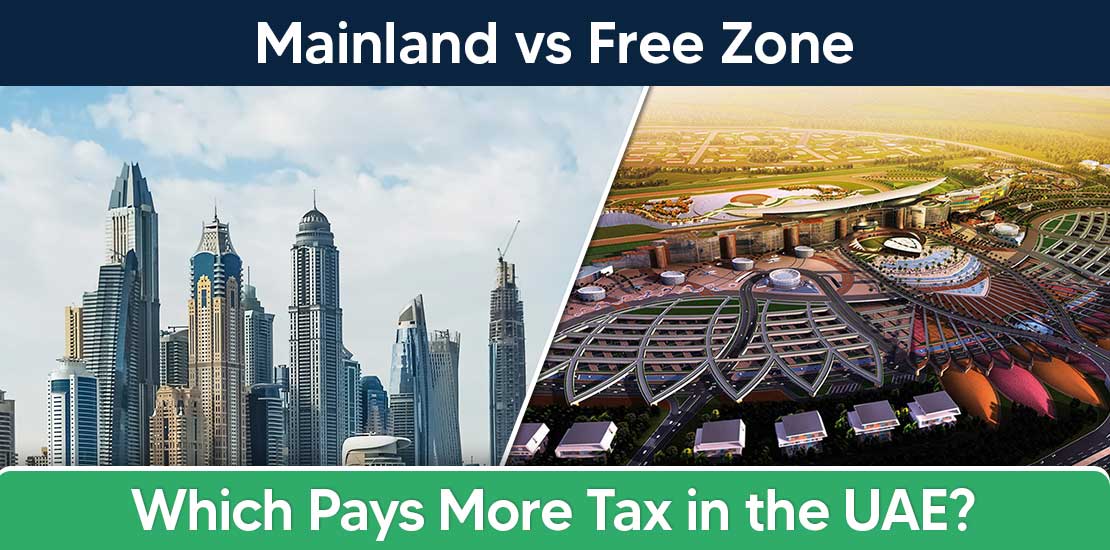
  • Corporate Tax in Mainland Vs Freezone in the UAE

    Corporate Tax in Mainland Vs Freezone in the UAE

    The UAE introduced corporate tax in 2023, a big change for businesses across the country. The goal was to align with global standards and support the nation’s growing economy. But with this new system came one common question: How does corporate tax apply to mainland and free zone companies?

    While both fall under the same tax law, the rules aren’t exactly the same. Mainland companies are generally taxed at 9%, whereas free zone businesses can still enjoy a 0% rate on qualifying income, as long as they meet the set conditions.

    Knowing these differences is important, as it helps you stay compliant but also lets you plan your taxes smartly, which can save you both money and stress.

    What is Corporate Tax in the UAE?

    Corporate tax is a direct tax on the profits of businesses. Simply put, it’s the amount companies pay to the government based on what they earn. The UAE introduced this tax to align with international tax practices, boost transparency, and support the country’s long-term economic growth. It also helps attract responsible global investors by building a stable financial environment.

    Who Needs to Pay Corporate Tax?

    Corporate tax generally applies to:

    • All mainland and free zone companies (depending on their qualifying status)
    • Foreign businesses earning income from the UAE
    • Individuals engaged in business activities that require a commercial license

    Current Corporate Tax Rate in the UAE:

    The standard corporate tax rate in the UAE is 9% on profits above AED 375,000.

    Any income below AED 375,000 is taxed at 0%, which means small and growing businesses can operate with minimal tax burden. This threshold was introduced to encourage entrepreneurship and support SMEs.

    Key Exemptions and Relief

    Not all entities are required to pay corporate tax. The following are exempt under UAE law:

    • Government and public entities
    • Extractive and natural resource businesses
    • Certain qualifying investment funds
    • Businesses wholly owned by the UAE government

    Corporate Tax for Mainland Companies in the UAE

    Mainland companies in the UAE are fully subject to corporate tax under the Federal Decree-Law No. 47 of 2022. This means that all profits earned from business activities (both within the UAE and abroad) are taxable, unless specifically exempt. The aim is to create a fair, transparent tax environment that supports the country’s sustainable economic development.

    1. Tax rates and thresholds:

    Mainland businesses are taxed at:

    • 0% on taxable income up to AED 375,000
    • 9% on taxable income above AED 375,000 

    This tiered structure ensures small and medium-sized businesses aren’t overburdened, while larger companies contribute fairly based on their profits.

    2. Treatment of Local and Foreign Income:

    Mainland companies are required to report and pay tax on their worldwide income, meaning both local and foreign profits are subject to UAE corporate tax. However, foreign income may be exempt or credited if it has already been taxed in another country, helping to avoid double taxation.

    3. Compliance Requirements:

    To stay compliant, mainland companies must:

    • Registration: Mandatory for all taxable persons (including those benefiting from the 0% threshold). Businesses must register with the Federal Tax Authority (FTA) via the EmaraTax platform and obtain a Tax Registration Number (TRN).
    • Accounting Standard: Financial statements must be prepared according to International Financial Reporting Standards (IFRS) or other accounting standards accepted in the UAE, which serves as the starting point for calculating taxable income.
    • Filing & Payment: An annual Corporate Tax Return must be filed with the FTA, and any tax due must be paid, within 9 months after the end of the relevant financial year.
    • Record Keeping: Accurate records, including all financial statements, invoices, and supporting documents, must be maintained for at least 7 years.
    • Transfer Pricing: Mainland companies with transactions involving Related Parties (local or international) must ensure these transactions comply with the internationally recognized Arm’s Length Principle.

    Proper accounting and record-keeping are crucial, as the FTA may request to review these records during audits.

    4. Example Scenario:

    Let’s say you run a trading company in Dubai mainland that earns a profit of AED 500,000 in a financial year.

    Here’s how your corporate tax would be calculated: 

    The first AED 375,000 is taxed at 0%

    The remaining AED 125,000 is taxed at 9%, resulting in a tax amount of AED 11,250 

    Corporate Tax for Free Zone Companies in the UAE

    Free zones in the UAE have long been popular for their tax incentives and business-friendly environment. Under the new corporate tax law, free zone companies can still enjoy certain tax benefits, but these depend on whether they qualify for special treatment. In short, not all free zone businesses are automatically tax-free anymore, they must meet specific conditions to keep their 0% corporate tax rate.

    1, Corporate Tax Rate for Free Zone Companies

    Here’s how the corporate tax applies to free zone entities:

    • 0% on qualifying income (if the company meets all QFZP conditions)
    • 9% on non-qualifying income or if the company fails to maintain QFZP status

    This approach allows genuine free zone operations to retain their tax advantage while ensuring fairness across all UAE businesses.

    2. Qualifying vs. Non-Qualifying Income

    Free zone companies are taxed based on the type of income they earn:

    • Qualifying income: Subject to 0% corporate tax
    • Non-qualifying income: Subject to the standard 9% corporate tax

    Qualifying income generally includes revenue from: 

    • Transactions with other free zone companies
    • Income from foreign customers outside the UAE
    • Certain regulated activities as listed by the Ministry of Finance

    Non-qualifying income usually covers: 

    • Income from business activities conducted in the UAE mainland (unless it’s considered a “passive” source like rent or dividends)
    • Any income that doesn’t meet the qualifying criteria

    3. Who is a Qualifying Free Zone Person (QFZP)?

    A Qualifying Free Zone Person (QFZP) is a company registered in a UAE free zone that meets the required conditions to enjoy a 0% corporate tax rate on qualifying income.

    To be treated as a QFZP, a business must:

    • Maintain adequate economic substance in the UAE
    • Earn qualifying income as defined by the law
    • Not elect to be subject to mainland tax
    • Comply with transfer pricing and other FTA regulations

    If any of these conditions are not met, the company will lose its qualifying status and be taxed at 9% on all income.

    4. Conditions to Make the 0% Tax Status

    To remain a QFZP and enjoy the 0% rate, a Free Zone company must satisfy the following five non-negotiable conditions:

    1. Maintain Adequate Substance: The company must demonstrate a substantial physical presence, including:

    • Sufficient Core Income Generating Activities (CIGA) being performed in the Free Zone.
    • Adequate assets, employees, and operating expenditures in the Free Zone, relative to its business activities.

    2. Derive Qualifying Income: The majority of its income must meet the ‘Qualifying Income’ definition, subject to the De Minimis rule.

    3. No Election for Standard Rate: The company must not have voluntarily elected to be subject to the standard 9% UAE Corporate Tax.

    4. Comply with Transfer Pricing: All transactions with related parties (both inside and outside the UAE) must comply with the Arm’s Length Principle and related documentation requirements.

    5. Audited Financial Statements: QFZPs are generally required to prepare and maintain audited financial statements.

    5. Example Scenario

    Imagine a tech company in Dubai Internet City that provides software development services to clients overseas. Since its income comes from foreign customers and it operates within the free zone with real substance, it can qualify for the 0% corporate tax rate.

    However, if the same company starts offering IT services to mainland businesses directly, that portion of income will be treated as non-qualifying and taxed at 9%.

    Key Differences: Mainland vs Free Zone Corporate Tax

    Here’s a quick comparison to help you see the difference at a glance:

    Criteria  Mainland Company  Free Zone Company 
    Tax Rate  9% on taxable income above AED 375,000 0% on qualifying income; 9% on non-qualifying income
    Tax Scope  Taxed on worldwide income Taxed only on non-qualifying or mainland income
    Qualifying Status  Automatically subject to corporate tax Must meet conditions to be a Qualifying Free Zone Person (QFZP)
    Eligibility for 0% Tax  Not available Available for qualifying income under QFZP rules
    Mainland Business Dealings  Can freely trade within the UAE Restricted — direct mainland trading may trigger 9% tax
    Compliance Requirements  Must register, file annual returns, and maintain records Must register, file returns, and prove QFZP compliance annually
    Example  Trading company in Dubai mainland selling locally Tech company in Dubai Internet City serving international clients

    Common Misconceptions About Corporate Tax in the UAE

    Even though the UAE’s corporate tax law is designed to be clear, a few misunderstandings still circulate among business owners. Let’s clear up some of the most common ones:

    “All free zone companies are tax-free”

    This isn’t entirely true. While many free zone businesses still enjoy a 0% corporate tax rate, this benefit only applies to qualifying income and if the company meets the Qualifying Free Zone Person (QFZP) conditions. If a free zone company earns income from the mainland or doesn’t meet the legal requirement, such as maintaining economic substance or keeping proper records – it will be taxed at 9%, just like a mainland company.

    “Free zone companies can freely trade with mainland”

    Free zone companies cannot directly trade with the UAE mainland unless they follow specific rules. If they sell goods or services to mainland customers, they must either:

    • Work through an approved mainland distributor, or
    • Open a mainland branch or subsidiary that’s subject to corporate tax.

    Direct mainland dealings can disqualify a free zone company from the 0% tax rate, so it’s important to structure such transactions carefully.

    “Corporate tax doesn’t apply to small businesses”

    Small businesses are not automatically exempt from corporate tax. However, the UAE offers a Small Business Relief program.

    If a company’s revenue does not exceed AED 3 million in a financial year (as per the latest FTA guidelines), it can opt for this relief , meaning it will be treated as having no taxable income.

    Once the revenue crosses that limit, regular corporate tax rules apply.

    We’ll Help You Make Corporate Tax Simple

    Corporate tax can sound a little confusing at first, especially when the rules differ for mainland and free zone companies. But understanding how it applies to your business can really help you plan better and avoid surprises later. If you’re not sure where your company fits in or what steps to take, Shuraa Tax can make it easy for you.

    Our team can help with corporate tax registration and Corporate tax filing, guide free zone companies on qualifying income, and offer practical tax advice for both mainland and free zone businesses.

    With Shuraa Tax guiding you, managing corporate tax becomes simple, clear, and stress-free.

    For expert advice and support, you can reach Shuraa Tax:

    📞 Call: +(971) 44081900
    💬 WhatsApp: +(971) 508912062
    📧 Email: info@shuraatax.com

    Frequently Asked Question

    1. What is corporate tax in the UAE?

    Corporate tax is a 9% tax on the profits of businesses operating in the UAE. It applies to both mainland and free zone companies, depending on their income and qualifying status.

    2. Do all free zone companies get a 0% tax rate?

    No, only Qualifying Free Zone Persons (QFZPs) can enjoy the 0% rate and only on qualifying income. If a free zone company earns non-qualifying income or trades with the mainland, it may be taxed at 9%.

    3. What is the corporate tax rate for mainland companies?

    Mainland companies pay 0% on profits up to AED 375,000, and 9% on profits above that amount.

    4. Can free zone companies trade with the UAE mainland?

    Yes, but under certain conditions. They must either work through an approved mainland distributor or open a mainland branch, which will then be subject to corporate tax.

    5. Does corporate tax apply to small businesses in the UAE?

    Small businesses can qualify for Small Business Relief if their revenue is AED 3 million or less. This allows them to be treated as having no taxable income for that financial year.

  • UAE Corporate Tax Compliance: A Complete Guide

    UAE Corporate Tax Compliance: A Complete Guide

    The UAE has always been a favourite place for businesses thanks to its strong economy, modern infrastructure, and global connections. But in January 2022, the country made a big change by introducing a federal corporate tax law (Federal Decree-Law No. 47 of 2022, as amended). From 1 June 2023 onwards, companies in the UAE are required to follow this new system and pay tax on their business profits.

    This means UAE corporate tax compliance has now become a must for all businesses. It’s not only about avoiding penalties; staying compliant also helps companies build trust, keep their reputation strong, and run operations smoothly. On the other hand, ignoring these rules can lead to fines, legal troubles, and unnecessary financial risks.

    Therefore, we’ll explain everything you need to know about corporate tax in the UAE. We’ll cover who needs to pay, the tax rates, registration and filing process, penalties for missing deadlines, special rules for free zones, and practical tips to stay compliant.

    UAE Corporate Tax Overview

    Corporate tax is a direct tax on the profits earned by companies and businesses. In simple terms, it’s a percentage of a business’s net income that must be paid to the government. The UAE introduced this system to align with global standards, diversify revenue streams, and enhance transparency in its economy.

    Key Features of the UAE Corporate Tax System:

    • Introduced under Federal Decree-Law No. 47 of 2022 (as amended).
    • Standard tax rate of 9% on taxable income above AED 375,000.
    • 0% tax rate on profits up to AED 375,000 (to support small businesses and startups).
    • Free zone businesses can still enjoy 0% tax on qualifying income, provided they meet specific conditions.
    • Certain entities (like natural resource businesses and government bodies) are exempt from corporate tax.
    • Complies with OECD global tax standards and includes rules for transfer pricing and transparency.

    What is a Taxable Person?

    A taxable person is any individual or legal entity that is required to pay corporate tax in the UAE. This includes:

    • Resident juridical persons (like LLCs, PSCs, and PJSCs incorporated in the UAE).
    • Non-resident juridical persons with a permanent establishment in the UAE.
    • Natural persons (individuals) who carry on a business activity in the UAE and cross the income threshold set by the FTA.
    • Free zone entities that don’t meet conditions for qualifying income.

    In simple terms, if you’re earning business profits in the UAE (unless exempt by law), you fall under the definition of a taxable person.

    Who is Subject to UAE Corporate Tax?

    The corporate tax applies to a wide range of businesses and individuals with a business license in the UAE.

    • Mainland Companies: All UAE-registered businesses must comply, unless specifically exempt.
    • Free Zone Companies: Subject to corporate tax, but may continue to enjoy 0% on qualifying income if they meet the FTA’s requirements.
    • Offshore Companies: Also within the scope if they earn income from the UAE or manage operations here.
    • Foreign Companies/Individuals: Only taxed if they conduct trade or have a permanent establishment in the UAE.

    What are the UAE Corporate Tax Compliance Requirements?

    For businesses in the UAE, complying with corporate tax is essential to understand your obligations, meet deadlines, and keep proper financial records. Here’s a breakdown of the key requirements:

    1. Determining Your Corporate Tax Obligations

    Every business must first figure out whether it falls under the corporate tax regime. This means checking if you are a taxable person (mainland company, free zone entity, or non-resident with UAE operations) and understanding the applicable tax rates to your income, exemptions, and thresholds.

    2. Corporate Tax Registration with the Federal Tax Authority (FTA)

    All taxable businesses must register with the FTA and obtain a Tax Registration Number (TRN) before they start paying corporate tax. Key points include:

    • Registration can be done online through the FTA portal.
    • Even free zone companies may need to register if they earn non-qualifying income.
    • Failure to register on time can result in penalties and affect your ability to claim certain exemptions.
    • The FTA may require supporting documents, such as a trade license, passport copies of owners, and proof of business operations

    3. Corporate Tax Return Filing Deadlines

    Businesses must file annual corporate tax returns reporting their profits, deductions, and exemptions. Corporate Tax Returns are typically due 9 months after the end of the financial year.

    Returns must include a breakdown of taxable income, expenses, and any free zone qualifying/non-qualifying income. Late or inaccurate filings can result in financial penalties, interest on unpaid tax, or additional audits.

    4. Accounting and Bookkeeping Requirements

    Proper accounting is essential for smooth compliance. Businesses must:

    • Maintain accurate books of accounts, including ledgers, journals, and statements of income and expenses.
    • Follow International Financial Reporting Standards (IFRS) or approved local accounting standards.
    • Track all business transactions, including income, costs, assets, and liabilities.
    • Ensure digital or physical records are readily accessible for FTA review or audit.

    5. Maintaining Audited Financial Statements

    Many companies, especially those in free zones or large businesses, must maintain audited financial statements. Even when not mandatory, audits are highly recommended as they provide credibility and ensure accuracy when filing tax returns.

    6. Documentation & Record-Keeping

    Proper documentation is the backbone of compliance. Businesses must keep:

    • Financial records such as income statements, expense records, invoices, receipts, and bank statements.
    • Contracts and agreements with customers, suppliers, and related parties.
    • Transfer pricing documentation for intercompany transactions to show compliance with OECD guidelines.
    • Any supporting documents that justify deductions, exemptions, or special tax treatments.

    7. Payment of Corporate Tax

    Businesses must ensure that any corporate tax due is paid within the deadlines specified by the Federal Tax Authority (FTA). It is important to reconcile tax returns with actual payments to avoid discrepancies and ensure accuracy. Keeping proof of all tax payments is essential, as these records may be requested during an FTA audit or review.

    8. Transfer Pricing Compliance

    Businesses with related-party transactions must follow arm’s length principles, ensuring that pricing is consistent with what independent parties would agree upon. Companies are required to prepare transfer pricing reports when applicable.

    Remember, Shuraa Tax offers end-to-end corporate tax compliance services in the UAE, including tax registration, corporate tax return filing, advisory on exemptions, and transfer pricing documentation. Our expert team ensures your business meets all corporate tax compliance requirements.

    What are the Penalties for Non-Compliance?

    Non-compliance with UAE corporate tax regulations can lead to significant financial penalties. Here’s an overview of the key penalties businesses may face:

    1. Late Registration Penalty

    Failure to register for corporate tax within the prescribed timeline incurs a fixed penalty of AED 10,000, regardless of the business’s tax liability status. This penalty applies even if the business is not yet liable to pay tax.

    2. Late Filing of Tax Returns

    Businesses that miss the deadline for submitting their corporate tax returns face escalating monthly penalties:

    • AED 500 per month for the first 12 months of delay.
    • AED 1,000 per month if the delay extends beyond 12 months.

    3. Late Payment of Taxes

    If your corporate tax payment is delayed, a 14% annual penalty will start accruing from the day after the deadline. This continues until the full amount is paid, making it crucial to pay on time.

    4. Failure to Keep Proper Records

    Not maintaining accurate financial records or supporting documents can result in fines of AED 10,000 for the first offence and AED 20,000 if repeated within 2 years. Proper records are essential to support your filings and simplify any audits.

    5. Incorrect or Misleading Tax Returns

    Submitting an incorrect tax return can lead to AED 500 penalty, although this can often be avoided if the mistake is corrected before the filing deadline.

    Note: The FTA offers a penalty waiver for businesses that missed registration. If you submit your first corporate tax return within seven months of the end of your first tax period, the AED 10,000 registration penalty can be waived or refunded if already paid.

    Shuraa’s Corporate Tax Compliance Services

    Ensuring corporate tax compliance in the UAE is very important for every business. It helps you avoid fines, stay on the right side of the law, and keep your company running smoothly. From registering with the FTA to filing your tax returns and keeping proper records, each step matters for hassle-free compliance.

    Shuraa Tax is here to make the whole process easier. We offer comprehensive corporate tax compliance services in the UAE, including tax registration, filing corporate tax returns, guidance on exemptions, and transfer pricing documentation.

    Don’t let corporate tax obligations slow your business down. Contact Shuraa Tax today for expert guidance and enjoy smooth, stress-free compliance in the UAE.

    📞 Call: +(971) 44081900

    💬 WhatsApp: +(971) 508912062

    📧 Email: info@shuraatax.com

  • UAE Corporate Tax Deadline 2026

    UAE Corporate Tax Deadline 2026

    The UAE introduced corporate tax in June 2023, which marks a big change for businesses in the country. Under this new system, companies must file their corporate tax returns every year, within nine months after their financial year ends. For example, if your business follows the January–December financial year, your first tax return deadline will be 30 September 2026.

    This UAE corporate tax deadline is very important because missing it can lead to serious issues, including fines, extra charges, and even interest on unpaid taxes. In some cases, repeated delays may trigger audits or affect your reputation with the Federal Tax Authority (FTA). Even free zone businesses that enjoy the 0% corporate tax rate must still file their returns on time – filing is mandatory for everyone.

    What is the UAE Corporate Tax Deadline 2026?

    The UAE’s corporate tax rules require businesses to file their returns within nine months from the end of their financial year. That means the actual deadline depends on your company’s chosen financial year.

    For businesses following the January–December financial year (calendar year): 

    Your first tax period will be 1 January 2024 to 31 December 2024, and the deadline to file your return will be 30 September 2026.

    For businesses following the April–March financial year: 

    Your first tax period will be 1 April 2024 to 31 March 2026, and the deadline to file your return will be 31 December 2026.

    What are the Key Compliance Requirements Before the Deadline?

    To make sure your business is ready for the corporate tax deadline in the UAE, there are a few important steps you need to complete in advance:

    1. Corporate Tax Registration

    Every business that falls under the corporate tax law must register with the Federal Tax Authority (FTA). Without registration, you won’t be able to file your return.

    2. Maintain Proper Financial Records

    Businesses are required to keep accurate books of accounts, financial statements, and supporting documents. These records should clearly reflect your income, expenses, and any exemptions or deductions claimed.

    3. Prepare the Corporate Tax Return

    The tax return must be completed in line with FTA requirements. This includes calculating taxable income, applying exemptions (if applicable), and ensuring all figures match your official records.

    4. File the Return on Time

    Submit your corporate tax return electronically through the FTA’s portal before the due date. Late submissions can trigger penalties even if no tax is payable.

    5. Pay the Tax Due

    If your business owes corporate tax, make sure the payment is made before the deadline. Delayed payments result in interest charges and additional fines.

    How to File a Corporate Tax Return in the UAE?

    Filing a corporate tax return in the UAE is done online through the Federal Tax Authority (FTA) portal. Here’s how it works:

    1. Register for Corporate Tax

    First, make sure your business is registered with the FTA for corporate tax. Once approved, you’ll receive a Corporate Tax Registration Number (TRN) that you’ll use for filing.

    2. Log in to the FTA Portal

    Go to the FTA e-Services portal using your registered account. Select the option for Corporate Tax to start your filing process.

    3. Prepare Your Financial Information

    Gather your audited financial statements and supporting records. Calculate your taxable income after applying exemptions or reliefs (like the AED 375,000 profit threshold at 0% tax).

    4. Fill Out the Corporate Tax Return Form

    Enter details such as income, expenses, adjustments, and exemptions. Double-check that the numbers match your financial statements.

    5. Review and Submit

    Carefully review the form to avoid errors. Submit the return electronically before the deadline.

    6. Pay Any Tax Due

    If your return shows tax payable, you must make the payment through the FTA’s system before the due date. You can pay via bank transfer, e-dirham, or other FTA-approved methods.

    7. Keep Records Safe

    The FTA requires businesses to keep their records for at least seven years. These may be requested during audits or inspections.

    What are the Penalties for Late Filing or Non-Compliance?

    Missing the corporate tax deadline can lead to serious consequences, including significant penalties and fines.

    1. Late Filing of Corporate Tax Returns:

    After the filing deadline, the FTA charges monthly fines:

    • AED 500 per month (or part of a month) for the first 12 months.
    • AED 1,000 per month from the 13th month onwards (continuing until you file the return).

    2. Late Registration Penalty:

    Businesses that fail to register for corporate tax within the specified deadlines can face a penalty of AED 10,000. However, the FTA has offered a temporary waiver for this penalty. To qualify, a business must file its first corporate tax return or annual declaration within seven months from the end of its first tax period.

    How Shuraa Tax Can Help Businesses

    The 2026 corporate tax deadline is very important for every business in the UAE. Filing on time helps you avoid fines, extra charges, and unnecessary stress. It also shows that your company is responsible and fully compliant with the Federal Tax Authority.

    With Shuraa Tax, you don’t have to worry about the process. Our team helps with everything – from corporate tax registration to filing returns correctly and on time. We also offer full advisory support, including help with penalty waivers if you’ve missed something in the past.

    Instead of stressing over rules and deadlines, let Shuraa Tax handle it for you. Get in touch with us today and make your corporate tax journey smooth and hassle-free.

    📞 Call: +(971) 44081900
    💬 WhatsApp: +(971) 508912062
    📧 Email: info@shuraatax.com

    Frequently Asked Questions

    1. What is the UAE corporate tax deadline for 2026?

    The deadline depends on your company’s financial year. If your year ends 31 December 2024, the filing deadline is 30 September 2026. If your year ends 31 March 2026, the filing deadline is 31 December 2026.

    2. How do I register for corporate tax in the UAE?

    You can register online through the FTA’s EmaraTax portal. Once approved, you’ll receive a Corporate Tax Registration Number (TRN).

    3. Do free zone companies also need to file corporate tax returns?

    Yes. Even if you qualify for a 0% rate as a free zone business, you are still required to register and file a corporate tax return on time.

    4. What is the corporate tax registration deadline in the UAE?

    The registration deadline varies based on your company’s license issuance date. The FA has issued specific schedules for different entity types. Generally, if you’re a UAE resident juridical person, your deadline is tied to the month your trade license was issued. For entities established on or after March 1, 2024, the deadline is within three months of their establishment.

    5. What happens if I miss the 2026 tax deadline?

    Missing the deadline can lead to fines, monthly penalties, and interest on unpaid taxes. It may also trigger FTA audits.

  • Understanding UAE Corporate Tax for Free Zone Person

    Understanding UAE Corporate Tax for Free Zone Person

    The implementation of UAE Corporate Tax for Free Zone Persons marks a significant shift in the country’s tax landscape, especially for businesses that have long benefited from zero-tax incentives. Free Zone Persons are now required to carefully assess how these rules apply to their operations, income sources, and ongoing eligibility for tax exemptions.

    While the UAE continues to position its free zones as competitive hubs for international trade and investment, the introduction of a corporate tax regime introduces new criteria to distinguish between qualifying and non-qualifying income. For Free Zone Persons, understanding these nuances is essential to maintain compliance, optimise tax efficiency, and fully leverage the advantages offered by the UAE’s free zone framework.

    This guide explains the key provisions, eligibility requirements, and strategic considerations every Free Zone Person should know under the new corporate tax system.

    UAE Corporate Tax in Free Zones

    The UAE introduced federal corporate tax in June 2023. Still, Free Zone Persons (businesses registered in UAE Free Zones) benefit from a unique tax framework designed to maintain the country’s competitiveness as a global business hub.

    Free Zones were established to attract foreign investment with incentives such as 100% foreign ownership, simplified import/export procedures, and favourable tax regimes. Under the new corporate tax law, these zones continue to enjoy significant advantages, provided certain conditions are met.

    Key Features:

    • Qualifying Income: Free Zone companies can enjoy a 0% corporate tax rate on income derived from transactions with businesses outside the UAE, within the same Free Zone, or other Free Zones, as long as these are considered “qualifying activities.”
    • Non-Qualifying Income: Income earned from mainland UAE (non-Free Zone) entities or non-qualifying activities is generally subject to the standard 9% corporate tax rate.
    • Substance Requirements: To benefit from the 0% tax rate, Free Zone Persons must maintain adequate economic substance, including a real office space, active operations, and a sufficient number of employees within the Free Zone.
    • Compliance Obligations: Even if a Free Zone entity qualifies for the 0% tax rate, it must register, file annual tax returns, and maintain proper records to remain compliant with the Federal Tax Authority (FTA).
    • Optional Election: In some cases, Free Zone companies can opt to be taxed at 9% if they expect to have mostly non-qualifying income.

    Why this matters:

    The UAE’s corporate tax regime strikes a balance between its need for global alignment with OECD tax principles and preserving the attractiveness of Free Zones. Businesses operating in Free Zones should carefully assess their income streams and structure to ensure they maximise tax efficiency without breaching compliance requirements.

    What are Free Zones in the UAE?

    Free Zones in the UAE are designated special economic areas that offer businesses a range of commercial benefits and tax incentives to attract foreign investment. They were introduced to diversify the UAE’s economy beyond oil and create a global hub for trade, logistics, finance, technology, and manufacturing.

    Key Features of UAE Free Zones

    1. 100% Foreign Ownership – Foreign investors can fully own companies in Free Zones without requiring a local partner.
    2. Tax Incentives – Traditionally, Free Zone companies have enjoyed exemptions from corporate and personal income taxes. Under the new corporate tax law, many still qualify for a 0% corporate tax rate on qualifying income.
    3. Customs Benefits – Goods imported, manufactured, and re-exported within Free Zones are usually exempt from customs duties.
    4. Simplified Setup Process – Free Zones often offer streamlined company formation, licensing, and visa processing.
    5. Sector-Specific Zones – Many Free Zones focus on particular industries, such as media (Dubai Media City), finance (Dubai International Financial Centre), aviation (Dubai Airport Free Zone), or logistics (Jebel Ali Free Zone).
    6. Modern Infrastructure – Free Zones provide world-class office space, warehousing, and logistics facilities to support global operations.

    Why Free Zones Matter

    • For Startups: Quick setup and lower costs make Free Zones an attractive option for entrepreneurs.
    • For multinationals: A prime location between Europe, Asia, and Africa provides easy access to regional markets.
    • For the UAE Economy: They help diversify revenue sources, boost trade, and encourage innovation.

    Understanding UAE Corporate Tax for Free Zone Persons

    In the UAE, Free Zone Persons are businesses or individuals that operate exclusively within one of the country’s designated free zones. These zones provide unique advantages, including exemptions from certain taxes and streamlined regulations, to encourage investment and economic growth. With the new UAE corporate tax framework, Free Zone Persons need to understand how their income may be impacted.

    1. Natural Person

    A natural person in this context refers to an individual operating a business in the UAE. If their business income exceeds AED 1 million in a year, it becomes subject to UAE corporate tax. Income from employment or investments that do not require a trade license is exempt from taxation under this regime.

    2. Juridical Person

    Juridical persons are legal entities such as companies, partnerships, or corporations recognised by UAE law. These entities are required to pay corporate tax on profits earned from business activities within the UAE, including those conducted in free zones.

    By understanding these rules, Free Zone Persons, whether individual entrepreneurs or corporate entities, can plan their operations efficiently and ensure compliance with the UAE corporate tax system.

    Tax Rates for Free Zone Persons

    Free Zone Persons in the UAE benefit from a specially structured corporate tax regime, designed to encourage investment while ensuring compliance with the UAE Corporate Tax law. The applicable tax rates depend on whether the entity is a natural person or a juridical person, as well as the level of taxable income.

    Key Points for Free Zone Persons: 

    1. 0% Corporate Tax

    • Many Free Zone Persons may continue to enjoy a 0% corporate tax rate if they meet certain conditions, such as deriving income solely from within the free zone and complying with all regulatory requirements.
    • This makes free zones an attractive option for startups, multinational subsidiaries, and export-oriented businesses.

    2. Standard Corporate Tax Rate

    • Free Zone Persons whose taxable income exceeds the AED 1 million threshold, or who earn income from outside the free zone, may be subject to the standard UAE corporate tax rate of 9%.
    • This applies to both natural and juridical persons if they do not qualify for exemptions or incentives provided to free zone businesses.

    3. Exemptions & Conditions

    • Free Zone Persons must maintain adequate substance, proper financial reporting, and licensing compliance to qualify for preferential tax treatment.
    • Tax incentives may vary between free zones, so businesses must check the specific rules applicable to their zone.

    Free Zone Persons can either benefit from 0% tax under qualifying conditions or be liable for the 9% standard corporate tax if thresholds are exceeded or regulatory conditions are not fully met. Understanding these rates is crucial for planning business operations and maximising benefits under the UAE corporate tax system.

    Will Free Zones Be Affected by Corporate Tax?

    Yes, Free Zones in the UAE will be affected by the new corporate tax regime, but the impact depends on how Free Zone Persons operate and structure their businesses. While free zones were historically tax-exempt, the introduction of UAE corporate tax means that even businesses in these zones need to understand their obligations.

    How Free Zone Persons Are Affected: 

    1. Qualified Free Zone Persons – Businesses that meet all regulatory requirements and generate income primarily within the free zone can continue to enjoy preferential tax treatment, often at a 0% corporate tax rate.
    2. Income Thresholds – If a Free Zone Person’s taxable income exceeds AED 1 million, or if they earn income outside the free zone, the standard corporate tax rate of 9% may apply.
    3. Compliance Requirements – Free Zone Persons must maintain proper financial records, have adequate economic substance, and comply with licensing regulations to benefit from tax incentives. Failure to meet these conditions can trigger corporate tax liability.

    Zones remain attractive for investors, but they are no longer automatically exempt from corporate tax. Free Zone Persons must carefully assess their business activities, income sources, and compliance obligations to ensure they maximise available benefits under the UAE Corporate Tax for Free Zone Persons.

    What is a Qualifying Activity?

    In the context of UAE corporate tax, a Qualifying Activity refers to specific business operations that a Free Zone Person can conduct to benefit from preferential tax treatment. Not all activities automatically qualify; only those recognised by the free zone authority and aligned with the UAE corporate tax rules are eligible.

    Key Features of Qualifying Activities: 

    1. Approved Business Operations: The activity must be explicitly permitted under the free zone’s licensing regulations. Examples often include trading, manufacturing, consulting, IT services, and export-oriented activity.
    2. Income Source Requirement: Only income generated directly from these qualifying activities within the free zone is considered for the 0% corporate tax rate. Revenue from activities outside the approved scope may be subject to taxation at the standard rate.
    3. Substance Alignment: The activity should be supported by tangible business presence, such as employees, offices, or equipment within the free zone. This ensures the business is genuinely operating rather than existing only on paper.
    4. Compliance with Free Zone Rules: To maintain the benefits, the business must continue to meet the reporting, licensing, and regulatory requirements associated with its qualifying activities.

    Only businesses carrying out qualifying activities can enjoy corporate tax incentives in free zones. Understanding what counts as a qualifying activity helps Free Zone Persons plan their operations, avoid penalties, and maximise tax efficiency.

    What is Qualifying Income?

    In the UAE corporate tax framework, Qualifying Income refers to revenue or profits earned by a Free Zone Person that are eligible for preferential tax treatment, such as the 0% corporate tax rate. Not all income earned by free zone businesses automatically qualifies; only income arising from approved activities and sources is considered.

    Key Characteristics of Qualifying Income: 

    1. Derived from Qualifying Activities: The income must originate from business operations recognised as qualifying activities by the free zone authority, such as trading, consulting, IT services, manufacturing, or export-focused services.
    2. Within Free Zone Operations: To be treated as qualifying, the income must be generated from activities carried out within the free zone itself. Revenue from outside the free zone may be subject to the standard corporate tax regime.
    3. Compliant with Regulatory Requirements: Only income from businesses that maintain proper records, comply with licensing rules, and meet substance requirements qualifies. Non-compliant operations can result in the partial or complete loss of tax benefits.
    4. Exclusions: Passive income such as personal investments, employment wages, or unrelated business activities, typically do not count as qualifying income for Free Zone Persons.

    Why It Matters: 
    Identifying and maintaining a qualifying income is essential for Free Zone Persons to benefit from UAE corporate tax incentives. Proper planning ensures businesses maximise their tax efficiency while remaining fully compliant.

    Conditions for Qualifying Free Zone Person

    Not all businesses in UAE free zones automatically benefit from corporate tax incentives. To be recognised as a Qualifying Free Zone Person, a company or individual must meet certain conditions set under the UAE corporate tax rules. These requirements ensure that tax benefits are reserved for businesses genuinely operating within free zones.

    Key Conditions: 

    1. Incorporation in a Free Zone: The entity must be legally registered and licensed to operate within one of the UAE’s designated free zones.
    2. Eligible Activities: Income must arise from activities approved by the free zone authority. Certain prohibited or excluded business activities may disqualify a Free Zone Person from preferential tax treatment.
    3. Substance Requirements: The business must maintain adequate economic substance in the free zone. This includes having an office, employees, and operations aligned with the nature of its licensed activities.
    4. Regulatory Compliance: The entity must comply with all free zone regulations, including reporting, licensing, and filing requirements.
    5. Income Limitations: Only income derived from eligible sources within the free zone is considered for the 0% corporate tax rate. Income earned outside the free zone or exceeding certain thresholds may be taxed at the standard rate.

    By fulfilling these conditions, Free Zone Persons can retain their 0% corporate tax benefits, making it essential for businesses to carefully manage operations, licensing, and reporting in line with UAE corporate tax rules.

    What are Qualifying Activities and Non-Qualifying Activities?

    In the context of UAE Corporate Tax for Free Zone Persons, understanding the distinction between Qualifying Activities and Non-Qualifying Activities is crucial, as only income from qualifying activities is eligible for the 0% corporate tax rate in Free Zones. Here’s a detailed breakdown:

    Activity Type  Definition  Examples  Tax Treatment 
    Qualifying Activities  Activities eligible for Free Zone tax benefits Export of goods, IT/consulting services, IP licensing, and manufacturing 0% corporate tax (if other conditions met)
    Non-Qualifying Activities  Activities outside the scope of Free Zone benefits Trading on the mainland without approval, unrelated investments, income from non-Free Zone operations Standard UAE corporate tax (9%)

    Tax Applicability for Different Types of Entities

    The UAE corporate tax framework applies differently depending on the type of entity and the nature of its business activities. Understanding these distinctions is crucial for ensuring compliance and optimising tax obligations.

    1. Mainland Companies

    All companies registered in the UAE mainland are subject to corporate tax on their global income, meaning profits earned both inside and outside the country are considered for taxation. This ensures that mainland businesses contribute appropriately under the UAE corporate tax system.

    2. Free Zone Companies

    Free Zone Persons can enjoy special tax benefits, including a 0% corporate tax rate on qualifying income. To retain this status, entities must comply with the free zone’s regulatory requirements, maintain proper accounting records, and conduct eligible business activities as defined under the UAE corporate tax rules.

    3. Foreign Companies with Permanent Establishments (PEs)

    Foreign businesses operating in the UAE through a Permanent Establishment are liable to pay corporate tax on income generated within the UAE. Only profits attributable to the PE are taxed, ensuring that international businesses are compliant without incurring tax on their global earnings outside the UAE.

    4. Individuals with Commercial Licenses

    Individuals carrying out business activities under a UAE commercial license—whether as sole proprietors or freelancers—are subject to corporate tax on their business income. This ensures that natural persons conducting commercial activities are included under the UAE corporate tax regime.

    The UAE corporate tax system encompasses a wide range of entities, including mainland companies, Free Zone Persons, and licensed individuals. Each category has specific rules and conditions, making it essential for businesses and entrepreneurs to understand their tax responsibilities thoroughly.

    What is the De Minimis Tax Rule?

    The De Minimis Tax Rule is a tax principle employed in many countries that allows for the exclusion of tiny amounts of income, transactions, or benefits from taxation, as they are deemed too trivial to warrant tax collection. The term “de minimis” comes from the Latin phrase “de minimis non curat lex”, which means “the law does not concern itself with trifles.”

    Here’s a breakdown of how it works: 

    1. Purpose:

    • The rule is designed to reduce the administrative burden for both taxpayers and tax authorities. If the taxable amount is minimal, it is not worth the cost and effort of taxing it.

    2. Common Applications:

    • Income: Small gifts, reimbursements, or allowances provided by an employer may not be taxed if they fall under the de minimis threshold.
    • Goods and Services: In customs or VAT law, items of very low value may be exempt from taxes.
    • Corporate Tax: Some countries allow minor foreign transactions or benefits below a set threshold to be ignored for tax purposes.

    3. Example:

    • If an employer gives each employee a gift worth $50 once a year, and the de minimis threshold for gifts is $100, this gift would not be taxed.
    • Small errors in invoicing or minor currency gains below a certain threshold might also be ignored under this rule.

    4. Key Point:

    • The specific threshold for what counts as “de minimis” varies by country, tax type, and context. Always check local tax laws to see the applicable limits.

    Navigating UAE Corporate Tax for Free Zone Persons with Shuraa Tax!

    The introduction of UAE Corporate Tax for Free Zone Persons reflects the UAE’s commitment to aligning with global tax standards while preserving the benefits that make its free zones internationally competitive.

    For Free Zone Persons, this means that while preferential tax rates, such as the 0% corporate tax on qualifying income- remain available, they are no longer automatic. Businesses must now ensure they meet substance requirements, comply with reporting obligations, and correctly classify qualifying versus non-qualifying income to maintain these advantages.

    Navigating these changes requires careful planning and a clear understanding of the UAE corporate tax framework. Partnering with experts like Shuraa Tax can help businesses structure their operations efficiently, stay fully compliant, and optimise their tax position under the new regime.

    Whether you are a startup, multinational subsidiary, or individual entrepreneur, proactive tax planning is essential to secure the benefits of operating in the UAE Free Zones. Shuraa Tax – Your trusted partner for UAE Corporate Tax compliance.

    📞 Call: +(971) 44081900
    💬 WhatsApp: +(971) 508912062
    📧 Email: info@shuraatax.com

    FAQs

    Q1. What is Free Zone Corporate Tax in UAE?

    Free Zone Corporate Tax is a specific UAE corporate tax regime that allows qualifying businesses in designated Free Zones to benefit from preferential tax treatment. Eligible Free Zone entities may enjoy a 0% corporate tax on qualifying income, subject to meeting certain conditions.

    Q2. What are the Tax Rates and Thresholds for Free Zone Entities?

    Qualifying Free Zone entities can enjoy a 0% corporate tax on qualifying income. However, if the entity earns income outside the Free Zone or fails to meet eligibility requirements, regular UAE corporate tax rates may apply.

    Q3. What is the Taxation Process for Free Zone Entities in the UAE?

    The taxation process includes:

    • Registering with the UAE Federal Tax Authority (FTA)
    • Determining taxable income
    • Filing annual corporate tax returns
    • Claiming eligible exemptions and benefits for qualifying income

    Q4. What are Free Zone Entities’ Obligations Regarding Filing and Reporting?

    Free Zone entities must:

    • Maintain proper accounting records
    • Submit annual corporate tax returns to the FTA
    • Report any non-qualifying income earned outside the Free Zone
    • Notify the FTA of any changes in business activity or ownership

    Q5. What are the Free Zone Corporate Tax Filing Documents?

    Required documents typically include:

    • Financial statements (audited, if applicable)
    • Corporate tax return forms
    • Details of income and expenses
    • Supporting documents for exemptions and qualifying income

    Q6. What is the Free Zone Corporate Tax Filing Timeline?

    • Annual corporate tax returns must generally be filed within 9 months of the end of the financial year.
    • Deadlines may vary depending on the Free Zone authority and the nature of the business.

    Q7. What are the Penalties for Non-Compliance with Free Zone Corporate Tax?

    Penalties can include:

    • Fines for late or inaccurate filing
    • Penalties for failure to maintain proper records
    • Interest on unpaid taxes
    • Potential loss of Free Zone tax benefits

    Q8. How Do Corporate Tax Benefits Work for Free Zone Businesses?

    • Eligible Free Zone entities can enjoy 0% corporate tax on qualifying income.
    • Tax benefits help attract investment, reduce costs, and encourage business growth within Free Zones.
    • Benefits apply as long as the entity meets all compliance requirements and conducts qualifying activities.

    Q9. What’s the Difference Between Corporate Tax in the Mainland and Free Zones?

    • Mainland Companies: Subject to UAE corporate tax on worldwide income.
    • Free Zone Entities: Can benefit from preferential 0% tax on qualifying income, provided they meet conditions set by the FTA and Free Zone authority.
    • Free Zone tax benefits are generally not applicable if income is earned outside the Free Zone or if compliance requirements are not met.
  • Corporate Tax Fines and Penalties in UAE

    Corporate Tax Fines and Penalties in UAE

    With the implementation of the UAE Corporate Tax regime, businesses across the Emirates are expected to comply with the new tax rules. Failing to meet these obligations can result in significant Corporate Tax fines in UAE, including penalties for late registration, incorrect filing, and non-compliance.

    In this blog, we’ll break down the penalties for UAE Corporate Tax, explore the UAE Corporate Tax Penalty Waiver, and provide clear steps to avoid these costly fines.

    What Is the UAE Corporate Tax Penalty Waiver?

    The UAE Corporate Tax Penalty Waiver is a government-backed relief initiative launched by the Ministry of Finance and implemented by the Federal Tax Authority (FTA). It is designed to support businesses that may have struggled to comply with new tax regulations, especially during the initial phases of implementing the UAE’s corporate tax system.

    Under this waiver scheme, eligible businesses can apply to have administrative penalties reduced or completely waived, provided they fulfil certain conditions. These penalties typically include fines related to:

    • Late registration for corporate tax
    • Late filing of tax returns
    • Late payment of corporate tax liabilities
    • Failure to maintain proper accounting records
    • Other non-compliance actions under the UAE Tax Procedures Law

    Why the UAE Launched the Corporate Tax Penalty Waiver

    The UAE government introduced the corporate tax penalty waiver as a strategic move to support the business community during the early stages of the new corporate tax regime. Here’s a breakdown of the key reasons behind this initiative:

    1. Encourage Voluntary Tax Compliance

    The waiver motivates businesses to come forward, register, and comply with tax regulations without fear of heavy penalties. This builds a culture of self-compliance rather than enforcement-led compliance.

    2. Ease the Transition to the New Corporate Tax Regime

    Since corporate tax is a new concept for many businesses in the UAE, the waiver serves as a grace period. It helps companies understand, adapt, and comply with new tax laws without the immediate burden of fines.

    3. Support Businesses with New Reporting Standards

    Filing taxes involves new financial reporting, recordkeeping, and documentation. The waiver acknowledges this learning curve and provides businesses, especially small and medium enterprises (SMEs), breathing room to adjust appropriately.

    4. Strengthen Economic Stability

    By reducing legal and financial stress, especially on smaller firms, the waiver promotes a healthier business environment. This helps maintain investor confidence and economic growth in the face of regulatory changes.

    The UAE’s goal is not to punish businesses, but to guide them towards full compliance while maintaining a stable and supportive economic environment.

    Aims of the Waiver

    The UAE Corporate Tax Penalty Waiver is more than just a short-term financial relief — it’s a strategic move by the government with broader goals in mind:

    1. Promoting Long-Term Compliance

    By offering a second chance to businesses, the waiver encourages them to meet their tax responsibilities moving forward consistently. It builds a habit of timely registration, filing, and payment, aligning businesses with the new tax culture in the UAE.

    2. Educating Businesses on Their Tax Obligations

    The waiver period serves as an educational window. Businesses unfamiliar with the new corporate tax regime have the opportunity to learn about their duties without facing harsh penalties immediately.

    3. Creating a Fair and Transparent Tax Environment

    The initiative supports a level playing field where all companies are held to the same standards. Transparent rules and penalty relief help build trust between authorities and businesses.

    4. Minimising Errors in Initial Tax Filings

    As the law is new, mistakes are expected. The waiver helps businesses correct these early errors without facing punitive consequences, thus reducing the administrative burden on both the taxpayer and the government.

    In short, the waiver aims to build a strong, compliant, and educated business community in line with international tax standards.

    Who Qualifies for the UAE Corporate Tax Penalty Waiver?

    Your business may be eligible for the UAE Corporate Tax penalty waiver if it takes the right corrective actions within the stipulated timeframe. The Federal Tax Authority (FTA) has outlined key conditions businesses must meet to qualify:

    1. Timely Payment of Taxes

    You must pay all outstanding corporate tax dues by the deadline set by the FTA. Without clearing your liabilities, you won’t be considered for the waiver.

    2. Accurate Tax Return Filing

    Your corporate tax returns should be filed accurately and on time. Filing errors or delays can disqualify your business from the waiver benefits.

    3. Correction of Errors

    If you’ve made any mistakes or left out information in previous tax filings, you must correct those errors through proper channels before applying.

    4. Voluntary Disclosure Compliance

    You must meet the criteria for voluntary disclosure, as defined by the FTA. This means proactively coming forward to correct your filings before the FTA identifies the issue.

    Important Note: 

    The FTA may reject waiver requests in the following cases:

    • If your business fails to meet any of the above conditions
    • If the penalties were imposed due to fraudulent behaviour or intentional misreporting
    • Being proactive, transparent, and compliant is essential to benefit from the waiver scheme.

    How to Register for Corporate Tax and File on Time in the UAE

    To avoid penalties and stay compliant with UAE’s Corporate Tax law, businesses must follow a structured process for registration and timely filing:

    Step 1: Register on the EmaraTax Portal

    All businesses, whether taxable or not, must register for Corporate Tax through the EmaraTax portal. This is a mandatory step introduced by the Federal Tax Authority (FTA).
    Even if your business qualifies for a 0% rate or exemption, registration is still required.

    Step 2: Prepare and Upload Required Documents

    Before starting your registration, keep the following documents ready:

    • Valid Trade License(s)
    • Emirates ID of business owners or authorised signatories
    • Passport copies of shareholders/owners
    • MOA (Memorandum of Association) or relevant formation documents
    • Details of business activities and the financial year
    • Contact details (email, mobile, office address)

    Step 3: File Tax Returns on Time

    Corporate Tax returns must be filed within 9 months from the end of your financial year.
    For example: 

    • If your financial year ends on 31st December 2024, you must file by 30th September 2025.

    Late filing can lead to hefty penalties, so mark the deadlines and set reminders in advance.

    Step 4: Maintain Proper Records

    The FTA mandates businesses to maintain records for at least 7 years, including:

    • Financial statements
    • Tax invoices and receipts
    • Contracts and agreements
    • Audit reports (if applicable)

    These records must be readily available in the event of an inspection or audit.

    Pro Tip

    If you are unsure about the process, consult a tax agent or business setup consultant to ensure your documents and filings are in order.

    Penalties Without the Waiver

    If your business does not meet the criteria for the UAE Corporate Tax penalty waiver or misses key deadlines, you could face the following hefty fines under the Federal Tax Authority (FTA) regulations:

    1. AED 10,000 – Failure to Register on Time

    If you fail to register for Corporate Tax within the prescribed timeline, you’ll be fined AED 10,000 even if your business is not liable to pay tax yet. Registration is mandatory for all eligible entities.

    2. AED 500 to AED 20,000 – Late Filing of Tax Returns

    Submitting your Corporate Tax return after the due date can result in fines ranging from AED 500 to AED 20,000, depending on the length of the delay and any history of non-compliance.

    3. AED 1,000 per Day – Delay in Providing Information

    If the FTA requests specific documentation or data and you delay submitting it, you can be fined AED 1,000 per day, with the amount increasing the longer you delay.

    4. AED 20,000 – Inadequate Record Keeping

    Failing to maintain proper financial and accounting records as per FTA guidelines will incur a flat penalty of AED 20,000. This includes failure to retain tax invoices, ledgers, and other key documents.

    5. Up to 200% of Tax Due – Filing Incorrect Returns

    Submitting false or incorrect tax returns — whether intentionally or due to negligence — can attract penalties of up to 200% of the unpaid tax amount, making this one of the most serious violations.

    Why It Matters

    These penalties can have a severe impact on cash flow, particularly for startups and small to medium-sized enterprises (SMEs). Non-compliance also risks FTA audits, license suspensions, and reputational damage.

    Tip: Always file on time, keep records updated, and seek professional tax advice to avoid unnecessary penalties.

    How to Apply for a Refund If You Already Paid a Penalty (Under UAE Corporate Tax Waiver)

    If you’ve already paid a penalty that qualifies for relief under the UAE Corporate Tax Penalty Waiver scheme, you can apply to get that amount refunded. Here’s how:

    Step 1: Log In to the EmaraTax Portal

    Visit https://eservices.tax.gov.ae and log in using your EmaraTax credentials.

    Step 2: Submit a Request for Reconsideration

    • Navigate to the “Reconsideration” section.
    • Choose the relevant penalty you’ve already paid.
    • Provide all supporting documents, such as payment receipts, proof of voluntary disclosure (if applicable), and any compliance evidence.

    Step 3: Track Your Request

    • Once submitted, you can monitor the status of your request in the EmaraTax dashboard.
    • The system may notify you if any additional information is required.

    Important Notes

    • Refunds are not automatic; you must submit a formal request.
    • Approval is at the discretion of the Federal Tax Authority (FTA).
    • Ensure your request aligns with the waiver eligibility criteria — including timely tax filing, payment, and voluntary disclosures.

    Cases Where the UAE Corporate Tax Penalty Waiver Applies

    The UAE Corporate Tax penalty waiver is designed to support businesses during the transition to the new tax regime. It applies in specific situations where businesses have made unintentional errors or faced genuine challenges. Common scenarios include:

    Case 1: Failure to Register Due to Lack of Awareness

    Businesses that missed the registration deadline during the early implementation phase—especially small to medium-sized enterprises (SMEs)—may be considered for a waiver if they can demonstrate that they were unaware of the requirement and acted promptly once informed.

    Case 2: Filing Errors Due to First-Time Compliance Challenges

    Mistakes in initial tax filings, especially by businesses new to corporate tax compliance, may be excused if they show efforts were made to understand and follow the law.

    Case 3: Late Payments Caused by Genuine Financial Hardship

    Companies experiencing cash flow problems or financial distress that have delayed their tax payments might be eligible if they can substantiate their financial difficulties and have since paid or committed to paying the due amount.

    Case 4: Voluntary Disclosures Made in Good Faith

    If a business voluntarily corrects its previous filings or discloses omissions/errors before being contacted by the FTA, the waiver may apply—provided the disclosure was honest and timely.

    Important

    Each case is assessed individually by the Federal Tax Authority (FTA). Businesses must provide complete documentation and clear justifications to support their waiver request.

    This approach encourages transparency and responsible behaviour while helping businesses stay compliant without excessive financial burden.

    Penalties for Corporate Tax Non-Compliance in the UAE

    Non-compliance with the UAE Corporate Tax law can result in serious financial, legal, and reputational consequences. Below are the everyday non-compliant actions and their potential outcomes:

    1. Not Registering for Corporate Tax

    All eligible businesses must register for corporate tax through the EmaraTax portal. Failing to do so can lead to:

    • A fixed penalty (e.g., AED 10,000)
    • Potential daily fines until the registration is completed
    • Delay in refunds or other tax-related benefits

    2. Submitting False or Misleading Information

    Providing incorrect financial data, underreporting income, or misrepresenting expenses can trigger:

    • Penalties of up to 200% of the unpaid tax amount
    • Legal actions for fraud or deliberate tax evasion
    • Loss of future eligibility for waiver schemes

    3. Failing to File Returns or Pay Dues

    Tax returns must be filed, and payments made on time. Delays or failures can lead to:

    • Fines ranging from AED 500 to AED 20,000 for late filing
    • Daily penalties for ongoing non-compliance
    • Interest on overdue tax payments

    4. Ignoring Audit Requests from the FTA

    If the Federal Tax Authority (FTA) requests documentation or initiates an audit, businesses must comply with the request. Non-compliance can result in:

    • Additional penalties for obstruction
    • Forced assessments based on FTA estimations
    • Suspension of tax certificates or licenses

    Consequences Beyond Penalties

    In addition to monetary fines, non-compliance can lead to:

    • Legal action and court cases
    • Reputational damage affecting business relationships
    • Operational disruptions including license issues or blacklisting

    Key Tip: Stay proactive—register on time, file accurately, and respond promptly to FTA communications to avoid penalties.

    How Businesses Can Avoid Corporate Tax Penalties in the UAE

    Avoiding corporate tax penalties in the UAE is entirely possible if businesses take a proactive and compliant approach. Here’s how:

    1. Register Early

    • Businesses must register for UAE Corporate Tax through the EmaraTax portal within the required timeframe.
    • Late registration incurs penalties starting from AED 10,000, so it’s essential to act promptly—even if your company isn’t yet taxable.

    2. Know Your Filing Deadlines

    • Tax returns must be filed within 9 months after the end of your financial year.
    • Missing deadlines can result in fines ranging from AED 500 to AED 20,000, depending on the severity of the delay and its recurrence.

    3. Maintain Accurate Financial Records

    • Keep proper documentation of:
    • Revenues
    • Expenses
    • Tax calculations
    • Supporting documents like invoices, contracts, and receipts
    • Failure to maintain adequate records may result in penalties of AED 20,000 or more.

    4. Consult with Tax Experts

    • Hiring a qualified tax consultant helps ensure that your business:
    • Applies the right tax treatment
    • Avoids filing errors
    • Is audit-ready in case of FTA scrutiny

    5. Stay Updated on FTA Guidelines

    • The UAE tax landscape is still evolving. Regularly check for updates from the Federal Tax Authority (FTA).
    • Ignorance of changes does not exempt you from compliance, and violations can lead to both financial and legal consequences.

    Being early, accurate, and informed—with the support of tax professionals—can help your business stay penalty-free in the UAE corporate tax system.

    Secure Your Compliance with Shuraa Tax

    Navigating the UAE’s evolving tax landscape can be challenging, but avoiding UAE corporate tax penalties doesn’t have to be. Whether you’re dealing with corporate tax fines in the UAE, concerned about penalties for UAE corporate tax, or trying to avoid a UAE corporate tax late registration penalty, Shuraa Tax is here to help.

    Our team ensures your business stays fully compliant—from accurate registration to timely filings and strategic waiver applications. With our expert support, you can minimize risks and focus on growth.

    📞 Call: +(971) 44081900
    💬 WhatsApp: +(971) 508912062
    📧 Email: info@shuraatax.com

    Let Shuraa Tax keep your business penalty-free and tax-compliant in the UAE.

  • UAE Expands Corporate Tax Exemption to Certain Foreign-Owned Entities

    UAE Expands Corporate Tax Exemption to Certain Foreign-Owned Entities

    The UAE continues to take bold steps in strengthening its position as a global investment hub. In a significant update, the Ministry of Finance (MoF) has announced an extension of the corporate tax exemption policy, this time including foreign-owned entities under specific conditions. The move aims to ensure fairness in tax treatment between local and foreign entities linked to certain exempt owners.

    Let’s break down what this update means, who it benefits, and how businesses can make the most of it.

    What’s New?

    Previously: 

    Foreign entities, even if fully owned by UAE government entities, sovereign funds, or other tax-exempt institutions, were not eligible for corporate tax exemption simply because they were incorporated outside the UAE.

    Now: 

    On 14 May 2025, Cabinet Decision No. 55 of 2025 was issued by the UAE Ministry of Finance. This decision expands the scope of Corporate Tax (CT) exemptions to cover certain foreign juridical persons, retrospectively effective from 1 June 2023.

    Foreign juridical persons (companies and legal entities) can enjoy the same tax exemption as UAE-incorporated entities if they are wholly owned by an exempt person and meet specific operational and ownership criteria.

    Who Are the Exempt Owners?

    The exemption applies if the foreign entity is 100% owned and controlled by one of the following exempt entities:

    • Federal and Emirate Government bodies
    • Government-controlled entities
    • Qualifying investment funds
    • Public pension funds
    • Social security funds

    These exempt owners are already listed under Article 4(1) of the UAE Corporate Tax Law and enjoy full tax exemption on their qualifying income.

    What Are the Conditions for Tax Exemption?

    For a foreign juridical person to qualify under this new rule, it must meet one or more of the following conditions:

    1. Aligned Business Activities

    The foreign entity must undertake part or all of the same activities carried out by the exempt owner.

    Example: A foreign investment vehicle conducting real estate investments on behalf of a UAE pension fund.

    2. Exclusive Asset Holding

    The entity must hold assets or invest funds exclusively for the benefit of the exempt owner.

    Example: A foreign SPV (Special Purpose Vehicle) that owns a portfolio managed on behalf of a sovereign fund.

    3. Support Functions

    The entity must carry out activities that directly support or facilitate the exempt owner’s operations.

    Example: A foreign company providing IT or back-office support to a UAE government-owned enterprise.

    Additional Requirement: UAE-Based Management

    The foreign entity must have its Place of Effective Management (POEM) in the UAE. This means that the strategic decisions and overall control of the business are exercised from within the UAE, even if the company is incorporated abroad.

    This clause ensures that entities claiming exemption have real economic substance and operations tied to the UAE, avoiding misuse of the exemption status.

    Why Is This Update Important?

    The expanded exemption offers several key benefits:

    1. Eliminates Discrimination

    Ensures that foreign-owned entities are not at a disadvantage compared to UAE-incorporated entities under the same ownership.

    2. Boosts Global Investment Appeal

    Reinforces the UAE’s attractiveness as a destination for holding companies, sovereign funds, and institutional investors.

    3. Encourages Restructuring

    Encourages existing foreign entities to reassess their UAE presence and possibly shift key management operations to the UAE to benefit from the exemption.

    4. Supports UAE’s Global Tax Commitments

    Aligns with OECD international tax frameworks, adding credibility to the UAE’s tax regime on the global stage.

    What Should Businesses Do Now?

    This update creates a strategic opportunity for foreign investors and organizations to optimize their UAE tax position. Here’s what businesses should consider:

    1. Reassess Corporate Structures

    Foreign entities should examine their ownership and control structure to see if they now qualify.

    2. Check Place of Effective Management (POEM)

    Confirm whether the strategic decisions are being made from the UAE—this is key for eligibility.

    3. Ensure Compliance with Article 4(1)(h)

    Ensure your activities align with the new conditions for exemption.

    4. Maintain Proper Documentation

    You’ll need supporting records to prove ownership, control, and operational alignment with the exempt owner.

    How Shuraa Tax Can Help

    At Shuraa Tax, we make it easy for businesses, local and foreign, to understand the UAE’s evolving tax landscape. With in-depth knowledge of the UAE Corporate Tax Law and international tax structures, we can:

    • Evaluate your eligibility under the updated tax exemption
    • Advise on restructuring your business to benefit from the exemption
    • Handle all corporate tax registrations, documentation, and filings
    • Assist with POEM assessments and documentation
    • Offer ongoing compliance and tax planning support

    The UAE’s decision to extend corporate tax exemptions to certain foreign-owned entities is a welcome and strategic move. It sends a clear message: the UAE is open, fair, and committed to aligning its business environment with global best practices.

    If you’re a foreign government body, investment fund, or pension fund or if you’re doing business with one, this could be your chance to benefit from a 0% corporate tax rate in the UAE.

    Contact Shuraa Tax today to explore how this update affects your business and take the right steps to stay compliant and competitive. +

  • UAE Corporate Tax FAQs

    UAE Corporate Tax FAQs

    The introduction of corporate tax in the UAE has marked a significant shift in the country’s tax landscape. With the UAE striving to align with global tax practices while maintaining its business-friendly environment, it is crucial for companies to understand their tax obligations.

    To make things easier, we’ve put together this list of UAE Corporate Tax FAQs to answer common questions about corporate tax rates in UAE, exemptions, filing requirements, and more. This will help you understand what corporate tax means for your business and how to stay compliant with the regulations.

    Here are some of the UAE Corporate Tax FAQs

    1. Is There a Corporate Tax in the UAE?

    Yes, the UAE introduced corporate tax starting from June 1, 2023. It applies to most businesses operating in the country, except for those that qualify for exemptions, such as certain government entities, some free zone businesses, and businesses involved in natural resource extraction (which remain subject to existing emirate-level taxation).

    2. What is a Corporate Tax?

    Corporate tax is a direct tax imposed on the net profits of businesses operating in the UAE. It was introduced to align the country with global tax standards while maintaining its competitive business environment.

    3. What is the Corporate Tax Rate in the UAE?

    The UAE corporate tax rates are:

    • 0% for taxable income up to AED 375,000 (to support small businesses).
    • 9% for taxable income exceeding AED 375,000.
    • A different rate may apply to multinational companies meeting specific global tax criteria under OECD rules.

    4. How is Corporate Tax Calculated?

    UAE Corporate tax is calculated based on a company’s taxable income, which is determined after allowable deductions and exemptions.

    Taxable Income Definition: The net profit of a business, as reported in its financial statements, after adjusting for non-taxable income and deductible expenses.

    Allowable Deductions: Expenses related to business operations, such as rent, salaries, and marketing costs, can be deducted from taxable income.

    Tax Computation Method:

    • Determine total revenue.
    • Subtract allowable business expenses.
    • Apply exemptions, if any.
    • If taxable income exceeds AED 375,000, apply the 9% tax rate.

    5. Are Free Zone Companies Subject to Corporate Tax?

    Free zone companies can enjoy tax benefits under specific conditions:

    Free zone entities and qualifying income:

    Free zone businesses can benefit from a 0% corporate tax rate on qualifying income if they meet the conditions set by the UAE Corporate Tax Law.

    Conditions to maintain tax benefits:

    • The company must operate within a recognized free zone.
    • It must not conduct business with the UAE mainland (except under specific conditions).
    • It should comply with transfer pricing rules and maintain proper financial records.

    If a free zone company does business with the mainland or does not meet the qualifying criteria, it may be subject to the standard 9% corporate tax rate.

    6. How Does Corporate Tax Affect Foreign Companies in the UAE?

    Foreign companies may be subject to UAE corporate tax if they have a permanent establishment (PE) in the UAE. This includes situations where:

    • The company has a physical presence, such as an office or branch.
    • It generates income from business activities conducted in the UAE.
    • It has dependent agents conducting business on its behalf in the UAE.

    If a foreign company does not have a permanent establishment, it generally does not need to pay corporate tax in the UAE. However, each case depends on the company’s business structure and operations.

    7. What are the Key Exemptions and Reliefs?

    The UAE Corporate Tax Law provides specific exemptions and reliefs to support various sectors and encourage economic growth:

    Small Business Relief

    Businesses with revenues not exceeding AED 3 million in the relevant tax period can elect to be treated as not having derived any taxable income, thereby benefiting from a 0% corporate tax rate. This relief is available until 31 December 2026.

    Exempt Entities

    Certain entities are exempt from corporate tax, including:

    • Federal and Emirate governments and their departments.
    • Entities wholly owned and controlled by government bodies.
    • Businesses engaged in the extraction of natural resources, subject to existing Emirate-level taxation.
    • Organizations established for religious, charitable, scientific, artistic, cultural, or sporting purposes that meet specific criteria.
    • Investment funds meeting certain conditions.

    8. What is a Corporate Tax Period?

    A Corporate Tax Period refers to the financial period for which a business calculates and reports its taxable income.

    In the UAE, the standard corporate tax period aligns with the Gregorian calendar year, running from January 1 to December 31. However, businesses can apply for a different tax period, subject to approval by the Federal Tax Authority.

    9. Can Companies Offset Losses Against UAE Corporate Tax?

    Yes, companies in the UAE can offset their taxable income with previous losses, subject to specific rules:

    • Tax losses can be carried forward indefinitely to offset future taxable income. However, the amount that can be utilized in a given tax period is limited to 75% of that period’s taxable income.
    • The UAE Corporate Tax Law does not permit carrying back losses to previous tax periods.
    • Losses incurred before the introduction of corporate tax (i.e., before June 1, 2023) or before a business becomes a taxable person cannot be carried forward. Additionally, if there’s a change in ownership of more than 50%, losses may not be carried forward unless the new owners continue the same business activities.

    10. What are Transfer Pricing Rules in UAE Corporate Tax?

    Transfer pricing rules ensure transactions between related parties are conducted at arm’s length (fair market value) to prevent profit shifting. Businesses must:

    • Follow the Arm’s Length Principle – Transactions must reflect fair market value.
    • Maintain Documentation – Keep records like Master and Local Files.
    • Disclose Related-Party Transactions – Report them in tax returns for transparency.

    11. Is it Possible for Businesses in the UAE to Claim Tax Treaty Benefits?

    Yes, UAE businesses can benefit from Double Taxation Avoidance Agreements (DTAAs), which prevent double taxation. To qualify, they must:

    • Obtain a Tax Residency Certificate from the UAE Federal Tax Authority.
    • Meet economic substance requirements to prove genuine operations in the UAE.

    12. What are the Penalties for Non-Compliance?

    Failing to comply with UAE corporate tax regulations can lead to fines, including:

    • AED 10,000+ for not maintaining proper records.
    • Late filing penalties for delayed tax returns.
    • Hefty fines for incorrect tax filings or underreporting income.

    13. What Supporting Documents are Required for Corporate Tax Filing in the UAE?

    For corporate tax filing in the UAE, businesses must submit:

    • Financial Statements (audited if applicable)
    • Tax Registration Number (TRN)
    • Invoices & Contracts (for revenue and expenses)
    • Transfer Pricing Documentation (if applicable)
    • Bank Statements & Payroll Records
    • Previous Tax Returns (if applicable)

    14. How Can Businesses Prepare for UAE Corporate Tax?

    To comply with UAE corporate tax regulations, businesses should:

    • Obtain a Tax Registration Number (TRN) from the FTA.
    • Keep organized books of accounts, invoices, and tax-related documents.
    • Identify allowable deductions, exemptions, and reliefs to optimize tax liability.
    • Ensure related-party transactions follow arm’s length pricing and maintain proper documentation.
    • Keep track of tax law changes and deadlines to avoid penalties.
    • Consult experts for tax planning, compliance, and audit support.

    How Can Shuraa Tax Help with UAE Corporate Tax Compliance?

    Shuraa Tax offers expert corporate tax services, including:

    Corporate Tax Registration & Filing

    Helping businesses register for corporate tax and submit timely returns.

    Tax Planning & Advisory

    Providing strategies to optimize tax savings while ensuring compliance.

    Audit & Compliance Support

    Assisting with financial audits, record-keeping, and meeting FTA requirements.

    Transfer Pricing & VAT Compliance

    Ensuring businesses follow proper tax policies for related-party transactions and VAT obligations.

    Penalty Mitigation & Legal Support

    Helping businesses resolve tax disputes, avoid penalties, and maintain compliance.

    With Shuraa Tax, businesses can stay compliant and stress-free.

    Contact us today at +(971) 44081900 or WhatsApp us at +(971) 508912062 for expert tax solutions.