Author: Kajol Kanojia

  • VAT on Gold in UAE

    VAT on Gold in UAE

    The recent changes in VAT on Gold in UAE have created a dynamic shift in the gold, diamond, and precious metals market. To make the UAE a global hub for gold trading, the government has introduced a VAT exemption specifically targeting registered businesses trading gold within the UAE. This VAT exemption enhances the financial appeal of trading in gold and aligns with the UAE’s long-term economic vision. With reduced costs, trading and investing in gold have become significantly more attractive, positioning the UAE as one of the top global destinations for gold trade.  

    This guide explores everything you need about VAT on gold in the UAE, including the recent updates, eligibility criteria, compliance requirements, and tips for navigating this new landscape.

    Understanding Gold VAT in UAE: What Are the Recent Changes? 

    VAT, or Value Added Tax, is typically applied at a standard rate of 5% on goods and services in the UAE. However, the new VAT exemption for gold, platinum, and silver transactions between registered businesses aims to boost the volume of gold trades and establish the UAE as a premier location for precious metals trading. This exemption applies only to business-to-business transactions, not to end-consumer purchases.  

    For those involved in gold trading, eliminating gold VAT in UAE on gold purchases in business settings presents a unique opportunity to maximise profitability while reducing operational costs. 

    Key Benefits of VAT Exemption on Gold VAT in UAE 

    The VAT exemption on gold transactions within the UAE has broad advantages for businesses and the national economy: 

    1.  Enhancing Market Attractiveness: Removing VAT for registered businesses makes trading in gold and other high-purity precious metals more appealing. 
    2. Encouraging High-Volume Trades: By reducing transaction costs, the UAE’s gold market could increase trading volume, attracting global businesses and investors. 
    3. Supporting Economic Growth: The VAT exemption is part of the UAE’s plan to grow as a leader in the global gold market, directly contributing to the country’s economic progress. 

    Eligibility Criteria for VAT Exemption on Gold Transactions 

    Not all transactions involving gold are eligible for VAT exemption. Specific conditions must be met for the exemption to apply: 

    1. High-Purity Metals Only: This exemption applies to gold, silver, and platinum that meet the minimum purity threshold of 99%. 
    2. Investment-Grade Products: Investment-grade items such as gold bars, coins, or bullion that meet the purity requirement are eligible. 
    3. Registered Businesses: The exemption applies to transactions between VAT-registered suppliers and recipients within the UAE, as the exemption is designed for business-to-business (B2B) transactions. 

    Documentation and Compliance Requirements

    To benefit from the VAT exemption on gold purchases in the UAE, businesses must meet strict compliance standards and maintain detailed records: 

    1. Comprehensive Transaction Records: Businesses must keep clear and accurate transaction records, including VAT invoices, supporting documents, and proof of eligibility for VAT exemption. 
    2. Proof of VAT Registration: Both buyer and seller must be VAT-registered, with supporting documentation to confirm their eligibility. 
    3. Adherence to UAE Tax Laws: Strict compliance with UAE’s tax laws and regulations is essential to avoid penalties and remain eligible for the exemption. 

    Read Also: VAT Registration Process in Saudi Arabia

    Impact on Gold VAT Rate in Dubai and Across the UAE 

    The VAT exemption also extends to importing and exporting eligible high-purity gold, platinum, and silver products, facilitating international trade. Additionally, making Dubai an even more attractive hub for precious metal transactions.  

    This policy reduces transaction costs and improves the UAE’s competitive edge in the global market, further solidifying its status as a preferred location for precious metal trading. 

    Exploring the Gold Market in UAE: Essential Tips 

    Understanding and staying compliant with the VAT exemption policies is crucial for those dealing in gold or considering investments in the UAE’s gold market. Here are some best practices for handling the evolving gold VAT landscape: 

    1. Stay Updated on Tax Regulations: Regulations around VAT on gold in UAE may change over time. Regularly consulting official sources, like the UAE Cabinet or tax advisors, helps ensure compliance. 
    2. Document Compliance: Meeting eligibility criteria and keeping meticulous records are non-negotiable. This ensures that your business practices align with tax regulations, allowing you to maximise VAT exemption benefits. 
    3. Monitor Market Trends: The VAT exemption could influence gold demand and pricing. Stay aware of these dynamics to make informed trading decisions.

    VAT Public Clarification: Gold Jewellery Making Charges 

    In 2022, the Federal Tax Authority (FTA) issued a public clarification (VATP029) detailing VAT application on gold-making charges. This impacts how VAT is handled on services and products in gold jewellery. Businesses need to differentiate between types of supplies. Here’s an overview of the main points: 

    1. Single Composite Supply: If a gold item is sold with making charges included as one price, it’s considered a single composite supply. VAT is applied to the total supply under the Reverse Charge Mechanism (RCM). This applies if: 

    • Gold is the main component, with charges made as ancillary. 
    • The price of gold and making services are combined in one line item. 

    2. Multiple Supplies: If making charges are billed separately, the supplier must apply VAT at the standard rate (5%) on making charges, with the gold component subject to the reverse charge mechanism. 

    3. Exemptions: Gold exports and investment-grade metals that meet specific criteria are not subject to VAT or the reverse charge mechanism, enhancing their appeal in international markets. 

    Understanding the Reverse Charge Mechanism for Gold Items

    The UAE Cabinet Decision No. 25 of 2018 introduced a reverse charge mechanism for certain gold transactions, provided specific conditions are met: 

    1. Recipient Registration: The recipient of the gold supply must be VAT-registered on the transaction date. 
    2. Use of Gold Items: The recipient must use the gold items for production, manufacturing, or resale. 
    3. Supplier Declaration: The supplier must obtain a declaration from the recipient confirming the intended use of the gold items and the recipient’s VAT registration status. 

    If these criteria are met, the recipient is responsible for accounting for VAT on the supply, and the supplier is exempt from charging VAT on the transaction. 

    Single Composite Supply vs. Multiple Supplies 

    When supplying gold along with making services, suppliers must classify transactions as either single composite supplies or multiple supplies: 

    1. Single Composite Supply: If a single price includes gold and making services, the transaction is treated as a single composite supply under the reverse charge mechanism, provided the gold is the main component. 
    2. Multiple Supplies: If making charges are billed separately, they should be taxed at the standard rate, while only the VAT related to the gold may fall under the reverse charge mechanism. 

    Key Points to Remember about Gold VAT UAE Exemptions 

    The key points to remember about Gold VAT UAE Exemptions are as follows: 

    1. The exemption applies to high-purity (99%+) gold items and only between VAT-registered entities in a B2B context.
    2. Compliance with documentation and eligibility criteria is essential to benefit from the VAT exemption.
    3. The reverse charge mechanism applies exclusively to gold items, not to related services like making charges, unless treated as a single composite supply.

    Is there any VAT on gold in UAE? 

    Yes, the UAE applies a 5% Value Added Tax (VAT) on most gold products. However, the VAT treatment depends on the type and purity of the gold: 

    1. Investment-Grade Gold (99% purity and above): VAT is zero-rated for gold bullion and other investment-grade gold products with a 99% or higher purity. This means that while VAT applies at a rate of 0%, suppliers can still recover any input VAT paid. 
    2. Gold Jewelry and Lower-Purity Gold: Gold items not of investment grade, such as jewellery or lower-purity gold, are subject to the standard 5% VAT. This applies to gold items with a purity below 99%, including many decorative and personal-use gold items. 

    This VAT structure was implemented to support the investment market for gold while maintaining revenue on commercial gold products. 

    Conclusion 

    The VAT exemption on gold transactions within the UAE provides an economic boost for businesses and traders, positioning the country as a prime hub for the global gold market. By understanding the new policies, eligibility requirements, and compliance rules, traders and investors can manage this updated gold VAT rate in Dubai and across the UAE, making the most of the potential tax savings. 

    For more detailed information on VAT policies or to explore how your business can benefit, contact us at +971508912062 or info@shuraatax.com
  • How to Get ICV Certification in Qatar 

    How to Get ICV Certification in Qatar 

    To obtain an ICV certificate in Qatar, businesses must adhere to the requirements of the In-Country Value (ICV) program, which aims to promote local development and economic diversification. The ICV certification process evaluates a company’s contribution to the national economy through local procurement, employment, and investments. 

    This guide will walk you through the steps and criteria for getting an ICV certificate in Qatar, ensuring compliance with the country’s ICV policies.

    What is In-Country Value (ICV)?  

    In-Country Value (ICV) is a national program to boost local economic growth by prioritising and promoting local goods, services, and industries. In Qatar, the ICV program is driven by the government’s efforts to increase the involvement of local suppliers and service providers in large-scale projects. It encourages companies to utilise more local resources, generate more jobs for Qatari nationals, and invest in the country’s infrastructure and human capital. 

    The ICV Qatar program assesses companies based on their contribution to the local economy through factors like local procurement, employment of Qataris, and capital investments within Qatar.  

    This program is crucial in awarding contracts to businesses that score higher on ICV, pushing organisations to adopt more sustainable practices and support Qatar’s national development strategy. 

    What is ICV Certification in Qatar? 

    ICV (In-Country Value) certification Qatar promotes local economic development by encouraging businesses to prioritise Qatari suppliers, workforce, and resources. The ICV program aims to increase the contribution of local goods, services, and employment to the national economy. 

    Here are the key aspects of ICV certification in Qatar: 

    • Boosting Local Content: It ensures companies operating in Qatar use local suppliers, services, and labour, which enhances the development of local industries. 
    • Business Opportunities: Companies with higher ICV scores may have a competitive advantage when bidding for government contracts or projects with state-owned enterprises. 
    • Key Metrics: The ICV score evaluates a company’s local procurement, employment of Qatari nationals, investments in the local economy, and corporate social responsibility initiatives. 
    • Encouragement for SMEs: It encourages multinational and large enterprises to collaborate with local small and medium-sized enterprises (SMEs). 

    ICV certification aligns with Qatar’s Vision 2030, promoting a sustainable, diversified economy by reducing import dependence and developing local industries. 

    Essential Stages of the Procurement Process with ICV Certificate in Qatar 

    In Qatar, the procurement process significantly emphasises the In-Country Value (ICV) certificate. It influences supplier selection, contract execution, and compliance with national economic goals. 

    Supplier Onboarding

    Suppliers in Qatar must provide their ICV certificates during registration and are required to recertify and update their ICV annually. 

    Tendering 

    The ICV Certificate in Qatar is a key factor in selecting winning bidders. Suppliers are assessed based on their ICV scores throughout the tendering phase. 

    Contract Review

    Two essential reviews are conducted during contract execution:   

    (i) The mid-contract review ensures compliance and progress.   

    (ii) At contract completion, the final review mandates that a pre-approved certifier sign the contract.  

    The entire bidding and evaluation process revolves around technical, financial, and ICV evaluation criteria, making adherence to ICV requirements crucial in Qatar’s procurement process. 

    Read Also: Top Audit Firms in Qatar

    How to get ICV certificate in Qatar?

    To obtain an ICV certificate in Qatar, follow these steps: 

    Step 1: Understand ICV Requirements 

    The ICV (In-Country Value) certificate is required by companies aiming to participate in tenders for specific sectors in Qatar, mainly to promote local content and economic development. 

    Step 2: Gather Required Documents

    Before applying for the ICV Certificate Qatar, be sure that you have the necessary documents, including company financial records, tax information, employment data, and local procurement details.

    Step 3: Register on the ICV Portal

    Companies must register through the relevant Qatar ICV portal, managed by the Ministry of Commerce and Industry or any authorised body overseeing ICV programs.

    Step 4: Submit Application

    Complete the application by filling out the required forms, providing accurate company data related to local economic contributions, and submitting the gathered documents.

    Step 5: Audit and Evaluation

    The application will be reviewed, and an audit may be conducted to assess your company’s contribution to the local economy regarding employment, local purchases, and services.

    Step 6: Receive the ICV Certificate

    Once evaluated, successful applicants will receive the ICV certificate Qatar. It can be used to participate in tenders and projects prioritising local content.

    Read Also: ICV Certification in UAE

    ICV certificate Qatar cost 

    The cost of an In-Country Value (ICV) certificate in Qatar can vary depending on several factors, such as the issuing authority and any additional services you might need. Generally, the fees range from QAR 5,000* to QAR 10,000*. It’s best to check with the specific issuing body or service provider for the most accurate and updated pricing. 

    How Can Shuraa Tax Help? 

    We hope this blog on obtaining an ICV certificate in Qatar has been helpful. For any tax-related inquiries, feel free to connect with our expert Shuraa Tax team. We specialise in a range of services, including: 

    • Accounting and Bookkeeping
    • VAT Consultancy
    • UAE Corporate Tax
    • Excise Tax Services
    • ESR Services

    Contact us today at +971 50 891 2062 or email us at info@shuraatax.com. We’re here to assist you! 

    FAQs 

    Q1. What are ICV certification services in Qatar? 

    ICV certification services in Qatar verify the In-Country Value generated by businesses operating there. 

    Q2. Who are the ICV certificate providers in Qatar? 

    Several accredited ICV certificate providers in Qatar offer certification services to businesses seeking to verify their In-Country Value. 

    Q3. What is ICV certificate Qatar validity?  

    The ICV certificate in Qatar is typically valid for one year from the issue date. 

  • Essential Documents Required for VAT Return Filing in UAE 

    Essential Documents Required for VAT Return Filing in UAE 

    Filing VAT returns is a mandatory step for businesses in the UAE to stay compliant with the Federal Tax Authority (FTA). This process requires businesses to submit VAT returns quarterly or monthly, depending on their taxable supplies.

    In this guide, we’ll explore the essential documents required for VAT return filing in UAE, helping you avoid penalties and ensure smooth compliance.

    What is VAT Return in UAE?

    In the UAE, a VAT return is a mandatory filing for businesses registered under the Value Added Tax (VAT) system. It serves as a formal statement to the Federal Tax Authority (FTA), detailing the VAT collected on sales (output VAT) and the VAT paid on purchases (input VAT) during a specific tax period.

    The filing frequency can be quarterly or monthly, depending on the business size and type. A VAT return includes information on total sales, purchases, and any adjustments from previous periods. If the VAT collected on sales exceeds the VAT paid on purchases, the business must pay the difference to the government.

    Conversely, if the VAT paid on purchases increases, the business may claim a refund or carry the amount forward. VAT returns must be filed online via the FTA portal within 28 days of the tax period’s end.

    VAT Return Filing Requirements in the UAE

    To ensure compliance with UAE VAT laws, businesses must adhere to specific requirements when filing VAT returns. Understanding the critical aspects of this process is essential for accurate and timely submissions. Here’s an overview of the core elements involved:

    Tax Periods

    The Federal Tax Authority (FTA) determines the frequency of VAT returns based on a business’s taxable supplies over the preceding twelve months. Businesses with taxable supplies exceeding AED 150 million must file their VAT returns monthly.

    Those with supplies between AED 37.5 million and AED 150 million file returns quarterly, while businesses with taxable supplies below AED 37.5 million can file biannually.

    Due Dates

    VAT returns are typically due by the 28th day of the month following the end of the tax period. However, businesses registered as part of a Tax Group enjoy an additional 15-day grace period.

    It allows them to file by the 15th day of the following month. Adhering to these deadlines is critical, as late submissions may incur penalties.

    Filing Methods

    Businesses can file VAT returns electronically via the FTA’s official portal (EmTax). Alternatively, companies may engage a Tax Agent to manage the filing process.

    These agents are authorised professionals who ensure compliance with VAT regulations, providing peace of mind for businesses with more complex tax requirements.

    By understanding these requirements—tax periods, deadlines, and filing methods—businesses can direct VAT return filing in the UAE more effectively and avoid potential fines or compliance issues.

    Documents Required for VAT Return Filing in UAE

    To file your VAT return successfully in the UAE, certain documents required for VAT return filing in UAE must be prepared in advance.

    Trade License: A valid trade License is a must for any business operating in the UAE. It serves as your legal foundation for VAT registration and future filings.

    Tax Registration Certificate (TRC): Issued by the FTA upon registration, your TRC includes your VAT registration number, necessary for filing VAT returns.

    Tax Invoices: Every transaction should be supported by accurate tax invoices containing essential details such as supplier and recipient information, VAT amounts, and descriptions of goods or services.

    Purchase Invoices: Document VAT paid on purchases to claim input VAT credits.

    Financial Reports and Bank Statements: Clear financial records help ensure accurate VAT calculations and compliance.

    Import and Export Declarations: Required if your business engages in international trade to validate VAT payments and claim zero-rating.

    Credit Notes and Debit Notes

    Credit and debit notes adjust previously issued invoices due to errors, returns, or cancellations. Proper documentation and justification of these notes are essential for maintaining correct VAT records.

    Records of Reverse Charge Mechanism

    For industries where the reverse charge mechanism applies, the recipient, rather than the supplier, is responsible for paying VAT. Maintaining accurate records of these transactions is crucial for VAT return filing.

    Audited Financial Reports

    If your business is subject to external audits, you may need to provide audited financial reports when filing VAT returns. These reports should be prepared thoroughly to avoid penalties from the FTA.

    Additional Requirements

    In some cases, businesses may also need to submit specific details such as:

    Profit Margin Scheme: Provide the required documentation if your business is part of this scheme.

    Goods Transferred to GCC States: Any transfer of goods to other GCC countries must be reported.

    VAT Paid on Personal Imports: Personal imports subject to VAT should be recorded.

    Transportation of Goods: Details on transportation of goods to other GCC countries need to be documented.

    Key Points for VAT Return Filing

    Here are some essential tips to remember:

    • All amounts should be reported in UAE Dirhams (AED).
    • Round off all amounts to the nearest fields.
    • VAT returns must be submitted to the FTA by the 28th day following the end of the tax period. If this falls on a weekend or public holiday, the deadline extends to the next business day.

    Failure to submit VAT returns on time can result in penalties. For instance, an initial fine of AED 1,000 may apply, with a further fine of AED 2,000 for repeat offences within 24 months.

    How Shuraa Tax Can Help You with VAT Return Filing

    Navigating VAT return filing in the UAE can be challenging, especially when it comes to ensuring that all documents required for VAT return filing in UAE are prepared correctly. Shuraa Tax provides expert services to help you meet compliance standards, submit accurate VAT returns, and avoid costly penalties.

    Contact us today at +971508912062 or info@shuraatax.com to learn how we can assist with your VAT return filing. By staying organised and compliant, you can focus on running your business while we handle your tax obligations efficiently.

    Related guides:

  • Top Audit Firms in Qatar (2026)

    Top Audit Firms in Qatar (2026)

    Working with the best audit firms in Qatar is crucial to ensuring your business remains compliant and financially sound. In 2026, Qatar’s rapidly growing economy will present opportunities and challenges for companies across various sectors.

    Finding an audit partner who understands local regulations and international financial standards can make all the difference. Among the top choices, Shuraa Tax stands out for its expertise, personalised services, and in-depth knowledge of Qatar’s business landscape. These make it the ideal partner for all your auditing needs.

    In this blog, we’ll discuss the top audit firms in Qatar. Read on to learn everything you need to know.

    Why Choose Shuraa Tax for Audit Services in Qatar?

    Shuraa Tax is Qatar’s top choice for audit services because we offer personalised, high-quality solutions to your business needs. Our experienced auditors have a deep knowledge of local regulations and international standards, ensuring accurate financial reporting and compliance.

    With Shuraa, you get expert guidance, risk management support, and transparent audits that help improve your financial performance—all at competitive rates.

    Benefits of Audit Services in Qatar

    Audit services in Qatar offer several key benefits for businesses, contributing to financial transparency and growth. Some of the primary advantages include:

    Financial Transparency

    Regular audits ensure that your company’s financial statements are accurate and reflect the proper financial health of your business. These builds trust among stakeholders, investors, and regulatory bodies.

    Regulatory Compliance

    Strict regulations govern Qatar’s business environment. Audit services help ensure compliance with local laws, avoiding penalties or legal complications.

    Fraud Detection

    Audits can identify potential fraud, irregularities, or mismanagement within an organisation. This not only prevents financial losses but also helps implement better internal controls.

    Improved Decision-Making

    An external audit provides an objective view of your financial situation. It offers valuable insights into strategic decision-making, resource allocation, and budgeting.

    Enhanced Credibility

    Audited financial statements enhance your company’s credibility with banks, investors, and customers. It can be beneficial for securing loans, investments, or partnerships.

    Risk Management

    Auditors evaluate your internal controls and risk management practices. It helps you identify weaknesses and develop strategies to mitigate risks.

    Boosted Efficiency

    By identifying operational inefficiencies, audits can lead to improved processes, cost reductions, and better management practices.

    These benefits highlight the importance of engaging with top audit firms in Qatar to ensure your business is well-prepared for growth, compliance, and long-term success.

    Top audit firms in Qatar

    Choosing a top audit firm in Qatar is essential for keeping your finances clear, staying compliant with regulations, and supporting your business growth.

    1. Shuraa Tax

    Shuraa Tax is part of Shuraa Business Setup and offers comprehensive audit, tax, and accounting services in Qatar. The firm focuses on helping businesses comply with Qatar’s evolving financial regulations. It provides clear financial reports and insights into improving internal processes.

    2. KPMG Qatar

    One of the “Big Four” audit firms, KPMG offers a wide range of audit, tax, and advisory services. Known for its expertise in financial statement audits. The firm helps businesses in Qatar comply with local regulations while ensuring transparency.

    3. Deloitte & Touche Qatar

    Deloitte is a global leader in audit and assurance services. The firm assists companies in financial reporting, risk management, and internal audits in Qatar. It provides strategic insights to boost business performance.

    4. Ernst & Young (EY) Qatar

    EY Qatar is another “Big Four” firm offering comprehensive audit services. They focus on improving financial reporting quality. It helps businesses identify risks and areas for operational improvements.

    5. PricewaterhouseCoopers (PwC) Qatar

    PwC provides top-tier audit services, helping companies in Qatar maintain compliance with accounting standards. Their focus on technology integration in audits makes them a preferred choice for larger organisations.

    6. Talal Abu-Ghazaleh & Co. (TAG)

    TAG is one of the leading audit firms in Qatar, and it is known for its local expertise combined with international standards. The firm specialises in audit, accounting, and advisory services, helping businesses with complex regulations.

    7. Mazars Qatar

    Mazars offers audit, tax, and advisory services, emphasising transparency and risk management. Their team in Qatar works closely with local and international businesses to provide reliable financial reporting.

    8. Grant Thornton Qatar

    Grant Thornton provides audit services focusing on growth-oriented businesses in Qatar. Their approach helps companies improve internal controls, mitigate risks, and ensure compliance with regulatory requirements.

    9. BDO Qatar

    BDO is a globally recognised audit firm that serves clients in Qatar. It offers various services, including financial auditing, risk assessments, and tax advisory. Their strong local presence helps them address the specific needs of businesses in Qatar.

    10. Moore Stephens Qatar

    Moore Stephens is a well-known audit firm in Qatar. It provides auditing and assurance services that ensure financial compliance and offer strategic insights to help businesses optimise performance.

    These firms are recognised for their professionalism and expertise, offering solutions that support the financial integrity of businesses across various sectors in Qatar.

    Company Auditing Services by Shuraa

    1. Statutory Audit
    1. Certification
    1. Business Advisory Services
    1. Compliance Services
    1. Internal Audit

    Statutory Audit

    Shuraa provides thorough statutory audit services, ensuring your financial statements and books comply with UAE regulations. Our certified auditors offer accurate and transparent reporting, boosting stakeholder confidence.

    Certification

    Obtain necessary certifications with Shuraa’s expert guidance. We help you meet industry standards and regulatory requirements. It ensures your business operates smoothly in the UAE.

    Business Advisory Services

    Get strategic guidance and actionable insights with Shuraa’s business advisory services. We analyse your financial performance, market trends, and competitive landscape to help you achieve your financial goals.

    Compliance Services

    Stay compliant with UAE regulations using Shuraa’s comprehensive compliance services. We conduct assessments, develop compliance programs, and implement controls to align your business with legal requirements.

    Internal Audit

    Strengthen your internal controls and risk management with Shuraa’s internal audit services. We identify risks and inefficiencies, providing insights and recommendations for operational efficiency.

    Partner with one of the leading audit firms in Qatar to ensure your business’s financial integrity and regulatory compliance.

    Read more: Value Added Tax in Qatar

    Choose Shuraa Tax: Qatar’s Best Audit Firm

    Selecting one of the best audit firms in Qatar is vital to keeping your business compliant and financially sound. With Qatar’s rapidly growing economy in 2026, having a trusted audit partner is more critical than ever. Shuraa Tax is a top choice, offering services and deep expertise in Qatar’s business environment.

    By choosing Shuraa Tax, you’ll benefit from transparent financial reporting, effective risk management, and a commitment to regulatory compliance. Their comprehensive services help you build stakeholder trust, avoid legal issues, and improve economic performance.

    Ready to take your business to the next level? Contact Shuraa Tax today at +971508912062 or drop us an email at info@shuraatax.com. Let us help you ensure your financial integrity and success in Qatar.

  • What is the VAT number in the UAE?

    What is the VAT number in the UAE?

    The VAT number in UAE plays a key role in helping businesses operate legally within the country’s tax system. Once a company registers for VAT, it is issued a VAT number, which must be included on invoices and official documents. 

    This number helps track tax payments and makes it easier for businesses to claim VAT refunds when needed. Whether setting up a new business or managing an existing one, knowing how the VAT number works is essential to staying compliant with UAE tax laws. 

    In this blog, we will tell you more about the VAT number in the UAE; continue to read more about it! 

    What is a VAT number in UAE? 

    A VAT number in UAE, often called a Tax Registration Number (TRN), is a unique 15-digit code assigned to businesses registered under VAT. It helps identify the business and track its VAT obligations. The breakdown of the VAT number is as follows: 

    • The first digit is the country code, “9,” representing the UAE.
    • The next two digits specify the type of organisation: “01” for corporations and “02” for sole proprietors.
    • The following three digits represent the business or individual’s Tax Registration Number.
    • The next six digits indicate the registration date of the business for VAT purposes.
    • The final digit is a check digit, calculated using a specific formula to ensure the number’s validity.

    This structure ensures that each VAT number is unique and accurately reflects the registration details of the business or individual. 

    Why is VAT number important in UAE? 

    A VAT number is important in the UAE as it helps to conduct business legally.  

    Without it: 

    • You cannot charge VAT to customers
    • You risk penalties for non-compliance
    • Your business reputation may suffer

    Getting a VAT number lets you legally charge VAT, claim VAT refunds, and avoid significant fines. This number also boosts customer confidence in your business operations. 

    Benefits of VAT number in UAE 

    The benefits of having a VAT number in the UAE include: 

    Legal Compliance 

    A VAT number ensures your business complies with UAE tax laws. It helps to avoid penalties or legal issues. 

    Tax Collection and Reporting 

    It allows businesses to collect customer VAT and report it to the Federal Tax Authority (FTA) as required. 

    VAT Refunds 

    Registered businesses can claim refunds on VAT for business expenses. It reduces their overall tax liability. 

    Improved Business Credibility 

    Having a VAT number increases the credibility and professionalism of your business, especially when dealing with clients and suppliers. 

    Eligibility for Government Contracts 

    Many government contracts require businesses to be VAT-registered. It helps to make a VAT number essential for bidding on such projects. 

    International Trade Facilitation 

    A VAT-registered business can conduct international trade more smoothly, as many global suppliers and partners prefer or require VAT-registered entities. 

    VAT Registration Requirements in UAE 

    To register for VAT in the UAE, you need: 

    • Tax Identification Number: Obtain this with the certificate of incorporation from the Trade Register.
    • Business License: A copy of the trade or commercial license.
    • Passport Copies: For the owner and shareholders.
    • Memorandum and Articles of Association
    • Company Representative Details: Contact information and proof of the registered UAE address.
    • Bank Account Information: Including IBAN.
    • Income Statement: For the last 12 months, if available.
    • Revenue Estimates: Expected revenue, turnover, and expenses for the next 30 days.
    • Import-Export Information: If applicable.
    • Customs Code: Including a copy of the Dubai Custom Code Certificate, if available.
    • GCC Trade Information: Details of trade activities in Gulf Cooperation Council countries.
    • Business History: If available, describe the company’s experience over the past five years.
    • Tax Group Details: If the company is part of a tax group.
    • Identification Papers: For natural persons, including visas.

    These documents ensure compliance and facilitate the VAT registration process. 

    Other VAT Requirements 

    VAT registration is mandatory for businesses with annual incomes exceeding AED 375,000. Companies earning below AED 187,500 may opt for voluntary registration.  

    The main benefit of VAT registration is the ability to claim refunds on VAT paid. VAT returns must be filed electronically either monthly or quarterly, depending on the income level: 

    • Monthly: For companies with annual income over AED 150 million.
    • Quarterly: For companies with annual income below AED 150 million. 

    Non-resident companies or individuals involved in activities in the UAE must also register for VAT. 

    All VAT invoices must be retained for five years. For assistance with VAT registration, local companies can consult our accountants in Dubai

    Steps to get a VAT Registration Number in the UAE 

    To obtain a VAT registration number in the UAE, follow these steps: 

    Determine VAT Registration Eligibility 

    Check if your business meets the VAT registration threshold. Businesses with annual taxable supplies over AED 375,000 are required to register for VAT. Voluntary registration is also available for businesses with taxable supplies over AED 187,500. 

    Prepare Required Documents 

    Gather all necessary documents, such as your trade license, passport copies, financial statements, and other documents specified by the Federal Tax Authority (FTA). 

    Register Online 

    Access the FTA online portal and complete the VAT registration process by providing the required details. 

    Pay Registration Fee 

    A non-refundable fee applies for VAT registration, which must be paid during application.  

    Once registered, your business will be issued a VAT registration number, allowing you to charge and report VAT legally. 

    VAT Exemptions in the UAE 

    Certain goods and services in the UAE are subject to a 0% VAT rate, which means they are exempt from VAT. These include: 

    • Exports: Goods and services sold outside the UAE.
    • International Transportation: Services related to transporting goods and passengers internationally.
    • Aircraft and Sea Transport: Services for operating and maintaining aircraft and ships.
    • Investments in Precious Materials: Transactions involving gold, silver, and platinum.
    • Residential Properties: The sale and lease of residential real estate.
    • Education Services: Educational services provided by accredited institutions.
    • Healthcare Services: Medical services provided by licensed healthcare providers.

    These exemptions support key sectors and reduce the tax burden on essential services. 

    Importance of Your VAT Number and How Shuraa Tax Can Help 

    The VAT number in the UAE is crucial for businesses to operate legally within the country’s tax framework. This unique 15-digit code ensures compliance with UAE VAT laws, facilitates accurate tax reporting, and enables companies to claim VAT refunds.  

    Understanding and properly managing your VAT number is essential for staying compliant and benefiting from VAT-related advantages. 

    Whether setting up a new business or managing an existing one, going through the VAT requirements can be complex. Shuraa Tax is here to assist you through every step of the VAT registration process.  

    Shuraa Tax helps you meet all requirements and optimise your tax management. For more information and personalised support, Get in touch today at +971508912062. You can also drop us an email at info@shuraatax.com

    Frequently Asked Questions

    Q1. Who issues the VAT registration number in UAE? 

    After verifying your application, the Federal Tax Authority (FTA) issues the VAT registration number. 

    Q2. How many digits make up the VAT registration number? 

    The VAT registration number is a unique 15-digit identifier. 

    Q3. What is the validity period of the VAT registration number? 

    The VAT number remains valid indefinitely if the business maintains its registration status. 

    Q4. Is mentioning the VAT number in VAT returns mandatory? 

    Yes, mentioning the VAT number in all VAT returns is mandatory for identification purposes. 

    Q5. What Happens if You Don’t Have a VAT Number in the UAE? 

    Businesses without a VAT number may face penalties, fines, and legal action by the FTA. 

    Q6. What is the purpose of a VAT number in UAE? 

    The VAT number is used for tax invoicing, VAT returns, and payments, ensuring compliance with VAT regulations. It helps the FTA track VAT collected and verify tax returns. 

    Q7. Can You Check a VAT Number in the UAE? 

    Yes, you can check a VAT number in the UAE through the Federal Tax Authority (FTA) website.  

    Q8. Who needs a VAT number? 

    • Businesses with taxable supplies exceed the registration threshold.
    • Entities engaged in VAT-registered activities (goods or services).
    • Companies wanting to reclaim VAT on expenses.
    • Importers and exporters of goods. 

    Q9. How to Get a VAT Number in the UAE? 

    1. Register on the FTA Portal: Create an account on the Federal Tax Authority website.
    2. Fill in Details: Enter your business name, trade license, and contact information.
    3. Submit Application: Complete and submit your application.
    4. Receive VAT Number: The FTA will issue your VAT number upon approval.

          These steps will ensure your business complies with UAE tax regulations. 

          Q10. Can Freelancers Get a VAT Number? 

          Yes, freelancers can get a VAT number in the UAE. If your freelance business meets the VAT registration threshold and engages in taxable activities, you can apply for a VAT number.  

          This allows you to charge VAT on your services, claim VAT refunds, and comply with UAE tax regulations.

        1. Financial Advisers in Dubai

          Financial Advisers in Dubai

          Managing your money is essential, and financial advisers in Dubai are here to help you reach your financial goals. With so many options in a busy city like Dubai, knowing what’s best for your personal or business finances can be confusing. That’s why expert advice makes a big difference. Whether you want to save for retirement, invest in property, or start a new business, a financial adviser can guide you.

          Plus, they provide insights into local investment opportunities, tax rules, and market trends, helping you stay ahead. They also create a custom plan that fits your needs so you have a clear path to follow.

          Whether you’re new to Dubai or have been here for years, working with a financial adviser gives you peace of mind. Ultimately, with the right advice, you can build a secure financial future and achieve your dreams.

          In this Post

          • Financial Advice in Dubai: Simple Guidance for Your Success
          • Why are financial advisers in Dubai important?
          • How to Choose the Right Financial Adviser in Dubai?
          • Financial Planning in Dubai: Your Path to Financial Success
          • Why Financial Planning in Dubai Is Important
          • What Does Financial Planning Involve?
          • Financial Advice v/s Financial Planning
          • Best financial advisors in Dubai

          Financial Advice in Dubai: Simple Guidance for Your Success

          Finding the right financial advice in Dubai is essential for making smart decisions with your money. Whether saving for the future, investing in property, or managing a business, good financial advice can help you reach your goals.

          Experienced financial advisers in Dubai provide precise, personalised guidance to help you understand your options. It makes the best choices for your situation. With the right help, like Shuraa Tax, you can feel confident about your financial decisions and work towards a secure future.

          Why are financial advisers in Dubai important?

          Financial advice in Dubai is crucial because it helps you make better decisions with your money. Here’s why it matters:

          Complicated choices

          Dubai has many investment options and financial rules, which can be confusing. A financial adviser helps you understand them and choose the best options.

          Grow your money

          With expert advice, you can make smart investments that help you save more and grow wealth.

          Local knowledge

          Advisers know the local market and can guide you through any legal or financial rules in Dubai. It helps you avoid mistakes.

          Personalised plans

          They create a plan that fits your goals, whether you want to save for retirement, buy a home, or start a business.

          Peace of mind

          Having a professional handle your finances gives you confidence that your money is in good hands.

          How to Choose the Right Financial Adviser in Dubai?

          Choosing the right financial adviser in Dubai is essential, as you trust someone to manage your finances and help you reach your goals. Finding the right one helps you get the best advice for your needs. Here are a few tips to help you make the right choice:

          Check qualifications, experience, and licensing.

          Always confirm that the adviser is licensed correctly when seeking financial advice in Dubai. Financial advisers must be approved by the relevant authorities to operate legally. A licensed adviser makes sure you’re working with someone backed by regulations.

          Additionally, their qualifications and experience matter. Make sure they have the skills necessary to provide the guidance you need.

          If you’re looking for the best financial adviser in Dubai, consider Shuraa Tax. With a top-notch legal team in the UAE. it provides expert financial guidance designed to meet your needs.

          Consider their reputation

          Working with a trustworthy adviser with a good track record is essential. Look for online reviews on platforms like Trustpilot or Google to understand their reputation. These reviews can give you insights into the experiences of others and help you determine if the adviser is reliable.

          Understand their fee structure

          Dubai’s Financial advisers typically charge a flat fee or work on commission. A fee-based adviser charges a set amount for their services, while a commission-based adviser earns a percentage of the assets they manage.

          A good financial adviser will clearly explain how they charge and ensure no hidden fees, helping you avoid unexpected costs.

          Make sure they understand your needs

          Everyone has different financial goals, so finding an adviser who takes the time to understand your situation is essential.

          Whether you’re a high-net-worth individual seeking specialised wealth management or simple investment advice, a good adviser will ask the right questions and provide solutions that match your goals.

          Considering these factors, you can confidently choose the right financial adviser in Dubai who will guide you towards financial success with transparency and expertise.

          Financial Planning in Dubai: Your Path to Financial Success

          Financial planning in Dubai is essential for managing your money wisely and reaching your financial goals. A solid plan can make all the difference in a city of opportunities and challenges.

          Financial planning helps you budget effectively, save for the future, invest wisely, and prepare for unexpected events.

          With the help of experienced financial planners in Dubai, just like Shuraa Tax. You can create a strategy that fits your needs, whether you want to grow wealth, save for retirement, or manage your business finances.

          A well-thought-out plan will give you peace of mind and help you make informed decisions. It helps you to secure a prosperous financial future.

          Why Financial Planning in Dubai Is Important

          Financial planning in Dubai is key for making smart decisions with your money. Here’s why it’s so important:

          Understanding Choices

          Dubai has many financial options. Good planning helps you understand these choices and pick the best ones for your needs.

          Reaching Your Goals

          Whether you want to buy a home, save for retirement, or manage your business finances, a clear plan keeps you on track to achieve these goals.

          Taking Advantage of Opportunities

          With a solid plan, you can make the most of Dubai’s unique investment opportunities and grow wealth.

          Preparing for Surprises

          Financial planning helps you set aside money for emergencies and ensures you have the right insurance to protect yourself.

          Managing Taxes

          A good plan helps you understand and manage Dubai’s tax rules so you keep more of your money.

          Feeling Confident

          A financial plan gives you peace of mind, knowing you’re making smart decisions for your future.

          In short, financial planning in Dubai helps you make the most of your money, reach your goals, and feel secure about your financial future.

          What Does Financial Planning Involve?

          Financial planning is essential for managing your money and achieving your goals, and it involves several key steps to ensure your financial security and success.

          Setting Goals

          Start by defining your short-term and long-term financial goals, such as retirement savings or buying a home. This gives you a clear direction for your planning.

          Tax Planning

          Even though Dubai does not have income tax, expats may face tax obligations in their home country. Effective tax planning ensures you manage your tax liabilities efficiently.

          Cash Flow Forecasting

          Estimate your future financial situation by projecting your income and expenses. This helps you understand how different scenarios might affect your financial health.

          Building a Comprehensive Plan

          Create a detailed financial plan using your goal-setting, tax planning, and cash flow forecasting information. This plan will guide you in achieving your financial goals and securing your future.

          Retirement Planning

          Plan for a secure retirement by considering how you will save and invest to support yourself in later years. For more details, explore guides on retirement planning. 

          These steps are essential for creating a solid financial plan, especially for expats in Dubai. It ensures you manage your money effectively and reach your financial goals.

          Financial Advice v/s Financial Planning

          Here’s an easy-to-understand table that outlines the differences between financial planning and financial advice:

          AspectFinancial AdviceFinancial Planning
          DefinitionGuidance and support for making financial decisionsCreating a comprehensive plan for managing finances
          Core ComponentsInvestment advice Retirement planning Tax planning Estate planningSetting financial goals Wealth management Creating a budget
          GoalOffer specialised guidance on financial products and strategiesDevelop a clear roadmap to achieve financial goals
          FocusSpecific advice on investments, savings, and insuranceOverall financial strategy and long-term planning

          Best financial advisors in Dubai

          Here are five top financial advisers in Dubai:

          Shuraa Tax

          Specialises in tax planning and financial advice. Known for their expert team and help with managing taxes efficiently.

          Nexus Financial Services

          Specialises in investment planning, retirement, and tax optimisation. Known for their tailored strategies.

          Globaleye

          Provides advice on investments, insurance, and retirement. They focus on understanding your needs and offer client-focused services.

          The Fry Group

          Expert in investments, estate planning, and tax efficiency. They offer high-quality service and understand the needs of expatriates.

          Swiss Wealth Management

          Offers custom wealth management and financial planning. They create solutions for your specific financial needs.

          These advisers can help you with various financial needs in Dubai.

          Shuraa Tax – Leading Financial Advisers in Dubai and the UAE

          Shuraa Tax is a top financial consultant in Dubai. We offer personalised financial solutions and comprehensive wealth management services to help you make the most of your money. Our team of skilled and experienced advisers provides services to ensure your investments are strategically placed and timed for maximum benefit.

          Contact us today at +971 50 891 2062 or email us at info@shuraatax.com to confidently plan your financial future.

          Frequently Asked Questions

          Q1. Is it worth paying for a financial advisor in Dubai?

          Yes, it’s worth paying for a financial advisor in Dubai. They provide expert advice, help you understand local rules, and find the best investment opportunities. This saves you time and gives you confidence that your finances are well-managed.

          Q2. Who gives the best financial advice in Dubai?

          Shuraa Tax gives some of the best financial advice in Dubai. Their team offers personalised help, making managing your money in the UAE easy and effective.

          Q3. What is the cost of financial advisers in Dubai?

          Financial advisors typically charge around 1% of the assets they manage yearly. This fee reflects the cost of their services in handling and growing your investments.

        2. Saudi Arabia Corporate Tax: Your Complete Guide for 2026

          Saudi Arabia Corporate Tax: Your Complete Guide for 2026

          Understanding corporate tax in Saudi Arabia is crucial for any business in the Kingdom. The Zakat, Tax, and Customs Authority (ZATCA) introduced this tax to charge enterprises on their income. Recently, there are important updates to the tax rules that companies need to know. Currently, there is no income tax for individuals in Saudi Arabia.

          This blog explains the basics of Saudi Arabia’s corporate tax, including the latest changes, tax rates, and filing requirements, so your business can stay on track and comply with the law.

          What is the corporate tax in Saudi?

          Saudi Arabia corporate tax applies to non-Saudi investors who must pay corporate income tax on their earnings in the Kingdom. On the other hand, Saudi citizens and citizens of GCC countries (treated as Saudi citizens for tax purposes) are subject to Zakat, an Islamic assessment.

          If Saudi and non-Saudi investors jointly own a business, ZATCA assesses the Saudi owner’s income for Zakat, while the corporate tax applies to the income attributed to the non-Saudi portion.

          Benefits of Saudi Arabia’s Corporate Tax

          Implementing corporate tax in Saudi Arabia offers several advantages, from boosting government revenue to attracting foreign investment and promoting economic growth.

          1. Boosts Government Revenue

          Corporate tax funds public services and infrastructure projects.

          2. Promotes Economic Growth

          It helps diversify the economy by encouraging growth in sectors beyond oil and gas.

          3. Attracts Foreign Investment

          A transparent tax system makes Saudi Arabia more appealing to international investors.

          4. Offers Regulatory Clarity

          It provides a clear set of rules for businesses, reducing uncertainty and fostering fair competition.

          5. Encourages Good Practices

          Accurate record-keeping and adherence to legal requirements motivate companies.

          6. Supports Development

          Governments can use tax revenue for development projects and social programs, aiding long-term stability.

          7. Aligns with Global Norms

          It helps Saudi Arabia adapt to international tax practices, improving its global business reputation.

          Who Must Pay Corporate Tax in Saudi Arabia?

          Saudi Arabia’s corporate tax applies to various entities and individuals under the Saudi Arabia income tax law. The following groups must pay income tax:

          1. Resident capital companies with shares owned directly or indirectly by non-Saudi or non-GCC persons and businesses involved in oil and hydrocarbon activities (with some exceptions). The exceptions must pay Zakat instead.
          1. Speculation trading shares owned in a listed resident capital company within the Saudi capital market.
          1. Shares owned by those in oil and hydrocarbon production within a listed resident capital company. This includes companies that indirectly own these shares.
          1. Non-Saudi individuals conducting business in Saudi Arabia.
          1. Non-resident persons doing business in Saudi Arabia through a permanent establishment (PE).
          1. Non-residents earn income from Saudi sources without a PE.
          1. Individuals with investments in natural gas fields.
          1. Entities involved in oil and hydrocarbon production.

          Corporate Tax Rate in Saudi Arabia

          The corporate tax rate in Saudi Arabia is 20% of net adjusted profits. Additionally, Zakat is charged at 2.5% on the company’s Zakat base. It reflects the entity’s net worth for Zakat purposes.

          However, it’s important to note that income from two specific activities is taxed at different rates:

          1. Income from oil and hydrocarbon production is taxed at a rate ranging from 50% to 85%.
          1. Income from natural gas investments is taxed separately from other business activities, with its independent tax base.

          Other Corporate Taxes in Saudi Arabia

          Saudi Arabia does not impose a capital duty, stamp duty, or payroll tax. Although there is no real estate tax, Zakat (a religious tax) may apply to real estate held for speculation. Additionally, a 5% real estate transaction tax is charged on property disposals.

          Zakat is imposed on companies based in Saudi Arabia and other GCC countries at a fixed rate of 2.5%. This tax is applied to the total capital resources held for over 12 months and income not invested in fixed assets. This includes the company’s capital, net profits, retained earnings, and reserves not earmarked for specific liabilities.

          Saudi Arabia Corporate Tax Rate List for 2026

          The Saudi Arabia Corporate Tax Rate list is as follows:

          Related Last Previous Unit Reference
          Corporate Tax Rate 20.00 20.00 per cent Dec 2024
          Personal Income Tax Rate 0.00 0.00 per cent Dec 2024
          Sales Tax Rate 15.00 15.00 per cent Dec 2024
          Social Security Rate 22.00 22.00 per cent Dec 2024
          Social Security Rate for Companies 12.00 12.00 per cent Dec 2024
          Social Security Rate for Employees 10.00 10.00 per cent Dec 2024
          Withholding Tax Rate 15.00 15.00 per cent Dec 2024

          Saudi Arabia Sales Tax Rate – VAT

          Actual  Previous  Highest  Lowest  Dates  Unit  Frequency 
          15.00  15.00  15.00  5.00  2018 – 2024  per cent  Yearly 

          Simplify Your Corporate Tax Compliance in Saudi Arabia

          In conclusion, understanding Saudi Arabia’s corporate tax rules is essential for any business in the Kingdom. With the 2024 updates, it’s necessary to be clear on tax rates, deadlines, and specific requirements for different companies.

          Shuraa Tax can make this easier for you. We help you prepare tax returns, meet ZATCA requirements, and plan your tax strategy. By working with Shuraa Tax, you’ll stay on top of deadlines, manage your tax obligations smoothly, and focus on growing your business in Saudi Arabia. Contact us today at +971 50 891 2062 or info@shuraatax.com for more information.
          FAQs

          Q1. What is the corporate tax rate in Saudi Arabia?

          The corporate tax rate in Saudi Arabia is 20%.

          Q2. What is Saudi Arabia’s corporate tax return deadline?

          The Zakat, Tax, and Customs Authority (ZATCA) has announced that the Saudi Arabia corporate tax return deadline for submitting zakat returns and Corporate Income Tax (CIT) is April 29, 2024, for the fiscal year ending December 31, 2023.

          Q3. What are the key provisions of Saudi Arabia’s corporate tax law?

          Saudi Arabia’s corporate tax law mandates that companies operating in the country must pay a corporate income tax rate of 20% on their profits. Additionally, businesses must comply with Zakat obligations, which are religious levies imposed on certain types of wealth. The law also includes regulations for tax reporting, compliance, and deadlines, overseen by the Zakat, Tax, and Customs Authority (ZATCA).

          Q4. What is Saudi Arabia’s corporate tax return due date? 

          Taxpayers must file Saudi Arabia’s corporate tax returns within 120 days after their year-end. The system operates on a self-assessment basis. Companies owned solely by Saudis, or a mix of Saudis and non-Saudis must submit audited financial statements and tax returns.

          Read More on Corporate Tax

          Corporate Tax in the UAE
          Corporate Tax Return Filing in UAE
          Corporate Tax Registration in UAE
          Corporate Tax in UAE Free Zone
          How to Register Corporate Tax in UAE

        3. How to Calculate Excise Tax in UAE?

          How to Calculate Excise Tax in UAE?

          Excise tax in UAE was introduced as part of the government’s efforts to reduce the consumption of goods that negatively impact public health and the environment. Implemented in October 2017, this tax targets specific products, such as tobacco, energy drinks, carbonated drinks, sweetened beverages, and electronic smoking devices. The rates are substantial, with a 100% tax on tobacco products, energy drinks, and electronic smoking devices and a 50% tax on carbonated and sweetened beverages.

          Businesses must determine the “Excise Price” to calculate UAE excise tax. This price includes the cost of the goods, shipping, and insurance (CIF). Once the Excise Price is established, the tax rate applicable to the product is applied. For example, if a company imports energy drinks with an Excise Price of AED 100, the excise tax would be 100%, resulting in an additional AED 100 tax, making the total cost AED 200.

          Businesses dealing with excisable goods must register with the Federal Tax Authority (FTA) and regularly file excise tax returns. Failing to adhere to these regulations could result in significant fines. By accurately calculating and paying excise tax, businesses not only avoid penalties but also contribute to the UAE’s broader health and environmental goals.

          What is Excise Tax in UAE? 

          Excise Tax in the UAE is a form of indirect tax levied on specific goods deemed harmful to human health or the environment. It was introduced to discourage the consumption of these goods and generate additional revenue for the government, which can be used to fund public services.

          Key Points about Excise Tax in the UAE:

          1. Introduction Date: The UAE introduced the Excise Tax on October 1, 2017.
          1. Taxed Goods: The Excise Tax applies to:
          • Tobacco products (including e-cigarettes and similar devices): 100% tax rate.
          • Energy drinks: 100% tax rate.
          • Carbonated drinks: 50% tax rate.
          • Sweetened beverages: 50% tax rate (introduced later in December 2019).
          1. Purpose: The tax aims to reduce the consumption of unhealthy goods, promote healthier lifestyles, and raise revenue for health-related initiatives.
          1. Registration: Businesses involved in the import, production, or storage of excise goods are required to complete excise tax registration in UAE with the Federal Tax Authority (FTA) and must file periodic tax returns.

          Implementing the Excise Tax is part of the UAE’s broader strategy to diversify its revenue sources and reduce its reliance on oil revenues.

          Excise Tax Rates in the UAE

          The UAE has implemented an excise tax on certain products and services, particularly those considered harmful to human health, such as tobacco, energy drinks, and sugary beverages. The UAE excise tax list is set as follows:

          • Tobacco Products: A 100% excise tax is imposed on tobacco products while doubling their retail price. This high tax rate aims to discourage tobacco use due to its well-documented health risks.
          • Energy Drinks: These beverages are marketed as stimulants for the body and mind and typically contain caffeine, taurine, ginseng, and guarana. The UAE applies a 100% excise tax on energy drinks. It includes any product that can be converted into beverages, such as concentrates, powders, gels, or extracts. This tax doubles the retail price of energy drinks.
          • Carbonated Drinks: The excise tax on carbonated beverages includes all aerated drinks except carbonated water. The price is set at 50% of the retail price. This category also covers products intended to be converted into carbonated drinks, such as powders, gels, or extracts.

          The UAE has implemented these high excise tax rates as part of a broader strategy to reduce the consumption of harmful products and promote healthier lifestyles among its residents.

          How to Calculate Excise Tax in UAE?

          The UAE employs two distinct methods for calculating excise tax on specific goods:

          Specific Method

          The specific method involves applying a fixed tax rate per product unit. This straightforward approach makes the tax amount predictable and easy to administer. For example:

          • Cigarettes: A fixed excise tax of AED 0.4 per cigarette.
          • Energy Drinks: A tax of AED 0.1 per millilitre.

          This method clarifies businesses and consumers by ensuring the tax amount remains consistent regardless of the product’s price.

          Ad Valorem Method

          The ad valorem method determines excise tax based on the product’s value. This method is typically used for goods where the value fluctuates significantly. For example:

          • Luxury Cars: A 50% excise tax on the retail price.
          • Jewellery: A 5% tax on the retail value.

          The ad valorem method is more complex, requiring an accurate product valuation to determine the taxable amount. This method is often applied to high-value or luxury items whose prices vary widely.

          Examples of Excise Tax Calculation in UAE

          Let’s examine some examples to better understand the excise tax calculation in UAE using the specific and ad valorem methods.

          Specific Method

          The specific method applies a fixed tax rate per product unit, making the calculation straightforward.

          Example 1: Cigarettes

          • Product: A pack of 20 cigarettes
          • Excise Tax Rate: AED 0.4 per cigarette

          Calculation:

          Total Excise Tax = 20 cigarettes × AED 0.4 per cigarette = AED 8

          So, the excise tax on a pack of 20 cigarettes would be AED 8, regardless of the pack’s retail price.

          Example 2: Energy Drinks

          • Product: A 250ml can of energy drink
          • Excise Tax Rate: AED 0.1 per millilitre

          Calculation:

          Total Excise Tax = 250ml × AED 0.1 per ml = AED 25

          The excise tax on a 250ml energy drink would be AED 25.

          Ad Valorem Method

          The ad valorem method calculates the excise tax based on the product’s value, making it a percentage of the retail price.

          Example 1: Luxury Car

          • Product: A luxury car with a retail price of AED 500,000
          • Excise Tax Rate: 50% of the retail price

          Calculation:

          Total Excise Tax = AED 500,000 × 50% = AED 250,000

          The excise tax on the luxury car would be AED 250,000.

          Example 2: Jewellery

          • Product: A piece of jewellery with a retail price of AED 10,000
          • Excise Tax Rate: 5% of the retail price

          Calculation:

          Total Excise Tax = AED 10,000 × 5% = AED 500

          The excise tax on the jewellery would be AED 500.

          These examples illustrate how the UAE uses specific and ad valorem methods to calculate excise tax, depending on the nature of the product. The specific method is used for items with a fixed unit measure, while the ad valorem method is applied to goods with variable values.

          Challenges in Implementing Excise Tax in the UAE

          Implementing the excise tax in the UAE presents key challenges:

          • Cross-Border Transactions: Enforcing tax compliance and collecting revenue in cross-border transactions is difficult, requiring robust border controls and international cooperation.
          • Impact on SMEs: Small and Medium-sized Enterprises (SMEs) may struggle with increased costs, needing to balance higher prices or lower profits. Addressing this impact requires careful policy adjustments.

            Documents Required for Excise Tax Registration

            To complete your excise tax registration, you must provide several key documents to verify your information. The required supporting documents include:

            • Passport Copy: For personal identification.
            • Emirates ID: This is for proof of residency and identity.
            • Trade License: To confirm your business operations in the UAE.
            • Other Official Records: Any additional documents that verify your business’s eligibility to conduct activities within the UAE.

            Business Details Required for Registration

            You will also need to provide specific information about your business, including:

            • Your Role: Indicate whether you register as a producer, importer, or another role.
            • Details of Excise Goods: Information about the excise goods your business handles.
            • Customs Authority Registration: Provide details if applicable.
            • GCC TRN: If registered for excise tax in another GCC state, include your Tax Registration Number (TRN).

            Make sure that all documents and details are accurate to facilitate a smooth registration process.

            Excise Tax Advisory Services in the UAE

            Dealing with the complexities of excise tax in the UAE can be challenging. To have smooth compliance and avoid substantial fines, it is important to seek guidance from qualified tax advisors.

            At Shuraa Tax, we specialise in excise tax consulting in Dubai. Our expert team is dedicated to helping you understand, calculate, and file your excise taxes with precision. We provide personalised advice to your specific needs, ensuring you stay compliant with all regulations.

            For expert support and the intricacies of excise tax, contact us at +971 50 891 2062 or email info@shuraatax.com. Let us help you manage your tax obligations smoothly and efficiently.

          • How to Calculate VAT in UAE

            How to Calculate VAT in UAE

            Calculating VAT in UAE might sound tricky, but with the right approach, it’s surprisingly simple. Understanding the process is essential for business owners trying to stay on top of their financial responsibilities. VAT, or Value Added Tax, is a tax on goods and services that’s added at each stage of production or distribution. The good news is that you don’t need to be a financial expert to calculate it.

            In this guide, we’ll walk you through the basics of VAT in the UAE, showing you exactly how to calculate VAT in the UAE without any hassle. We’ll cover what VAT is, why it’s important, and the simple steps you can follow to ensure you’re calculating it correctly.

            Along the way, we’ll also provide practical examples to make the process even clearer. By the end of this guide, you’ll feel confident in your ability to manage VAT calculations, whether for your business or personal understanding.

            What is VAT in UAE?

            VAT (Value Added Tax) in the UAE is a consumption tax levied on most goods and services. Introduced on January 1, 2018, at a standard rate of 5%, VAT is applied at each stage of the supply chain where value is added. Businesses collect VAT on behalf of the government, and consumers ultimately bear the cost when purchasing goods or services.

            The tax is part of the UAE government’s efforts to diversify revenue sources beyond oil. Under specific conditions, some goods and services, such as education and healthcare, may be exempt or zero-rated.

            How to Calculate VAT in UAE

            Businesses registered for VAT in the UAE must maintain accurate records of their income and VAT payments. VAT is charged at a rate of 5% on the invoice value for all customers of registered businesses. Additionally, businesses pay 5% VAT on the goods and services they purchase from suppliers.

            To manage VAT efficiently, it’s important to understand the difference between the VAT collected on sales (Output VAT) and the VAT paid on purchases (Input VAT). The VAT owed to the tax authorities or eligible for a refund is determined by the following formula:

            VAT=Output VAT−Input VAT 

            • Output VAT: The VAT collected on sales and services.
            • Input VAT: The VAT paid on raw materials and purchases.

            To use this formula, calculate the total Output VAT collected during the taxable period and the total Input VAT paid. Subtract the Input VAT from the Output VAT to determine your VAT liability.

            • If Output VAT exceeds Input VAT, the difference is the amount you owe to the tax authorities.
            • If Input VAT exceeds Output VAT, you are entitled to a refund, and no VAT is due.

            Understanding this process is essential for managing VAT effectively and ensuring compliance with UAE tax regulations.

            VAT Calculation Formula

            There are two methods for calculating VAT in the UAE, depending on whether VAT is included in or excluded from the sale price. Here’s how to apply each method:

            Adding VAT to the Sale Price

            Use this method when VAT is not included in the sale price. To calculate the VAT amount and the total price, including VAT, use the following formulas: 

            VAT Amount

            VAT Amount = Sale price X (VAT Rate/100)

            Gross Amount (Including VAT)

            Gross Amount = Sale Price x (1+VAT Rate/100)

            Excluding VAT from the Sale Price

            Use this method when VAT is included in the sale price. To find the VAT amount and the net sale amount (excluding VAT), use these formulas:

            VAT Amount:

            Net Sale Amount = Sale Price x (100/100+VAT Rate)

            Net Sale Amount (Excluding VAT):

            Net Sale Amount = Sale Price x (100/100+VAT Rate)

            VAT Calculation Example

            Let’s calculate VAT using an example with a sale amount of AED 1,000 and a VAT rate of 5%.

            When VAT is Part of the Sale Price:

            VAT Amount:

            Gross Amount = Sale Price x (1+VAT Rate/100)

            Net Sale Amount (Excluding VAT):

            AED1,000 X (100/105) = AED952.38

            When VAT is Excluded from the Sale Price:

            VAT Amount:

            AED1,000 X (100/105) = AED952.38

            Gross Amount (Including VAT):

            AED1,000 X (1+5/100) = AED1,050

            These methods will help you accurately calculate VAT based on whether it is included in or excluded from the sale price.

            How Business Owners Can Calculate VAT in the UAE

            In the UAE, the VAT rate is set at 5%, one of the lowest globally. Instead of the government collecting VAT directly, businesses are responsible for charging their customers and remitting the collected VAT to the authorities.

            To calculate VAT, use the following formula: 

            VAT Payable = Output Tax – Input Tax

            Output Tax

            Output tax is the VAT collected by a seller from customers on the selling price of the final product or service. In the UAE, VAT is 5%. For example, if the selling price of a product or service is AED 200, the output tax (VAT collected) would be:

            Output Tax=200×5%= AED10.00

            Output tax is also known as VAT Collected.

            Input Tax

            Input tax is the VAT a business pays on the cost price of goods or services used to produce a final product. The standard VAT rate is 5% in the UAE. For example, if the cost price of goods or services is AED 100, the input tax (VAT paid) would be:

            Input Tax=100×5%=AED5.00

            Input tax is also referred to as VAT Credit or Recoverable VAT.

            VAT Payable

            To determine the VAT payable to the government, subtract the input tax from the output tax:

            VAT Payable=Output Tax−Input Tax

            For example, if your output tax is AED 10.00 and your input tax is AED 5.00, the VAT payable would be:

            VAT Payable=10.00−5.00=AED5.00

            All businesses must collect VAT on sales (output tax) and recover VAT on purchases (input tax). The difference between the two amounts must be paid to the government.

            How to Register for VAT in the UAE

            In the UAE, VAT registration depends on your annual revenue:

            1. Mandatory Registration: If your business makes more than AED 375,000 annually, you must register for VAT. 
            1. Optional Registration: If your annual revenue is between AED 187,500 and AED 375,000, registration is optional. 
            1. Exempt from Registration: If your annual revenue is below AED 187,500, you do not need to register for VAT. 

            Steps to Register for VAT 

            1. Visit the FTA Website: Go to the Federal Tax Authority (FTA) website. 
            1. Create an e-Services Account: Sign up for an e-Services account to activate your profile. 
            1. Access Your Dashboard: Log in to your e-Services account. 
            1. Register for VAT: Click “Add New Taxable Person” and follow the simple process to complete your VAT registration. 

            By following these steps, you can easily register your business for VAT in the UAE.

            Simplify VAT Calculation with Shuraa Tax

            Calculating VAT in the UAE can seem complex, but with Shuraa Tax, it becomes straightforward. Our team simplifies the VAT process, guiding you through each step—from understanding VAT basics to calculating and managing VAT payments.

            With practical examples and clear instructions, Shuraa Tax ensures you handle VAT efficiently and comply with UAE regulations. For personalized assistance, contact us at +971 50 891 2062 or email info@shuraatax.com.

            FAQs

            Q1. How is VAT calculated in the UAE?

            To calculate VAT in the UAE, you need to apply the 5% VAT rate to the sale price. For example, if the price of a product or service is AED 100, the VAT amount would be AED 5 (calculated as AED 100 x 0.05). Thus, the total amount payable would-be AED 105 (AED 100 + AED 5 VAT).

            Q2. What is the VAT rate in the UAE?

            The UAE’s standard VAT rate is 5%. However, certain goods and services are classified as exempt or zero-rated, meaning no VAT is applied to them. Exempt supplies include specific healthcare and educational services, while zero-rated supplies may include certain international goods and services.

            Q3. How do you calculate 5% VAT in the UAE?

            To calculate 5% VAT, multiply the sale price by 0.05. For example, if the sale price is AED 200, the VAT is AED 10 (AED 200 x 0.05). Add this to the sale price to get the total amount payable, AED 210.

            Q4. How to calculate VAT on AED 100?

            For a product priced at AED 100, the 5% VAT would be AED 100 × 5% = AED 5.00. Thus, the Input VAT is AED 5.00.

            Q5. How do you find the price before VAT from a gross amount?

            To remove VAT from a price, follow these steps: First, divide the gross amount by 1 plus the VAT percentage (expressed as a decimal). Then, subtract the resulting value from the gross amount. Finally, multiply by -1 and round to the nearest value.

          • Tax Invoice Under VAT in UAE

            Tax Invoice Under VAT in UAE

            The Tax invoice in Dubai is important for businesses and tax authorities. It serves as a clear record of transactions. It ensures that VAT regulations are followed and makes it easier to manage tax payments. A well-prepared tax invoice not only helps in claiming VAT refunds but also keeps your financial records organised and transparent.

            Understanding the key elements to include on a tax invoice, such as VAT amounts and business details. It can simplify your accounting processes and reduce the risk of errors. By mastering the format and requirements of a tax invoice, businesses can move the VAT system smoothly and maintain smooth operations.

            What is Tax Invoice in UAE?

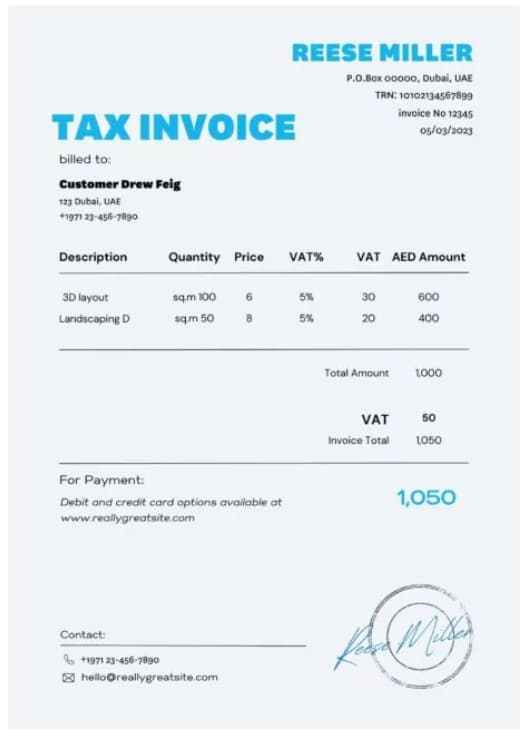
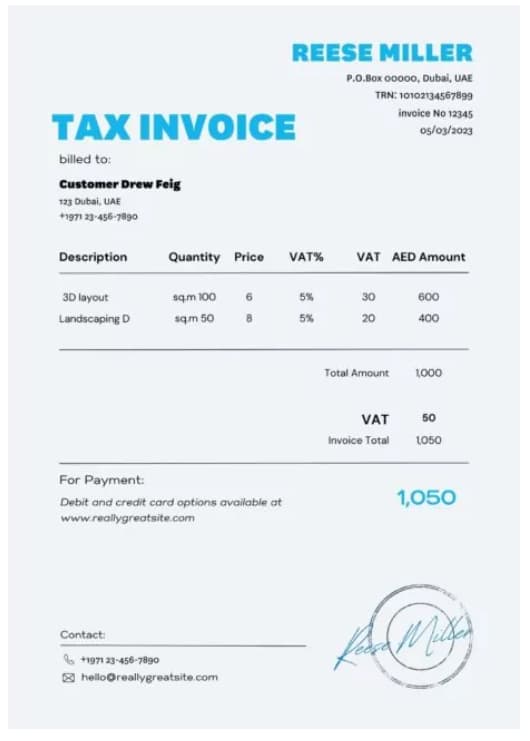
            A tax invoice in UAE is a formal document issued by a seller to a buyer that details the goods or services provided and the amount of Value Added Tax (VAT) charged. It serves several essential functions:

            • Record-Keeping: It provides a detailed transaction record, including the date, description of items or services, quantity, price, and VAT amount.
            • VAT Compliance: It ensures that the VAT charged is documented correctly, helping the seller and buyer comply with tax regulations.
            • Tax Refunds: For businesses, a tax invoice is essential for claiming VAT refunds or credits, as it acts as proof of the tax paid.
            • Financial Transparency: It aids in maintaining transparent financial records for both parties involved, which is crucial for audits and financial reporting.

            In essence, a tax invoice is a key component of VAT administration, helping businesses manage their tax obligations and maintain accurate financial records.

            When should you issue a tax invoice in Dubai?

            A tax invoice in the UAE must be issued in the following situations:

            • When Goods or Services Are Supplied: A tax invoice should be issued when a sale of goods or services occurs. This applies to both B2B (business-to-business) and B2C (business-to-consumer) transactions.
            • Within 14 Days: The invoice must be issued within 14 days of the date the goods or services are supplied. This ensures timely documentation of the transaction for VAT purposes.
            • Upon Request: If a customer requests a tax invoice, it should be provided promptly, even if the transaction occurred earlier.
            • For Payments Received in Advance: If a business receives payment before supplying the goods or services, a tax invoice should be issued at the time of receipt.

            Issuing a tax invoice in these scenarios ensures compliance with VAT regulations and helps businesses and customers manage their tax obligations effectively.

            Who Must Issue a Tax Invoice?

            In the UAE VAT system, the seller typically issues a tax invoice, but there are exceptions where the buyer or an agent may take on this task.

            • Seller: Typically, the supplier of goods or services is responsible for issuing the tax invoice. However, in some cases, the buyer or an agent may issue it.
            • Buyer: If it’s easier for the buyer to identify the details of the goods, they can issue the tax invoice, provided the seller agrees in writing not to issue it.
            • Timing: A tax invoice must be issued within 14 calendar days of the supply date.
            • Agent: An agent selling on behalf of a supplier can issue the tax invoice, including their details and the principal supplier’s information.
            • Summary Invoice: A single tax invoice can be issued for multiple supplies to the same buyer within a month.

            Mandatory Fields in a Tax Invoice

            Here’s a table outlining the mandatory fields to be mentioned in a tax invoice according to VAT law:

            Mandatory FieldDescription
            Tax InvoiceThe words “Tax Invoice” prominently displayed
            Supplier InformationName, TRN, and address of the supplier
            Recipient InformationName, TRN, and address of the recipient
            Unique IdentifierA unique or sequential identifying number
            Invoice DateThe date when the invoice is issued
            Date of SupplyThe date when the supply occurred (if different from the invoice date)
            Description of Goods/ServicesDetails of the goods or services supplied
            Unit Price, Quantity, Tax Rate, AmountUnit price, quantity supplied, tax rate, and total amount payable
            Discounts OfferedAny discounts applied to the invoice
            Gross Value PayableTotal amount payable before VAT
            VAT Amount PayableThe VAT amount payable
            Reverse Charge DeclarationDeclaration of reverse charge if applicable

            Types of Tax Invoices in the UAE

            There are two types of tax invoices in the UAE: full tax invoice and simplified tax invoice.

            1. Full Tax Invoice: Required for most transactions and includes detailed information.
            1. Simplified Tax Invoice: A simplified tax invoice is a shorter version of a standard one, requiring fewer details.

            Full Tax Invoice

            tax invoice uae

            A valid full tax invoice must include:

            • The words “Tax Invoice” clearly displayed
            • Seller’s name, TRN, and address (P.O. Box at minimum)
            • Buyer’s name, address, and TRN (if VAT registered)
            • A sequential or unique tax invoice number
            • The date of issuing the invoice
            • The supply date (if different from the invoice date)
            • Description of goods or services supplied
            • For each item, the unit price, quantity, VAT rate, and amount payable (in AED)
            • Any discounts offered
            • The gross amount payable (in AED)
            • The VAT amount payable (in AED) and exchange rate if invoiced in foreign currency
            • If the buyer must account for VAT (e.g., reverse charge), a statement noting this and referencing the relevant law provision

            Simplified Tax Invoice in UAE

            VAT Invoice UAE

            It can be issued in two situations

            1. The recipient is not VAT-registered in UAE.
            1. The recipient is VAT-registered, but the transaction is below AED 10,000.

            Simplified tax invoices are typically issued to end consumers or small business transactions under AED 10,000.

            Mandatory Fields in a Simplified Tax Invoice

            A simplified tax invoice in the UAE must include the following details:

            • The words “Tax Invoice” prominently displayed
            • Name, TRN, and address of the supplier
            • Date of the invoice
            • Description of the goods or services
            • Total amount payable
            • Total VAT payable

            Read more: Tax Invoice Format UAE

            Simplify your Taxation with Shuraa

            In Dubai, tax invoices are vital for businesses and tax authorities. They provide a clear record of transactions and ensure VAT compliance. They help manage tax payments, claim VAT refunds, and maintain organised and transparent financial records. Understanding and including key elements like VAT amounts and business details on a tax invoice can simplify accounting processes and reduce errors.

            Businesses can turn to Shuraa Tax for expert assistance with VAT compliance, ensuring smooth operations within the VAT system. Call +971 50 891 2062 or email us at info@shuraatax.com today.