Author: Anaab Khan

  • UAE Introduces New Tiered Excise Tax on Sweetened Drinks

    UAE Introduces New Tiered Excise Tax on Sweetened Drinks

    In a major move towards promoting healthier lifestyles, the UAE government has approved a new excise tax policy on sweetened drinks, shifting from a flat-rate system to a tiered, sugar-based model. This announcement, made in early November 2025, aligns with the UAE’s ongoing public health goals and its commitment to maintaining a transparent and progressive tax environment.

    So, let’s break down what this new policy means for businesses and consumers in the UAE.

    What’s New in the Excise Tax Policy in UAE?

    Previously, all sweetened beverages (regardless of their sugar content) were subject to a flat 50% excise tax under the UAE Excise Tax Law (Federal Decree-Law No. 7 of 2017). This meant that both high-sugar and low-sugar drinks were taxed equally.

    Under the new tiered volumetric model, which is set to take effect from 1 January 2026, the excise tax will now be determined by the sugar concentration in the beverage, measured in grams per 100ml. The higher the sugar content, the higher the tax rate.

    This model makes the system fairer and more health-focused, encouraging both consumers and manufacturers to make better dietary choices.

    For instance, a beverage containing 9g of sugar per 100ml will fall under the “high-sugar” tier and be taxed at the highest rate, while one with 3g per 100ml will be taxed at the lowest rate.

    The New Tiered Sugar Tax Categories

    Under the new excise tax structure, sweetened drinks will be classified into four tiers:

    Category Sugar Content (per 100ml) Tax Tier / Expected Rate
    High-sugar drinks 8g or more Highest tax rate (above current 50%)
    Moderate-sugar drinks 5g – less than 8g Medium tax rate
    Low-sugar drinks Less than 5g Lowest tax rate
    Artificially sweetened drinks No added sugar, only artificial sweeteners 0% excise tax


    In short:

    • Drinks with less sugar will now cost less tax, giving companies an incentive to reformulate their products.
    • Artificially sweetened or sugar-free beverages will not be taxed, promoting healthier alternatives.
    • Drinks with only natural sugars (e.g., 100% fruit juice with no additives) will be fully exempt from excise tax.

    What Counts as a “Sweetened Drink”?

    Under the new framework, a “sweetened drink” refers to any beverage that has an added source of sugar or other sweeteners, whether they are natural or artificial.

    This definition includes not only bottled and canned beverages but also concentrates, syrups, powders, gels, and drink mixes that are meant to be diluted or prepared for consumption.

    Examples of products covered:

    • Carbonated drinks like colas and flavoured sodas
    • Energy drinks and sports drinks with added sugar
    • Sweetened iced teas, flavoured waters, and juices
    • Instant drink powders or syrups used to make sugary beverages

    Even if a drink contains natural sugars along with added sweeteners, it will fall under the excise tax scope. However, drinks that contain only natural sugar from fruits or vegetables, without any added sweeteners, will be excluded.

    Exemptions from the New Excise Tax

    Certain beverages are specifically excluded from the new Sweetened Drink definition and tiered model:

    • Energy Drinks: These remain subject to the existing, separate 100% Excise Tax calculation.
    • 100% Natural Juices: Juices made of 100% natural fruit or vegetable content with no added sugar or other sweeteners.
    • Dairy Products: Milk, dairy, and related products.
    • Infant Products: Baby formula, follow-up formula, or baby food.
    • Special-Use Beverages: Beverages and concentrates intended for special dietary or medical uses.
    • Non-Commercial & Restaurant Preparations: Drinks prepared by individuals for personal, non-commercial use, or drinks prepared in restaurants and similar places that are served in an open container for direct consumption (i.e., not pre-packaged for sale).

    Why This Change?

    The shift to a tiered model serves several important goals:

    • Encouraging Healthier Habits: With obesity and diabetes rates rising globally, the UAE’s sugar tax policy aims to discourage the overconsumption of sugary drinks and encourage healthier options.
    • Promoting Product Reformulation: Beverage manufacturers now have a strong motivation to reduce sugar levels in their products to qualify for lower tax tiers.
    • Aligning with Global Standards: Countries like the UK, Mexico, and Saudi Arabia have already adopted similar sugar tax systems, and the UAE’s move reflects its alignment with international health and taxation practices.
    • Supporting Sustainable Taxation: A tiered approach ensures fair taxation, where the tax burden is proportional to the sugar level, not just the product category.

    What UAE Businesses Need to Do?

    The Federal Tax Authority (FTA) has advised all taxable persons (producers, importers, and distributors of sweetened drinks) to start preparing early. Here’s what that involves:

    • Assess Product Formulas: Review your beverage ingredients to determine total sugar content, including natural, added, and other sweeteners.
    • Obtain Laboratory Certification: Businesses must provide a lab report from an FTA-approved UAE laboratory showing the sugar composition. The Ministry of Industry and Advanced Technology (MOIAT) will soon publish a list of accredited labs for testing and certification.
    • Update Excise Registration: Once the policy takes effect, all sweetened drinks must be registered or re-registered on the FTA’s Excise Goods portal, with the lab report as supporting documentation.
    • Review Pricing and Labels: Update your pricing structure and product labelling to reflect new tax rates and sugar content disclosures.
    • Plan Inventory Management: Transitional rules will apply to prevent stockpiling products before 1 January 2026 for tax advantages.
    • Stay Compliant: In the absence of a lab report, the FTA will automatically classify a beverage under the high-sugar category, until proper documentation is submitted, meaning higher taxes by default.

    Talk to Experts at Shuraa Tax

    The UAE’s new tiered excise tax on sweetened drinks marks a smart step toward healthier consumption habits and fairer taxation. For businesses, this means staying informed, compliant, and ready to adapt to the upcoming rules by January 2026.

    If you’re unsure how these changes affect your business (whether in excise tax registration, corporate tax compliance, or VAT reporting), Shuraa Tax is here to help. Our experts will guide you through every step, from understanding new FTA requirements to filing accurate tax reports, so you stay compliant and confident in your operations.

    Stay compliant. Stay prepared. Reach out to Shuraa Tax today and let’s make your transition to the new excise tax regime smooth and stress-free.

    Frequently Asked Questions

    1. What is the new excise tax policy on sweetened drinks in the UAE?

    The UAE has approved a new tiered excise tax system for sweetened drinks, effective 1 January 2026. Instead of a flat 50% rate, taxes will now depend on the sugar content per 100ml — higher sugar means higher tax.

    2. How will the sugar levels be classified under the new policy?

    Drinks will be divided into four categories:

    • High-sugar: 8g or more per 100ml
    • Moderate-sugar: 5g to less than 8g per 100ml
    • Low-sugar: Less than 5g per 100ml
    • Artificially sweetened only: 0% excise tax

    3. Which drinks are exempt from the new excise tax?

    Drinks containing only natural sugars with no added sweeteners are exempt. Examples include 100% natural fruit or vegetable juices, milk and dairy drinks, baby formula, and medical or dietary beverages.

    4. When will the new excise tax in the UAE come into effect?

    The new tiered excise tax model will take effect from January 1, 2026, giving businesses time to adjust their formulations, pricing, and compliance processes.

    5. Are carbonated drinks still a separate tax category?

    No. Under the new rules, Carbonated Drinks will be abolished as a separate category of Excise Good and will instead be taxed based on their sugar content and classification as Sweetened Drinks.

    6. What must businesses provide to the FTA to comply with the UAE new tax?

    Businesses must register their products and provide a lab report from a UAE-accredited laboratory detailing whether the drink has added sugar, other sweeteners, or artificial sweeteners, and showing the total sugar content.

  • Corporate Tax in Mainland Vs Freezone in the UAE

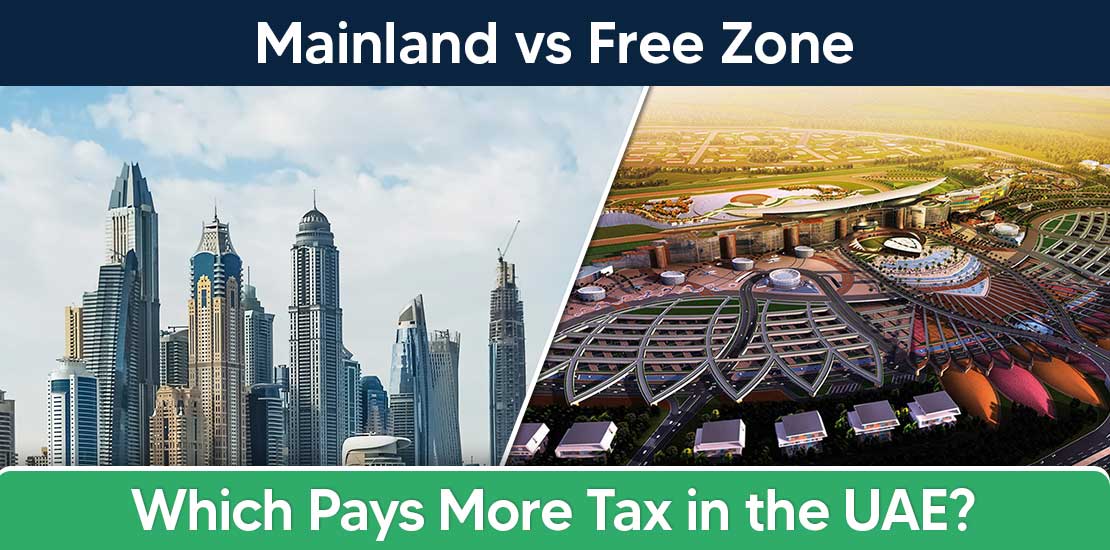
    Corporate Tax in Mainland Vs Freezone in the UAE

    The UAE introduced corporate tax in 2023, a big change for businesses across the country. The goal was to align with global standards and support the nation’s growing economy. But with this new system came one common question: How does corporate tax apply to mainland and free zone companies?

    While both fall under the same tax law, the rules aren’t exactly the same. Mainland companies are generally taxed at 9%, whereas free zone businesses can still enjoy a 0% rate on qualifying income, as long as they meet the set conditions.

    Knowing these differences is important, as it helps you stay compliant but also lets you plan your taxes smartly, which can save you both money and stress.

    What is Corporate Tax in the UAE?

    Corporate tax is a direct tax on the profits of businesses. Simply put, it’s the amount companies pay to the government based on what they earn. The UAE introduced this tax to align with international tax practices, boost transparency, and support the country’s long-term economic growth. It also helps attract responsible global investors by building a stable financial environment.

    Who Needs to Pay Corporate Tax?

    Corporate tax generally applies to:

    • All mainland and free zone companies (depending on their qualifying status)
    • Foreign businesses earning income from the UAE
    • Individuals engaged in business activities that require a commercial license

    Current Corporate Tax Rate in the UAE:

    The standard corporate tax rate in the UAE is 9% on profits above AED 375,000.

    Any income below AED 375,000 is taxed at 0%, which means small and growing businesses can operate with minimal tax burden. This threshold was introduced to encourage entrepreneurship and support SMEs.

    Key Exemptions and Relief

    Not all entities are required to pay corporate tax. The following are exempt under UAE law:

    • Government and public entities
    • Extractive and natural resource businesses
    • Certain qualifying investment funds
    • Businesses wholly owned by the UAE government

    Corporate Tax for Mainland Companies in the UAE

    Mainland companies in the UAE are fully subject to corporate tax under the Federal Decree-Law No. 47 of 2022. This means that all profits earned from business activities (both within the UAE and abroad) are taxable, unless specifically exempt. The aim is to create a fair, transparent tax environment that supports the country’s sustainable economic development.

    1. Tax rates and thresholds:

    Mainland businesses are taxed at:

    • 0% on taxable income up to AED 375,000
    • 9% on taxable income above AED 375,000 

    This tiered structure ensures small and medium-sized businesses aren’t overburdened, while larger companies contribute fairly based on their profits.

    2. Treatment of Local and Foreign Income:

    Mainland companies are required to report and pay tax on their worldwide income, meaning both local and foreign profits are subject to UAE corporate tax. However, foreign income may be exempt or credited if it has already been taxed in another country, helping to avoid double taxation.

    3. Compliance Requirements:

    To stay compliant, mainland companies must:

    • Registration: Mandatory for all taxable persons (including those benefiting from the 0% threshold). Businesses must register with the Federal Tax Authority (FTA) via the EmaraTax platform and obtain a Tax Registration Number (TRN).
    • Accounting Standard: Financial statements must be prepared according to International Financial Reporting Standards (IFRS) or other accounting standards accepted in the UAE, which serves as the starting point for calculating taxable income.
    • Filing & Payment: An annual Corporate Tax Return must be filed with the FTA, and any tax due must be paid, within 9 months after the end of the relevant financial year.
    • Record Keeping: Accurate records, including all financial statements, invoices, and supporting documents, must be maintained for at least 7 years.
    • Transfer Pricing: Mainland companies with transactions involving Related Parties (local or international) must ensure these transactions comply with the internationally recognized Arm’s Length Principle.

    Proper accounting and record-keeping are crucial, as the FTA may request to review these records during audits.

    4. Example Scenario:

    Let’s say you run a trading company in Dubai mainland that earns a profit of AED 500,000 in a financial year.

    Here’s how your corporate tax would be calculated: 

    The first AED 375,000 is taxed at 0%

    The remaining AED 125,000 is taxed at 9%, resulting in a tax amount of AED 11,250 

    Corporate Tax for Free Zone Companies in the UAE

    Free zones in the UAE have long been popular for their tax incentives and business-friendly environment. Under the new corporate tax law, free zone companies can still enjoy certain tax benefits, but these depend on whether they qualify for special treatment. In short, not all free zone businesses are automatically tax-free anymore, they must meet specific conditions to keep their 0% corporate tax rate.

    1, Corporate Tax Rate for Free Zone Companies

    Here’s how the corporate tax applies to free zone entities:

    • 0% on qualifying income (if the company meets all QFZP conditions)
    • 9% on non-qualifying income or if the company fails to maintain QFZP status

    This approach allows genuine free zone operations to retain their tax advantage while ensuring fairness across all UAE businesses.

    2. Qualifying vs. Non-Qualifying Income

    Free zone companies are taxed based on the type of income they earn:

    • Qualifying income: Subject to 0% corporate tax
    • Non-qualifying income: Subject to the standard 9% corporate tax

    Qualifying income generally includes revenue from: 

    • Transactions with other free zone companies
    • Income from foreign customers outside the UAE
    • Certain regulated activities as listed by the Ministry of Finance

    Non-qualifying income usually covers: 

    • Income from business activities conducted in the UAE mainland (unless it’s considered a “passive” source like rent or dividends)
    • Any income that doesn’t meet the qualifying criteria

    3. Who is a Qualifying Free Zone Person (QFZP)?

    A Qualifying Free Zone Person (QFZP) is a company registered in a UAE free zone that meets the required conditions to enjoy a 0% corporate tax rate on qualifying income.

    To be treated as a QFZP, a business must:

    • Maintain adequate economic substance in the UAE
    • Earn qualifying income as defined by the law
    • Not elect to be subject to mainland tax
    • Comply with transfer pricing and other FTA regulations

    If any of these conditions are not met, the company will lose its qualifying status and be taxed at 9% on all income.

    4. Conditions to Make the 0% Tax Status

    To remain a QFZP and enjoy the 0% rate, a Free Zone company must satisfy the following five non-negotiable conditions:

    1. Maintain Adequate Substance: The company must demonstrate a substantial physical presence, including:

    • Sufficient Core Income Generating Activities (CIGA) being performed in the Free Zone.
    • Adequate assets, employees, and operating expenditures in the Free Zone, relative to its business activities.

    2. Derive Qualifying Income: The majority of its income must meet the ‘Qualifying Income’ definition, subject to the De Minimis rule.

    3. No Election for Standard Rate: The company must not have voluntarily elected to be subject to the standard 9% UAE Corporate Tax.

    4. Comply with Transfer Pricing: All transactions with related parties (both inside and outside the UAE) must comply with the Arm’s Length Principle and related documentation requirements.

    5. Audited Financial Statements: QFZPs are generally required to prepare and maintain audited financial statements.

    5. Example Scenario

    Imagine a tech company in Dubai Internet City that provides software development services to clients overseas. Since its income comes from foreign customers and it operates within the free zone with real substance, it can qualify for the 0% corporate tax rate.

    However, if the same company starts offering IT services to mainland businesses directly, that portion of income will be treated as non-qualifying and taxed at 9%.

    Key Differences: Mainland vs Free Zone Corporate Tax

    Here’s a quick comparison to help you see the difference at a glance:

    Criteria  Mainland Company  Free Zone Company 
    Tax Rate  9% on taxable income above AED 375,000 0% on qualifying income; 9% on non-qualifying income
    Tax Scope  Taxed on worldwide income Taxed only on non-qualifying or mainland income
    Qualifying Status  Automatically subject to corporate tax Must meet conditions to be a Qualifying Free Zone Person (QFZP)
    Eligibility for 0% Tax  Not available Available for qualifying income under QFZP rules
    Mainland Business Dealings  Can freely trade within the UAE Restricted — direct mainland trading may trigger 9% tax
    Compliance Requirements  Must register, file annual returns, and maintain records Must register, file returns, and prove QFZP compliance annually
    Example  Trading company in Dubai mainland selling locally Tech company in Dubai Internet City serving international clients

    Common Misconceptions About Corporate Tax in the UAE

    Even though the UAE’s corporate tax law is designed to be clear, a few misunderstandings still circulate among business owners. Let’s clear up some of the most common ones:

    “All free zone companies are tax-free”

    This isn’t entirely true. While many free zone businesses still enjoy a 0% corporate tax rate, this benefit only applies to qualifying income and if the company meets the Qualifying Free Zone Person (QFZP) conditions. If a free zone company earns income from the mainland or doesn’t meet the legal requirement, such as maintaining economic substance or keeping proper records – it will be taxed at 9%, just like a mainland company.

    “Free zone companies can freely trade with mainland”

    Free zone companies cannot directly trade with the UAE mainland unless they follow specific rules. If they sell goods or services to mainland customers, they must either:

    • Work through an approved mainland distributor, or
    • Open a mainland branch or subsidiary that’s subject to corporate tax.

    Direct mainland dealings can disqualify a free zone company from the 0% tax rate, so it’s important to structure such transactions carefully.

    “Corporate tax doesn’t apply to small businesses”

    Small businesses are not automatically exempt from corporate tax. However, the UAE offers a Small Business Relief program.

    If a company’s revenue does not exceed AED 3 million in a financial year (as per the latest FTA guidelines), it can opt for this relief , meaning it will be treated as having no taxable income.

    Once the revenue crosses that limit, regular corporate tax rules apply.

    We’ll Help You Make Corporate Tax Simple

    Corporate tax can sound a little confusing at first, especially when the rules differ for mainland and free zone companies. But understanding how it applies to your business can really help you plan better and avoid surprises later. If you’re not sure where your company fits in or what steps to take, Shuraa Tax can make it easy for you.

    Our team can help with corporate tax registration and Corporate tax filing, guide free zone companies on qualifying income, and offer practical tax advice for both mainland and free zone businesses.

    With Shuraa Tax guiding you, managing corporate tax becomes simple, clear, and stress-free.

    For expert advice and support, you can reach Shuraa Tax:

    📞 Call: +(971) 44081900
    💬 WhatsApp: +(971) 508912062
    📧 Email: info@shuraatax.com

    Frequently Asked Question

    1. What is corporate tax in the UAE?

    Corporate tax is a 9% tax on the profits of businesses operating in the UAE. It applies to both mainland and free zone companies, depending on their income and qualifying status.

    2. Do all free zone companies get a 0% tax rate?

    No, only Qualifying Free Zone Persons (QFZPs) can enjoy the 0% rate and only on qualifying income. If a free zone company earns non-qualifying income or trades with the mainland, it may be taxed at 9%.

    3. What is the corporate tax rate for mainland companies?

    Mainland companies pay 0% on profits up to AED 375,000, and 9% on profits above that amount.

    4. Can free zone companies trade with the UAE mainland?

    Yes, but under certain conditions. They must either work through an approved mainland distributor or open a mainland branch, which will then be subject to corporate tax.

    5. Does corporate tax apply to small businesses in the UAE?

    Small businesses can qualify for Small Business Relief if their revenue is AED 3 million or less. This allows them to be treated as having no taxable income for that financial year.

  • UAE Corporate Tax Deadline 2026

    UAE Corporate Tax Deadline 2026

    The UAE introduced corporate tax in June 2023, which marks a big change for businesses in the country. Under this new system, companies must file their corporate tax returns every year, within nine months after their financial year ends. For example, if your business follows the January–December financial year, your first tax return deadline will be 30 September 2026.

    This UAE corporate tax deadline is very important because missing it can lead to serious issues, including fines, extra charges, and even interest on unpaid taxes. In some cases, repeated delays may trigger audits or affect your reputation with the Federal Tax Authority (FTA). Even free zone businesses that enjoy the 0% corporate tax rate must still file their returns on time – filing is mandatory for everyone.

    What is the UAE Corporate Tax Deadline 2026?

    The UAE’s corporate tax rules require businesses to file their returns within nine months from the end of their financial year. That means the actual deadline depends on your company’s chosen financial year.

    For businesses following the January–December financial year (calendar year): 

    Your first tax period will be 1 January 2024 to 31 December 2024, and the deadline to file your return will be 30 September 2026.

    For businesses following the April–March financial year: 

    Your first tax period will be 1 April 2024 to 31 March 2026, and the deadline to file your return will be 31 December 2026.

    What are the Key Compliance Requirements Before the Deadline?

    To make sure your business is ready for the corporate tax deadline in the UAE, there are a few important steps you need to complete in advance:

    1. Corporate Tax Registration

    Every business that falls under the corporate tax law must register with the Federal Tax Authority (FTA). Without registration, you won’t be able to file your return.

    2. Maintain Proper Financial Records

    Businesses are required to keep accurate books of accounts, financial statements, and supporting documents. These records should clearly reflect your income, expenses, and any exemptions or deductions claimed.

    3. Prepare the Corporate Tax Return

    The tax return must be completed in line with FTA requirements. This includes calculating taxable income, applying exemptions (if applicable), and ensuring all figures match your official records.

    4. File the Return on Time

    Submit your corporate tax return electronically through the FTA’s portal before the due date. Late submissions can trigger penalties even if no tax is payable.

    5. Pay the Tax Due

    If your business owes corporate tax, make sure the payment is made before the deadline. Delayed payments result in interest charges and additional fines.

    How to File a Corporate Tax Return in the UAE?

    Filing a corporate tax return in the UAE is done online through the Federal Tax Authority (FTA) portal. Here’s how it works:

    1. Register for Corporate Tax

    First, make sure your business is registered with the FTA for corporate tax. Once approved, you’ll receive a Corporate Tax Registration Number (TRN) that you’ll use for filing.

    2. Log in to the FTA Portal

    Go to the FTA e-Services portal using your registered account. Select the option for Corporate Tax to start your filing process.

    3. Prepare Your Financial Information

    Gather your audited financial statements and supporting records. Calculate your taxable income after applying exemptions or reliefs (like the AED 375,000 profit threshold at 0% tax).

    4. Fill Out the Corporate Tax Return Form

    Enter details such as income, expenses, adjustments, and exemptions. Double-check that the numbers match your financial statements.

    5. Review and Submit

    Carefully review the form to avoid errors. Submit the return electronically before the deadline.

    6. Pay Any Tax Due

    If your return shows tax payable, you must make the payment through the FTA’s system before the due date. You can pay via bank transfer, e-dirham, or other FTA-approved methods.

    7. Keep Records Safe

    The FTA requires businesses to keep their records for at least seven years. These may be requested during audits or inspections.

    What are the Penalties for Late Filing or Non-Compliance?

    Missing the corporate tax deadline can lead to serious consequences, including significant penalties and fines.

    1. Late Filing of Corporate Tax Returns:

    After the filing deadline, the FTA charges monthly fines:

    • AED 500 per month (or part of a month) for the first 12 months.
    • AED 1,000 per month from the 13th month onwards (continuing until you file the return).

    2. Late Registration Penalty:

    Businesses that fail to register for corporate tax within the specified deadlines can face a penalty of AED 10,000. However, the FTA has offered a temporary waiver for this penalty. To qualify, a business must file its first corporate tax return or annual declaration within seven months from the end of its first tax period.

    How Shuraa Tax Can Help Businesses

    The 2026 corporate tax deadline is very important for every business in the UAE. Filing on time helps you avoid fines, extra charges, and unnecessary stress. It also shows that your company is responsible and fully compliant with the Federal Tax Authority.

    With Shuraa Tax, you don’t have to worry about the process. Our team helps with everything – from corporate tax registration to filing returns correctly and on time. We also offer full advisory support, including help with penalty waivers if you’ve missed something in the past.

    Instead of stressing over rules and deadlines, let Shuraa Tax handle it for you. Get in touch with us today and make your corporate tax journey smooth and hassle-free.

    📞 Call: +(971) 44081900
    💬 WhatsApp: +(971) 508912062
    📧 Email: info@shuraatax.com

    Frequently Asked Questions

    1. What is the UAE corporate tax deadline for 2026?

    The deadline depends on your company’s financial year. If your year ends 31 December 2024, the filing deadline is 30 September 2026. If your year ends 31 March 2026, the filing deadline is 31 December 2026.

    2. How do I register for corporate tax in the UAE?

    You can register online through the FTA’s EmaraTax portal. Once approved, you’ll receive a Corporate Tax Registration Number (TRN).

    3. Do free zone companies also need to file corporate tax returns?

    Yes. Even if you qualify for a 0% rate as a free zone business, you are still required to register and file a corporate tax return on time.

    4. What is the corporate tax registration deadline in the UAE?

    The registration deadline varies based on your company’s license issuance date. The FA has issued specific schedules for different entity types. Generally, if you’re a UAE resident juridical person, your deadline is tied to the month your trade license was issued. For entities established on or after March 1, 2024, the deadline is within three months of their establishment.

    5. What happens if I miss the 2026 tax deadline?

    Missing the deadline can lead to fines, monthly penalties, and interest on unpaid taxes. It may also trigger FTA audits.

  • How to Choose the Right Accounting Services in the UAE

    How to Choose the Right Accounting Services in the UAE

    The United Arab Emirates has rapidly transformed into a global business hub, attracting entrepreneurs, investors, and multinational companies with its central location, advanced infrastructure, and pro-investment policies. Yet, with this rapid growth comes an increasingly complex regulatory and tax environment.

    Accurate accounting is no longer a back-office formality; it is essential for staying compliant with UAE tax laws and managing cash flow efficiently. Whether you are starting a startup, expanding your operations, or managing a large enterprise. Choosing the right accounting service can protect you from costly penalties, streamline your financial processes, and provide the insights needed to scale sustainably.

    This guide will walk you through the process of selecting the right accounting services in the UAE and explain why it is crucial for your long-term growth. As a trusted industry leader, Shuraa Tax has helped countless businesses maintain compliance, optimise performance, and stay ahead in a competitive market by offering customised solutions.

    Understanding Your Business Needs Before Choosing an Accounting Service

    Before selecting an accounting service, it’s essential to gain clarity on what your business truly requires. Begin by assessing the size of your company, the sector in which you operate, and the complexity of your financial structure. For example, a small e-commerce startup with straightforward transactions may only need basic bookkeeping, while a mid-sized logistics firm dealing with cross-border payments, tax filings, and regulatory compliance will require a far more robust accounting framework.

    This is where many businesses go wrong, assuming that any accounting firm can handle their needs. In reality, a one-size-fits-all approach often leads to missed opportunities, inefficiencies, or even compliance risks. A generic service may not have industry-specific knowledge, leaving you without customised advice on tax benefits, cost optimisation, or growth strategies unique to your sector.

    By defining your financial pain points and future goals early on, you can choose an accounting partner who does more than just balance your books. The right service provider will help streamline processes, provide timely reporting, highlight cost-saving opportunities, and offer strategic guidance to fuel sustainable growth. In short, understanding your business first ensures that your accounting solution works for you, not the other way around.

    Key Factors in How to Choose the Right Accounting Services

    When selecting an accounting service, it’s not just about finding someone to manage your books. It’s about partnering with experts who can add real value to your business. Here are the key factors to consider:

    1. Experience in UAE Tax Regulations and VAT

    The UAE has its own set of tax laws, including corporate tax, VAT, and compliance requirements. Look for firms that have proven expertise in local regulations to help you avoid penalties and stay compliant.

    2. Verified Certifications and Industry Expertise

    Ensure your accounting partner holds recognised certifications and has experience in your specific sector. Industry knowledge allows them to provide specialised advice on tax benefits, financial planning, and cost efficiencies.

    3. Use of Advanced Technology

    Modern accounting solutions, including cloud-based accounting platforms and automation tools, provide real-time reporting, seamless collaboration, and reduced errors. A tech-savvy provider ensures greater accuracy and efficiency in your financial management.

    4. Transparency in Pricing and Service Scope

    Clear pricing structures and well-defined service packages prevent unexpected costs, ensuring you know exactly what you’re paying for. The right firm will outline all deliverables upfront so there are no surprises later.

    Choosing the right accounting service is about aligning expertise, tools, and integrity with your business needs, ensuring smooth operations today and planned expansion for tomorrow.

    Why Local Expertise Matters in the UAE?

    The UAE’s business environment is dynamic, with unique laws, tax frameworks, and compliance standards that can vary depending on where your company is registered. Having local expertise is crucial to ensure you stay compliant while maximising the benefits available.

    1. Navigating UAE Laws and Compliance Requirements

    UAE regulations, from VAT filings to corporate tax obligations, require precise handling. A locally experienced accounting firm can guide you through these requirements. It helps you avoid penalties and ensure smooth operations.

    2. Expertise in Free Zones, Mainland, and Offshore Structures

    Each jurisdiction in the UAE comes with its own set of incentives, ownership rules, and reporting standards. Firms that understand these differences can help you choose and manage the structure best suited to your business model and growth plans.

    3. Shuraa Tax Strong Local Presence

    With deep roots in Dubai and across other Emirates, Shuraa Tax combines regulatory know-how with practical business insights. Their on-the-ground expertise ensures clients receive customised advice and end-to-end support, whether you’re a startup or an established enterprise expanding in the UAE.

    Working with a locally knowledgeable partner like Shuraa Tax is not just about compliance; it’s about leveraging the UAE’s business landscape to your full advantage.

    Benefits of Choosing Shuraa Tax for Your Accounting Needs

    Partnering with Shuraa Tax means more than just hiring an accounting service, you’re gaining a trusted advisor who understands the UAE’s financial framework inside and out. Here’s why businesses across industries choose Shuraa Tax:

    1. Customised Accounting and Bookkeeping Solutions

    No two businesses are the same. Shuraa Tax provides customised accounting services designed to match your company’s size, sector, and operational needs, ensuring accuracy and efficiency at every stage.

    2. VAT Registration and Filing Support

    Handling VAT requirements in the UAE can be a challenging task. Shuraa Tax simplifies the process with end-to-end support, from registration to timely and compliant filing, helping you avoid costly errors or penalties.

    3. Corporate Tax Compliance Guidance

    With the UAE introducing corporate tax regulations, staying compliant is more critical than ever. Shuraa Tax offers expert advice to help you understand obligations, optimise tax planning, and maintain full compliance.

    4. Proven Track Record with Startups and Established Businesses

    Whether you’re a new venture finding your footing or a growing enterprise expanding operations, Shuraa Tax has a strong history of delivering reliable results and strategic insights to businesses of all sizes.

    By choosing Shuraa Tax, you secure a partner committed to your financial success, helping you focus on what truly matters: growing your business.

    Common Mistakes to Avoid When Selecting an Accounting Firm

    Choosing the right accounting partner can have a lasting impact on your business. Unfortunately, many companies make avoidable mistakes during the selection process, which can lead to compliance issues, financial mismanagement, or lost opportunities. Here are key pitfalls to steer clear of:

    1. Going Only by Cost Instead of Quality

    While it’s natural to look for competitive pricing, selecting a firm solely because they’re the cheapest can backfire. Low-cost services may lack the expertise, technology, or resources necessary to meet your needs effectively, potentially resulting in higher costs in the long run.

    2. Ignoring Future Scalability

    Your business today won’t be the same as it is in a year or two. Choosing an accounting firm that can’t grow with you. Look for a firm that offers more advanced services as your operations expand, as this may force you to switch providers later, causing disruption and added expense.

    3. Not Checking Reviews or Client References

    A firm may look impressive on paper, but firsthand feedback from current or past clients tells the real story. Skipping this step can result in overlooking issues such as poor communication, missed deadlines, or a lack of industry-specific knowledge.

    Avoiding these mistakes ensures you choose an accounting partner who not only meets your current requirements but also supports your long-term success.

    Steps to Get Started with the Right Accounting Service

    Finding the perfect accounting partner doesn’t have to be complicated. By following a straightforward process, you can ensure a smooth transition and establish a foundation for accurate and efficient financial management. Here’s how to begin:

    1. Initial Consultation

    Start with a discovery meeting to discuss your business model, current financial practices, and specific accounting needs. This helps the service provider understand your goals and challenges.

    2. Service Proposal Review

    Next, review a detailed proposal outlining the scope of work, timelines, technology to be used, and pricing. This step ensures complete transparency and alignment before you make a commitment.

    3. Onboarding and Regular Reporting

    Once you finalise the partnership, the onboarding process begins, transferring your records, setting up systems, and establishing reporting cycles. Regular updates and performance reviews keep everything on track.

    4. How Shuraa Tax Makes the Process Seamless

    Shuraa Tax simplifies every stage of this journey. From offering personalised consultations to providing clear proposals and quick onboarding, their team ensures you get started without stress. With strong reporting systems and consistent communication, Shuraa Tax helps you focus on running your business while they efficiently handle your accounting needs.

    What Services Does Shuraa Tax Offer?

    Shuraa Tax offers a comprehensive suite of accounting, tax, and compliance solutions customised to support businesses of all sizes and sectors in the UAE. Their services are targeted to meet local regulatory requirements while helping companies optimise their financial performance. Key offerings include:

    1. Accounting and Bookkeeping

    Accurate, timely bookkeeping and comprehensive accounting services to maintain clean financial records and support informed decision-making.

    2. VAT Registration, Filing, and Advisory

    End-to-end VAT solutions, including registration, periodic return filing, compliance checks, and strategic advice to manage VAT obligations efficiently.

    3. Corporate Tax Compliance and Planning

    Guidance on navigating the UAE’s corporate tax framework, ensuring your business stays compliant while identifying opportunities to optimise your tax liabilities.

    4. Auditing and Assurance Services

    Independent audits to meet statutory requirements or investor expectations, along with detailed financial reviews for improved transparency and governance.

    5. Business Advisory and Financial Consulting

    Practical advice on cost optimisation, budgeting, cash-flow management, and financial planning to help businesses achieve sustainable growth.

    6. Payroll Management and HR Support

    Streamlined payroll services that ensure accurate salary disbursements, WPS compliance, and proper employee record maintenance.

    7. Company Formation and Structuring Assistance

    Support in choosing the proper business structure, Mainland, Free Zone, or Offshore, and aligning it with your financial and tax goals.

    With a team of experts and a strong local presence, Shuraa Tax acts as a coordinated partner rather than just an accounting service provider, helping businesses remain compliant, competitive, and financially sound in the UAE.

    Partner with Experts like Shuraa Tax Who Understand Your Business

    Selecting the right accounting partner is not just about managing books; it’s about empowering your business to grow with confidence. Knowing how to choose the right accounting services in the UAE can protect you from compliance risks, streamline operations, and unlock valuable financial insights.  

    With their deep local expertise, customised solutions, and proven track record, Shuraa Tax is uniquely positioned to guide you through every step of the process. Whether you need support with VAT, corporate tax compliance, or strategic financial planning, their team ensures your business stays compliant and competitive in today’s dynamic market. 

    For reliable accounting solutions that fit your business needs, connect with Shuraa Tax today:

    📞 Call: +(971) 44081900
    💬 WhatsApp: +(971) 508912062
    📧 Email: info@shuraatax.com

  • Documents Required for VAT registration in Dubai

    Documents Required for VAT registration in Dubai

    Documents required for VAT registration will be submitted to the Federal Tax Authority (FTA) via a web portal. To obtain the Tax Registration Number (TRN) for the firm, several conditions for VAT registration in the UAE must be met.  

    If a company’s taxable supply and imports surpass the statutory registration level of AED 375,000, it must register for VAT. Furthermore, a company may voluntarily register for VAT if the total amount of its taxable supplies and imports (or taxable costs) exceeds the AED 187,500 voluntary registration threshold.  

    Penalties may apply for non-compliance with the UAE VAT Executive Regulations and law. There is also the risk of a firm losing its legal position and consumer confidence due to noncompliance with regulatory requirements.   

    What is VAT in the UAE? 

    Value Added Tax (VAT) in the UAE is an indirect tax applied to most goods and services at each stage of the supply chain. Simply put, it’s a small percentage added to the price of products or services when they’re sold. Introduced on January 1, 2018, VAT is currently charged at a standard rate of 5%. Businesses collect this tax on behalf of the government and later remit it to the Federal Tax Authority (FTA). 

    VAT plays a crucial role in supporting the UAE’s vision to reduce its reliance on oil revenue and build a sustainable economy. While it may seem like a small addition, VAT helps fund essential public services such as healthcare, education, and infrastructure, ultimately contributing to the country’s long-term growth and stability. VAT in the UAE ensures that everyone contributes a fair share to the nation’s development while maintaining a transparent and balanced tax system. 

    What is VAT Registration? 

    VAT registration is the official process through which a business becomes recognised by the Federal Tax Authority (FTA) as a taxpayer in the UAE. Once registered, the company is authorised to collect VAT from customers on taxable goods and services and remit it to the government. In simpler terms, VAT registration gives a business its Tax Registration Number (TRN), a unique ID used for all VAT-related transactions, invoices, and filings. 

    Businesses in the UAE must register for VAT if their annual taxable turnover exceeds AED 375,000, which is the mandatory registration threshold. However, those with turnover above AED 187,500 but below the required limit can register voluntarily to claim input tax and enhance business credibility. Registering for VAT ensures compliance with UAE tax laws and builds trust with clients and authorities, a key step for any business operating in the country’s evolving financial landscape. 

    Mandatory vs Voluntary VAT Registration in the UAE 

    When it comes to understanding VAT registration requirements in the UAE, it’s essential to know that businesses can either register mandatorily or voluntarily depending on their turnover and taxable activities. Let’s break down the two types and why they matter for your business. 

    1. Mandatory VAT Registration in the UAE 

    If your business is growing rapidly, this part concerns you. Mandatory VAT registration applies when your total taxable supplies and imports in the past 12 months exceed AED 375,000

    Alternatively, if you expect your business turnover to cross this threshold within the next 30 days, you must register as well. This rule ensures that all qualifying businesses remain compliant with the VAT registration requirements set by the Federal Tax Authority (FTA) in the UAE

    However, it’s important to note that this threshold doesn’t apply to foreign businesses operating in the UAE; they follow different VAT obligations. 

    2. Voluntary VAT Registration in the UAE 

    Not hitting the mandatory limit doesn’t mean you’re out of the VAT system. In fact, smaller businesses can still register voluntarily, and there are good reasons to do so. 

    If your taxable supplies and imports or even taxable expenses over the past 12 months exceed AED 187,500, or if you expect to cross that in the next 30 days, you can apply for voluntary VAT registration

    This gives startups and small enterprises a strategic edge by allowing them to claim VAT refunds on business purchases and establish credibility in the market. 

    Why does VAT Registration Matters Businesses in the UAE? 

    Whether your registration is mandatory or voluntary, completing your VAT registration is not just about compliance; it’s about building business credibility. 

    Here’s why it’s so important: 

    • It ensures your business complies with the UAE’s tax laws. 
    • You can reclaim VAT paid on business expenses, reducing operational costs. 
    • Being VAT-registered boosts your company’s image, showing you operate transparently and professionally. 
    • It allows seamless transactions with other VAT-registered companies in the UAE. 

    Ignoring VAT registration can be costly. Businesses that fail to register or file VAT returns face a fine of AED 10,000, plus AED 1,000 per tax period for missed returns. Additionally, non-registered companies lose input tax credits, directly affecting their profits. 

    Documents Required for VAT Registration in the UAE 

    Businesses must complete the required documentation to register for VAT in the UAE. VAT registration and fee payment (for paid services) will be completed online. The documents listed below are necessary for VAT registration in the UAE.  

    • Business Trade License or Commercial License   
    • Passport copies of the owner or partners of the company mentioned on the license 
    • Emirates ID of the owners/ partners of companies (as per the business license)  
    • Memorandum of Association (MOA)  
    • Complete Company Address  
    • Authorised Signatory’s Contact with email, number  
    • Company Bank Details, including IBAN letter 
    • Details of branch (if any)  
    • Turnover Declaration (Signed & Stamped by the owner or the manager)  
    • Amount of the expected revenue, turnover, and taxable expense for the next 30 days   
    • To specify if the Company does GCC export or import   
    • Provide the custom code along with a copy of the Dubai Customs letter (if any) 
    • Specify if your company would like to be registered as a tax group   
    • As per the Federal Tax Authority, you may also require additional documents or authorisation depending on your business activity, the jurisdiction of your business and other such factors.  

    What is the Timeline for VAT Registration? 

    The materials will be submitted electronically. Upon completing online VAT registration, you will receive your Tax Registration Number (TRN) from the Federal Tax Authority (FTA). The Processing time is 20 business working days from the date of sharing complete information with FTA. The application may take longer if additional details are required.   

    What is the Significance of VAT Registration in Dubai?   

    Paying taxes is viewed by some business owners as an expense. They have no idea that registering their businesses for VAT might bring several benefits.   

    • It raises the company’s profile. Companies may, of course, show their VAT registration to key stakeholders and business associates, thereby enhancing their credibility and customer preference. Customers are more inclined to prefer a company that has registered for VAT than one that does not.   
    • Tax avoidance is sometimes considered a crime, and if found guilty, the corporation may face severe financial penalties in case of non-compliance or delayed compliance. Registering your business for VAT in Dubai avoids these situations and ensures your firm grows while also benefiting society. 
    • It should be underlined that VAT is not intended to burden enterprises. VAT refunds are available in certain instances. 
    • Overall, it helps the company capture a broader market and boost its reputation, thereby expanding its client base.  

    Required Documents for Tax Group Registration  

    Businesses in the UAE can make a tax group registration application. Several enterprises of various types can also form a tax group. According to the Federal Tax Authority (FTA), if entities are related to parties with a common ownership of 50% or more, then all those companies can be combined into one tax group. The FTA will issue a single TRN for the entire group of companies. Group structure, no objection letter, and turnover declaration need to be submitted.  

    How do I register for VAT in Dubai?  

    Online registration for VAT is available. To register for VAT, individuals or businesses must first create an account on the Federal Tax Authority (FTA) website.  

    Several official documents are needed for VAT registration. Before submitting a VAT registration application to the FTA, a few crucial documents must be attached to the application. After the Tax Registration Number (TRN) has been approved, a VAT Certificate will be issued. A distinctive, specific Tax Registration Number (TRN) will be assigned to each VAT certificate.  

    How to Register a Tax Group in the UAE? 

    Only the group’s representative company may apply for tax group registration. A representative firm of the group must apply for VAT registration. Each potential member of the Tax Group is required to:  

    • Being a person of law (not a natural person)  
    • Be a UAE resident who is not a part of another Tax Group.  
    • Must have a place of establishment or a fixed establishment in the UAE  
    • Must be a related party of the group members and the representative  
    • One or more persons conducting business in a partnership must control the others  

    How to Register for a Tax Registration Number in the UAE? 

    If you’re running a business in the UAE, one of the first steps after understanding VAT is getting your Tax Registration Number (TRN). This number is issued by the Federal Tax Authority (FTA) and acts like your business’s unique tax identity; it’s what officially makes your company recognized for VAT purposes. 

    Getting a TRN might sound complicated, but the process is actually straightforward if you know what to expect. Here’s a simple, step-by-step guide to help you through it: 

    Step 1: Create an FTA e-Services Account 

    Start by visiting the Federal Tax Authority’s official website — https://tax.gov.ae
    Click on “Sign Up” to create your e-Services account. You’ll need to provide basic details like your email address and set a password. Once you confirm your email, you can log in and start your tax registration journey. 

    Step 2: Begin Your VAT Registration Application 

    After logging in, head to the “VAT Registration” section. This is where you’ll fill out the form to apply for your TRN. Make sure you have all your business details ready, including: 

    • Your trade license number and copy 
    • Owner’s Emirates ID or passport copy (for non-residents) 
    • Contact details (email, phone, address) 
    • Bank account details 
    • Financial records showing your turnover 

    These details help the FTA verify your eligibility for VAT registration. 

    Step 3: Fill Out the VAT Application Form 

    Now comes the main part, completing the VAT registration form. The form will ask for information about your business structure (LLC, sole establishment, etc.), business activities, and financial data. You’ll also need to specify whether your registration is mandatory or voluntary, based on your annual taxable supplies. 

    Note: Be careful here; any incorrect information could delay your TRN approval. 

    Step 4: Submit the Application 

    Once you’ve filled everything out and attached all required documents, review the form carefully. After double-checking, click “Submit for Approval.” 

    The FTA will then review your application, which can take anywhere between 5 to 20 working days, depending on the accuracy of your submission and current processing times. 

    Step 5: Receive Your TRN Certificate 

    If your application is approved, you’ll receive your Tax Registration Number (TRN) via email. You can also download your VAT Certificate from your FTA account. 

    Your TRN will be a 15-digit number; this is what you’ll need to include on your invoices, tax returns, and official documents related to VAT. 

    Why Shuraa tax?  

    Businesses must create an online account on the FTA website and complete the VAT registration form to register for VAT in the UAE. The documents mentioned above can be uploaded, and the procedure can be completed while registering for VAT on the website. Contact Shuraa Tax Consultants if you are confused about how to proceed or if you have any questions concerning the paperwork necessary for VAT registration in Dubai.  

    Shuraa Tax Consultants provides a complete solution for UAE VAT registration services, including the documentation required for VAT registration in Dubai and throughout the UAE, as well as assistance with the online registration process. Our tax consultants guarantee that the VAT registration procedure is simple. We provide comprehensive counselling in terms of FTA VAT registration online, tax accounting services, financial record keeping, bookkeeping services, corporate taxation, and so forth. Contact Shuraa Tax Consultants right away for UAE VAT implementation! All you need to do is reach out to us at:

    📞 Call: +(971) 44081900
    💬 WhatsApp: +(971) 508912062
    📧 Email: info@shuraatax.com